

Maulana Abdul Hai Budhanawi (also spelled Budhānwī or Budhanawi) was a distinguished Islamic scholar associated with the scholarly family and intellectual tradition of Shah Waliullah Dehlawi in early nineteenth-century India. He is particularly remembered for his exceptional knowledge of Quranic exegesis, Hadith, Islamic jurisprudence, and the rational sciences, as well as for his participation in the reformist movement led by Sayyid Ahmad Shahid.
Although his name is less widely recognized than those of Shah Abdul Aziz, Shah Abdul Qadir and Shah Ismail Dehlawi, historical accounts describe him as one of the highly accomplished scholars of his generation. His scholarly relationship with Shah Abdul Aziz and Shah Abdul Qadir, together with his later commitment to Sayyid Ahmad Shahid‘s spiritual and reformist mission, makes him an important figure in the history of Islamic scholarship in South Asia.
This biography examines his family background, education, scholarly reputation, relationships with prominent Dehlavi scholars, participation in the Tariqah-yi Muhammadi movement, and historical legacy, drawing particularly on the account preserved by Syed Abul Hasan Ali Nadwi in Saviours of Islamic Spirit, Volume IV.
Quick Facts About Maulana Abdul Hai Budhanwi
| Particular | Information |
|---|---|
| Name | Maulana Abdul Hai Budhanawi |
| Alternative spelling | Abdul Hai Budhānwī / Budhanawi |
| Historical period | Early nineteenth century |
| Father | Hibbatullah Budhanawi |
| Scholarly association | Dehlavi scholarly tradition |
| Teachers | Shah Abdul Qadir Dehlavi and Shah Abdul Aziz Dehlavi |
| Scholarly specialties | Tafsir, Hadith, Islamic jurisprudence and rational sciences |
| Spiritual affiliation | Associated with Sayyid Ahmad Shahid |
| Major historical association | Tariqah-i Muhammadi movement |
| Death | Reported by Syed Abul Hasan Ali Nadwi as having died fighting; exact date not established by the principal source discussed here |
Historical Context: Islamic Scholarship in Nineteenth-Century India
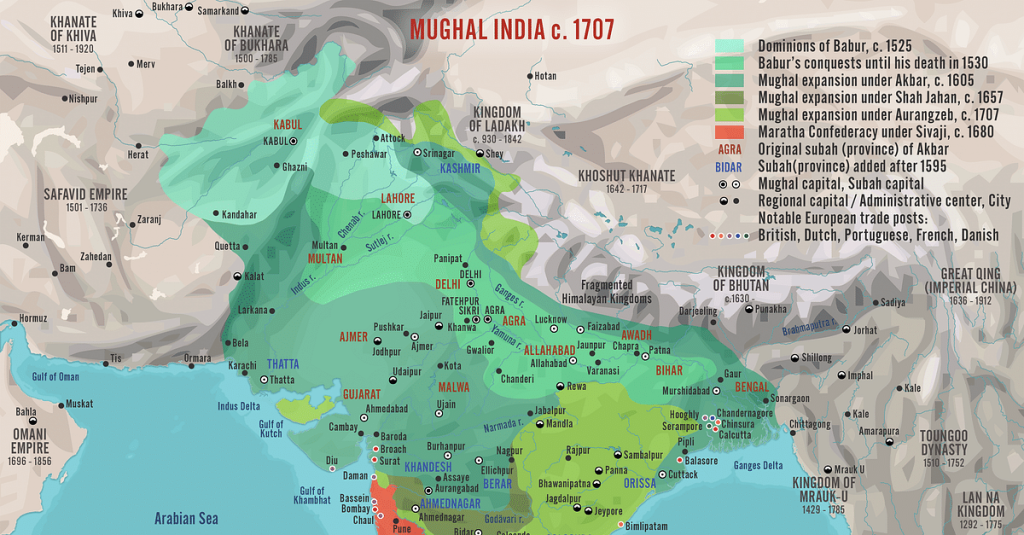
Maulana Abdul Hai Budhanawi lived during a period of considerable political and intellectual transformation in the Indian subcontinent. The declining authority of the Mughal Empire, the expansion of the British East India Company‘s power, and the growing influence of regional political forces posed significant challenges for Muslim society.
At the same time, Delhi remained an important center of Islamic learning. The scholarly legacy of Shah Waliullah Dehlawi (1703–1762) continued through his sons, descendants, students, and associated scholars.
Religiously, Indian Islam was diverse but fragmented. Sufi orders such as the Naqshbandi, Chishti, and Qadiri were influential, but many practices—like tomb veneration and syncretic rituals—were deemed innovations (bid’ah) by reform-minded scholars.
Shah Waliullah had emphasized the importance of understanding the Quran and Sunnah, advocating ijtihad (independent reasoning) and a balanced approach to Islamic law, strengthening Islamic scholarship and addressing the intellectual and religious challenges of his time. His son, Shah Abdul Aziz Dehlavi (1746–1824), continued much of this scholarly work and became one of the most influential Muslim scholars in India.
The circle surrounding Shah Abdul Aziz included accomplished scholars who contributed to religious education, Quranic interpretation, Hadith studies and reformist activities.
Maulana Abdul Hai Budhanawi belonged to this wider scholarly network. His intellectual abilities and personal commitment eventually brought him into association with Sayyid Ahmad Shahid, whose movement sought religious reform and organized resistance against Sikh Empire under Ranjit Singh in the northwestern regions of the subcontinent.
The early 19th century also witnessed reformist movements combining spiritual revival with political activism. Scholars like Abdul Hai engaged in both intellectual and militant efforts to preserve Islamic identity and resist external domination.
📖 Deep Dive into 19th-Century Islamic Reform Movements:
- Read History: [The Deoband Movement: A Complete Historical Overview]
- Read History: [Tariqah-i Muhammadiya: Anti-Colonial Resistance and Revival]
Early Life and Family Background
Maulana Abdul Hai Budhanawi was the son of Hibbatullah Budhanawi. His family was connected with the wider Dehlavi scholarly tradition that developed around the intellectual legacy of Shah Waliullah.
His family background provided an important connection to the prominent scholars of Delhi. However, the available biographical accounts should be distinguished carefully when describing individual family relationships.
Syed Abul Hasan Ali Nadwi identifies Abdul Hai as a talented disciple and close relative of Shah Abdul Aziz. In his account of Shah Abdul Aziz’s family and scholarly circle, Nadwi also identifies Maulana Abdul Hai as his son-in-law.
The same work identifies him as a son of Hibbatullah Budhanawi and records his association with Shah Abdul Qadir Dehlavi as a student.
These relationships demonstrate how closely Abdul Hai was connected to the major scholarly figures of the Dehlavi tradition.
Rather than treating him simply as another member of a prominent family, it is more appropriate to understand his historical importance through his own scholarly achievements and his documented relationships with these eminent teachers.
Education and Intellectual Development
Maulana Abdul Hai Budhanawi developed an exceptionally strong reputation for Islamic learning. His education and intellectual development were closely associated with the scholarly environment of the Dehlavi family.
Maulana Abdul Hai Budhanvi grew up in the intellectual hub of Delhi, where his father-in-law, Shah Abdul Aziz Dehlvi (1746–1824), was a central figure in continuing the Waliullahi legacy. Shah Abdul Aziz’s fatwas and writings, including his declaration that India under British rule had become Dar al-Harb (land of war), reflected the family’s engagement with contemporary challenges.
The family’s prominent scholars, including Shah Ismail Dehlvi and Shah Abdul Qadir Dehlvi, were also significant figures, and together they represented a network of intellectual and reformist influence. The family’s primary center of learning was the Madrasah-i Rahimiyah, which emphasized Hadith, Fiqh, Tafsir, and Sufism. Maulana Abdul Hai Budhanvi’s early education was shaped by this rigorous environment, balancing scholarly learning with spiritual training.
📖 Read More: Shah Waliullah Dehlvi Biography
Scholarly Relationship with Shah Abdul Aziz
Shah Abdul Aziz was among the most respected Islamic scholars of his generation. He continued the intellectual work of his father, Shah Waliullah, and contributed significantly to Quranic interpretation, Hadith, Islamic jurisprudence, and religious instruction.
Abdul Hai was one of the talented scholars associated with Shah Abdul Aziz’s circle.
According to Syed Abul Hasan Ali Nadwi, Shah Abdul Aziz held Abdul Hai and Maulana Muhammad Ismail Shahid in exceptionally high regard. In a letter addressing their scholarly abilities, he praised their knowledge of Quranic exegesis, Hadith, jurisprudence, logic and other branches of learning.
Nadwi records that Shah Abdul Aziz regarded the two scholars as exceptionally accomplished and encouraged others to consult them regarding difficult scholarly questions.
He further explains that Shaykh ‘Abd al-Hayy Budhanawi was particularly distinguished in rational sciences and was regarded by Shah Abdul Aziz as one of his foremost disciples in Quranic exegesis.
Shah Abdul Aziz reportedly addressed him with the honorific title Shaykh al-Islam, reflecting the high esteem in which he held his scholarship.
This account provides important evidence of Abdul Hai’s intellectual standing. His reputation was not based merely on his family connections; it was recognized by one of the most prominent scholars of his time.
Relationship with Shah Abdul Qadir Dehlavi
Another important figure in Abdul Hai’s scholarly development was Shah Abdul Qadir Dehlavi, the distinguished son of Shah Waliullah and the author of the well-known Urdu Quran translation Muzih-ul-Quran.
Nadwi identifies Maulana Abdul Hai, son of Hibbatullah Budhanawi, among the prominent disciples of Shah Abdul Qadir.
This relationship further demonstrates Abdul Hai’s connection with the wider Dehlavi scholarly tradition.
Shah Abdul Qadir was particularly renowned for his Quranic translation and teaching activities. His students included several scholars who later contributed to the development of Islamic learning in India.
Abdul Hai’s association with both Shah Abdul Qadir and Shah Abdul Aziz placed him within an important network of Quranic and Hadith scholarship.
Scholarly Contributions and Intellectual Reputation
Maulana Abdul Hai Budhanvi was also influenced by the family’s reformist ideology, which promoted a return to early Islamic practices and rejected innovations (bid’ah) and polytheistic tendencies (shirk) that had spread among Indian Muslims.
Although the available historical accounts do not provide a comprehensive bibliography of Maulana Abdul Hai Budhanawi’s independent writings, they preserve valuable information about his intellectual abilities.
His reputation was particularly associated with the following areas:
1. Quranic Exegesis (Tafsir)
Abdul Hai was recognized for his expertise in Quranic interpretation.
Syed Abul Hasan Ali Nadwi records that Shah Abdul Aziz considered him among his foremost disciples in the field of Tafsir.
This assessment is especially significant because Shah Abdul Aziz himself was a highly accomplished Quranic scholar and the successor to Shah Waliullah’s intellectual tradition.
2. Hadith Studies
Abdul Hai was also recognized for his knowledge of Hadith.
The scholarly appreciation expressed by Shah Abdul Aziz included his abilities in the study and understanding of Prophetic traditions.
His intellectual reputation therefore extended beyond Quranic interpretation to important areas of Islamic religious scholarship.
3. Islamic Jurisprudence
Nadwi’s account also mentions Abdul Hai’s knowledge of law and jurisprudence.
His scholarly abilities were recognized alongside those of Maulana Muhammad Ismail Shahid, demonstrating the breadth of learning expected of accomplished scholars within the Dehlavi tradition.
4. Rational Sciences
One of the most distinctive aspects of Abdul Hai’s scholarly reputation was his proficiency in rational sciences.
Nadwi specifically records that other scholars of his time regarded him as a specialist in these disciplines.
His expertise in rational sciences, combined with his knowledge of Quranic interpretation and Hadith, demonstrates the broad intellectual foundation of his scholarship.
Role in the Tariqah-yi Muhammadi Movement
One of the most significant developments in Maulana Abdul Hai Budhanawi’s life was his association with the reformist movement led by Sayyid Ahmad Shahid (1786–1831).
The movement is commonly associated with the Tariqah-i Muhammadi tradition and the efforts of Sayyid Ahmad and his companions to promote religious reform and establish Muslim political authority in the northwestern regions of the Indian subcontinent.
The movement emerged during a period when Sikh political power was expanding in Punjab and surrounding territories.
Its religious and political activities attracted scholars, spiritual leaders, and other committed individuals from different parts of India.
Maulana Abdul Hai became one of the important scholars associated with this movement.
His Relationship with Sayyid Ahmad Shahid
The relationship between Abdul Hai and Sayyid Ahmad is particularly noteworthy.
According to Syed Abul Hasan Ali Nadwi, Abdul Hai was older than Sayyid Ahmad, and the latter had even previously been his student.
Despite this difference in age and their earlier scholarly relationship, Abdul Hai later took the oath of allegiance (bay’ah) to Sayyid Ahmad.
This decision reflects the spiritual importance he attached to Sayyid Ahmad’s guidance.
Nadwi emphasizes that Abdul Hai’s sincerity and God-consciousness were as remarkable as his intellectual abilities.
His decision to follow Sayyid Ahmad demonstrates that he regarded spiritual development and religious commitment as more important than personal scholarly status or social distinction.
Commitment to the Movement
Maulana Abdul Hai Budhani joined Sayyid Ahmad and Shah Ismail, contributing as a scholar, preacher, and advisor. While he may not have authored key texts like Sirat al-Mustaqim, he provided essential ideological and spiritual support, ensuring that the movement remained rooted in authentic Islamic scholarship.
Nadwi records that Abdul Hai abandoned his literary pursuits to follow Sayyid Ahmad’s spiritual guidance and support his wider mission.
He devoted his abilities and energies to advancing the work of his spiritual mentor.
This is one of the most important details preserved about his life because it illustrates the transition from a highly accomplished scholar engaged in intellectual activities to an individual committed to a broader religious and reformist mission.
His participation also demonstrates the close relationship between scholarship, spiritual discipline, and collective religious activity within the movement.
Death and Martyrdom
Maulana Abdul Hai Budhanawi passed away around 1828 CE while accompanying Sayyid Ahmad Shahid’s movement in the northwestern region of the Indian subcontinent.
According to Syed Abul Hasan Ali Nadwi’s “Life Sketch of Syed Ahmad Shahid“, Sayyid Ahmad visited Khar, the center of Swat, and stayed there for approximately one year. Nadwi specifically records that Maulana Abdul Hai passed away during this period. He also describes Abdul Hai as the Shaykh al-Islam of the Mujahidin army and notes the high regard Sayyid Ahmad had for him.
The chronology of Sayyid Ahmad’s arrival at Khar in December 1827, as discussed in historical research on his movement, supports identifying 1828 CE as the probable year of Abdul Hai’s death. However, an exact date of death has not been established.
Legacy and Historical Significance
Maulana Abdul Hai Budhanawi occupies an important place in the scholarly and reformist history of nineteenth-century India.
Although fewer independent biographical details about him have survived in widely accessible sources, the historical assessments preserved by Syed Abul Hasan Ali Nadwi reveal the exceptional respect he received from his contemporaries.
His legacy can be understood through several important contributions.
An Accomplished Scholar of the Dehlavi Tradition
Abdul Hai’s reputation in Quranic interpretation, Hadith, jurisprudence, and rational sciences demonstrates the intellectual strength of the scholarly environment surrounding Shah Abdul Aziz and Shah Abdul Qadir.
His recognition by Shah Abdul Aziz is particularly important evidence of his scholarly standing.
A Scholar Who Prioritized Spiritual Commitment
His decision to take bay’ah to Sayyid Ahmad, despite being older and having previously taught him, illustrates his commitment to spiritual guidance.
It also provides an interesting example of the relationship between scholarship and spiritual leadership in the reformist movements of the period.
A Participant in Religious and Reformist Activities
His involvement in Sayyid Ahmad’s movement demonstrates that his activities extended beyond teaching and literary scholarship.
He committed his abilities to a wider religious mission and ultimately died fighting, according to Nadwi’s historical account.
An Underrepresented Figure in South Asian Islamic History
The comparatively limited attention given to Abdul Hai in modern biographical writing makes careful historical documentation especially important.
His life deserves further study through historical works concerning Shah Abdul Aziz, Shah Abdul Qadir, Sayyid Ahmad Shahid and the wider Dehlavi scholarly network.
Rather than attributing unsupported later influences to him, his documented scholarly achievements and participation in the Tariqah-i Muhammadi movement provide a sufficient basis for recognizing his historical importance.
He was also one of the key persons who inspired later movements, including the Ahl-i Hadith and Deobandi reformists, who drew on the Waliullahi emphasis on the Quran, Hadith, and moral revival.
Conclusion
Maulana Abdul Hai Budhanawi was a distinguished Islamic scholar whose intellectual abilities earned him considerable recognition among the leading scholars of early nineteenth-century India.
His association with Shah Abdul Aziz and Shah Abdul Qadir connected him to the influential scholarly tradition of Shah Waliullah Dehlawi. His expertise in Quranic interpretation, Hadith, jurisprudence, and rational sciences established his reputation as an accomplished scholar.
His later decision to take spiritual allegiance to Sayyid Ahmad Shahid and dedicate his abilities to the latter’s mission represents another significant dimension of his life.
Although many details of his personal biography remain insufficiently documented, the historical account preserved by Syed Abul Hasan Ali Nadwi provides valuable evidence of his scholarship, sincerity and commitment.
Remembering Maulana Abdul Hai Budhanvi is therefore important not only for understanding the history of the Dehlavi scholarly family but also for appreciating the scholars who contributed to the intellectual and reformist movements of South Asian Islam.
Frequently Asked Questions (FAQs)
Who was Maulana Abdul Hai Budhanwi?
Maulana Abdul Hai Budhanvi was an accomplished Islamic scholar of early nineteenth-century India. He was associated with the scholarly circle of Shah Abdul Aziz and Shah Abdul Qadir Dehlavi and later participated in the reformist movement led by Sayyid Ahmad Shahid.
Who was the father of Maulana Abdul Hai Budhanvi?
His father was Hibbatullah Budhanawi, as identified in the biographical account preserved by Syed Abul Hasan Ali Nadwi.
Who were the teachers of Maulana Abdul Hai Budhanawi?
Historical accounts identify Shah Abdul Qadir Dehlavi as one of his teachers. He was also closely associated with Shah Abdul Aziz Dehlavi, who held his scholarly abilities in exceptionally high regard.
What were the scholarly specialties of Maulana Abdul Hai Budhanvi?
He was particularly recognized for his knowledge of Quranic exegesis, Hadith, Islamic jurisprudence, and rational sciences.
What was his relationship with Shah Abdul Aziz Dehlavi?
He was a close relative, disciple, and son-in-law of Shah Abdul Aziz Dehlavi. Shah Abdul Aziz reportedly praised his exceptional knowledge and addressed him with the honorific title Shaykh al-Islam.
What was his relationship with Shah Abdul Qadir Dehlavi?
Shah Abdul Qadir was one of his teachers. Nadwi identifies Abdul Hai among the prominent disciples of Shah Abdul Qadir.
What was his role in the Tariqah-i Muhammadi movement?
He became associated with Sayyid Ahmad Shahid’s reformist movement, took bay’ah to him and devoted his scholarly abilities to supporting his spiritual and religious mission.
When did Maulana Abdul Hai Budhanawi die?
Syed Abul Hasan Ali Nadwi records that Abdul Hai ultimately died fighting in the way of God. However, the principal biographical account consulted does not establish an exact date or year of his death.
References and Further Reading
- Nadwi, Syed Abul Hasan Ali. Saviours of Islamic Spirit. Volume IV. Academy of Islamic Research and Publications, Lucknow, 2004 edition. Chapter XI, particularly pages 271–272 and 277. Read the book (PDF).
- The Role of Darul Uloom Deoband in Indian Politics. Institute of Objective Studies. Consult for the broader historical context of Shah Abdul Aziz’s scholarly and reformist network.
- Nadwi, Syed Abul Hasan Ali. Saviours of Islamic Spirit. Volume IV, Chapter XI. The sections on Shah Abdul Aziz, Sayyid Ahmad Shahid, Maulana Abdul Hai Budhanwi and Shah Abdul Qadir Dehlavi provide additional context for understanding his scholarly relationships.
- Life Sketch of Syed Ahmed Shahid by Maulana Syed Abul Hasan Ali Nadwi; printed page 18, under the heading “At Panjtār.”
2 Responses
Awesome article ever. Probably the most detailed article about this man available on internet. Sha Abdul Hai Dehlawi was a renowned and an underrated person in our history. May Allah bless you.
Probably you are right. He should be included in more writings, as he is one of the scholars who tried his best to spread the light of the truth.
Thanks a lot for your comment.