

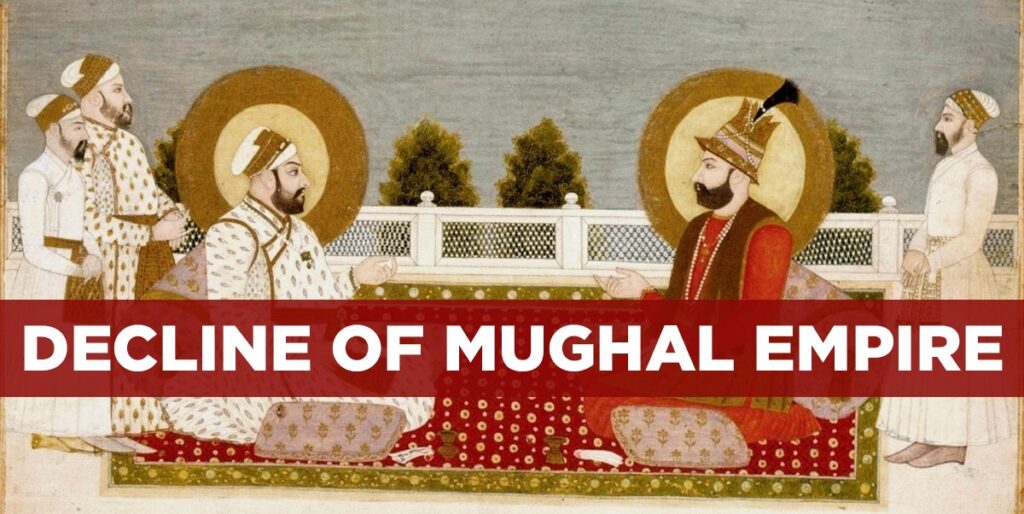
The Mughal Empire, a glorious and multifaceted chapter in the history of South Asia, was established in 1526 by Zahiruddin Muhammad Babur and exerted political, economic, social, cultural, and religious influence over the Indian subcontinent for nearly three centuries. This empire was a major center of Islamic rule, making significant contributions to the history of India through the propagation of Islam, the application of Sharia law, art, architecture, literature, and administrative structures. Under the leadership of emperors like Babur, Humayun, Akbar, Jahangir, Shah Jahan, and Aurangzeb, the Mughal Empire unified India under a strong central administration, conquered vast geographical areas, and achieved cultural prosperity. However, the decline of the empire began in the late 17th century, and it officially ended with British rule after the Indian Rebellion of 1857.
From an Islamic perspective, the decline of the Mughal Empire is not merely a political or economic event but a reflection of a deep spiritual, moral, and administrative failure in Islamic governance. The core principles of Islamic rule—justice (adl), unity (ittihad), accountability to public welfare (amanat), and the application of Sharia law—gradually weakened in the later stages of the empire. This article analyzes the causes of the Mughal Empire’s decline from an Islamic perspective, including political instability, economic weakness, military incompetence, administrative errors, social divisions, and foreign invasions. Each section discusses historical context, key events, the roles of the emperors, the application and deviation from Islamic ideals, and their impact on India.
The Rise of the Mughal Empire: Islamic Context
Babur’s Foundation (1526–1530)
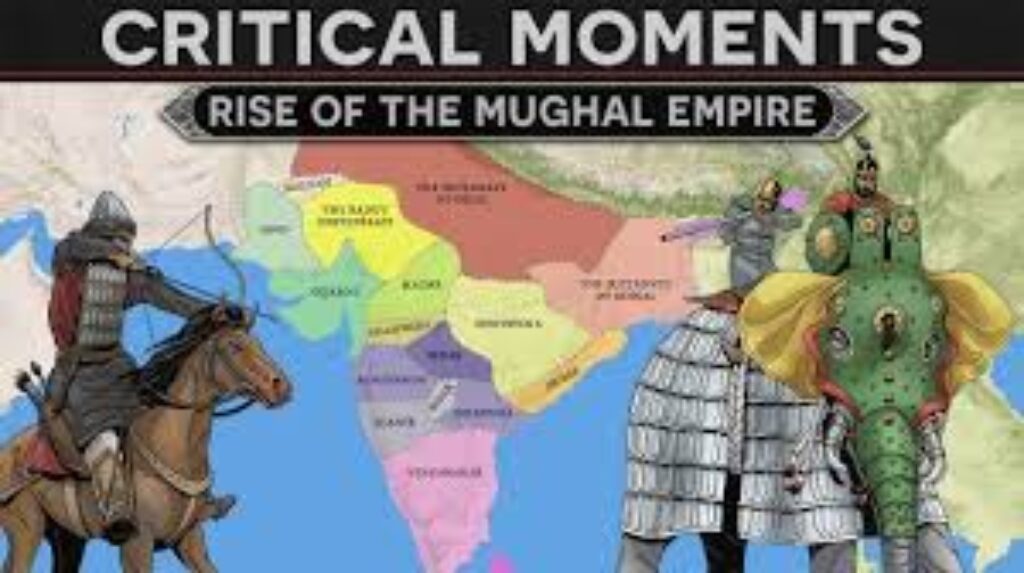
The foundation of the Mughal Empire began in 1526 when Zahiruddin Muhammad Babur defeated Sultan Ibrahim Lodi of Delhi in the First Battle of Panipat. As a descendant of Timur and Genghis Khan, Babur came from the region of Fergana in Central Asia. His military skill, war strategy, and commitment to the tradition of Islamic rule laid the foundation for the Mughal Empire. His autobiography, Baburnama, reflects Islamic values such as faith, patience, justice, and the responsibility of governance. Babur established Delhi and Agra as centers of Islamic rule and preserved religious traditions through the construction of mosques and the patronage of Islamic education. During his reign, the Battle of Khanwa (1527) against the Rajputs and the Battle of Gogara (1529) demonstrated his military strength, which manifested the defensive aspect of Islamic jihad.
Babur’s short reign (1526–1530) built a strong administrative and military foundation. He attempted to build relations with the local population and showed initial policies of religious tolerance. In his reign, the core principles of Islamic rule, such as justice and accountability to the people, were established. However, his short rule and death due to illness prevented the administrative structure from being fully organized. Nevertheless, Babur’s commitment to Islamic ideals and military victories established the Mughal Empire as a powerful force in India’s history.
In Babur’s reign, some key aspects of Islamic rule emerged. He tried to provide justice to the local population, and his military victories expressed the defensive aspect of Islamic rule. His Baburnama is an important part of Islamic literature, reflecting his philosophy of governance and ethics. He introduced Central Asian Islamic culture, especially Persian literature and art, to India. Although his short rule did not allow the administrative structure to be fully developed, it was further improved by subsequent emperors.
Humayun’s Challenges and Recovery (1530–1556)
Babur’s son Humayun ascended the throne in 1530, but his reign was full of challenges. He was defeated by Sher Shah Suri in the Battle of Chausa (1539) and the Battle of Kannauj (1540) and was exiled to Persia. From an Islamic perspective, Humayun’s defeat and subsequent recovery (1555) symbolize Islamic faith, patience, and struggle. With the help of Persia’s Safavid Shah Tahmasp, Humayun recovered Delhi, ensuring the continuity of Islamic rule. During his reign, administrative weaknesses were evident, but he continued to patronize Islamic education and culture. Humayun’s interest in astrology and the establishment of a library expressed his commitment to Islamic knowledge.
In Humayun’s reign, some important aspects of Islamic rule emerged. He learned from Sher Shah Suri’s administrative reforms and, after recovering the empire, introduced the initial form of the mansabdari system. Following the Islamic principle of justice, he tried to build relations with local leaders. However, internal rebellions, such as his brother Kamran’s rebellion, and family conflicts challenged the Islamic ideal of unity. During his exile in Persia, Humayun came into contact with Safavid culture, which introduced Persian influence to Mughal art and architecture. His death (1556) handed the empire to his son Akbar, who initiated the golden age of Mughal rule.
Humayun’s reign highlights the importance of patience and defense in Islamic rule. His exile and recovery are proof of the strength of Islamic faith. He tried to provide justice to the local population and contributed to the propagation of Islamic education. However, administrative weaknesses and internal conflicts challenged the stability of the empire. Humayun’s struggle and recovery form an important chapter in the history of the Mughal Empire, ensuring the continuity of Islamic rule.
Akbar’s Golden Age (1556–1605)
Akbar, the third emperor of the Mughal Empire, established the empire as an ideal model of Islamic rule. His reign (1556–1605) is known as the golden age of the Mughal Empire. He introduced the mansabdari system, which ensured administrative responsibility and justice. This system granted ranks and jagirs (land grants) to nobles based on military and administrative duties, which were consistent with the Islamic principles of justice and accountability. Akbar’s Sulh-i-Kul (universal peace) policy promoted religious tolerance, which was consistent with the Islamic concepts of adl (justice) and tasamuh (tolerance). He abolished the jizya tax, formed alliances with Hindu Rajputs, and established the Ibadat Khana in Fatehpur Sikri, where Hindu, Jain, Christian, and Muslim scholars discussed religion.
Akbar’s reign saw the excellence of Islamic art, literature, and architecture. He patronized the writing of Akbarnama and Ain-i-Akbari, which reflect his contribution to Islamic knowledge and history. His administrative reforms, such as the zabti revenue system, reduced oppression on farmers and applied the Islamic principle of justice. During Akbar’s reign, the Mughal Empire expanded geographically through the conquest of Gujarat (1573), Bengal (1576), and Rajasthan. His religious tolerance and administrative efficiency strengthened the Islamic ideals of rule and transformed the empire into a multicultural center.
Akbar’s reign expressed the moral and spiritual aspects of Islamic rule. Through religious tolerance, he propagated the universal values of Islam. His Ibadat Khana and Din-i-Ilahi policy faced criticism from some ulema, but it reflected his commitment to Islamic tolerance and unity. During Akbar’s reign, the Mughal Empire became economically prosperous, which was consistent with the Islamic policy of wealth distribution and public welfare. His patronage of Mughal art, especially the architecture of Fatehpur Sikri and miniature painting, became symbols of Islamic aesthetics.
Akbar’s reign was a period of cultural and economic prosperity. His architectural projects expressed the excellence of Islamic art. He maintained the stability of the empire through administrative reforms and tried to provide justice to the local population. However, the succession conflict in his later life challenged the Islamic ideal of unity.
Jahangir and Shah Jahan’s Prosperity (1605–1658)
Jahangir (1605–1627) continued Akbar’s policy of religious tolerance and administrative continuity. He patronized Islamic art and literature. During his reign, Mughal painting, especially miniature painting, reached its peak, which became a symbol of Islamic aesthetics. His Tuzuk-i-Jahangiri expresses the responsibility and honesty of Islamic rule. However, internal rebellions, such as his son Khusrau’s rebellion, challenged the Islamic ideal of unity. Jahangir established commercial relations with European merchants, especially the English, which later paved the way for British intervention.
Shah Jahan (1628–1658) reached the peak of Islamic architecture. He built the Taj Mahal, which was constructed in memory of his wife Mumtaz Mahal and became a symbol of Islamic art and love. He built the Jama Masjid in Delhi and the Moti Masjid in Agra, which strengthened the Islamic religious tradition. During Shah Jahan’s reign, the empire was economically prosperous, which was consistent with the Islamic policy of wealth distribution and public welfare. However, the succession war among his sons in his later life, especially the conflict between Aurangzeb and Dara Shikoh, damaged the Islamic ideal of unity.
Shah Jahan’s reign was the peak of cultural and economic prosperity. His architectural projects expressed the excellence of Islamic art. He maintained the stability of the empire through administrative reforms and tried to provide justice to the local population. However, the succession conflict in his later life became a preliminary step for the empire’s decline.
Aurangzeb’s Expansion and Controversy (1658–1707)
Aurangzeb took the empire to its geographical maximum, which extended from northern Afghanistan to the Deccan in the south. He emphasized the application of Sharia law and reimposed the jizya tax, which expressed his commitment to Islamic governance. From an Islamic perspective, this policy reflected his devotion to Sharia. However, the jizya tax caused rebellions among the Rajputs, Marathas, and Sikhs, which went against the Islamic principle of tolerance. His long Deccan campaign (1682–1707) depleted the empire’s economic and military strength, which is considered the beginning of the decline.
During Aurangzeb’s reign, Islamic education and mosque construction increased. He patronized the compilation of Fatawa-i-Alamgiri, a vast collection of Islamic law. However, his religious rigidity and policies toward non-Muslims damaged the empire’s unity. His Deccan campaign saw the rise of Maratha leader Shivaji, who established the Maratha Empire in 1674 and conducted guerrilla warfare against the Mughals. Aurangzeb’s death (1707) left the empire in the face of a succession war, accelerating the decline.
Aurangzeb’s reign was a complex chapter in Islamic rule. He emphasized the Sharia-based aspects of Islamic governance, but his rigid policies created social divisions. The Deccan campaign cost huge amounts of money, depleting the economic base of the empire. During his reign, Sikh Guru Gobind Singh established the Khalsa (1699), which became a powerful force against Mughal rule. Aurangzeb’s death left the empire weak, which was further intensified by the incompetence of subsequent emperors.
Causes of the Mughal Empire’s Decline: Islamic Perspective
Islamic rule emphasizes justice, unity, and public welfare. The Mughal decline was a result of deviation from these ideals. Below, each cause is analyzed in detail.
Political Causes
1. Weak Successors and Moral Decline: In Islamic rule, the moral and spiritual excellence of the ruler is essential. The emperors after Aurangzeb—Bahadur Shah I (1707–1712), Farrukhsiyar (1713–1719), and Muhammad Shah (1719–1748)—were weak and incompetent. Their lack of amanat and khilafat responsibility divided the empire. Farrukhsiyar was used as a puppet by the Sayyid Brothers (Husain Ali Khan and Abdullah Khan) and was murdered in 1719, which was contrary to Islamic ethics. Succession wars, such as the conflict among Aurangzeb’s sons (1707), damaged the Islamic ideal of unity.
Bahadur Shah I tried to stabilize the empire. He suppressed the Sikh rebellion and attempted to improve relations with the Rajputs. However, his short reign and internal conflicts made it unsuccessful. Farrukhsiyar’s reign saw the Sayyid Brothers seize power and weaken the emperor. Muhammad Shah’s reign saw Nadir Shah’s invasion (1739), which exposed the empire’s weakness. The moral weakness of these emperors was evidence of deviation from Islamic ideals. Their incompetence destroyed the central control and encouraged the rise of regional powers.
2. Influence of Nobles and Intrigues: In Islamic rule, mutual accountability between amirs and the ruler is essential. However, the Sayyid Brothers abused power by controlling the emperors. Nizam-ul-Mulk (Asaf Jah I) established an independent state in Hyderabad (1724) and encouraged Maratha attacks, which were against the Islamic principle of unity.
The Sayyid Brothers murdered Farrukhsiyar and controlled subsequent emperors, undermining the moral foundation of Islamic rule. Factional politics among nobles, such as the conflict between Turani and Irani groups, weakened the central control. This intrigue and betrayal damaged the ethical base of Islamic rule.
3. Factional Politics and Internal Divisions: Factional politics between Turani, Irani, and Hindustani groups in the Mughal capital destroyed the Islamic ideal of unity. In Islamic rule, the unity of the ummah is a core principle, but this division weakened the empire and encouraged the rise of regional powers. For example, Maratha leader Shivaji and his successors took advantage of the Mughal weakness to strengthen their position in the Deccan. Sikh leader Guru Gobind Singh established the Khalsa in Punjab (1699), which became a powerful resistance against Mughal rule. Jat rebellions in Mathura and Agra challenged Mughal authority. These divisions worked against the overall unity and ethics of Islamic rule.
Economic Causes
- Jagirdari Crisis and Economic Mismanagement: The Islamic economy emphasizes fair wealth distribution and public welfare. The Mughal jagirdari system was an implementation of this ideal, granting land in exchange for military and administrative duties. However, Aurangzeb’s long Deccan campaign (1682–1707) created a jagir shortage, increasing noble discontent. This mismanagement violated the Islamic policy of public welfare and created economic instability. Jagirdars often collected excessive revenue from land, which acted as zulm (oppression) on farmers. This was contrary to the Islamic principle of justice.
- Agricultural Crisis and Excessive Taxation: In Islamic rule, imposing excessive taxes is forbidden, as it is considered zulm. However, in the Mughal Empire, farmers were crushed under excessive taxes. The Deccan campaign of Aurangzeb required huge amounts of money, collected through excessive taxes on farmers. This caused the Jat rebellion (1669–1681), Satnami rebellion (1672), and Sikh rebellions. These rebellions were evidence of deviation from Islamic justice and public welfare. Agricultural productivity declined, and economic stability was undermined, accelerating the empire’s decline.
- Commercial Weakness and Foreign Intervention: The Islamic economy emphasizes trade and prosperity. The early Mughal period was prosperous in trade, especially through the Silk Road and European merchants. However, the British East India Company’s intervention, especially the Battle of Plassey (1757) and the Battle of Buxar (1764), seized the Mughal revenue sources. The British gained the diwani of Bengal and established economic control, which went against the Islamic policy of economic stability. The Mughals underestimated the military and economic power of the Europeans, which was one of the main causes of their decline.
Military Causes
- Military Incompetence and Deviation from Jihad Ideal: In Islamic rule, the army is essential for the protection of people and Islam. Aurangzeb’s long Deccan campaign exhausted the Mughal army. The rise of Maratha leader Shivaji, Sikh Guru Gobind Singh, and Jats challenged the Mughal military superiority. Nadir Shah’s invasion (1739, Battle of Karnal) and Ahmad Shah Abdali’s invasion (1757, Third Battle of Panipat) exposed the Mughal army’s weakness. From an Islamic perspective, this weakness was a result of deviation from the ideal of jihad (struggle for defense and justice).
- Economic Pressure of War: Aurangzeb’s Deccan campaign cost huge amounts of money, depleting the treasury. This went against the Islamic policy of economic stability. The maintenance of the army and campaign expenses eroded the economic base of the empire. The Mughal army failed to keep pace with modern war strategies, making it weak compared to European powers.
- Foreign Invasions: Nadir Shah’s looting of Delhi (1739) and Ahmad Shah Abdali’s Third Battle of Panipat (1757) exposed the Mughal Empire’s military weakness. Nadir Shah took away the Koh-i-Noor diamond and vast treasures, depleting the empire’s economic and moral strength. The Third Battle of Panipat defeated the Marathas but further weakened the Mughals. These invasions were evidence of the failure of the Muslim rule’s defense system.
Administrative Causes
- Weakness of Central Administration: Akbar’s mansabdari system was a symbol of Islamic justice and accountability. However, after Aurangzeb, it weakened. The jagir shortage increased noble discontent, and governors became independent, such as the Nizam of Hyderabad, Nawab of Bengal, and Nawab of Awadh. This went against the Islamic principle of central unity.
- Noble Rebellions: The Sayyid Brothers controlled the emperors, which was contrary to Islamic accountability. Nizam-ul-Mulk encouraged Maratha attacks, breaking Islamic unity.
- Regional Autonomy: Murshid Quli Khan in Bengal, Saadat Khan in Awadh, and Nizam-ul-Mulk in Hyderabad established independent states, which were against the central control of Islamic rule.
Social Causes
- Religious Intolerance and Deviation from Islamic Ideals: Islam emphasizes religious tolerance and justice. Akbar’s Sulh-i-Kul policy reflected this ideal, but Aurangzeb’s reimposition of jizya (1679) caused rebellions among Rajputs, Marathas, and Sikhs. Shivaji’s Maratha rebellion (1674) and Guru Gobind Singh’s Khalsa establishment (1699) were reactions against the Islamic tolerance policy.
- Social Divisions and Oppression: Excessive taxes acted as zulm on farmers, causing Jat and Satnami rebellions. This was contrary to Islamic justice.
- Cultural Decline: Aurangzeb’s reign saw a decline in the patronage of art and literature, damaging Islamic cultural unity. Akbar and Shah Jahan’s cultural prosperity declined due to Aurangzeb’s rigid religious policies. He banned music and painting, which went against Islamic art traditions.
Key Events and the Role of Emperors
- Death of Aurangzeb (1707): After Aurangzeb’s death, the succession struggle among his sons shattered Islamic unity. Bahadur Shah attempted to stabilize the empire, but his short reign made this effort futile. He suppressed Sikh rebellions and tried to improve relations with the Rajputs. However, after his death, the empire weakened further.
- Rise of the Sayyid Brothers (1713–1720): The Sayyid brothers controlled Farrukhsiyar and eventually assassinated him in 1719, an act contrary to Islamic ethics. Their abuse of power increased the empire’s weakness. They used subsequent emperors as puppets and encouraged Maratha attacks.
- Nadir Shah’s Invasion (1739): During Muhammad Shah’s reign, Nadir Shah defeated the Mughals at the Battle of Karnal and sacked Delhi. He took enormous wealth, including the Koh-i-Noor diamond, which depleted the empire’s economic and moral strength. This event exposed the weakness of Mughal rule and the failure of Islamic governance defense mechanisms.
- Ahmad Shah Abdali’s Invasion (1757): The Maratha defeat at the Third Battle of Panipat destroyed the last remaining Mughal power. Ahmad Shah Abdali occupied Delhi and turned the Mughal emperor into a puppet. This highlighted the military weakness of Islamic rule.
- British Intervention: The Battle of Plassey (1757) and the Battle of Buxar (1764) gave the British East India Company economic and political control over India. The British gained the Diwani of Bengal and reduced the Mughal emperors to puppets. This marked the end of the economic and political power of Islamic rule.
- The Revolt of 1857: The Indian revolt against the British, led by Bahadur Shah II, was the last resistance. Hindus and Muslims united in this revolt, symbolizing Islamic unity. However, the British suppressed it and exiled Bahadur Shah II to Rangoon, formally ending Mughal rule.
Impact of the Mughal Decline in India
- Political Impact: The fall of the Mughal Empire marked the end of Islamic rule in India and the beginning of British colonial rule. It symbolized the destruction of the central unity and moral authority of Islamic governance. The British turned India into a colonial possession and destroyed Mughal political power.
- Economic Impact: The British turned India into a source of raw materials and a market for their goods, undermining the economic prosperity and justice system of Islamic rule. Mughal economic institutions were destroyed, and local industries, such as textiles, were harmed. The British exploited India’s resources and worsened economic hardship.
- Social Impact: The decline of the Mughals increased religious divisions. The gap between Hindu and Muslim communities widened, contrary to the Islamic principle of tolerance. However, Mughal heritage survived through the Urdu language, literature, and architecture. The legacy of Mughal religious tolerance influenced Indian society.
- Cultural Impact: British rule damaged Islamic cultural heritage. Yet monuments like the Taj Mahal, Jama Masjid, and Mughal painting survived as part of Islamic art heritage. Urdu language and literature, including the poetry of Ghalib and Mir, remained part of Mughal culture.
Conclusion
From an Islamic perspective, the fall of the Mughal Empire was the result of moral and spiritual decline. Weak leadership, economic mismanagement, military weakness, administrative failures, and social division destroyed the empire. Deviation from the Islamic principles of justice, unity, and public welfare was the main cause of decline. The fall of the Mughal Empire was a turning point in Indian history, marking the end of Islamic rule and the beginning of the colonial era. However, the cultural and religious legacy of the Mughals continues to influence the Indian subcontinent today.
References
- Richards, J. F. (1995). The Mughal Empire. Cambridge University Press.
- Chandra, S. (2005). Medieval India: From Sultanate to the Mughals. Har-Anand Publications.
- Wikipedia contributors. (2023). Decline of the Mughal Empire. Wikipedia, The Free Encyclopedia. Retrieved from https://en.wikipedia.org/wiki/Decline_of_the_Mughal_Empire
- Stein, B. (2010). A History of India. Wiley-Blackwell.
- Farooqui, A. (2011). Sindias and the Raj: Princely Gwalior c. 1800–1850. Primus Books.
- Alam, M., & Subrahmanyam, S. (1998). The Mughal State, 1526–1750. Oxford University Press.
- Encyclopædia Britannica. (2023). Mughal Empire. Retrieved from https://www.britannica.com/topic/Mughal-dynasty