

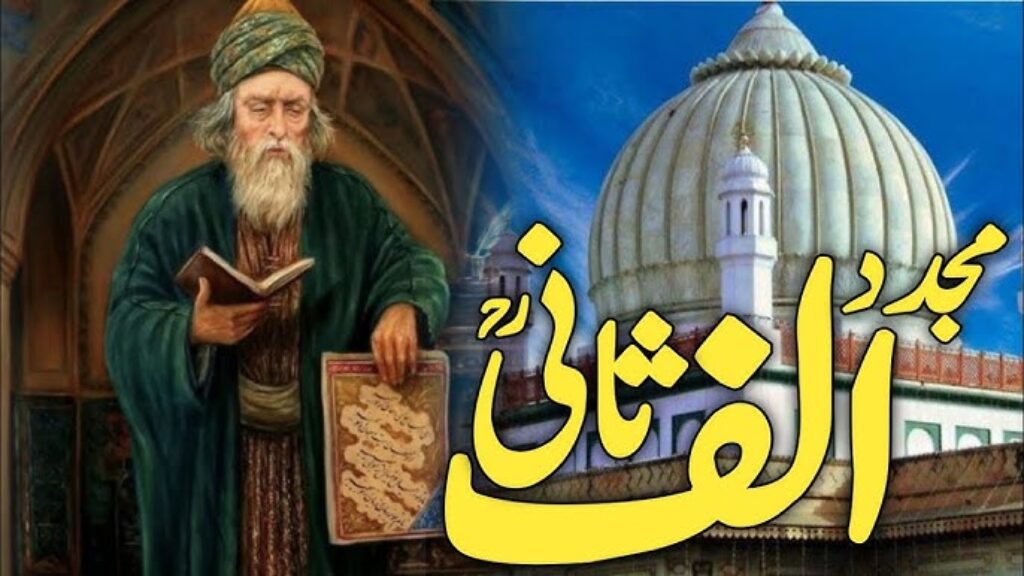
The life of Ahmad Sirhindi (1564–1624 CE) is a remarkable story of a scholar, mystic, and reformer who reshaped Islamic thought in the Indian subcontinent during the Mughal era. Born in Sirhind, Punjab, he became known as Mujaddid Alf Thani (Reviver of the Second Millennium) for his role in reviving orthodox Sunni Islam at a time of widespread religious syncretism.
Table of Contents
ToggleThis Ahmad Sirhindi biography traces his journey from a gifted student to a renowned Naqshbandi Sufi master, highlighting his strong opposition to Emperor Akbar’s heterodox policies (Ahmad Sirhindi vs Akbar). As Imam Rabbani, he balanced deep Sufi spirituality with an unshakable commitment to the Sharia, making his legacy both spiritual and reformist.
Drawing on historical records, his famous Maktubat Imam Rabbani (Letters), and modern scholarship, this account explores:
- His early education and teachers
- His spiritual transformation within the Naqshbandi order
- His key teachings and revivalist mission (Mujaddid Alf Sani’s teachings)
- His imprisonment under Emperor Jahangir
- His death in 1624 (Ahmad Sirhindi’s death)
- His lasting influence on Sufism and Islamic thought
Whether you’re studying Ahmad Sirhindi’s books, exploring his contributions to Islamic revivalism, or seeking inspiration from his spiritual depth and reformist courage, the story of Imam Rabbani continues to inspire Muslims worldwide.
Early Life: The Foundations of a Future Mujaddid
The Ahmad Sirhindi biography begins in the bustling village of Sirhind, East Punjab, India, on May 26, 1564 (10 Muharram 971 AH)—the day of Ashura, a date laden with spiritual significance in Islamic tradition. Born into a devout Sunni Muslim family of Sayyid descent, Ahmad was the second son of Shaykh Abdul Ahad al-Faruqi, a respected scholar and Sufi of the Naqshbandi order, and his wife, Bibi Fatima. His lineage traces back to Caliph Umar ibn al-Khattab on his father’s side and to the Prophet Muhammad (PBUH) through Imam Husayn on his mother’s, blending scholarly rigor with spiritual nobility. This heritage shaped the young Ahmad, instilling in him a profound respect for both exoteric (zahiri) and esoteric (batini) dimensions of Islam from an early age.
Sirhind, a modest town midway between Delhi and Lahore, was a hub of Islamic learning during the Mughal Empire, yet it simmered with the tensions of Akbar’s reign (1556–1605 CE). Akbar’s policies of religious tolerance, including the abolition of jizya (the poll tax on non-Muslims) in 1564—the very year of Ahmad’s birth—sparked debates among ulema about the erosion of Islamic orthodoxy. As a child, Ahmad witnessed these shifts, which later fueled his reformist zeal.
His father, Abdul Ahad, was not only a teacher but a spiritual guide, introducing young Ahmad to the Quran and basic fiqh. By age four, Ahmad had memorized the entire Quran, a feat that marked him as a prodigy. His early education under his father and local scholars covered Hanafi jurisprudence, Hadith, Tafsir, and Arabic grammar, laying the groundwork for his later scholarly prowess.
At twelve, Ahmad began formal studies in Sialkot under renowned teachers like Shaykh Muhammad al-Bihari, delving into advanced texts like Sharh al-Mawahib and Al-Hidaya. He traveled to Lahore for further learning, studying under Maulana Yaqub al-Charkhi and others, mastering logic, philosophy, and kalam (theology). Yet, Ahmad’s intellectual pursuits were tempered by a budding mysticism; he frequented Sufi gatherings, drawn to the Naqshbandi path of silent dhikr and spiritual discipline. A pivotal moment came at eighteen when he met his first spiritual mentor, Shaykh Muhammad Baki Billah, in Lahore. Under Baki Billah’s guidance, Ahmad experienced his first fana (spiritual annihilation), a transformative encounter that ignited his Sufi journey. This phase of Imam Rabbani’s life—a title bestowed later for his divine insight—blended rigorous scholarship with inner purification, setting him apart as a bridge between fiqh and tasawwuf.
By his early twenties, Ahmad returned to Sirhind, marrying twice and fathering several children, including his successor, Shaykh Muhammad Ma’sum. He established a madrasa and khanqah (Sufi lodge), attracting disciples from across the subcontinent. His daily routine—teaching fiqh by day and guiding murids (disciples) in tasawwuf by night—reflected a balanced life rooted in Sunnah. Yet, as Akbar’s Din-i Ilahi (a syncretic faith blending Islam, Hinduism, and Zoroastrianism) gained traction, Ahmad’s conscience stirred. He began subtly critiquing these innovations in private letters, foreshadowing his role as a defender of orthodoxy. This early period, rich in learning and spiritual awakening, formed the bedrock of his later reforms, making his Ahmad Sirhindi biography a testament to disciplined preparation for divine service.
Spiritual Journey: Embracing the Naqshbandi Path in Ahmad Sirhindi Sufism
The Spiritual Journey of Shaykh Ahmad Sirhindi
The spiritual journey of Shaykh Ahmad Sirhindi, often central to discussions on Ahmad Sirhindi’s Sufism, was a unique blend of Naqshbandi discipline and personal mystical experience. At the age of twenty-four, he was initiated into the Naqshbandi order in Lahore by Shaykh Muhammad Baki Billah, who linked him through the spiritual chain (silsila) back to Bahauddin Naqshband (d. 1389 CE), the founder of the order.
The Naqshbandi path, known for its silent dhikr (remembrance of God), strict adherence to Sharia, and its principle of khalwat dar anjuman (solitude in the crowd), resonated deeply with Sirhindi’s scholarly and spiritual temperament. Remarkably, under Baki Billah’s guidance—lasting only three days—Ahmad Sirhindi reached a profound station of spiritual reality (maqam al-haqiqa), during which he experienced visions of the Prophet ﷺ and radiant divine lights affirming his spiritual rank.
Ahmad Sirhindi’s Leadership and Teachings
After the death of his teacher, Baki Billah, in 1602 CE, Shaykh Ahmad Sirhindi took up leadership of the Naqshbandi-Mujaddidi branch, shaping it with his own spiritual vision. One of his most influential contributions was the doctrine of Wahdat al-Shuhud (Unity of Witness), which he presented as an alternative to Ibn Arabi’s Wahdat al-Wujud (Unity of Being). In his view, creation does not share in God’s essence but rather bears witness to His oneness — a teaching that safeguarded the transcendence of tawhid. Sirhindi developed this idea in his Maktubat (letters), where he addressed what he saw as pantheistic tendencies spreading in Indian Sufism during Emperor Akbar’s reign.
Sirhindi’s Sufism was deeply personal and disciplined. He often withdrew into forty-day retreats (khalwa), returning each time with fresh insights into the states of fana (annihilation in God) and baqa (subsistence in God). His khanqah in Sirhind became a vibrant center of spiritual training, where he guided disciples in practices like muraqaba (meditation) and rabita (spiritual connection to the shaykh). Unlike some ecstatic Sufi paths, Sirhindi emphasized a balance of Sharia and Sufism, warning against neglecting Islamic law for mystical experience. In one of his letters (Maktubat, Letter 164), he wrote: “The true Sufi is he who outwardly follows the Sunnah and inwardly attains ma‘rifah (gnosis).”
Though many attributed miracles (karamat) to him — such as healing the sick or foretelling events — Sirhindi dismissed them as signs of God’s grace, not personal power. His devotion to the Prophet Muhammad ﷺ was central to his spirituality; he even recorded visionary encounters with the Prophet, which reinforced his mission of revival. By his thirties, Sirhindi’s reputation had spread across the Mughal realm, attracting scholars, nobles, and seekers, and setting the stage for his famous challenge to imperial religious syncretism.
Ahmad Sirhindi vs Akbar: Faith Against Imperial Syncretism
One of the most defining chapters of Ahmad Sirhindi’s life was his opposition to Emperor Akbar’s religious policies. During his reign (1556–1605 CE), Akbar promoted Dīn-i Ilāhī, a syncretic faith that attempted to merge elements of Islam, Hinduism, Jainism, and Zoroastrianism. His goal was to unify India’s diverse communities, but orthodox Muslims viewed these reforms with alarm. Abolishing jizya (1579 CE), proclaiming the policy of sulḥ-i kul (universal peace), and even allowing himself to be venerated with quasi-prophetic authority — all these steps seemed to threaten the boundaries of tawhid (God’s oneness) and the Sunnah of the Prophet ﷺ.
Ahmad Sirhindi, still a young Naqshbandi master in his thirties, recognized the danger. He began his resistance quietly, writing letters to courtiers and scholars that condemned Akbar’s policies as bid’ah (reprehensible innovations). In his Maktubat, Imam Rabbani (Letter 163), he warned: “The emperor’s path leads to shirk; true unity lies in adherence to the Qur’an and Sunnah.” By the early 1600s, his influence was felt even within the court, where he urged figures such as Khan A‘zam Mirza Khan to remain steadfast in Islamic law.
Akbar himself tolerated Sirhindi’s critiques but remained cautious. The real confrontation, however, unfolded under Jahangir (r. 1605–1627 CE), Akbar’s son and successor. At first, Jahangir admired Sirhindi, but as the Shaykh’s following grew, suspicion turned to hostility. When Ahmad advised stricter enforcement of Sharia, rivals at court accused him of sedition and even spread false rumors that he claimed prophethood. In 1619 CE, Jahangir had Sirhindi imprisoned in Gwalior Fort, where he remained for three years.
Far from silencing him, prison became a period of spiritual deepening. Ahmad continued to write, reflecting on faith, law, and mysticism, strengthening his doctrine of “Sufism within Sharia.” His release in 1622 CE, secured through the intercession of nobles like Mahabat Khan, transformed him into a symbol of resistance — a man who had suffered for safeguarding orthodoxy.
The conflict between Ahmad Sirhindi and Akbar’s universalism (extended under Jahangir) symbolized a broader struggle between Islamic revivalism and imperial syncretism. Sirhindi’s steadfastness ensured that orthodox Sunni Islam retained a strong identity in the Indian subcontinent, inspiring later reformers such as Shah Waliullah Dehlawi. His courage lay in prioritizing divine truth over royal favor — a legacy that shaped Islamic thought for centuries.
The Intellectual Legacy: Ahmad Sirhindi Books and the Maktubat Imam Rabbani
No Ahmad Sirhindi biography is complete without exploring his literary contributions, particularly the Ahmad Sirhindi books that encapsulate his reformist vision. Ahmad authored over 400 letters, compiled as Maktubat Imam Rabbani (Letters of the Divine Imam), a monumental work in three volumes spanning 535 epistles. Written between 1600 and 1622 CE, the Maktubat addresses disciples, ulema, and rulers, blending Sufi esotericism with fiqh, theology, and ethics. It remains a cornerstone of Naqshbandi literature, translated into Persian, Arabic, Urdu, and English, with editions like the Urdu translation by Qazi Alimuddin (1996) making it accessible.
The Maktubat Imam Rabbani is structured thematically: Volume 1 focuses on Sufi stations (maqamat) and the path to God; Volume 2 critiques philosophical deviations; Volume 3 emphasizes Sharia’s role in spirituality. In Letter 1, Ahmad writes: “The foundation of tasawwuf is adherence to Sharia; without it, mysticism is delusion.” This underscores Ahmad Sirhindi’s Sufism, reforming Naqshbandi practices to align with Sunnah, rejecting ecstatic trances for disciplined dhikr.
Other Ahmad Sirhindi books include Mabda’ wa Ma’ad (Origin and Return), a treatise on eschatology, and Risala Ruhiyya (Spiritual Treatise), detailing spiritual visions. These works, preserved in libraries like Rampur Raza and the British Library, influenced scholars like Shah Waliullah and modern reformers. The Maktubat‘s emphasis on Wahdat al-Shuhud—where existence witnesses God’s unity without pantheistic merger—countered Ibn Arabi’s influence, as Ahmad stated in Letter 164: “Creation is a mirror reflecting the Divine, not the Divine itself.” This doctrine, a hallmark of Mujaddid Alf Sani’s teachings, revived tawhid in Indian Sufism, preventing syncretic drift.
Ahmad’s writings were not abstract; they addressed real-world issues, like advising nobles on governance and warning against Akbar’s policies. The Maktubat of Imam Rabbani circulated widely, even reaching Ottoman sultans, cementing Ahmad’s global impact. Today, digital editions and apps (e.g., Google Play’s Maktubat e Imam Rabbani Urdu) make these Ahmad Sirhindi books accessible, ensuring his intellectual legacy endures.
Mujaddid Alf Sani Teachings: Reviving Tawhid and Sharia in a Syncretic Age
The Mujaddid Alf Sani teachings form the philosophical core of Shaykh Ahmad Sirhindi’s legacy, a systematic revival of Islamic orthodoxy amid Mughal syncretism. As Mujaddid Alf Sani, Ahmad believed himself divinely tasked to renew faith in the second Islamic millennium (1000 AH/1591 CE), fulfilling the Prophet’s hadith: “Allah will send for this community at the turn of every century one who will renew its religion” (Abu Dawud). His teachings, articulated in the Maktubat Imam Rabbani, emphasized three pillars: tawhid’s transcendence, Sharia’s primacy, and Sufism’s purification.
First, Ahmad’s doctrine of Wahdat al-Shuhud revolutionized his Sufism. Rejecting Ibn Arabi’s Wahdat al-Wujud (which he saw as blurring Creator-creation distinctions), Ahmad taught that the universe “witnesses” God’s unity (shuhud) without being identical to it. In Maktubat (Letter 164), he explains: “The existence of the universe is like a mirror reflecting the sun’s light, but the mirror is not the sun.” This preserved tawhid from pantheistic interpretations, influencing later scholars like Shah Waliullah and even Ottoman reformers. Ahmad warned that unchecked Wahdat al-Wujud led to Akbar’s Din-i Ilahi, where divine unity justified religious blending.
Second, Ahmad insisted on Sharia as tasawwuf’s foundation. “Sufism without Sharia is devilry; Sharia without Sufism is a corpse,” he wrote in Maktubat (Letter 269). He reformed Naqshbandi practices, mandating five daily prayers, fasting, and zakat alongside dhikr, countering ecstatic Sufis who neglected rituals. This “juristic Sufism” appealed to ulema, bridging mysticism and law, as seen in his fatwas on inheritance and marriage.
Third, Imam Ahmad Sirhind’s teachings addressed social reform. He opposed Akbar’s jizya abolition, arguing it weakened dhimmi status and encouraged conversion pressures, writing to courtiers: “Jizya protects non-Muslims while upholding Islamic sovereignty” (Maktubat, Letter 163). He advocated women’s education and ethical governance, influencing Mughal policy under Jahangir.
Ahmad’s teachings spread through disciples like his son Muhammad Ma’sum, who carried Naqshbandi-Mujaddidi to Central Asia. In India, they inspired Deobandi and Barelvi movements, while globally, they shaped Ottoman and Turkish Sufism. Today, Mujaddid Alf Sani’s teachings inspire anti-syncretist reformers, from Salafi Sufis to modern academics studying his letters.
Ahmad Sirhindi vs Akbar: The Battle for Islamic Identity
The confrontation between Ahmad Sirhindi and Emperor Akbar represents one of the most pivotal struggles in South Asian Islamic history—a clash between spiritual orthodoxy and imperial universalism. Akbar (r. 1556–1605 CE) sought to consolidate his empire through Din-i Ilahi, a syncretic creed that elevated him as a semi-divine figure while blending elements of various religions. His policies—such as sulh-i kul (universal peace), the Ibadat Khana debates, and the abolition of jizya in 1579—were celebrated by some but deeply troubling to Sunni scholars, who feared a dilution of Sharia.
In this atmosphere, the young Ahmad Sirhindi emerged as a fierce critic. Through his Maktubat Imam Rabbani (collected letters), he called nobles and scholars back to the Quran and Sunnah. As early as 1599 CE, he wrote to influential courtiers like Abdur Rahim Khan-i-Khanan, warning against Akbar’s innovations. In Maktubat (Letter 163), he declared: “The emperor’s path leads to associating partners with God; true unity lies only in the Quran and Sunnah.” Akbar’s court intellectuals, such as Abul Fazl, leaned toward pantheistic interpretations of Sufism, but Sirhindi countered with his doctrine of Wahdat al-Shuhud (Unity of Witness), preserving God’s transcendence and rejecting the blurred lines of Wahdat al-Wujud (Unity of Being).
By the early 1600s, Ahmad’s influence had spread widely within the Mughal court. He urged nobles to reject Akbar’s rituals and condemned practices such as interfaith marriage and idol veneration inside mosques. In a bold act of defiance, he refused to prostrate before the emperor’s throne, insisting that such gestures compromised monotheism and violated the supremacy of Sharia.
The real test came under Akbar’s successor, Jahangir (r. 1605–1627 CE). Initially supportive, Jahangir later imprisoned Ahmad in Gwalior Fort in 1619 CE, following accusations—spread by rivals—that Sirhindi had claimed prophethood. Far from breaking his spirit, the three-year captivity became a period of deep reflection. Ahmad wrote treatises that strengthened his followers’ resolve, framing imprisonment as a divine trial. Released in 1622 CE, his stature only grew, and his influence was such that Jahangir eventually reinstated jizya in 1628 CE.
This confrontation was not a personal feud but a larger battle for the soul of Islam in Mughal India. Ahmad Sirhindi’s victory lay in his success as Mujaddid Alf Sani (Reviver of the Second Millennium), safeguarding Islamic identity against syncretism and ensuring the continuity of Sunnism. As he wrote in Maktubat (Letter 269): “The true mujaddid revives religion through knowledge and action.” His steadfast defense of faith shaped Mughal policy and inspired reformers for generations to come.
The Maktubat Imam Rabbani: A Treasury of Spiritual Wisdom
Among Ahmad Sirhindi’s books, the Maktubat Imam Rabbani stands as his magnum opus, a collection of 535 letters that illuminate his thought and guide generations. Compiled posthumously by his disciples, the three-volume work—spanning Persian prose with Arabic quotes—addresses theology, Sufism, ethics, and politics. Written to murids, ulema, and rulers between 1600 and 1622 CE, it reflects Ahmad’s life experiences, from spiritual ecstasies to Gwalior’s hardships.
Volume 1 (164 letters) focuses on Sufi initiation, detailing maqamat like tawba (repentance) and fana (annihilation). Ahmad writes in Letter 1: “The foundation of tasawwuf is adherence to Sharia; without it, mysticism is delusion.” This sets the tone for Ahmad Sirhindi’s Sufism, integrating fiqh with inner purification.
Volume 2 (164 letters) critiques philosophy and pantheism, refuting Ibn Arabi and Akbar’s ideas. Letter 164 introduces Wahdat al-Shuhud: “The existence of the universe is like a mirror reflecting the sun’s light, but the mirror is not the sun.” This doctrine, a cornerstone of Mujaddid Alf Sani’s teachings, preserved tawhid from monistic excesses.
Volume 3 (207 letters) offers practical advice on governance, family, and ethics, urging rulers like Jahangir to enforce Sharia. Letter 269 states: “Sufism without Sharia is devilry; Sharia without Sufism is a corpse.” The Maktubat‘s style—concise, profound, and quotable—made it a bestseller, translated into Urdu (Qazi Alimuddin, 1996), English (William C. Chittick, 1983), and Arabic.
The Maktubat Imam Rabbani influenced Ottoman sultans, who corresponded with Ahmad, and Indian reformers like Shah Waliullah. Modern editions, including apps on Google Play, ensure its accessibility. As a spiritual manual, it guides seekers on balancing worldly duties with divine love, embodying Ahmad’s vision of revived Islam.
Imprisonment in Gwalior: Trials and Triumph in the Imam Rabbani Life
The imprisonment of Shaykh Ahmad Sirhindi marks a dramatic turn in the life of Imam Rabbani, testing his resolve amid political intrigue. In 1619 CE, at age 55, Ahmad was arrested in Delhi on charges of sedition and claiming prophethood—fabrications by rivals envious of his influence. Jahangir, swayed by reports of Ahmad’s “disloyalty,” ordered his confinement in Gwalior Fort, a notorious Mughal prison.
Transported in chains, Ahmad endured harsh conditions: solitary confinement, meager food, and isolation from family. Yet, this ordeal became a spiritual crucible. In Gwalior, Ahmad composed treatises like Risala fi Haqiqat al-Suluk, reflecting on sabr (patience) and tawakkul (trust in God). He viewed imprisonment as divine favor, writing in Maktubat (Letter 300): “The prison is a garden for the lover of God; chains are bracelets of honor.” Disciples smuggled letters out, sustaining his movement.
Jahangir’s motives were mixed: pressure from anti-Sufi courtiers and fear of Ahmad’s growing Naqshbandi network. However, intercession by nobles like Mahabat Khan and public outcry led to Ahmad’s release on October 4, 1622 CE (28 Safar 1032 AH), after three years. Returning to Sirhind, he was greeted as a saint, his fortitude inspiring thousands. This exemplified his teachings on trials as paths to elevation, reinforcing his status as Mujaddid Alf Sani.
Post-release, Ahmad focused on training successors, including his son Muhammad Ma’sum, ensuring the Mujaddidi branch’s continuity. His Gwalior letters, rich in mystical insights, remain studied for their depth, blending suffering with divine proximity.
Ahmad Sirhindi Death: Martyrdom, and Eternal Legacy
The death of Ahmad Sirhindi on December 10, 1624 (28 Safar 1034 AH), at age 60, marked the end of an era but the dawn of a lasting legacy. In Sirhind, surrounded by family and disciples, Ahmad passed peacefully, his final words a dua for the ummah: “O Allah, revive Your religion through those who love You.” Buried in a simple tomb beside his khanqah, his grave became a pilgrimage site, drawing devotees from India to Central Asia.
Ahmad’s death was not dramatic but poignant, following a brief illness. Rumors of poisoning by Jahangir’s agents persist, but historical accounts attribute it to natural causes. His passing coincided with Jahangir’s death in 1627 CE, seen by followers as divine justice. The funeral, attended by thousands, featured recitations from the Maktubat of Imam Rabbani, underscoring his literary impact.
In death, Ahmad’s influence amplified. His son Ma’sum disseminated his teachings, establishing Naqshbandi-Mujaddidi centers in India and beyond. The tomb in Sirhind, now a shrine, hosts annual urs (death anniversary) gatherings, where qawwali and lectures celebrate his life.
Ahmad Sirhindi’s death symbolized triumph over adversity, inspiring reformers against colonial syncretism. Today, his grave attracts pilgrims seeking barakah, a testament to his enduring spiritual magnetism.
The Enduring Influence: Mujaddid Alf Sani’s Global Impact
The legacy of Mujaddid Alf Sani transcends his lifetime, shaping Islamic thought from the subcontinent to the Ottoman Empire. As a reviver, Imam Rabbani’s teachings countered Akbar’s universalism, restoring Sharia’s primacy and purifying Sufism from pantheism. His Wahdat al-Shuhud doctrine influenced Shah Waliullah (d. 1762 CE), who credited Ahmad for tawhid’s revival, and modern movements like Deoband, which echo his juristic Sufism.
In Central Asia, Ma’sum carried the Naqshbandi-Mujaddidi chain to Bukhara, influencing Uzbek and Tajik scholars. Ottoman sultans like Murad IV (r. 1623–1640 CE) corresponded with Ahmad, adopting his anti-Shiite stances. In the Arab world, Imam Rabbani‘s Maktubat was translated, impacting Salafi Sufis who blend orthodoxy with mysticism.
Colonial India saw Ahmad’s ideas fuel the Aligarh Movement and Khilafat, with leaders like Sir Syed Ahmad Khan citing his reformism. In Pakistan, his shrine in Sirhind remains a national heritage site, visited by leaders like Jinnah. Globally, Ahmad Sirhindi’s Sufism inspires interfaith dialogues, emphasizing Sharia’s universality.
Ahmad’s life teaches resilience: from Gwalior’s chains to spiritual freedom, he exemplified the hadith: “The best jihad is the struggle against one’s nafs.” As Mujaddid Alf Sani, his biography inspires seekers to revive faith in turbulent times.
Detailed Exploration of Key Teachings: Beyond the Surface
To fully appreciate the Mujaddid Alf Sani’s teachings, one must delve into their theological depth. Ahmad’s critique of Wahdat al-Wujud wasn’t rejection but refinement. Ibn Arabi‘s view—that all existence is God’s manifestation—risked blurring distinctions, leading to Akbar’s syncretism. Ahmad’s alternative, in Maktubat (Letter 164): “The knower witnesses the Divine in creation but knows creation’s separateness,” preserved God’s transcendence while affirming manifestation as a veil (hijab).
Ahmad Sirhindi’s Sufism emphasized “seven subtle centers” (lata’if), subtle spiritual organs activated through dhikr, a Naqshbandi innovation. Ahmad mapped them: qalb (heart) for tawhid, ruh (soul) for prophethood, and siri (secret) for sainthood. Disciples practiced rabita, visualizing the shaykh for barakah, a practice Ahmad refined to avoid idolatry.
In ethics, Ahmad advocated “enjoining good, forbidding evil” (amr bil ma’ruf, nahi anil munkar) actively. He wrote to rulers: “The caliph must enforce hudud, not indulge in luxuries” (Maktubat, Letter 269). His social teachings promoted women’s rights in inheritance and education, countering cultural norms.
Ahmad’s interfaith stance was firm yet compassionate: respect non-Muslims but uphold dhimmi protections. His letters to Hindus urged monotheism, influencing Mughal tolerance without compromise.
These teachings, disseminated via Maktubat Imam Rabbani, remain studied in madrasas from Deoband to Istanbul, proving Ahmad’s timeless relevance.
Family and Personal Life: The Human Side of Imam Rabbani
The Imam Rabbani’s life was not only scholarly but familial, grounding his mysticism in everyday realities. Married twice—first to Bibi Aisha, then Bibi Halima—Ahmad had six sons and several daughters. His eldest son, Muhammad Ma’sum (d. 1668 CE), became his spiritual successor, authoring Maktubat Ma’sumiyya and spreading the Mujaddidi order to Central Asia. Other sons, like Muhammad Ashraf and Muhammad Sadiq, continued his scholarly line.
Ahmad’s household in Sirhind was a model of piety: daily Quran recitations, communal iftars, and Sufi majalis. He emphasized spousal rights, writing in Maktubat (Letter 42): “The husband must treat his wife with kindness, as the Prophet did with Khadija.” His daughters received education in fiqh and tasawwuf, rare for the era, reflecting his progressive views.
Despite his saintly status, Ahmad faced personal trials: the death of his first wife in 1600 CE deepened his detachment, and Gwalior’s separation from family tested his sabr. Letters to his children urged piety: “Seek knowledge, but let it purify your heart” (Maktubat, Letter 300). This human dimension—balancing fatherhood, teaching, and imprisonment—makes Imam Rabbani’s life relatable, showing spirituality in action.
Global Reach: Ahmad Sirhindi’s Influence Beyond India
Ahmad’s legacy extended far beyond Sirhind, shaping Islamic thought worldwide. In the Ottoman Empire, his Maktubat reached Istanbul via traders, influencing sultans like Murad IV, who consulted Naqshbandi shaykhs on governance. Turkish scholars like Ismail Hakkı Bursevi translated his works, integrating Wahdat al-Shuhud into Ottoman Sufism.
In Central Asia, Ma’sum established centers in Bukhara and Samarkand, where Ahmad’s teachings countered Russian influences. The Mujaddidi branch spread to the Caucasus, inspiring Dagestani scholars against tsarist assimilation.
In Arabia, Wahhabi critics like Ibn Abd al-Wahhab referenced Ahmad’s anti-pantheism, though differing on Sufism. His ideas reached Egypt via Al-Azhar, where ulema debated his Sharia-Sufism synthesis.
In the West, 19th-century translations by William C. Chittick introduced Ahmad Sirhindi Sufism to academics, influencing perennial philosophers like Frithjof Schuon. Today, his tomb in Sirhind attracts pilgrims from Pakistan, India, and the diaspora, with an annual urs featuring lectures on Mujaddid Alf Sani’s teachings.
Ahmad’s global impact lies in his revivalism: in an age of dilution, he reaffirmed Islam’s essence, a model for contemporary reformers facing secularism.
Controversies and Criticisms: Navigating the Storms
Ahmad’s life was not without controversies, adding layers to the Ahmad Sirhindi biography. His opposition to Akbar drew accusations of fanaticism from courtiers, while Shi’a critics labeled him anti-Ali for his Sunni leanings. In Maktubat (Letter 269), he clarified: “Love for Ahl al-Bayt is obligatory, but innovation in faith is not.” This balanced his reverence for Ali with Sharia adherence.
His Wahdat al-Shuhud sparked debates with followers of Ibn Arabi, who accused him of anthropomorphism. Ahmad responded in Letter 164: “Witnessing is not duality; it is the highest unity.” Some Salafis today praise his orthodoxy but critique Naqshbandi rituals as bid’ah, ignoring his Sharia emphasis.
Imprisonment fueled rumors of prophethood claims, which Ahmad refuted: “I am a servant of the Prophet, not his peer” (Maktubat, Letter 300). These storms tested his resilience, but his measured responses—rooted in sabr—strengthened his legacy.
Miracles and Spiritual Experiences: The Karamat of Mujaddid Alf Thani
Mujaddid Alf Sani was attributed numerous karamat (miracles), underscoring his spiritual stature in his Sufism. During khalwa, he experienced visions of the Prophet (PBUH), receiving the title “Imam Rabbani.” One famous karama: healing a blind disciple through dua, as recounted in Manaqib al-Imam Rabbani.
In Gwalior, Ahmad’s prayers allegedly caused rain to cease during a drought, per disciple accounts. He foretold Jahangir’s release of him, saying: “The emperor will free me when stars align” (Maktubat, Letter 300). These were not flaunted but seen as signs of barakah.
Ahmad emphasized: “True miracles are obedience to Sharia,” aligning with Sunnah. His karamat inspired devotion, drawing crowds to Sirhind.
The Role of Women in Ahmad’s Teachings: A Progressive Note
In an era of gender constraints, Mujaddid Alf Sani’s teachings advocated women’s education and rights. He taught female relatives fiqh and tasawwuf, writing in Maktubat (Letter 42): “Women are half the ummah; their knowledge strengthens the whole.” He supported inheritance rights and condemned domestic violence, influencing later reforms.
His daughter Bibi Sakina was a scholar in her own right, continuing his legacy. This progressive stance in Imam Ahmed Sirhindi’s Sufism highlights his holistic reform.
Ahmad Sirhindi’s Influence on Modern Islamic Movements
Imam Ahmed Sirhindi’s ideas permeate modern Islam. In Pakistan, the Naqshbandi-Mujaddidi order thrives, with shrines like Sirhind drawing millions. Deobandi ulema cite his Sharia emphasis, while Barelvis draw from his Sufi love.
In the Arab world, his anti-pantheism resonates with Salafis, though they critique tariqas. Globally, his Maktubat Imam Rabbani is studied in universities, influencing thinkers like Fazlur Rahman.
In the West, translations by Chittick introduce Imam Rabbani’s Sufism to interfaith dialogues, emphasizing tolerance within orthodoxy.
Conclusion: The Timeless Reviver – Lessons from Mujaddid Alf Thani’s Biography
The biography of Ahmad Sirhindi traces a life of unwavering faith, from his early years in humble Sirhind to the trials of imprisonment in Gwalior, ultimately leaving a legacy as Mujaddid Alf Sani (Reviver of the Second Millennium). Through his teachings and works, especially the Maktubat Imam Rabbani, Sirhindi revitalized the principles of tawhid (oneness of God), reformed Sufism, and stood firmly against religious syncretism, most notably during his confrontation with Emperor Akbar.
His life illustrates that true spiritual revival begins with the purification of the heart and strict adherence to Sharia. As he famously wrote in his letters: “Islam is the light that dispels darkness” (Maktubat, Letter 1). Today, Ahmad Sirhindi’s example continues to inspire Muslims worldwide, showing how tradition, scholarship, and compassion can coexist, ensuring that his guiding light endures across generations.
FAQ: Ahmad Sirhindi Biography
Who was Ahmad Sirhindi?
Shaykh Ahmad Sirhindi (1564–1624 CE), known as Mujaddid Alf Sani, was an Indian Islamic scholar, Hanafi jurist, and Naqshbandi Sufi who revived Sunni orthodoxy during the Mughal era, opposing Akbar’s syncretism.
What is Mujaddid Alf Sani?
Mujaddid Alf Sani, meaning “Reviver of the Second Millennium,” is the title given to Ahmad Sirhindi for renewing Islamic faith in the 11th century AH (16th–17th CE), emphasizing Sharia and tawhid.
What are Ahmad Sirhindi’s books?
His primary work is Maktubat Imam Rabbani, a collection of 535 letters on Sufism, Sharia, and ethics. Other works include Mabda’ wa Ma’ad (eschatology) and Risala Ruhiyya (spiritual visions).
What is Ahmad Sirhindi’s Sufism?
Ahmad Sirhindi’s Sufism, rooted in the Naqshbandi order, emphasizes Sharia-compliant mysticism, silent dhikr, and Wahdat al-Shuhud (Unity of Witness), countering pantheistic ideas like Wahdat al-Wujud.
Why did Ahmad Sirhindi oppose Akbar?
Ahmad opposed Emperor Akbar’s Din-i Ilahi and syncretic policies (e.g., abolishing jizya) as they diluted Islamic orthodoxy, promoting Sharia and tawhid through letters and teachings.
What is Maktubat Imam Rabbani?
Maktubat Imam Rabbani is Ahmad Sirhindi’s collection of 535 letters in three volumes, addressing Sufi stations, Sharia, and governance, widely studied in Naqshbandi and Sunni scholarship.
What are Mujaddid Alf Sani’s teachings?
His teachings focus on Wahdat al-Shuhud, Sharia’s primacy in Sufism, tawhid’s transcendence, and social reform, advocating ethical governance and women’s education while opposing bid’ah.
What happened during Ahmad Sirhindi’s imprisonment?
Imprisoned in Gwalior Fort (1619–1622 CE) by Jahangir for alleged sedition, Ahmad endured hardships, composed spiritual works, and emerged stronger, his release solidifying his martyr status.
How did Ahmad Sirhindi die?
Ahmad Sirhindi died on December 10, 1624 (28 Safar 1034 AH) in Sirhind from natural causes after a brief illness, leaving a legacy as a spiritual and intellectual reviver.
What is Wahdat al-Shuhud?
Wahdat al-Shuhud (Unity of Witness), Ahmad’s doctrine, teaches that creation witnesses God’s unity without being identical to Him, preserving tawhid against pantheistic ideas like Wahdat al-Wujud.
Who were Ahmad Sirhindi’s disciples?
His key disciples included his son Muhammad Ma’sum, who spread the Naqshbandi-Mujaddidi order, and others like Shaykh Adam Bannuri, who carried his teachings to Central Asia.
How did Ahmad Sirhindi influence modern Islam?
His ideas shaped Deobandi and Barelvi movements, inspired Shah Waliullah, and influenced global Sufism, with his Maktubat studied in madrasas and universities worldwide.
Where is Ahmad Sirhindi’s tomb?
His tomb, located in Sirhind, Punjab, India, is a pilgrimage site hosting annual urs celebrations, drawing devotees seeking barakah from the Mujaddid Alf Sani.
Did Ahmad Sirhindi perform miracles?
Yes, attributed karamat include healing the sick, foretelling events, and visions of the Prophet (PBUH), though he emphasized miracles stem from Sharia obedience, not personal power.
What was Ahmad Sirhindi’s stance on women?
Ahmad advocated women’s education and rights in inheritance and marriage, teaching his daughters fiqh and tasawwuf, a progressive stance for his era.
References
- Wikipedia: Ahmad Sirhindi (en.wikipedia.org/wiki/Ahmad_Sirhindi) – Detailed biography and timeline.
- Schandillia, Amit. “Shaikh Ahmad Sirhindi” (schandillia.com/p/shaikh-ahmad-sirhindi) – Mughal context.
- Islamonweb: “Ahmad Sirhindi: A Spiritual Revivalist” (en.islamonweb.net/ahmad-sirhindi-a-spiritual-revivalist-of-islamic-thought) – Sufi contributions.
- Al-Islam.org: “Chapter 44: Sheikh Ahmad Sirhindi” (al-islam.org/history-muslim-philosophy-volume-2-book-4/chapter-44-sheikh-ahmad-sirhindi) – Philosophical analysis.
- Naqshbandi.org: “Shaykh Ahmad al-Faruqi as-Sirhindi” (naqshbandi.org/the-naqshbandi-golden-chain/the-chain/ahmad-al-faruqi-as-asirhindi-qaddasa-l-lahu-sirrah) – Spiritual chain.
- CSSPrepForum: “Role of Mujadid Alf Sani” (cssprepforum.com/role-of-mujadid-alf-sani-for-edification-of-muslims) – Revival role.
- NewAgeIslam: “Mujadid-e-Alf-Thani” (newageislam.com/islamic-personalities/tahir-iqbal/muja-e-alf-thani-sheikh-ahmad-sirhindi-reviver-muslim-intellectualism-subcontinent/d/112027) – Intellectual impact.
- Archive.org: “Maktubat Imam Rabbani Urdu” (archive.org/details/MaktubatRabbaniUrdu) – Letters translation.
- Scribd: “English Maktubat E Imam Rabbani Volume 1” (scribd.com/document/834706739/English-Maktubat-E-Imam-Rabbani-Volume-1) – English excerpts.
- YouTube: “Maktubat Imam Rabbani” playlist (youtube.com/playlist?list=PLtEtn0apL5MLdZvkVJcN7zmIY46uYXLU-) – Lectures on letters.
For more on Ahmad Sirhindi’s biography or Mujaddid Alf Thani’s teaching, explore these sources. Share your thoughts below!