

Imam al-Tirmidhi was a prominent scholar of hadith, renowned for his compilation "Jami‘ al-Tirmidhi." His work uniquely blends authentic narrations with critical analysis, offering insights into the authenticity and classification of hadith. Al-Tirmidhi emphasized accessibility, allowing scholars and laypersons alike to benefit from his collections. He contributed significantly to Islamic jurisprudence and comparative fiqh by highlighting various scholarly opinions. His meticulous methodology and dedication to hadith preservation solidified his legacy as a pivotal figure in Islamic scholarship.

Who Is Imam Tirmidhi?
Imam al-Tirmidhi is a central figure in Islamic scholarship, particularly known for his contributions to the science of hadith. His collection, Jaami’ al-Tirmidhi, is one of the six canonical hadith compilations, holding immense significance in the study of Islamic teachings. This article will explore Imam al-Tirmidhi’s lineage, life, contributions, and the importance of studying his works.
Table of Contents
ToggleLineage and Early Life
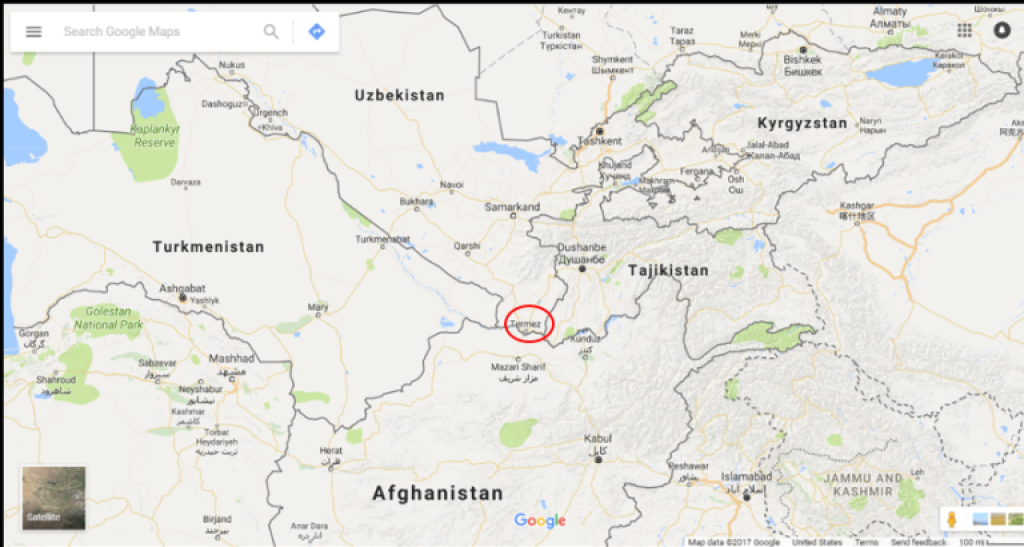
Imam al-Tirmidhi’s full name is Muhammad ibn Isa ibn Sawrah ibn Musa ibn al-Dahhak, al-Sulami al-Tirmidhi, and he is commonly referred to by his teknonym (kunyah), Abu `Eesā. He was born in the year 209 AH (824 CE) in the city of Termez, located in present-day Uzbekistan. Termez is a historically significant city, known since the time of Alexander the Great. It is now a bustling commercial hub with a population of around 150,000.
Historical Context
Imam Abu Isa Muhammad at-Tirmidhi, during the Abbasid Caliphate, rose in an era when Islamic orthodoxy was influenced by Greek philosophical thought, especially under the reign of Caliph Ma’mun al-Rashid. This period saw the rise of the Mu’tazila, a rationalist Islamic school that emphasized logic, often at odds with orthodox interpretations. Scholars like Imam Tirmidhi, motivated by a commitment to safeguard Shariah, focused on preserving authentic hadith to counter these ideological shifts, which greatly shaped his scholarship and dedication to protecting prophetic tradition.
Family Background
Al-Tirmidhi’s family originally hailed from Merv but had settled in Termez generations before his birth. This family background, rich in scholarly tradition, played a role in shaping his intellectual pursuits. Notably, he was not only known for his own scholarship but also for being part of a community that valued knowledge.
Education and Early Influences
Educational Foundation
Growing up immersed in learning, Imam Tirmidhi’s foundational education began at home, setting the stage for his future scholarship. During his formative years, the Abbasid Caliphate encouraged intellectual pursuits, including Greek philosophy, which introduced challenges to traditional Islamic perspectives. This atmosphere of philosophical exploration prompted the emergence of dedicated scholars like Imam Tirmidhi, who were committed to preserving and defending Islam’s core teachings against external ideological influences.
Response to Challenges
Imam Tirmidhi’s response to the intellectual climate of his time reflects his dedication to preserving the integrity of the Shariah. The Mutazila school, with its philosophical influences, had gained official endorsement, making opposition complex and risky. In this environment, Imam Tirmidhi allied with scholars committed to safeguarding Islamic orthodoxy. His work was part of an enduring effort initiated by scholars such as Umar bin Abdul Aziz (ra) during the first century, focusing on the compilation and verification of hadith to prevent their loss and ensure the preservation of Islamic teachings.
Thirst For Knowledge
His deep interest in hadith led him to pursue extensive studies in this field, traveling widely to expand his knowledge. He spent significant time in regions like Iraq, Isfahan, Khurasan, as well as in the holy cities of Makkah and Medina, where he learned from esteemed scholars and refined his expertise across various Islamic sciences. He learned from over 200 scholars, acquiring a wealth of knowledge about the teachings and sayings of the Prophet Muhammad (peace be upon him).
Imam al-Tirmidhi was diligent in his pursuit of hadith, seizing every opportunity to collect and study them. He meticulously recorded the hadiths he learned from his teachers and narrators, whether during his travels or at home, demonstrating his commitment to preserving Islamic knowledge. This practice contributed significantly to his comprehensive understanding of hadith literature and helped establish his reputation as a leading scholar in the field.
His Teachers
As a child, Imam al-Tirmidhi displayed remarkable intelligence, energy, and a unique aptitude for learning. It is known that his first teacher was Muhammad ibn Ja`far al-Qawmasi al-Samnān, who passed away in 221 AH. He studied hadith with numerous prominent scholars of his time, including his primary teacher, Imam Bukhari, as well as Ibrahim ibn Isma`il ibn Yahia, Abu Is-haq At-Tabari, Ibrahim ibn Hatim Al-Harawi, Ibrahim ibn Harun Al-Balkhi, Ibrahim ibn Ya`qub Al-Jawjajani, Muhammad ibn Bashshar ibn Bindar, Muhammad ibn Al-Muthanna, Qutaybah ibn Sa`id Al-Baghlani, `Ali ibn Hajar Al-Mirwazi, Muhammad ibn Isma`il Al-Bukhari, Muslim ibn Al-Hajjaj An-Naysaburi, Ahmad ibn Mani` Al-Baghawi, Mahmud ibn Ghaylan Al-Mirwazi, Abdullah ibn `Abdur-Rahman Ad-Darimi, Is-haq ibn Rahawih and many others.
His Exceptional Memory
Imam al-Tirmidhi was renowned for his exceptional memory, with anecdotes illustrating his remarkable ability to retain hadith.
He once filled two notebooks with hadith from his shaykh and later sought a review, only to discover he had the wrong notebooks. As his shaykh narrated, al-Tirmidhi realized he wasn’t writing anything down, leading the shaykh to question his shame. Al-Tirmidhi explained the mix-up but claimed to have memorized everything. To test him, the shaykh narrated 40 additional hadith, which al-Tirmidhi flawlessly recited from memory. The shaykh marveled, stating, “I’ve never seen anyone like you.“
His Piety
Imam al-Tirmidhi was highly esteemed for his deep piety and reverence for Allah. Known for his ascetic lifestyle, he was often praised by scholars, including his contemporaries, for his humility and fear of Allah. Umar ibn Alak noted that, after Imam Bukhari’s passing, there was no one in Khurasan comparable to Imam Tirmidhi in knowledge, piety, and abstinence (zuhd). His intense devotion led him to weep frequently out of fear of Allah, ultimately causing him to lose his sight later in life.
Scholarly Contributions
Scholarly Praise
“There is no dispute that he (At-Tirmidhi) is the Imam of his age.” Also, he said, “He was one of the leading Imams of hadith.”
- As-Sama`ani
“He (At-Tirmidhi was one of the prominent memorizing Imams (of Hadith) by whom Allah has benefitted Muslims.”
- Al-Hafiz Abu Al-Hajjaj Al-Mizzi
“He was a leading memorizer of hadith, and he was blind. He was one of the well-known proficient scholars of hadith.”
- Abu Al-Fida’
“He was one of the Imams of this matter (Hadith) at his time.”
- Ibn Kathir
“He was one of the prominent memorizing scholars of hadith. Also, he was well-informed of Fiqh.”
- Ibn Al-Athir Al-Jazari
“Muhammad ibn `Isa At-Tirmidhi, the blind memorizer of hadith, is one of the leading scholars of the knowledge of Hadith. He compiled the book Al-Jami`, At-Tawarikh and Al-`Ilal in a proficient and scientific way. He was an example of the memorization of hadith.”
- Abu Sa'd Al-Idrisi
Contribution To Hadith Science
Imam Tirmidhi made significant contributions to the science of hadith, notably through his compilation, Jami at-Tirmidhi. Unlike other collections, his work harmonized styles and methodologies from previous scholars such as al-Bukhari and Muslim, combining rigorous assessment of narrations with explanations suited to juristic needs. His distinct classification of hadith, evaluating discrepancies, authenticity, and narrators, provided a structured resource for Islamic law. By presenting Jami at-Tirmidhi to scholars across regions like Hijaz, Iraq, and Khurasan, he solidified its value, earning widespread scholarly acceptance and admiration.
Relationship with Imam al-Bukhari
Imam al-Tirmidhi and Imam Muslim were both dedicated students of Imam al-Bukhari, with al-Tirmidhi being particularly devoted, frequently quoting al-Bukhari in his own work. While not all of al-Tirmidhi’s narrations are authentic, he clarifies al-Bukhari’s views on many. Despite al-Bukhari’s seniority, he acknowledged benefiting more from al-Tirmidhi. Both scholars were known for their extensive travels and exceptional memories, contributing significantly to the field of hadith.
While it is noted that Imam Muslim may have spent more time with al-Bukhari, al-Tirmidhi’s devotion was evident in his extensive citations of al-Bukhari throughout his own work, Jaami’ al-Tirmidhi.
The Nature of Jaami’ al-Tirmidhi
Imam al-Tirmidhi’s collection, Jaami’ al-Tirmidhi, is distinctive in that it does not claim to contain only authentic hadith. Instead, al-Tirmidhi categorized narrations based on their authenticity and provided insight into al-Bukhari’s perspectives on various narrations. This approach gives readers a broader understanding of the context and evaluation of each hadith.
At-Tirmidhi's Status In Fiqh
Scholar Abu Al-Hasan An-Nadawi credited him as an early pioneer of comparative jurisprudence, recognizing his role in preserving Islamic legal heritage across various schools of thought.
Al-Tirmidhi’s status in fiqh is nuanced; he is viewed as a follower of the people of hadith rather than a strict mujtahid or muqallid.
Ibn Taymiyyah noted –
… As for al-Bukhari and Abu Dawud, they were both imams in fiqh, and both among the people of ijtihad. As for Muslim, al-Tirmidhi, al-Nasa’I, ibn Maajah, ibn Khuzaimah, Abu Ya’la, al-Bazzaar and others, then they were upon the madhab of the people of hadeeth, and not following anyone in specific from the scholars, nor were they from the imams of unrestricted ijtihad, rather, they leaned towards the choices of the champions of hadeeth, like al-Shafi`I, Ahmad, Ishaq, Abu `Ubaid and their contemporaries. And they were all much closer to the school of the Hijaz rather than the school of Iraq. As for Abu Dawud al-Ṭayālisī, then he was older than all of these, in the same generation as Yahya ibn Saeed al-Qattaan, Yazeed ibn Haroon al-Waasiti, AbdurRahman ibn Mahdi, and similar from the generation of Imam Ahmad’s teachers. And none of these ever held back any effort in following the Sunnah. However, some of them inclined towards the Iraqi school, like Wakee’ and Yahya ibn Sa’eed, but there were some who leaned towards the Medani school like AbdurRahman ibn Mahdi. As for al-Daraqutni, then he used to lean towards the Shafi’ school, but he had ijtihad and was from the imams of hadeeth and Sunnah. But his situation was not like that of the hadeeth leaders who came after him and clung to taqleed across the board, except for a small minority you could easily count; because al-Daraqutni was stronger in ijtihad than him, had greater fiqh and more knowledge…
- Imam Ibn Taymiyyah
Many Shafi’i and Hanbali historians claim affiliation of certain imams, like al-Bukhari and al-Nasa’i, to their respective schools. While al-Bukhari is sometimes seen as Shafi’i or Hanbali, he remained distinct in his approach. He visited Imam Ahmad ibn Hanbal multiple times, highlighting his commitment to knowledge. Al-Tirmidhi is noted for adhering to the principles of hadith and presumably followed the creed of the people of hadith, emphasizing his scholarly independence within the Islamic legal tradition.
Scholarly Methodology
Al-Tirmidhi’s methodology in hadith collection involved rigorous scrutiny and memorization. He was renowned for his exceptional memory; a story illustrates this well. During a review session with a shaykh, al-Tirmidhi mistakenly brought blank notebooks instead of his written notes. Despite this, he confidently recited the entire content from memory, astonishing his teacher. This anecdote highlights his mastery in hadith memorization and understanding.
Recognition and Titles
Al-Tirmidhi earned the title of al-Hafiz. His scholarly peers recognized his remarkable abilities, and his contributions to hadith literature solidified his status as a leading authority in the field.
mam al-Tirmidhi is highly regarded as a trusted hadith scholar and recognized as a Master (Hafiz) in hadith studies which is reserved for scholars who have memorized a vast number of hadith, often exceeding 100,000, complete with their chains of narration, revered for his extensive contributions to Islamic knowledge. While some scholars have viewed his authentication methods as somewhat lenient, the vast majority of his evaluations remain reliable, with few exceptions.
Shah Wali Allah acknowledged Imam al-Tirmidhi as an independent jurist (mujtahid), with others suggesting his leanings toward Shafi’i jurisprudence. His works are fundamental to hadith studies and offer a unique perspective in hadith authentication.
His students
Imam Tirmidhi, known for his profound scholarship, attracted a diverse body of students from across the Islamic world. Among his most notable students were Haytham ibn Kulayb al-Shami, Ahmad ibn AbdAllah al-Marwazi, and Ahmad ibn Yusuf al-Nasafi. These students went on to spread Imam Tirmidhi’s teachings and methodology in hadith science, helping to solidify his legacy across regions.
Final Years and Legacy
Imam al-Tirmidhi passed away on the evening of 13 Rajab 279 AH (October 8, 892 CE) near Termez. Although his gravesite is not known today, his legacy continues through his works, which are studied by scholars and students of knowledge across the globe. His influence remains significant in the field of hadith sciences.
His Works
Imam Tirmidhi’s scholarship produced some of the most influential works in hadith literature:
- Al-Jami’ al-Sunan – Imam al-Tirmidhi authored over ten works, with Al-Jami
as-Sahih (also known as Jamiat-Tirmidhi) being the most significant. This collection is part of the six major hadith compilations and has various names, including “Reliable Collection” and “The Great Collection.” - Shama’il al-Muhammadiyya – One of Imam al-Tirmidhi’s notable works is Shama’il Muhammadiyah, also known as Shama’il at-Tirmidhi and Ash-Shama‘il An-Nabawiyyah wa Al-Fada‘il Al-Mustafawiyyah. This compilation focuses on the characteristics and virtues of the Prophet Muhammad ﷺ, providing insights into his personality and behavior through authentic hadiths. This work is highly regarded for its detailed portrayal of the Prophet’s life and attributes.
- Kitab al-Ilal al-Kabir and Al-Ilal al-Saghir – Critical texts on the science of hadith authenticity and narrator analysis.
- Al-Asmaa‘ wa Al-Kuna
- Kitaab Zhud
- Kitaab Tareeq
He also reportedly authored an Islamic history and a Qur’anic exegesis, though these are now extinct.
Commentaries on Jami’ al-Tirmidhi
Imam Tirmidhi’s Jami’ al-Tirmidhi has inspired numerous commentaries due to its significant impact on hadith scholarship. Here are some notable commentaries:
A’ridat al-Ahwazi: A comprehensive commentary by Qadi Abu Bakr ibn al-Arabi, consisting of about seven volumes. It’s renowned for its scholarly depth and has influenced later scholars, including Ibn Hajar al-Asqalani.
Qut al-Mughtadhi: This concise commentary, authored by Imam Hafiz Jalal al-Din Suyuti, is appreciated for its clarity and brevity.
Tuhfat al-Ahwazi: Written by Abdur-Rahman Mubarakfuri, this ten-volume work provides detailed analysis but has been critiqued for its bias against Hanafism. The first volume focuses on hadith sciences and Tirmidhi’s methodology.
Al-Kawkab al-Durri ala Jami’ al-Tirmidhi: Compiled by Shaykh Mawlana Yahya al-Kandahlawi and includes glosses by his son, Shaykh Muhammad Zakariyya al-Kandahlawi. This two-volume work is based on the teachings of Shaykh Rashid Ahmad Gangohi.
Ma’arif al-Sunan: Authored by Shaykh Yusuf al-Binnori, this six-volume commentary covers various chapters of Jami’ al-Tirmidhi, though it remains incomplete, stopping at the chapter on Hajj.
These commentaries collectively enrich the understanding of Tirmidhi’s work and provide insights into the broader field of hadith studies.
Importance of Studying Jaami’ al-Tirmidhi
Comprehensive Insight into Hadith
Studying Jaami’ al-Tirmidhi is crucial for several reasons. First and foremost, it provides comprehensive insight into hadith literature, offering a range of narrations that include authentic, weak, and fabricated reports. This diversity allows students and scholars to understand the complexities of hadith evaluation and the principles that underpin it.
Understanding Islamic Jurisprudence
Al-Tirmidhi’s work is also significant in the context of Islamic jurisprudence (fiqh). Many scholars refer to his collection to derive legal rulings and to understand the principles of Islamic law. His organization of hadith according to various themes aids in the study of jurisprudential issues, making it an invaluable resource for both scholars and laypersons.
Historical Context and Preservation
The preservation of hadith through scholars like al-Tirmidhi is vital for maintaining the integrity of Islamic teachings. His efforts to document and authenticate the sayings of the Prophet (peace be upon him) have ensured that subsequent generations have access to these teachings, fostering a deeper understanding of Islam’s foundational texts.
Encouragement of Critical Thinking
Al-Tirmidhi’s methodology encourages critical thinking and analytical skills among students of knowledge. By providing commentary on the authenticity of narrations and discussing the opinions of other scholars, he fosters a spirit of inquiry and scholarly debate. This is essential for the development of a robust intellectual tradition within Islam.
Bridging the Gap Between Scholars and Students
Jaami’ al-Tirmidhi serves as a bridge between scholarly discourse and the broader Muslim community. It allows students and practitioners to engage with the hadith literature in a structured manner, promoting accessibility to Islamic knowledge. His clear categorization and commentary make it easier for individuals to understand the teachings of the Prophet (peace be upon him).
Reviving Interest in Hadith Sciences
In contemporary times, studying al-Tirmidhi’s work can revive interest in hadith sciences among new generations of scholars. As the complexities of hadith classification and authentication become increasingly relevant, Jaami’ al-Tirmidhi remains a cornerstone text that provides essential knowledge and guidance.
Criticism
Al-Tirmidhi’s approach to evaluating narrators is marked by a degree of leniency. He occasionally categorizes fabricators as simply weak and refers to questionable transmitters as acceptable or good. While some later scholars argue that his leniency was primarily when he diverged from his contemporaries, he generally aligns with their assessments. This leniency has attracted criticism regarding his collection, though he often clarifies the weaknesses of certain narrations.
Misconceptions About Imam Tirmidhi and His Legacy
Here’s a deeper look into some common misconceptions about Imam Tirmidhi and his legacy:
Scope of Influence Beyond Hadith: While Imam Tirmidhi is often recognized mainly for his contributions to hadith, his work also significantly impacted Islamic jurisprudence, theology, and spirituality.
Reach Beyond Central Asia: Born in Tirmidh, his teachings and scholarship had a global reach, influencing Islamic thought in regions far beyond his birthplace.
Approach to Religious Practice: Imam Tirmidhi advocated for moderation and balance, countering misconceptions that he promoted rigidity in religious practice.
Diversity of Sources: Critics sometimes wrongly assume he relied heavily on a limited pool of narrators. However, he was meticulous about ensuring rigorous standards of authentication and verification.
Methodology of Compilation: Some view his compilation style as overly innovative, but in reality, he adhered to established hadith principles while making the text accessible for scholars and jurists.
Misjudged Sectarian Bias: Imam Tirmidhi’s works are respected across different Islamic schools of thought, dispelling claims of sectarian leaning.
Enduring Relevance: Despite being centuries old, his teachings remain pertinent today, with principles that continue to resonate and guide Islamic scholarship and practice.
FAQs about Imam Tirmidhi
How did Imam Tirmidhi verify the authenticity of hadiths?
Imam Tirmidhi employed rigorous criteria, assessing narrators’ reliability and cross-referencing with existing sources to ensure authenticity.What distinguishes Al-Jami’ al-Sahih from other compilations?
His work categorizes hadiths by reliability, aiding scholars in identifying authenticity levels effectively.How did Imam Tirmidhi influence Islamic jurisprudence?
His collection serves as a foundational source for jurisprudential debates by providing authenticated traditions.Did he face challenges during his scholarly career?
Yes, he encountered significant obstacles, but his commitment to preserving authentic knowledge was steadfast.Why is his methodology a standard in hadith scholarship?
His adherence to strict authentication principles set a precedent in hadith categorization and study.What relevance do his teachings hold today?
His insights remain pertinent, offering guidance for Muslims on contemporary issues while upholding Islamic principles.How can one benefit from his legacy?
Studying his works and adopting his balanced approach to faith can deepen understanding and spiritual practice in Islam.
Conclusion
Imam al-Tirmidhi is a towering figure in the field of hadith scholarship, with his contributions continuing to resonate within the Muslim community today. His collection, Jaami’ al-Tirmidhi, not only preserves the teachings of the Prophet Muhammad (peace be upon him) but also serves as an essential resource for understanding the principles of Islamic jurisprudence, ethics, and spirituality. By studying al-Tirmidhi’s work, individuals can deepen their connection to the rich intellectual tradition of Islam and contribute to its ongoing scholarship. In a world where misinformation can easily spread, the rigorous methodology exemplified by al-Tirmidhi underscores the importance of authenticity in religious knowledge.
15 Responses
What impressed me most about Imam At-Tirmidhi was his incredible photographic memory and meticulous attention to detail. It shows that true scholarship requires not just effort, but pure intentions and precision.
A concise yet comprehensive overview of one of Islam’s greatest Hadith masterminds. Articles like this are essential for helping young Muslims connect with our rich scholarly heritage. Highly recommended read!
Excellent piece of content! The structure is clear, the flow is engaging, and the subject matter is invaluable. Please keep publishing more biographies of the great scholars of Islam.
Such an uplifting article. Reading about the perseverance of classical scholars always puts our daily struggles into perspective. May Allah grant us a fraction of his devotion to learning.
I learned a lot from this summary! It’s easy to read Hadith books today without realizing the immense sacrifices scholars like Imam At-Tirmidhi made to collect them. Thank you for this reminder.
It’s amazing to see how he studied under great giants like Imam al-Bukhari and then left behind a legacy that still guides the Ummah over a thousand years later. Great research and presentation!
This was a fantastic read. His genius in categorizing Hadith—especially distinguishing Hasan narrations—made Islamic scholarship so much clearer for generations that followed. Excellent article!
His deep love for the Prophet (ﷺ), evident in works like Shama’il Muhammadiyyah, is truly heartwarming. Thank you for presenting his biography in such an easy-to-read and engaging format.
Beyond his incredible scholarship, Imam At-Tirmidhi’s piety and fear of Allah (Taqwa) are deeply moving. Reading about his life serves as a strong reminder that knowledge must always be paired with humility.
Very well-written article! It’s incredible how much dedication and travel went into compiling Jami’ at-Tirmidhi. May Allah elevate his status and reward everyone involved in sharing his legacy.
SubhanAllah, what an inspiring account of Imam At-Tirmidhi’s life. His devotion to seeking knowledge and preserving Hadith is a true example for all of us today. Jazak Allah Khair for writing this!
Extremely informative article. Imam At-Tirmidhi’s introduction of distinct Hadith classifications (like Hasan) revolutionized Islamic jurisprudence and study. It’s inspiring to see how his rigorous standards and deep love for authentic knowledge shaped Islamic history. Great work on this piece!
A beautiful read! Learning about Imam At-Tirmidhi’s immense piety, exceptional memory, and scholarly journey is truly humbling. Thank you for putting together such a clear and beneficial biography.
Jazak Allah Khair for this well-structured and inspiring overview of Imam At-Tirmidhi’s life. What strikes me most is his extraordinary dedication to preserving the Sunnah despite losing his sight later in life. His work on Jami’ at-Tirmidhi and the unique Shama’il Muhammadiyyah continues to draw millions closer to the character of the Prophet (ﷺ). May Allah reward the author for sharing this knowledge!
I think the admin of this site is in fact working hard in support of his website,
because here every information is quality based stuff.