

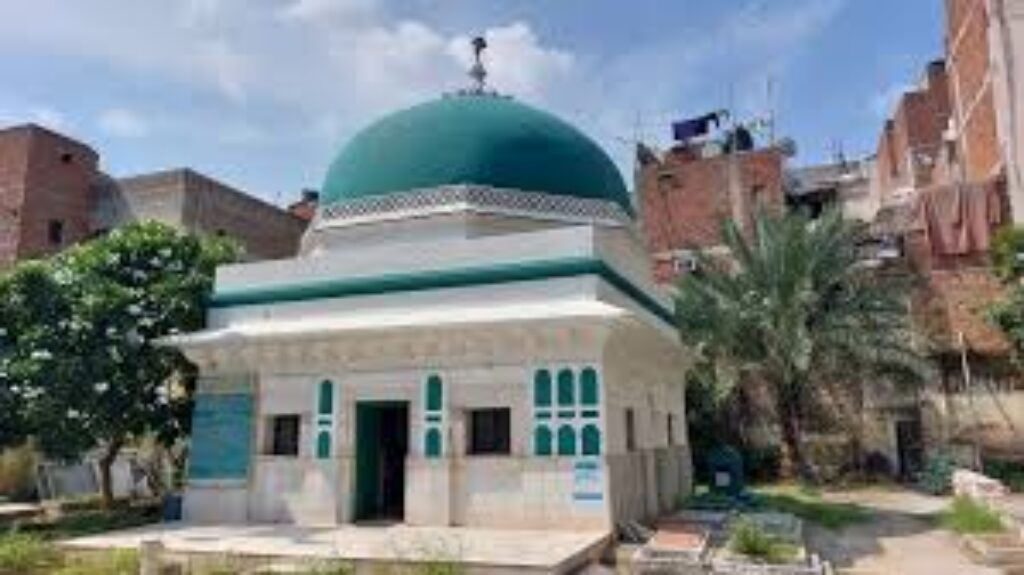
Abdul Haq Dehlvi, revered as Shaykh Abdul Haq Muhaddith Dehlawi or simply Abdul Haq Dehlavi, is a monumental figure in Islamic scholarship, renowned for reviving Hadith studies in the Indian subcontinent during the 16th and 17th centuries. Known as the “Muhaddis Dehlvi,” he played a pivotal role in balancing Hadith sciences with Sufi spirituality during the Mughal era, when mysticism often overshadowed formal Prophetic traditions.
Table of Contents
ToggleThis biography explores his early life, education, scholarly contributions, and enduring legacy, tailored for readers searching for Abdul Haq Dehlavi’s life story, Abdul Haq Dehlavi’s books, or his impact on Indian Islam. His works, written primarily in Persian, bridged classical Islamic knowledge with the cultural context of Mughal India, making him a cornerstone of South Asian Islamic history.
Abdul Haq Dehlvi’s journey from a young scholar in Delhi to a celebrated Muhaddith exemplifies intellectual rigor and spiritual devotion. His efforts to make Hadith accessible and combat religious innovations left a lasting mark on Islamic scholarship. Whether you’re researching Abdul Haq Dehlawi’s contributions or the legacy of Muhaddis Dehlvi, this article provides a comprehensive, engaging guide to his life and achievements.
Early Life and Family Background of Abdul Haq Dehlvi
Abdul Haq Dehlvi was born in 1551 CE (958 AH) in Delhi, the vibrant heart of the Mughal Empire under Emperor Humayun. The city, a hub of learning and cultural exchange, shaped his formative years. His full name, Shaykh Abdul Haq ibn Saifuddin al-Bukhari al-Dehlawi, reflects his Bukhari lineage, tracing back to Central Asian scholars who migrated to India. The “Dehlawi” suffix, sometimes written as Dehlvi, signifies his deep-rooted connection to Delhi, his birthplace and lifelong base.
Raised in a scholarly and Sufi family, Abdul Haq Dehlavi was immersed in religious education from a young age. His father, Shaykh Saifuddin, a respected Qadiri Sufi and scholar, nurtured his early interest in the Quran and Hadith. Historical accounts, including Abdul Haq Dehlavi’s own writings, suggest he memorized the Quran by age 10 and began studying Islamic sciences soon after. The early loss of his father pushed Abdul Haq Dehlawi to pursue knowledge independently, laying the foundation for his future as a leading Muhaddith.
The 16th-century Mughal India, marked by political transitions and cultural synthesis, profoundly influenced Abdul Haq Dehlvi. Delhi’s diverse environment, blending Persian, Turkish, and Indian influences, exposed him to a rich intellectual milieu. This backdrop enabled Abdul Haq Dehlavi to harmonize classical Islamic scholarship with the needs of Indian Muslims, earning him the title Muhaddis Dehlvi.
Education and Teachers of Abdul Haq Dehlvi
Abdul Haq Dehlavi’s education was comprehensive, blending local and international learning. He began his studies in Delhi under prominent ulema, mastering Arabic grammar, logic, and fiqh (Islamic jurisprudence). His thirst for deeper knowledge led him to undertake a transformative journey to Mecca and Medina in his early 20s, where he spent several years studying Hadith under renowned scholars.
In the Hijaz, Abdul Haq Dehlavi trained under luminaries like Shaykh Abdul Wahhab al-Mutahhir, a distinguished Muhaddith, and Shaykh Ali ibn Ahmad al-Muqri, from whom he received ijazah (authorization to teach) in Hadith and other Islamic sciences. Immersed in the Prophet’s Mosque in Medina, he studied core Hadith collections like Sahih al-Bukhari and Sahih Muslim, honing his expertise as a Muhaddis Dehlvi. These years in Arabia were pivotal, shaping his rigorous approach to Hadith verification.
Upon returning to India, Abdul Haq Dehlawi continued his education under Indian scholars, including those from the Qadiri and Naqshbandi Sufi orders. His training balanced exoteric (Ilm-e-Zahir) and esoteric (Ilm-e-Batin) knowledge, a hallmark of his later teachings. By his 30s, Abdul Haq Dehlavi had become a teacher, attracting students across the Mughal Empire and establishing himself as a leading Muhaddith Dehlawi.
Contributions and Works of Abdul Haq Dehlvi
Abdul Haq Dehlvi’s scholarly output is remarkable, with over 100 works attributed to him, many of which remain essential in Islamic studies. His most celebrated book, Akhbar al-Akhyar fi Asrar al-Abrar (News of the Pious on the Secrets of the Righteous), is a seminal biography of 255 Indian Sufi saints, blending Hadith-based verification with Sufi narratives. Written in Persian, it remains a key source for understanding Indian Sufism, showcasing Abdul Haq Dehlawi’s ability to harmonize orthodoxy and spirituality.
Another significant work is Sharh Sifat al-Jannah (Commentary on the Attributes of Paradise), a detailed exegesis of Hadith about the afterlife, reflecting his expertise as a Muhaddis Dehlvi. His Lama’at al-Tanqih fi Sharh Mishkat al-Masabih, a commentary on the Hadith collection Mishkat al-Masabih, clarified complex traditions for Indian scholars, making Hadith accessible in Persian. Madarij al-Nubuwwah (Stages of Prophethood) defended the Prophet’s status against heterodox views, reinforcing Sunni orthodoxy.
Abdul Haq Dehlavi established madrasas in Delhi, training thousands in Hadith and fiqh. His translations of Arabic texts into Persian democratized Islamic knowledge, earning him widespread respect as Muhaddith Dehlawi. His letters, compiled in Makatib, offer insights into his ethical and spiritual guidance, emphasizing balance between Sharia and Tasawwuf.
Role in Hadith Revival and Islamic Scholarship
Abdul Haq Dehlvi is best known for reviving Hadith studies in India, earning the title Muhaddis Dehlvi. During the Mughal era, Sufi practices often overshadowed Hadith scholarship, but Abdul Haq Dehlavi emphasized authentic chains of narration (isnad) to combat bid’ah (innovations). His training in Hijaz under leading Muhaddithin equipped him to introduce rigorous Hadith methodologies to India.
His commentaries, such as Ash’at al-Lama’at fi Sharh al-Mishkat, provided critical analysis, influencing later scholars like Shah Waliullah Dehlawi. Abdul Haq Dehlavi’s madrasa in Delhi became a hub for Hadith, producing scholars who spread his methods across the subcontinent. His work countered Shia influences and heterodox practices, promoting a balanced Sunni orthodoxy that resonated with Indian Muslims, solidifying his legacy as Muhaddith Dehlawi.
Travels and Influences of Abdul Haq Dehlvi
Abdul Haq Dehlavi’s travels were focused but profoundly impactful. His primary journey was to Mecca and Medina in the 1580s, where he performed Hajj multiple times and studied for nearly a decade. In Mecca, he engaged with global scholars, enriching his perspective as a Muhaddis Dehlvi. His time in Medina deepened his connection to Prophetic traditions, shaping his scholarly rigor.
Back in India, Abdul Haq Dehlavi corresponded with scholars in Persia and Central Asia, blending their insights with Indian traditions. Under Mughal emperors Akbar and Jahangir, he navigated court debates, advocating for Sharia-compliant practices. These experiences shaped his inclusive yet orthodox approach, making Abdul Haq Dehlawi a bridge between Arabian and Indian Islamic traditions.
Death and Legacy of Abdul Haq Dehlvi
Abdul Haq Dehlvi passed away in 1642 CE (1052 AH) in Delhi at the age of 91, buried near the shrine of Nizamuddin Auliya. His death marked the end of a remarkable era, but his legacy as Muhaddith Dehlawi endured through his works and students.
Abdul Haq Dehlawi’s influence on Indian Islam is profound. His revival of Hadith studies laid the groundwork for movements like Deoband and inspired scholars like Shah Abdul Aziz. His books remain part of madrasa curricula in India and Pakistan, where he is revered as Muhaddis Dehlvi. His emphasis on Persian as a scholarly language preserved cultural ties, while his balanced approach to Sufism and orthodoxy continues to guide modern Islamic thought.
Frequently Asked Questions (FAQ)
Who was Abdul Haq Dehlvi?
Abdul Haq Dehlvi, also known as Muhaddith Dehlawi, was a 16th-century Islamic scholar who revived Hadith studies in India.
What was Abdul Haq Dehlawi’s early life like?
Born in 1551 in Delhi, he grew up in a scholarly Sufi family, memorizing the Quran early and pursuing rigorous education after his father’s death.
Where did Abdul Haq Dehlvi study?
He studied in Delhi and spent years in Mecca and Medina under renowned Muhaddithin, mastering Hadith and Islamic sciences.
What are Abdul Haq Dehlawi’s major works?
His key works include Akhbar al-Akhyar, Sharh Mishkat al-Masabih, and Madarij al-Nubuwwah, vital for Hadith and Sufi studies.
How did Abdul Haq Dehlvi revive Hadith studies?
As a Muhaddis, Abdul Haqq Dehlvi emphasized authentic Hadith, authored commentaries, and established madrasas to counter innovations.
What influenced Abdul Haq Dehlawi’s scholarship?
His travels to Hijaz and engagement with Qadiri and Naqshbandi Sufism balanced his orthodox Hadith approach with spirituality.
When did Abdul Haqq Dehlvi die?
He died in 1642 in Delhi, buried near Nizamuddin Auliya’s shrine.
What is Abdul Haq Dehlawi’s legacy?
As a Muhaddith, Abdul Haqq Dehlawi shaped Indian Islam through Hadith revival, influencing modern scholarship and promoting balanced orthodoxy.
Conclusion
Abdul Haq Dehlvi’s life is a testament to scholarly excellence and spiritual balance. From his Delhi roots to his transformative years in Hijaz, he revived Hadith studies, leaving a legacy as Muhaddis Dehlvi that continues to inspire. His works, blending rigorous scholarship with Sufi ethics, remain relevant, guiding students and scholars in India, Pakistan, and beyond.
References
- Abdul Haq Muhaddith Dehlawi. Akhbar al-Akhyar. Urdu translation by Subhan Mahmud, 2005.
- Tazkirat al-Ulama by Mirza Muhammad Akhtar, 1890.
- Annemarie Schimmel. Islam in the Indian Subcontinent, Brill, 1980.
- André Wink. Al-Hind: The Making of the Indo-Islamic World, Brill, 1990.
- Yohanan Friedmann. Shaykh Ahmad Sirhindi, Oxford University Press, 2000.
- Makatib-e-Abdul Haq, compiled by Muhammad Nizamuddin, 1965.
- Carl W. Ernst. Sufism: An Introduction, Shambhala, 2011.
- Peter Hardy. Historians of Medieval India, Meenakshi Prakashan, 1968.
- “Abdul Haq Dehlvi,” Encyclopaedia of Islam, Brill, 2025.
- H.M. Elliot and John Dowson. The History of India as Told by Its Own Historians, 1867.
One Response
Undoubtedly he was one of the best person in the Islamic history of Indian subcontinent. He fueled several revival movement.