

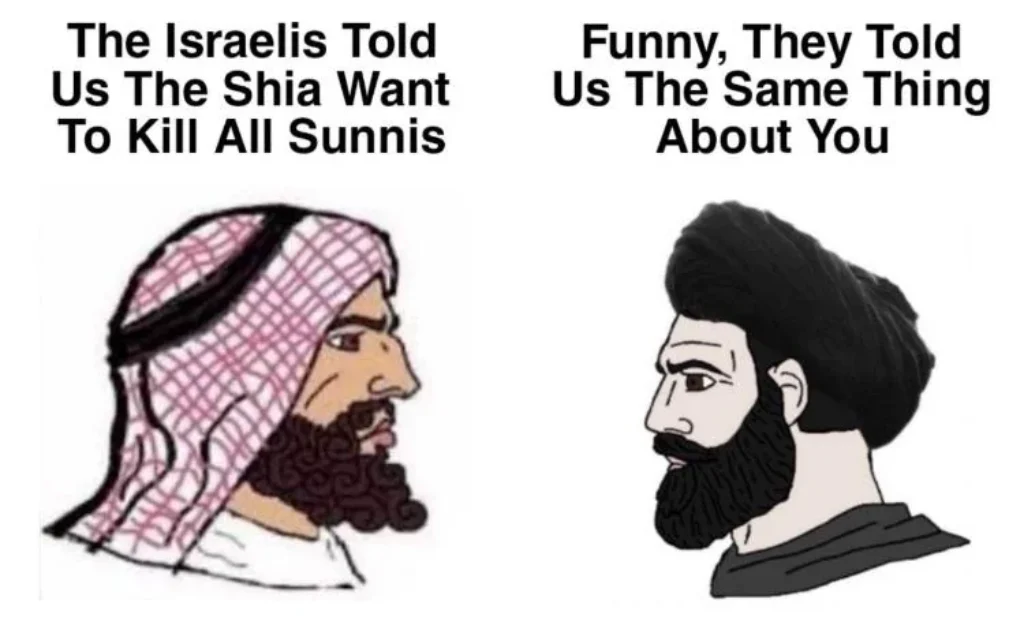
The topic of whether Shias “hate” or curse the Sahaba (Companions of Prophet Muhammad, PBUH) is a deeply divisive issue in Shia-Sunni relations, often fueled by historical, theological, and cultural differences. Sunnis generally revere all Sahaba as exemplary figures. At the same time, Shias emphasize loyalty to the Ahl al-Bayt (family of the Prophet) and criticize certain Sahaba for alleged political actions after the Prophet’s death, such as the Saqifa event.
Table of Contents
ToggleThis has led to accusations that Shias inherently hate or curse the Sahaba, particularly Abu Bakr, Umar, Uthman, and Aisha (RA). However, mainstream Shia scholarship prohibits public cursing and promotes unity and harmony. This article examines the claim based on evidence from reliable sources, including scholarly fatwas, historical texts, and online discussions, to provide a balanced verification.
The Mainstream Shia Beliefs About the Sahaba
Twelver Shia beliefs about the Sahaba emphasize loyalty to the Ahl al-Bayt, particularly Imam Ali, whom they view as the divinely appointed successor (imamah) based on events like Ghadir Khumm, as narrated in a shia hadith book named Usul al-Kafi (Vol. 1, p. 228): “The Messenger of Allah said, ‘Whomever I am his master, Ali is his master.’”
Shias honor Sahaba like Salman al-Farsi, Abu Dharr al-Ghifari, and Ammar ibn Yasir and others for supporting Ali during conflicts like the Battle of Jamal, viewing them as righteous per Quranic praise for loyal Muhajirun and Ansar (Surah Al-Tawbah 9:100). However, they criticize Abu Bakr, Umar, and Uthman for the Saqifa event (632 CE), where Ali’s leadership was allegedly usurped, with Bihar al-Anwar (Vol. 29, p. 137) [another shia hadith book] narrating: “They [certain Sahaba] gathered at Saqifa and appointed one among themselves, neglecting the Prophet’s command.”
Aisha is criticized for leading the Battle of Jamal against Ali, and Muawiyah for opposing him at Siffin and cursing Ali from pulpits, as noted in Bihar al-Anwar (Vol. 33, p. 22): “Muawiyah ordered the cursing of Ali in every mosque.”
Mainstream scholars reject extreme narrations (e.g., calling Sahaba apostates) as weak, with only 40% of Usul al-Kafi deemed reliable. The principle of tabarra (disavowal) targets injustice, not personal hatred, but public cursing is forbidden by Ayatollah Sistani, who states in Rulings on Unity (al-islam.org): “Cursing the Sahaba is against the teachings of the Ahl al-Bayt and prohibited if it causes division.”
Ayatollah Khamenei’s 2010 fatwa (khamenei.ir) declares: “Insulting the symbols of Sunni brothers, including the Sahaba, is haram.” Imam Ali himself discouraged vilification, saying in Nahj al-Balagha (Sermon 110): “Do not curse people, for they are creatures of Allah.” Cultural practices like chanting “lanat” in Muharram processions are localized (e.g., Pakistan, India) and not universal, with modern Shias favoring unity over division.
The actual Shia position on the Sahaba, as articulated by scholars, rejects blanket rejection or blind reverence, emphasizing evaluation based on the Quran, Sunnah, and history. Shia books are replete with chapters praising the Sahaba of Rasulullah (s), but respect is earned through love for the Ahl al-Bayt and alignment with divine truth.
Shia scholar Sayyid Asad Haider, in al Sahabeeyat fi Nazhar Shi’a (p. 32, printed in Egypt), states: “The Shi’a of the Ahl’ul bayt respect Rasulullah’s Sahaba, they do not play down respect for them, but when following the life of Rasulullah (s) they stress that the Shari’a applies equally to Sahaba and non Sahaba – the Sahaba’s position and status is in accordance with their deeds and actions.”
Further, Shia scholar Sharfuddin al-Mousawi in Ajwebat Masail Jarallah (pp. 14-16) elaborates:
Whoever researches our view with regard to the sahaba will find it the most moderate of views. We neither go to extremes in this regard as the ghulat have done, labelling them all as apostates, nor do we go to extremes in accepting them as trusted authorities as most [Sunni] Muslims have done. Those who attribute their perfection, as well as those who go to the opposite extreme and label them as apostates, are all in the same box. …………..’
But as far as we are concerned, although we regard keeping company with the Prophet as a great honor, it, as is, does not render one infallible. Like all other men, the sahaba included equitable persons who are their scholars and greatest men, whereas some of them are hypocrites who committed crimes.
The condition of some of them is unknown; so, we rely on the equitable ones among them and accept them as our masters in the life of this world as well as in the life to come. As for those who oppressed the wasi and the Prophet’s brother, as well as all those who committed crimes such as Hind’s son [Abu Sufyan], the son of the genius, the son of “the blue woman,” the son of Uqbah, the son of Arta’a, etc., and their likes, these have nothing to be honored for, nor does their hadith hold water. It is of an undecided nature, and we have to carefully scrutinize it.
Such is our view with regard to the sahaba who narrate hadith. The Qur’an and the Sunnah are our argument to pack this view as explained wherever appropriate in our books that deal with the basics of jurisprudence. But the majority of Muslims have gone too far in sanctifying the hadith they hear from any sahabi, so much so that they swayed from moderation and sought their arguments from those who are good as well as from those who are bad, blindly emulating every Muslim individual who had heard or seen the Prophet. They resented others who differed from them in going to such extremes and went beyond all limits in denouncing them.
“How intense their denunciation of us when they find us rejecting the hadith of many sahaba whose integrity we publicly challenge or whose condition is not fully ascertained! While doing so, we simply follow the binding legislative obligation in verifying religious facts and looking for authentic Prophetic legacy.
“It is for this reason that they cast doubt about us, piling their accusations on us, charging us with unfounded charges, vying with one another to remain in ignorance about us. Had they recalled their wisdom and consulted the bases of knowledge and scholarship, they would have come to know that equity as a basic ingredient in all the sahaba cannot be proven. Had they delved in depth into the meanings of the Qur’an, they would have found it full of references to a number of sahabi hypocrites. Suffices you, for example, Surat al-Tawbah and Surat al-Ahzab.
This moderate stance underscores that Shias acknowledge the Sahaba’s sacrifices but evaluate them against divine criteria, avoiding extremes of blind reverence or total rejection.
Sunni Scholars on Cursing the Sahaba
1. Imam Ahmad ibn Hanbal (d. 241H)
📖 al-Sunnah of al-Khallāl (d. 311H), vol. 3, p. 493:
حدثني عبد الملك بن عبد الحميد الميموني قال: سمعت أبا عبد الله – يعني أحمد بن حنبل – يقول:
“إذا شتم الرجل أبا بكر أو عمر أو عائشة: ما أراه على الإسلام.”
Translation:
ʿAbd al-Malik ibn ʿAbd al-Ḥamīd al-Maymūnī said: I heard Abū ʿAbdillāh (Aḥmad ibn Ḥanbal) say:
“If a man curses Abū Bakr or ʿUmar or ʿĀʾishah, I do not consider him to be upon Islam.”
The authenticity of this narration is generally accepted among Sunni scholars, and it reflects Imam Ahmad’s strong stance on the respect and honor due to the Prophet’s companions.
Context and Nuance
Imam Ahmad ibn Hanbal was known for his strict adherence to the Sunnah and his defense of the honor of the Prophet’s companions. While this statement indicates a severe view towards cursing the companions, it’s important to note that Imam Ahmad sometimes distinguished between explicit takfir (declaring someone a disbeliever) and declaring an act to be a major sin, depending on the person’s intent and the context of the insult. Therefore, while he expressed strong disapproval of cursing the companions, he did not necessarily declare every individual who did so to be outside the fold of Islam.
2. Imam al-Tahawi (d. 321H) – Aqidah al-Tahawiyyah
📖 al-ʿAqīdah al-Ṭaḥāwiyyah, section on Companions:
ونحب أصحاب رسول الله ﷺ، ولا نفرط في حب أحد منهم، ولا نتبرأ من أحد منهم، ونبغض من يبغضهم وبغير الخير يذكرهم، ولا نذكرهم إلا بخير، وحبهم دين وإيمان وإحسان، وبغضهم كفر ونفاق وطغيان.
Translation:
“We love the Companions of the Messenger of Allah ﷺ. We do not go to extremes in love with any of them, nor disown any of them. We hate those who hate them, or who mention them with anything but good. We do not mention them except with good. Loving them is religion, faith, and excellence; while hating them is disbelief, hypocrisy, and rebellion.”
- Stated: “We love all of the Companions of the Messenger of Allah ﷺ. We do not mention them except with good. Whoever speaks ill of them is misguided, not upon the truth.”
- Shows that reviling Sahaba is deviation, but he does not declare blanket takfir.
3. Imam al-Nawawi (d. 676H)
📖 Sharḥ Ṣaḥīḥ Muslim, under the chapter “Do not revile the Companions” (ḥadīth 2541):
قال القاضي عياض: وذهب كثير من العلماء إلى أن من سب الصحابة فسق، ولا يكفر إلا إن استحل ذلك. وقال بعضهم: يكفر مطلقا. وسبب الخلاف أن السب في اللغة الشتم والتعيير، وقد يكون بحق، وقد يكون بباطل. وأما من سبهم سبا يقدح في دينهم وعدالتهم فلا شك في كفره.
Nawawī comments:
“Cursing the Ṣaḥābah is among the gravest sins. The scholars differed: many said the one who curses them is a fāsiq (immoral sinner), not a kāfir unless he considers it ḥalāl. Some said he is a kāfir absolutely. The reason for the difference is that sabb (reviling) can mean a simple insult, or it can mean an accusation against their religion and integrity. Whoever insults them in a way that attacks their religion and uprightness, there is no doubt about his kufr.”
In short:
- “Cursing the Sahaba undoubtedly is among the gravest of sins.
- If one curses all the Sahaba, or declares them disbelievers, then he himself becomes a disbeliever (Kafir).
- If one curses a specific Companion, such as Abu Bakr or Umar, then he is close to disbelief, but takfir is not made lightly.”
4. Ibn Hajar al-‘Asqalani (d. 852H)
📖 al-Iṣābah fī Tamyīz al-Ṣaḥābah, vol. 1, p. 17:
اتفق أهل السنة على وجوب الكف عن سب الصحابة … فمن سبهم أو تعرض لهم بما يشينهم، فقد فسق. وقال بعض العلماء: من نسبهم إلى كفر أو فسق فقد كفر.
Translation:
“Ahl al-Sunnah agreed on the obligation of refraining from reviling the Companions … Whoever reviles them or ascribes to them what dishonors them has committed immorality. Some scholars said: Whoever attributes disbelief or immorality to them has himself committed kufr.”
Yet, like Nawawi, he distinguishes between insulting all vs. some, and between disbelief and grave sin.
5. Ibn Taymiyyah (d. 728H)
📖 al-Ṣārim al-Maslūl ʿalā Shātim al-Rasūl, p. 586:
وأما سب الصحابة رضي الله عنهم فأعظم من سب التابعين ومن بعدهم؛ لأنهم خيار الخلق بعد الأنبياء … وأما من سبهم سبا لا يقدح في دينهم فإنه يستحق التعزير البليغ … وأما من سبهم سبا يقدح في دينهم وعدالتهم فهذا كفر.
Translation:
“As for reviling the Companions, it is more severe than reviling the successors or others, for they are the best of creation after the prophets… Whoever reviles them with words not impugning their religion deserves severe disciplinary punishment. But whoever reviles them in a way that attacks their religion and integrity — this is kufr.”
This indicates that Ibn Taymiyyah considered insulting the Companions to be a serious offense, with the severity depending on whether the insult impugns their religious integrity.
He also said,
“And merely abusing some one other than the Prophets does not necessarily make the abuser Kaffir; because some of those who were in the time of the Prophet (i.e. companions) used to abuse one another and none of them was declared kaffir because of this (practice); and (also) because it is not Wajib to have faith particularly in any of the companions; therefore abusing any of them does not detract from the faith in Allah and His books and His messengers and the Last day.
“As Sarimu l masul”, Ibn Taymiyyah, page 579 Published in 1402/1982 by Alam al-Kutub
Contextual Understanding
It’s important to note that Ibn Taymiyyah’s writings were often in response to specific theological disputes of his time. His views on the Companions must be understood within the context of these debates and the prevailing interpretations of Islamic jurisprudence during his era.
While Ibn Taymiyyah did express strong disapproval of insulting the Companions, labeling such individuals as disbelievers was contingent upon the nature and intent of the insult. Therefore, the claim of takfir is partially true but requires a nuanced understanding of Ibn Taymiyyah’s position.
6. Qāḍī ʿIyāḍ (d. 544H)
📖 al-Shifāʾ bi-Taʿrīf Ḥuqūq al-Muṣṭafā, vol. 2, p. 267:
وقد أجمع العلماء على أن سب الصحابة حرام، ومنهم من جعله كفرا. قال مالك: من شتم أحدا من أصحاب محمد ﷺ أبا بكر أو عمر أو عثمان أو معاوية أو عمرو بن العاص، فإن قال: كانوا على ضلال أو كفر، قُتل. وإن شتمهم بغير هذا من مشاتمة الناس نُكِّل نكالا شديدا.
Translation:
“The scholars have agreed that reviling the Companions is ḥarām, and some considered it kufr. Mālik said: Whoever curses any of the Companions of Muḥammad ﷺ — Abū Bakr, ʿUmar, ʿUthmān, Muʿāwiyah, or ʿAmr ibn al-ʿĀṣ — if he says ‘they were upon misguidance or disbelief,’ he is to be killed. But if he insults them with ordinary abuse, he is to be punished severely.
- In Short:
“The scholars agreed that whoever curses the Sahaba or attributes immorality to them has committed disbelief.”
7. Mulla Ali Qari
📖 In his work of Sharh Fiqh al Akbar:
“To abuse Abu Bakr and Umar is NOT Kufr, as Abush Shakur as Salimi has correctly proved in his book, at Tamhid. And it is because the basis of this claim is not proven, nor is its meaning confirmed. It is so because certainly abusing a Muslim is fisq (sin) as is proved by a confirmed hadith, and therefore the Shaykhayn (Abu Bakr and Umar) will be equal to the other (Muslims) in this rule…”
– Mulla Ali Qari, Sharah al Fiqh al Akbar Matba Uthmaaniyya, Istanbul, 1303 page 130 Matba Mujtabai, Delhi, 1348, page 86 Matba Aftab e Hind, India, No date, page 86)
7. Allamah Alaudeen Hanafi
📖 In Durr al Mukhtaar, in his chapter on Imamate, page 72 states:
“And whoever turns in the direction of the Kaaba is not a kaffir. Even the Khwaarij are not kaffir, despite the fact that they deem it halaal to take our lives and property. Similarly those that deem it permissible to curse the Sahaba, and deny the concept of seeing Allah (swt), can not be deemed to be kaffir, since their beliefs are based on interpretation and doubt – the fact that they are not held to be kaffirs is proven by the fact that there testimony is accepted whilst those of Non Muslims is not, this proves that they are Muslim”.
9. Maulana Abdu Hai Lucknawi
📖 In response to a question regarding the Shi’a position on cursing the Sahaba:
“This is bidah (an innovation) not kufr. They believe Ali to be superior to the Shaykhayn some state that it is a duty to curse the opponents of Ali such as Mu’awiya and Ayesha – this is bidah not kufr, it is based on interpretation, in conclusion to deem the Shi’a kaffir on account of their cursing of the Sahaba contradicts the opinions of the Ulema”.
– Mujmoa al Fatawa, Volume 1 pages 3-4
10. Modern Sunni Scholars
| Scholar | Ruling on Reviling Ṣaḥābah | Details / Conditions | Reference |
|---|---|---|---|
| Shaykh Ibn Bāz (d. 1999) | Kufr for cursing Abū Bakr, ʿUmar, ʿĀʾishah, or all Ṣaḥābah | Declared: “Whoever reviles Abū Bakr, ʿUmar, or ʿĀʾishah, or all Companions, is a kāfir.” | Fatāwā Ibn Bāz, 4/233 |
| Shaykh al-Albānī (d. 1999) | He argued that slandering ʿĀʾishah = denial of Qur’an (Sūrah al-Nūr). Reviling Companions is fisq or kufr depending on the wording. | Stated: Slandering ʿĀʾishah = kufr since it rejects the Qur’an. Cursing other Ṣaḥābah = fisq and bidʿah. | Silsilat al-Aḥādīth al-Ṣaḥīḥah, no. 3249 |
| Shaykh Ibn ʿUthaymīn (d. 2001) | Kufr if revilement includes takfīr of Ṣaḥābah | “Whoever declares the Companions kāfir is himself a kāfir. Whoever reviles them generally is a misguided innovator.” | Sharḥ al-ʿAqīdah al-Wāsiṭiyyah, 1/161 |
| Shaykh Yūsuf al-Qaraḍāwī (d. 2022) | Kufr if reviling implies rejecting Qur’an | Kufr if reviling implies rejecting the Qur’an | al-Ṣaḥābah al-Kirām: Manzilatuhum wa-Ḥuqūquhum |
| Shaykh Ṣāliḥ al-Fawzān (b. 1933) | Kufr in major cases; fisq otherwise | “Reviling all the Companions is kufr. Reviling the foremost among them is kufr. Reviling others is fisq.” | Iʿtiqād Ahl al-Sunnah, p. 81 |
Final Consensus Across Eras
- Cursing all the Ṣaḥābah = kufr (ijmāʿ).
- Cursing Abū Bakr, ʿUmar, ʿUthmān, ʿAlī, or ʿĀʾishah (RA) = kufr conditionally according to most; some said fisq close to kufr or gravest sin.
- Cursing other Ṣaḥābah generally = major sin, fisq, and bidʿah, but not necessarily kufr unless it implies rejection of Qur’an/Sunnah.
Do Shia Curse the Companions?
The question of whether Shias curse the Sahaba is central to understanding Shia Sahaba beliefs and the accusation of hatred. Historically, some extremist Shia sects, known as ghulat (exaggerators), practiced open laʿn (invoking curses) on certain Sahaba, particularly those seen as opposing Imam Ali’s rightful leadership, such as Abu Bakr, Umar, and Uthman, as noted in early texts like Rijal Kashi (p. 138), which references ghulat groups labeling most Sahaba as apostates. However, mainstream Twelver Shia (Ithna Ashari) theology, which dominates today, explicitly rejects such extreme views.
Rather than open cursing, mainstream Shias practice tabarra (disavowal), a theological principle rejecting those who wronged the Ahl al-Bayt, as supported by Wasail al-Shia (Vol. 16, p. 178): “Disavow those who wronged the Ahl al-Bayt, but act with wisdom.” Tabarra is symbolic, akin to rejecting Yazid for the Karbala massacre, and does not mandate personal vilification.
Historically, some medieval Shia scholars permitted private laʿn in specific prayers, such as Dua Sanamay Quraysh, which critiques Abu Bakr and Umar, as found in Bihar al-Anwar (Vol. 82, p. 260): “O Allah, curse those who usurped the right of the family of Muhammad.” However, these narrations are often weak, as we mentioned previously, with only 40% of Usul al-Kafi’s hadiths deemed reliable, per Shaykh Mufid in Tashih al-I’tiqad.
Theological Basis:
Shia theology defines Sahaba as those who met the Prophet, believed, and died as Muslims, but loyalty to the Ahl al-Bayt post-Prophet is critical. The Quran (Surah Al-Tawbah 9:100) praises early supporters, but Shias interpret it as not guaranteeing infallibility. Tabarra is a symbolic rejection of oppression (e.g., Yazid at Karbala), not a mandate to curse, as supported by hadiths in Wasail al-Shia (Vol. 16, p. 178): “Disavow those who wronged the Ahl al-Bayt, but act with wisdom.” Criticism focuses on actions like Saqifa or Siffin, not personal hatred, and is rooted in the doctrine of imamah, which prioritizes Ali’s divine appointment over communal caliphate.
Imam Ali himself set a precedent for restraint, as in Nahj al-Balagha (Sermon 110): “Do not curse people, for they are creatures of Allah.”
Cultural practices, such as chanting “lanat” during Muharram processions in regions like Pakistan or India, are not universal and are often criticized by scholars like Sistani, who advocate alternative expressions like charity or recitations.
In reality, mainstream Shias prioritize narrating their historical perspective—centered on Ali’s rightful leadership, as in Usul al-Kafi (Vol. 1, p. 228): “The Messenger of Allah said, ‘Whomever I am his master, Ali is his master’”—without resorting to insults, aligning with modern calls for unity.
Scholarly Support:
- Modern Twelver Shia scholars, responding to sectarian tensions, strongly discourage public cursing to promote Muslim unity. Ayatollah Ali Sistani, in Rulings on Unity (al-islam.org), states: “Cursing the Sahaba contradicts the teachings of the Ahl al-Bayt and is prohibited if it causes division.”
- Ayatollah Khamenei’s 2010 fatwa (khamenei.ir) bans insulting Sunni-revered figures: “Insulting the symbols of Sunni brothers, including the Sahaba, is haram.”
- Shaykh Muhammad ibn Ya’qub al-Kulayni’s Usul al-Kafi (Vol. 1, p. 228) contains narrations critical of some Sahaba, but scholars like Shaykh Mufid in Tashih al-I’tiqad clarify: “Many narrations in al-Kafi are weak; only those aligned with the Quran and reason are accepted.”
- Shia scholar Sharfuddin al-Mousawi in Ajwebat Masail Jarallah (pp. 14-16) emphasizes moderation: “We neither go to extremes as the ghulat have done, labelling them all as apostates, nor do we accept them as trusted authorities as most [Sunni] Muslims have done… As for those who oppressed the wasi and the Prophet’s brother, as well as all those who committed crimes such as Hind’s son [Abu Sufyan]… these have nothing to be honored for, nor does their hadith hold water.”
- Allamah Sayyid Asad Haider in al Sahabeeyat fi Nazhar Shi’a (p. 32) clarifies: “The Shi’a of the Ahl’ul bayt respect Rasulullah’s Sahaba… the Sahaba’s position and status is in accordance with their deeds and actions.”
- The book Tawalla and Tabarra: Do Shia Curse the Companions explains: “Shias revere loyal Sahaba like Salman and Ammar; tabarra is not cursing but rejecting injustice.”
Summary
- It is not accurate to say that “all Shia curse the Sahaba.”
- The Shia position is selective respect: they revere loyal Companions but criticize or hate those they believe opposed Imam Ali and the Ahl al-Bayt, such as Umar Ibn Khattab, Abu Bakr, Aisha, Talha, Zubayr, and more. But they did it as a Tabarra (disavowal) for the acts of injustice (based on their judgment or historical stances).
- Open public cursing was more common historically, but today most mainstream Shia authorities advise against it. But they still allow private cursing.
👉 In short:
- Yes, some Shia groups (especially historically) practiced cursing certain Sahaba, not all of them.
- No, it is not correct to claim that all Shia universally curse the Companions.
Verdict:
The claim is mostly false for mainstream Shias, who prohibit public cursing of all the Sahabah and respect loyal Sahaba. In that sense, not all the Shi’as are kafirs. Only specific fringe or extremist Shias (e.g., ghulat) engaging in ritualistic cursing might be considered deviant by both Shia and Sunni scholars.
Are Shia Kafir for Cursing Sahaba?
This is a sensitive theological question, and scholars have different positions:
Sunni Scholars’ Opinions
- The majority of Sunni scholars: Cursing all Sahaba is kufr because it implies rejecting Islam itself.
- If someone curses some Sahaba out of ignorance or anger, many Sunni scholars say it is a major sin but not automatic disbelief (takfir).
- Imam Ahmad ibn Hanbal, Ibn Taymiyyah, and others: Said whoever curses Abu Bakr or Umar is close to kufr, but takfir (declaring someone kafir) is not made lightly.
Shia Scholars’ Perspective
- Shia do not see themselves as kafir; they consider themselves Muslims, followers of the Qur’an, and lovers of the Prophet’s family.
- They argue that criticism of some Sahaba is a historical disagreement, not disbelief.
Contemporary Sunni Consensus
- Most Sunni scholars today do not declare Shia kafir. Instead, they classify them as Muslims with theological deviations (ahl al-bid‘ah).
- Exceptions: Certain radical Sunni groups (like some Salafi-Wahhabi or extremist factions) label all Shia as kafir, but this is not the mainstream Sunni position.
Conclusion
Accusations of Shia “hate” toward the Sahaba often arise from misunderstandings of historical critiques and selective use of texts. Mainstream Shia authorities, through fatwas and rulings, emphasize unity and prohibit actions that sow division. Both sects share reverence for the Prophet (PBUH) and his true followers, and efforts like the Amman Message promote mutual recognition. Fostering dialogue based on authentic sources can bridge these gaps, reducing sectarianism.
FAQ
1. Do Shia curse the Sahaba (Companions of the Prophet ﷺ)?
- Historically, many Shia sects (especially early Rafidah) openly cursed and insulted some Sahaba, particularly Abu Bakr, Umar, Uthman, and Aisha (RA).
- Modern Twelver Shia (Ithna Ashariyyah) often avoid the word “curse” publicly but still reject the legitimacy of Abu Bakr and Umar, and many Shia texts contain derogatory statements about certain Sahaba.
- Zaydi Shia are generally more respectful toward the Sahaba, closer to Sunnis.
2. What is the Sunni position on cursing the Sahaba?
Sunni Islam holds all Sahaba in high regard, based on the Qur’an and Hadith:
- Allah says:
“And the foremost (Sahaba) among the Muhajirun and Ansar and those who follow them with ihsan – Allah is pleased with them and they are pleased with Him.” (Qur’an 9:100) - The Prophet ﷺ said:
“Do not abuse my Companions. For if one of you were to spend gold equal to Uhud, it would not equal a handful of what they spent.” (Sahih Bukhari, Sahih Muslim)
Thus, reviling the Sahaba contradicts the Qur’an and Sunnah.
3. Did classical Sunni scholars consider cursing the Sahaba kufr?
✅ Yes, in many cases. The scholars distinguished between:
- Cursing all Sahaba → Kufr by consensus.
- (Ibn Taymiyyah, Qadi Iyad, Ibn Hajar)
- Cursing Abu Bakr, Umar, Uthman, Ali, or Aisha (RA) → Many scholars said kufr; others said it is a grave sin close to kufr.
- Imam Ahmad: Whoever curses Abu Bakr, Umar, or Aisha is a kafir.
- Ibn Taymiyyah: Consensus on kufr for one who reviles them.
- Al-Nawawi: Kufr if rejecting their companionship or religion; otherwise, a major sin.
- Cursing other Sahaba generally (not the Khulafa Rashidun) → Severe sin, bid‘ah, punishable, but not automatic kufr unless accompanied by denial of Qur’an or Sunnah.
4. So, are Shia kafir for cursing the Sahaba?
- Sunni scholars differ:
- Some declared Rafidah Shia kafir because they curse the most honored Sahaba and reject the Qur’an’s testimony about them.
- Others considered them deviant innovators (ahlul-bid‘ah) but not outside Islam unless they deny core beliefs of Islam.
🔹 Modern Sunni fatwas (like from Darul Uloom Deoband, Al-Azhar, and Saudi scholars):
- They generally avoid blanket takfir on all Shia, but they strongly condemn the act of cursing Sahaba as a major sin.
- The ruling depends on the extent of the insult: if it reaches denial of the Qur’an or declaring Sahaba disbelievers, it is kufr.
5. Why do Shias curse Sahaba?
Mainstream Shias do not curse Sahaba. They practice tabarra (disavowal) of those who wronged the Ahl al-Bayt, not personal cursing, as in Wasail al-Shia (Vol. 16, p. 178): “Disavow those who wronged the Ahl al-Bayt, but act with wisdom.” Public cursing is haram, per Sistani’s Rulings on Unity (al-islam.org): “Cursing the Sahaba contradicts the teachings of the Ahl al-Bayt and is prohibited if it causes division.”
6. What is the Shia view on Abu Bakr?
Shias criticize Abu Bakr for his role in the Saqifa event (632 CE), believing he usurped Ali’s leadership, as in Usul al-Kafi (Vol. 1, p. 228): “The Messenger of Allah said, ‘Whomever I am his master, Ali is his master.’” Mainstream Shias avoid insults, per Khamenei’s 2010 fatwa (khamenei.ir): “Insulting the symbols of Sunni brothers, including the Sahaba, is haram.”
7. What is the Shia view on Umar?
Shias critique Umar for his role in Saqifa, viewing it as bypassing Ali’s divine appointment. Bihar al-Anwar (Vol. 29, p. 137) states: “They gathered at Saqifa and appointed one among themselves.” Public cursing is forbidden, as Sistani states in Rulings on Unity: “Cursing the Sahaba is prohibited if it causes division,” focusing on historical critique, not hatred.
8. Do Shias disrespect Aisha?
Shias criticize Aisha for leading the Battle of Jamal (656 CE) against Ali, but mainstream scholars discourage disrespect. Nahj al-Balagha (Sermon 110) quotes Ali: “Do not curse people, for they are creatures of Allah.” Khamenei’s fatwa (2010) reinforces: “Insulting the symbols of Sunni brothers is haram,” promoting unity over insults.
9. Why do Shias curse Muawiyah?
Shias condemn Muawiyah for opposing Ali at Siffin (657 CE) and cursing him from pulpits, as in Bihar al-Anwar (Vol. 33, p. 22): “Muawiyah ordered the cursing of Ali in every mosque.” Mainstream Shias practice tabarra, not cursing, per Tawalla and Tabarra: “Tabarra is not cursing but rejecting injustice.”
10. What is Shia tabarra regarding Sahaba?
Tabarra is disavowing those who wronged the Ahl al-Bayt, like during Saqifa, not cursing. Wasail al-Shia (Vol. 16, p. 178) states: “Disavow those who wronged the Ahl al-Bayt, but act with wisdom.” Anwaru ‘l-lughah (Vol. 14, p. 20) aligns: “Those deserving of the title ‘Sahaba’ bore love and respect of Rasulullah and his Ahl’ul bayt.”
11. Do Shias consider Sahaba apostates?
Only extremist ghulat sects labeled Sahaba apostates, as in Rijal Kashi (p. 138). Mainstream Shias reject this, per Ajwebat Masail Jarallah (pp. 14-16): “We neither go to extremes as the ghulat, labelling them all as apostates, nor accept them as trusted authorities.” They evaluate Sahaba by deeds, not blanket rejection.
12. Are Shia beliefs about Sahaba kufr?
No, Shia beliefs are theological differences, not kufr. The 1959 Al-Azhar fatwa and Amman Message (2004) recognize Twelver Shiism as valid. Tashih al-I’tiqad (Shaykh Mufid) clarifies: “Many narrations in al-Kafi are weak; only those aligned with the Quran and reason are accepted,” ensuring orthodoxy.
13. What is the Shia view on loyal Sahaba?
Shias honor Sahaba like Salman al-Farsi and Ammar ibn Yasir for supporting Ali, as per al Sahabeeyat fi Nazhar Shi’a (p. 32): “The Shi’a respect Rasulullah’s Sahaba… in accordance with their deeds.” They align with Quranic praise for loyal supporters (Surah Al-Tawbah 9:100).
14. Why do Shias criticize Uthman?
Shias criticize Uthman for alleged nepotism and bypassing Ali’s leadership at Saqifa. Bihar al-Anwar (Vol. 29, p. 137) notes: “They appointed one among themselves, neglecting the Prophet’s command.” Public insults are avoided, per Sistani: “Cursing the Sahaba is prohibited if it causes division.”
15. Do Shias curse Sahaba in Muharram?
Localized “lanat” chants in Muharram (e.g., Pakistan, India) are not universal and are discouraged by scholars like Sistani, who advocate charity instead, per Rulings on Unity: “Cursing the Sahaba contradicts the Ahl al-Bayt.” Tawalla and Tabarra clarify: “Tabarra is not cursing but rejecting injustice.”
16. What does tabarra mean in Shia beliefs?
Tabarra is disavowing those who opposed the Ahl al-Bayt, like Yazid or Saqifa figures, not cursing. Wasail al-Shia (Vol. 16, p. 178) states: “Disavow those who wronged the Ahl al-Bayt, but act with wisdom.” It’s theological, per Tawalla and Tabarra: “Tabarra is rejecting injustice.”
17. Do Shias reject all Sahaba?
No, Shias respect Sahaba loyal to the Ahl al-Bayt, like Abu Dharr, per Anwaru ‘l-lughah (Vol. 14, p. 10): “The verses praising the Sahaba refer to those who showed love towards his Ahl’ul bayt.” Ajwebat Masail Jarallah (pp. 14-16) adds: “We rely on the equitable ones among them.”
18. Why do Shias view Ali as the rightful leader?
Shias believe Ali was divinely appointed, as in Usul al-Kafi (Vol. 1, p. 228): “The Messenger of Allah said, ‘Whomever I am his master, Ali is his master.’” This imamah doctrine leads to criticism of Sahaba who bypassed Ali at Saqifa, not hatred.
19. Do Shias curse Sahaba in prayers?
Historical prayers like Dua Sanamay Quraysh (Bihar al-Anwar, Vol. 82, p. 260) include: “O Allah, curse those who usurped the right of the family of Muhammad,” but these are weak narrations. Mainstream Shias avoid such practices, per Sistani: “Cursing the Sahaba is prohibited.”
20. How do Shias view Sahaba compared to Sunnis?
Sunnis revere all Sahaba as just (udul), per Sahih al-Bukhari (Book 57, Hadith 2): “The best of my community are my generation.” Shias evaluate Sahaba by loyalty to Ahl al-Bayt, per Ajwebat Masail Jarallah (pp. 14-16): “We regard keeping company with the Prophet as a great honor, but it does not render one infallible.”
21. Do Shias disrespect Sahaba in history?
Shias critique historical actions (e.g., Saqifa, Jamal), not personal disrespect. Bihar al-Anwar (Vol. 29, p. 137) critiques Saqifa, but Nahj al-Balagha (Sermon 110) advises: “Do not curse people.” Sistani reinforces: “Cursing the Sahaba contradicts the Ahl al-Bayt.”
22. Why do some Shias chant lanat?
Localized “lanat” chants in Muharram are cultural, not doctrinal, and discouraged by scholars like Sistani, per Rulings on Unity: “Cursing the Sahaba is prohibited if it causes division.” Tawalla and Tabarra clarify: “Tabarra is not cursing but rejecting injustice.”
23. Are Shia views on Sahaba divisive?
Mainstream Shias promote unity, avoiding cursing, as per Khamenei’s fatwa: “Insulting the symbols of Sunni brothers is haram.” Anwaru ‘l-lughah (Vol. 14, p. 20) aligns: “Those deserving of the title ‘Sahaba’ bore love for his Ahl’ul bayt.” The Amman Message (2004) recognizes Shiism’s validity, fostering dialogue.