

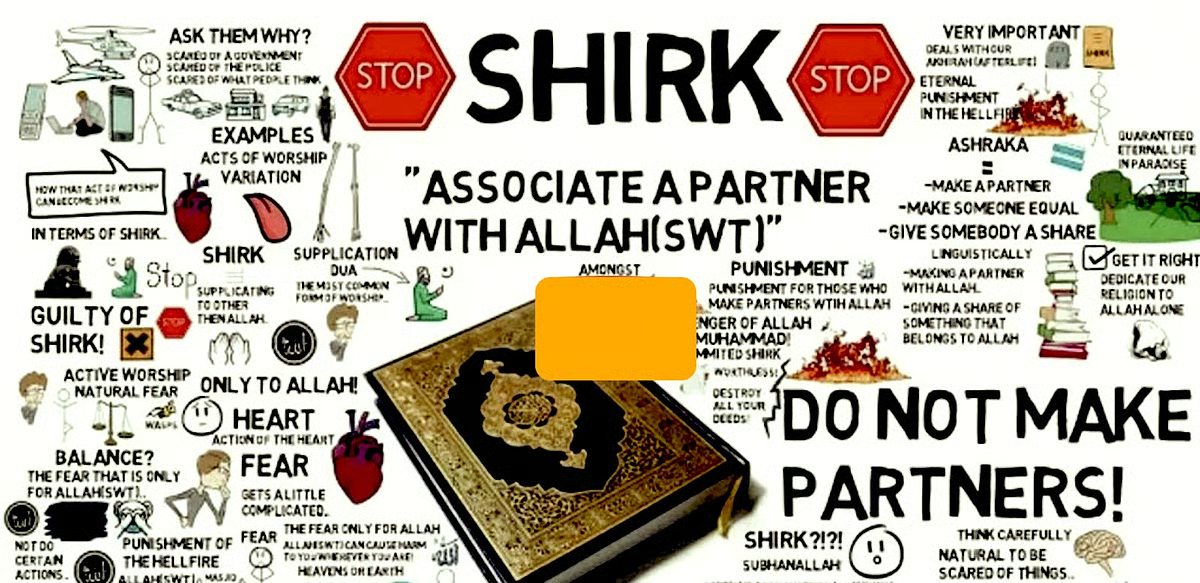
Shirk, the act of associating partners with Allah, is considered the gravest sin in Islam, as it violates the fundamental principle of Tawhid (the oneness of Allah). Rooted in the Quran, Hadith, and the teachings of Prophet Muhammad (peace be upon him), the concept of Shirk is central to Islamic theology, emphasizing the exclusive worship of Allah alone. This comprehensive article explores the meaning, types, historical context, spiritual implications, and modern relevance of Shirk from an Islamic perspective.
Table of Contents
ToggleWhat is Shirk?
Definition and Quranic Basis
Shirk, derived from the Arabic word sharak, meaning “to share” or “to associate,” refers to attributing partners, equals, or rivals to Allah in His divinity, worship, or attributes. It is the opposite of Tawhid, the core Islamic belief in the oneness and uniqueness of Allah. The Quran explicitly condemns Shirk in several verses, such as:
إِنَّ ٱللَّهَ لَا يَغْفِرُ أَن يُشْرَكَ بِهِۦ وَيَغْفِرُ مَا دُونَ ذَٰلِكَ لِمَن يَشَآءُ ۚ
Translation: “Indeed, Allah does not forgive association with Him, but He forgives what is less than that for whom He wills” (Quran 4:48).
This verse underscores the severity of Shirk, as it is the only sin Allah declares unforgivable without repentance. Another key verse is:
وَإِذْ قَالَ لُقْمَٰنُ لِٱبْنِهِۦ وَهُوَ يَعِظُهُۥ يَٰبُنَىَّ لَا تُشْرِكْ بِٱللَّهِ ۖ إِنَّ ٱلشِّرْكَ لَظُلْمٌ عَظِيمٌ
Translation: “And [mention, O Muhammad], when Luqman said to his son while advising him: ‘O my son, do not associate [anything] with Allah. Indeed, association [with Him] is a great injustice'” (Quran 31:13).
This highlights Shirk as an injustice (zulm), as it denies Allah’s exclusive right to worship.
Hadith on Shirk.
The Hadith literature reinforces the gravity of Shirk. Prophet Muhammad (peace be upon him) said:
أَعْظَمُ الذُّنُوبِ عِنْدَ اللهِ أَنْ يُشْرَكَ بِهِ، وَعُقُوقُ الْوَالِدَيْنِ
Translation: “The greatest sin is to associate partners with Allah and to disobey parents” (Sahih al-Bukhari, Hadith No. 6273).
Another Hadith states:
مَنْ مَاتَ وَهُوَ يَدْعُو مِنْ دُونِ اللهِ نِدًّا دَخَلَ النَّارَ
Translation: “Whoever dies while invoking anything other than Allah as a rival will enter Hell” (Sahih al-Bukhari, Hadith No. 4497).
These narrations emphasize that Shirk nullifies faith and leads to eternal consequences unless repented.
Types of Shirk
Islamic scholars categorize Shirk into two primary types: Shirk Akbar (major Shirk) and Shirk Asghar (minor Shirk). A third category, Shirk Khafi (hidden Shirk), is also discussed.
1. Shirk Akbar (Major Shirk)
Shirk Akbar involves openly associating partners with Allah, such as worshiping idols, deities, or other entities alongside Him. It nullifies a person’s faith and removes them from the fold of Islam. Examples include:
- Polytheism: Worshiping multiple gods, as practiced in pre-Islamic Arabia, exemplified by idols like Lat, Uzza, and Manat, as mentioned in the Quran: أَفَرَءَيْتُمُ ٱللَّٰتَ وَٱلْعُزَّىٰ وَمَنَوٰةَ ٱلثَّالِثَةَ ٱلْأُخْرَىٰ. Translation: “Have you seen al-Lat and al-Uzza, and Manat, the third, the other?” (Quran 53:19-20).
- Ascribing Divine Attributes to Others: Believing that humans, saints, or objects possess divine powers, such as the ability to create or control destiny.
- Invoking Intermediaries: Seeking intercession from beings other than Allah without His permission, contrary to: قُلْ لِلَّهِ ٱلشَّفَٰعَةُ جَمِيعًا ۖ لَهُۥ مُلْكُ ٱلسَّمَٰوَٰتِ وَٱلْأَرْضِ ۖ. Translation: “Say, ‘To Allah belongs all intercession. To Him belongs the dominion of the heavens and the earth'” (Quran 39:44).
2. Shirk Asghar (Minor Shirk)
Shirk Asghar refers to acts that do not expel a person from Islam but diminish the purity of Tawhid. It includes subtle behaviors that may lead to major Shirk if unchecked. Examples include:
- Riya (Showing Off): Performing acts of worship to gain praise from others rather than for Allah’s sake. The Prophet (peace be upon him) said: إِنَّ أَخْوَفَ مَا أَخَافُ عَلَيْكُمْ الشِّرْكَ الْأَصْغَرَ… الرِّيَاءُ. Translation: “The thing I fear most for my ummah is the minor Shirk of showing off” (Musnad Ahmad, Hadith No. 27742).
- Swearing by Other than Allah: Taking oaths by entities other than Allah, such as saying, “I swear by the Prophet,” which the Prophet discouraged: مَنْ حَلَفَ بِغَيْرِ اللهِ فَقَدْ أَشْرَكَ. Translation: “Whoever swears by other than Allah has committed Shirk” (Sunan Abu Dawud, Hadith No. 3256).
- Superstitions: Believing in omens, charms, or amulets as sources of protection or harm, contrary to reliance on Allah alone.
3. Shirk Khafi (Hidden Shirk)
Shirk Khafi is the most subtle form, involving hidden intentions or desires that compromise devotion to Allah. The Prophet (peace be upon him) said: الشِّرْكُ فِي هَذِهِ الْأُمَّةِ أَخْفَى مِنْ دَبِيبِ النَّمْلِ. Translation: “Shirk in this ummah is more hidden than the creeping of an ant” (Al-Mustadrak, Hadith No. 7867).
Examples include hypocrisy (nifaq) or prioritizing worldly desires over Allah.
Historical Context of Shirk
Shirk in Pre-Islamic Arabia
Before Islam, the Arabian Peninsula was steeped in Shirk Akbar, with tribes worshiping idols, celestial bodies, and ancestral spirits. The Kaaba, originally built by Prophet Ibrahim (peace be upon him) for Allah’s worship, housed 360 idols (Ibn Hisham, Sirat Rasulullah). The Quran addresses this:
فَٱجْتَنِبُوا۟ ٱلرِّجْسَ مِنَ ٱلْأَوْثَٰنِ وَٱجْتَنِبُوا۟ قَوْلَ ٱلزُّورِ
Translation: “So avoid the uncleanliness of idols and avoid false statements” (Quran 22:30).
Prophet Muhammad (peace be upon him) was sent to eradicate Shirk and restore Tawhid. His mission faced resistance from the Quraysh, who clung to idolatry for social and economic reasons. The conquest of Mecca (630 CE) marked a turning point, with the Prophet cleansing the Kaaba of idols (Sahih al-Bukhari, Hadith No. 4287).
Shirk in Islamic History
Throughout Islamic history, Shirk re-emerged due to cultural influences. For example:
- Umayyad and Abbasid Eras: Some rulers and sects introduced practices resembling Shirk Asghar, such as excessive veneration of leaders or reliance on astrology, opposed by scholars like Imam Ahmad ibn Hanbal (Ibn Kathir, Al-Bidayah wa al-Nihayah).
- Sufi Practices: Certain Sufi orders adopted rituals like seeking blessings from graves, criticized by scholars like Ibn Taymiyyah as bordering on Shirk (Majmu’ Fatawa).
Spiritual Implications of Shirk
Shirk undermines the essence of Islam, as it contradicts the purpose of creation:
وَمَا خَلَقْتُ ٱلْجِنَّ وَٱلْإِنسَ إِلَّا لِيَعْبُدُونِ
Translation: “I have not created jinn and mankind except to worship Me” (Quran 51:56).
By associating partners with Allah, one denies His sovereignty, leading to spiritual and moral corruption. The Quran describes Shirk as a tremendous sin:
وَمَن يُشْرِكْ بِٱللَّهِ فَقَدِ ٱفْتَرَىٰٓ إِثْمًا عَظِيمًا
Translation: “And whoever associates others with Allah has certainly fabricated a tremendous sin” (Quran 4:116).
Spiritually, Shirk severs the connection between the individual and Allah, as worship becomes divided. It fosters arrogance, superstition, and reliance on false deities, weakening faith and moral accountability. Repentance (tawbah) is the remedy, as Allah promises forgiveness for those who sincerely turn back to Him:
إِلَّا مَن تَابَ وَءَامَنَ وَعَمِلَ عَمَلًا صَٰلِحًا فَأُو۟لَٰٓئِكَ يُبَدِّلُ ٱللَّهُ سَيِّـَٔاتِهِمْ حَسَنَٰتٍ ۖ
Translation: “Except for those who repent, believe, and do righteous deeds, for those, Allah will replace their evil deeds with good” (Quran 25:70).
Practical Manifestations of Shirk in Modern Times
Shirk in Everyday Life
In the modern era, Shirk appears in both overt and subtle forms, influenced by cultural practices or secular ideologies. Examples include:
- Materialism and Secularism: Prioritizing wealth or status over Allah’s commands can resemble Shirk Khafi. The Quran warns: إِنَّمَآ أَمْوَٰلُكُمْ وَأَوْلَٰدُكُمْ فِتْنَةٌ ۚ وَٱللَّهُ عِندَهُۥٓ أَجْرٌ عَظِيمٌ. Translation: “Your wealth and your children are but a trial, and Allah has with Him a great reward” (Quran 64:15).
- Superstitions: Practices like wearing amulets or believing in horoscopes are forms of Shirk Asghar: قَالَ رَسُولُ ٱللَّهِ صَلَّى ٱللَّهُ عَلَيْهِ وَسَلَّمَ: مَنْ عَلَّقَ تَمِيمَةً فَقَدْ أَشْرَكَ. Translation: “The Messenger of Allah (peace be upon him) said: ‘Whoever wears an amulet has committed Shirk'” (Sahih Muslim, Hadith No. 5540).
- Excessive Veneration: Elevating religious figures to divine status by seeking their intercession without Allah’s permission.
Shirk in Media and Pop Culture
Modern media and pop culture can inadvertently promote ideas akin to Shirk. For example, idolizing celebrities or adopting philosophies that deny divine authority can dilute Tawhid. Muslims are encouraged to critically evaluate such influences, as the Quran advises:
ٱتَّبِعُوا۟ مَآ أُنزِلَ إِلَيْكُم مِّن رَّبِّكُمْ وَلَا تَتَّبِعُوا۟ مِن دُونِهِۦٓ أَوْلِيَآءَ ۗ
Translation: “Follow what has been revealed to you from your Lord and do not follow other than Him as allies” (Quran 7:3).
Avoiding Shirk: Islamic Teachings
Strengthening Tawhid
The best defense against Shirk is a firm belief in Tawhid. This involves:
- Knowledge of Allah’s Attributes: Understanding Allah’s names and attributes, as in: قُلْ هُوَ ٱللَّهُ أَحَدٌ ٱللَّهُ ٱلصَّمَدُ لَمْ يَلِدْ وَلَمْ يُولَدْ وَلَمْ يَكُن لَّهُۥ كُفُوًا أَحَدٌ. Translation: “Say, ‘He is Allah, [who is] One, Allah, the Eternal Refuge. He neither begets nor is born, nor is there to Him any equivalent'” (Quran 112:1-4).
- Sincere Intention: Acts of worship must be for Allah’s sake, avoiding Riya (Sahih al-Bukhari, Hadith No. 1).
- Education and Awareness: Studying authentic Islamic sources to identify practices leading to Shirk.
Repentance and Seeking Forgiveness
For those who commit Shirk, sincere repentance is essential. The Quran states:
قُلْ يَٰعِبَادِىَ ٱلَّذِينَ أَسْرَفُوا۟ عَلَىٰٓ أَنفُسِهِمْ لَا تَقْنَطُوا۟ مِن رَّحْمَةِ ٱللَّهِ ۚ إِنَّ ٱللَّهَ يَغْفِرُ ٱلذُّنُوبَ جَمِيعًا ۚ
Translation: “Say, ‘O My servants who have transgressed against themselves, do not despair of the mercy of Allah. Indeed, Allah forgives all sins'” (Quran 39:53).
Repentance involves abandoning Shirk, regretting the act, and resolving to uphold Tawhid.
Role of Scholars
Islamic scholars play a crucial role in educating the ummah about Shirk. Classical scholars like Ibn Taymiyyah and modern scholars like Shaykh Uthaymeen have written extensively on distinguishing Tawhid from Shirk (Sharh Riyadhus Salihin). Their works emphasize returning to the Quran and Sunnah to safeguard faith.
Challenges and Controversies Surrounding Shirk
Misconceptions About Shirk
- Mislabeling Practices: Some Muslims hastily accuse others of Shirk without proper knowledge, leading to division. For instance, cultural practices like visiting graves for supplication are debated, with scholars like Shaykh Albani clarifying that only specific acts constitute Shirk (Silsilah al-Hadith as-Sahihah).
- Shirk in Interfaith Contexts: Muslims in pluralistic societies face challenges in maintaining Tawhid. The Quran encourages dialogue without compromising belief: قُلْ يَٰٓأَهْلَ ٱلْكِتَٰبِ تَعَالَوْا۟ إِلَىٰ كَلِمَةٍ سَوَآءٍ بَيْنَنَا وَبَيْنَكُمْ أَلَّا نَعْبُدَ إِلَّا ٱللَّهَ وَلَا نُشْرِكَ بِهِۦ شَيْـًٔا. Translation: “Say, ‘O People of the Scripture, come to a word that is equitable between us and you—that we will not worship except Allah and not associate anything with Him'” (Quran 3:64).
Shirk in Extremist Ideologies
Certain extremist groups misuse the concept of Shirk to justify violence or takfir (declaring others disbelievers). This contradicts the balanced approach of the Prophet (peace be upon him), who emphasized mercy and education over condemnation (Sahih Muslim, Hadith No. 2593).
Social and Cultural Impact of Shirk
Undermining Community Unity
Shirk fragments the Muslim community by introducing divisions in belief. The Quran calls for unity under Tawhid:
وَٱعْتَصِمُوا۟ بِحَبْلِ ٱللَّهِ جَمِيعًا وَلَا تَفَرَّقُوا۟ ۚ
Translation: “And hold firmly to the rope of Allah all together and do not become divided” (Quran 3:103).
Practices resembling Shirk, such as sectarianism or excessive veneration, weaken this unity.
Moral and Ethical Consequences
Shirk leads to moral decay, as it shifts reliance from Allah to fallible entities. This can result in superstition, fear, and unethical behavior, as individuals seek solutions outside divine guidance.
Cultural Legacy
The fight against Shirk has shaped Islamic history, from the Prophet’s mission to modern reform movements. Scholars like Muhammad ibn Abdul Wahhab emphasized reviving Tawhid to counter cultural deviations, influencing Islamic thought globally (Kitab al-Tawhid).
Shirk in the Modern World: Relevance and Future
In today’s globalized world, Shirk remains relevant as Muslims navigate challenges like secularism, materialism, and cultural syncretism. The principles of Tawhid—monotheism, sincerity, and reliance on Allah—offer a timeless framework for maintaining faith. Technology and media amplify the spread of ideas that may lead to Shirk Khafi, making education and awareness critical.
The future of combating Shirk lies in:
- Islamic Education: Promoting Quranic literacy and authentic Hadith studies to strengthen Tawhid.
- Interfaith Dialogue: Engaging with other faiths respectfully while upholding Islamic beliefs.
- Community Initiatives: Mosques and scholars should address local practices that risk Shirk, offering guidance rooted in the Quran and Sunnah.
Conclusion
Shirk, as the antithesis of Tawhid, is the gravest sin in Islam, threatening the spiritual and moral fabric of the Muslim community. From its explicit condemnation in the Quran to its detailed explanation in Hadith, Shirk encompasses both overt polytheism and subtle deviations. Understanding its types, historical context, and modern manifestations is essential for Muslims to safeguard their faith. By strengthening Tawhid, seeking repentance, and relying on authentic Islamic sources, believers can avoid Shirk and uphold the purity of worship. As the Quran warns: “Worship Allah and associate nothing with Him” (Quran 4:36). This article serves as a guide to recognizing and avoiding Shirk, ensuring a life devoted to Allah alone.
References
- Al-Quran. Sahih International translation.
- Sahih al-Bukhari. Hadith collection.
- Sahih Muslim. Hadith collection.
- Sunan Abu Dawud. Hadith collection.
- Musnad Ahmad. Hadith collection.
- Al-Mustadrak. Hadith collection.
- Ibn Hisham. Sirat Rasulullah.
- Ibn Kathir. Al-Bidayah wa al-Nihayah.
- Ibn Taymiyyah. Majmu’ Fatawa.
- Shaykh Uthaymeen. Sharh Riyadhus Salihin.
- Shaykh Albani. Silsilah al-Hadith as-Sahihah.
- Muhammad ibn Abdul Wahhab. Kitab al-Tawhid.