

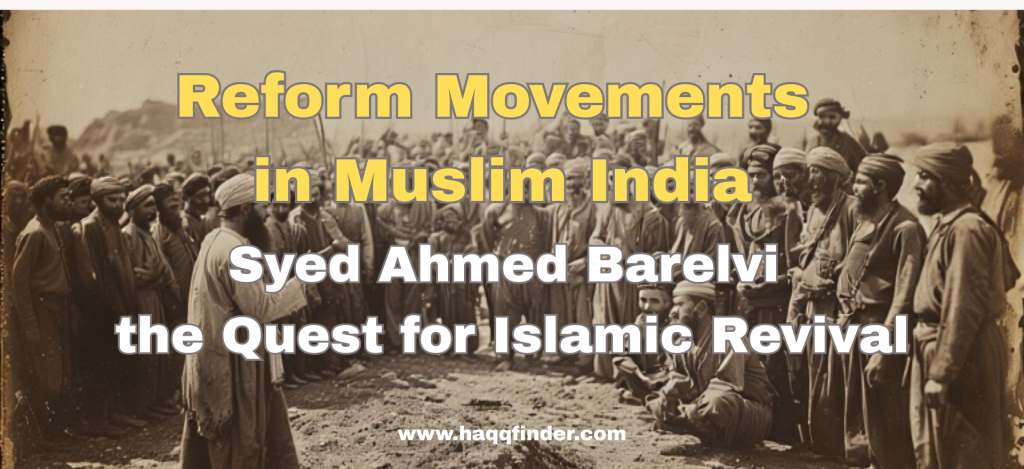
The 18th and 19th centuries were a pivotal period for India’s Muslim community. The decline of the Mughal Empire, the rise of British colonial power, widespread economic hardship, and the erosion of Islamic practices created a climate of crisis. In response, visionary leaders launched reform movements aimed at revitalizing the spiritual, social, and political vitality of Muslims. Among them, Syed Ahmed Barelvi’s Jihad Movement (Tariqa-e-Muhammadiya) stood out as a bold effort to restore Islamic purity and resist oppression.
This article explores India’s Muslim reform movements, their historical context, key figures, core ideologies, strategies, and lasting impact. Drawing on authentic sources and research, it offers a comprehensive resource for students, scholars, and enthusiasts of Islamic history.
Historical Context: A Crisis in Muslim India
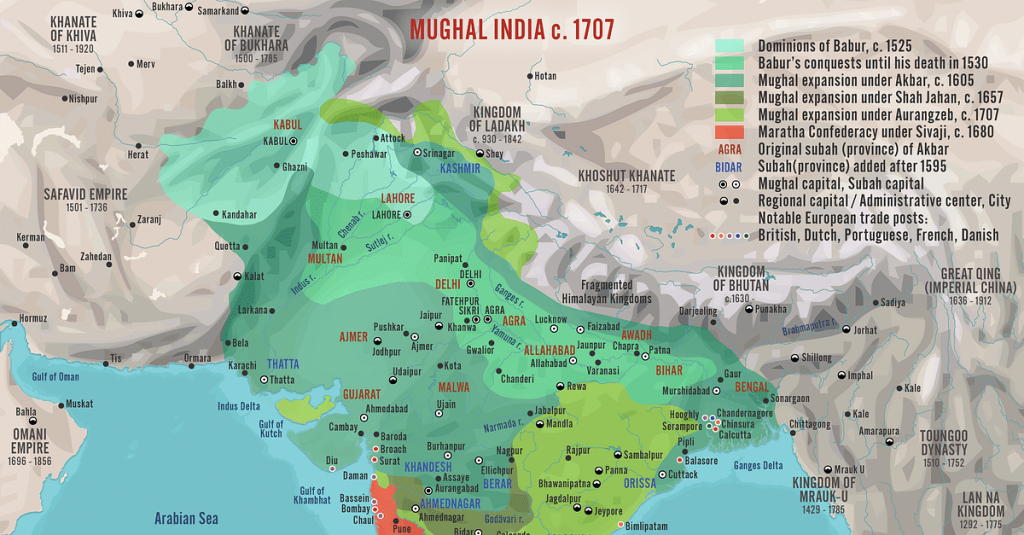
The decline of the Mughal Empire following Emperor Aurangzeb’s death in 1707 led to political fragmentation across India. Regional powers, such as the Marathas, Sikhs, Jats, Afghans, and Muslim Nawabs, vied for control, leaving a vacuum that the British East India Company exploited. By the early 19th century, the Mughal emperor was reduced to a ceremonial figure in Delhi, undermining the concept of Dar-ul-Islam (Abode of Islam) and leaving Muslims politically disempowered.
Economically, colonial policies devastated the Muslim populace. The 1793 Permanent Settlement in Bengal favored Hindu zamindars, dispossessing Muslim landholders and burdening peasants with high rents. Traditional Muslim-dominated trades, such as textiles, suffered under restrictive British policies, causing widespread poverty and social strain (Hardy, 1972).
Socially, divisions persisted within the Muslim community—Sunni versus Shia, ethnic differences (Turkic, Afghan, local converts), and class distinctions (ashraf elites versus ajlaf masses). Religious practices had also been influenced by syncretism; shrine worship, saint veneration, and incorporation of local rituals blurred Islamic identity. Many rural Muslims lacked access to formal religious education, and the practice of ijtihad (independent reasoning) had declined, replaced by taqlid (blind adherence).
These overlapping crises—political, economic, social, and religious—set the stage for Muslim reform movements in India, aiming to restore Islamic orthodoxy and community cohesion. Leaders like Syed Ahmed Barelvi and Shah Waliullah sought to revive spiritual discipline while addressing pressing societal challenges.
Shah Waliullah Dehlawi: The Intellectual Pioneer

Shah Waliullah Dehlawi (1703–1762 CE) is widely regarded as the father of Islamic revivalism in India. Living during the decline of the Mughal Empire, he diagnosed the political, social, and spiritual challenges facing Muslims and proposed a comprehensive reform agenda that influenced all later movements, including Syed Ahmed Barelvi’s Tariqa-e-Muhammadiya.
Core Reformist Ideas
Return to Quran and Sunnah:
Shah Waliullah stressed direct engagement with the Quran and Prophetic traditions. He translated the Quran into Persian, the elite’s lingua franca, making it accessible to scholars and leaders. He believed neglecting these primary sources had allowed un-Islamic practices to flourish (Rizvi, 1980).
Unity Across Divides:
He sought to reconcile differences between fiqh schools and Sufi orders, promoting a united Muslim community (Ummah). His seminal work, Hujjat Allah al-Baligha, blended rationalism with spiritual insight.
Ijtihad over Taqlid:
Waliullah encouraged scholars to derive rulings from the Quran and Sunnah instead of blind adherence to past interpretations. This approach fostered critical thinking and adaptability.
Combating Shirk and Bid’ah:
He condemned excessive shrine worship, saint intercession, astrology, and superstitions as deviations from tawhid (monotheism).
Social and Economic Justice:
Concerned with inequality, Waliullah advocated fair wealth distribution and condemned exploitation by landlords and colonial authorities.
Political Revival:
He urged Muslim rulers to unite against external threats, emphasizing the link between political power and religious well-being.
Moral Upliftment:
Virtues such as piety, honesty, and discipline were central to his vision of a vibrant Muslim society.
Through his sons (e.g., Shah Abdul Aziz) and students, Waliullah’s ideas shaped reform movements that followed, emphasizing ijtihad, tawhid, and unity, which became central to Syed Ahmed Barelvi’s Jihad Movement.
Syed Ahmed Barelvi and the Jihad Movement (Tariqa-e-Muhammadiya)

Syed Ahmed Barelvi (1786–1831 CE), born in Rae Bareli, Uttar Pradesh, was a charismatic leader and religious reformer. Inspired by Shah Waliullah Dehlawi’s ideas, he launched the Tariqa-e-Muhammadiya, commonly known as the Jihad Movement, to restore Islamic purity and defend Muslim communities under colonial and regional domination.
Core Principles
Tawhid and Anti-Shirk:
Syed Ahmed strongly opposed practices considered shirk (polytheism) or bid’ah (innovations), including shrine worship and saint intercession. His writings, like Taqwiyat-ul-Iman and Sirat-e-Mustaqim (co-authored with Shah Ismail Shaheed), emphasized strict monotheism.
Strict Adherence to Sunnah:
The movement’s name, Tariqa-e-Muhammadiya (Path of Muhammad), reflected its focus on following the Prophetic tradition in daily life.
Ijtihad over Taqlid:
Emphasizing independent reasoning, Syed Ahmed rejected blind adherence to traditional fiqh schools, encouraging scholars and followers to return to primary Islamic sources.
Jihad as Resistance:
Viewing India under British and Sikh rule as Dar-ul-Harb (land of war), the movement promoted both spiritual and armed struggle to protect Muslims’ rights, including the practice of Azaan and the lawful slaughter of cows.
Organizational Strategies
- Preaching Tours: Syed Ahmed and his followers, including Shah Ismail Shaheed, traveled across North India, spreading reformist ideas through sermons and literature.
- Khalifa Network: Appointed agents (khalifas) to recruit followers, collect zakat, and enforce religious adherence.
- Hijrat (Migration): In 1826, after performing Hajj, Syed Ahmed encouraged followers to migrate to the North-West Frontier, establishing a base at Panjtar near Mardan by 1830.
- Islamic Administration: At Panjtar, he set up a rudimentary Islamic state with a treasury, judiciary, and military, training mujahidin in both piety and combat tactics.
The Battle of Balakot
The movement’s military campaign targeted the Sikh Empire, led by Maharaja Ranjit Singh. Early successes, such as the Battle of Akora (1826), bolstered morale. However, conflicts with local tribes and strategic missteps culminated in the Battle of Balakot (1831), where Syed Ahmed and Shah Ismail were martyred. Despite military defeat, the movement left a lasting religious and intellectual legacy.
Other Reform Movements
Faraizi Movement
Founded by Haji Shariatullah (1781–1840) in Bengal, the Faraizi Movement emphasized faraiz (obligatory duties) and opposed shirk, like shrine worship. Declaring British India Dar-ul-Harb, Shariatullah initially barred Jumu’ah prayers. His son, Dudu Miyan (1819–1862), transformed it into a peasant resistance movement, challenging Hindu zamindars and British indigo planters. Organizing a Lathial Bahini (stick-wielding force) and a khalifa network, Dudu Miyan empowered peasants, declaring, “Land belongs to God, and no one has the right to tax it” (Hardy, 1972). Though suppressed, it left a legacy of social justice.
Aligarh Movement
Sir Syed Ahmad Khan (1817–1898) took a pragmatic approach post-1857, advocating Western education and British cooperation. His Mohammedan Anglo-Oriental College (1875, later Aligarh Muslim University) produced a modern Muslim elite. Promoting rational Islam via Tafsir al-Quran, he opposed traditionalism, advocating social reforms like women’s education. Critics, including Deobandis, viewed his modernism as unorthodox, but Aligarh laid the groundwork for Muslim political identity.
Deoband Movement
Founded in 1866 by Maulana Muhammad Qasim Nanautawi, Darul Uloom Deoband preserved traditional Islamic sciences (Tafsir, Hadith, Fiqh). Opposing bid’ah, it trained ulema to guide the community. Financially independent via donations, it resisted British influence. Later, Deobandi scholars joined the Indian National Congress, fostering anti-colonial nationalism through scholarship.

Interplay and Contrasts Among Movements
Commonalities
- Religious Purification: All emphasized tawhid, rejecting shirk and bid’ah.
- Moral Upliftment: Promoted piety, discipline, and Islamic ethics.
- Muslim Identity: Strengthened communal distinctiveness amidst colonial rule.
Contrasts
- Methodology: Jihad used armed struggle; Faraizi combined religious reform with peasant resistance; Aligarh focused on education; Deoband prioritized scholarship.
- Modernity: Aligarh embraced Western knowledge; Jihad and Faraizi rejected cultural influence; Deoband balanced tradition with cautious engagement.
- British Relations: Jihad and Faraizi opposed colonial rule; Aligarh cooperated; Deoband later supported nationalism non-violently.
- Audience: Jihad attracted diverse followers; Faraizi targeted peasants; Aligarh served elites; Deoband educated scholars.
Achievements and Limitations
Achievements
- Re-Islamization: Movements like Jihad and Faraizi reduced syncretism, promoting orthodox practices.
- Social Empowerment: Faraizi’s peasant resistance gave agency to the downtrodden.
- Educational Legacy: Aligarh and Deoband established enduring institutions, shaping modern and traditional leadership.
- Anti-Colonial Spirit: Jihad and Faraizi inspired resistance; Deoband contributed to nationalism.
- Intellectual Revival: Waliullah’s ijtihad legacy fostered dynamic Islamic thought.
Limitations
- Military Failures: Jihad’s Balakot defeat and Faraizi’s suppression highlighted power disparities.
- Internal Divisions: Conflicts between movements (e.g., Deobandi vs. Aligarh) weakened unity.
- Social Conservatism: Deoband’s traditionalism limited progress in areas like women’s education.
- Leadership Dependency: Jihad and Faraizi waned after their leaders’ deaths.
Enduring Legacy of Reform Movements
The reform movements left a lasting imprint on Muslim India:
- Muslim Identity: They sharpened communal identity, fostering solidarity in a pluralistic society.
- Political Foundations: Aligarh’s focus on separate electorates influenced the Pakistan Movement; Jihad and Faraizi inspired anti-colonial activism.
- Educational Impact: Aligarh Muslim University and Darul Uloom Deoband remain intellectual hubs.
- Social Activism: Faraizi’s agrarian resistance set a precedent for social justice movements.
- Ongoing Reform: The ijtihad spirit continues to shape South Asian Islamic scholarship.
Suggested Link: Explore Shah Waliullah Dehlawi’s Biography.
Conclusion
Syed Ahmed Barelvi’s Jihad Movement, alongside Faraizi, Aligarh, and Deoband movements, was a dynamic response to the crises of 18th and 19th-century Muslim India. Though its military ambitions faltered at Balakot, its religious zeal and resistance spirit ignited a lasting revival, shaping Muslim identity and politics. These movements, rooted in Shah Waliullah’s vision, navigated colonial challenges with diverse strategies, leaving a legacy that resonates in modern South Asia.
FAQs on Muslim Reform Movements
What triggered reform movements in Muslim India?
The Mughal decline, British colonialism, economic exploitation, and religious syncretism spurred reformist efforts to restore Islamic vitality.
How did Syed Ahmed Barelvi’s Jihad Movement differ from others?
It emphasized armed jihad to establish Islamic governance, unlike Aligarh’s educational focus or Deoband’s scholarly approach.
What role did Shah Waliullah play in reforms?
He laid intellectual foundations, advocating ijtihad, tawhid, and unity, influencing all subsequent movements.
Why did the Jihad Movement fail militarily?
Tactical errors, tribal betrayals, and superior Sikh forces led to defeat at Balakot in 1831.
How do these movements influence modern South Asia?
They shaped Muslim identity, education, and politics, contributing to Pakistan’s creation and ongoing Islamic scholarship.
References
- Metcalf, Barbara D. Islamic Revival in British India: Deoband, 1860–1900. Princeton University Press, 1982.
- Ahmad, Aziz. Studies in Islamic Culture in the Indian Environment. Clarendon Press, 1964.
- Hardy, Peter. The Muslims of British India. Cambridge University Press, 1972.
- Ahmad, Qeyamuddin. The Wahhabi Movement in India. Manohar Publishers, 1994.
- Rizvi, Saiyid Athar Abbas. Shah Wali-Allah and His Times. Ma’rifat Publishing House, 1980.
- Nadwi, Abul Hasan Ali. Saviors of Islamic Spirit. Lucknow: Academy of Islamic Research and Publications, 1971.
- Ikram, S. M. Muslim Civilization in India. Columbia University Press, 1964.