

Throughout the history of Islam, there have been many moments when the light of faith, righteous deeds, and morality illuminated the world once again. A similar light spread across India at the beginning of the 13th Hijri century. It was a time marked by colonialism and imperial aggression. But one man stood up—he had neither wealth nor a large army. His only strength was his Iman and unshakable trust in Allah.
That man was Syed Ahmad Shaheed (RA), who launched a historic movement based on Jihad and pure faith, known as the Tariqah-e-Muhammadiyah. Following the model of the Prophet Muhammad (PBUH), he formed a group of Mujahideen, who were determined not only for self-purification but also for the establishment of Islamic governance.
In the history of Islam in the Indian subcontinent, Syed Ahmad Shaheed Barelvi (R) stands as a figure unlike any other—
a monk by night, a warrior by day, “ruhbanul-layl wa fursanun-nahar.”
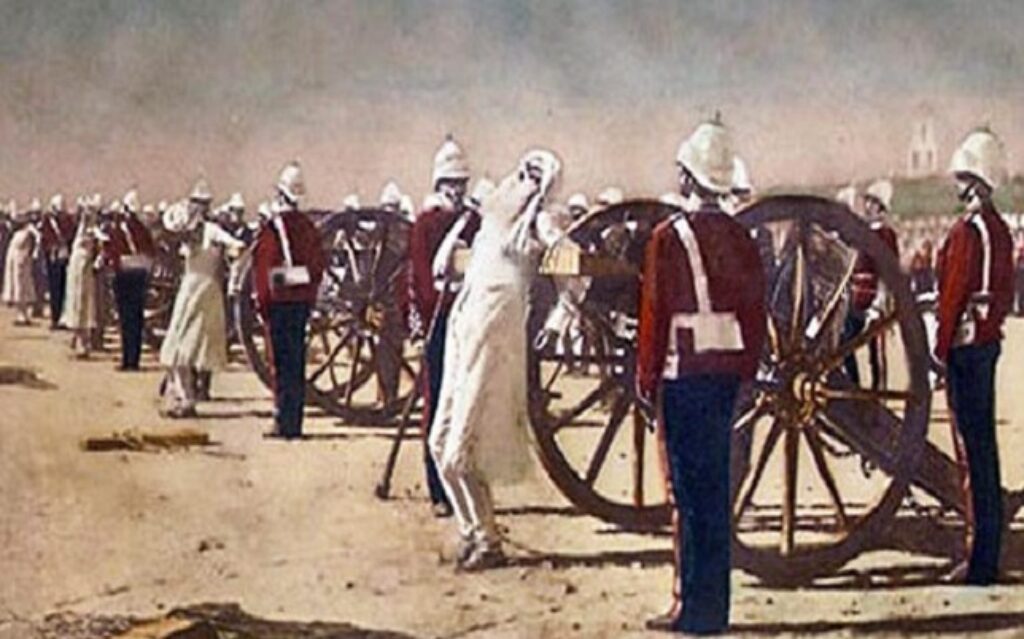
The Condition of Muslims in the British Context
The Early Influence of Islam in the Subcontinent
The first footprints of Islam on the soil of the Indian Subcontinent appeared in the early 8th century, when, under the Umayyad rule, General Muhammad ibn Qasim’s conquest lit a torch of Islam in the coastal land of Sindh. Yet, this initial arrival was not permanent; it rushed in like a mountain stream and soon faded away in the tide of time. Still, that brief spark paved the way for those who would come after.
Then came the great Sufi shaykhs and Muslim traders, crossing the mountains of Iran and Afghanistan, and sailing across the Indian Ocean. Their piety, dedication, and noble character resounded like thunder in the idolatrous heart of Hindustan. The names of illustrious scholars and saints—like Khwaja Muinuddin Chishti—remain eternally entwined with the spiritual consciousness of Indian Muslims. As Sayyid Abul Hasan Ali Nadwi remarked, every soul in India that embraces Islam will share its reward with Chishti’s record of deeds.
In the early 13th century, Muslim power entered the Subcontinent for the second time, under Sultan Muhammad Ghuri. This time, it was not a fleeting mountain stream but a flowing river, leaving enduring marks of Islam upon Hindustan. Though mighty dynasties like the Mamluks, Khaljis, Sayyids, and Mughals ruled the land, their role in spreading Islam was limited; it was still the Sufi shaykhs who carried out the noble mission of da‘wah.
Religious Deviation in the Mughal Empire

When the early God-fearing Sufis passed away, false beliefs crept into the name of Sufism. At the same time, Mughal emperors Akbar and Jahangir propagated the heretical creed of Din-i-Ilahi. At this very moment, Allah sent His chosen servant, the great scholar of the age—known as Mujaddid Alf-e-Thani—Imam Ahmad Sirhindi (r.a.). He shattered false doctrines, restored Tasawwuf upon the foundation of Sunnah, and erased Din-i-Ilahi from history.
His contemporary, the eminent hadith scholar Shaykh Abdul Haq Dehlawi (r.a.), sowed the seeds of Prophetic traditions in this land. The tajdid (revival) of Sirhindi and the scholarly contributions of Abdul Haq converged into a towering figure—Shah Waliullah Dehlawi (r.a.).
Shah Waliullah is regarded as the greatest mujaddid of the Subcontinent. Through his Persian translation of the Qur’an, he brought the divine word to the doorsteps of common people; later, his sons’ Urdu translations spread the message of Islam to households far and wide. He revived the science of hadith, introduced balance in jurisprudence, and reopened the doors of ijtihad. His timeless masterpiece Hujjatullah al-Baligha explained the objectives of Shariah in a way unparalleled in history.
He simplified Tasawwuf, made self-purification an inseparable part of Muslim identity, and highlighted the social, political, and economic aspects of Islam. By reimagining the dream of the lost caliphate, Shah Waliullah (r.a.) became the guiding beacon for Muslims of the Subcontinent.
Dawn of a New Struggle
The sons of Shah Waliullah (r.a.) carried forward their father’s unfinished mission with tireless devotion. Yet, enemies of Islam were rising on all sides. Since the reign of Emperor Jahangir, English merchants had entered India under the guise of trade. Their aim was never limited to commerce—their eyes were fixed on the throne of India. After the death of Aurangzeb (r.a.), the weakening Mughal court was powerless to resist them.
Meanwhile, the descendants of the Hindu king Shivaji launched repeated assaults on the crumbling Mughal Empire. In the mid-18th century, Maratha commander Sadashiv Rao even managed to capture Delhi for a brief time. To the west, Punjab had fallen under the grip of Sikh forces, fiercely hostile to Muslims. With enemies pressing from three sides, the very existence of Muslims in India hung in the balance.
At this perilous hour, Shah Waliullah (r.a.) wrote to the Afghan ruler Ahmad Shah Abdali, urging him to intervene. In 1761, at the Third Battle of Panipat, Abdali’s Muslim army crushed the Marathas. Had they not been defeated, Muslim history in India might have ended in that very century.
Learn more about “The Decline of the Mughal Empire“
Indian Muslims in the Face of Calamity
The beginning of the 13th Hijri century, i.e., the late 18th century and early 19th century, was a time of severe crisis for Indian Muslims. The Mughal Empire was collapsing, and India had fragmented among foreign powers, Marathas, Sikhs, and local rulers. Muslims had become politically weak, and the entire nation was confused and in despair.
Indian Muslims Facing Crisis
A terrifying chapter in the history of Indian Muslims began at that time.
On one side was British imperialism, on the other, Maratha aggression, and internally, the fire of division and sectarianism. Those who once ruled India were now struggling to preserve their very existence.
✅ Moral degradation was widespread.
✅ Islamic values were on the verge of being lost.
✅ Western customs had deeply infiltrated society.
Due to financial and political instability, many Muslims were even being deprived of fulfilling the obligation of Hajj. Scholars, poets, and Sufis of the time were trying to spread Islamic teachings, but the lack of unity and the absence of strong leadership weakened their efforts.
Ray of Hope: Hyder Ali and Tipu Sultan

In this dark era, a new ray of hope emerged in the form of Hyder Ali and his valiant son Tipu Sultan. Their courageous resistance was a unique effort toward the awakening of Muslims in the subcontinent.
Unfortunately, the self-interest and internal discord within the Muslim society shattered the foundation of that movement. Thus, Bengal fell, Orissa and Bihar collapsed, and one by one, Muslim-ruled regions fell under the grip of British colonizers.
Eventually, the British sat on the throne of Delhi and began erasing the glory of the Muslims.
The Realization and Decision of Syed Ahmad Shaheed Barelvi
Syed Ahmad Shaheed Barelvi (RA) observed this terrifying reality with deep concern. He understood that mere speeches and writings would not be enough to save the nation; what was needed was a historic action. A clear direction was essential.
He had three options before him:
1️⃣ To compromise with falsehood and go with the flow of the times
2️⃣ To be silently destroyed
3️⃣ Or… to declare Jihad against injustice
Syed Ahmad Shaheed chose the third path—the path of Jihad.
This was the path of the brave. This was the path of the martyrs. This was the path to the pleasure of Allah.
Introduction to Syed Ahmad Shaheed Barelvi
The story of Syed Ahmad Shaheed Barelvi (RA) began long before his birth, through the noble history of his ancestors. His lineage was rooted in bravery, knowledge, and self-sacrifice, tracing directly back to Hazrat Hasan (RA), the grandson of the Prophet Muhammad ﷺ.
Lineage and Ancestral Contributions
Among his ancestors was Shaykh al-Islam Syed Qutubuddin (R.A.), a fearless scholar and mujahid. He arrived in the Indian subcontinent via Ghazni and settled in the Kara region of Allahabad, northern India. He passed away there, and the ideals he left behind continued to inspire the Muslim community.
Later, another great figure was born: Shah Alamulah (R.A.), a pious Sufi and the khalifa of the renowned mystic Adam Bin Noori (R.A.). He played a significant role in Islamic spiritual training and tirelessly upheld the teachings of the faith throughout his life.
Birth History
Carrying forward this noble lineage, Syed Ahmad Shaheed Barelvi (R.A.), the fifth son of Shah Alamulah, was born in 1786 CE (1201 Hijri). He was the 37th descendant of Prophet Muhammad ﷺ, a legacy that bestowed spiritual nobility and leadership upon his personality.
Why This Lineage Matters
This noble ancestry was not just a matter of pride but a continuation of a legacy that shaped him into a future revolutionary leader. Through it, a path was forged of faith, sacrifice, and Islamic revival.
Tariqah-e-Muhammadiyah Movement: Reviving Islam’s Core

The Tariqah-e-Muhammadiyah Movement, founded by Syed Ahmad Shaheed Barelvi (RA), was a transformative Islamic revival effort in the 19th-century Indian subcontinent. Rooted in the teachings of the Qur’an and Sunnah, it aimed to purify Muslim society from shirk (polytheism) and bid‘ah (innovations), such as Hindu-influenced customs and distorted Sufi practices. Inspired by Shah Waliullah Dehlawi’s legacy, the movement blended spiritual purification with active jihad to establish Shariah-based governance.
Syed Ahmad (RA) launched this movement in Delhi, spreading it to regions like Bareilly, Lucknow, and Punjab. It emphasized:
- Tawheed: Restoring pure monotheism by eliminating superstitious rituals.
- Sunnah: Reviving Prophetic traditions in daily life, from salah to social practices.
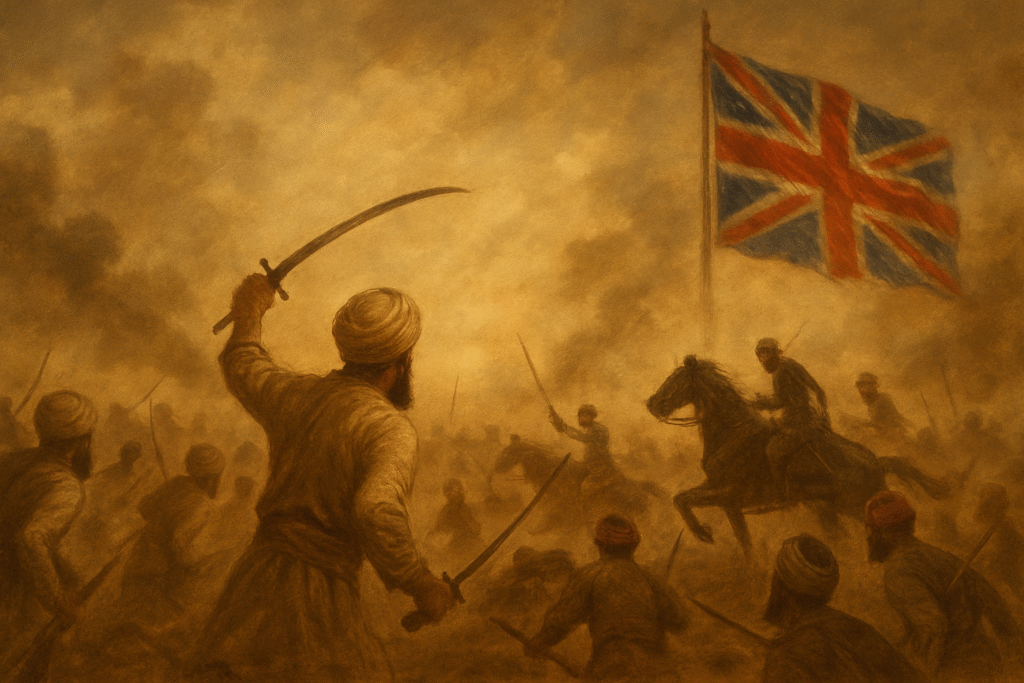
- Jihad: Mobilizing Muslims against Sikh oppression and British colonial rule, notably in battles like Akora (1826) and Balakot (1831).
- Community Reform: Promoting Islamic education, widow rights, and moral conduct.
The movement attracted thousands, including scholars like Maulana Muhammad Ismail (RA), and laid the foundation for later Islamic movements like Ahl-i-Hadith and Deobandi. Despite Syed Ahmad’s martyrdom at Balakot in 1831, the Tariqah-e-Muhammadiyah’s call for faith and resistance continues to inspire Muslims across South Asia.
Learn more about the “Tariqah-e-Muhammadiyah Movement from here.
Syed Ahmad Shaheed Barelvi’s Childhood: The Beginnings of Leadership and Sacrifice

Syed Ahmad Shaheed Barelvi (R.A.) was extraordinary from an ordinary appearance in childhood. Signs of a great future leader were evident from the beginning of his life. At four years, four months, and four days old, he began his education in a Maktab as per family tradition. He completed learning the Holy Qur’an in just three years.
An Ordinary Boy, Extraordinary Dreams
Though outwardly ordinary, he harbored a great dream—to dedicate his life to Islam. This dream was reflected in every action of his childhood.
From an early age, he engaged in regular physical training, knowing that strength, patience, and courage were essential to uphold the banner of Islam. Swimming was his favorite exercise.
He chose the path of hardship from childhood, preparing himself like a Mujahid.
It is popularly believed that he would perform two rak’ahs of voluntary prayer underwater!
Leadership Qualities in Childhood
Even in his youth, Syed Ahmad Barelvi formed a group with friends called “Lashkar-e-Islam”, dedicated to self-purification, practicing Islamic ideals, and preparing for sacrifice. At a young age, he began to understand the reasons behind the decline of Muslim society.
Social Responsibility of Syed Ahmad Barelvi
He always had a compassionate heart for the poor and needy. He would voluntarily help them. As a student, he realized that the infiltration of Hindu culture and superstitions was weakening the Muslim community.
He observed that cowardice, confusion, and dependence had crept into the hearts of the nation. Even in childhood, his soul was stirred by the question: “How can we revive the spirit of faith of the Sahabah?”
Facing Harsh Realities
At just twelve years old, Syed Ahmad Barelvi lost his father. Family responsibilities and the need for livelihood forced him to travel nearly 80 kilometers from Rae Bareli to Lucknow. Though he had one ride, he would let his companions ride while he walked the path himself.
True Education of Leadership
Throughout the journey, he served his companions without ever complaining. Even upon reaching Lucknow, he had to face struggles—poverty, unemployment, and uncertainty in life.
Yet he never asked for better food for himself; he would give his share of good food to his friends.
This was the beginning of his self-sacrifice. From early childhood, the reflection of a future revolutionary leader began to emerge, one who would one day awaken the Muslim community.
Journey to Delhi and Training under the Scholars
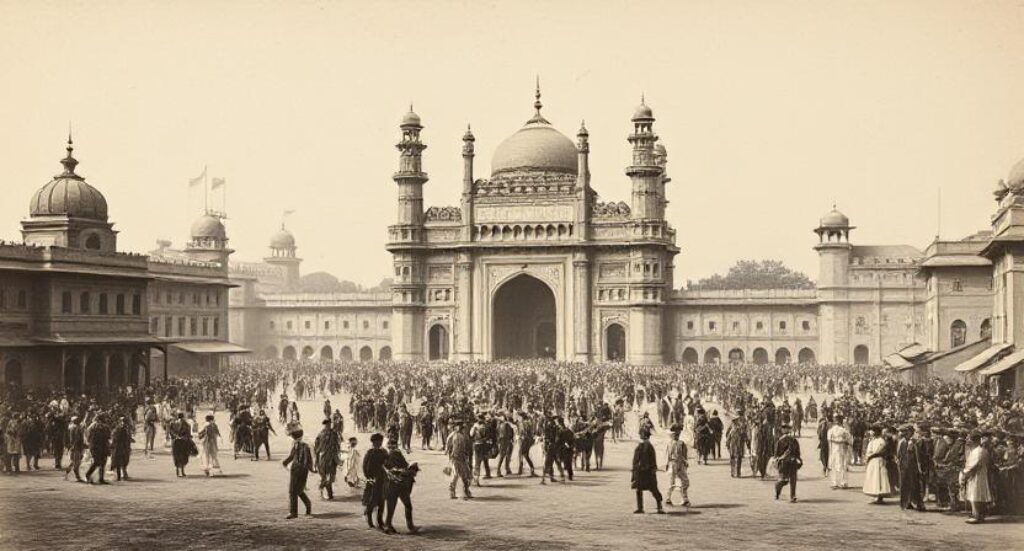
Eventually, the path of fate led him to Delhi, then the heart of Islamic knowledge and spirituality. There, Syed Ahmad Shaheed Barelvi (RA) joined the renowned Shah Abdul Aziz (RA), son of the great scholar Shah Waliullah Dehlavi (RA).
Shah Abdul Aziz (RA) quickly realized that Syed Ahmad was no ordinary student. In a short time, he became the most trusted disciple and spiritual successor (khalifa) of the Shaykh.
Alongside spiritual training, he received lessons in Hadith, Tafsir, Fiqh, and Usul from top scholars of Delhi. But his real training happened in the company of righteous scholars, through their character, lifestyle, and wisdom.
First Armed Jihad in His Life
In 1811, while residing in Delhi, under the instruction of Shah Abdul Aziz (RA), he joined the army of Amir Khan, which was engaged in resistance against the British colonial forces in Malwa and Rajasthan.
Amir Khan’s army was equipped with around 40,000 soldiers and 140 cannons, posing a major threat to the British. Syed Ahmad’s goal was to gain proper training in jihad and play an effective role in expelling the British from India.
Illuminated the Entire Camp with Religious Knowledge

He was not merely a fighter but also enlightened the entire military camp with the light of Islam through his deep religious knowledge. His role in guiding Muslim forces with true Islamic principles was unparalleled.
Return to Delhi and Expansion of the Da’wah Mission
Preparation and Journey
After spending seven long years in military expeditions alongside Amir Khan, Syed Ahmad Shahid (RA) realized—he was standing beside the wrong man. Amir Khan’s ambition was nothing but plunder and the dream of becoming a Nawab. In the end, Amir Khan struck a deal with the British and accepted the throne of Tonk. Syed Ahmad (RA) rejected this betrayal outright. Around the same time, the Marathas bowed before British might, and the East India Company emerged as the unstoppable power of India.
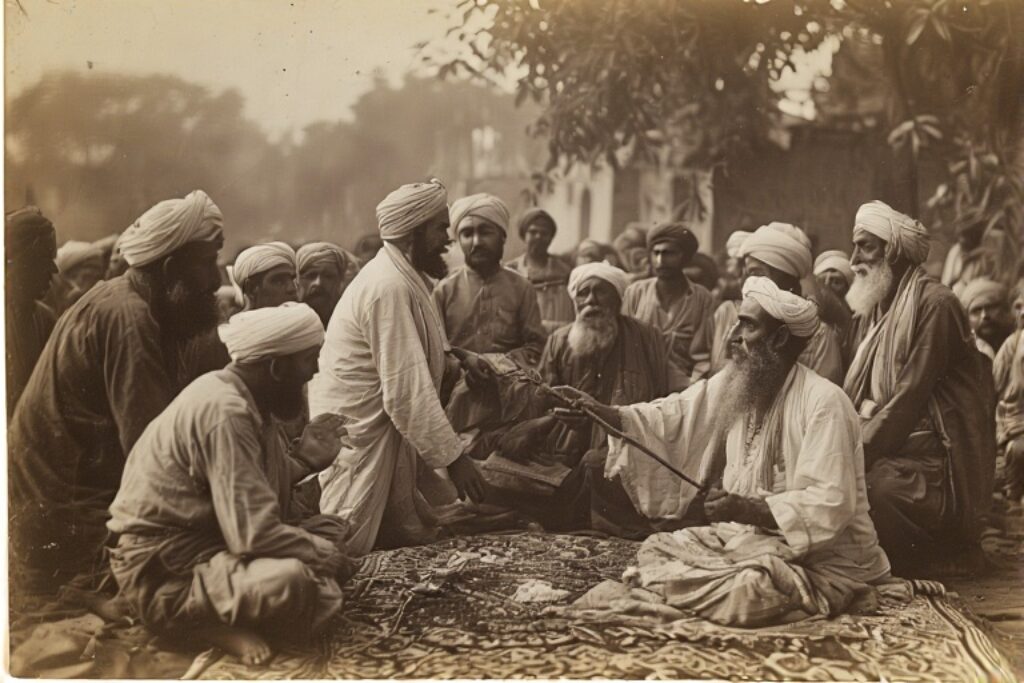
Turning away from Amir Khan’s path, Syed Ahmad (RA) turned his gaze to the Muslim community—only to find them broken, hollow, and drowned in empty rituals. Saddened, he returned to Delhi. But despair did not weaken him. Inside homes and within society, he began reform, laying the foundation of the Tariqah Muhammadiyyah movement. He launched a direct da‘wah campaign against corrupt Sufism, the flawed beliefs of the Shias, and the creeping influence of Hindu customs. Ordinary people flocked to his call, while the British, alarmed by his growing influence, branded him with the slanderous label—“Wahhabi.”
Back in Delhi, he devoted himself fully to da‘wah. It was here that two great scholars from Shah Waliullah’s noble family—Maulana Abdul Hai and Maulana Muhammad Ismail (RA)—took bay‘ah at his hand. Slowly but steadily, more scholars, shaykhs, and common people began to gather around him.
Islamic Revival and the Beginning of Unity
From Delhi, he spread the Islamic call (da’wah) to Muzaffarnagar, Saharanpur, Rampur, Bareilly, Shahjahanpur, and many other regions. Thousands of people abandoned anti-Tawheed beliefs and returned to the path of the Sunnah.
The prominent scholar Haji Abdur Rahim came with thousands of disciples to pledge bay‘ah. A wave of revival began to flow across the region—spreading the light of Sunnah and Tawheed everywhere.
Return to Hometown: Leadership Amidst Hardship
Rae Bareli was then struck by famine—cries of hunger echoed across the area. In this dire time, Syed Ahmad (RA) took on the responsibility of feeding the people. Under his leadership, the small village of Rae Bareli transformed into a vibrant khanqah—an Islamic educational and jihad preparatory center.
He traveled to various places, including Allahabad, Benares, Kanpur, and Sultanpur. Everywhere, people pledged bay‘ah to him and committed themselves to building their lives according to Islamic ideals.
His life was not only about worship and asceticism—it was a historical chapter of awakening an entire nation. In that same spirit, he began his journey to Lucknow with the great goal of Islamic reform.
Expansion of Islamic Da’wah in Lucknow

In the Lucknow cantonment, Syed Sahib had many followers, especially among the Pathans. He was accompanied by Maulana Abdul Hai, Maulana Muhammad Ismail (RA), Nawab Fakir Muhammad Khan, and over a hundred disciples. At that time, Lucknow was plagued by political chaos, moral decline, and religious confusion.
Syed Sahib resided near the Shah Pir Mosque on the western bank of the Gomti River. From morning till night, countless people began coming to him. Especially through Maulana Muhammad Ismail (RA)’s da’wah, thousands embraced Islam, abandoned innovations and polytheism, and returned to the path of Tawheed.
Prominent scholars pledged bay‘ah at his hands. Lucknow at that time witnessed many gatherings of devotion and miraculous events (karamat). Due to the widespread abandonment of Shia practices, there was concern among the authorities, but despite the risks, Syed Sahib continued his Islamic preaching.
Beginning of Jihad Preparation
After returning from Lucknow to Bareilly, he focused especially on the Muslims of Punjab. At that time, he began preparing young people for jihad, training them physically and in weaponry.
Hajj Journey: A New Chapter of Faith Awakening
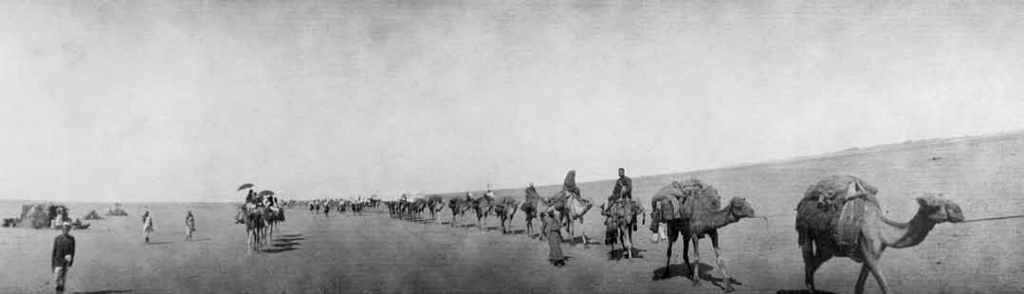
The year was 1821. The Muslim community was then religiously misled. Some so-called scholars were spreading false fatwas claiming sea travel for Hajj was unsafe, and that Hajj was not obligatory for Indian Muslims. In response, the great muhaddith Shah Abdul Aziz (RA) issued a clear fatwa declaring Hajj an absolute obligation for Muslims.
To establish this truth, Syed Ahmad Shaheed (RA) set off from Rae Bareli with a caravan of 400 people on the 1st of Shawwal, 1236 Hijri (1821 CE), for Hajj. His goal was not just pilgrimage, but to spread the message of faith and Tawheed wherever he passed.
Islamic Revolution Along the Way
In Mirzapur and Benares, thousands of people pledged bay‘ah to him. They repented from shirk and innovations, returning to the mainstream of Islam.
Calcutta, then the center of British rule, was stirred by a religious revolution through Syed Ahmad Barelawi’s da’wah. Prominent families of Calcutta declared, “Those who do not follow the Shariah will be boycotted from society.”
With a large caravan of 775 people, he set out from Calcutta toward Makkah. Finally, they reached Jeddah on May 16, 1822.
Faith Revolution in the Holy City
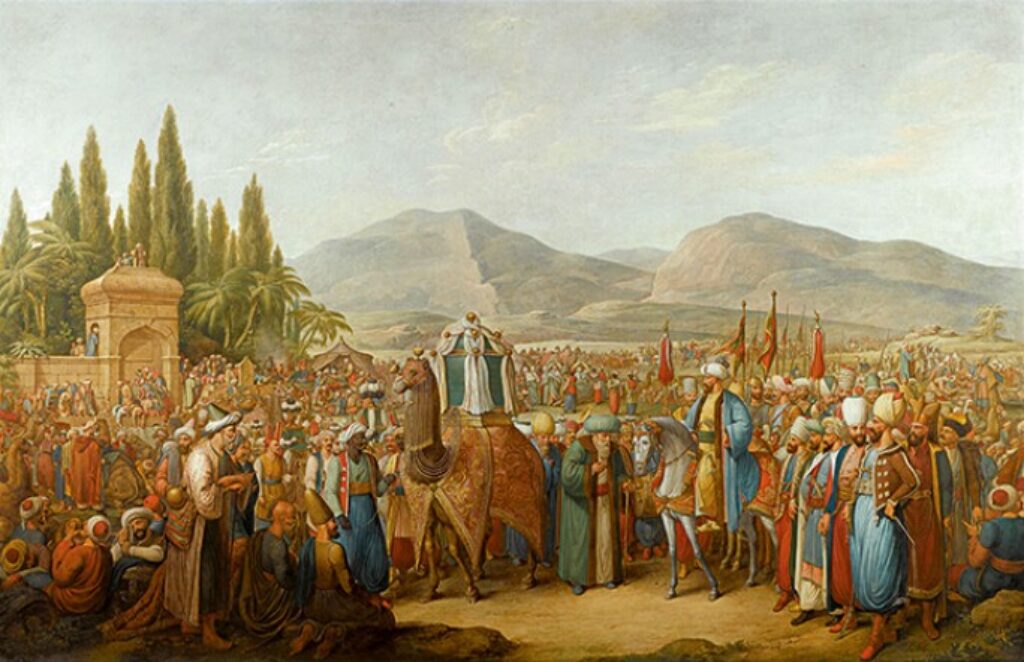
Upon arriving in Makkah, many imams and muftis pledged bay‘ah to him. During Ramadan, he devoted himself to worship in the holy city. Following the example of the Sahaba at ‘Aqabah, he took the ‘Bay‘ah of Jihad’ from his companions.
Praised in Madinah as Well
In Madinah, too, from scholars and saints to common people—everyone was mesmerized by his knowledge and spirituality. After performing Hajj for the second time, he returned to India on April 30, 1824.
Final Preparation for Jihad

Returning to Raebareli, he transformed his birthplace into a center for Islamic education, preaching, and jihad training. Under his leadership, strict asceticism, intense worship, and physical training continued—all for a noble purpose: dedicating life to the pleasure of Allah.
Crisis of the Muslim Ummah and the Necessity of Jihad
At that time, oppression by Sikh ruler Ranjit Singh over the Muslims of Punjab reached its peak. Mosques had turned into stables, and the call to prayer (Azan) was banned. This situation firmly committed him to the path of jihad.
International Outreach and Planning
Along with India, Syed Ahmad Barelvi sent appeals for jihad to many Muslim rulers, including those in Turkey. He chose Northwest India (the Punjab region) as the center of the Islamic movement.
Countless brave men from the Pathan tribes were his disciples who pledged support.
Hijrah and Beginning of Jihad: A Historic Step by Syed Ahmad Shaheed
January 17, 1826. A great chapter of history begins.
Syed Ahmad Barelvi (R.A.) bid farewell to his birthplace, Raebareli, eyes filled with tears, heart firm with faith—with a great mission: migration for Islam, preparing for jihad, and awakening the Ummah.

Caravan of 600 Mujahideen: A Tale of Sacrifice and Faith
The caravan included saints, young men, and even elderly women—all united by a single goal: to sacrifice for the pleasure of Allah.
Their journey was thrilling and difficult, from plains to deserts, mountains, valleys, rivers, and passes—they crossed them all. Along the way were hunger, thirst, robbers, foreign languages, and enemy spies—but their resolve was to move forward, not retreat.
Journey Route and Support
Dalmaun, Fatehpur, Banda, Jalaun, Gwalior, Tonk—they stopped at each place, rested, then continued. In Gwalior, the Maharaja gave gifts; in Tonk, the Nawab bade them farewell with honor.
Crossing Ajmer and the desert lands of Marwar, they reached Hyderabad (Sindh). There, hundreds of thousands took bay’ah at his hands. Sindh’s ruler, Mir Muhammad, gave him full support.
Then they departed for Pirkot, Shikarpur, Chhatargahban, and Dhadhar, finally reaching Bolan Pass on the Afghan frontier. At last, the caravan arrived at the valley of Shal.
This migration was not just a geographical relocation—it was the dawn of a new awakening. From here began the historic journey of jihad, the struggle to uphold the honor of Islam.
Afghanistan Tour: Call for Unity and Preparation for Jihad
1826. The caravan of Syed Ahmad Shaheed (R.A.) marched through the heart of India toward Afghanistan. His mission is jihad against the enemies of Islam and establishing unity among Muslims.
Efforts for Unity Among the Barakzai Brothers

At that time, Afghanistan was ruled by the Barakzai brothers—
In Kandahar: Purdil Khan, in Ghazni: Mir Muhammad Khan, in Kabul: Dost Muhammad Khan, and in Peshawar: Yar Muhammad Khan.
The goal of this journey was to end their familial division and establish Muslim unity against their enemies.
Tours and Preaching in Various Cities of Afghanistan
✅ Upon reaching Kandahar, hundreds of people pledged allegiance (bay’ah) at his hands.
✅ In Ghazni, 270 brave mujahideen joined him.
✅ In Kabul, the ruler Sultan Muhammad Khan personally welcomed him.
He called for social reform, and people from all walks of life, rich and poor, came to him.
Failure of Unity Efforts and the Journey to Peshawar
He made tireless efforts to unite the Barakzai brothers, but he could not succeed. Then he moved towards Peshawar.
Along the way, his call was:
“Rise, O Muslims! Sacrifice in the path of Allah!”
A New Chapter of History Begins
Upon reaching Nowshera, a historic chapter began—’Jihad’, which reshaped the history of the subcontinent.
Suggested: What is Tariqa-i Muhammadiya Movement
Battle of Akora (1826)
The First Victory of Islam Under Syed Ahmad Shaheed’s Leadership
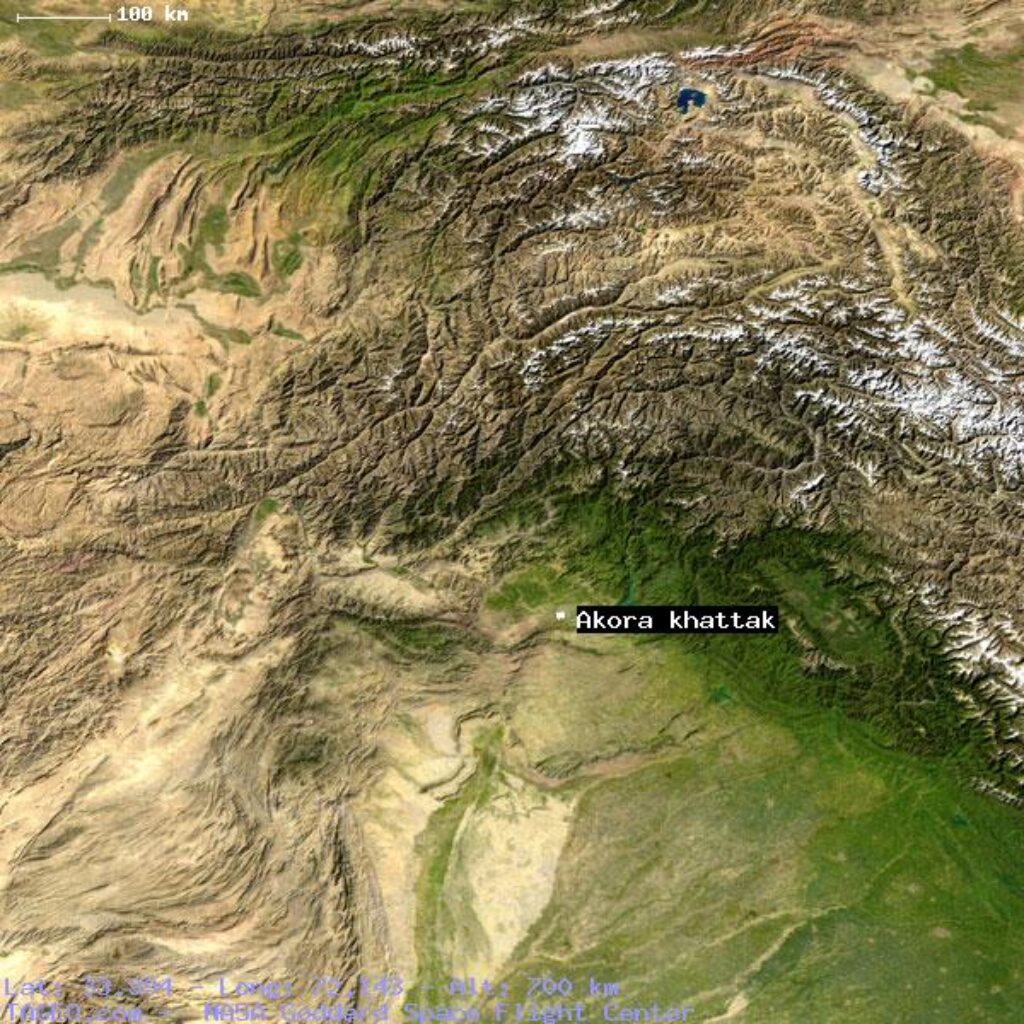
The Battle of Akora, fought in December 1826, was one of the earliest clashes between the Mujahideen forces of Syed Ahmad Barelvi and the Sikh Khalsa troops near Akora Khattak, close to the Kabul River. It marked the first notable confrontation of Syed Ahmad’s jihad movement in the frontier region and became a source of inspiration for his followers.
Call for Jihad and the Clash of Forces
Before the battle, Syed Ahmad Shaheed sent a dispatch to Maharaja Ranjit Singh, the ruler of Lahore, inviting him to embrace Islam or pay the jizya. If he refused both, war would follow. In this letter, Syed Ahmad is reported to have written:
“Perhaps your love for wine is not greater than our love for martyrdom.”
In response, a strong Sikh contingent was mobilized. Sources differ on the numbers: Muslim chronicles describe around 7,000 Sikh troops, while Sikh records downplay the size of the force. Syed Ahmad’s men, numbering around 600–700 Mujahideen, were vastly outnumbered but inspired by faith and the call to martyrdom. [3][4]
The Battle
On the night of 20 December 1826, the two sides clashed under the cover of darkness. Despite their small numbers, the Mujahideen launched fierce assaults on the Sikh positions. By dawn, Sikh forces were forced to retreat, leaving the battlefield to the Mujahideen.
Though the scale of the victory is debated—Muslim historians portraying it as a decisive triumph and Sikh accounts minimizing it—modern historians generally recognize it as a minor but morale-boosting success for Syed Ahmad’s movement.
Aftermath and Legacy
The outcome at Akora significantly boosted Syed Ahmad’s prestige. Tribal chiefs and scholars, previously hesitant, now pledged allegiance to him. Khadi Khan of Hund became his disciple, and Syed Ahmad stayed at Hund Fort for several months, consolidating his influence. This marked the beginning of his authority in the frontier region and strengthened the belief that Islamic revival under his leadership was possible.
Battle of Haidru (Hazru) / Attock (1827)
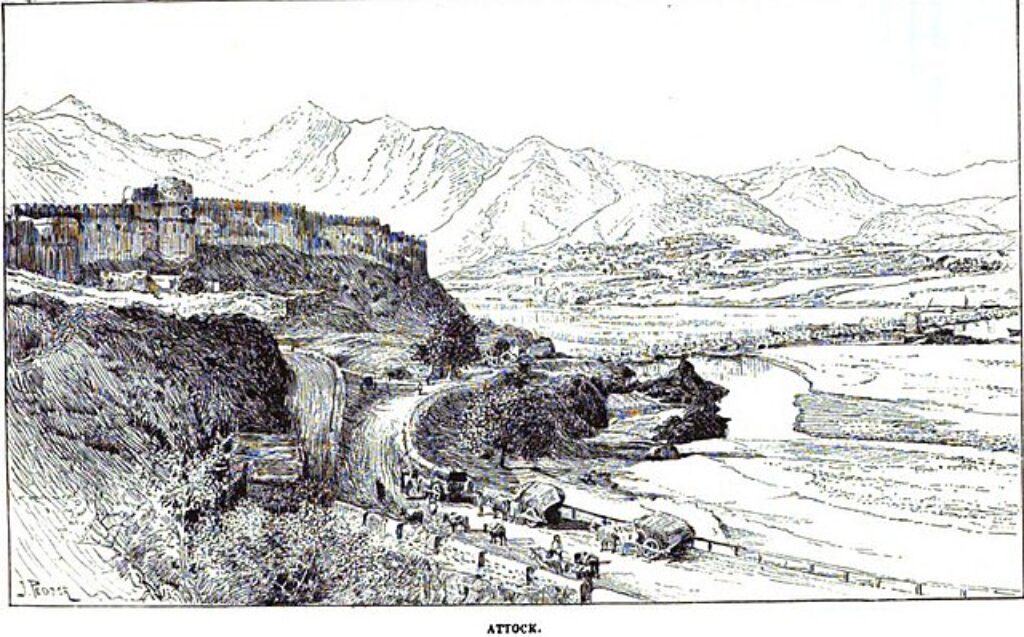
An Early Engagement Under Syed Ahmad Shaheed’s Leadership
The Raid on Hazru, also referred to in some sources as the Battle of Haidru or the Battle of Attock, took place in early January 1827 in the Hazara region, a major trading center under Sikh control. This operation was among the first military actions conducted under the leadership of Syed Ahmad Shaheed following his appointment as Imam and Amir at Hund.
Planning, Leadership, and Lessons
Local supporters proposed a dawn attack on Hazru to disrupt Sikh trade and assert the growing influence of the mujahedin. Syed Ahmad authorized the raid but did not personally participate, emphasizing the importance of organization, discipline, and strategic planning.
The raiders, comprising local volunteers and mujahedin from surrounding areas, were instructed to adhere to Islamic rules of warfare, including fair treatment of civilians and proper distribution of spoils. However, some mujahedin ignored these instructions, engaging in looting and disorderly conduct.
This experience highlighted a critical lesson: the success of jihad required centralized, disciplined leadership under a righteous Imam. The lack of strict coordination underscored the need for Syed Ahmad’s spiritual and political guidance.
The Raid
The dawn attack caught the Sikh defenders by surprise, causing panic and inflicting damage, though the raiders could not decisively occupy the town. Historical sources generally describe the outcome as a partial success—a morale boost for the mujahedin, but not a definitive victory.
Aftermath and Significance
The raid served as a testing ground for the mujahedin’s discipline and readiness under Syed Ahmad’s leadership. It highlighted the need for strict adherence to Islamic rules of warfare and prepared the followers for future engagements.
Declaration of Khilafah and Social Renewal
Following the raid, the historic bay‘ah ceremony was held at Hund Fort on January 13, 1827. Syed Ahmad Shaheed (R.A.) was unanimously declared Imam, and local tribal leaders—including Khadi Khan and Ashraf Khan—along with scholars from India, pledged allegiance under his leadership.
This bay‘ah symbolized the beginning of an ideal Islamic state, combining spiritual authority with governance. Under Syed Ahmad’s guidance, Shariah law was implemented: verdicts were issued from Darul Qaza, religious discipline improved, and the moral and spiritual revival of society gained momentum. Muslims who had neglected prayer returned to their duties, and the principles of Islam were restored in public life.
Battle of Shaidu (Pirpai) (1827)
Courage, Betrayal, and the Test of Faith
The Battle of Shaidu, also called the Battle of Pirpai, was a decisive engagement between the mujahedin of Syed Ahmad Shaheed and the Sikh Khalsa army led by the formidable Hari Singh Nalwa. Fought in March 1827, this battle revealed the harsh realities of internal betrayal and the perils of disunity, even amidst courage and faith.

After the Victory of Akora: Seeds of Treachery
Following the victory at Akora, Syed Ahmad Shaheed’s movement gained momentum among the Pashtun tribes. Tribal chiefs and landlords pledged allegiance, but some secretly conspired with the Sikhs, fearing the loss of their influence.
On the eve of the battle, Syed Ahmad reportedly fell ill, allegedly due to poisoning orchestrated by the servants of Yar Muhammad Khan, a local Afghan ally who had allied with the Sikhs. Despite his weakened condition, Syed Ahmad insisted on being present at the battlefield, demonstrating unwavering dedication and trust in Allah.
The Battle
The Sikh army fortified its positions near Saidu, reinforced by generals Budh Singh Sandhawalia, Gulab Singh, and Atariwala Sardars. The Mujahedin, composed largely of Khattak and Yousafzai tribesmen, launched repeated bold charges, showing courage and determination.
Although the Mujahedin outnumbered the Sikh forces on paper, discipline issues and lack of coordination hindered their effectiveness. The crucial moment came when Yar Muhammad Khan and his troops deserted the battlefield, joining the Sikh side. Surrounded and attacked from multiple fronts, the Mujahedin were forced to retreat by evening, and the Sikhs held the field.
Historical estimates suggest nearly 6,000 Mujahedin were killed or wounded, while the Sikh casualties were comparatively lower. Modern historians note that betrayal, not lack of bravery, decided the outcome.
Aftermath and Lessons
- The defeat at Shaidu was a turning point, highlighting the danger of internal division and the necessity of loyalty and discipline within the jihad movement.
- Syed Ahmad Shaheed, despite this setback, continued his struggle, reorganizing his forces and preparing for future campaigns in Buner, Swat, and Hazara.
- The eventual death of Yar Muhammad Khan in intertribal conflicts was seen by many contemporaries as a form of divine justice for his betrayal.
Panjtar: A New Beginning, A New Chapter
After the tragic setback at Saidu, Syed Ahmad Shaheed (R.A.) and his followers took refuge in Panjtar, a secure mountainous stronghold in Swat. This fortress became the foundation of a new Islamic state, offering safety, stability, and a center for spiritual and military organization.
Panjtar soon transformed into a bastion of faith, where the mujahidin could recite the Qur’an, engage in Zikr, and prepare for future campaigns without fear of immediate attack. The atmosphere fostered discipline, devotion, and communal solidarity, essential for sustaining the jihad movement after earlier losses.
During this period, Syed Ahmad (R.A.) traveled extensively through the mountain villages of Buner, Swat, and Hazara, calling the people to faith, righteousness, and adherence to Shariah. It was also a time of profound personal loss: Maulana Abdul Hai (R.), Syed Ahmad’s beloved companion and the movement’s Shaikhul-Islam, passed away. His death was mourned deeply, leaving a significant void in the spiritual leadership of the mujahedin.
Confrontation with General Ventura and Khadi Khan’s Betrayal

After establishing his authority in the frontier regions, Syed Ahmad Shaheed (R.A.) faced both external threats and internal treachery. One of the most notable challenges came from General Jean-Baptiste Ventura, a French officer commanding Sikh forces under Maharaja Ranjit Singh.
Ventura led an army of 10,000–12,000 troops in a surprise attack, expecting an easy victory. However, the mujahedin, inspired by faith and the honor of martyrdom, mounted a fierce resistance. Despite his experienced troops, Ventura’s forces were repelled and forced to retreat to Lahore.
Not deterred, Ventura attempted to advance towards the Sammha region, but Syed Ahmad had strategically fortified the mountainous terrain. Realizing the strength and preparedness of the mujahedin, Ventura retreated without engaging in battle, marking a notable defensive success for Syed Ahmad’s forces.
Khadi Khan’s Treachery and Justice
While external threats were significant, internal betrayal posed an even greater danger. Khadi Khan of Hund, who had initially pledged allegiance to Syed Ahmad Shaheed Barelvi, became resentful after the mujahedin shifted their base to Panjtar. Secretly, he colluded with the Sikhs, providing them with intelligence and undermining the movement from within.
Syed Ahmad (R.A.) responded decisively. He launched an operation against Hund, reclaiming control and ensuring that Khadi Khan’s betrayal was punished. Khadi Khan was ultimately killed during this confrontation, demonstrating Syed Ahmad Barelvi’s unwavering commitment to the integrity and unity of his Islamic revival movement.
Battle of Zaida (1829)
The Victory Legend of Syed Ahmad Shaheed
The Battle of Zaida, fought in September 1829, unfolded during a revolutionary era when faith guided every step and martyrdom was the ultimate honor. Syed Ahmad Shaheed (R.A.) moved resolutely to write a new chapter in Islamic history, inspiring his followers to rise against both external enemies and internal treachery.
Background and Conspiracies
After the events of Saidu and the death of Khadi Khan, the internal enemy still lingered. Khadi Khan’s brother, Amir Khan, allied with Yar Muhammad Khan, the same traitor who had conspired to poison the Mujahideen in the Battle of Saidu. Despite repeated betrayals, Syed Ahmad Shaheed (R.A.) maintained his principle: “Do not create fitna.”
Meanwhile, the Sikh Empire, under Hari Singh Nalwa, reinforced by Budh Singh Sandhawalia and 4,000 cavalry from Attock, prepared to suppress the uprising. Tribal leaders loyal to the Mujahideen, including Ashraf Khan of Zaida, Fateh Khan of Panjtar, and remnants of Khadi Khan’s forces, rallied to defend the region.
The Battle
The battlefield saw roughly 30,000 Sikh troops facing a comparable number of Mujahideen (historical chronicles exaggerate up to 100,000). Despite the Mujahideen’s courage and devotion, internal betrayal struck once again—Yar Muhammad Khan and his men deserted, weakening Syed Ahmad’s forces.
Even so, the faith and resolve of the mujahedin acted as an invisible shield. Their courage mirrored the spirit of earlier Islamic victories, reminiscent of the resolve at Badr.
The fighting was intense, but the Mujahideen managed to capture enemy cannons, and the Durrani-aligned forces collapsed. In a decisive moment, Yar Muhammad Khan was killed, ending his treachery and scattering his followers.
Outcome and Significance
- Victory for the Mujahideen: Zaida became a symbol of faith, discipline, and resilience.
- End of Yar Muhammad Khan’s Betrayal: The traitor’s death reinforced the importance of loyalty and unity within the movement.
- Spiritual and Moral Boost: Despite heavy casualties (~6,000), the battle strengthened morale and validated Syed Ahmad Shaheed’s leadership and vision.
The Heroism of Hund Fort and the Aftermath of Zaida
Following the victory at Zaida, the routed Durrani forces launched an attack on Hund Fort, which was held by only about fifty mujahidin. Despite being vastly outnumbered, the defenders fought with undaunted courage and determination, successfully repelling the assault. This attempt by the enemy ended in complete failure.
The Enemy Flees, the Mujahideen Advance
The victory at Hund Fort sent ripples of fear among the Durrani rulers. Rumors of a Mujahideen advance towards Peshawar caused them to abandon the city, allowing Syed Ahmad Shaheed’s forces to capture strategic regions such as Ashra and Amb.
New Campaign: Kashmir
Syed Ahmad Shaheed (R.A.) then turned his attention towards Kashmir. To advance his campaign, he dispatched an expedition under the command of his nephew, Syed Ahmad Ali, to capture Phulera. Unfortunately, the Sikh forces had prepared a surprise ambush, resulting in the martyrdom of Syed Ahmad Ali and several other mujahidin.
Rebuilding Governance and Social Reform
Even in the face of personal loss, Syed Ahmad Shaheed (R.A.) did not waver in his mission. In Amb and the surrounding areas:
- Shariah law was implemented with fairness and rigor.
- Governance, justice, and social reform were revitalized according to Islamic principles.
- A renewed sense of discipline, devotion, and communal solidarity inspired the mujahedin to continue their struggle.
Battle of Mayar (1830)

Faith, Strategy, and the Path to Peshawar
In October 1830, the Mujahideen, led by Syed Ahmad Shaheed Barelvi, faced a formidable challenge from Sultan Muhammad Khan, the Durrani-appointed governor of Peshawar. The battle took place in the Mayar region, situated between Toru and Hoti in the Peshawar Valley.
Syed Ahmad Shaheed, with a force of approximately 3,000 Mujahideen, confronted Sultan Muhammad Khan’s significantly larger army of 12,000 troops and six cannons. Despite being outnumbered, the Mujahideen’s unwavering faith and strategic prowess led them to victory. Maulana Muhammad Ismail and Sheikh Wali Muhammad played pivotal roles by capturing the enemy’s artillery, turning the tide in favor of the Mujahideen.
The Durrani forces, overwhelmed by the Mujahideen’s resolve, were forced to retreat, leaving behind 80 dead. The Mujahideen suffered 38 casualties, with 28 killed on the battlefield and 10 in subsequent engagements.
Aftermath and the Capture of Peshawar
Following their triumph at Mayar, Syed Ahmad Shaheed advanced towards Peshawar. The city’s residents welcomed him with open arms, celebrating his arrival with illuminations and the distribution of sweets and sherbet. Sultan Muhammad Khan, realizing the Mujahideen’s determination, fled the city with his family and initiated peace negotiations. He pledged:
“I will turn Peshawar into a stronghold of Islamic governance and implement Shariah law.”
Syed Ahmad Shaheed, prioritizing Islamic governance over territorial control, allowed Sultan Muhammad Khan to retain his position as governor, contingent upon his allegiance and the implementation of Shariah law. This decision, however, proved to be a miscalculation, as Sultan Muhammad Khan later betrayed the Mujahideen, leading to further challenges for Syed Ahmad Shaheed’s movement.
Quzat Genocide and Betrayal
The Fall of the Quẓāt: Treachery, Revenge, and Martyrdom in Peshawar

After the temporary triumphs in Peshawar, a dark tide of treachery swept the valley. Those who had accepted Syed Ahmad Shaheed’s (R.A.) call to revive Islam — the qazīs, muḥtāsibs, and local officers appointed to administer Shariah — became targets of a bitter and organised backlash. What followed is remembered in movement histories as the fall of the Quẓāt: a systematic purge that decimated the civil-religious leadership the mujahidin had installed.
Context: why the purge occurred
Syed Ahmad’s reforms — enforcing Shariah, appointing new judges and market supervisors, and curbing customary privileges — threatened entrenched interests. Tribal maliks, worldly-minded ulama, and rival chiefs who profited from the old order found common cause with pro-Sikh elements and resentful Barakzai leaders. When political momentum shifted, those resentments boiled over into a coordinated campaign of revenge against the movement’s officials. Modern scholars emphasise that the killings were rooted in a complex mix of political rivalry, loss of patronage, and fear of losing customary authority rather than in a single motive.
What happened — scope and nature of the killings
Contemporary narratives and later historiography report widespread assassinations and massacres across Peshawar and neighbouring districts in late 1830, targeting the very officers who administered Shariah — qazīs, muḥtāsibs, revenue collectors — as well as numerous mujahidin. Sources differ on exact casualty totals (early partisan accounts give higher figures), but there is scholarly consensus that the violence was systematic enough to dismantle the movement’s civil administration in the valley and create a climate of terror.
Immediate consequences for the movement
The purge destroyed the administrative backbone Syed Ahmad had built: courts, market supervision, and revenue collection collapsed in many areas. Panic and loss of local support followed, territory slipped from mujahidin control, and the movement’s capacity to govern was gravely weakened — a blow that preceded the final stand at Balakot. Historians point to these massacres as a decisive turning point in the decline of Syed Ahmad’s attempt to establish a durable Shariah-based polity in the Peshawar valley.
Second Migration and New Beginning (1830)
Betrayal, Bloodshed, and the Path of Forgiveness
The massacres in Peshawar and the brutal annihilation of the Quẓāt left the land soaked in blood and the movement shattered. The mujahedin who had once held the banner of Islam in triumph now faced broken ranks and bitter hearts. Syed Ahmad Shaheed Barelawi (R.A.), stabbed in the back by betrayal and treachery, gathered scholars and tribal elders. With calm dignity, he explained the purpose of his mission and analyzed the catastrophe that had unfolded.
The verdict was clear: the land of Peshawar was no longer fertile ground for the movement. The betrayal of its people and leaders had poisoned the soil. Migration was the only option left.
The Decision to Migrate
Though many wept, pleaded, and urged him to stay, Syed Ahmad Barelvi knew that the lessons of treachery must not be forgotten. He chose not vengeance, but wisdom: “A believer,” he reminded them, “is not bitten twice from the same hole.”
This second migration marked the end of the first great chapter of his jihad in the frontier. With patience and reliance upon Allah, Sayyid Ahmed Shaheed turned his gaze towards new lands where the call of Islam might be received with sincerity.
Example of Forgiveness
Even in the face of such betrayal, Syed Ahmad’s heart inclined towards mercy. When he learned that Fateh Khan of Panjtar had conspired with Sultan Muhammad Khan, he did not exact revenge. Instead, he forgave him — even presenting him with gifts. It was a living example of prophetic forbearance, echoing the sunnah of the Messenger ﷺ, who repaid treachery with magnanimity.
Lessons from the Second Migration
- Forgiveness over revenge: Even when betrayed, Syed Ahmad chose mercy.
- Wisdom over passion: He recognized that poisoned soil cannot bear righteous fruit.
- Faith over despair: Migration was not retreat, but a new beginning, keeping alive the mission of reform and jihad.
This migration was not an end but a new dawn. It prepared the ground for the next stage of struggle — leading ultimately towards the mountains of Hazara and, finally, Balakot.
Towards Kashmir: On the Path of New Beginnings, Syed Ahmad Shaheed
The dark shadow of betrayal spread everywhere. Yet, a group of faithful companions could not leave their leader, Syed Ahmad Shaheed, alone. In their eyes was the search for a new dawn, and the goal—Kashmir.
Kashmir was not just a place, but an address for rewriting history. From here, India’s interior could be reached, and the Muslim lands of Central Asia could extend a hand. This journey of hope, faith, and sacrifice was a brave step towards a new history.
Balakot: The Center of the Islamic Movement
The Second Migration began with the dream of establishing the center of the Islamic movement in Kashmir. The path was covered with snow and full of thorny mountain turns. Due to continuous Sikh attacks and internal tribal conflicts, the administration of the Pakhli and Kaghan valleys was unstable. The locals earnestly appealed for Syed Sahib’s help.
Balakot was a strategically important position, surrounded by mountains with the only entry point at the mouth of the Kunhar River. On April 17, 1831, Syed Ahmad Shaheed arrived at Balakot and from here began preparations for the Islamic movement towards Kashmir.
Battle of Balakot (1831)

Faith Against Empire: The Final Stand of Syed Ahmad Shaheed
In May 1831, the serene valley of Balakot became the stage of one of the most defining battles of resistance in the Indian subcontinent. This natural fortress, surrounded by mountains and rivers, turned into the arena where Syed Ahmad Shaheed Barelvi and his devoted Mujahideen faced the might of the Sikh Khalsa under Prince Sher Singh, son of Maharaja Ranjit Singh.
Despite having only 600–700 fighters, Syed Ahmad Shaheed chose Balakot as his final bastion. In contrast, the Sikh army numbered 10,000 or more, supported by artillery and aided by treachery from local collaborators.
The Enemy Approaches: Treachery at the Gates
Initially, Sher Singh hesitated to advance. Balakot’s terrain—its narrow valley paths and natural defenses—made a frontal assault risky. But betrayal opened the way. Some locals, secretly aligned with the Sikhs, guided the army towards Matikot, a vantage point overlooking the Mujahideen camp.
On 6 May 1831, the Sikh cannons roared, showering fire into the valley. The Mujahideen, outnumbered and encircled, stood firm, their voices rising with “Allahu Akbar!”
The Martyrdom of Syed Ahmad Shaheed
Syed Ahmad Shaheed fought at the front lines, encouraging his companions to remain steadfast. While firing from behind a rock, he was struck down by a bullet. His fall shook the ranks, but he had already lit the fire of faith that no sword could extinguish.
Shortly after, Maulana Muhammad Ismail Shaheed, his closest lieutenant and brother-in-law, was also martyred in the thick of battle. Leaderless, the Mujahideen faltered as waves of Sikh forces pressed in. The field of Balakot was soon soaked in the blood of martyrs—over 500 Mujahideen perished that day.
Aftermath: Blood and Betrayal
The Sikhs desecrated the battlefield, mutilating the bodies of martyrs. Local traitors, who had conspired with the invaders, plundered the belongings of the Mujahideen. Yet, even in apparent defeat, Balakot became a symbol of ultimate sacrifice and resistance against oppression.
The martyrdom of Syed Ahmad Shaheed and Shah Ismail Shaheed was not the end but a beginning. Their blood nourished the soil of resistance, inspiring generations of reformers and revivalists in India.
Lessons from Balakot
- Martyrdom as victory: Though the Mujahideen fell, Balakot immortalized Syed Ahmad Shaheed as a martyr and symbol of resistance.
- Faith over fear: A few hundred stood against thousands, proving that courage rooted in belief can shake empires.
- Unity as survival: Internal betrayal and disunity caused more harm than the enemy’s cannons.
Suggested Link: Was Syed Ahmad Shaheed Barelvi a British Agent? Historical Analysis
Contribution to Religious Reform
Sayyid Ahmad Barelvi (R.A.) was not merely a reformer.
He was a founder of a spiritual order, a strategic leader, and a visionary thinker.
His personality, Dawah, and influence continue to touch hearts even today.
Abul Hasan Ali Nadwi wrote:
“Through Shah Abdul Aziz, Allah created such great personalities who transformed the lives of thousands of people. The truth of this claim is evident in his Khalifa—Sayyid Ahmad Shahid (RA).”
Under his leadership, religious reform, Jihad, and the great struggle for spiritual purification left a profound impact on the lives and society of Muslims in the subcontinent.
Nawab Siddiq Hasan Khan wrote:
“Through his hands, countless people returned to the path of Allah. His Khalifas freed India from shirk and bid‘ah, restoring it to the path of the Qur’an and Sunnah.”
More than forty thousand Hindu leaders embraced Islam under his guidance.
Three Dimensions of His Movement
Syed Ahmad’s mission can be seen through three great streams, yet all flowed to one ocean:
to re-establish Islam as a living, victorious force.
- Religious Reform – Reviving forgotten Sunnah: the greeting of salaam, Islamic dress, correction of marriage practices, restoration of widows’ rights, purification from Hindu customs, abolishment of ta’ziyah, and cleansing of shirk and bid‘ah.
- Spiritual Awakening (Tariqah Muhammadiyyah) – A fusion of Chishti, Qadiri, Naqshbandi, and Mujaddidi paths, distilled into a single tariqah that combined purification of the soul with revival of Islamic order.
- Jihad (Armed Struggle) – From Akora in 1822 against the Sikhs, to countless battles thereafter, until the final stand at Balakot in 1831, where Syed Ahmad Shaheed (R) fell, sword in hand, against the joint Sikh-British forces—sealing his life with martyrdom.
British Distortion of History and Propaganda
Sayyid Ahmad Shahid Barelvi (RA) was an unparalleled leader of Islamic revival and reform in the Indian subcontinent. However, his courageous leadership, anti-British stance, and the widespread impact of his movement drew the attention—and ire—of the ruling British authorities. As a result, the British rulers and historians backed by them attempted to distort his true history.
The British aimed to create confusion among the public and limit the influence of Sayyid Ahmad (RA). He was falsely labeled as a “Wahhabi” or as someone opposing legitimate religious authorities, portraying his movement as extreme and hostile. Even today, remnants of this misrepresentation persist in some accounts, failing to reflect the true magnitude of his religious, social, and political contributions.
Fortunately, numerous researchers and Islamic scholars have corrected this distorted history. They have demonstrated that Sayyid Ahmad Shahid Barelvi’s (RA) movement was a well-organized reform and religious propagation effort, aimed at restructuring Muslim society and eradicating superstitions and innovations (bid‘ah).
Although the British distortion briefly created some confusion, through historical research, we now understand that Sayyid Ahmad Shahid (RA) was a true Muslim leader, reformer, and warrior, who dedicated his life to establishing and defending Islam.
Suggested Link: What is the Tariqat-e-Muhammadiya Movement? Historical Background
Contributions of the Successors
In just 45 years of life, Hazrat Sayyid Ahmad Shahid Barelvi (RA) accomplished extraordinary work, the impact of which extends far beyond imagination. His efforts in Tajdid (revival), Jihad, and the Tariqa Muhammadiyya have, for generations, spread the light of Islam across the Muslim society of the subcontinent, removed the darkness of shirk (polytheism) and bid‘ah (innovation), and served as an inspiration for spiritual purification.
Hazrat Sayyid Ahmad’s (RA) two main successors, Hazrat Maulana Karamat Ali Jaunpuri (RA) and Hazrat Maulana Noor Muhammad Niyampuri (RA), expanded this noble chain across Greater Bengal, Bihar, Orissa, and Assam. There, they undertook innumerable services: resisting the British, participating in independence movements, propagating Islam, eradicating Hindu-influenced customs and rituals, guiding Muslims in spiritual purification and religious education, and standing against falsehood—work beyond what anyone else could even imagine.
Among them, the contribution of Maulana Karamat Ali (RA) is particularly noteworthy.
Radiant History of Faith
Although Hazrat Sayyid Ahmad Shahid Barelvi (RA) attained martyrdom in the Battle of Balakot in 1831, his ideals remain alive; his spirit has not faded. From that day to the present, any Islamic movement in the subcontinent—past, present, or future—echoes the legacy of the great Balakot movement.
In a Muslim society weakened by centuries of stagnation, he revitalized the meaning of Islamic concepts such as Dawah, Khilafat, and Jihad, making the dream of establishing Din alive, even if only for a brief moment. Hazrat Sayyid Ahmad Shahid Barelvi (RA) demonstrated the true meaning of martyrdom in the path of Allah, and even today, he remains a beacon of Islamic consciousness for the Muslims of the subcontinent.
The life of Sayyid Ahmad Shahid Barelvi (RA) is a history illuminated by faith. We pray for this great leader and all his companions who struggled to revive Islamic governance—may Allah grant them Jannah. Ameen.
Frequently Asked Questions (FAQ)
- Who was Sayyid Ahmad Shahid Barelvi?
✅ Sayyid Ahmad Shahid Barelvi (1786–1831) was an influential 19th-century Islamic scholar, reformer, and Mujahid in India. He was the founder of the Tariqa Muhammadiyya movement, aimed at re-establishing Islamic governance and opposing bid‘ah (innovations in religion). - What was the Tariqa Muhammadiyya movement?
✅ It was an Islamic revival movement led by Sayyid Ahmad Shahid Barelvi, focused on returning to the teachings of the Qur’an and Hadith, removing bid‘ah, and establishing Islamic governance through Jihad against the Sikhs and British rule. - What was the Battle of Balakot and its significance?
✅ The Battle of Balakot (1831) was a key battle of the Tariqa Muhammadiyya movement against the Sikh Empire. Sayyid Ahmad Shahid and Shah Ismail Shahid were martyred in this battle, which became a symbol of Islamic resistance. - Did Sayyid Ahmad fight against the British?
✅ Yes, he resisted British colonial rule, although his primary struggle was against the Sikh Empire, which was oppressing Muslims in northwest India. - What were Sayyid Ahmad Shahid Barelvi’s educational contributions?
✅ He promoted Islamic education through Madrasa-i-Rahimiya, continuing the scholarly tradition of Shah Waliullah Dehlawi, emphasizing the Qur’an and Hadith. His movement laid the foundation for the Ahl-i Hadith and Deobandi revival. - Was Sayyid Ahmad Shahid a British collaborator?
✅ No. This is a misconception. Historical records show he fought against both the British and the Sikh rulers to establish Islamic governance. His movement was devoted to faith and freedom. - What is Sayyid Ahmad Shahid’s legacy?
✅ His legacy influenced Islamic revival in South Asia through the Ahl-i Hadith and Deobandi movements. His Jihad and reformist spirit inspired subsequent generations of scholars. - Why was Sayyid Ahmad Shahid defeated at Balakot?
✅ The Sikhs gained a strategic advantage through local collaboration and breached the Mujahideen’s natural fortifications. Leadership gaps and numerical weakness also contributed to the defeat. - Which madrasa was Sayyid Ahmad Shahid associated with?
✅ He was associated with Madrasa-i-Rahimiya, a center for Islamic learning established by Shah Waliullah Dehlawi. - Where can I read Sayyid Ahmad Shahid’s biography?
✅ Apart from this article, refer to Nadvi’s Tarikh Dawat wa Azimat, Siddiqui’s Syed Ahmad Barelvi and the Mujahidin Movement, and Hardy’s The Muslims of British India.
📚 Key References
- Abu’l Hasan Ali Nadwi, Sirat-i-Sayyid Ahmad Shaheed
- Ghulam Rasul Mihr, Sayyid Ahmad Shaheed (Urdu, Lahore: 1938; English translation exists)
- Muhammad Ismail Shaheed, Tareekh-i-Mujahideen
- Qeyamuddin Ahmad, Sayyid Ahmad Shahid: His Life and Mission (Delhi: 1966)
- Ganda Singh, Life of Syed Ahmad Barelvi, 1786–1831 (Patiala: 1939)
- Khushwant Singh, A History of the Sikhs, Vol. 1
- William Irvine, Later Mughals
- ResearchGate, Sayyid Ahmad Barailvi: His Movement and Legacy from the Pukhtun Perspective
- Altaf Qadir, Sayyid Ahmad Barailvi: His Movement and Legacy from the Pukhtun Perspective (analysis of the Peshawar massacres and regional politics).
- Wilayat Ali (Eyewitness), Sirat-i Sayyid Ahmad Shaheed
- Waqaiʿ Sayyid Ahmad Shahid and contemporary narrations collected in later editions (primary narrative material referenced in modern studies).
- Charles Allen, God’s Terrorists: The Wahhabi Cult and the Hidden Roots of Modern Jihad (2006)
- A. Qadir, “Historiography of the Jihad Movement” — useful review of sources and disputed figures.
- Iqbal Ahmad, Syed Ahmad Shaheed aur unki Tehreek
- Syed Ahmad/Balakot background summaries and timelines (overview of how the Peshawar massacres related to the final Balakot encounter)
- Shah Ismail Shaheed’s letters (compiled in Mansab-e Imamat)
- M. S. A. H. Ali Nadwi, Life Sketch of Syed Ahmad Shahid (Waqai / movement narratives)
- Siddiqui, R. A., Syed Ahmad Barelvi and the Mujahidin Movement
- Nadvi, Abul Hasan Ali, Tarikh Dawat wa Azimat
Additional References
- Hardy, Peter, The Muslims of British India
- Writings of Shah Waliullah Dehlawi and his successors
- Shah Ismail Dehlawi, Taqwatu’l Iman
- Ibn Kathir, Al-Bidaya wa’l Nihaya