

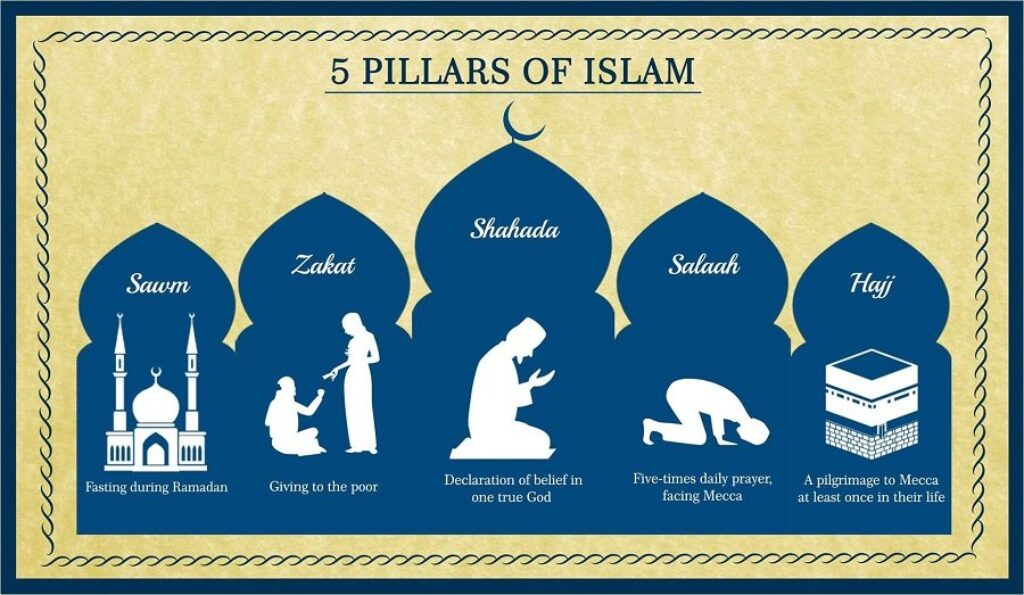
Iman, or faith, is the heartbeat of Islam, anchoring a Muslim’s spiritual, moral, and social life. More than a mere belief, Iman is a dynamic force that integrates conviction in the heart, affirmation through speech, and righteous actions through deeds. Rooted in the Quran and Hadith, Iman encompasses belief in Allah, His angels, books, messengers, the Day of Judgment, and divine decree. This SEO-optimized, comprehensive guide explores Iman’s linguistic and theological definitions, its six pillars, its role in Islamic life, its relationship with Islam and Ihsan, its dynamic levels and branches, practical ways to strengthen it, challenges, and its esoteric dimensions. Drawing from authentic Islamic sources, this article is designed for readers seeking to understand “Iman in Islam,” “pillars of faith,” or “how to strengthen faith in Islam.”
Introduction: Iman as the Core of Islamic Spirituality
Iman (إيمان) is the essence of Islam, transforming acts of worship—prayer, fasting, charity—into meaningful expressions of devotion. Without Iman, these deeds lack spiritual weight; with it, even small acts, like removing a harmful object from a path, become rewarded worship. The Quran addresses believers as “O you who have believed (Ya ayyuhal-ladhina amanu)” over 80 times, signaling that all Islamic obligations hinge on Iman. This article delves into Iman’s multifaceted nature, offering a detailed, user-friendly exploration for both new and seasoned Muslims, as well as those curious about Islamic faith.
Iman is not static; it grows with obedience and weakens with sin, requiring constant nurturing. As Imam al-Nawawi noted, “Every act of obedience increases Iman, and every sin decreases it.” This guide covers Iman’s foundations, practical applications, and spiritual depth, ensuring a holistic understanding.
Linguistic and Theological Definition of Iman

Linguistic Roots
The Arabic word Iman derives from the root ʾ-m-n (أ-م-ن), meaning security, peace, and trust. Linguistically, Iman implies:
- Tasdiq (تَصْدِيق): Affirmation or acknowledgment of truth.
- Amn (أمْن): Inner security and tranquility from trusting in Allah.
Thus, Iman is a state of heartfelt assurance and commitment, providing spiritual peace through belief in divine truths.
Theological Definition
Scholars of Ahl al-Sunnah wal-Jama‘ah define Iman as: “Belief in the heart, affirmation by the tongue, and action by the limbs. It increases with obedience and decreases with sin.” This triadic definition emphasizes Iman’s holistic nature, refuting the notion that faith is merely intellectual or ritualistic.
Quranic Evidence:
- Heart: “The believers are only those who, when Allah is mentioned, their hearts tremble, and when His verses are recited, it increases their faith” (Surah Al-Anfal 8:2).
- Tongue: “Say, ‘We have believed in Allah and what has been revealed to us’” (Surah Al-Baqarah 2:136).
- Limbs: “Those who believe and do righteous deeds will have the Gardens of Paradise” (Surah Al-Kahf 18:107).
Hadith Evidence:
- The Prophet (ﷺ) said: “Iman has over seventy branches; the highest is the declaration ‘La ilaha illa Allah,’ and the lowest is removing harm from the road. Modesty is a branch of Iman” (Sahih Muslim, Hadith 35).
Scholarly Commentary:
- Imam al-Tahawi in Aqidah al-Tahawiyyah: “Iman is affirmation by the tongue and acceptance in the heart, encompassing all that Allah commanded.”
- Ibn Taymiyyah in Majmu‘ al-Fatawa: “Iman is dynamic, illuminated by obedience and darkened by sin.”
The Six Pillars of Iman: The Bedrock of Faith
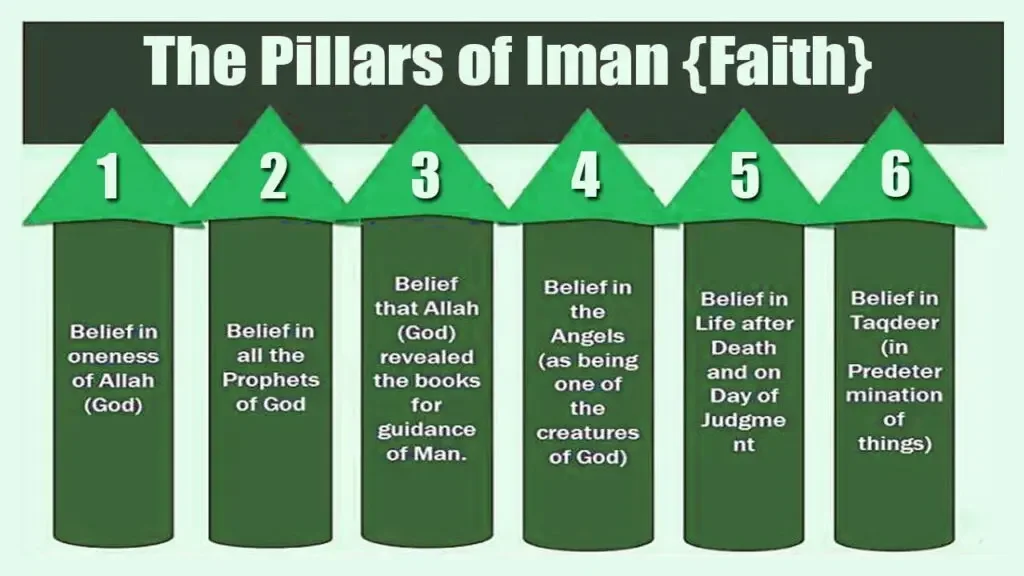
The six pillars of Iman, outlined in the Hadith of Jibreel (Sahih Muslim, Hadith 8), are the core beliefs every Muslim affirms. These pillars, referenced in Surah Al-Baqarah (2:285), are interconnected, forming a comprehensive spiritual framework.
1. Belief in Allah (Tawhid)
Tawhid, the oneness of Allah, is the foundation of Iman, affirming His existence, attributes, and sole right to worship. Quran: “Say: He is Allah, [who is] One, Allah, the Eternal Refuge” (Surah Al-Ikhlas 112:1-4). Hadith: “Faith is to believe in Allah…” (Sahih Muslim, Hadith 8). Commentary: Ibn Kathir emphasizes Tawhid as the root of all Islamic belief, requiring knowledge (ma‘rifah) and devotion (ibadah).
2. Belief in Angels
Angels, created from light, execute Allah’s commands. Quran: “All of them have believed in Allah and His angels” (Surah Al-Baqarah 2:285). Hadith: “Angels were created from light” (Sahih Muslim). Commentary: Al-Qurtubi notes angels like Jibril and Kiraman Katibin (recording angels) reinforce accountability.
3. Belief in Divine Books
Muslims believe in revealed scriptures: Torah, the Psalms, the Gospel, and the Quran, the final preserved revelation. Quran: “We sent down the Torah… and gave him the Gospel” (Surah Al-Ma’idah 5:44-48). Hadith: The Prophet (ﷺ) confirms prior scriptures (Sahih Bukhari, Hadith 3435). Commentary: Al-Tahawi stresses the Quran’s supremacy as the unalterable guide.
4. Belief in Messengers
Belief in prophets from Adam to Muhammad (ﷺ), the final messenger, without distinction. Quran: “We make no distinction between any of His messengers” (Surah Al-Baqarah 2:285). Hadith: Jibreel Hadith. Commentary: Ibn Taymiyyah warns that rejecting any prophet constitutes disbelief.
5. Belief in the Day of Judgment
Affirming resurrection, accountability, Heaven, and Hell. Quran: “Whoever does an atom’s weight of good will see it” (Surah Az-Zalzalah 99:7-8). Hadith: Implied in Jibreel narration. Commentary: Al-Ghazali views this belief as a moral compass.
6. Belief in Divine Decree (Qadr)
Trusting Allah’s predestination of all events. Quran: “All things We created with predestination” (Surah Al-Qamar 54:49). Hadith: “Believe in Qadr, its good and bad” (Sahih Muslim). Commentary: Ibn Qayyim clarifies Qadr encourages effort, not fatalism.
Practical Implications: These pillars shape worship (Tawhid), accountability (angels, Judgment), guidance (books, messengers), and resilience (Qadr).
The Central Role of Iman in Islam
Iman is the foundation of religion, key to salvation, source of strength, basis of brotherhood, and a guiding light.
Foundation of Religion
Without Iman, deeds are fruitless. Quran: “We will regard their deeds as dust dispersed” (Surah Al-Furqan 25:23). Commentary: Ibn Kathir explains this applies to actions lacking faith.
Key to Salvation
Iman paired with righteous deeds ensures Paradise. Quran: “Those who believe and do righteous deeds will have Gardens” (Surah Al-Baqarah 2:82, repeated 50+ times). Hadith: “Faith and deeds together” (implied in Sahih Muslim).
Source of Strength
Iman fortifies believers in trials. Quran: “It only increased them in faith” (Surah Aal ‘Imran 3:173). Hadith: “No calamity befalls a believer except Allah expiates sins” (Sahih Muslim, Hadith 2573).
Basis of Brotherhood
Iman fosters community. Hadith: “None truly believes until he loves for his brother what he loves for himself” (Sahih Bukhari/Muslim).
Light in Life and Hereafter
Iman illuminates guidance. Quran: “Their light proceeding before them” (Surah Al-Hadid 57:12). Commentary: Al-Qurtubi sees Iman as spiritual light.
Guard Against Hypocrisy
Hypocrisy undermines Iman. Quran: “Some say, ‘We believe,’ but they are not believers” (Surah Al-Baqarah 2:8). Commentary: Al-Ghazali warns hypocrisy erodes sincerity.
Iman, Islam, and Ihsan: The Triad of Faith
The Hadith of Jibreel (Sahih Muslim, Hadith 8) defines:
- Islam: Outward submission (e.g., prayer, zakah).
- Iman: Inner belief in the six pillars.
- Ihsan: Worship as if seeing Allah, achieving spiritual excellence.
Quran: “Whoever does righteous deeds while believing” (Surah An-Nisa 4:124). Hadith: “Ihsan is to worship Allah as if you see Him” (Sahih Muslim). Commentary: Ibn Qayyim views Ihsan as Iman’s perfection.
Prophet’s Example:
- Prayer with humility (Tahajjud).
- Compassion for orphans and, poor.
- Honest business dealings.
Contemporary Relevance: Iman drives sincere worship, Islam ensures compliance, and Ihsan elevates actions with mindfulness, countering modern distractions like materialism.
Levels and Branches of Iman: A Dynamic Framework
Iman is dynamic, fluctuating with actions. Hadith: “Faith wears out… ask Allah to renew it” (Sunan Abu Dawood, Hadith 4463).
Branches of Iman
Hadith: “Iman has over seventy branches” (Sahih Muslim, Hadith 35). Examples:
- Shahadah: Pinnacle of faith.
- Prayer, Zakah: Core worship.
- Modesty, Kindness: Ethical branches.
- Removing Harm: Practical acts.
Commentary: Al-Bayhaqi’s Shu’ab al-Iman lists 77 branches, showing Iman’s breadth.
Levels of Iman
- Basic: Core beliefs (new Muslims, children).
- Intermediate: Regular worship, ethics.
- Highest (Ihsan): Constant Allah-awareness.
Quran: “Hearts find comfort in Allah’s remembrance” (Surah Ar-Ra’d 13:28). Hadith: “The strong believer is better” (Sahih Muslim, Hadith 2664).
Factors Increasing Iman
- Worship: Prayer, fasting (Surah Al-Anfal 8:2).
- Knowledge: “Seeking knowledge is obligatory” (Sunan Ibn Majah).
- Company: “Be with those who call upon their Lord” (Surah Al-Kahf 18:28).
- Gratitude: “Faith increases with gratitude” (Ibn Majah, Hadith 4197).
Factors Decreasing Iman
- Sins: Darken the heart.
- Neglect: Abandoning prayer/zakah.
- Doubt: “Some are not believers” (Surah Al-Baqarah 2:8).
Stories of Exemplary Iman
- Bilal ibn Rabah: Endured torture, upheld Tawhid.
- Abu Bakr: Trusted Allah in trials (e.g., Hijrah).
- Sumayyah: First martyr, steadfast in faith.
Iman in the Quran and Hadith: Thematic Insights

Quranic Themes
- Dynamic Nature: Increases with recitation (Surah Al-Anfal 8:2); likened to a rooted tree (Surah Ibrahim 14:24-25).
- Believer Categories: Weak, moderate, strong (Surah Al-Baqarah 2:262, per Ibn Kathir).
- Hypocrisy Warnings: “Hypocrites in the lowest depths” (Surah An-Nisa 4:145).
- Transformative Power: “Hearts find rest” (Surah Ar-Ra’d 13:28).
Hadith Insights
- Branches: Holistic faith (Sahih Muslim, Hadith 35).
- Renewal: Constant effort (Sunan Abu Dawood, Hadith 4463).
- Strength: “Strong believer is better” (Sahih Muslim, Hadith 2664).
Commentary: Tafsir Ibn Kathir and Al-Jalalayn emphasize Iman’s role in guiding ethics and resilience.
Strengthening Iman: Practical Steps
To nurture Iman:
- Quran Reflection: “His verses increase faith” (Surah Al-Anfal 8:2).
- Prayer/Dhikr: “Remembrance brings rest” (Surah Ar-Ra’d 13:28).
- Knowledge: Study the Quran, Hadith (Sunan Ibn Majah).
- Righteous Company: “Be with those who fear Allah” (Surah Al-Kahf 18:28).
- Good Deeds: Charity, kindness as branches (Sahih Muslim, Hadith 35).
- Repentance: “Allah accepts repentance” (Surah Al-Zumar 39:53).
Overcoming Challenges to Iman
Challenges include doubt, sin, and distractions. Quran: “Do not weaken… if you are true believers” (Surah Al-Imran 3:139). Solutions:
- Seek refuge from Shaytan (Surah Al-A’raf 7:200).
- Repent sincerely (Surah Al-Zumar 39:53).
- Reflect on companions’ steadfastness.
Iman in Shia Theology and Esoteric Dimensions
Shia Perspective
Shia scholars emphasize wilayah (allegiance to Imams) as integral to Iman. Hadith: “Perfection of faith lies in accepting our leadership” (Shia sources). While Sunni and Shia agree on the six pillars, wilayah adds a distinct dimension.
Esoteric Dimensions
Hadith: “The Quran has an external and hidden meaning” (attributed). Scholar Henry Corbin views Iman as a journey to divine gnosis (ma’rifah), with the heart seeking deeper spiritual truths.
Iman in Daily Life: Practical Manifestations
Iman transforms daily actions:
- Worship: Sincere prayers, fasting.
- Ethics: Honesty in business, kindness to neighbors.
- Resilience: Patience in trials, gratitude in blessings.
- Community: Supporting the needy, fostering brotherhood.
Hadith: “The best deeds are prayer, kind words, and a righteous heart” (Sunan Tirmidhi).
Iman and Reason: A Harmonious Balance
The Quran encourages reasoning: “In the creation of the heavens… are signs for people of understanding” (Surah Al-Baqarah 2:164). Al-Ghazali argues faith and reason align, with Iman transcending intellect through spiritual conviction.
Historical Examples of Iman
- Prophet’s Companions: Stories of Bilal, Abu Bakr, and Sumayyah inspire steadfastness.
- Early Muslims: Endured persecution, upheld Iman under trials.
- Scholars: Ibn Taymiyyah, Al-Nawawi exemplified Iman through knowledge and action.
Iman in Modern Contexts
In today’s world, Muslims face materialism, secularism, and digital distractions. Iman counters these by:
- Grounding identity in Tawhid.
- Promoting ethical conduct in a globalized world.
- Encouraging mindfulness through Ihsan.
Conclusion: Living Iman for Spiritual Fulfillment
Iman is a living, dynamic faith that shapes a Muslim’s heart, words, and deeds. By embracing its six pillars, nurturing its branches, and striving for Ihsan, believers achieve spiritual excellence. As a light guiding to Paradise, Iman requires constant effort—through worship, knowledge, and good deeds—to ensure eternal success.
References
- Quran (Sahih International).
- Sahih Bukhari, Sahih Muslim, Sunan Abu Dawood, Sunan Ibn Majah, Sunan Tirmidhi.
- Aqidah al-Tahawiyyah (Al-Tahawi).
- Majmu‘ al-Fatawa (Ibn Taymiyyah).
- Madarij al-Salikin (Ibn Qayyim).
- Tafsir Ibn Kathir, Al-Qurtubi, Al-Jalalayn.
- Shu’ab al-Iman (Al-Bayhaqi).