
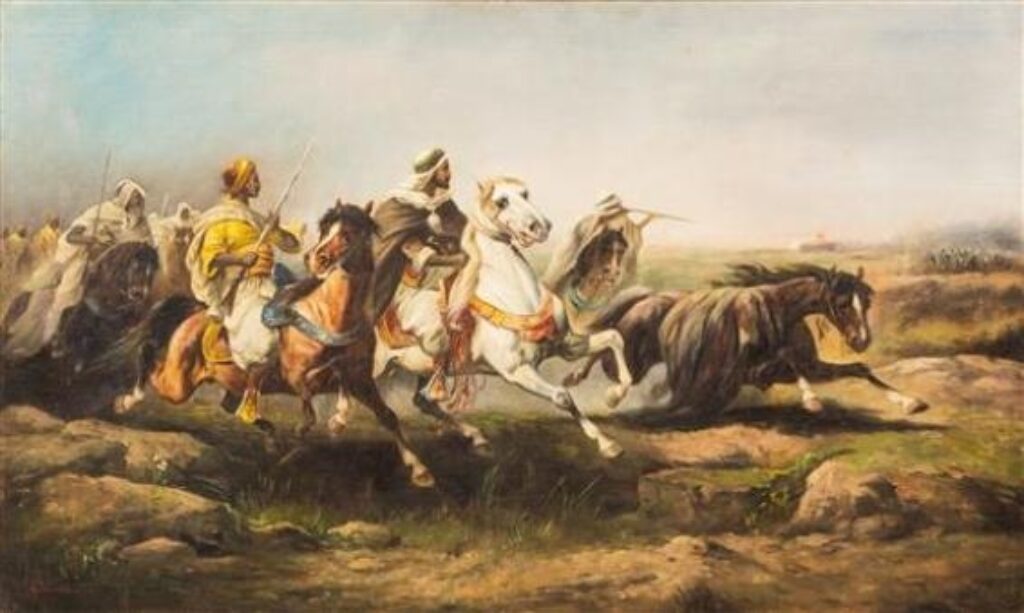
Muhammad bin Qasim, also known as Muhammad ibn Qasim, is a towering figure in Islamic history, renowned for leading the Umayyad Caliphate’s conquest of Sindh (modern-day Pakistan and parts of India) in 711–712 AD at the age of 17. As one of the youngest military commanders in history, he marked the first significant Muslim foothold in the Indian subcontinent, reshaping its cultural, religious, and political landscape. This Muhammad bin Qasim biography explores his early life, rise under Umayyad rule, military campaigns, innovative governance, controversies surrounding his death, and enduring legacy. Optimized for searches like “Muhammad bin Qasim history,” “Muhammad ibn Qasim conquest of Sindh,” and “Umayyad general Muhammad bin Qasim,” this article provides a definitive resource for students, historians, and enthusiasts.
Table of Contents
ToggleWith a blend of strategic brilliance and cultural tolerance, Muhammad bin Qasim (Muhammad ibn Qasim) navigated complex socio-political dynamics, earning both admiration and critique. From his birth in Taif to his tragic end in Iraq, his life encapsulates the ambition and intrigue of the Umayyad era.
Early Life and Family Background of Muhammad bin Qasim
Born around 695 AD in Taif, a mountainous city in the Hijaz region of Arabia, Muhammad bin Qasim hailed from the Banu Thaqif tribe, known for its martial and administrative prowess. Taif’s fertile valleys and proximity to Mecca shaped his early environment, exposing him to commerce and Islamic scholarship. The Banu Thaqif, initially resistant to Islam, embraced it after the Siege of Taif in 630 AD, embedding a legacy of resilience in Muhammad bin Qasim.
His father, Qasim ibn Yusuf al-Thaqafi, served in minor Umayyad administrative roles but died when Muhammad was young, leaving him under his mother’s care. This loss thrust Muhammad ibn Qasim into a world of responsibility early on. His uncle, Al-Hajjaj ibn Yusuf, the formidable governor of Iraq and the eastern provinces, became his mentor and father-in-law, marrying him to his daughter. This connection catapulted Muhammad bin Qasim into the Umayyad elite, granting access to elite education in Basra or Kufa.
By his early teens, Muhammad ibn Qasim excelled in Quranic studies, military tactics, and governance, as noted in the Chachnama. He likely studied under scholars like Anas ibn Malik, absorbing Islamic ethics that influenced his later policies. His first military engagements, suppressing rebellions in Fars and Sistan around 708 AD, showcased his precocity, earning Al-Hajjaj’s trust for the Sindh campaign.
Taif’s cultural diversity and the Umayyad court’s dynamism prepared Muhammad bin Qasim for cross-cultural governance. His youth, far from a hindrance, was an asset in an empire valuing loyalty and vigor, setting the stage for his historic mission.
The Umayyad Caliphate: Context and Muhammad bin Qasim’s Rise
The Umayyad Caliphate (661–750 AD), the second Islamic dynasty, transformed the Muslim world into a vast empire stretching from Spain to Central Asia. Under Caliph Al-Walid I (r. 705–715 AD), it reached its zenith, with governors like Al-Hajjaj driving relentless expansion. Muhammad bin Qasim emerged during this era of conquest and consolidation.
In 708 AD, at 13–15, Muhammad ibn Qasim led campaigns in Persia, quelling tribal revolts. His success led Al-Hajjaj to appoint him to Sindh in 711 AD, prompted by a crisis: pirates from Debal, under Raja Dahir, raided Muslim ships, capturing pilgrims and goods. Al-Hajjaj, after failed diplomacy, assembled a force of 6,000 Syrian cavalry, 6,000 camel infantry, and siege engines, entrusting the 17-year-old Muhammad bin Qasim.
Departing from Shiraz, he traversed Makran’s deserts, establishing supply lines and alliances with local tribes. His preparation included studying Sindh’s geography and caste divisions, leveraging these for strategic advantage.
The Conquest of Sindh: Detailed Campaigns and Key Battles of Muhammad bin Qasim
The Muhammad bin Qasim conquest of Sindh from 711–713 AD was a landmark in military history, blending innovative tactics, diplomacy, and psychological warfare against Raja Dahir’s fragmented kingdom. Primary sources like the Chachnama (a 13th-century Persian text based on an earlier Arabic manuscript) and Futuh al-Buldan by Al-Baladhuri provide detailed accounts, though historians debate their accuracy due to potential biases and later interpolations. The Chachnama, translated into English by Mirza Kalichbeg Fredunbeg in 1900, narrates the events as a “historical romance,” focusing on political theory rather than mere chronology. Al-Baladhuri’s work, written in the 9th century, offers a concise but authoritative Arab perspective, emphasizing the conquest’s logistical and administrative aspects.
The conquest was motivated by multiple factors: retaliation for piracy on Arab ships, strategic control of trade routes to India and China, and the need to subdue rebels finding refuge in Sindh. Raja Dahir’s Brahmin dynasty ruled a diverse realm of Hindus, Buddhists, Jats, and Meds, riven by caste conflicts and regional rivalries, which Muhammad ibn Qasim exploited masterfully.
Prelude: The Makran Campaign and Preparations (710–711 AD)
Before entering Sindh, Muhammad ibn Qasim secured the arid Makran region (modern Balochistan), a vital supply corridor. Previous Umayyad expeditions had failed here due to harsh terrain and tribal resistance. Departing from Shiraz in late 710 AD, his army faced water shortages and ambushes. According to Al-Baladhuri, Muhammad bin Qasim established fortified camps and dug wells, demonstrating early logistical genius.
In Makran, he subdued the Baloch tribes, including the Jats, through a mix of force and alliances. The Chachnama describes how he negotiated with local chieftains, offering amnesty in exchange for guides and supplies. Casualties were minimal, but the campaign hardened his troops for Sindh’s challenges. By spring 711 AD, Muhammad ibn Qasim reached Arman Belah (Lasbela), positioning for Debal. This prelude, often overlooked, was crucial, as Makran’s control prevented flanking attacks.
Historians like Yohanan Friedmann note controversies: some Arab sources exaggerate victories to glorify Umayyad expansion, while Indian accounts highlight local resistance. Nonetheless, Makran set the tone for Muhammad bin Qasim’s strategy: divide and conquer by exploiting local grievances against Dahir.
The Siege of Debal: Opening Salvo and Symbolic Victory (711 AD)
Debal (Bhanbhore, near modern Karachi), a thriving Buddhist-Hindu port, was the gateway to Sindh. Guarded by a massive temple believed to house a protective idol, it symbolized Dahir’s authority. The Chachnama vividly describes the siege: Muhammad ibn Qasim’s 12,000 troops, including Syrian cavalry and Iraqi mawali (non-Arab converts), faced 10,000 defenders led by Dahir’s cousin.
The battle began with a three-day bombardment using manjaniks (trebuchets), one of which toppled the temple’s flagstaff, shattering morale as per a prophecy. “The idol was broken, and the hearts of the infidels were broken with it,” recounts the Chachnama. Defenders surrendered; Muhammad bin Qasim ordered the execution of resistors but spared women, children, and priests, enslaving some as per Umayyad policy.
Casualties: Estimates from Al-Baladhuri suggest hundreds of Arabs and thousands of locals killed. Booty included 700 women (the pirate raid’s captives) and gold, one-fifth sent to Damascus. He built a mosque on the temple site, symbolizing Islam’s arrival.
Controversies: Hindu nationalists criticize temple destruction as iconoclasm, while Pakistani historians frame it as liberation from superstition. Manan Ahmed Asif, in A Book of Conquest, argues that the Chachnama uses this event to discuss political theory, not mere conquest.
Advance to Nirun and the Siege of Sehwan: Diplomacy and Consolidation (711 AD)
From Debal, Muhammad ibn Qasim marched to Nirun (near Hyderabad), a Buddhist center. The Chachnama notes that its monks, oppressed by Dahir’s taxes, surrendered peacefully, providing intelligence and supplies. This diplomatic win avoided casualties, exemplifying his strategy: offer aman (protection) for submission.
Sehwan, a fortified town with Buddhist and Hindu populations, resisted briefly. Muhammad bin Qasim besieged it, using catapults and cutting water supplies. The governor surrendered after negotiations, accepting Jizya and allowing religious freedom. Al-Baladhuri praises this tolerance: “He granted them peace and settled their tribute as dhimmis.” Casualties were low, with locals integrated into the administration.
These victories consolidated southern Sindh, allowing Muhammad ibn Qasim to recruit Jats and Meds, swelling his army. Historians like André Wink note that this exploitation of caste divisions was key to success.
The Battle of Aror: Climactic Confrontation with Raja Dahir (712 AD)
The pivotal Battle of Aror (near Rohri) pitted Muhammad bin Qasim’s 20,000 troops against Dahir’s 50,000, including war elephants and eastern Jats. The Chachnama details the buildup: Dahir, warned by spies, mobilized at the Indus River, using boats for supply.
Muhammad ibn Qasim crossed the river via a pontoon bridge, outflanking Dahir. The battle raged for days; Arab archers targeted elephant drivers, causing chaos as per Al-Baladhuri: “The elephants turned upon their own ranks.” Dahir, fighting on an elephant, was struck by a naphtha arrow, igniting his howdah and leading to his death.
Dahir’s army was routed; his widow, Rani Ladi, rallied defenses in Aror, but after a siege, she committed Jauhar with 15,000 women to avoid capture. Casualties: Thousands on both sides, with Arab losses around 3,000. Muhammad bin Qasim’s chivalry—protecting survivors—earned local respect, as noted in the Chachnama: “He showed mercy to the captives.”
Controversies: The Jauhar incident is debated; some see it as heroic resistance, others as exaggerated folklore. Peter Hardy questions the Chachnama‘s authenticity, suggesting Persian influences shaped the narrative.
The Siege of Brahmanabad: Negotiation and Integration (712 AD)
Brahmanabad, Dahir’s former capital, was defended by his son Jaisindh. Muhammad ibn Qasim besieged it for six months, using catapults and mines. Starvation forced surrender; the Chachnama recounts detailed negotiations, where Brahmins were pardoned and appointed to administrative roles. “I grant you amnesty and settle your tribute,” Muhammad bin Qasim reportedly said.
Casualties were moderate; the outcome integrated local elites, stabilizing rule. Al-Baladhuri highlights this pragmatism: “He left the Brahmins in charge of collection.”
The Siege of Multan: Final Push and Economic Gains (713 AD)
Multan, the “City of Gold,” was a gateway with a famous sun temple. Muhammad bin Qasim besieged it for two months, cutting water channels. The Chachnama describes the temple’s idol destruction, yielding 13,000 pounds of gold. Surrender followed; priests were spared, but resistors executed.
Casualties: High among defenders. Al-Baladhuri notes that the wealth funded further campaigns. Controversies: Iconoclasm is criticized as cultural vandalism, though Asif argues the Chachnama uses it metaphorically for political renewal.
Post-Multan, minor mopping-up operations subdued remaining pockets, like the Jats’ revolts. The Chachnama details six battles with Jats near Bolan Pass, though earlier. By 713 AD, Sindh and southern Punjab were secured, with Muhammad ibn Qasim’s army augmented to 50,000 through local recruits.
Historiographical debates: The Chachnama, per Manan Ahmed Asif, is not a simple conquest narrative but a 13th-century political treatise, critiquing central authority and advocating local autonomy. Al-Baladhuri’s brevity contrasts with the Chachnama‘s detail, suggesting later embellishments. Modern scholars like Yohanan Friedmann question exaggerated victories, noting Arab sources’ bias.
Overall, the conquest’s success lay in Muhammad bin Qasim’s adaptability: from brutal sieges to merciful surrenders, exploiting divisions while promising stability. It cost the Umayyads relatively little in lives but yielded immense economic and strategic gains.
Governance and Reforms in Sindh
Following the conquest, Muhammad bin Qasim (Muhammad ibn Qasim) served as governor of Sindh from 712 to 715 AD, implementing a series of reforms that blended Islamic principles with local traditions, ensuring stability and prosperity in the newly acquired territory. As detailed in Al-Baladhuri’s Futuh al-Buldan, he established his headquarters in Alor (Aror), the former capital of Raja Dahir, from where he administered the region. His governance was characterized by pragmatism, tolerance, and efficiency, drawing on Umayyad administrative models while accommodating Sindh’s diverse Hindu, Buddhist, and tribal populations.
Administrative Structure and Division of Territory
Muhammad ibn Qasim divided Sindh into several administrative districts or iqtas to facilitate effective control. According to the Chachnama, he appointed Arab amirs (governors) to oversee key areas such as Debal, Nirun, Sehwan, Brahmanabad, and Multan, while retaining local Hindu and Buddhist officials in subordinate roles to maintain continuity and reduce resistance. This hybrid system was innovative for the time, as it integrated conquered elites into the new regime, a strategy praised by historians like André Wink in Al-Hind for preventing revolts.
The Dar al-Qaza (judicial courts) were established in major cities, applying Sharia law for Muslims and local customary laws for non-Muslims, ensuring justice across communities. Al-Baladhuri notes that Muhammad bin Qasim appointed qadis (judges) from among learned Arabs, but local pandits and monks often handled civil disputes among non-Muslims. This dual legal system promoted harmony and was a precursor to later Islamic administrations in India.
Religious Policies and Tolerance
One of the most celebrated aspects of Muhammad ibn Qasim’s rule was his religious tolerance, which contrasted with the era’s typical conquest norms. The Chachnama records that he granted dhimmi status to Hindus and Buddhists, treating them as “People of the Book” akin to Christians and Jews, exempting them from forced conversion. In a famous letter to Al-Hajjaj, preserved in Al-Baladhuri’s work, Muhammad bin Qasim wrote: “The Buddhists and Brahmins should be allowed to repair their temples and practice their religion.” This policy allowed the reconstruction of temples damaged during the conquest and permitted public worship, as long as Jizya was paid.
Historians like Yohanan Friedmann argue this tolerance was pragmatic, aimed at stabilizing rule in a majority non-Muslim region, but it nonetheless set a precedent for interfaith relations in South Asia. Voluntary conversions increased, particularly among lower castes like Jats, who saw Islam as liberation from Brahmin oppression. The Chachnama details instances where Muhammad ibn Qasim intervened to protect Buddhist monks from local feuds, further enhancing his reputation for justice.
Social Reforms and Equality Measures
Muhammad bin Qasim’s social reforms targeted the rigid caste system prevalent in Sindh. According to the Chachnama, he abolished discriminatory practices, declaring all subjects equal under Islamic law, which appealed to oppressed groups like the Jats and Meds. He freed slaves captured during the conquest, integrating them into society, and prohibited sati (widow immolation), a practice noted in local traditions. Al-Baladhuri mentions that he encouraged intermarriages between Arabs and locals to foster unity, leading to the emergence of mixed communities.
These reforms reduced social tensions, as evidenced by the lack of major revolts during his tenure. Modern scholars like N.A. Baloch in The Arab Rule in Sind credit this approach with laying the foundations for Sindh’s syncretic culture.
Economic Reforms and Infrastructure Development
Economically, Muhammad ibn Qasim reformed the tax system to be fair and productive. The Chachnama outlines the structure: Kharaj (land tax) at 20–40% based on soil fertility, Jizya for non-Muslims (graded by wealth, exempting women, children, and priests), and Ushr (10% tithe) for Muslims. This system, inspired by Umayyad models in Persia, boosted revenue without overburdening peasants, as Al-Baladhuri reports increased agricultural output.
Infrastructure projects included digging canals for irrigation, repairing roads, and building mosques and caravanserais. Ports like Debal were revitalized, enhancing trade with Arabia, Persia, and China, exporting cotton, indigo, and spices. The Chachnama mentions the establishment of mints for coining dirhams, standardizing currency. These measures led to economic prosperity, with low crime rates and thriving markets, as per historical accounts.
Military Organization and Security
To maintain peace, Muhammad bin Qasim created hybrid garrisons combining Arab troops with local recruits, stationed in key forts. The Chachnama describes intelligence networks to monitor dissent, preventing uprisings. He also trained local militias, integrating Jats into the army, which strengthened defense against potential raids from Rajasthan or Central Asia.
Overall, his governance, lasting three years, transformed Sindh from a conquered territory to a stable province, influencing later Muslim administrations like the Abbasids and Delhi Sultanate. Debates persist on whether his reforms were altruistic or pragmatic, but sources agree on their effectiveness.
Controversies and the Death of Muhammad Ibn Qasim
The death of Muhammad bin Qasim in 715 AD at age 20 remains one of the most controversial episodes in his life, shrouded in legend and political intrigue. Primary sources like the Chachnama and Al-Baladhuri provide conflicting accounts, while modern interpretations in India and Pakistan reflect nationalistic biases.
Narratives of Death: Legend vs. Reality
The Chachnama offers the most dramatic tale: After Dahir’s defeat, his daughters Suryadevi and Parmaldevi were sent to Caliph Al-Walid as tribute. They falsely accused Muhammad ibn Qasim of violating them, enraging the caliph, who ordered his death by sewing in raw cowhide, causing suffocation as it dried. Upon discovering the lie (the girls confessed posthumously), the caliph had them trampled by elephants. This narrative, echoed in later Persian texts, portrays Muhammad bin Qasim as a victim of deceit.
However, Al-Baladhuri’s Futuh al-Buldan suggests a political purge: With Al-Walid’s death in 715 AD, Sulayman ascended, harboring grudges against Al-Hajjaj’s family. Sulayman recalled Muhammad ibn Qasim, imprisoned and tortured in Wasit, Iraq, leading to his death. Wikipedia and Dharmapedia entries cite Mosul as the site, with his body transferred to Makran.
Modern historians like Manan Ahmed Asif view the daughters’ story as folklore, symbolizing injustice rather than fact, influenced by Persian literary traditions. Yohanan Friedmann argues it was fabricated to absolve Sulayman of blame. Studento.co.in attributes it to court rivalries.
Controversies in Conquest and Rule
Muhammad bin Qasim’s campaigns sparked debates on imperialism and cultural destruction. In India, nationalists like those on Dharmapedia portray him as an invader who destroyed temples and forced conversions, citing Debal and Multan. ResearchGate’s Dalit discourse sees both Qasim and Dahir as oppressors. Dawn.com’s Dr. Mubarak Ali argues the war was political, not religious, challenging “faith vs. infidelity” narratives.
In Pakistan, he’s a hero, the “first Pakistani,” as per Quora and Naya Daur, symbolizing liberation from Brahmin tyranny and Islamic arrival. Nadeem Paracha notes that post-1947 nationalism elevated him alongside Aurangzeb. Medium.com calls this “fabricated history.” Reddit discusses Chachnama‘s reliability, questioning hero-villain binaries.
Source reliability is contested: The Chachnama is seen as biased by Asif, while Arab sources like Al-Baladhuri are accused of exaggeration. Casualty figures and conversions are debated—voluntary or coerced?
These controversies reflect post-colonial identities: Pakistan uses him for Muslim heritage, India for critiquing invasions.
Legacy of Muhammad bin Qasim
Muhammad bin Qasim (Muhammad ibn Qasim) left an indelible mark on history, serving as a bridge between the Arab world and the Indian subcontinent. His conquest of Sindh in 711–713 AD not only expanded the Umayyad Caliphate but also initiated the long process of Islam’s integration into South Asia, influencing subsequent dynasties and cultural developments for over a millennium. His legacy is multifaceted, encompassing military, religious, cultural, political, and economic dimensions, and it continues to be interpreted differently across regions, reflecting contemporary nationalistic and ideological narratives.
Historical and Military Legacy
Historically, Muhammad bin Qasim’s campaigns are seen as the first successful Muslim incursion into the Indian subcontinent, paving the way for later invasions by the Ghaznavids, Ghurids, and the establishment of the Delhi Sultanate in the 12th century. His conquest extended Umayyad influence to the Indus Valley, creating a frontier province that served as a base for further explorations into Punjab and Rajasthan. Al-Baladhuri’s Futuh al-Buldan credits him with securing trade routes and suppressing piracy, which stabilized Arabian maritime commerce with East Asia. Militarily, his innovative use of siege engines, cavalry tactics, and alliances with local dissidents (like the Jats) set precedents for future conquerors, such as Mahmud of Ghazni.
In global Islamic history, Muhammad ibn Qasim exemplifies the Umayyad era’s expansionist zeal, often compared to contemporaries like Qutayba ibn Muslim in Central Asia or Tariq ibn Ziyad in Spain. His youth—achieving such feats at 17—has inspired legends, portraying him as a divinely guided prodigy in medieval Arabic texts. However, critics like Yohanan Friedmann argue that his successes were amplified by Umayyad propaganda to justify eastern expansions.
Religious and Cultural Impact
Religiously, Muhammad bin Qasim’s tolerant policies facilitated Islam’s gradual spread in Sindh, where conversions were often voluntary among lower castes seeking social mobility. The Chachnama highlights his protection of non-Muslims, which encouraged Sufi missionaries to follow, leading to syncretic traditions blending Islamic mysticism with local Hindu-Buddhist practices. This laid the groundwork for figures like Shah Abdul Latif Bhittai and Sachal Sarmast, whose poetry reflects Sindh’s unique Islamic-Hindu fusion.
Culturally, his rule introduced Arabic script and language, influencing Sindhi’s development and preserving Sanskrit texts through translations. André Wink in Al-Hind notes that Arab settlers intermarried with locals, creating communities like the Arains and Syeds, who trace lineages to his era. Architectural legacies include early mosques in Bhanbhore and Multan, blending Persian and Indian styles. In literature, he features in Naseem Hijazi’s novels and Sindhi folklore, often as a just ruler.
Political and Nationalistic Interpretations
In Pakistan, Muhammad bin Qasim is revered as the “first Pakistani,” a narrative promoted post-1947 to forge a Muslim national identity distinct from India. Textbooks portray him as a liberator from Brahmin oppression, with institutions like Port Qasim and Muhammad bin Qasim University named in his honor. Nadeem Paracha critiques this as selective history, emphasizing his role in Pakistan’s “ideological genesis.” Festivals in Sindh celebrate his arrival, tying it to regional pride.
In India, his legacy is contentious: nationalists view him as a symbol of foreign invasion and cultural disruption, often cited in debates on Hindu-Muslim relations. Dharmapedia entries label him an aggressor, linking his campaigns to temple destructions. However, some scholars like Romila Thapar see his tolerance as mitigating factors, challenging black-and-white portrayals.
Globally, he represents medieval Islamic expansion, studied in contexts of empire-building and cross-cultural encounters. In Western academia, figures like Stanley Lane-Poole depict him as a “boy conqueror,” emphasizing his precocity. Post-colonial critiques, such as in Manan Ahmed Asif’s work, deconstruct myths, viewing him as a tool of Umayyad imperialism.
Economic and Social Legacy
Economically, his reforms revitalized trade, with Sindh becoming a hub for Arabian commerce, introducing new crops like sugarcane and fostering urban growth. Socially, his anti-caste policies empowered marginalized groups, influencing Dalit narratives today. His legacy endures in debates on pluralism, with calls to emulate his tolerance in modern South Asia.
Critics argue his idolization distorts history, ignoring local resistance or Umayyad exploitation. Nonetheless, Muhammad bin Qasim remains a symbol of youthful achievement and cultural synthesis, inspiring across borders.
| Legacy Aspect | Pakistan | India | Global |
|---|---|---|---|
| Historical | First Muslim ruler; liberation narrative | Foreign invader; start of Muslim conquests | Umayyad expansion symbol; medieval warfare example |
| Cultural | Seen as a disruptor of social order | Model for cross-cultural integration: influence on Indo-Islamic art | Studied in the Empire and Colonialism courses |
| Political | National hero for identity; schools and ports named after him | Critique of imperialism; used in communal debates | Acknowledged as an enhancer of Indo-Arab commerce |
| Economic | Debated in historical texts, a symbol of cultural clash | Legacy in trade routes; Port Qasim as a modern hub | Example of economic consolidation post-conquest |
| Social | Empowerment of lower castes; tolerance icon | Seen as disruptor of social order | Inspiration for youth leadership; debates on pluralism |
Conclusion
Muhammad bin Qasim remains an enduring figure whose brief but extraordinary life left a profound impact on the history of South Asia and the Islamic world. At just 17, he orchestrated the Umayyad Caliphate’s conquest of Sindh, demonstrating unparalleled military genius, diplomatic finesse, and administrative foresight. His campaigns from 711–713 AD not only secured a foothold for Islam in the Indian subcontinent but also laid the groundwork for centuries of Muslim rule, influencing dynasties like the Ghaznavids and the Delhi Sultanate. His governance, marked by religious tolerance, equitable taxation, and infrastructure development, showcased a model of administration that balanced conquest with cultural integration, fostering a syncretic Sindhi identity that endures today.
Yet, his legacy is not without complexity. In Pakistan, Muhammad bin Qasim is celebrated as a national hero, the “first Pakistani,” symbolizing the Islamic arrival and liberation from oppressive rule. In India, he is often viewed through the lens of foreign invasion, sparking debates over cultural destruction and imperialism. These contrasting narratives, fueled by modern nationalistic agendas, highlight the challenges of interpreting medieval figures through contemporary lenses. The controversies surrounding his death—whether by treachery or political purge—add a layer of tragedy to his story, underscoring the volatile politics of the Umayyad court.
Backed by sources like the Chachnama and Futuh al-Buldan, this biography reveals a commander who was both a product of his time and a visionary ahead of it. His ability to navigate caste divisions, integrate local elites, and promote trade reshaped Sindh, while his youthful ambition continues to inspire across cultures. Whether seen as a conqueror, reformer, or symbol, Muhammad ibn Qasim’s life invites reflection on leadership, tolerance, and the enduring interplay of history and identity. His story, bridging Arabia and the Indus, remains a testament to the power of vision and the fragility of glory.
Frequently Asked Questions (FAQ)
Who was Muhammad bin Qasim (Muhammad ibn Qasim)?
Muhammad bin Qasim, also spelled Muhammad ibn Qasim, was a teenage Umayyad general born around 695 AD in Taif, Arabia. He led the conquest of Sindh at 17, establishing Muslim rule in the subcontinent under Caliph Al-Walid I.
What was the Muhammad bin Qasim conquest of Sindh?
The conquest (711–713 AD) involved campaigns against Raja Dahir, capturing key cities like Debal, Nirun, Sehwan, Aror, Brahmanabad, and Multan. It combined military tactics, diplomacy, and alliances, leading to Umayyad control over Sindh and parts of Punjab.
Why was Muhammad ibn Qasim chosen for the Sindh campaign?
Al-Hajjaj ibn Yusuf, his uncle and mentor, selected him for his loyalty, prior successes in Persia, and strategic acumen, despite his youth. The campaign was a response to Sindhi piracy on Muslim ships.
How did Muhammad bin Qasim govern Sindh?
He implemented tolerant reforms, dividing Sindh into districts, retaining local officials, granting religious freedom to non-Muslims, reforming taxes (Jizya, Kharaj), and building infrastructure like canals and mosques. His hybrid administration ensured stability and prosperity.
What caused Muhammad ibn Qasim’s death?
In 715 AD, after Caliph Sulayman’s ascension, he was recalled and executed, possibly due to false accusations by Raja Dahir’s daughters or political purges against Al-Hajjaj’s allies. Accounts vary between suffocation in a cowhide or torture in Iraq.
What is Muhammad bin Qasim’s legacy in Pakistan and India?
In Pakistan, he’s a national hero symbolizing Islamic arrival and liberation, with ports, universities, and festivals named after him. In India, he’s often viewed as a foreign invader, sparking debates on cultural destruction and Muslim conquests.
How did Muhammad ibn Qasim influence South Asian culture?
His rule introduced Arabic script, Islamic governance, and Sufi traditions, fostering a syncretic Sindhi culture blending Hindu-Buddhist and Islamic elements. This influenced poetry, architecture, and social practices in the region.
Was Muhammad bin Qasim tolerant towards non-Muslims?
Yes, he granted dhimmi status to Hindus and Buddhists, allowing temple rebuilding, religious freedom, and public office-holding in exchange for Jizya, as per the Chachnama and Al-Baladhuri.
What are the main controversies about Muhammad bin Qasim?
Debates include accusations of iconoclasm (temple destruction), forced conversions, and exaggerated victories in sources. In India, he’s seen as an aggressor; in Pakistan, a liberator. Historians question the Chachnama‘s reliability.
How accurate are historical sources on Muhammad ibn Qasim?
Sources like the Chachnama (13th-century) and Futuh al-Buldan (9th-century) provide details but are debated for biases. The Chachnama is viewed as a political treatise, while Arab accounts may glorify Umayyad achievements.
What economic changes did Muhammad bin Qasim bring to Sindh?
He reformed taxes for fairness, revitalized ports for Indo-Arab trade, and invested in irrigation, boosting agriculture and commerce, as noted in Al-Baladhuri.
Why is Muhammad bin Qasim called the “first Pakistani”?
Post-1947 Pakistani nationalism portrays him as the founder of Muslim rule in the region, symbolizing Islamic heritage and independence from Hindu-majority India.
Short Notes about Muhammad Ibn Qasim
At what age did Muhammad bin Qasim die?
Muhammad bin Qasim died at the age of 20 in 715 AD.
Who killed Muhammad bin Qasim?
He was likely executed due to political intrigue after Caliph Sulayman ascended, though some legends involve false accusations.
How did Muhammad bin Qasim die?
Accounts vary: some sources say suffocation in a cowhide, others suggest torture in Iraq.
Muhammad bin Qasim attacked India in which year?
He began his campaigns in Sindh in 711 AD.
How many times did Muhammad bin Qasim attack India?
His main campaign lasted from 711–713 AD, including multiple battles against Raja Dahir’s forces.
Muhammad bin Qasim’s age when he died?
20 years old.
Muhammad bin Qasim’s age when he conquered Sindh?
He was 17 years old.
After Muhammad bin Qasim, who ruled India?
The Umayyad Caliphate maintained control over Sindh; local governance continued under appointed Arab governors.
Achievements of Muhammad bin Qasim
Conquest of Sindh, establishment of Islamic administration, religious tolerance, infrastructure development, and economic reforms.
Muhammad bin Qasim belonged to which dynasty?
He was part of the Umayyad dynasty.
Muhammad bin Qasim’s birth date
Circa 695 AD.
Muhammad bin Qasim’s birthplace
Tayef, Arabia (modern-day Saudi Arabia).
Muhammad bin Qasim came from
The Banu Thaqif tribe of Tayef.
Muhammad bin Qasim’s cause of death
Political purge under Caliph Sulayman or alleged false accusations.
Muhammad bin Qasim defeated whom?
He defeated Raja Dahir of Sindh and his forces.
Did Muhammad bin Qasim kill Abdullah Shah Ghazi?
No, there is no historical evidence linking him to Abdullah Shah Ghazi.
Did Muhammad bin Qasim impose the Jizya tax?
Yes, he imposed Jizya on non-Muslims while granting them religious freedom.
When did Muhammad bin Qasim arrive in the Indian subcontinent?
He arrived in 711 AD.
Who defeated Muhammad bin Qasim?
He was not defeated in battle; his death was due to political circumstances in the Umayyad Caliphate.
Short note on Muhammad bin Qasim
He was a teenage Umayyad general who led the conquest of Sindh, introduced Islamic administration, and promoted religious tolerance.
Who sent Muhammad bin Qasim to Sindh?
His uncle and mentor, Al-Hajjaj ibn Yusuf, appointed him to lead the Sindh campaign.
References
- Al-Baladhuri. Futuh al-Buldan. Translated by Philip Hitti. Columbia University Press, 1916.
- Ali Kufi. Chachnama. Translated by Mirza Kalichbeg Fredunbeg. Commissioner in Sind, 1900.
- Asif, Manan Ahmed. A Book of Conquest: The Chachnama and Muslim Origins in South Asia. Harvard University Press, 2016.
- Wink, André. Al-Hind: The Making of the Indo-Islamic World, Vol. 1. Brill, 1990.
- Hardy, Peter. “The Authority of Muslim Arabic Historians in British India.” In Historians of Medieval India, edited by Mohibbul Hasan. Meenakshi Prakashan, 1968.
- Friedmann, Yohanan. “The Origins and Significance of the Chach Nāma.” In Islam in Asia, Vol. 1, edited by Yohanan Friedmann. Magnes Press, 1984.
- Baloch, N.A. “The Arab Rule in Sind.” Islamic Culture, Vol. 23, 1949.
- Lane-Poole, Stanley. Medieval India under Mohammedan Rule. G.P. Putnam’s Sons, 1903.
- Elliot, H.M., and Dowson, John. The History of India as Told by Its Own Historians, Vol. 1. Trübner and Co., 1867.
- Gabrieli, Francesco. “Muhammad ibn Qāsim ath-Thaqafī and the Arab Conquest of Sind.” East and West, Vol. 15, No. 3/4, 1965.