

Untold History of British Colonial Rule and Oppression of Indian Muslims
Imagine a world where your faith, culture, and livelihood are systematically dismantled by a foreign empire promising progress. This was the grim reality for millions of Indian Muslims under British colonial rule, enduring relentless British oppression in India and colonial violence against Muslims.
From the Mughal Empire’s decline to the catastrophic Partition of India in 1947, the British Empire inflicted calculated economic exploitation in colonial India and cultural suppression under British rule, leaving deep scars on Muslim communities. These were computed acts to weaken a people tied to the Mughal legacy, not mere oversights.
Through letters, diaries, oral histories, and insights from Indian, Pakistani, British, and global scholars, we uncover the harrowing truth of Muslim suffering. British records claim impartiality, but the evidence—massacres, famines, fractured communities—reveals a stark pattern of colonial wrongs. Join us as we hear from those who endured, from weavers to scholars, exploring the enduring scars of British colonial oppression of Indian Muslims.
Quick Facts: British Colonial Atrocities Against Indian Muslims
- Battle of Plassey (1757): The British East India Company seized Bengal, triggering the 1770 famine, killing 10 million, many Muslims, due to exploitative taxes.
- Decline of the Mughal Empire: By 1837, the British replaced Persian with English, marginalizing Muslim scholars and administrators, fostering cultural and economic exclusion.
- 1857 Rebellion: Led by Muslim leaders like Bahadur Shah Zafar, Maulana Ahmadullah Shah, and Begum Hazrat Mahal, it faced brutal reprisals, with 51,200 Muslim scholars executed and 200,000 deaths.
- Post-1857 Massacres: British forces massacred thousands in Delhi, razed Muslim neighborhoods, and executed Mughal family members, including Zafar’s three sons, at Khooni Darwaza.
- Mass Execution of Ulema (1864–1867): 14,000 Muslim scholars executed, some wrapped in pigskin or burned alive, targeting intellectual leadership across India.
- Cultural Suppression: Over 1,000 Islamic institutions in Delhi were destroyed by 1867; 300,000 Qur’ans were burned post-1857, crippling Muslim scholarship and identity.
- Economic Devastation: Permanent Settlement (1793) favored Hindu zamindars; the Land Alienation Act in Punjab sidelined Muslim farmers, leading to widespread poverty.
- Bengal Famine (1943): Killed 3 million, mostly Muslims, as Churchill diverted rice for war, exacerbating starvation in Muslim-majority regions.
- Divide and Rule: 1905 Bengal Partition and 1909 Morley-Minto Reforms created separate electorates, deepening Hindu-Muslim communal tensions.
- Malabar Rebellion (1921): The British spent 5.1 million rupees to suppress Mappila Muslims; the Wagon Tragedy suffocated 67 prisoners in sealed railway wagons.
- Jallianwala Bagh Massacre (1919): General Dyer’s forces killed 379, including Muslims, in a peaceful Amritsar crowd, reflecting colonial brutality.
- Qissa Khwani Bazaar Massacre (1930): British troops in Peshawar fired on unarmed protesters, killing 200–400, strengthening the Khudai Khidmatgar movement.
- Tank (Bannu) Massacre (1930): British forces attacked protesters in the Frontier regions, killing scores of unarmed Muslim demonstrators.
- Salanga Massacre (1922): In Bengal, British forces fired on 4,500 unarmed villagers protesting taxation, one of the deadliest colonial atrocities.
- Sura Massacre (1922): British police in Khulna fired on Muslim villagers resisting revenue collection, killing dozens.
- Peshawar/Kohat Massacres (1930–31): British crackdowns in NWFP killed hundreds of unarmed Muslim protesters defying colonial authority.
- Bengal Firing on Khilafat Processions (1920–22): British police fired on Muslim protesters in Dhaka, Chittagong, and Barisal, killing dozens.
- Sholapur Massacre (1930): British forces shot Muslim and other demonstrators during the Civil Disobedience Movement, causing significant casualties.
- Pirpur Massacre (1946): British inaction during pre-Partition riots in Bengal led to police firing on Muslim peasants, worsening communal violence.
- Chauri Chaura Aftermath (1922): The British executed 19 Muslim villagers after questionable trials following the Chauri Chaura incident.
- Karachi Firing (1932): British police fired on Muslim League protesters in Karachi, killing several during anti-colonial demonstrations.
- Kakori Crackdown (1925): The British sentenced Muslims like Ashfaqulla Khan to death after the Kakori Train Robbery, despite weak evidence.
- Kashmir Massacre (1931): Under British-backed Dogra rule, troops fired on Muslim protesters in Srinagar, killing 22, with British complicity.
- Punjab Martial Law (1919): Muslims faced floggings and “crawling orders” in Amritsar and Lahore under General Dyer’s brutal regime.
- Kanpur Mosque Firing (1932): British police killed dozens of Muslims protesting mosque construction restrictions in Kanpur.
- Kolkata Killings (1946): British inaction during the Direct Action Day riots led to thousands of Muslim deaths in Bengal.
- Sitana Campaign (1863): The British burned Muslim villages in the NWFP, executing men and displacing women and children.
- Bombay Riots (1893): British police, accused of siding with Hindu mobs, fired on Muslim neighborhoods, causing dozens of deaths.
- Kanpur Mosque Incident (1913): The British demolished a mosque for a road, firing on protesting Muslims, killing over 30.
- Patna Firing (1945): British police killed dozens of Muslims protesting the Muslim League leaders in Bihar.
- Mysore Campaign (1799–1800): Post-Tipu Sultan, the British massacred and imprisoned his Muslim soldiers and civilians in Srirangapatna.
- Pindari Suppression (1817–1819): British campaigns in Central India led to mass killings of Muslim villages accused of harboring rebels.
- Rohilkhand & Awadh Reprisals (1859–1860): Post-1857, the British demolished Muslim neighborhoods and executed men in mass hangings.
- Chitral & NWFP Expeditions (1897–1898): British punitive campaigns killed and displaced Muslim villagers resisting colonial rule.
- Bengal Famine Protests (1910–1911): The British fired on Muslim peasants in Murshidabad and Nadia protesting famine relief mismanagement.
- Punjab Muslim League Crackdowns (1927–1928): The British attacked Muslims protesting discriminatory taxes, killing several.
- Bengal Peasant Movements (1937–1939): British police fired on Muslim peasants in Dinajpur, Bogra, and Comilla, killing dozens.
- Bengal Famine Relief Protests (1944–1945): British brutality against Muslim relief organizers led to fatal shootings in rural Bengal.
- Bengal Peasant Revolt (1772): East India Company forces killed and arrested Muslim peasants resisting excessive taxation.
- Tipu Sultan’s Supporters (1784): The British executed or imprisoned Muslims in Malabar and Coorg supporting Tipu Sultan’s resistance.
- Anglo-Burmese War (1824–1825): Muslim sepoys from Bengal faced executions and floggings for alleged mutiny.
- Aligarh Tax Protests (1831–1832): The British fired on Muslim villagers resisting oppressive land taxes, killing dozens.
- Afghan Campaign Reprisals (1842): The British massacred Muslims in Kabul and the frontier regions, allied with local rulers.
- Oudh Muslim Leaders Execution (1855–1856): The British executed Muslim landlords and clerics in Awadh for alleged rebellion plotting.
- Frontier Expeditions (1872–1875): British campaigns in the NWFP killed and displaced Muslim villagers resisting colonial authority.
- Bengal Partition Protests (1905): The British fired on Muslim protesters opposing Bengal’s partition, killing several.
- Buxar Aftermath (1764–1765): The British executed and imprisoned Muslim soldiers and Nawab supporters post-Battle of Buxar.
- Partition (1947): British inaction led to 1–2 million deaths and 15 million displaced, disproportionately affecting Muslims.
- Economic Drain: Britain extracted $45 trillion (1765–1938), devastating Muslim-majority regions like Bengal, per Shashi Tharoor.
- Khilafat Movement (1919–1924): Muslim-Congress alliance protested British policies, but its collapse deepened communal distrust.
- Legacy: Colonial policies fueled Muslim marginalization, contributing to communal violence (e.g., 2002 Gujarat riots) and socioeconomic challenges, per the Sachar Committee Report (2006).
Why Study British Atrocities in India?
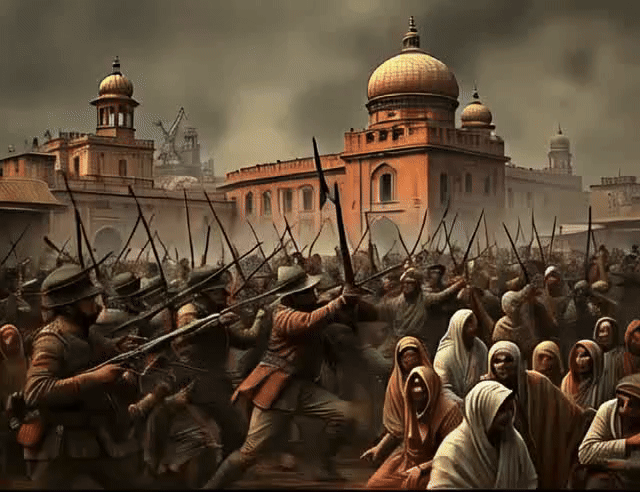
Understanding these injustices sheds light on modern communal tensions and the lasting impact of British colonialism. From the 1857 rebellion, Indian Muslims led the Malabar Rebellion, also known as the Mappila Muslims. This history reveals a campaign of suppression that shaped India’s past and present, urging us toward historical justice.
One of the leading British officials at the time, Dr. William Yur, submitted a report to the British Viceroy that revealed deep colonial anxieties. In his words:
“Among the entire population of India, the Muslims are the most spirited and vigilant. The battle of independence was fought mainly by the Muslims. As long as they cherish the spirit of jihad, we will not be able to impose our rule upon them. Hence, the first and foremost task is to extinguish this spirit. The only way to achieve this is by eliminating the ulema and eradicating the Quran.”
Historical Roots of British Oppression of Indian Muslims
Early British Atrocities in India and the 1857 Indian Rebellion (1757–1857)

In 1757, Bengal’s vibrant markets, a Muslim-majority hub, thrived under Nawab Siraj-ud-Daulah. The Battle of Plassey marked a pivotal moment in British colonial rule, triggering economic exploitation in colonial India and initiating centuries of British oppression in India. This event set the stage for the 1857 Indian Rebellion, a defiant stand against colonial violence against Muslims.
Robert Clive’s East India Company, aided by betrayal, seized Bengal’s wealth, hiking taxes that triggered the 1770 famine, killing 10 million, many Muslims. A Murshidabad merchant wrote in 1771, “Our fields lie barren, our children starve, yet their ships sail heavy with our grain.” This deliberate colonial atrocity set the stage for centuries of exploitation.
Cultural Suppression and Muslim Marginalization Under British Rule
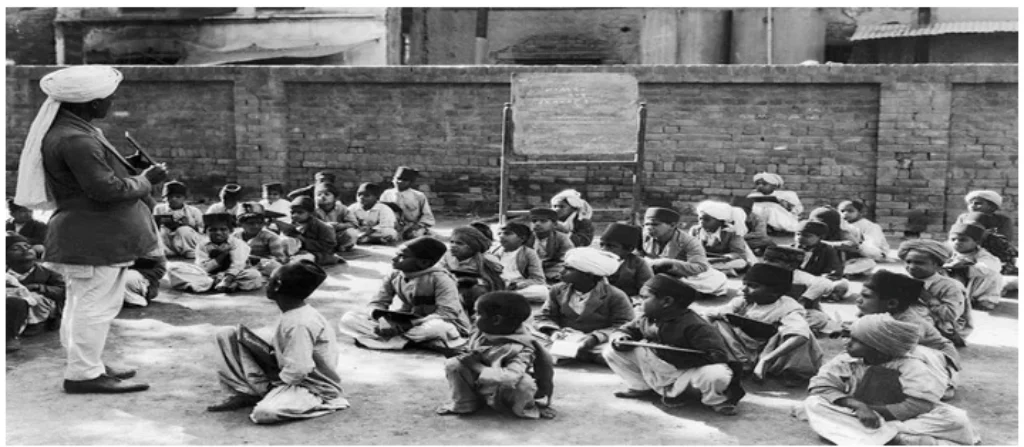
As the Mughal Empire faded, Muslims, once scholars and administrators, were sidelined. By 1837, the British replaced Persian with English in courts and schools, leaving clerks like Abdul Rahman, a scribe in Lucknow, despairing, “My pen, once my pride, is useless; their tongue shuts us out.” His family sank into poverty as Persian-based jobs vanished. Pakistani historians call this a cultural assault, fostering colonial education and Muslim backwardness. British scholar Thomas Metcalf framed it as progress, but for Muslims, it meant marginalization, as W.W. Hunter noted in The Indian Musalmans.
The 1857 Uprising and Muslim Leadership
The 1857 rebellion, led by Indian Muslims, was a defiant stand against British rule. Leaders like Bahadur Shah Zafar, Azimullah Khan, General Bakht Khan, Maulana Ahmadullah Shah, Maulana Liaquat Ali, and Begum Hazrat Mahal rallied Hindus and Muslims.
British historian Holmes called Ahmadullah Shah “the most formidable enemy of the British in Northern India” (History of the Indian Mutiny, p. 539), praising his “spirit and capacity to command a great army” (The Sepoy War). Malleson lauded him as a “true patriot” who “fought honourably” (The Indian Mutiny, Vol. IV, p. 381). Henry Mead saw it as an “Islamic revolt” (The Sepoy Revolt, 1857), fueling British fears of jihad.
British Brutality After the 1857 Revolt
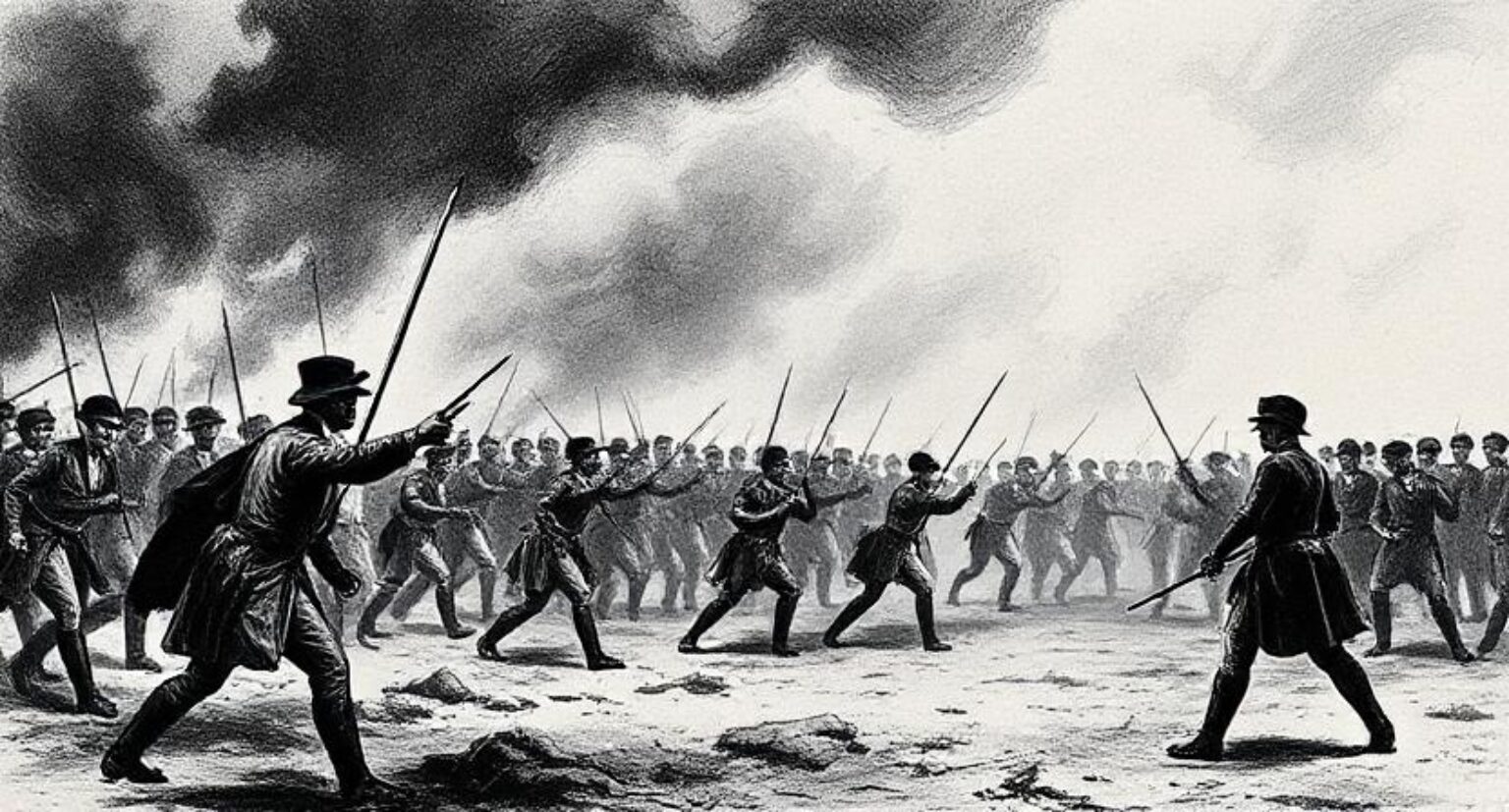
The aftermath of the 1857 War of Independence, also known as the First Indian Rebellion, was marked by unspeakable brutality, especially by the British colonial forces. Following the failure of the uprising—largely due to a lack of coordination, betrayal by princely states, and superior British military organization—the British government unleashed a wave of terror across northern India. This vengeance was so ferocious that many compared it to the massacres of Genghis Khan and Hulagu Khan, infamous for their ruthless campaigns in Asia.
Excesses on Both Sides
It is historically acknowledged that some rebel groups, in moments of frenzy, committed acts such as the killing of British women and children, particularly during the sieges of Kanpur and Delhi. These acts, while condemnable, were committed in the chaos of war. However, the British response was calculated, cold-blooded, and far more savage.
Under the guise of restoring order, the British unleashed collective punishment on entire towns and communities. Thousands of suspected rebels were executed without a fair trial, homes were burned to the ground, and villages were razed. The sheer scale of destruction reflected not justice, but vengeance.
Cultural Suppression and Muslim Marginalization Under British Rule
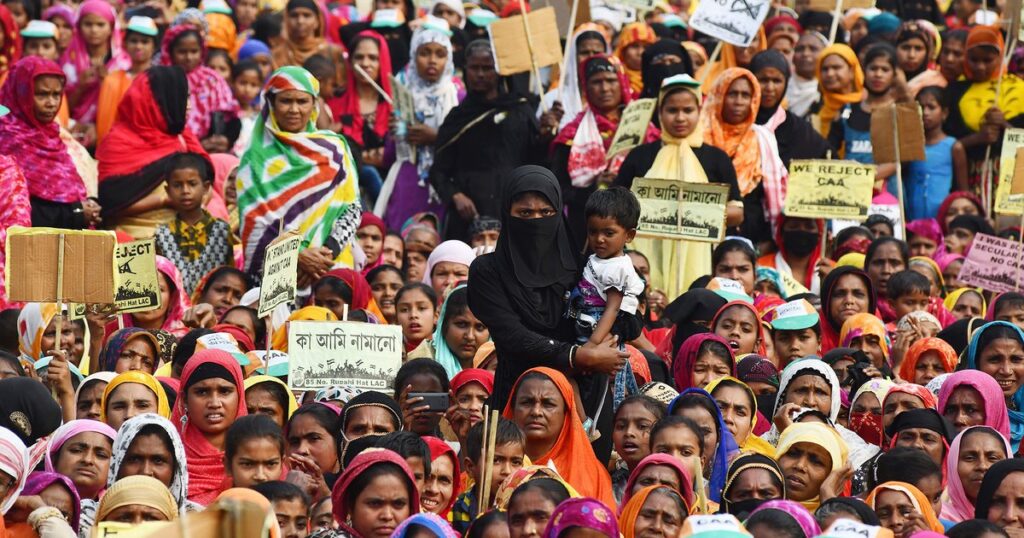
The British colonial rule orchestrated a deliberate assault on Indian Muslim history through cultural suppression under British rule. By destroying over 1,000 Islamic institutions in Delhi by 1867 and burning 300,000 Qur’ans, the British committed colonial violence against Muslims that crippled their scholarly traditions. The replacement of Persian with English in courts and schools further entrenched Muslim marginalization under British rule, as scholars like Maulvi Kareem lamented, “My students are gone; the Quran gathers dust.” This British Islamophobia in India, evident in James Mill’s portrayal of Muslim rulers as tyrants, fueled a cultural erasure that disconnected Muslims from their heritage.
Post-1857 Reprisals and Mughal Family Massacres
When the uprising failed, the British unleashed ferocious atrocities against Indian Muslims. In Delhi, troops massacred thousands, targeting Muslims as “instigators.” Survivor Bibi Fatima, a Delhi weaver, recounted, “They burned our homes, shot my brothers, calling us traitors for loving our king.” Her neighborhood was razed, leaving her destitute. Up to 200,000 died, including 51,200 Muslim scholars executed. Captain William Hodson shot Zafar’s three sons at Khooni Darwaza, despite their surrender, and 33 other Mughal family members—elderly, women, children—were massacred. Zafar, tried for treason at the Red Fort, was exiled to Rangoon, dying in 1862, writing, “How unfortunate is Zafar, for even a grave was not granted in the land of his beloved” (The Last Mughal).
For a gripping narrative of the 1857 rebellion and its devastating impact on Indian Muslims, explore The Last Mughal by William Dalrymple on Amazon.
Delhi’s Destruction in 1857
Delhi, a cultural hub, became a “city of the dead.” Lord Roberts wrote, “Dead bodies were strewn about… a dog gnawed at an uncovered limb” (Forty-One Years in India).
For three days, British soldiers looted, burned, and killed, as Lord Lawrence lamented, “We shall be abused for the way we despoiled all classes” (History of the Indian Mutiny). This devastation, evoking Surah An-Naml’s warning of conquering tyrants, shattered Delhi’s Muslim heritage.
Divide and Rule: Fracturing Indian Society Under British Rule
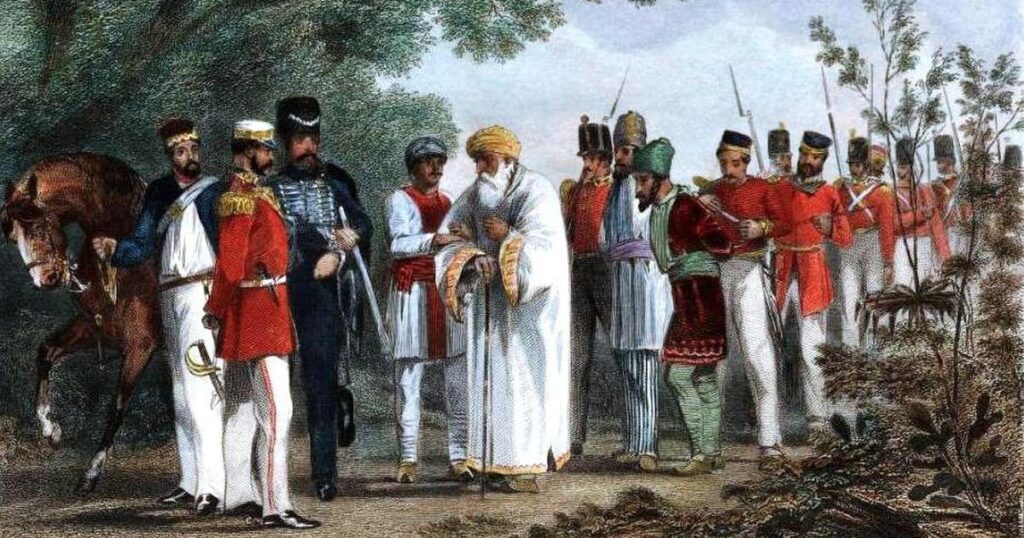
“The British colonial rule relied on a British divide and rule policy to fracture Indian society, pitting Hindus against Muslims to entrench British oppression in India. This strategy, evident in the Partition of Bengal 1905 and the 1909 Morley-Minto Reforms, deepened communal tensions and fueled Muslim marginalization under British rule, as Muslim League member Syed Ali wrote in 1910, ‘They make us a separate nation to chain us to their will.“
The Muslims, creating a Muslim-majority East Bengal, were sold as administrative efficiency, but Viceroy Curzon’s memos reveal the intent to fracture unity, per Reginald Coupland’s The Indian Problem. Hindu protests led to its 1911 reversal, deepening communal mistrust.
Separate Electorates and Communal Tensions
The 1909 Morley-Minto Reforms introduced separate electorates, allowing Muslims to vote only for Muslims. Viceroy Minto called it protection, but Muslim League member Syed Ali wrote in 1910, “They make us a separate nation to chain us to their will.” Pakistani scholars argue that this delayed independence, a tactic of colonial oppression, per Ayesha Jalal’s The Sole Spokesman.
Colonial Censuses and Muslim Identity
British censuses in the 1870s redefined Muslims as a monolithic “other,” perpetuating cultural stereotypes about British India Muslims. James Mill’s History of British India painted Muslim rulers as tyrants, justifying colonial rule. Lucknow scholar Mirza Haider wrote in 1880, “They label us invaders, stealing our history,” fueling early Islamophobia, as scroll.in notes.
1937 Elections and the Seeds of Partition
The 1937 elections intensified tensions. Congress, predominantly Hindu, sidelined the Muslim League, sparking riots that killed 1,700, mostly Muslims. Muhammad Ali Jinnah turned to separatism, writing, “The British have made us strangers in our own land” (The Sole Spokesman). The 1940 Lahore Resolution demanded Muslim homelands, a direct result of colonial policies, per Viceroy Reading’s correspondence.
Partition’s Catastrophic Toll
The 1947 Partition, a catastrophic British atrocity against Indian Muslims, killed 1–2 million and displaced 15 million. Refugee Noor Begum, fleeing Punjab, recalled, “Our train stopped; only screams and blood greeted us.” Her family was torn apart, a microcosm of British inaction’s chaos, as Urvashi Butalia documents in The Other Side of Silence.
Economic Devastation: Plundering Muslim Communities
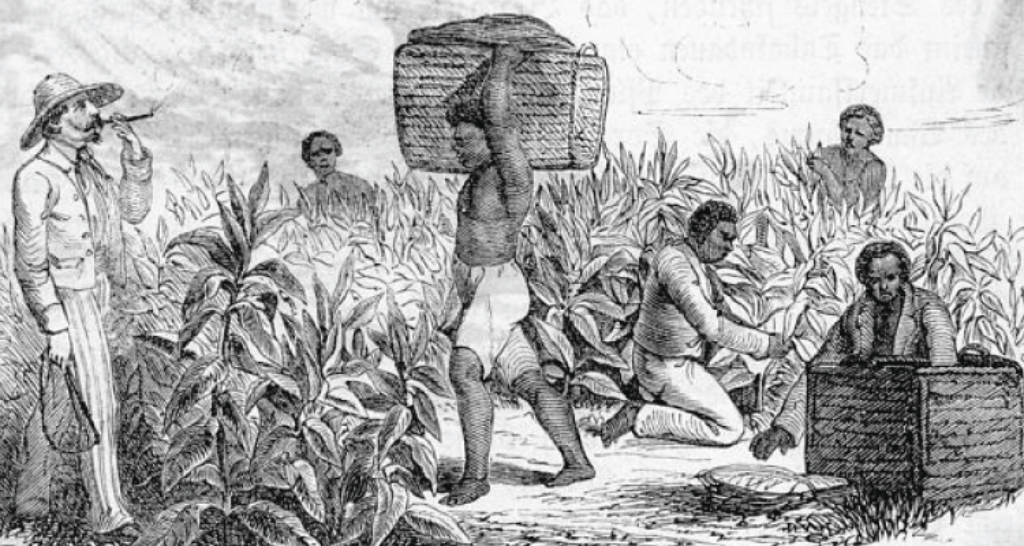
Under British colonial rule, the Empire plundered India, inflicting severe economic exploitation in colonial India. The Permanent Settlement of 1793 favored Hindu zamindars, reducing Muslim nawabs to tenants and deepening Muslim marginalization under British rule. The Bengal famine of 1943, which killed 3 million, mostly Muslims, exemplified British atrocities in India, as Churchill diverted rice for war, leaving farmers like Ismail Khan to mourn, ‘Our children died while their ships carried our food.
In Punjab, the Land Alienation Act favored Hindus and Sikhs, leaving farmers like Ghulam Rasool lamenting in 1900, “My father’s fields are gone; we till for others now.” His family faced starvation, unable to reclaim their land.
Criminal Tribes Act: Targeting Muslim Nomads
The Criminal Tribes Act against Muslims in India of 1871 labeled nomadic Muslim groups as “criminals,” restricting their movement. Tribal leader Karim Khan wrote in 1875, “We are hunted like beasts for living as our fathers did,” forcing his community into poverty under constant surveillance.
Famines as Tools of Colonial Control
Famines were catastrophic. The 1943 Bengal Famine killed 3 million, mostly Muslims, as Churchill diverted rice for war. Farmer Ismail Khan, who lost two children, wept, “Our children died while their ships carried our food.” He lived in penury, haunted by loss, as Amartya Sen’s Poverty and Famines confirms. The 1770 famine, fueled by Company taxes, killed 10 million.
Economic Drain and Colonial Loot
Dadabhai Naoroji estimated Britain drained £200–300 million annually, with Shashi Tharoor calculating $45 trillion looted from 1765–1938 (Inglorious Empire). This economic devastation disproportionately harmed Muslims, already marginalized by land reforms.
Uncover the staggering scale of Britain’s economic exploitation in Inglorious Empire by Shashi Tharoor.
Collapse of the Textile Industry
Muslim weavers, once global leaders, were ruined by British imports. In Dhaka, weaver Rahim lamented in 1830, “My loom is silent; Manchester’s cloth buries us.” His family turned to manual labor, as Bipan Chandra notes. By 1850, India’s textile exports had plummeted, with Muslim-majority regions like Bengal hardest hit, per Angus Maddison’s The World Economy.
Opium Trade’s Toll on Muslim Farmers
Opium cultivation, forced on Muslim farmers, fueled British trade with China, trapping them in debt. Farmer Ali Reza in Bihar wrote in 1840, “They force us to grow poison, not food; our children go hungry.” His village faced cycles of poverty, as Maddison documents.
Indentured Labor and Muslim Exile
Two million Indians, including Muslims, were shipped as indentured laborers to colonies, treated as virtual slaves. Laborer Karim Bux, sent to Fiji in 1879, wrote, “We are chained to their fields, far from home.” Many died under brutal conditions, per Hugh Tinker’s A New System of Slavery.
Cultural Suppression: Erasing Muslim Identity
An Outcome of British Islamophobia in India
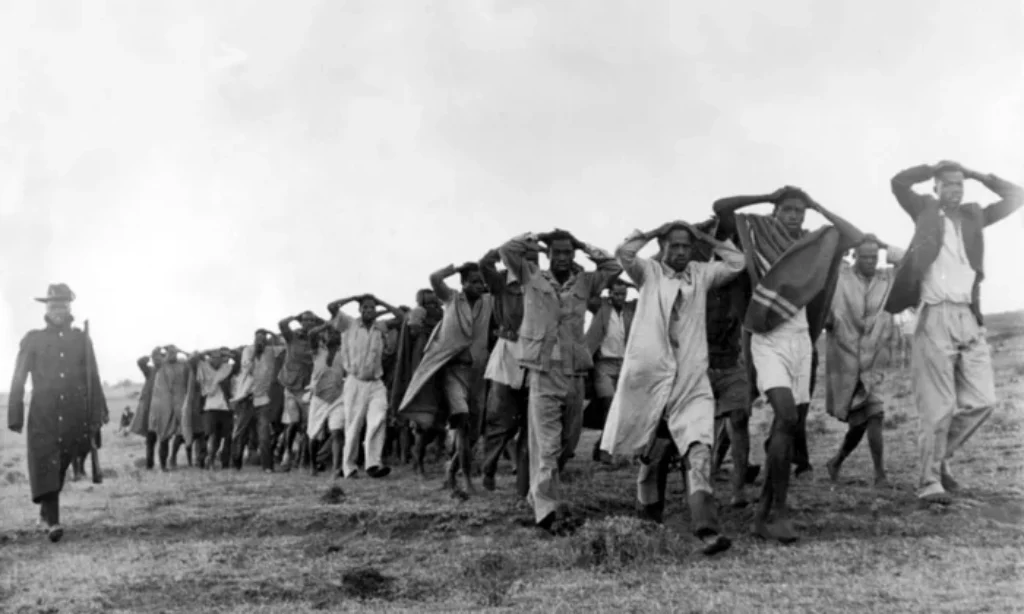
The British targeted Muslim identity, committing cultural atrocities. English schools replaced madrasas, fostering colonial education and Muslim backwardness. Scholar Maulvi Kareem wrote in 1860, “My students are gone; the Quran gathers dust.” His madrasa in Agra closed, leaving him jobless.
Control Over Religious Institutions
The British controlled waqf endowments, starving mosques and schools. By 1850, waqf properties worth millions were mismanaged, per the Indian National Archives. Islamic law was altered, with British judges overriding qadis. The Cantonment Acts forced Muslim women into “chakla” labor. A 1870 missionary report noted, “The girls, some barely 15, are broken by disease and shame,” highlighting the human toll.
The Erasure of Islamic Education in India
By 1867, British efforts had nearly succeeded in wiping out the Islamic scholarly infrastructure of India. It’s astonishing to realize that when the British first arrived in India in 1601 as traders, there were over 1,000 Islamic institutions in Delhi alone. By the end of this genocidal campaign, not a single Islamic madrasa remained operational.
This was not just an attack on individuals—it was a cultural and intellectual decapitation designed to strip the Muslim community of its leadership, its knowledge, and its identity.
Stereotyping Muslim History
British histories like James Mill’s History of British India painted Muslim rulers as tyrants, fostering Islamophobia. Poet Mirza Haider wrote, “They call us barbarians, yet their pens steal our past,” reflecting the cultural assault, as Peter Hardy notes in The Muslims of British India.
Suppression of Islamic Publishing
The British censored Islamic texts, with 300,000 Qur’ans burned post-1857, per Edward Thompson’s The Other Side of the Medal. Printing presses in Delhi were shut, and scholars like Maulvi Abdul Qadir faced imprisonment for publishing religious works, crippling Muslim intellectual life, as Munshi Zakaullah’s Urooj-i-Sultanat-i-Englishia documents.
British Fear of the Ulema and the Quran
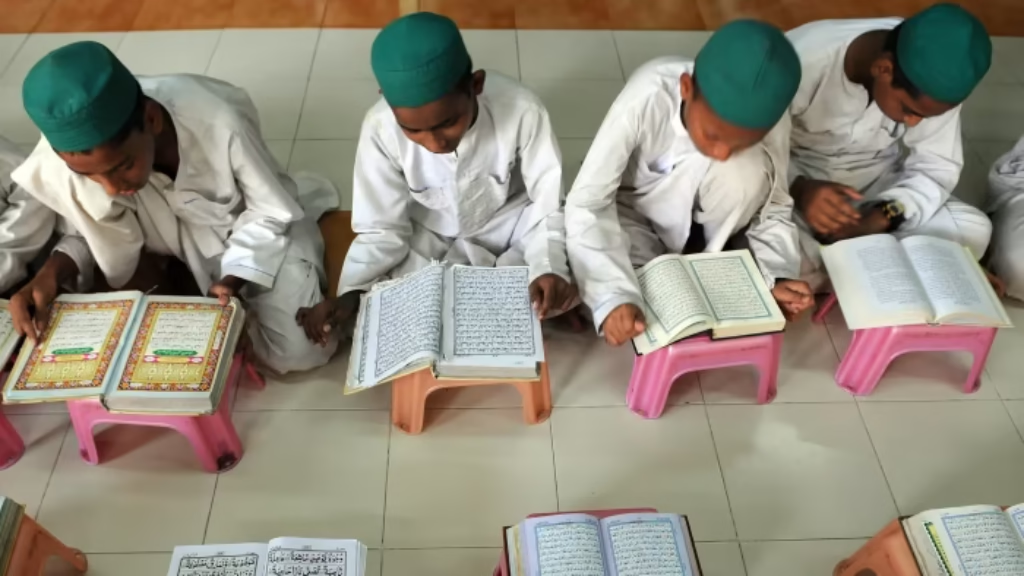
There is documented evidence that British officials, after 1857, viewed Muslim scholars and their call for Jihad as existential threats to colonial rule. For example, Dr. William Hunter, in his book “The Indian Musalmans” (1871), argued that as long as the spirit of Jihad lived in the hearts of Muslims, British rule would remain insecure.
He famously wrote:
“So long as a single copy of the Quran remains in India, so long will rebellion smoulder.” – Dr. William Hunter, The Indian Musalmans, 1871
This philosophy led to the suppression of madrasas, the monitoring of mosque sermons, and restrictions on Islamic publishing houses.
Targeted Repression of Muslims: An Ideological War
Although the rebellion involved both Hindus and Muslims, the British colonial administration perceived the revolt primarily as an Islamic revolution. Many high-ranking British officers believed that the ideological and spiritual force behind the rebellion was Islamic in nature, led by Muslim leaders and scholars who viewed British rule as an occupation of a historically Muslim-ruled land.
British civil servant Henry Mead noted:
“This rebellion, in its present phase, cannot be called a Sepoy Mutiny. It did begin with the sepoys, but soon its true nature was revealed. It was an Islamic revolt.”
— Henry Mead, “The Sepoy Revolt: Its Causes and Its Consequences” (1857)
This interpretation led to a campaign of deliberate anti-Muslim vengeance, where Muslims were viewed not just as rebels, but as religious enemies of the British Empire.
Brutality Fueled by Religious Profiling
Eyewitnesses and chroniclers of the uprising documented horrifying scenes where British soldiers targeted Muslims indiscriminately, often executing them based solely on their faith.
One British account reported:
“An English officer had made it a principle to treat every Muslim as a rebel. He would ask every man he saw whether he was a Hindu or a Muslim. If the answer was ‘Muslim’, he would shoot him dead on the spot.”
Such incidents were not isolated but reflected a broader colonial mindset that saw Islam itself as a threat to British authority. As a result, the Muslim population endured disproportionate massacres, public hangings, and destruction of religious institutions, especially madrasas and mosques, which the British saw as breeding grounds for jihadist sentiment.
British Legal and Administrative Policies Against Muslims
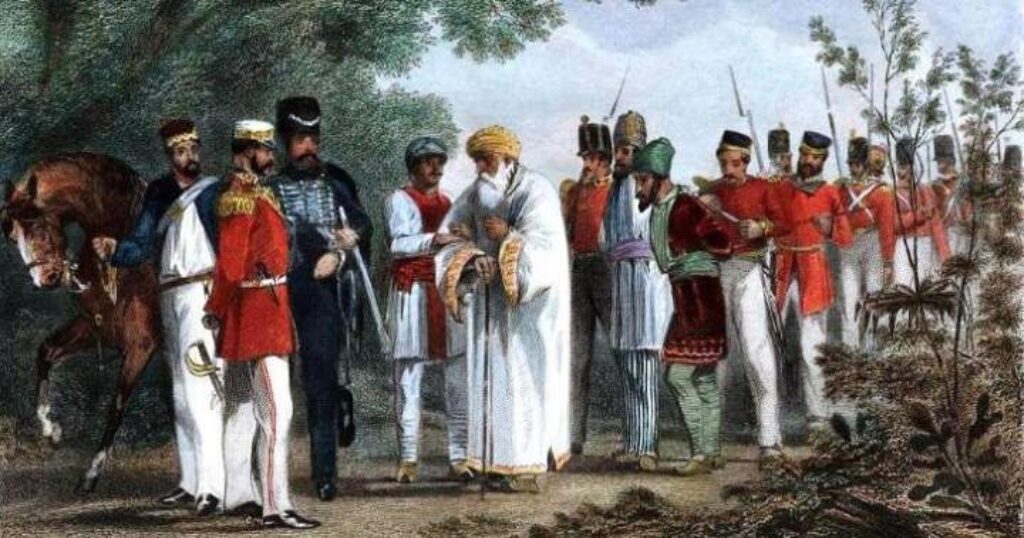
The British used legal and administrative tools to marginalize Muslims, entrenching British colonial oppression of Indian Muslims. Policies like the Morley-Minto Reforms and land laws favored non-Muslims, while surveillance targeted Muslim communities.
Morley-Minto Reforms and Political Exclusion
The 1909 Morley-Minto Reforms, while granting separate electorates, limited the political power of Muslims. Congress’s dominance left Muslims sidelined, as Syed Ali’s letters lament. British officials monitored “Wahabi” activities, branding devout Muslims as threats, per J.A.R. Marriott’s The English in India.
Surveillance and Show Trials
Muslims across India were treated with suspicion and cruelty. At the slightest excuse, they were rounded up, imprisoned, or executed. The British administration unleashed legal persecution and state terror on scholars, merchants, and religious leaders, particularly those accused of supporting the movement of Syed Ahmad Shaheed Barelvi or aligning with the Mujahidin (freedom fighters) operating in the North-West tribal belt (present-day Khyber Pakhtunkhwa).
In cities like Patna, Thanesar, and Lahore, show trials were conducted under flimsy charges of sedition or Wahabi affiliation. This term was broadly and often inaccurately applied to any devout or politically conscious Muslim.
A Chilling Verdict: British Judiciary and Anti-Muslim Hatred
One of the most shocking examples of British vengeance is found in the trial of three prominent Muslim leaders—Maulana Yahya Ali, Muhammad Ja’far Thanesari, and Muhammad Shafi Lahori. Branded as “Wahabis,” they were sentenced to death under fabricated charges of treason.
In his verdict, the British judge chillingly declared:
“You will be hanged till death, your properties will be confiscated, and your corpses will not be handed over to your relatives. Instead, you will be buried contemptuously in the jail compound.”
This ruling highlights not just the judicial cruelty but also the deep-seated colonial contempt toward Muslims. It was a political message as much as a legal ruling.
Public Display of Prisoners: A Macabre Spectacle
After sentencing, the condemned prisoners were put on display in their jail cells, visited by British men and women who treated the event as morbid entertainment. However, the prisoners were seen not weeping or despairing, but rather rejoicing in their upcoming martyrdom. This response frustrated the British onlookers, who felt deprived of emotional satisfaction.
In a twist of colonial logic, the British then revised the sentences from death to life imprisonment, not out of mercy, but to deny the prisoners the dignity of martyrdom.
“You rejoice over the sentence of death and look upon it as martyrdom. The Government therefore have decided not to award you the punishment you like so much.”
— Deputy Commissioner of Ambala, 1865
Deportation to the Andamans: Exile as a Tool of Colonial Control
In 1865, the three men—along with Maulana Ahmadullah Azimabadi and Maulvi Abdul Rahim Sadiqi—were deported to the Andaman Islands (Kala Pani), the infamous penal colony used by the British to isolate political prisoners. Maulana Yahya Ali and Maulana Ahmadullah later died in exile.
The entire property of the Sadiqpur family in Patna was seized, their homes were razed, and government buildings were erected in their place. Even the ancestral graves were demolished—a vengeful act meant to erase their memory and legacy.
Widespread Banishment of Islamic Scholars
Several other esteemed Islamic scholars (Ulama) were similarly punished:
- Maulana Fazl-i-Haq Khairabadi – died in exile at the Andamans.
- Mufti Inayat Ahmad Kakorwi – imprisoned, later returned after sentence.
- Mufti Mazhar Karim Daryabadi – survived exile and returned post-sentence.
These religious scholars were not rebels in the military sense but were seen by the British as the spiritual backbone of Muslim resistance. Their persecution served a dual colonial goal: eliminating religious authority and crippling Muslim intellectual leadership.
Long-Term Impact: Educational and Political Decline of Indian Muslims
This policy of colonial vengeance played a devastating role in the educational, political, and social decline of Muslims in British India. The destruction of Muslim leadership, coupled with the targeted dismantling of institutions, created a vacuum from which the community took decades to recover.
Even today, historians and scholars point to this period as the beginning of the systematic marginalization of Indian Muslims—a legacy that continues to affect their socioeconomic conditions.
Violent British Atrocities Against Indian Muslims
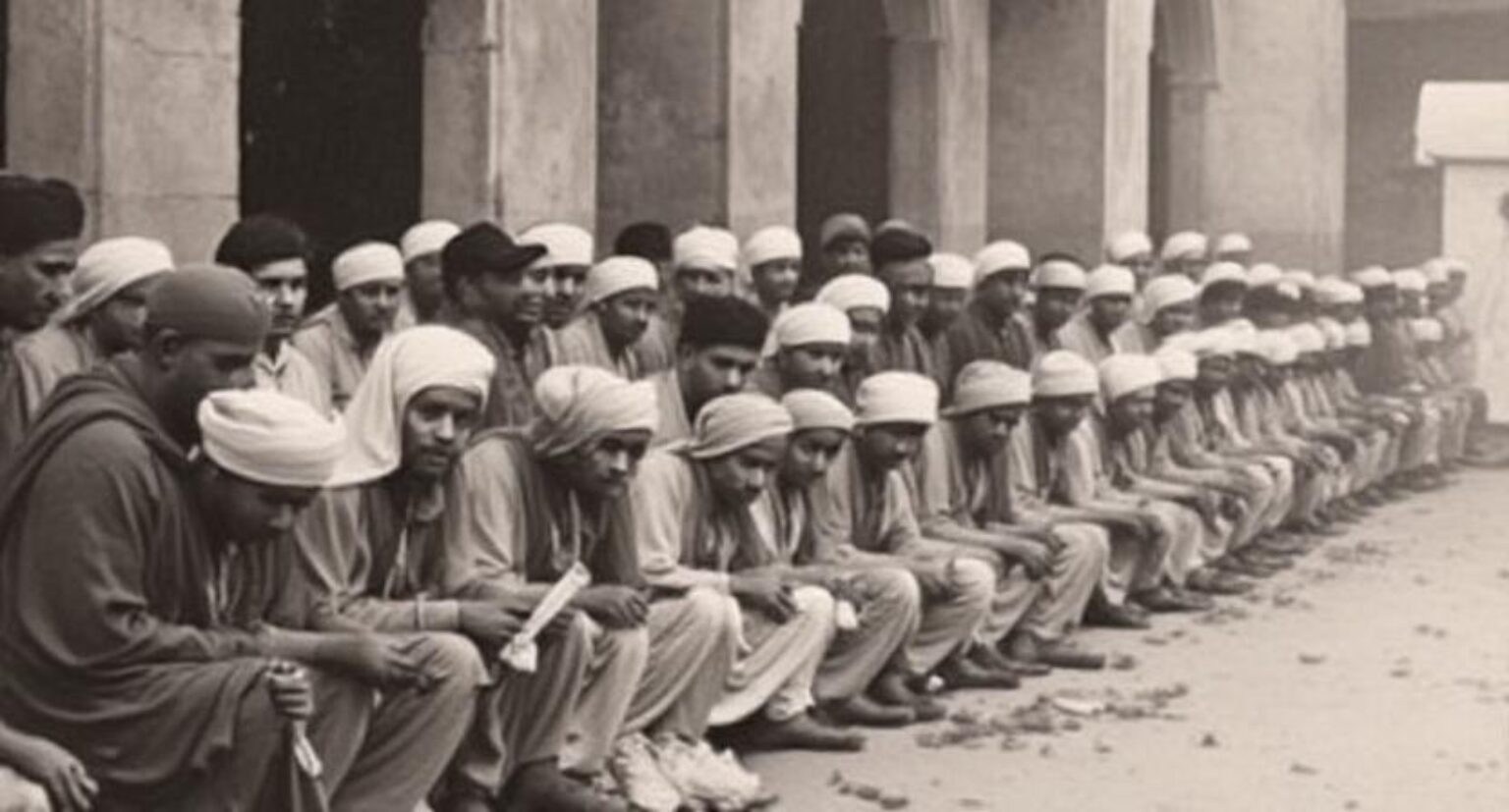
Violence defined British atrocities against Indian Muslims. After the 1857 uprising, Delhi became a graveyard. Lord Roberts wrote, “The atmosphere was laden with noxious odours” (Forty-One Years in India). Jallianwala Bagh in 1919 killed 379, including Muslims, with General Dyer celebrated in Britain.
Massacre of Islamic Scholars (1864–1867)
From 1864 to 1867, the British executed 14,000 Ulema, targeting Muslim intellectual leadership. Historian Edward Thompson wrote,
“From 1864 to 1867, the British government firmly resolved to eradicate all the Ulema of India. These three years are among the most heart-wrenching in Indian history.” (The Other Side of the Medal).
The methods used were horrifying:
- Over 14,000 Ulema were executed by hanging across the subcontinent.
- From Chandni Chowk in Delhi to the Khyber Pass, no tree was left untouched by the ropes that hung Islamic scholars.
- Scholars were reportedly wrapped in pigskin—a religiously offensive act—and thrown alive into furnaces.
- Copper rods were heated and pressed against their bodies as instruments of torture.
- In some cases, Ulema were made to stand on elephants, tied to trees, and left to hang when the elephants were driven away.
- A temporary gallows was constructed inside the historic Shahi Mosque of Lahore, where up to 80 Ulema were executed daily.
- Others were stuffed in sacks and dumped into the Ravi River, only to be gunned down in the water.
Eyewitness Account of Mass Executions
Mr. Thompson’s writings paint a gut-wrenching picture of the mass execution process:
“As I entered my camp in Delhi, I smelled the stench of rotting flesh. Behind the camp, I saw a fire burning. A group of forty naked Ulema were being led into it.”
“Another group followed. Their clothes were stripped off. A British commander told them:
‘O Molvies! Just like your brothers, you will be roasted alive unless one of you denies participating in the 1857 uprising.’”
“By the Lord who created me, not one Ulema recanted. They all chose martyrdom. Not a single scholar surrendered.”
Malabar Rebellion: Brutal Suppression of Mappila Muslims
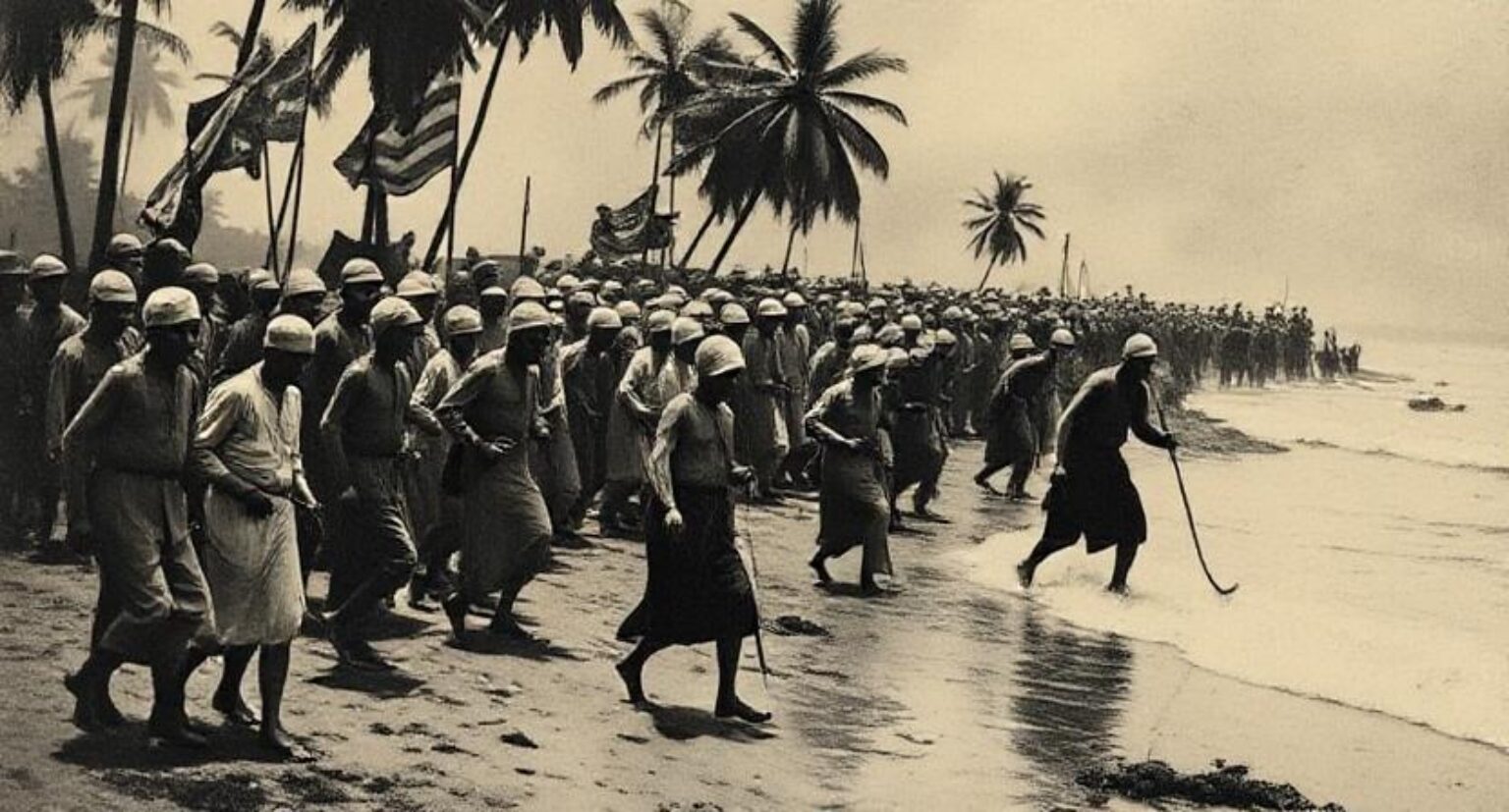
The Malabar Rebellion, Mappila Muslims in 1921, sparked by feudal oppression and the Khilafat Movement‘s colonial response, saw the British spend 5.1 million rupees on military suppression, according to K.K.N. Kurup’s The Malabar Rebellion 1921. The Wagon Tragedy suffocated 67 prisoners in sealed wagons unfit for transport. Survivor’s descendant Ayesha shared, “My grandfather spoke of the darkness, the screams, until silence.” The 1922 Malabar Inquiry reported that 35,000 Mopla women and children faced starvation, per William Logan’s Malabar Manual.
Mopla Muslims Massacre Incident Details
The dark legacy of British colonialism in India is stained with numerous incidents of state violence, ethnic targeting, and ruthless suppression of indigenous resistance. Among the most tragic and lesser-known episodes is the Mopla (or Mappila) Rebellion of 1921, which saw brutal atrocities committed by the British against the Muslim population of Malabar, in present-day Kerala.
A People Driven to Desperation
On August 21, 1921, the Mopla Muslims of Malabar, long subjected to oppressive feudal practices by Hindu landlords (jenmis) backed by British colonial authority, rose in revolt. This armed uprising, also known as the Malabar Rebellion, was sparked by decades of economic exploitation, religious discrimination, and denial of basic civil rights.
Initially rooted in anti-colonial sentiment and the Khilafat Movement, the rebellion soon escalated into a full-scale confrontation between the oppressed peasants and the colonial state.
Massive Suppression and Unimaginable Brutality
The Mopla Rebellion lasted for over six months, during which it assumed such intense proportions that the British had to deploy regular army regiments, use artillery, and even call in a warship to suppress the revolt. Between August and December 1921, the colonial government reportedly spent 5.1 million rupees—a staggering sum at the time—on the military operation to crush the rebels.
Thousands of Mopla Muslims were killed, tortured, or imprisoned, and entire villages were razed to the ground.
The Tragedy of the “Wagon Massacre”
Perhaps the most horrific atrocity of this period was the infamous “Wagon Tragedy” (also called the Wagon Massacre) that occurred in November 1921. A large group of Mopla prisoners were crammed into sealed railway goods wagons—vehicles that had been declared unfit for human transport by three separate medical officers.
Despite the prisoners’ desperate cries for water, they were denied even the most basic necessities during the journey. When the train finally arrived at Podanur station, 67 of the 90 prisoners were found dead, having suffocated to death inside the stifling, locked wagons. The tragedy became a symbol of British cruelty, akin to a mobile death chamber.
This chilling event remains one of the most gruesome and criminally neglected episodes of colonial repression in Indian history.
Long-Term Suffering of the Mopla Muslim Community
Even after the rebellion had been crushed, the British continued to punish the Mopla community collectively:
- Widespread arrests and detentions followed.
- Thousands of Moplas were kept under strict surveillance, denied civil liberties, and humiliated in public and private life.
- Their economic resources were depleted, and their homes and mosques were often destroyed.
In 1922, a Committee of Inquiry appointed by the Special Commissioner of Malabar published a harrowing report:
“There are at least 35,000 Mopla women and children whose condition is extremely miserable and unless proper measures are taken for their relief, many of them are likely to die of disease and starvation.”
— Malabar Inquiry Committee Report, 1922
This official admission underscores the scale of human suffering that followed the rebellion and the criminal neglect by the British colonial government.
A Forgotten Genocide?
The Mopla Rebellion of 1921 was more than just a regional uprising—it was a desperate cry for justice, equality, and freedom. The British response, however, was marked by disproportionate violence, racial hatred, and deliberate dehumanization of an entire community.
This episode, while often glossed over in mainstream Indian history, deserves recognition as a symbol of anti-colonial resistance and a grim reminder of the brutality of British imperialism in India.
Mass Executions Post-1857
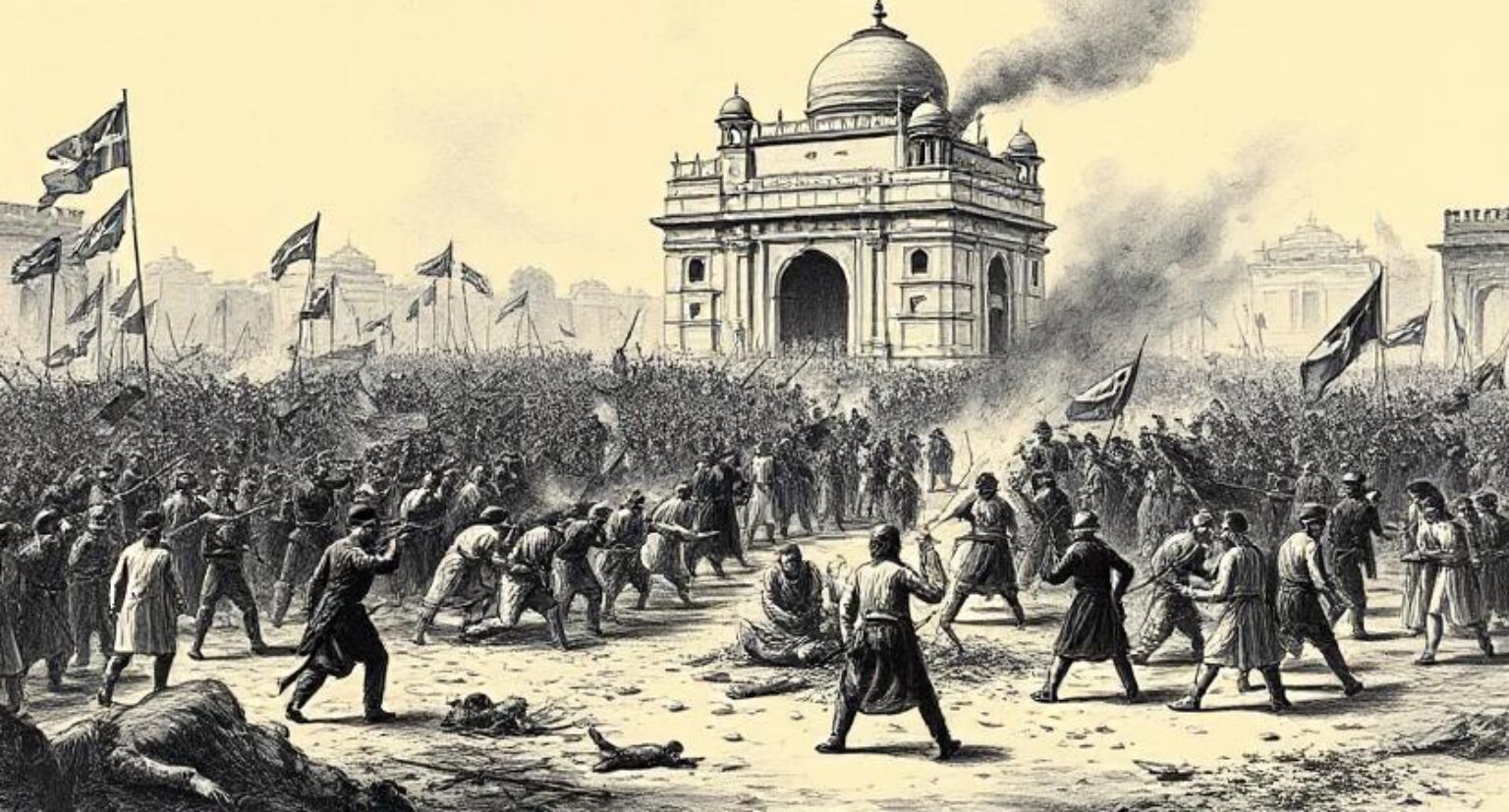
The year 1857 marked a turning point in India’s colonial history with the First War of Independence—also known as the Sepoy Mutiny—against British rule. But perhaps one of its most brutal chapters unfolded in Delhi, a city once regarded as the heart of Islamic culture and Mughal grandeur. When British forces reclaimed Delhi after intense fighting, what followed was a horrific display of vengeance, destruction, and indiscriminate slaughter.
Quranic Echoes in Colonial Horror
The devastating entry of the British army into Delhi evoked a chilling parallel to a verse in the Holy Qur’an that warns of the ruin left by conquering tyrants:
Indeed, when kings enter a city, they ruin it and humiliate its honored citizens – this is what they do.” Surah An-Naml (27:34)
This Qur’anic truth was painfully reflected in the events that transpired as the British army entered the fallen city.
Three Days of Pillage, Murder, and Fire
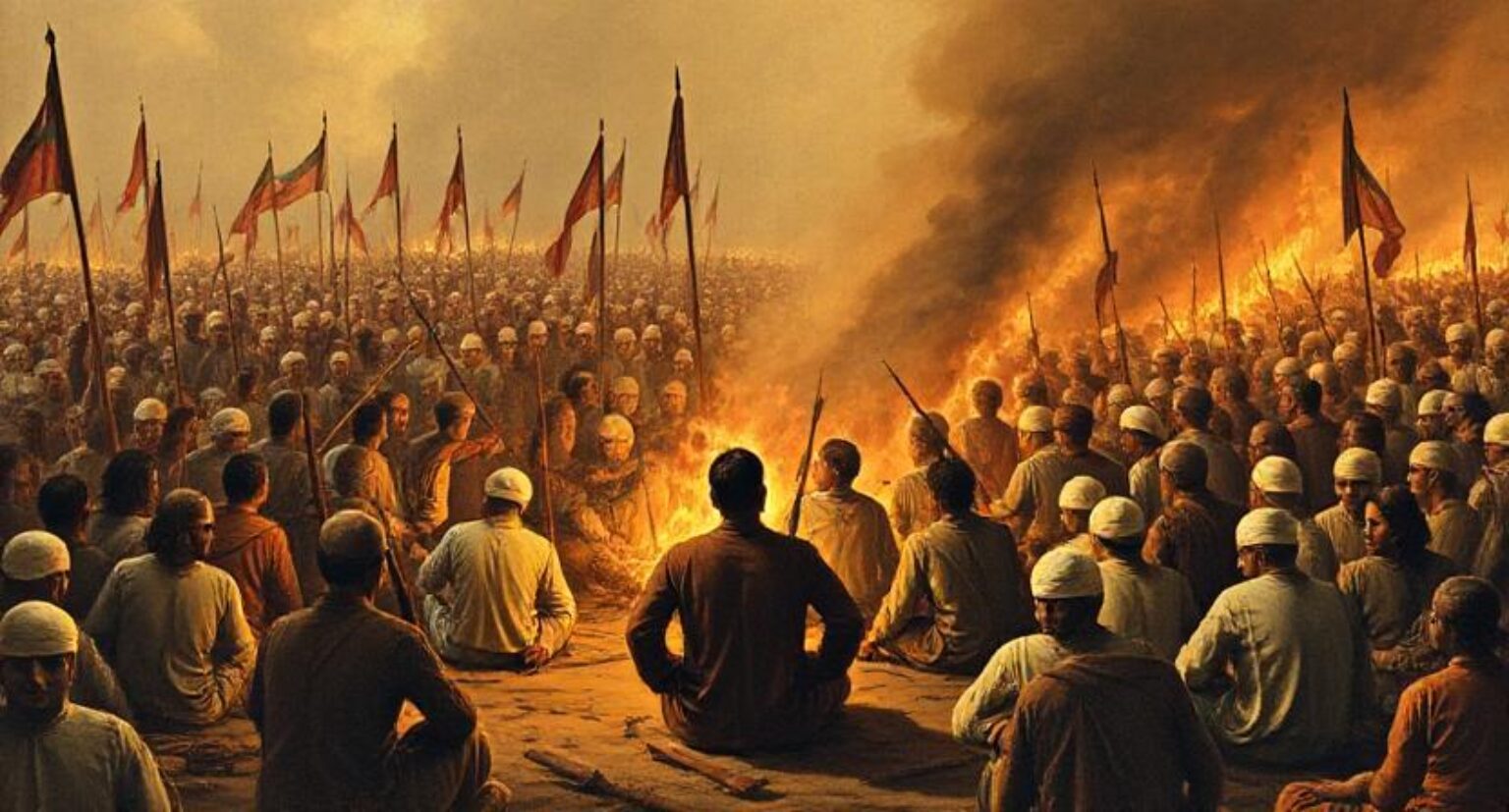
Upon their victorious return, British commanders gave soldiers a free hand to loot, burn, and kill for three consecutive days. What followed was one of the most merciless crackdowns in modern Indian history:
- Thousands of civilians—regardless of age, gender, or religion—were killed.
- Homes and businesses were looted and destroyed.
- Entire families fled, abandoning centuries-old homes.
- The cultural and economic backbone of Delhi was shattered in a few days.
Even some British officials were horrified by the scale of the destruction. Lord Lawrence, a senior British administrator, wrote to General Penny, the commanding officer at the time, expressing deep concern over the lawless carnage:
“I believe we shall lastingly and indeed justly be abused for the way in which we have despoiled all classes without distinction.”
This statement is a rare admission from within the colonial ranks, acknowledging the excessive cruelty and indiscriminate punishment inflicted on Delhi’s population.
Scaffolds were erected across the city, especially on main roads and marketplaces. Shockingly, these sites of death became forms of gruesome entertainment for British civilians and soldiers.
Eyewitness accounts describe how Englishmen would gather in groups to watch and cheer as Muslims were hanged, shot, or blown apart. This bloodshed was not hidden—it was put on display to send a message of domination and humiliation.
According to contemporary reports:
“Twenty-seven thousand Muslims were executed, not including the many who were killed in the general massacres.”
Whole neighborhoods known for their Muslim populations were wiped off the map, turning vibrant communities into ghost towns.
Systematic Extermination: Women and Children Not Spared
What made this brutality even more horrifying was that it did not spare children or women. Historical records and local testimonies suggest that the British massacred Muslim families indiscriminately, regardless of age or gender. Women were subjected to unspeakable abuse, and the slaughter of children was carried out with a savagery that defies comprehension.
As one account puts it:
“It seemed that the British were determined to blot out of existence the entire Muslim race.”
The scale of violence was so enormous and relentless that many historians compare it to genocidal purges seen in other colonial contexts.
Lord Roberts: Chilling Words from a British General
British General Lord Frederick Roberts, who would later become a Field Marshal, wrote chillingly casual comments in a letter to his mother dated June 21, 1857:
“The death that seems to have the greatest effect is being blown from a gun. It is rather a horrible sight but in these times we cannot be particular.”
— Letter from Lord Roberts to his mother, 1857
This method—strapping victims to cannons and firing them into pieces—was frequently used to execute Indian freedom fighters, particularly Muslims, to shock and terrify the local population.
In the same letter, Lord Roberts wrote:
“The purpose of this business is to show these rascally Musalmans that, with God’s help, Englishmen will still be the masters of India.”
Such statements reveal the deeply religious and racialized motivations behind the executions. Muslims were not just rebels in British eyes; they were seen as existential threats to imperial Christian supremacy.
The British viewed Muslims as the ideological and spiritual leaders of the 1857 Islamic revolt, as many ulama (Islamic scholars), soldiers, and leaders invoked jihad against colonial rule. This perception led to a targeted campaign of extermination, the scars of which remain in South Asian Muslim memory.
The sheer scale of executions and the targeted destruction of Muslim lives, properties, and institutions during this period qualify as a mass atrocity, if not an outright genocide, by modern standards.
A City Turned Into a Graveyard: Eyewitness Account by Lord Roberts
Perhaps the most graphic and heartbreaking description of post-siege Delhi comes from Lord Frederick Roberts, a British officer who marched with troops into the city after its capture. Writing in his memoirs (Forty-One Years in India), he recounts:
“That march through Delhi in the early morning light was a gruesome proceeding… not a living creature was to be seen… Dead bodies were strewn about in all directions… a dog gnawed at an uncovered limb, there a vulture disturbed by our approach from its loathsome meal…”
He continues:
“Our horses seemed to feel the horror as much as we did… The atmosphere was unimaginably disgusting, laden as it was with the most noxious and sickening odours.”
– Lord Roberts, Memoirs (Sept 24, 1857)
Such descriptions illustrate how the British army turned Delhi into a “city of the dead”. Homes were emptied, mosques defiled, libraries lost, and streets ran red with blood.
The Fall of a Great Civilization
Before the arrival of the British, Delhi was a thriving center of culture, learning, and Islamic scholarship, deeply rooted in centuries of Mughal history. The events of 1857 changed that forever. What had once been a symbol of India’s multicultural brilliance was reduced to rubble and mourning.
This mass destruction of Delhi is more than just a tragic event in the past—it serves as a stark reminder of the brutality of colonial imperialism. Today, as historical revisionism often glorifies British contributions to infrastructure and governance, it’s crucial to remember the cost at which that rule was established and maintained.
Jallianwala Bagh / Amritsar Massacre
The 1919 Jallianwala Bagh massacre saw 379 killed, including Muslims, in a peaceful crowd. General Dyer’s actions, firing on unarmed civilians, reflected colonial brutality, as Sumit Sarkar’s Modern India details.
Qissa Khwani Bazaar Massacre (1930)
On 23 April 1930, in Peshawar’s Qissa Khwani Bazaar, thousands of unarmed protesters gathered to demonstrate against British colonial rule. In response, British troops opened fire indiscriminately, killing an estimated 200 to 400 people and injuring many more. This brutal massacre became a turning point in the struggle, particularly strengthening the Khudai Khidmatgar movement led by Khan Abdul Ghaffar Khan. Often compared to the Jallianwala Bagh tragedy of 1919, it remains one of the most notorious examples of colonial violence in Muslim-majority regions.
Tank (Bannu) Massacre (1930)
After the Qissa Khwani tragedy, British forces also attacked protesters in the Frontier regions such as Bannu and Tank, killing scores of unarmed demonstrators. These crackdowns were part of the larger campaign to suppress the Khilafat and Khudai Khidmatgar movements.
Salanga Massacre (1922)
On 27 January 1922, thousands of villagers assembled at Salanga Bazar in Sirajganj, Bengal (now Bangladesh) to peacefully protest against oppressive British taxation and exploitation. Without warning, colonial forces opened fire on the crowd, killing nearly 4,500 unarmed civilians. The Salanga Massacre was one of the deadliest atrocities in Bengal under British rule. While it instilled fear, it also inspired stronger resistance in rural Bengal. Despite its magnitude, this massacre is less well-known than Jallianwala Bagh, but it remains a deeply painful chapter in the collective memory of Bengal.
Chandpur Massacre (1971 Context but British Precedent in 1940s Bengal)
Although not directly a colonial massacre like Jallianwala Bagh, the Bengal famine (1943) and earlier crackdowns on food riots in Chandpur saw British police firing on hungry Muslim peasants demanding grain.
Sura Massacre (Khulna, 1922)
Similar to Salanga, British police opened fire on villagers in Khulna who resisted forced revenue collection and exploitation, leaving dozens dead.
Peshawar/Kohat Massacre (1930–31)
After the Qissa Khwani killings, British troops carried out further crackdowns in the North-West Frontier Province (now Khyber Pakhtunkhwa), including Peshawar, Kohat, and other tribal regions. Hundreds of unarmed protesters were killed for defying colonial authority.
Bengal Firing on Khilafat Processions (1920–22)
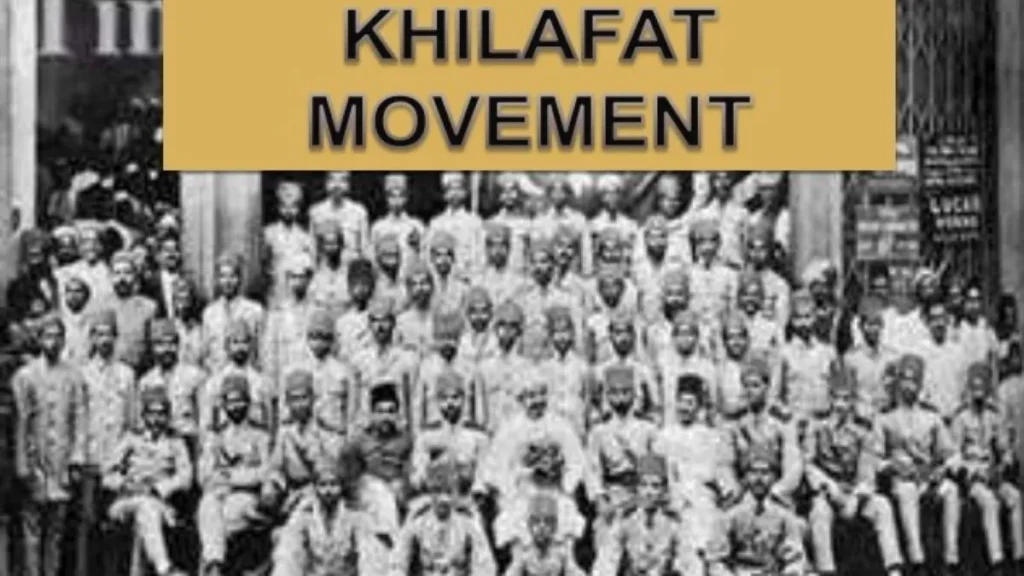
During the Khilafat Movement, many processions in Bengal, particularly in Dhaka, Chittagong, and Barisal, faced police firing. Records show dozens of Muslims killed in scattered incidents when they protested against British policies and in support of the Ottoman Caliphate.
Sholapur Massacre (1930, Maharashtra)
When protests broke out during the Civil Disobedience Movement, British forces shot at demonstrators in Sholapur. While not exclusively Muslim, Muslims formed a significant part of the casualties.
Pirpur Massacre (1946, Bengal)
During the pre-partition riots, British inaction and sometimes complicity in Bengal led to violent crackdowns, including direct police firing in places like Pirpur, killing protesting Muslim peasants.
Chauri Chaura (1922) Aftermath Executions
Although technically not a massacre by direct British firing, after the Chauri Chaura incident (where protesters killed policemen), the British executed 19 Muslim villagers by hanging after highly questionable trials.
1932 Karachi Firing on Muslim Leaguers
British police opened fire on Muslim League supporters during protests in Karachi, killing several. This was one of the early clashes between Muslims and the colonial administration in Sindh.
1925 Kakori Crackdown
Although remembered mainly for revolutionaries like Ram Prasad Bismil and Ashfaqulla Khan, the aftermath of the Kakori Train Robbery saw British courts sentencing Muslims like Ashfaqulla Khan and Roshan Singh to death. The hangings were widely viewed as unjust, especially since the evidence was weak.
1931 Kashmir Massacre (under British-backed Dogra rule)
Although not directly by the British army, the Dogra Maharaja, under British suzerainty, ordered troops to fire on unarmed Muslim protesters in Srinagar on 13 July 1931, killing 22. British silence and support for the Dogra regime made them complicit.
1919 Punjab Martial Law Atrocities
Beyond Jallianwala Bagh, in Amritsar, Lahore, and Gujranwala, Muslims were tied to telegraph poles, flogged publicly, and subjected to “crawling orders” under General Dyer and O’Dwyer. These humiliations targeted both Muslims and Sikhs.
1932 Kanpur Mosque Firing
British police opened fire on Muslims protesting against restrictions on mosque construction in Kanpur, killing dozens. This event further alienated Muslims from the Raj.
1946 Kolkata Killings (Direct Action Day)
Although it spiraled into communal riots, records suggest British inaction and deliberate “stand back” policies worsened the bloodshed, in which thousands of Muslims died in Bengal.
1863 Sitana Campaign (NWFP)
The British launched brutal military campaigns against Muslim tribes in the North-West Frontier (now Khyber Pakhtunkhwa, Pakistan). Villages were burned, men executed, and women/children displaced in retaliation for resistance.
1893 Bombay Riots
Communal clashes broke out, but British police were accused of siding with Hindu mobs and disproportionately firing on Muslim neighborhoods, causing dozens of Muslim deaths.
1913 Kanpur Mosque Incident
A mosque was demolished by the British to make space for a road in Kanpur. When Muslims protested, police opened fire, killing over 30 people.
1945 Patna Firing
Muslims protesting the arrest of Muslim League leaders were fired upon by British police. Dozens were killed, which inflamed nationalist anger in Bihar.
1799–1800 Mysore Campaign (Tipu Sultan’s Muslims)
After the fall of Tipu Sultan, British forces massacred and imprisoned large numbers of his Muslim soldiers and civilians in Srirangapatna. Many were executed or forcibly relocated.
1818–1819 Pindari Suppression (Central India)
British campaigns against Pindari bands, which included Muslim mercenaries, led to mass killings of Muslim villages accused of harboring rebels.
1859–1860 Rohilkhand & Awadh Reprisals
Post-1857, in Rohilkhand and Awadh, entire Muslim neighborhoods were demolished, and men were executed in mass hangings as punishment for alleged rebellion.
1897–1898 Chitral & NWFP Expeditions
British punitive expeditions in frontier regions led to mass killings of local Muslims resisting colonial authority. Villages were torched, men executed, and women/children displaced.
1910–1911 Bengal Famine Protests
During protests against famine relief mismanagement, British troops fired on Muslim peasants in Murshidabad and Nadia, leaving dozens dead.
1927–1928 Punjab Muslim League Crackdowns
Muslims protesting discriminatory taxes and land policies were attacked; several were killed, and many were arrested.
1937–1939 Bengal Peasant Movements
British police frequently opened fire on Muslim peasants involved in anti-landlord movements, such as in Dinajpur, Bogra, and Comilla.
1944–1945 Bengal Famine Relief Protests
Muslims organizing relief efforts and food distribution sometimes faced police brutality, with fatal shootings recorded in rural Bengal.
1772 Bengal Peasant Revolt Repression
Muslim peasants in Bengal who resisted excessive taxation faced mass arrests, beatings, and killings by East India Company forces.
1784 Tipu Sultan’s Resistance Supporters
Muslims in Malabar and Coorg who supported Tipu Sultan’s campaigns were executed or imprisoned after the British victory.
1824–1825 Anglo-Burmese War (Bengal Muslim Soldiers)
Muslim sepoys from Bengal faced brutal punishments, including executions and flogging, for alleged mutiny or desertion during British campaigns in Burma.
1831–1832 Aligarh and North Indian Tax Protests
British forces fired on protesting Muslim villagers resisting oppressive land taxes, leaving dozens dead.
1842 Afghan Campaign Reprisals (Muslim Soldiers & Civilians)
During and after the First Anglo-Afghan War, Muslims in Kabul and northern frontier regions allied with local rulers faced massacres and forced displacement by the British.
1855–1856 Oudh (Awadh) Muslim Leaders Execution
The British executed prominent Muslim landlords and clerics accused of plotting rebellion, before the 1857 uprising.
1872–1875 Frontier Expeditions
In tribal areas of NWFP, the British often carried out punitive campaigns against Muslim villagers, killing and displacing entire communities.
1905 Bengal Partition Protests
Muslim protesters opposing the British attempt to partition Bengal faced police brutality and firing, killing several unarmed participants.
1764–1765 Battle of Buxar Aftermath
Following the East India Company’s victory, Muslim soldiers and supporters of the Nawab of Bengal faced executions, imprisonment, and land confiscation.
1799–1801 Mysore Muslim Prisoners
After Tipu Sultan’s defeat, the British imprisoned and executed large numbers of his Muslim soldiers and administrators.
1817–1818 Pindari Muslim Settlements
Muslims accused of supporting rebel Pindari bands were massacred or forcibly relocated by British troops in central India.
Why This Chapter Must Be Remembered
The genocide of Islamic scholars and muslims is one of the most underreported and unacknowledged crimes of the British Raj. It shows how colonial powers used religious persecution as a tool of control, fearing the spiritual and moral influence of the Ulema over the masses.
These atrocities are not only relevant for historical memory but are essential for understanding how colonizers viewed indigenous resistance—particularly when that resistance was inspired by faith, led by scholars, and rooted in the belief of liberation from foreign domination.
Muslim Resistance to British Oppression
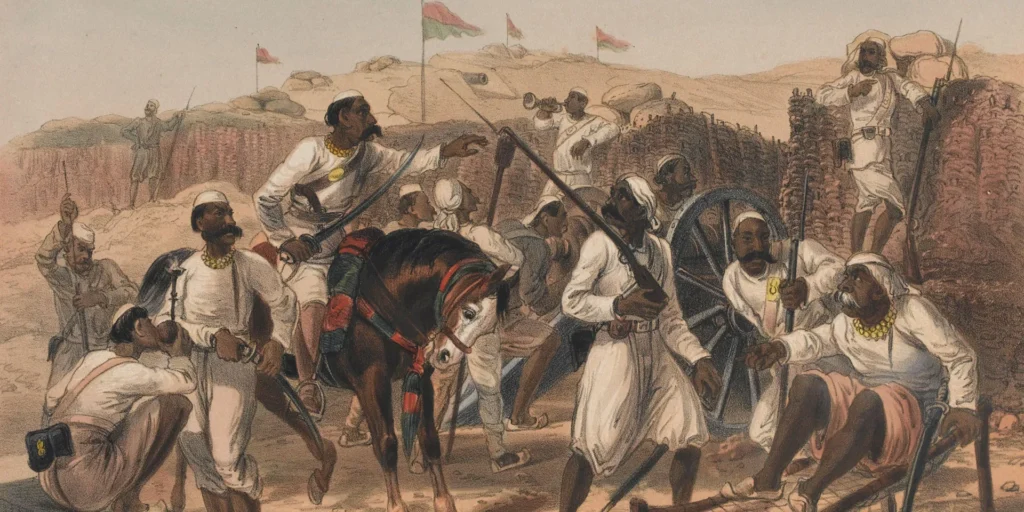
Despite British colonial rule, Muslims resisted through uprisings, reforms, and intellectual efforts. Begum Hazrat Mahal’s leadership in the 1857 Indian Rebellion urged, ‘Defend our faith, our home,’ inspiring thousands against British oppression in India. The Khilafat Movement, uniting Muslims with Congress, protested colonial policies, while Sir Syed Ahmad Khan’s Aligarh Movement countered colonial education and Muslim backwardness, laying the foundation for modern Muslim scholarship.
Her stand in Lucknow inspired thousands, though she was exiled. Sir Syed Ahmad Khan, Muhammad Ali Jinnah, and Maulana Azad fought for Muslim rights.
Khilafat Movement: A Unified Stand
The Khilafat Movement’s colonial response allied Muslims with Congress against British policies, protesting the Ottoman Caliphate’s dismantling. Leaders like the Ali brothers rallied millions, but their 1924 collapse deepened distrust, as Syed Mahmud’s A History of the Freedom Movement notes.
Sir Syed’s Educational Reforms
Sir Syed’s Aligarh Movement countered colonial education and Muslim backwardness, founding Aligarh University. His efforts faced ulema resistance but laid the foundation for modern Muslim scholarship, as Peter Hardy’s The Muslims of British India documents.
Revolutionary Defiance: Ashfaqulla Khan
Ashfaqulla Khan, executed in 1927, declared, “My blood will water freedom,” inspiring resistance, per the Indian Mutiny Papers.
Legacy of British Atrocities Against Indian Muslims
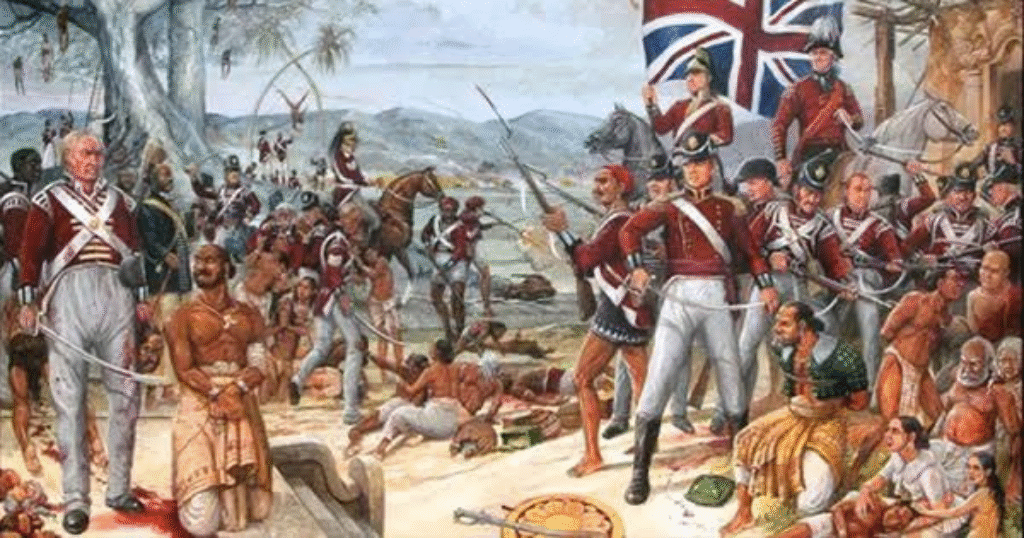
The British left Muslims marginalized, their communities fractured. Communal violence in India, rooted in colonial divisions, persists, with riots like the Gujarat riot of 2002 echoing these tensions, per Indian sociological studies. Pakistan’s creation responded to Muslim marginalization, but its challenges reflect the same legacy. John Esposito sees British stereotypes as early Islamophobia, shaping modern tensions. Delhi Muslim Imran said in 2020, “We still carry the weight of their chains.”
Lasting Communal Tensions
Communal violence, from post-Partition riots to the 1992 Babri Masjid demolition, traces to British policies, as Ayesha Jalal’s The Sole Spokesman highlights. The 1984 anti-Sikh riots further reflect lingering divides.
Socioeconomic Marginalization
Muslims in India face lower literacy and income levels, a legacy of colonial exclusion, per the Sachar Committee Report (2006). In Pakistan, narratives of British oppression shape national identity, as Pakistani archives note.
Relevance for Historical Justice
Understanding British atrocities against Indian Muslims fosters dialogue for reconciliation and equity, urging acknowledgment of colonial wrongs.
Conclusion: Confronting the Legacy of British Colonial Oppression
The British colonial rule systematically dismantled Indian Muslim communities through British oppression in India and colonial violence against Muslims. From the Battle of Plassey to the Partition of India in 1947, British atrocities in India—including massacres, the Bengal famine of 1943, and the British divide-and-rule policy—left enduring scars. Recognizing this Indian Muslim history is crucial for understanding communal tensions and pursuing historical justice.
Stories of Abdul, Fatima, and Noor humanize the cost. Recognizing this history is the first step toward justice and healing.
References:
- [1] Independent, “5 of the worst atrocities carried out by the British Empire.”
- [3] The Militant, “Brutality of British rule in India reflected in Amritsar massacre.”
- [4] explaininghistory.org, “Divide and Rule? The Role of British Colonial Policy.”
- [7] haqqfinder.com, “British Colonial Atrocities: Indian Muslims.”
- [8] stophindudvesha.org, “British Raj’s Heinous Crimes in India.”
- [10] Peter Hardy, “The Muslims of British India.”
- [18] britishonlinearchives.com, “India under Colonial Rule, 1752-1933.”
- [22] W.W. Hunter, “The Indian Musalmans.”
- [29] explaininghistory.org, “Causes of the Partition of India (1857–1947).”
- [33] British colonial records, Viceroy Minto’s correspondence.
- [36] Reginald Coupland, “The Indian Problem.”
- [43] Indian National Archives, Morley-Minto Reforms.
- [53] Urvashi Butalia, “The Other Side of Silence.”
- [57] Amaresh Misra, “War of Civilisations: India AD 1857.”
- [60] Pakistani archives, post-1857 reprisal data.
- [67] W.W. Hunter, “The Indian Musalmans.”
- [68] Indian sociological studies, post-independence communal violence.
- [70] Punjab Land Alienation Act records.
- [75] Bipan Chandra, Indian economic histories.
- [78] John Esposito, global studies on Islamophobia.
- [85] Ayesha Jalal, “The Sole Spokesman.”
- [89] Pakistani accounts, post-1857 Muslim marginalization.
- [94] Ayesha Jalal, “The Sole Spokesman.”
- [97] British economic records, famine policies.
- [99] British military records, 1857 reprisals.
- [101] scroll.in “How the British convinced Hindus that Muslims were despots.”
- [105] Sir Syed Ahmad Khan’s writings, Aligarh Movement.
- [106] James Mill, “History of British India.”
- [109] Peter Hardy, “The Muslims of British India.”
- [115] Shashi Tharoor, “Inglorious Empire.”
- [118] Frederick Roberts’ military dispatches.
- [120] Amartya Sen, “Poverty and Famines.”
- [122] Pakistani historiographical critiques.
- [124] Viceroy Reading’s correspondence, British Library.
- [127] Partition oral histories, 1947.
- [128] Durba Ghosh, Indian social histories on cantonment practices.
- [131] Shashi Tharoor, “Inglorious Empire.”
- [132] Indian National Archives, 1937 election reports.
- [136] Khilafat Movement records.
- [137] Biographies of Jinnah, Azad, and Begum Hazrat Mahal.
- [141] Maulana Azad, “India Wins Freedom.”
- [142] Christopher Hibbert, “The Great Mutiny: India 1857.”
- [143] S.N. Sen, “Eighteen Fifty-Seven.”
- [144] G.W. Forrest, “Selections from the State Papers of the Governors-General of India.”
- [145] John Kaye, “History of the Indian Mutiny.”
- [146] William Dalrymple, “The Last Mughal.”
- [147] Syed Mahmud, “A History of the Freedom Movement.”
- [148] J.A.R. Marriott, “The English in India.”
- [149] K. K. N. Kurup, The Malabar Rebellion 1921: A Historical Study, Calicut University, 1975.
- [150] William Logan, Malabar Manual, Government Press, 1887 (background on the Mopla social structure).”
- [151] Report of the Malabar Special Committee, Government of Madras, 1922.
- [152] Sumit Sarkar, Modern India 1885–1947, Macmillan, 1983.”
- [153] Munshi Zakaullah: Urooj-i-Sultanat-i-Englishia, Vol . 2, p.(702-708).”
- [154] Edward Thompson, “The Other Side of the Medal,(1926) p.40.”
- [155] Muhammad Jafar Thaneswari, “Kala Pani.”
- [156] Angus Maddison, “The World Economy.”
- [157] Hugh Tinker, “A New System of Slavery.”
- [158] Sachar Committee Report, 2006.
- [159] Letter of Lord Lawrence to General Penny – Referenced in historical records such as The History of the Indian Mutiny (Sir John Kaye).
- [160] Lord Roberts’ Memoirs – Forty-One Years in India, Frederick Sleigh Roberts, 1897.
- [161] Henry Mead, The Sepoy Revolt: Its Causes and Its Consequences, 1857.
- [162]Indian Mutiny Papers (British Library, India Office Records).
- [163]Lord Frederick Roberts, Letters and Memoirs (1857–58), as cited in multiple British India historical archives.
- [164]“Wagon Tragedy,” Indian Railways Historical Records, 1921.
- [165] Bosworth Smith: Life of Lawrence (1883), Vol. 2, p.258
- [166] Reproduced from Ghulam Rasool Mehr, 1857
- [167] Kamaluddin Hyder: Qaiser-ul-Tawareekh, Vol. 2, p.454
This post may contain affiliate links. We may earn a commission at no extra cost to you. Learn more
4 Responses
Nice. The history that we really wouldn’t know. Thanks for such an informative post
You are most welcome. Hope it helped you.
British colonial rule was a history of brutality. They made the world unstable. The present USA govt. Is the past reflection of inhumane British regime.
well said. They created the definition of terrorism. Now they are calling others terrorists where they are doing the real terrorism. How hypocritical they are!