

Maulana Abdul Hai Budhanwi (d. 1828), was an influential scholar and reformist figure in early 19th-century India. Although less well-known than some of his contemporaries, his role in the Tariqah-yi Muhammadi movement alongside Sayyid Ahmad of Raebareilly and Shah Ismail Shaheed was crucial. Born into the illustrious Shah Waliullah family, Maulana Abdul Hai Budhanvi inherited a legacy of Islamic scholarship, spiritual discipline, and reformist zeal, which he applied both in teaching and activism.
This biography explores his early life, education, scholarly contributions, involvement in the reformist movement, and enduring legacy in South Asian Islamic history.
Historical Context: 19th-Century India
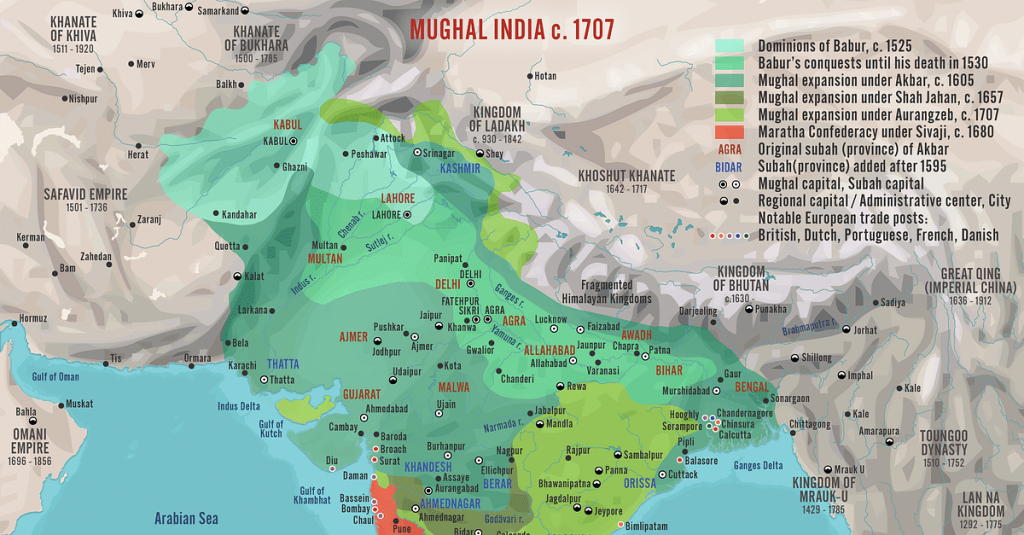
The life of Maulana Abdul Hai Budhanvi unfolded in a time of political upheaval and religious change. By the late 18th century, the once-powerful Mughal Empire was in decline. Its authority had been largely supplanted by the British East India Company, leaving the Mughal emperor as a symbolic figure. Simultaneously, the Sikh Empire under Ranjit Singh expanded in the northwest, particularly in Punjab and the North-West Frontier, posing challenges to local Muslim communities.
Religiously, Indian Islam was diverse but fragmented. Sufi orders such as the Naqshbandi, Chishti, and Qadiri were influential, but many practices—like tomb veneration and syncretic rituals—were deemed innovations (bid’ah) by reform-minded scholars. The Shah Waliullah family, especially Shah Waliullah Dehlawi (1703–1762), had emphasized a return to the Quran and Hadith, advocating ijtihad (independent reasoning) and a balanced approach to Islamic law.
The early 19th century also witnessed reformist movements combining spiritual revival with political activism. Scholars like Abdul Hai engaged in both intellectual and militant efforts to preserve Islamic identity and resist external domination.
Suggested: Shah Waliullah Dehlvi Biography
Early Life and Family Background
Abdul Hai Budhanwi was born into a prominent scholarly family in Delhi. His father, Hibbatullah Budhanwi, was a learned man, but the family’s prominence derived from its connection to Shah Waliullah Dehlawi, Abdul Hai’s grandfather in the broader family lineage. This environment provided him with access to rigorous Islamic education and reformist ideals from an early age.
Maulana Abdul Hai Budhanvi grew up in the intellectual hub of Delhi, where his uncle, Shah Abdul Aziz Dehlvi (1746–1824), was a central figure in continuing the Waliullahi legacy. Shah Abdul Aziz’s fatwas and writings, including his declaration that India under British rule had become Dar al-Harb (land of war), reflected the family’s engagement with contemporary challenges.
His cousins, Shah Ismail Dehlvi and Shah Abdul Qadir Dehlvi, were also significant scholars, and together they represented a network of intellectual and reformist influence. The family’s primary center of learning was the Madrasah-i Rahimiyah, which emphasized Hadith, Fiqh, Tafsir, and Sufism. Maulana Abdul Hai Budhanvi’s early education was shaped by this rigorous environment, balancing scholarly learning with spiritual training.
Education and Intellectual Development
Maulana Abdul Hai Budhanwi’s formal education was guided largely by Shah Abdul Aziz. At the Madrasah-i Rahimiyah, he studied:
- Hadith: Engaging deeply with prophetic traditions, forming the foundation for reformist thought.
- Fiqh: Trained in the Hanafi school, with attention to practical application of Sharia.
- Tafsir: Studied the Quranic exegesis of Shah Waliullah and his cousins, making the scripture accessible to broader audiences.
- Sufism: Following the Naqshbandi order, emphasizing spiritual discipline within Shariah-compliant practice.
Maulana Abdul Hai Budhanvi was also influenced by the family’s reformist ideology, which promoted a return to early Islamic practices and rejected innovations (bid’ah) and polytheistic tendencies (shirk) that had spread among Indian Muslims.
Role in the Tariqah-yi Muhammadi Movement
The Tariqah-yi Muhammadi, led by Sayyid Ahmad of Raebareilly (1786–1831), emerged as a key reformist and militant movement in early 19th-century India. Its objectives were:
- Religious Purification: Eliminating un-Islamic practices and promoting strict adherence to the Quran and Sunnah.
- Political Resistance: Opposing non-Muslim rule, especially the Sikh Empire, and seeking to establish Islamic governance.
- Social Reform: Educating and uplifting Muslim communities.
Maulana Abdul Hai Budhani joined Sayyid Ahmad and Shah Ismail, contributing as a scholar, preacher, and advisor. While he may not have authored key texts like Sirat al-Mustaqim, he provided essential ideological and spiritual support, ensuring that the movement remained rooted in authentic Islamic scholarship.
He also participated in the frontier campaigns against the Sikh Empire, supporting logistics, morale, and religious guidance for the fighters. His role bridged the gap between scholarship and activism, reflecting the Waliullahi model of engaged ulama.
Death and Circumstances
Maulana Abdul Hai Budhanwi passed away in 1828, before the final battle of Balakot (1831), where Sayyid Ahmad and Shah Ismail were martyred. Although details of his death are limited, it is likely he succumbed to the hardships of the frontier campaigns, such as disease or logistical challenges. His death marked a significant loss for the Tariqah-yi Muhammadi, as he was a crucial figure linking scholarship with action.
Legacy and Influence
While Maulana Abdul Hai Budhanvi did not leave an extensive written record, his contributions are reflected in:
- Strengthening the intellectual foundation of the Tariqah-yi Muhammadi movement.
- Training students and preaching, spreading reformist ideas throughout North India.
- Inspiring later movements, including the Ahl-i Hadith and Deobandi reformists, who drew on the Waliullahi emphasis on the Quran, Hadith, and moral revival.
The Madrasah-i Rahimiyah continued to influence Islamic scholarship, with Maulana Abdul Hai Budhanvi’s life demonstrating the intersection of learning, spirituality, and activism. His dedication to reform and resistance left a lasting imprint on subsequent generations of Indian Muslim scholars.
Conclusion
Maulana Abdul Hai Budhanwi’s life exemplifies the intellectual and spiritual resilience of Indian Muslims in the early 19th century. As a member of the Shah Waliullah family, his scholarship, preaching, and activism strengthened the Tariqah-yi Muhammadi movement, bridging the gap between academic reform and political engagement. Although less documented than his relatives, his legacy remains integral to the story of Islamic revival and reform in South Asia, highlighting the sacrifices and commitment of scholars in a time of profound change.
Important References
- Nadwi, A. H. A. (1971). Saviors of Islamic Spirit (Vol. 2). Lucknow: Academy of Islamic Research and Publications.
- Academia.edu. (n.d.). Contribution of the Dehlevis Family in the Field of Hadith.
2 Responses
Awesome article ever. Probably the most detailed article about this man available on internet. Sha Abdul Hai Dehlawi was a renowned and an underrated person in our history. May Allah bless you.
Probably you are right. He should be included in more writings, as he is one of the scholars who tried his best to spread the light of the truth.
Thanks a lot for your comment.