

Syed Ahmad Shaheed Barelvi (1786–1831) stands as a pivotal figure in the Islamic revival and Jihad movements of 19th-century India. His Tariqah-e-Muhammadiyah Movement aimed to purify Islamic practices, eliminate shirk (polytheism) and bid’ah (innovations), and establish an Islamic state. However, a controversial question often arises:
Was Syed Ahmad a British agent?
This accusation, particularly from some followers of the Barelvi sect and critics, stems from his focus on Jihad against the Sikh Empire and his apparent avoidance of direct conflict with the British. In this blog post, we will examine the historical evidence, references, and analysis to uncover the truth behind this claim.
Syed Ahmad Barelvi: A Brief Introduction to His Life and Movement

Early Life
Born in 1786 in Raebareilly, Uttar Pradesh, Syed Ahmad Shaheed Barelvi traced his lineage to Hazrat Hasan (RA) through the Prophet Muhammad (PBUH). In his childhood, he memorized the Quran and later studied Hadith, Fiqh, and Sufism under Shah Abdul Aziz Dehlvi in Delhi. His intellectual and spiritual development was deeply influenced by the reformist philosophy of Shah Waliullah Dehlvi.
The Tariqah-e-Muhammadiyah Movement
After returning from Hajj in 1821, Syed Ahmad Barelvi founded the Tariqah-e-Muhammadiyah movement, with the following objectives:
- Religious Purification: Eradicating shirk, bid’ah, and un-Islamic practices.
- Social Reform: Promoting moral and spiritual upliftment of Muslim society.
- Jihad: Establishing an Islamic state through armed struggle against Sikh rule.
His key disciples included Shah Ismail Dehlvi and Maulana Abdul Hai Budhanwi. Together, they authored Sirat-ul-Mustaqim, a text outlining the movement’s theological foundations.
Check here to know more in detail about The Tariqah-e-Muhammadiyah Movement,
Jihad and Martyrdom at Balakot
In 1826, Syed Ahmad Shaheed Barelvi declared Jihad against the Sikh Empire in the North-West Frontier. He achieved victories in battles like Akora (1826) and Mayar (1827), but in 1831, he and Shah Ismail were martyred at the Battle of Balakot due to local betrayals. While this defeat marked the end of his military campaign, his ideals continued to inspire future generations.
The Accusation of Being a British Agent: Origins and Arguments
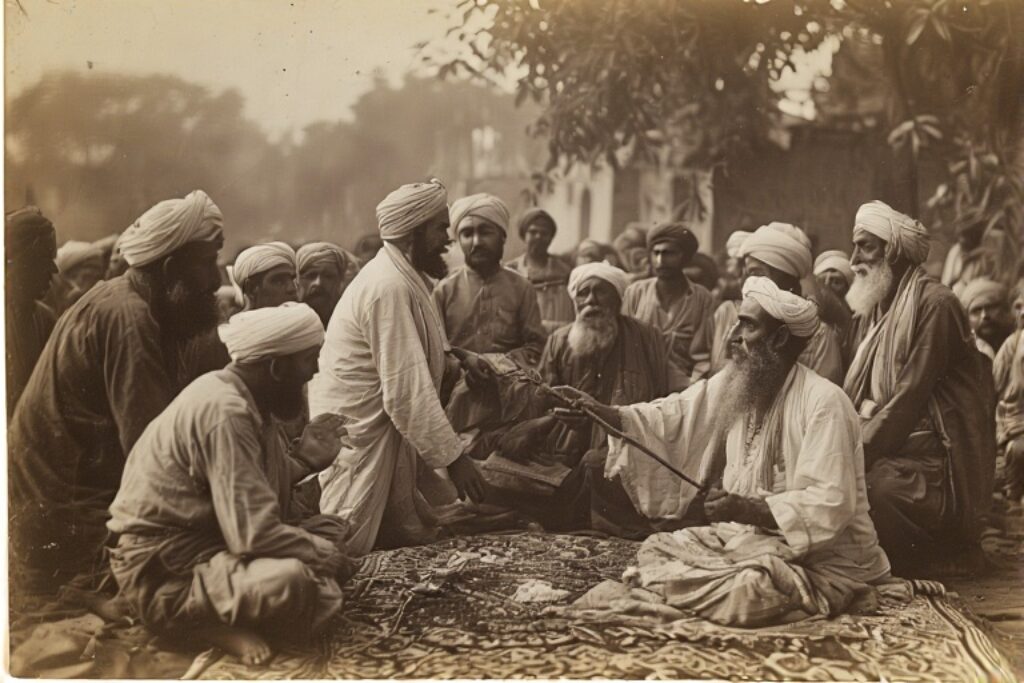
Background of the Allegation
The claim that Syed Ahmad Barelvi was a British agent primarily arises from his focus on fighting the Sikhs under Maharaja Ranjit Singh rather than directly confronting the British. Critics, particularly some Barelvi followers, argue:
- Focus on Sikhs: The British were the dominant colonial power in India, yet Syed Ahmad targeted the Sikhs, which some view as a strategy to serve British interests.
- Early Associations: His early service under Amir Khan, the Nawab of Tonk, who later allied with the British, fuels suspicion.
- British Records: Some British documents portray his anti-Sikh Jihad as beneficial to their interests, which critics cite as evidence of British support.
Historical Context
The political landscape of India in the 1820s was complex:
- Mughal Decline: The Mughal Empire had virtually collapsed, with the British East India Company dominating most of India.
- Sikh Empire: Ranjit Singh’s Sikh Empire in Punjab and the North-West Frontier was seen as oppressive to Muslim communities, particularly in Peshawar and Kashmir.
- British Strategy: The British maintained a temporary truce with the Sikhs via the 1809 Treaty of Amritsar, but were keen to exploit any weakening of Sikh power.
In this context, Syed Ahmad Shaheed’s Jihad against the Sikhs may have indirectly benefited the British, but this does not prove he was their agent.
Evidence Against the Accusation
Syed Ahmad Barelvi’s (1786–1831) primary struggle was to establish an Islamic system of governance and revive Jihad against non-Muslim rulers. In particular, during his time, he built a movement against the Sikh Empire of Maharaja Ranjit Singh.
The refutations of the allegations made by those who seek to label him as a British agent are provided below.
A. Syed Ahmad Barelvi’s Anti-British Stance
(1) Breaking Ties with the Nawab of Tonk
Although Syed Ahmad Shaheed Barelvi served in the army of Amir Khan, the Nawab of Tonk, from 1811 to 1817, he severed ties with him when Amir Khan allied with the British in 1817. This weakens the accusation of British support.
(2) Letter Sent to Raja Hindu Rao
Syed Ahmad Barelvi called upon Raja Hindu Rao to join hands with him against the British. In that letter, he wrote:
“It is apparent to you that unfriendly foreigners (British) of a distant land have become master of the country, that traders have assumed the dignity of ‘Sultanate’ and destroyed the rule of great rulers and chieftainship of high-placed chiefs by depriving them of their respect and honour.”
“Since the rulers and statesmen have sought refuge in privacy, a band of poor and helpless persons have girded up their loins. This weak band does not aspire to any worldly gains. They are inspired by the spirit of service to God without the least desire for wealth and power.
“The moment India is cleared of the foreigners and the arrow of efforts reaches its target, the offices and rulership shall remain intact for those who want it and their dignity and power shall be strengthened. This weak band wants only this much from the great rulers and high dignitaries that while they occupy the masnad of rulership, service to Islam with heart and soul should be done.
“Although this poor band has not got ample means, yet by the desire of the Lord, it is glad and cheerful and detests the desire for power and pelf, and keeps its hands off from wealth and riches which they do not want to enjoy either now or in future.
Any one of the rulers of old states that may come forward to help will only be strengthening the foundation of his state. The purport of this affectionate letter will truly be explained to you in detail by Haji Bahadur Shah who is an old associate of mine.””
Source: History of Bihar’s Independence, K.K. Datta, 1957.
(3) Barbara Metcalf’s Research (Islamic Revival in British India)
Barbara D. Metcalf mentions Syed Ahmad Barelvi in several pages of her book Islamic Revival in British India: Deoband, 1860–1900. In a historical discussion on this topic, she stated:
The British viewed Syed Ahmad Barelvi’s movement as a revivalist threat. In particular, the movement’s emphasis on Puritan or strict Islamic ideals and its opposition to practices like devotion to saints or shrine worship, which were widespread in Indian Muslim society at the time, caused concern among the British. The British were wary of any movement that could challenge their authority or create disorder.
(4) The 1852 Khagan Expedition
Additionally, the 1852 Khagan Expedition, detailed in A Record of the Expeditions Undertaken Against the North-West Frontier Tribes, was a British military campaign targeting the Sayyids of the Khagan Valley, known as associates of Syed Ahmad Barelvi. This expedition reflects the British’s vigorous efforts to suppress groups linked to Syed Ahmad Barelvi’s movement, clearly expressing their deep concern about his influence.
(5) W.W. Hunter (The Indian Musalmans, 1871)
W.W. Hunter discusses Syed Ahmad Barelvi extensively in his book “The Indian Musalmans: Are They Bound in Conscience to Rebel Against the Queen?” (1871). W.W. Hunter portrays him as an opponent of British influence. The essence of what he wrote across various pages of his book is:
“He was a fervent devotee who blended religious zeal with political aspirations, called for Jihad against the Sikhs, and stood against British influence.”
“Syed Ahmad’s followers, though inspired by religious zeal, sometimes engaged in plunder and violence under the guise of holy war, creating instability in the frontier regions.”
“While his intentions may have been pure, his methods cast him as both a religious leader and a political rebel in the eyes of the British administration.”
(6) Ingram, Brannon D. (Deobandis Abroad: Sufism, Ethics, and Polemics in a Global Islamic Movement)
Ingram, Brannon D., published a report or dissertation titled ‘Deobandis Abroad: Sufism, Ethics, and Polemics in a Global Islamic Movement‘ through The University of North Carolina at Chapel Hill, ProQuest Dissertations & Theses, 2011. In it, he states:
The British were unsurprisingly circumspect about his movement. “The whole object of his career,” reports one British study of 1832, published just a year after Sayyid Ahmad’s death, “was to rouse and unite Mahommedan feeling in support of his own views of fanaticism and aggrandizement.””
[Source: J. R. Colvin, “Notice of the Particular Tenets Held by the Followers of Syed Ahmad, taken chiefly from the ‘Sirat-ul-Mustaqim’ a principal Treatise of that Sect,” Journal of the Asiatic Society, 11 (1832): 479-498, at 480.]
B. Strategic Reasons for Targeting Sikhs
- Sikh Oppression: Sikh rule in Peshawar and the North-West Frontier was seen as oppressive to Muslims, making it an immediate target for Syed Ahmad Barelvi’s Jihad.
- Plan for an Islamic State: He aimed to establish an Islamic state in the northwest as a base to eventually challenge the British, part of a long-term anti-colonial strategy.
- Military Reality: In the 1820s, the British were militarily superior. With limited resources, fighting the Sikhs was a more feasible initial step.
C. Anti-British Struggles of His Followers
- After Syed Ahmad Barelvi’s martyrdom, his followers, particularly members of the Tariqah-e-Muhammadiyah, actively participated in the 1857 Indian Rebellion against the British. This reflects the anti-British ethos of his movement.
- For example, mujahideen in Patna continued armed resistance against the British, as documented in The Indian Musalmans.
D. Interpretation of British Records
- While some British records note Syed Ahmad Barelvi’s anti-Sikh Jihad as advantageous, this does not indicate direct British support. The British often exploited local conflicts for their political gain without actively directing them.
Weaknesses in the Accusation
1. Lack of Evidence
- No direct historical documents or letters support the claim that Syed Ahmad Barelvi was a British agent. The accusation relies largely on speculative arguments.
- In The Indian Musalmans, Hunter suggests the British viewed Syed Ahmad Shaheed’s movement as primarily religious and anti-Sikh, not as their proxy.
2. Barelvi Sect’s Perspective
- Some Barelvi followers oppose Syed Ahmad Barelvi’s movement due to its criticism of practices like shrine veneration, which he deemed bid’ah. This ideological conflict often drives the “British agent” accusation, rooted more in doctrinal disputes than historical evidence.
3. Role of the Nawab of Tonk
- While Amir Khan allied with the British, Syed Ahmad Barelvi distanced himself and operated independently. Amir Khan’s limited financial support lacks evidence of being directed by the British.
Why Did He Not Fight Against the British?
He primarily did not engage in direct conflict with the British for two reasons.
- Reason 1: At that time, the British were extremely powerful and well-organized.
- Reason 2: His goal was to establish an Islamic state in northwest India, which could serve as a foundation for a broader Islamic movement in the future.
Alternative Explanations: Why the Accusation Arose
1. Colonial Propaganda
- The British often spread rumors to create divisions among local leaders. Labeling a figure like Syed Ahmad Barelvi as an agent could undermine his movement’s credibility.
2. Contemporary Political Complexity
- While the anti-Sikh Jihad indirectly benefited the British, it was not a deliberate act of British support. Syed Ahmad Barelvi chose the most viable enemy (the Sikhs) to achieve his religious and military goals.
3. Ideological Conflicts
- Syed Ahmad Shaheed’s reformist movement, influenced by Shah Waliullah and Wahhabi thought, clashed with local Sufi traditions. This tension fueled accusations of being a British agent.
Syed Ahmad’s Legacy
Though his martyrdom marked a military defeat, Syed Ahmad Barelvi’s ideas laid the foundation for Islamic revival in South Asia. His influence includes:
- Deobandi and Ahl-i-Hadith Movements: His reformist thought shaped later Islamic movements.
- 1857 Rebellion: His followers fought actively against the British.
- Modern Islamic Thought: His ideals of Jihad and reform continue to resonate in Islamic movements.
Conclusion
Was Syed Ahmad Barelvi a British agent?
Historical evidence clearly answers: No, he was not.
While his Jihad against the Sikhs indirectly benefited the British, it was a strategic decision, not evidence of British collusion. His letters, anti-British stance, and his followers’ role in the 1857 Rebellion confirm his opposition to colonial rule. The accusation largely stems from ideological disputes and colonial propaganda, unsupported by historical facts.
Syed Ahmad Shaheed Barelvi was an Islamic reformer and mujahid whose life and martyrdom remain a symbol of sacrifice and resistance in Indian Muslim history. His legacy inspires us to seek truth beyond rumors and understand the complexities of history.
References
- The Indian Musalmans by W.W. Hunter (1871).
- Awaz The Voice: “When Syed Ahmad Barelvi Asked a Maratha to Join Hands Against British” (https://www.awazthevoice.in/culture-news/when-syed-ahmad-barelvi-asked-a-maratha-to-join-hands-against-british-31775.html).
- J.R. Colvin’s Report on Wahabi Movement (1832).
- Sirat-ul-Mustaqim by Shah Ismail Dehlvi and Syed Ahmad Barelvi.