

Sahih al-Bukhari is regarded as the most authentic text in Islamic literature after the Qur'an. It has been extensively studied and taught by Muslim scholars, including female scholars, who dedicated their lives to its memorization, interpretation, and instruction throughout history. While it primarily features authentic ahadith, prophetic traditions can also be found in various other hadith collections.
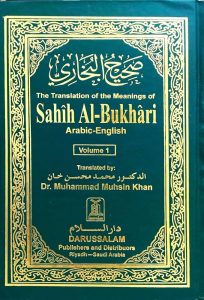
Is Sahih Bukhari Authentic?
Sahih al-Bukhari is widely regarded as the most authentic book of hadith after the Qur’an. But does this mean that every single narration in it is beyond question?
This article explores the scholarly consensus, grading methods, and rare critiques within the hadith sciences. Let’s examine whether “Sahih” truly means “unquestionable” in every case.
Table of Contents
ToggleTestimony from Scholars
The scholars of Ahl as-Sunnah wal-Jama’ah are unanimous in their acceptance of Sahih al-Bukhari as the most authentic book after the Qur’an. Major scholars such as Imam al-Nawawi, Ibn Hajar al-Asqalani, and many others have testified to Sahih Bukhari’s authenticity.
Al-Haafiz Abu ‘Amr ibn al-Salaah
Al-Haafiz stated:
Imam al-Haramayn al-Juwayni, declared, - If any man were to swear that he would divorce his wife if it were not the case that what is in the books of al-Bukhaari and Muslim is what they ruled to be sound of the words of the Prophet (peace and blessings of Allaah be upon him), then divorce would not be binding upon him, and he would not be breaking his oath, because the Muslim scholars are unanimously agreed that they are saheeh. End quote.
- Siyaanat Saheeh Muslim (p. 86)
He further said:
Scholars universally agree that as-Saheehayn (i.e., Saheeh al-Bukhari and Saheeh Muslim) are the most authentic books after the Qur'an, held in high regard by all Muslims, whether learned or unlearned. The general consensus is that Saheeh al-Bukhari is more accurate and rigorous in terms of scholarship compared to Saheeh Muslim.
Imam Al-Nawawi’s Endorsement:
The ummah is unanimously agreed that these two books are saheeh and it is obligatory to follow their ahaadeeth. End quote.
- Tahdheeb al-Asma’ wa’l-Lughaat (1/73).
اتَّفَق الْعُلَمَاءُ رحِمَهُمْ اللهُ عَلَى أَنَّ أَصَحُّ الْكُتُبِ بَعْدَ الْقُرْآنِ الْعَزِيزِ : الصَّحِيحَانِ الْبُخَارِيَّ وَمُسْلِمٌ ، وَتَلَقَّتْهُمَا الْأُمَّةُ بِالْقَبُولِ ، وَكِتَابُالْبُخَارِيِّ أُصَحُّهُمَا
"Scholars agreed that the most authentic books after the Glorious Qur'an are Sahih al-Bukhari and Sahih Muslim whom Muslim nation has accepted them as such. But Sahih al-Bukhari has a higher rank of authenticity."- Sharh an-Nawawi, Vol. 1, p. 14
The two Sahihs are distinguished from all other hadith compilations because their contents are regarded as authentic and do not require further verification.
Imam Ibn Salah
Abu ‘Amr ibn as-Salaah clarified that even hadiths narrated by only al-Bukhari or only Muslim should still be considered definitively sound. This has been the unanimous opinion of the ummah throughout history, despite a few critiques from scholars such as ad-Daaraqutni and others (Muqaddimat Ibn as-Salaah, p. 10).
Everything that (Imam) Muslim considered to be Sahih of this book is undoubtedly Sahih, and it leads to contemplative certainty due to its authenticity. Likewise, everything that (Imam) al-Bukhari considered to be Sahih in his book (is Sahih), because the Ummah has accepted that reality (the authenticity of Bukhari and Muslim) with agreement. With the exception of a few, whose acceptance or disagreement does not affect the consensus.
- Siyanatu Sahih Muslim.
Ibn Taymiyah's Testimony
There is no book beneath the canopy of heaven that is more sound than al-Bukhaari and Muslim, after the Qur’aan. End quote.
- Majmoo’ al-Fataawa (18/74).
Shaykh al-Islam
Regarding hadiths that both scholars, al-Bukhari and Muslim, agree upon, there is no basis for suggesting that any of these narrations are weak. The Muslim ummah is unanimous in accepting hadiths upon which both imams concur. Shaykh al-Islam affirmed this, stating that any hadith they agreed upon is unquestionably saheeh.
- Majmoo‘ al-Fataawa, 18/20
Mufassir Ibn Kathir
أَجْمَعَ الْعُلَمَاءُ عَلَى قَبُولِ صَحِيحِ الْبُخَارِيِّ وَصِحَّةٍ مَا فِيه ، وَكَذَلِكَ سَائِرُ أهْلِ الْإِسْلامِ
"Scholars, and all Muslims, consensually agree on accepting Sahih al-Bukhari as well as the authentication of its content."- Ibn Kathir, al-Bidayah wa an-Nihayah, Vol. 24, p. 11
This reflects the unanimous agreement among Muslim scholars that these two books are authentic, establishing their authority. Scholars like Imam al-Nawawi and Shaykh al-Islam Ibn Taymiyah have similarly emphasized the soundness of these collections, underscoring their obligation in Islamic jurisprudence.
Suggested Article: Sahih Bukhari Compilation and Origin Methodology
Imam Al-Bukhari's Methodology and Precision
Imam al-Bukhari’s meticulous approach to Hadith compilation is well-documented. Before including any Hadith in his Sahih, he would pray two rak’ahs and seek divine guidance (istikhaarah) [al-Khatib al-Bughdadi, Tarikh Baghdad, Vol. 2, p. 327].
Although he memorized thousands of authentic ahadith, he selected only those that met the highest standards of authenticity. As al-Bukhari himself said:
"I compiled al-Jami' (Sahih al-Bukhari) from 600,000 ahadith over sixteen years."
- Tuhfat al-Bari, Vol. 1, p. 17
His extraordinary memory and precision earned him the praise of his contemporaries and later scholars alike. Despite some minor criticisms of certain Hadiths, the overwhelming consensus is that Sahih al-Bukhari remains a reliable and authoritative source.
Al-Bukhari employed an extremely stringent methodology in compiling his Sahih. He examined every link in the chain of narrators (isnaad), verifying the trustworthiness, memory, and integrity of each person. The narrators in Sahih al-Bukhari are known to be some of the most reliable in the science of Hadith.
Imam al-Bukhari did not explicitly outline the criteria he used in compiling Sahih al-Bukhari, but scholars, through extensive analysis, identified the following conditions:
Isnad Mutasil (Continuous Chain of Narrators): The chain of narrators must be uninterrupted, tracing back to the Prophet Muhammad (saw).
Trustworthy Narrators: Each narrator must be a Muslim, reliable, and free from any deceit (mudallis). They should not have confused memories, must be trustworthy, possess sharp memory, be non-communicative, and hold no false beliefs.
Contemporary Narrators (al-Mu'asarah): The narrator must have lived during the same time as the person they reported from.
Direct Meeting (al-Liqa'): The narrator must have met their teacher from whom they transmitted the hadith.
- Ibn Hajar, Fath al-Bari, Vol. 1, p. 7.
Does Sahih Bukhari include only Sahih (Sound) ahadith?
Sahih al-Bukhari does not contain all authentic ahadith, but rather only those that meet the specific conditions set by Imam al-Bukhari for this collection. The purpose of compiling Sahih al-Bukhari was not to gather every sound hadith, but to curate a collection of the most authoritative ones. In fact, Bukhari himself included additional authentic ahadith in his other works, beyond what appears in Sahih al-Bukhari.
Imam al-Bukhari stated:
"I did not include in this book except sound ahadith, and I left out many more sound ahadith than I included."
- Ibn Hajar, Hadi as-Sari, p. 18
He also mentioned:
"I memorize 100,000 authentic ahadith and 200,000 weak ones," and in some narrations, he claimed to have memorized up to 1,000,000 total ahadith.
- Azrkashi, an-Nukat 'ala Ibn as-Salah, p. 64
While he memorized at least 100,000 sound ahadith, only 2,500 ahadith were selected for inclusion in Sahih al-Bukhari, as these met the rigorous standards he had established.
Addressing Criticism
Sahih Al-Bukhari and Sahih Muslim are widely regarded as the most authentic Hadith collections after the Quran. While minor criticisms exist, they do not undermine the overall reliability of these foundational works.
Nature and Scope of Criticisms
Of the 7,563 Hadiths in Sahih Al-Bukhari (including repetitions), fewer than twenty have faced scrutiny, primarily concerning their chains of transmission (isnaads) or specific wording, with very few relating to the content (matn). Al-Hafiz Ibn Hajar, in his commentary Fath al-Bari, provides detailed responses to these critiques, reinforcing the collection’s integrity.
Scholarly Differences in Hadith Classification
Hadith classification, like Islamic jurisprudence (fiqh), is subject to scholarly differences. Experts such as Imams Tirmidhi, Mundhiri, and Ibn ‘Abdil Hadi have noted that disagreements in Hadith grading—where a Hadith deemed sahih (authentic) by some may be considered da’if (weak) by others—are natural and stem from methodological variations. These differences, however, are limited and do not detract from the overall authenticity of Sahih Al-Bukhari and Sahih Muslim.
Scholarly Responses to Critiques
Later scholars, such as Hafiz Ibn Hajar al-Asqalani, systematically addressed criticisms, offering clarifications that uphold the rigorous standards of Imams Al-Bukhari and Muslim. These responses affirm that the collections remain reliable despite isolated points of contention.
Importance of Scholarly Expertise
Critiquing Hadith in Sahih Al-Bukhari and Sahih Muslim requires the expertise of qualified Hadith scholars (mujtahids). For the broader Muslim community and students of knowledge, it is essential to adhere to the mainstream consensus that both collections are authentic. Unqualified individuals should avoid critiquing these works based on superficial understanding or repeating others’ critiques without proper scholarly grounding.
The minor criticisms of Sahih Al-Bukhari and Sahih Muslim do not diminish their status as authoritative sources, and their authenticity remains a cornerstone of Islamic scholarship.
Weak Hadith In Sahih Bukhari?
Ibrahim ibn Ma’qil narrated that he once heard Imam al-Bukhari mention,
“I was with Ishaq ibn Rahuyah when someone suggested, ‘Why don’t you compile a concise collection of the prophetic traditions?’ This idea stayed with me, which led to my compilation of the Sahih.” Al-Dhahabi noted that it was reported through two reliable chains of transmission that Imam al-Bukhari said, “I selected this book from around 600,000 authentic hadiths. I compiled it over sixteen years, and it serves as a plea between me and Allah.”
Al-Firabri added that Imam al-Bukhari mentioned,
“I did not include a single hadith in the Sahih without performing ablution (ghusl) and praying two rak’ahs beforehand.”
In his work Kitab al-Tatabbu’, Al-Daraqutni critiqued the authenticity of 78 hadiths in Sahih al-Bukhari, 100 in Sahih Muslim, and 32 found in both collections, focusing on issues in the chains of transmission (isnad) and content (matn).
Ibn al-Salah remarked,
“Any hadith narrated exclusively by either al-Bukhari or Muslim is considered sahih without the need for investigation, although a few minor issues have been raised by hadith experts such as Al-Daraqutni, which are well known to specialists.” He added that “when both Sahihs agree on a hadith, it is definitively authentic for the Ummah.”
However, Al-Nawawi objected to the use of the term “definitively sahih” while maintaining that the hadiths in the Sahihayn are “strongly presumed authentic unless they reach the level of mutawatir.” In contrast, Ibn Kathir aligned with Ibn al-Salah, affirming, “I agree with Ibn al-Salah’s conclusion, and Allah knows best.”
Al-Suyuti in Tadrib al-Rawi echoed Ibn Kathir’s view and stated, “This is also my choice and none other’s.” This reflects the standing of the Sahihayn in the Muslim community, as no other early Islamic scholars made the claim that their collections were entirely authentic except for al-Bukhari and Muslim. Furthermore, the verifying scholars upheld their assertion.
In Muqaddimat Sharh Muslim, Ibn as-Salaah mentions that some hadiths narrated by al-Bukhari and Muslim were not unanimously accepted by scholars. Al-Haafiz called this a cautious approach. Shaykh Muhyi’d-Deen remarked similarly, noting that some scholars had reservations about certain narrations in both collections. ad-Daaraqutni, Abu Mas‘ood ad-Dimashqi, and others expressed reservations about some hadiths, though most of these concerns have been addressed by other scholars.
In Muqaddimat Sharh al-Bukhaari, it is mentioned that ad-Daaraqutni’s doubts were based on principles not widely accepted by scholars of fiqh and usool. Therefore, these critiques should not be given undue weight.
When carefully analyzing the context of these hadiths, it becomes clear that most of the critiques are not valid. As stated by Shaykh Muhyi’d-Deen, the majority of these reservations have been satisfactorily addressed by other scholars (Muqaddimat al-Fath, p. 344).
It is also noted that a few hadiths in Saheeh al-Bukhari faced scrutiny, though these are very rare. Upon closer examination, many of these narrations proved to be sound. Saheeh Muslim contains some phrases narrated solely by Muslim, which al-Bukhari refrained from including, and some scholars deemed these narrations weak. In certain cases, these scholars may have been correct, as in the case of the eclipse prayer, or Muslim’s version may be more accurate, as is often the case (Majmoo‘ al-Fataawa, 18/17-20).
Shaykh al-Islam, referring to the prominent scholar Ibn Hajar al-‘Asqalani, supported this view in his work al-Nukat ‘ala Ibn al-Salah. Al-Suyuti quoted in detail Ibn Hajar’s refutation of Al-Daraqutni’s criticisms, demonstrating that Al-Daraqutni’s objections did not disprove the authenticity of the Sahihayn.
Shaykh al-Islam further stated that when al-Bukhari was criticized, his assessments of the hadiths were more often accurate than those of his critics. In contrast, critiques of some of Muslim’s narrations were more justified (Majmoo‘ al-Fataawa, 1/256).
While all hadiths in these collections are authentic, not all reach the same level of authenticity. This aligns with Al-Dhahabi’s conclusion regarding a few narrators in the Sahihayn whose reliability was questioned: “Their narrations do not fall below the rank of hasan, which we can consider the lowest level of sahih.“
Shaykh Abu Ghudda also emphasized, “This explicitly shows that al-Bukhari and Muslim did not limit themselves to narrating only the highest degree of sahih hadith.” He also stated in his appendix, “Our Shaykh, the great scholar Ahmad Shakir – may Allah have mercy on him – affirmed that the hadiths in the two Sahihs are all authentic, with no valid cause for criticism or weakness. What Al-Daraqutni and others critiqued was merely that these hadiths did not meet their stringent criteria, but in terms of overall soundness, both al-Bukhari and Muslim upheld their standard.“
Dr. Badi’ al-Sayyid al-Lahham, in his edition of Ibn Kathir’s al-Ba’ith al-Hathith, concluded that most of the hadiths in Sahih al-Bukhari and Sahih Muslim are of the highest degree of authenticity, though a few may not reach this level. Supporting this, Dr. Nur al-Din ‘Itr explained in his manual Manhaj al-Naqd fi ‘Ulum al-Hadith that the ruling concerning the hadiths of the Sahihayn is that they are all sahih. Scholars like Ibn al-Salah, Al-Nawawi, Al-Dhahabi, Ibn Kathir, Ibn Hajar, Al-Suyuti, Ahmad Shakir, Abu Ghudda, and Dr. ‘Itr all agreed that the hadiths in Sahih al-Bukhari and Sahih Muslim are authentic, with Ibn al-Salah, Ibn Kathir, and Ibn Hajar specifically asserting that their narrations are as reliable as mutawatir hadiths. Additional research on the positions of major hadith masters might reveal more scholars in agreement with this stance.
Common questions arise about whether all hadith scholars agree that every hadith in the Sahihayn is sahih, whether any scholars consider these collections to contain weak hadiths, and if believing that “the Sahihayn are not 100% sahih” constitutes innovation. As discussed, leading hadith scholars like Ibn al-Salah, Ibn Kathir, and Al-Suyuti answered affirmatively to the first question. Imam al-Haramayn (Ibn al-Juwayni) even remarked that if someone swore that everything in al-Bukhari and Muslim was authentic, their marriage would be safe. However, Al-Daraqutni did critique a small number of hadiths, answering “yes” to the second question. Yet, these critiques were addressed and refuted by scholars like Ibn Hajar and Al-Nawawi in their respective works.
It is essential to note that this discussion excludes narrations without chains of transmission or incomplete reports. For example, the “suicide hadith,” attributed to al-Zuhri, is considered a broken-chain narration and thus weak. Al-Bukhari mentioned it only to illustrate the discrepancy between different chains that omit the attempted suicide account, underscoring the rigorous criteria used for authentic hadiths.
For more details, see: Fath al-Baari (11/341), Jaami‘ al-‘Uloom wa’l-Hikam (358), and as-Silsilah as-Saheehah (2/384), Kitaab al-Ilzaamaat wa’t-Tatabbu‘ by Abu’l-Hasan ad-Daaraqutni; Meezaan al-I‘tidaal (4/39-40); Muqaddimat al-Fath (344); Sharh Muslim by an-Nawawi (1/27); Silsilat al-Ahaadeeth as-Da‘eefah (1/142; 2/471-475; 5/218).
What Are The 4 Weak Hadith of Bukhari?
Al-Uqayli, a renowned hadith scholar specializing in jarh wa ta’dil (the evaluation of narrators), shared his insights regarding Imam al-Bukhari’s compilation, al-Jami’ al-Sahih (Sahih al-Bukhari). He mentioned that when al-Bukhari completed his collection, he presented it to prominent scholars like Ahmad Ibn Hanbal, Yahya Ibn Ma’in, Ali Ibn al-Madini, and others for their critique. These scholars affirmed that all the hadiths in the book were sound, except for four. However, they also stated that the final verdict on these hadiths rested with al-Bukhari, who confirmed their authenticity.
While some narrations in Sahih al-Bukhari have faced criticism, there is little information available regarding which specific hadiths these scholars deemed weak. Over time, other critics such as Al-Daraqutni raised concerns about the chains of transmission in around 110 hadiths from the collection. However, the majority of hadith scholars did not find these criticisms valid. Ibn Hajar al-Asqalani, in his work Hady al-Sari, defended all of the criticized narrations and the narrators, affirming their authenticity (see Hady al-Sari, pp. 364-488).
Here are some examples of hadith from Sahih al-Bukhari that have been considered weak by certain classical scholars due to issues in their chain of transmission (isnad):
Hadith on the Prohibition of Gold and Silk for Men:
One hadith in Sahih al-Bukhari reports that the Prophet (peace be upon him) cursed men who wear silk and women who wear silk. Some classical scholars have considered this hadith weak due to concerns about the chain of transmission, raising questions about its authenticity.Hadith on the Prohibition of Using a Toothbrush:
Another hadith found in Sahih al-Bukhari mentions the Prophet (peace be upon him) saying, “Do not use a toothbrush, for it is a means of cleaning the teeth of the Ethiopians, and it is a means of softening the gums of the Persians.” This hadith has been criticized by some scholars for its weak chain of transmission, making its authenticity debatable.Hadith on the Prohibition of Using a Sieve:
This hadith narrates the Prophet (peace be upon him) saying, “Do not use a sieve, for it is a means of sifting the flour of the Jews, and it is a means of separating the fine from the coarse for the Christians.” Like the previous examples, some classical scholars have questioned the strength of this hadith’s chain of transmission, classifying it as weak.
The weak hadiths in Sahih al-Bukhari are generally categorized into three types:
1. Inqita’ (Interruption in the Chain of Transmission):
These are hadiths with a broken chain of transmission, but their weakness is compensated for by other factors. For instance, a hadith narrated by Tawus states that Mu‘adh ibn Jabal informed the people of Yemen that they could pay zakah in the form of silk or wool clothing instead of barley and corn. This hadith is considered munqati’ (interrupted) because Tawus did not directly hear it from Mu‘adh. Al-Bukhari included this hadith as mu’allaq (suspended).
2. Narrations Not Corroborated by Other Chains but Accepted in Practice:
These are hadiths that may not have supporting chains but are still considered valid for practice by scholars. An example is a narration that reports the Prophet (peace be upon him) ruled that debts should be settled before executing a will. Although some scholars, such as Tirmidhi, narrated this hadith with a complete chain, al-Bukhari included it based on its practical acceptance by scholars.
3. Narrations with No Supporting Chains:
These are rare and are explicitly identified by al-Bukhari as weak. He included them to contrast them with stronger, authentic narrations. To highlight the weakness of these narrations, al-Bukhari used passive language, such as ruwiya (“it is narrated”) or qila (“it is said”). For example, in a suspended narration from Abu Hurayra, it is reported that “The imam should not perform nafilah (supererogatory) prayers in the same place.” After this narration, al-Bukhari himself clarified that it was not sound, and he had already provided a stronger narration on the same topic earlier.
To learn more about the criticism of Weak Hadith in Sahih Bukhari, check the following article –
An In-Depth Analysis of Weak Hadith (Da’if Hadith) in Ṣaḥiḥ al-Bukhari
Shaykh al-Albaani's Criticism: Classical Scholar's Analysis
Did Shaykh al-Albaani Declare Some Hadiths in Sahih al-Bukhari as Weak?
There has been much discussion around the claim that Shaykh al-Albaani classified certain hadiths in Sahih al-Bukhari as weak. To understand this matter, it is essential to differentiate between two types of criticism when analyzing as-Saheehayn (the two Sahih collections of al-Bukhari and Muslim).
Types of Criticism:
Invalid Criticism: This type of criticism lacks a structured academic methodology and deviates from scholarly norms. It is based on personal biases and opinions, often rejecting hadiths that contradict one’s views or experiences. This approach dismisses the academic principles on which al-Bukhari and Muslim compiled their works. Critics from this group often aim to diminish the value of these collections, attempting to discard them from the Islamic scholarly tradition. Examples include writings from certain modernist and Raafidi groups who view as-Saheehayn as flawed.
Methodological Criticism: The second type of criticism is rooted in established scholarly principles. This method acknowledges the high status of as-Saheehayn but offers reasoned and academic critiques of specific hadiths based on the isnad (chain of narrators) and matn (content). Renowned scholars such as Abu Zar‘ah, al-Tirmidhi, an-Nasaa’i, ad-Daaraqutni, and Ibn Hajar followed this method. Their critiques focused on a small number of hadiths in as-Saheehayn and were based on sound scholarly analysis.
Shaykh al-Albaani's Methodology:
- Shaykh al-Albaani followed the second type of criticism, adhering to the established rules of hadith criticism. He was meticulous, offering scholarly critiques of individual hadiths, particularly focusing on the chain of narrators (isnad) or specific wording of the texts (matn).
- His critiques were in line with those of earlier scholars, like Ibn Hajar and al-Daraqutni, who also identified weak hadiths in Sahih al-Bukhari and Sahih Muslim. Al-Albaani’s aim was not to discredit these collections but to maintain high standards of authenticity.
Examples of al-Albaani's Critiques:
Shaykh al-Albaani pointed out certain narrations where narrators made errors, where there were interruptions in the isnad, or where additions were made that did not belong to the original hadith. For example, he critiqued the wording “it occurred to Allah” in a hadith, as it is inappropriate and does not align with Islamic beliefs.
Al-Albaani's Respect for the Sahihayn:
- Despite classifying some hadiths as weak, Shaykh al-Albaani always maintained respect for the status of Sahih al-Bukhari and Sahih Muslim. He emphasized that his work was a continuation of the tradition of earlier hadith scholars, who critiqued some narrations without diminishing the overall value of these collections.
- Al-Albaani himself recognized that his critiques were minor and that most of the hadiths in the Sahihayn are indeed authentic. His goal was to uphold academic honesty while ensuring that Islamic knowledge remains pure.
In summary, Shaykh al-Albaani did classify some hadiths from Sahih al-Bukhari as weak, but his approach was scholarly and in harmony with the tradition of earlier hadith critics. His intention was never to undermine the authenticity or status of these revered collections, but to contribute to the field of hadith studies with a critical eye.
Misconceptions About Sahih al-Bukhari
Misconception 1: Sahih al-Bukhari Contains All Hadiths of the Prophet
While Sahih al-Bukhari is one of the most comprehensive and respected collections of hadith, it does not include every saying or action of the Prophet Muhammad (saw). Rather, it is a carefully curated selection of hadiths that meet the strict authenticity criteria set by Imam al-Bukhari.
Misconception 2: All Muslims Unanimously Accept Every Hadith in Sahih al-Bukhari
Although Sahih al-Bukhari is highly revered and widely accepted among Sunni Muslims, the acceptance of individual hadiths can vary across different Islamic scholars and sects. Interpretations and opinions about certain hadiths may differ due to varying scholarly approaches and methodologies.
Misconception 3: Sahih al-Bukhari is Equivalent to the Quran
Sahih al-Bukhari is an essential Islamic text but it is not on the same level as the Quran. The Quran is considered the literal word of God, while Sahih al-Bukhari is a collection of the sayings and actions of the Prophet Muhammad (saw) compiled by Imam al-Bukhari.
Misconception 4: Sahih al-Bukhari is the Only Authentic Hadith Collection
Although Sahih al-Bukhari is a significant collection, it is not the only authentic source of hadith in Islam. Other collections, such as Sahih Muslim, Sunan Abu Dawood, and Sunan an-Nasa’i, also contain authentic hadiths, each with its own set of authenticity criteria.
Misconception 5: Sahih al-Bukhari is Only Relevant for Religious Scholars
While Sahih al-Bukhari is often studied in depth by scholars, it is also a valuable resource for the general Muslim public. It offers insights into the teachings and practices of the Prophet Muhammad (saw) and is relevant for anyone seeking to deepen their understanding of Islamic tradition.
By clearing up these misconceptions, it becomes easier to appreciate the true significance of Sahih al-Bukhari in Islamic scholarship and daily life.
FAQs about Sahih Al-Bukhari
1. What is Sahih Al-Bukhari?
Sahih al-Bukhari is one of the most significant and authentic collections of hadiths (sayings, actions, and approvals of Prophet Muhammad, saw) in Islam. It was compiled by Imam al-Bukhari, who meticulously gathered the hadiths over many years to ensure their authenticity.
2. Why is Sahih Al-Bukhari Important in Islam?
Sahih al-Bukhari is highly regarded for its rigorous methodology in collecting and verifying hadiths. Due to its meticulous approach, it is considered one of the most reliable sources for understanding the Sunnah (practices) of the Prophet Muhammad (saw), playing a crucial role in Islamic scholarship.
3. How Was Sahih Al-Bukhari Compiled?
Imam al-Bukhari spent 16 years compiling this collection. He examined hundreds of thousands of hadiths and selected only those that met his strict criteria for authenticity. His selection process involved deep scrutiny of the narrators and the chains of transmission (isnad).
4. Does Sahih Al-Bukhari Address All Aspects of Islamic Teachings?
Yes, Sahih al-Bukhari addresses a wide array of topics, including faith, prayer, charity, pilgrimage, and more. It provides Muslims with guidance on both religious practices and daily conduct, offering insight into various aspects of Islamic teachings.
5. How Do Muslims Use Sahih Al-Bukhari?
Muslims use Sahih al-Bukhari as a primary reference for understanding the teachings of the Prophet Muhammad (saw). It serves as a guide for daily practice, Islamic jurisprudence, and legal rulings, playing a foundational role in shaping Islamic law and personal ethics.
6. Is Sahih Al-Bukhari Different from the Quran?
Yes, Sahih al-Bukhari is a collection of hadiths, which are the sayings and actions of the Prophet Muhammad (saw). The Quran, on the other hand, is the holy book of Islam and is considered the direct word of God as revealed to the Prophet Muhammad (saw).
7. Are the Hadiths in Sahih Al-Bukhari Relevant to Modern Life?
Many Muslims believe that the hadiths in Sahih al-Bukhari provide timeless guidance that is applicable to both historical and modern life. The teachings within these hadiths offer insights into ethical conduct, religious practice, and personal interactions that remain relevant today.
8. Can Sahih Al-Bukhari Be Interpreted Differently?
Yes, interpretations of the hadiths in Sahih al-Bukhari can vary among scholars. These differences arise due to various contexts, schools of thought, and approaches within Islamic jurisprudence, allowing for multiple perspectives on certain hadiths.
Conclusion
The overwhelming majority of Islamic scholars agree that any critiques of the Hadiths in Sahih al-Bukhari do not undermine the overall integrity of the collection. They maintain that the vast majority of the Hadiths are beyond reproach in terms of authenticity, and the few instances of criticism are seen as scholarly discussions rather than wholesale rejections. The collection has passed through centuries of rigorous scholarly examination and is still considered the most reliable source of Prophetic tradition.
In summary, while minor criticisms exist, the consensus among scholars is that Sahih al-Bukhari remains the gold standard for Hadith authenticity, with the vast majority of its contents accepted as authentic by the Muslim ummah.