

Abstract
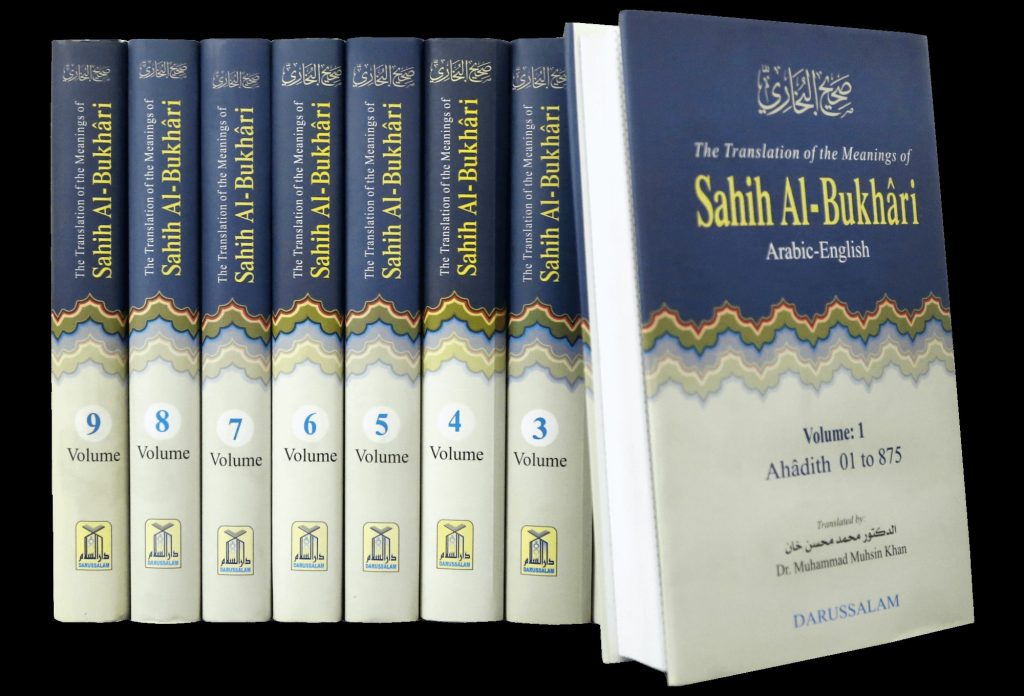
This research seeks to determine whether all the hadiths narrated in Sahih al-Bukhari are authentic or if there are also weak (ḍa’if) hadiths present. The study uses a descriptive and content analysis approach, referencing scholarly articles, books on hadith principles, hadith commentaries, and other related works. The article explores the views of scholars who assert that there is a consensus that Sahih al-Bukhari is the most reliable book after the Qur’an, containing no weak hadiths. On the other hand, it also examines the opinions of scholars who argue that not all the hadiths in Sahih al-Bukhari are authentic, and that some are considered ḍa’if.
Table of Contents
ToggleAfter analyzing both perspectives, the research concludes that while Sahih al-Bukhari is indeed regarded as the most accurate collection after the Holy Qur’an, this does not mean it is entirely free from ḍa’if hadiths. Several hadiths in the collection have been labeled as weak by hadith scholars. However, the presence of these ḍa’if hadiths does not diminish the scholarly prestige, authenticity, or acceptance of Sahih al-Bukhari within the Islamic community and among hadith scholars.
Introduction
Imam Bukhari’s full name is Abu Abdullah Muhammad bin Isma’il bin Ibrahim bin Mughirah bin Bardazbeh al-Ju‘fi. Born in 194 Hijrah, he is one of the most renowned scholars of Hadith, known for his mastery in the sciences of Hadith, Islamic Jurisprudence, and his deep devotion to worship. Imam Ahmad bin Hanbal once remarked that there was no greater scholar in Khurasan than Muhammad bin Isma’il Bukhari. Among his many significant works are Al-Adab al-Mufrad, Al-Tarikh al-Kabir, Al-Tarikh al-Awsat, Al-Tarikh al-Saghir, and his most famous collection, Sahih al-Bukhari.
Though Sahih al-Bukhari is widely recognized as the most authentic collection of the Sunnah of the Prophet (SAW), it is essential to note that it is not a complete compilation of all authentic hadiths. Some valid hadiths are found outside of Sahih al-Bukhari. Imam Bukhari dedicated 16 years to compiling his collection, and it is said that he performed ablution and prayed two rak’ahs of nafl prayer before documenting each hadith. He passed away at the age of 62 in 256 Hijrah.1
Imam Bukhari was exceptionally meticulous in the narration of hadiths, establishing rigorous conditions that all narrators and testifiers had to meet. He emphasized that narrators must possess a strong memory, honesty, and integrity. Sahih al-Bukhari is considered one of the most authoritative collections of hadith and is often regarded by Muslim scholars as the most authentic book after the Holy Qur’an.2
In Sahih al-Bukhari, Imam Bukhari recorded 7,397 hadiths that are al-Marfu’ and al-Mawsul (with repetitions), and 2,602 without repetitions. Additionally, there are 1,341 al-Mu‘alaq hadiths with repetitions and 159 without.3 Imam Bukhari took great care in compiling his work, performing ablution and praying two rak’ahs before including each hadith. He also performed istikharah (seeking guidance from Allah) and prayed before deciding on the inclusion of each hadith, ensuring his confidence in its authenticity.4
Imam al-‘Uqaili reported that after completing Sahih al-Bukhari, Imam Bukhari presented it to renowned scholars such as Ahmad bin Hanbal, Yahya bin Mu‘in, and Ali bin al-Madiny. These scholars approved the collection and affirmed that all the hadiths were correct, though they initially questioned four hadiths. However, al-‘Uqaili later confirmed that Imam Bukhari was right about those hadiths, affirming their authenticity as well.5
Many scholars, both historically and in modern times, have held the belief that all the hadiths in Sahih al-Bukhari are authentic and reliable, with the exception of those found in the commentaries (taʿliqat), which may contain both authentic (Sahih) and weak (ḍa’if) hadiths. Due to this high level of scrutiny, Imam Bukhari aptly named his work “Al-Jami’ al-Sahih al-Musnad min Ahadith-e-Rasul Allah wa Sunanihi wa Ayamihi“6 to emphasize its authenticity.
Prominent scholars, such as Al-Nawawi, stated that the two most accurate books after the Qur’an are Sahih Bukhari and Sahih Muslim, with the Muslim ummah accepting them as the most reliable sources after the Holy Qur’an.7 Similarly, Ibn Salah contends that the hadiths narrated by Bukhari and Muslim are generally considered authentic because of the consensus of the ummah. However, a few hadiths have been criticized by some scholars, including Dar al-Qutni (385 AH) and Nasiruddin al-Albani, though these critiques are well-known among hadith experts.8
Contemporary scholar Abdullah Bin Baz also affirms that Sahih Bukhari and Sahih Muslim are the most accurate collections of hadith after the Qur’an. While there may be occasional mistakes in the transmission of certain words by narrators, he maintains that the core text (al-matn) remains authentic, and there are no ḍa’if hadiths9 in Sahih Bukhari.10
Imam Bukhari meticulously selected hadiths for his collection, ensuring that the narrators were trustworthy and that the sanad (chain of narration) was uninterrupted (mutasil) and not broken (maqtu’). According to his strict criteria, it was ideal if a hadith was narrated by two companions of the Prophet. However, even if narrated by a single companion with accuracy, the hadith would still be accepted.11 Additionally, Bukhari and Muslim share some common narrators, while Bukhari alone narrated from approximately 430 people, with around 80 of them being narrators whose credibility has been questioned (al-mutakalim fihym).12
While the majority of hadiths in Sahih al-Bukhari are universally accepted as authentic (Sahih), some scholars have raised concerns about a few hadiths, suggesting they may be ḍa’if (weak). Scholars who believe in the existence of ḍa’if hadiths in Sahih al-Bukhari argue that certain hadiths, due to issues in their text or chain of transmission, require further scrutiny. This debate is not new; historically, some hadith scholars, like Imam Dar al-Qutni, pointed out several hadiths in Sahih al-Bukhari that they considered ḍa’if. However, many other scholars13 , including Imam Ibn Hajar, have refuted these claims, asserting that even if a few hadiths were questioned, they do not undermine the overall authenticity and authority of the collection.14
Some contemporary scholars and critics have challenged the authenticity of Sahih al-Bukhari and the hadith tradition as a whole, diverging from the views of early Islamic scholars. These critics argue that not all Companions of the Prophet (SAW) should be considered equally trustworthy, unlike the Salaf scholars, who regarded all Companions as just and reliable narrators. For instance, critics like Mahmoud Abu Raiyyah in Abu Hurairah Sheikh al-Mudhirah and Mustafa Bohandi in Akthar Abu Hurairah have questioned the credibility of Abu Hurairah, who is known for narrating a large number of hadiths.15
Orientalist scholars have also critiqued the hadith tradition, suggesting that many hadiths were fabricated under political pressure.16 According to this view, hadiths must be evaluated within the political and intellectual context of their time, rather than merely assessing the memory and trustworthiness of their narrators. Consequently, hadiths dealing with political incidents, including some in Sahih al-Bukhari, have come under scrutiny.
Some modern critics argue that when a hadith contradicts the Qur’an or reason, it should be rejected.17 Nasiruddin al-Albany, for example, claimed that up to 5,000 weak or fabricated hadiths exist in the al-Sihah books, including Sahih al-Bukhari and Sahih Muslim. He believed that early hadith compilers relied too much on a narrator’s reputation and sincerity without sufficient scrutiny of the transmission chain (sanad), which may have resulted in the inclusion of weak narrations centuries after the Prophet’s death.18
Imam Ibn Hajar categorized the criticisms of hadiths in Sahih al-Bukhari into six types, ranging from discrepancies in the chains of narration to differences in the text’s wording. For instance, some hadiths were criticized for having additional words in certain narrations or for being transmitted by weaker narrators. Despite these critiques, Sahih al-Bukhari remains one of the most respected collections of hadith, though debates about its complete authenticity persist.19
Imam Dar al-Qutni, in his book Al-Ilzamat wa al-Tatabu‘, criticized around 200 hadiths in Sahih al-Bukhari. Imam Ibn Hajar responded to these critiques, agreeing with some of Dar al-Qutni’s objections but defending the majority of the hadiths in question. Additionally, works such as Hady al-Sary by Ibn Hajar and al-Zu’afâ by al-‘Uqaili also address the presence of ḍa’if (weak) hadiths in Sahih al-Bukhari while defending the overall reliability of the collection.20
Many orientalists have argued that the majority of prophetic hadiths are not authentic and were fabricated, claiming that this process began soon after the Prophet’s (SAW) death. They believe that even some Companions of the Prophet were involved in the fabrication of hadiths.21 One of the prominent figures in this line of thought, Ignaz Goldziher, contends that the Companions themselves started to create sayings that they believed were in line with the Prophet’s teachings, especially after the expansion of the Muslim empire.22 Goldziher specifically names figures like Mu’awiyah bin Abu Sufyan and al-Mughirah bin Shu’ba as examples of individuals involved in this process, though his claims are based on weak historical sources. For instance, the narrations he relies on from al-Ṭabari are attributed to Abu Mikhnaf, a historian deemed unreliable by scholars like al-Dhahabi, who described him as “a spoiled historian.”23
Goldziher’s critique extends to Sahih al-Bukhari. He argues that although Bukhari’s method focused heavily on the chain of transmission (sanad), it did not sufficiently scrutinize the content of the hadith (matn). He believes that hadiths in Sahih al-Bukhari were shaped by political, scientific, and socio-cultural influences of the time. One of Goldziher’s more controversial claims is that ʿAbd al-Malik ibn Marwān ordered al-Zuhri to fabricate hadiths, though this claim has been widely rejected by hadith scholars.24 Muhammad Mustafa al-Azami, for example, refutes Goldziher’s arguments, insisting that Bukhari and other hadith scholars rigorously examined both the sanad and the matn.25
In recent times, other scholars like Jamal al-Banna have also questioned the authenticity of some hadiths in Sahih al-Bukhari and Sahih Muslim. In his 2008 book Tajrid al-Bukhari wa Muslim min al-Ahadith Alati La Talzam (Dismantling Bukhari and Muslim of the Unnecessary Hadiths), al-Banna claims that certain hadiths in these collections contradict the Qur’an, have problematic texts, or conflict with the concept of prophetic infallibility (‘iṣmah). He argues that there is no unanimous consensus among Sunni scholars regarding the absolute authenticity of all the hadiths in Sahih al-Bukhari.
Despite these criticisms, defenders of the hadith tradition, like Muhammad Mustafa al-Azami, assert that the meticulous methods used by early hadith scholars, particularly Imam Bukhari, provide strong grounds for the authenticity of the vast majority of hadiths in Sahih al-Bukhari.
This research seeks to address the question of whether all the hadiths in *Sahih al-Bukhari* are authentic or whether there are weak (ḍa’if) hadiths included. By analyzing the views of hadith scholars regarding the presence of weak hadiths in Bukhari’s collection and their reasoning for classifying certain hadiths as weak, the research employs both content analysis and descriptive methods. The study draws from various sources, including books, academic journal articles, and reliable online articles.
The primary goal of this research is to gather and critically analyze the perspectives of both proponents and opponents of the idea that Sahih al-Bukhari contains weak hadiths, with the aim of reaching a balanced and logical conclusion in line with the principles of hadith science and Islamic law. One of the unique aspects of this research is its non-sectarian approach; it aims to assess the arguments based on evidence and scholarly reasoning, rather than religious or sectarian bias.
By validating sound, rational arguments and critically engaging with prejudiced or extreme views, this research attempts to provide an objective understanding of the issue. Additionally, technical terms related to hadith science that may not be easily understood by the general reader are explained in the footnotes, although each term is defined only once using credible sources. This effort to make the research accessible while maintaining scholarly rigor sets it apart from other works on the subject.
Bukhari and His Standards for Narrating Hadith in His Book Sahih al-Bukhari
One key reason Ṣaḥiḥ al-Bukhari is considered the most authentic book after the Qur’an is Imam Bukhari’s meticulous method of narrating hadiths. He set strict conditions and high standards for accepting hadiths from narrators. Imam Bukhari did not rely on just any scholar but ensured that narrators met his rigorous criteria before including their narrations in his collection. For instance, the Hadith’s Sanad26(chain of narrators) must be Mutasil27(connected), the narrator must be trustworthy, the narrator must have met the person he is narrating from, even if it was only once, the narrator must be Muslim, honest, not laid back, not Mukhtalit, have good intentions when narrating hadith, and many other requirements.28 Therefore, If a narrator fails to meet the established conditions for credibility, scholars of hadith will scrutinize the hadith for its authenticity.
While Sahih al-Bukhari is widely regarded as one of the most reliable hadith collections, it is essential to recognize that it is ultimately a human effort, and as such, it is not infallible.
Some hadith scholars have raised concerns regarding certain narrations included in Bukhari’s compilation. These scholars have articulated their reasons for questioning the authenticity of specific hadiths, suggesting that some do not meet the high standards required for classification as Ṣaḥīḥ.29 For example, Imam Ibn Hajar noted that there are 110 hadiths in Sahih al-Bukhari and Sahih Muslim, of which 80 are solely narrated by al-Bukhari. Some of these hadiths have faced criticism from scholars like al-Daraqutni and Abu Ali al-Asani.30
Examples of Hadiths Considered Da'if by Hadith Scholars
Many scholars of hadith have pointed out the presence of ḍa’if (weak) hadiths in Sahih al-Bukhari. Below are a few examples commonly cited by these scholars:
A. Hadiths of Sahih al-Bukhari Criticized by Dar al-Qutny as Da'if
Imam Dar al-Qutny (306-385h) identified and raised concerns about certain hadiths in Sahih al-Bukhari, as well as Sahih Muslim, in his renowned book “Al-Ilzamat wa al-Tatabu‘“. He provided detailed explanations for his criticisms, classifying the hadiths into five distinct categories:
- Hadiths Cited by Both Bukhari and Muslim: These are hadiths that both Imam Bukhari and Imam Muslim included in their collections and used to support their arguments.
- Hadiths in the Al-Mutab‘at Section: These hadiths appear in the mutab‘at31 section, which is a part of the collections where narrators corroborate the same report.
- Hadiths Narrated with Caution: Bukhari and Muslim cited certain hadiths in their books but did so with caution due to concerns about their authenticity.
- Hadiths with Known Causes or Weaknesses: These are hadiths mentioned by both Bukhari and Muslim in the mutab‘at section, where the reasons for their potential weakness were clearly stated by the scholars.
- Hadiths Discussed in Muslim’s Introduction: Some of the hadiths Imam Muslim referenced in the introduction to his collection were also subject to scrutiny by Dar al-Qutny.32
From Dar al-Qutny’s extensive work, it is evident that his criticism of the hadiths in Sahih al-Bukhari and Sahih Muslim can be categorized into three major circumstances:
- Hadiths with Clear Reasons for Inclusion: These hadiths were included by Bukhari and Muslim with explanations that made their weaknesses understandable to those specialized in hadith science.
- Unjustified Criticisms by Dar al-Qutny: In some instances, Dar al-Qutny’s critiques were deemed unjustified, with scholars preferring the opinions of Bukhari and Muslim.
- Valid Criticisms by Dar al-Qutny: In cases where Dar al-Qutny’s criticism was valid, his arguments were widely accepted. Among the 210 hadiths criticized in the collections of Bukhari and Muslim, Dar al-Qutny’s criticism was considered correct in around 100 of them.33
B. Hadiths in Sahih al-Bukhari Weakened by Imam al-Albany (1914–1999)
Imam al-Albany, one of the leading hadith scholars of the 20th century, has extensively contributed to the study of prophetic traditions through his scholarly works, including books, articles, and lectures. Among his notable stances is his belief that there are weak (da’if) hadiths in Sahih al-Bukhari, traditionally regarded as one of the most authentic collections of hadith. He identified specific hadiths in Sahih al-Bukhari as weak for several reasons, including the presence of Mutakalam Fihim narrators in the chains of narration.
1. Presence of Mutakalam Fihim Narrators in the Chain of Narration
In hadith science, the term Mutakalam Fihim refers to narrators who have been criticized by certain scholars due to questionable attributes that may impact their reliability. While not every narration from a da’if (weak) narrator is automatically considered weak, the involvement of such narrators can cast doubt on the authenticity of a hadith.34 Imam al-Albany weakened several hadiths from Sahih al-Bukhari due to the presence of these narrators.
Some examples of hadith criticized by Imam al-Albany is as follows:
01. حدثني عبد هللا بن منير، سمع أبا النضر، حدثنا عبد الرحمن بــن عبد هللا يعني ابن دينــار، عن أبيه، عن أبي صالح، عن أبي هريرة، عن النبي صلى هللا عليه وســلم قال: »إن العبد ليتكلــم بالكلمة من رضــوان هللا، ال يلقي لها باال، يرفعه هللا بها درجات، وإن العبد ليتكلم بالكلمة من ســخط هللا، ال يلقي لها باال، يهوي بها في جهنم.
“The Prophet (peace be upon him) said: ‘A slave (of Allah) may utter a word that pleases Allah without paying much attention to it, and because of that Allah raises him in rank. A slave may also utter a word (carelessly) that displeases Allah, and as a result, he will be cast into Hell.'”35
Imam Bukhari narrated this hadith from Abdulrahman bin Abdullah bin Dinar, who transmitted it from his father, from Abu Salih, and ultimately from Abu Hurairah. However, Imam al-Albany classified this hadith as da’if (weak) for two primary reasons.
- Abdulrahman’s Weak Memory (Suw’ Hifz):
Imam al-Albany pointed out the poor memory of Abdulrahman as a key factor in weakening this hadith. Although Imam Bukhari narrated multiple hadiths from Abdulrahman, several scholars criticized Abdulrahman’s memory and reliability.36 Yahya bin Mu’in, for example, noted that Abdulrahman’s hadiths contain “du’uf” (weakness).37 Similarly, Amru bin Ali stated that he had never heard Abdulrahman bin Mahdy narrate anything from him.38 Abu Hatem also commented that while Abdulrahman’s hadiths could be recorded, they should not be used as definitive evidence due to their “Liyn” (softness).39 Additionally, Dar al-Qutny remarked that Bukhari diverged from the majority opinion by accepting narrations from Abdulrahman, though Abdulrahman was not entirely rejected (matruk).40 - Disagreement Between Imam Malik and Imam Bukhari:
The second reason for considering this hadith weak is the disagreement between Imam Malik and Imam Bukhari regarding its classification. While Imam Bukhari narrated the hadith as marfu’41 (attributed directly to the Prophet), Imam Malik reported it as mawquf42 (a statement attributed to a companion). In Imam Malik’s al-Muwatta, the same hadith is narrated by Abdullah bin Dinar from Abu Salih, who quoted Abu Hurairah without raising it to the Prophet’s level.43 This discrepancy suggests that Abdulrahman may have mistakenly altered the hadith, rendering it.
02. “In our garden, there was a horse belonging to the Prophet (SAW) called al-Luhaif or al-Lakhif.”44
This narration is recorded by Al-Baihaqy, who cites it from Ubay bin ‘Ebas through his brother Musadiq bin ‘Ebas, from their father, as a marfu’ hadith. However, Imam al-Albany classified this hadith as ḍa’if (weak) for several reasons.
First, al-Albany noted that he does not recognize Musadiq bin ‘Ebas, and additionally, his brother, Ubay bin ‘Ebas, is considered a weak narrator. Many scholars of hadith, including Imam Bukhari, have expressed reservations about Ubay’s reliability. For instance, Imam Bukhari stated that Ubay is “laysa bil qawiy”45 (not strong), while Sajy labeled him as ḍa’if (weak). Abu al-Arab included him in his compilation of weak narrators (al-Du‘afa’), al-Nasaiy echoed the sentiment with “laysa bil qawy,” and Imam Ahmad bin Hanbal criticized him as “Munkar al-hadith” 45(one who narrates unacceptable hadiths).
Imam Ibn Hajar summarized the opinions of these scholars, concluding that “fihy ḍa’if” (there is a weakness in him). Interestingly, despite the consensus among many hadith scholars regarding Ubay’s weakness, Imam Bukhari still chose to narrate a hadith from him, which highlights the complexities and nuances of hadith transmission.
03. ““Allah’s Messenger (saw) said, “Between my house and my pulpit there is a garden from amongst the gardens of Paradise, and my pulpit is over my Lake-Fount.”.”48
In this hadith, the narrator Ibrahim bin al-Mundir al-Hazimy is categorized as a Mutakalam Fihy narrator. Imam Ibn Hajar remarked that he is one of the notable narrators. While Ibn Mu‘in recognized him as trustworthy (thiqah), Ahmad bin Hanbal expressed reservations about him, labeling him as takalam fihy because both Abu Dawud and Sajy noted that he narrated munkar (rejected) hadiths.
Despite these concerns, Imam Bukhari chose to narrate from Ibrahim in several instances, including a narration found in the book of al-Raqaq, specifically in the chapter on al-Hâwd (pool).49 This highlights the complexities of hadith transmission, where scholars may hold differing opinions about a narrator’s reliability.
04. “The Prophet (saw) said, “If somebody eats something forgetfully while he is fasting, then he should complete his fast, for Allah has made him eat and drink..”50In this hadith, the narrator Khilas bin ‘Amru al-Hajry is classified as a Mutakalam Fihy narrator. Imam Ibn Hajar noted that Ibn Mu‘in, Abu Dawud, and al-’Ajaly regarded him as trustworthy (al-thuqah) and reliable. However, al-Hakim expressed that he is not considered strong (al-qawy).51 This illustrates the nuanced evaluations that scholars apply when assessing the reliability of hadith narrators, reflecting a spectrum of opinions within the field of hadith sciences.
05. “Allah’s Messenger (saw) said, “Allah said, ‘I will declare war against him who shows hostility to a pious worshipper of Mine. And the most beloved things with which My slave comes nearer to Me, is what I have enjoined upon him; and My slave keeps on coming closer to Me through performing Nawafil (praying or doing extra deeds besides what is obligatory) till I love him, so I become his sense of hearing with which he hears, and his sense of sight with which he sees, and his hand with which he grips, and his leg with which he walks; and if he asks Me, I will give him, and if he asks My protection (Refuge), I will protect him; (i.e. give him My Refuge) and I do not hesitate to do anything as I hesitate to take the soul of the believer, for he hates death, and I hate to disappoint him”52
This hadith is unique in that it was narrated solely by Imam Bukhari, and none of the other six major hadith compilers included it in their collections. Hafiz Ibn Rajab pointed out that this hadith was exclusively transmitted by Ibn Karamah from Khalid Ibn Mukhalad al-Qatwany, a narrator whose reliability has been questioned by scholars. Various concerns have been raised about Khalid, and many scholars have criticized his narrations.53 The hadith has also been narrated through other chains, but these do not fully resolve the concerns raised.
Ibn Hajar al-‘Asqalani remarked that Khalid bin Mukhalad narrated munkar (disputed or strange) hadiths and specifically referred to this hadith as ghareeb jiddan (very rare), emphasizing the issue of tafarud (exclusive narration).54 Al-‘Ajaly considered Khalid al-thuqah (trustworthy) but noted his Shiite inclinations, while other scholars like Ibn Sa’id and Salih accused him of being an extreme Shiite. Ahmad bin Hanbal also noted his munkar hadiths, and Abu Dawud mentioned that while Khalid’s hadiths could be written down, they should not be relied upon (la yuhtaj bihi).55
However, some scholars of hadith have offered justifications for these criticisms of Khalid. They argue that as long as a person accurately transmits hadith without promoting Shiism, their Shiite beliefs should not disqualify their narrations. Additionally, they note that this particular hadith narrated by Imam Bukhari is not among Khalid’s manakirs (disputed hadiths) and is considered an authentic hadith by these scholars.56
2. Existence of Abnormalities (Shudhudh), Strangeness (Gharabah), or Oddity (Nakarah) in One of the Textual Words of a Hadith
Here are several examples of hadiths in Sahih al-Bukhari that exhibit abnormalities (Shudwd)57 or strangeness, impacting their authenticity:
01. “On the authority of others, that the Prophet (saw) said, “No Punishment exceeds the flogging of the ten stripes, except if one is guilty of a crime necessitating a legal punishment prescribed by Allah.”58
Imam al-Albany classified this hadith as munkar due to the term “al-‘uqwbah.” The narrator in question, Fudail bin Sulaiman, was characterized by Imam Ibn Hajar as “saduq lahu khata kathir,” indicating that he is truthful but prone to numerous errors. This particular hadith is considered one of those errors.
Additionally, the hadith has been narrated by al-Musaib bin Wadah, a teacher of Abu Hatim, who described him as “saduq, kan yukht’e kathirân,” meaning he is honest yet frequently makes mistakes. Furthermore, Dar al-Qutny remarked that Fudail bin Sulaiman is ḍa’if, adding to the concerns regarding the reliability of this narration.59
02. “The Prophet (saw) said, “While I was sleeping, a group (of my followers were brought close to me), and when I recognized them, a man (an angel) came out from amongst (us) me and them, he said (to them), ‘Come along.’ I asked, ‘Where?’ He said, ‘To the (Hell) Fire, by Allah’ I asked, ‘what is wrong with them’ He said, ‘They turned apostate as renegades after you left.’ Then behold! (Another) group (of my followers) were brought close to me, and when I recognized them, a man (an angel) came out from (me and them) he said (to them); Come along.’ I asked, “Where?’ He said, ‘To the (Hell) Fire, by Allah.’ I asked, what is wrong with them?’ He said, ‘They turned apostate as renegades after you left. So, I did not see anyone of them escaping except a few who were like camels without a shepherd”60
Imam al-Albany classified this hadith as ḍa’if for two primary reasons:
(a) Issues with the Sanad: The chain of narration (sanad) includes Fulaih bin Sulaiman, about whom Ibn Hajar commented, “Saduq Kathir al-Khata,” indicating he is truthful but frequently makes mistakes. Imam al-Albany also noted that the sanad of this hadith is ghareeb (strange) since Imam Bukhari narrated it alone, and it is absent from the recognized Sihah collections.61 Additionally, scholars such as Ibn Mu‘in, Abu Hatim, and al-Nasa’iy remarked, “Lays bil al-qawy,” meaning he is not strong in his narrations.62
(b) Problems with the Matn: There are several inconsistencies in the text (matn) of this hadith that contradict more than thirty other hadiths narrated by different sources. For example, the inclusion of the phrase “Bayn Ana Na’im” (when I was sleeping) implies that the event was a dream, whereas other narrations do not contain this term.63
Another addition in this hadith is the phrase “kharaj rajul min bainy wa bainhim” (a man came out between me and them), which is absent in other versions.64 Furthermore, this narration categorizes those who turned away from the Prophet’s teachings into two groups, a division not found in other narrations.65 Lastly, the term used for the angel in this hadith is “rajul” (man), while angels are not typically described in human terms of gender.66
03. ““While the Prophet (saw) was saying something in a gathering, a Bedouin came and asked him, “When would the Hour (Doomsday) take place?” Allah’s Messenger (saw) continued his talk, so some people said that Allah’s Messenger (saw) had heard the question, but did not like what that Bedouin had asked. Some of them said that Allah’s Messenger (saw) had not heard it. When the Prophet (saw) finished his speech, he said, “Where is the questioner, who enquired about the Hour (Doomsday)?” The Bedouin said, “I am here, O Allah’s Apostle.” Then the Prophet (saw) said, “When honesty is lost, then wait for the Hour (Doomsday).” The Bedouin said, “How will that be lost?” The Prophet (saw) said, “When the power or authority comes in the hands of unfit persons, then wait for the Hour (Doomsday).”67Imam al-Albany classified this narration as ḍa’if (weak) because it was recorded by al-Bukhari alone and not found in any of the other six hadith collections. The weakness of this hadith primarily stems from the narrator Fulaih bin Sulaiman. Although he is regarded as saduq (truthful), scholars have noted that he made numerous mistakes in his narrations.68
03. Inserting an extra word into a hadith that does not belong
01. “Once I went up the roof of the mosque, along with Abu Hurairah. He performed ablution and said, “I heard the Prophet (saw) saying, “On the day of resurrection, my followers will be called “al-Ghurr al-Muhajjalun” from the trace of ablution and whoever can increase the area of his radiance should do so (i.e. by performing ablution regularly).”69
Imam al-Albany stated that the initial portion of this hadith is authentically attributed to the Prophet Muhammad (SAW). However, scholars like al-Mundiry, Ibn Taimiyah, and Ibn al-Qayyim argue that the concluding statement—”Anyone among you who can lengthen the whiteness of his legs and forehead should do so”—is not a prophetic saying. Instead, they contend that this phrase originates from Abu Hurairah, with some narrators mistakenly inserting it into the marfu‘ (elevated) hadith.70
04. The Existence of Idtirab in Sanad or Matn of a Hadith
01. “The Prophet (saw) said, “Allah says, ‘I will be against three persons on the Day of Resurrection: (1) One who makes a covenant in My Name, but he proves treacherous, (2) One who sells a free person (as a slave) and eats the price, (3) And one who employs a laborer and gets the full work done by him but does not pay him his wages”73
Imam al-Albany expressed his initial inclination toward the weakness of this hadith in his book Irwa’ al-Ghalil, where he discussed various opinions on it. However, upon discovering the presence of idtirab in the narration by Yahya—both in terms of sanad and matn—he became certain of the hadith’s weakness.
In terms of sanad, the hadith is transmitted by the authors of the six hadith collections from Said bin Abu Said al-Maqbari through Abu Hurairah. It is also narrated by Ibn Jarud and al-Baihaqi. Imam al-Albany noted that he initially hesitated to pass judgment on this hadith because scholars had labeled al-Taifiy as ḍa’if while considering Nafili trustworthy. Al-Zahaby quoted Abu Daud, who remarked that he had never encountered anyone with better memory than Abdullah bin Muhammad (Nafili). Furthermore, Ibn Hajar described him as thuqah hafiz74 (trustworthy with excellent memory).
Imam al-Albany pointed out that when evaluating the reliability of narrators, it is crucial to differentiate between those who are considered thuqah (trustworthy) and those who are thuqah and hafiz (trustworthy with a good memory). If the matter comes down to the delusion of a thuqah narrator and the delusion of a thuqah and hafiz narrator, the latter’s credibility should take precedence, especially if the former is known to have poor memory. Al-Hafiz Ibn Hajar noted that the narrator in question is saduq (truthful) but with poor memory, raising doubts about accepting his narration over someone with a better memory.
He elaborated that it is incorrect to trust a teacher who has a poor memory if the student has a good memory; instead, it is plausible that sometimes the teacher mentions the narration accurately, while at other times he may forget or not include it. Thus, Abu Jaafar al-Nafili‘s inconsistencies may stem from such circumstances.75
Regarding the text of the hadith, al-Albany identified idtirab (confusion) in two phrases. The first discrepancy lies in whether the phrase is “lam yu‘etihy” (He did not give him), as found in al-Bukhari‘s narration, or “wa lam yuwa fihy” (He did not pay him).76 The second instance of confusion occurs in the phrase “wa man kunt khasmuh, khasamtuh,” which is found in narrations by Ibn Haban, Ibn Jarud, Ibn Majah, Baihaqi, Abu Ya’la, and al-Tabrany through the narrator Alta’efy.77
Al-Albany further mentioned another point of contention: whether this hadith should be classified as a Qudsi hadith. While the majority consensus among scholars maintains that it is, others, including Ibn Haban, Ibn Majah, Abu Ya’la, and Tabrany, contend that it is not.78
He argued that the tendency to claim all hadiths in Bukhari and Muslim as authentic reflects a lack of understanding. He cited the hadith in which the Prophet Muhammad (SAW) describes a dialogue between Heaven and Hell and their responses to Allah. Paradise expresses its wish to be filled with the weak and fallen, while Hell claims to be filled with the arrogant. Allah responds –
“You are My Mercy,’ and said to Hell, ‘You are My Punishment which I inflict upon whom I wish, and I shall fill both of you.’” The Prophet added, “As for Paradise, (it will be filled with good people) because Allah does not wrong any of his created things, and he creates for hell (fire) whomever he will, and they will be thrown into it, and it will say thrice, ‘Is there any more, till Allah (will put) His Foot over it and it and it will become full and its sides will come close to each other and it will say, ‘Qat! Qat! Qat!”79
In this discussion of the hadith regarding the creation of beings for Hell, the phrase “wa inahu yunshi linar” is noted as a shad (anomalous) narration, which some scholars argue should be “wa yunsh’e lialjnah.” This discrepancy leads to varying interpretations, with some scholars, such as Ibn Qayyim, declaring the hadith flawed because it suggests that Allah would create beings solely for the purpose of filling Hell, which they argue contradicts the divine attribute of justice. Imam al-Bulqiny contends that creating any creature to fill Hell would indeed be an act of oppression, while Ibn Hajar identifies this as an anomaly or shudud within the hadith.80
Furthermore, there is a notable contradiction within the narrations concerning the Prophet Muhammad’s (SAW) marriage to Maimunah (RA). One hadith, narrated in both Bukhari and Muslim, claims that the Prophet married her while in ihram81 (the state of pilgrimage). However, Maimunah herself asserts that he was not in ihram at the time of their marriage. This contradiction raises further questions, especially when considered alongside the established principle that a person in ihram cannot marry or be married to another. In response to this, Ibn Musayyib commented that Ibn Abbas was mistaken, affirming that Maimunah’s account is the accurate one.82
C. Hadiths in Sahih al-Bukhari Considered Da’if (Weak) by Other Scholars
Some other scholars have considered certain hadiths in Sahih al-Bukhari to be weak or ḍa’if, and here are a few examples:
01. The Hadith of Hamam bin Yahya about Three People in Banu Israel
This hadith about the leper, the blind man, and the bald man, though narrated in both Sahih al-Bukhari and Muslim, was considered weak by al-‘Uqailiy.83 He stated that it was actually the speech of Ubaid bin Umair and not a true prophetic narration.84 Al-‘Uqailiy questioned Hamam bin Yahya’s memory, noting that scholars such as al-Saji, Abu Hatim, and Yazid bin Zurai‘ had also commented on his weak memory.
Al-‘Uqailiy argued that the hadith wasn’t reported by Ahmad bin Hanbal or by the compilers of other major hadith collections, which further indicated its weakness. The reason why al-Bukhari and Muslim included this hadith, despite some scholars considering it weak, is that it relates to a story rather than legal rulings (shari‘ah). They typically applied less stringent criteria for narrating hadiths that pertain to stories or historical events, as opposed to those concerning shari‘ah rulings, where the conditions for authenticity were much stricter.85 This distinction allowed for more leniency in accepting narrations that conveyed moral or spiritual lessons rather than legal instructions.
Moreover, there’s a textual error in this hadith— the phrase “Allah wanted (arad-Allah)” was replaced with “It seemed to Allah (bda-lillah),” a problematic concept as attributing bada to Allah is considered a Jewish belief, and it contradicts Islamic teachings .86
02. The Hadith on Loving and Hating the Ansar
This hadith states that only believers love the Ansar, while hypocrites hate them.87 There is a narrator in its chain, A’di bin Thabit, whom scholars such as Ahmad bin Hanbal, al-Dar al-Qutny, and Ibn Mu‘in regarded as trustworthy but noted that he was a Shiite. Some considered him an extreme Shiite.88
Abu Hatim mentioned that while the narrator was Sadooq (truthful), he also served as the imam of a Shiite mosque and was a judge for their community.89 According to scholars of hadith, narrations should not be accepted from someone who is a mubtadi‘i (innovator in religion) if they actively invite others to join their sect.90 Sufyan al-Thawry further emphasized this principle, stating that any hadith narrated by a mubtadi‘i holds no benefit and that even associating with such a person—like shaking hands—undermines the integrity of one’s religious commitment.91
03. Anas' Hadith about the Prophet's Repetition of Speech
Anas narrated that the Prophet (SAW) used to repeat his speech three times and would greet people three times when entering a gathering.92 Al-Zahaby and other scholars considered this narration an oddity (gharabah) in Sahih al-Bukhari.
The narrator Abdul Samad bin Abdul Warith93 has had mixed reviews from hadith scholars. Abu Hatim stated that the narrator is honest and transmits good hadiths. However, Ibn Qani mentioned that while he is thuqah (trustworthy), he also made mistakes.94
Ibn Mu‘in was more critical, saying, “He is nothing.” Al-Nasa’i concurred, noting that the narrator is “not strong.” Ibn Haban observed that the narrator likely made errors, while Abu Daud mentioned that he does not narrate his hadiths at all. Saji labeled him as weak, and Ibn Mahdi went as far as to say that the narrator was mendacious.95
04. The Jewish Man and the Girl's Head-Crushing Incident
There is another hadith rejected by Imam Abu Hanifah, narrated by Anas bin Malik, about a Jewish man who crushed a girl’s head between two stones. When asked who did it, the girl, unable to speak, gestured toward the man after hearing his name mentioned.
The man was brought to the Prophet (SAW), confessed, and the Prophet ordered his head to be crushed as retribution.96 Imam Abu Hanifah strongly criticized this hadith, calling it hudyan (delirium).97
05. Aisha's Cleaning of the Prophet’s Clothes
Another hadith narrated by Aisha Siddiqah stated that she cleaned the traces of janabah (ritual impurity) from the Prophet’s clothes, and he would go to prayer with water stains on his garments.98
Imam Shafi’i challenged the authenticity of this narration, stating that the hadith was inaccurately attributed to Aisha and was likely the opinion of Sulaiman ibn Yasar, as ‘Amr ibn Maimun made an error in narrating it.99
06. The Destruction of the Ummah by Quraysh
In another example, Imam Ahmad bin Hanbal considered a hadith in Sahih al-Bukhari weak. The Prophet is reported to have said, “My ummah will be destroyed by this group of Quraysh.”
When asked what should be done at that time, the Prophet advised leaving them alone.100 Although this hadith was mentioned in Musnad Ahmad, Imam Ahmad advised leaving it because it contradicts other hadiths that emphasize obeying and being patient with the Muslim leader .101
Conclusion
Ṣaḥiḥ al-Bukhari is widely regarded as one of the most authentic books after the Qur’an, and Imam Bukhari set strict standards for narrating hadiths. Despite his thorough efforts, scholars recognize that Sahih al-Bukhari, being a human endeavor, may contain some mistakes. Notably, scholars like Imam Dar al-Qutny and Imam Nasiruddin al-Albany have highlighted the presence of a few ḍa’if (weak) hadiths in the collection. This acknowledgment, however, does not undermine the scholarly value of Sahih al-Bukhari, but rather supports a critical analysis to distinguish between authentic and weak hadiths.
Suggested Article: Are all the Hadith of Sahih Bukhari Authentic?
References
01. Abu Bakr Kafy, Manhaj al-Imam al-Bukhari fi Tashihul alAhadith wa Talilyha (Beirut: Dar Ibn Hazm, 2000), 45-53.
02. Introduction to Sahih al-Bukhari; Collection, H. (n.d.).
03. Abdulmuhsin al-Badur bin Hamd bin Abdulmuhsin bin Abdullah bin Hamd al-Ibad, Al-Imam al-Bukhari wa Kitabuhu al-Jami’ al-Ṣaḥiḥ (Madinah al-Munawarah: al-Jami’ah al Islamiyah, 1431), 41.
04. Ibid., 39
05. Ibn Hajar al-‘Asqalany, Hady al-Sary Muqdimah Fath al-Bary, Vol. 1 (Riyad: Dar al-Taibah, n.d), 11.2/380
06. Ibid ., 11
07. Abu-Zakariya Muhyiddin Yahya Bin Sharaf al-Nawawy, Al Minhaj Sharh Sahih Muslim (Beirut: Dar Ihya’ al-Turath al- ‘Araby, 1431), 1/14.
08. Abu ‘Amr ‘Uthman bin Abdulrahman Ibn Salah, Marifatu Anwa’ al-Hadith (Beirut: Dar al-Fikr, 1986), 26.
09. Da’if Hadîth: is a hadith which does not meet the conditions and the criteria of a al-sahih or al-hasan hadiths (Abu Abdullah Badruddin Muhammad bin Ibrahim bin Sa’id bin Jama’ih al Kanany al-Shaf’iy al-Hamawy, Al-Minhal al-Rawi fi Mukhtasar ‘Ilm al-Hadith al-Nabawy (Dimashq: Dar al-Fikr 1406 H), 38.
10. Al-Imam Ibn Baz, “al-ad’ea’ ban shyhyalbkharywmslmbh maahadythd’eyfh” available from internet; accessed on 19 October 2020.
11. Ibid., 13.
12. Ibid., 18. Mutakalim Fihy is a narrator in whom some critics of Hadith science have spoken with a jarh that may or may not be effective (Abdul Aziz Mohammed Farah, ‘Inayh al-‘Ilmyah’ bilIsnad wa ‘Ilm al-Jarh wa-Ta’dil (Riyad: Majm’e al-Malik Fahd, 1431H), 7.
13. Ibn Hajar al-‘Asqalany, Hady al-Sary Muqadimah Fath alBary (Riyad: Dar al-Taibah, n.d), 2\264.
14. Ibid., 2/266.
15. M. Hud Hud, (2015, April 07). Masralarabia. Retrieved from Naqd Al-Turath :NaqdSahyh Al-Bukhari wa Muslim: https://masralarabia.net/%D8%A7%D8%B6%D8%
16. Ibid.
17. Ibid.
18. A.Y. Ruz, (n.d.). aljaml. Retrieved from Al-Ahadith Al-ManhulahfySahyh Al-Bukhari: https://aljaml.com/%D8%A7%D9%84%D8%A3%
19. Abu Bakr Kafy, Manhaj al-Imam al-Bukhari fi Tashyhul alAhadith wa Taliliha (Beirut: Dar Ibn Hazm, 2000), 219-220.
20. I. Amin, (n.d.). Ibn Amin. Retrieved from Daef al-Bukhari wa Muslim: http://www.ibnamin.com/daef_bukhari_muslim.htm
21. J. Saeed, & Altyu Alhaji Rabiu, “Assessing Goldziher’s Claim of Fabrication of Hadith by the Companions of the Prophet,” Al Burahan Journal of Qur’an and Sunnah Studies (2019): 34-51.
22. Goldziher, Muslim Studies (London: S. S. M., & B. C. R. 1971), 10.
23. J. Saeed & Altyu Alhaji Rabiu, “Assessing Goldziher’s Claim of Fabrication of Hadith by the Companions of the Prophet,” 34-51.
24. S. H. Hera, (2020). “Kritik Ignaz Goldziher dan Pembelaan Musthofa al-Azami terhadap Hadis dalam Kitab Shahih alBukhari,” Jurnal Living Hadis 5, no. 1 (2020): 133-149.
25. Ibid.
26. Sanad is the chain of narrators of a hadith connecting to the text of the hadith (A. A. al-Faumy, (2014, 09 10). Alukah. Retrieved from Maryfat-ul-Mustalahat-wa-alrumuz Ynda-al-Muhadythyn : https://www.alukah.net/
sharia/0/76973/
27. Mutasil: is a hadith that’s chain of narrators is connected to the Prophet. Or it is a hadith that’s chain of narrators is connected
so that each narrator has heard from the narrator above himself (Tadrib al-Rawy, Syuty)
28. Abdulmuhsin bin Hamd bin Abdulmuhsin bin Abdullah bin Hamd al-Ebad al-Badur, Al-Imam al-Bukhari wa Kitabuhu al-Jam’i al-Sahih (Madinah al-Munawarah: al-Jam’iah alIslamiyah,n.d), 143.
29. Abu Bakr Kafy, Manhaj al-Imam al-Bukhari fi Tashyhul alAhadith wa Taliliha, 213.
30. Ibn Hajar al-‘Asqalany, Hady al-Sary Muqdimah Fath al-Bary, Vol. 2, 264.
31. Al-Mutab’at: when two or more narrators in one layer narrate one hadith, in al-mutab’at the narration of those who are not trustworthy will be accepted, see Muhammad bin Sulaiman bin Sa’ad bin Mas’ud al-Rumi al-Hanafi, Al-Mukhtasar fi ‘Ilm al-Athar (Riyad: Maktabah al-Rushd, 1407H), 143. Also, it is defined as: when a narrator’s narration agreed with another narrator’s narration, and he narrate it from his teacher or from someone higher; Nūruddin Atur, Manhaj al-Naqd fi ‘Ulūmy alHadith (Syria: Dar al-Fikr, 1981), 418.
32. Abu Bakr Kafy, Manhaj al-Imam al-Bukhari fi Tashyhul alAhadith wa Taliliha, 222.
33. Ibid., 223
34. Abdulaziz Muhammad Farih, ‘Inayh al-‘ulama Bil-Isnad wa ‘Ilm al-Jarh wa al-Ta’dil (Riyad: Majmu’ al-Matba’ah al-Mushf al-Sharyf, 1431), 7.
35. Al-Bukhari, Vol. 8, 101; hadith number 6478, chapter of Hifz al-lisan.
36. Say’ al-hifz: is a person who cannot be preferred the aspect of his correctness from his mistakes, and it has two kinds: first, If it happens for the narrator in all his life’s affairs according to the opinion of soxxme scholars of hadith, he is al-shad, and if the bad memorization come to the narrator as an emergency; Either because of his old age, or because of his blindness, or because his books were burned or not exist, and he relied on them, and then when he referred to his memory everything mixed, this kind of narrator called al-mukhtalat.
37. Abdulrahman Aby Hatim, al-Jarh Wa Ta’dil, Vol. 5 (Beirut: Dar Ehya’ Altrath al-’erby, 1271H), 254.
38. Abu Ahmad Abdullah bin ‘Edy al-Jurjany, al-Kamal fi alD’ufa’, Vol. 4 (Beirut: Dar al-Fikr), 294.
39. Abdulrahman Aby Hatim, al-Jarh Wa Ta’dil, Vol. 5, 254.
40. Ibn Hajar al-’Asqalany, Tahdib al-Tahdib, Vol. 6 (Beirut: Dar al-Fikr, 1404H), 207. Matruk: A hadith can be matruk due to a narrator’s being accused of lying; Ibn Hajar al-’Asqalany, Nazhah al-Nazar fi Tawdih Nukhbh al-Fikr fi Mustalah Ahl alAthr (Riyad: Matba’ah Sfyr, 1422H), 225.
41. Al-Marfu’: is what the Companion told about what the prophet Mohammad (SAW) said; Abu ‘Amr ‘Uthman Bin Abdulrahman Ibn al-Salah, M’erfah Anwa’e ‘Ilm al-Hadith (Beirut: Dar al Kutub al-‘Ilmiyah, 2002), 117.
42. Mawquf: is a hadith which is narrated from the Companions of the prophet, from their sayings or their deeds, so it stops on them, and does not refer to the prophet; Abu ‘Amr ‘Uthman Bin Abdulrahman Ibn al-Salah, Muqadimah Ibn al-Salah (Syria: Dar al-Fikr, 1976), 46.
43. al-Albaniy, al-Silsilah al-ḍa’ifah, Vol. 3 (Riyad: Dar al-Ma’arif, 1992), 463; Hadith Number 1299.
44. al-Bukhari, Vol. 4, 29; hadith number 2855.
45. Lays bi- alqawy means not the strongest narrator, and he is not at degree of a strong narrator and Bukhari uses this and means
that the narrator is ḍa’if; Abu Abdullah Muhammad bn Ahmad bn Usman bin Qaimaz Zahabi, Al-Muqizah fi ‘Ilmi-Mustalah-alHadith (Halab: Maktaba al-Matbughat al-Islamia, 1412H), 83.
46. Alhanafy ‘ Aluddin Mughaltaiy bin Qulaij bin Abdullah alBukjury, Ikmal Tahdyb al-Kamal fi Asma’ al-Rijal, Vol. 2 (Qahirah: al-Faruq al-Hadithah Lil-Taba’eh wa al-Nashur, 2001), 5. They call Munkar al-hadith when a weak or ḍa’if narrator oppose narrators who are trustworthy or thuqah. Newumaya. (n.d.). newumaya. Retrieved from Mustalahat : http://newumaya.com/Ibidioms.html
47. Ibn Hajaral-‘Asqalany, Taqrib al-Tahdib, Vol. 1 (Syria: Dar alrash, 1986), 96; number 281.
48. al-Bukhari, Vol. 8, 121; hadith number 6588.
49. Hady al-Sary, 2\296.
50. al-Bukhari, Vol. 8, 136; hadith number 6669.
51. Hady al-Sary, 2\307.
52. al-Bukhari, Vol. 8, 105; hadith number 6502
53. Zainuddin Abdulrahman bin Ahmad Ibn Rajab, Jam’i alUlumwa al-Hikam fi Sharhy Khamsin Hadithan min Jawam’e al-Kalym, Researched by al-Arnawut, Vol. 2 (Beirut: Muasysat al-Risalat, 2001), 330.
54. Tafarud means that One of the narrators narrates a hadith without others. and the scholars of hadith say this “hadith gharyb”; Abu Bakr Kafy, Manhaj-al-Imam al-Bukhari fi Tashihul al-Ahadith wa Taliliha, 224.
55. Hady al-Sary, 2/306.
56. Abu Bakr Kafy, Manhaj-al-Imam al-Bukhari fi Tashihul alAhadith wa Taliliha, 233.
57. Shad is a kind of hadith in which a thuqah narrates against the narration of other thuqahs; Ibrahim Subhy al-Salih, ‘Ulumal-Hadith wa Mustalahatuhu, Vol. 1 (Beirut: Dar al-‘Ilmi elMalayn, 1984), 197.
58. al-Bukhari, 8/ 174
59. al-Albaniy, Sulsilah al-Ahadith al-D’eyfah wa al-Mawdu’eah wa Atharuha al-Say’e fi al-Ummah, Vol. 14 (Riyad: Dar alMa’arif, 1992), 1056; hadith number 6959.
60. al-Bukhari, Vol.8, 121; hadith number 6587
61. Gharib: is a hadith which is narrated by one person and it can happen in any place, at any chain of narrators or at any text; Ibn Hajar al-‘Asqalany, Nuzhat al-Nazar fi Tawzihy Nukhbat al-Fekar fi Mustalahy Ahly al-Athar (Dimashq: Matbaghah alSabah, 2000), 50.
62. al-Albany, Sulsilah al-Ahadith al-Da’ifah wa al-Mawdu’eah wa Atharuha al-Say’e fi al-Ummah, Vol. 14, 1031; hadith number 6945.
63. Ibid., 1033.
64. Ibid., 1036.
65. Ibid.
66. Ibid., 1034.
67. al-Bukhari, Vol. 1, 21; hadith number 59
68. al-Albany, Sulsilah al-Ahadith al-Da’ifah wa al-Mawdu’eah wa Atharuha al-Say’e fi al-Ummah, 1038; hadith number 6948.
69. al-Bukhari, Vol. 1, 39; hadith number-136.
70. al-Albany, Sulsilah al-Ahadith al-Da’ifah wa al-Mawdu’eah, Vol 3, 104; hadith number 1030.
71. Al-Mudtarab is a kind of hadith narration, in which the narration differs, some narrate it in a way, and others narrate in a different way. We call it al-mudtarab if they are equal, and if one of the narrations preferred and other was not able to resist with this, in the way its narrators have strong memory, or they accompanied the person from whom the narration narrated for a long time or there were other authentic reasons for preferring it, in this case we will not call this narration a al-mudtarab.
72. Matn: It is the narrated speech that the chain of narration ends to it. Al-Faumy (2014, 09 10). Alukah. Retrieved from Maryfat-ul-Mustalahat-wa-al-rumuz Ynda-al-Muhadythyn : https://www.alukah.net/sharia/0/76973/
73. al-Bukhari, Vol. 3, 82; hadith number 2227.
74. Thuqah is a narrator who combines the attributes of justice and Zabt. And Hafiz is someone whose knowledge of each class of narrators is more than his ignorance. Some scholars believe this is equal to term “al-muhadith” and some others believe his higher than al-muhadith; Abu Hafs Mahmud bin Ahmad bin Mahmud Tahan al-Naymy, Taysyir Mustalah al-hadith (Beirut: Maktabat al-Ma’arif, 2004), 182 & 20.
75. al-Albany, Sulsilah al-Ahadith al-Da’ifah wa al-Mawdu’eah, Vol. 14, 591.
76. Ibid., 591.
77. Ibid., 591-592.
78. Ibid., 592.
79. al-Bukhari, Vol. 9, 134; hadith number 7449.
80. al-Albaniy, Sulsilah al-Ahadith al-Sahihah wa shay’ min Fiqhiha wa fawa’ediha, Vol. 6 (Riyad: Maktabah al-Ma’arif, 2002), 93.
81. al-Bukhari, Vol. 3, 15; hadith number 1837.
82. Ibn Hajar al-‘Asqalany, Fath al-Bary Sharh Sahih al-Bukhari, Vol. 9 (Beirut: Dar al-Marifat, 1379 H), 165.
83. al-Bukhari, Vol 4, 171; hadith number 3464.
84. Abu Jafar Muhammad bin ‘Amr bin Musa bn Hamaad al-Maky al-‘Uqailiy, Al-Du’afa al-Kabir, Vol. 4 (Beirut: Dar al-Maktabah al-Ilmiyah, 1984), 369.
85. I. Amin, (n.d.). Ibn Amin. Retrieved from Daef Al-Bukhari wa Muslim: http://www.ibnamin.com/daef_bukhari_muslim.htm
86. S. al-Hajy, (2020, October 13). Banassa. Retrieved from Naq al-Shaikh al-Albany ly sahyh Al-Bukhari :https:// banassa.com/notmob/50015.htm
87. al-Bukhari, Vol. 5, 32; hadith number 3783.
88. Ibn Hajar al-‘Asqalany, Thadib al-Thadib, Vol. 7 (India: Matba’a Dar al-Ma’arif al-Nizamiya, 1326 H), 166.
89. Ibid., 7/165.
90. Amin, I. (n.d.). Ibn Amin. Retrieved from Daef Al-Bukhari wa Muslim: http://www.ibnamin.com/daef_bukhari_muslim.htm
91. Abu Bakar Ahmad bin Ali bin Thabith bin Ahmad bin Mahdy al-Khatib al-Baghdady, Al-Jam’i li Akhlaq al-Rawy wa Âdab alSamy, Vol. 1 (Riyad: Maktaba al-Ma’arif, 1431 H), 137-138.
92. al-Bukhari, Vol. 1, 30; hadith number 95.
93. Shamsuddin Abu Abdullah Muhammad bin Ahmad bin Usman bin Qaymaz al-Zahaby, Syar A’elam al-Nubla, Vol. 14 (Beirut: Muasysat al-Risalah, 1985), 153.
94. Ibn Hajar al-‘Asqalany, Tahdib al-tahdib, Vol. 6, 328.
95. I. Amin, (n.d.). Ibn Amin. Retrieved from ḍa’if Al-Bukhari wa Muslim: http://www.ibnamin.com/daef_bukhari_muslim.htm
96. al-Bukhari, Vol. 6, 6; hadith number 6884.
97. Al-Baghdady, Tarikh Baghdad (Beirut: Dar al-Kutub alIlmiyah, 1417 H), 13/387.
98. al-Bukhari, Vol. 1, 55; hadith number 229.
99. al-Shafi’i, Kitab Al-Um (Beirut: Dar al-Ma’rifat, 1990), 1\74.
100. al-Bukhari, Vol. 4, 199; hadith number 3604.
101. Ibn Hanbal, Ahmad, Musnad al-Imam Ahmad bin Hanbal (Beirut: Muasisa al-Risalat, 2001) 13\381-383; hadith number 8006.
Keywords: Weak Hadith Sahih al-Bukhari, Sahih al-Bukhari analysis, weak hadith explanation, hadith authenticity, Islamic hadith studies, Sahih al-Bukhari critique, hadith verification, Imam Bukhari hadith scrutiny.
Sources Analyzed
- Habiburrahman Rizapoor and Mohammad Anwar Zafari: A Critical Analysis of the Existence of Da’if Hadith (Weak Hadith) in Ṣaḥiḥ al-Bukhari
- Nasruddin Bin Alhaj Nuh Bin Najaty Bin Adam. Sulsilah al-Ahadith al-Da‘ifah wa al-Mawḍu‘ah wa Atharuha al-Say’e fi al-Ummah. Riyad: Dar al-Ma‘arif, 1992.
- Nasruddin Bin Alhaj Nuh Bin Najaty Bin Adam.. Sulsilah al-Ahadith al-Ṣaḥiḥah wa Shay’ Min Fiqhiha wa Fawa’ediha. Riyad:
Maktabah al-Ma’arif, 2002. - Amin, Ibn Amin.“daCif Al-Bukhari wa Muslim”http://www.ibnamin.com/daef_bukhari_muslim.htm, Internet. Retrieved n.d.
- Atur, Nūruddin. Manhaj al-Naqd fi ‘Ulumy alHadith. Syria: Dar al-Fikr, 1981.
- Aziz, Muhammad Farih Abdul. ‘Inayh al- ‘Ulama Bil-Isnad wa ‘Ilm al-Jarh wa al-Ta‘dil. Riyad: Majm’e al-Malik, 1431.
- al-Imam Ibn Baz. “al-ad’ea’ ban Ṣaḥiḥ alBukhari wa Muslim bihyma ahadithda‘eyfah.” https://binbaz.org.sa/fatwas/2735/%D8%A7%D9%84% D8%A7%D8% AF%D8%B9%D8% Internet. Retrieved, 19 October 2020.
- al-Badur, Abdulmuhsin bin Hamid bin Abdulmuhsin bin Abdullah bin Hamid al Ebad.
- Al-Imam al-Bukhari wa Kitabuhu alJam’i al-Ṣaḥiḥ. Madinah al-Munawarah: al-Jami’ah al-Islamiyah, n.d. al-Baghdady,
- Abu Bakar Ahmad bin Ali bin Thabit bin Ahmad bin Mahdy al-Khatib. al-Jam’i li Akhlaq al-Rawy wa Âdab alSamy. Riyad: Maktabah al Ma’arif, 1431.
- Abu Bakar Ahmad bin Ali bin Thabit bin Ahmad bin Mahdy al-Khatib.. Tarikh Baghdad. Beirut: Dar al-Kutub al-‘Ilmiyah, 1417.
- al-Bukhari, Abu Abdullah Muhammad bin Isma‘il, Ṣaḥiḥ al-Bukhari. Beirut: Dar Tawq al-Najah, 1422.
- Collection, H. “Introduction to Ṣaḥiḥ al-Bukhari”: http://hadithcollection.com/about-hadithbooks/Ṣaḥiḥ-bukhari/background.html, Internet. Reterived n.d.
- Farah, Abdul Aziz Mohammed. ‘Inayh al- ‘Ilmiyah’ bil-Isnad wa ‘Ilm al-Jarh wa Ta‘dil. Riyad: Majm’e al-Malik Fahd, 1431.
- al-Faumy, A. A. Alukah. “Maryfat-ul Mustalahat-wa-al-rumuzYnda-alMuhadythyn”:https://www.alukah.net/sharia/0/76973/, Internet. Retrieved. 10 November 2014.
- Goldziher. Muslim Studies. Trans. London: S. S. M., & B. C. R., 1971.
- al-Hajy, S. Banassa. “Naqd al-Shaikh al-Albany li Ṣaḥiḥ al-Bukhari”: https://banassa.com/notmob/50015.html, Internet. Retrieved 13 October 2020.
- al-Hamawy, Abu Abdullah Badruddin Muhammad bin Ibrahim bin Sa’id bin Jama’eh alKanany al-Shafi’i. al-Minhal al-Rawy fi Mukhtasar ‘Ilm al-Hadith al-Nabawy. Dimashq: Dar al-fikr,1406.
- al-Hanafi, Muhammad bin Sulaiman bin Sa’ad bin Mas’ud al-Rumi. Al-Mukhtasar fi ‘Ilm al Athar. Riyad: Maktabah al-Rushd, 1407.
- al-Hanafi, Alauddin Mughaltaiy bin Qulaij bin Abdullah al-Bukjury. Ikmal Tahdyb alKamal fi Asma’ al-Rijal. Qahirah: al-Faruq al-Hadithah Lil-Taba’eh wa al-Nashur, 2001.
- Hera, S. H. “Kritik Ignaz Goldziher dan Pembelaan Musthofa al-Azami terhadap Hadis dalam Kitab Shahih al-Bukhari.” Jurnal Living Hadis 5, no.1 (2020): 133-149.
- Hud Hud, M. Masralarabia. Retrieved from Naqd Al-Turath“Naqd Ṣaḥiḥ Al-Bukhari wa Muslim”: https://masralarabia.net/%D8%A7%. Internet. Retrieved 07 April 2015.
- Ibn Hajar al-‘Asqalany, Abu Al-Fadul Ahmad bin Ali bin Muhammad bin Ahmad. Nuzhat al-Nazar fi Tawzihy Nukhbat al-Fekar fi Mustalahy Ahly al-Athar. Dimashq: Matbaghah al-Sabah, 2000.
- Ibn Hajar al-‘Asqalany,. Fath al-Bary Sharh Ṣaḥiḥ al-Bukhari. Beirut: Dar al-Ma’rifat, 1379.
- Ibn Hajar al-‘Asqalany. Thadib al-Thadib. India: Matba‘ah Dar al-Ma’arif al-Nizamiyah, 1326.
- Ibn Hajar al-‘Asqalany,. Hady Al-Sary Muqdimah Fath al-Bary. Riyad: Dar al-Taibah, n.d.
- Ibn Hajar al-‘Asqalany,. Taqrib al-Tahdib. Syria: Dar al-Rashid, 1986.
- Ibn Hanbal, Ahmad. Musnad al-Imam Ahmad bin Hanbal. Beirut: Muasisa al-Risalat, 2001.
- Ibn Rajab, Zainuddin Abdulrahman bin Ahmad. Jam‘i al-‘Ulum wa al Hikam fi Sharhy Khamsin Hadithan min Jawâm’e al-Kalym. Researched by al-Arnawut. Beirut: Muasisat alRisalat, 2001.
- Ibn al-Salah, Abu ‘Amr Uthman Bin Abdulrahman. Marifatu Anwa‘ al-Hadith. Beirut: Dar al-Fikr, 1986.
- Ibn al-Salah, Abu ‘Amr Uthman Bin Abdulrahman. Marifatu Anwa‘ al-Hadith. Beirut: Dar al-Kutub al-‘Ilmiyah, 2002.
- al-Jurjany, Abu Ahmad Abdullah bin ‘Edy. al-Kamil fi al-Du’afa’. Beirut: Dar al-Fikr, n.d.
- Kafy, Abu Bakr. Manhaj al-Imam al-Bukhari fi Tashihil al-Ahadith wa Taliliha. Beirut: Dar Ibn Hazm, 2000.
- al-Nawawy, Abu-Zakariya Muhyiddin Yahya Bin Sharaf. al-Minhaj Sharh Ṣaḥiḥ Muslim bin al-Hajaj. Beirut: Dar Ihya’ al-Turath al-‘Araby, 1431.
- al-Naymy, Abu Hafs Mahmud bin Ahmad bin Mahmūd Tahan. Taysyir Mustalah al-Hadith. Beirut: Maktabat al-Ma’arif, 2004.
- Ruz, A.Y. aljaml “Al-Ahadith AlManhulah fy Sahyh Al-Bukhari” https://aljaml.com/%D8%A7%D9%, Internet. Reterived n.d.
- Saad, J. & Rabiu, A. A. “Assessing Goldziher’s Claim of Fabrication of Hadith by the Companions of the Prophet.” Al-Burhān: Journal Of Qurʾān and Sunnah Studies 3, no. 2 (2019): 34-51.
- al-Salih, Ibrahim Subhy. ‘Ulum al-Hadith wa Mustalahatuhu. Beirut: Dar al-‘Ilm Lil Malayin, 1984.
- al-Shafi’i, Abu Abdullah Muhammad bin Idris bin al-Abbas bin Uthman bin Shafi’i bin Abdul Mutalib bin Abdul Manaf al-Matlabi al-Quraishy.
- Kitab Al-Um. Beirut: Dar al-Ma’rifat, 1990.
- al-‘Uqailiy, Abu Jafar Muhammad bin ‘Amr bin Musa bn Hamâd al-Maky. al-Dua’fa al-Kabir. Beirut: Dar al-Maktabah al-Ilmiyah, 1984.
- al-Zahaby, Shamsuddin Abu Abdullah Muhammad bin Ahmad bin Uthman bin Qaymaz. Syar A’elam al-Nubala. Beirut: Muasisat al Risalah, 1985.
- al-Zahaby, Shamsuddin Abu Abdullah Muhammad bin Ahmad bin Uthman bin Qaymaz. Syar A’elam al-Nubala. al-Muqizah fi ‘Ilmi Mustalah al-Hadith.
- Halab: Maktabah al-Matbughat al-Islamia, 1412.