

Introduction
The third century of the Hijri calendar, equivalent to the ninth century AD, is often regarded as the “golden period” for hadith scholarship. This era saw foundational work by major scholars like Imam al-Bukhari and Imam Muslim, whose methods in compiling and authenticating hadith influenced future generations. Imam al-Tirmidhi, as a student of both, made significant contributions to this field. His meticulous approach to organizing and verifying hadith propelled him to become one of the most impactful scholars in Islamic history, furthering the methods established by his esteemed teachers.
Table of Contents
ToggleWhat Is Jami At-Tirmidhi?
Jami` at-Tirmidhi, also known as Sunan at-Tirmidhi, is one of the six major hadith collections in Islam, compiled by Imam Abu Isa Muhammad al-Tirmidhi. Known for its organized structure, it covers various subjects, including Islamic rulings, beliefs, and virtues. Unique to this work is Imam al-Tirmidhi’s inclusion of brief commentary on the authenticity of each hadith, as well as cross-references to similar narrations in other collections, which makes it particularly valuable for comparative hadith study and for understanding scholarly viewpoints on specific narrations.
Al-Jami’ as-Sahih by Imam al-Tirmidhi stands as a foundational hadith collection in the Islamic tradition. According to Hafiz Ibn Hajar al-Asqalani, al-Tirmidhi completed it in 270 A.H., around the age of 60, after extensive scholarly experience. This compilation is preserved in libraries worldwide, including the Oriental Studies Institute in Uzbekistan, showcasing its widespread significance and recognition in Islamic studies.
Naming of Imam al-Tirmidhi’s Hadith Collection
Imam al-Tirmidhi’s primary hadith collection is often debated in terms of classification due to its structure and content. Though it follows the fiqh-based chapter arrangement typical of Sunan collections, it also meets the comprehensive criteria of a Jami, including chapters on creed, tafsir, and virtues. There are several opinions on its title: Ibn Athir calls it Jami‘ Kabir, Ibn Kathir uses Sunan, Imam Hakim labels it Jami‘ Sahih, and Khatib al-Baghdadi simply calls it As-Sahih. Tirmidhi himself referred to it as Musnad Sahih.
Al-Jami` as-Sahih's Commentaries
Al-Jami` as-Sahih by Imam al-Tirmidhi has been a central text in Islamic scholarship and has inspired numerous significant commentaries over centuries. Some prominent commentaries include:
- Aridhat al-Ahwadhi by Ibn al-Arabi,
- Sharh Jaami’ al-Tirmidhi (partial),
- Sharh ‘Ilal at-Tirmidhi by Ibn Rajab,
- Al-ʿUrf al Shadhi by Anwar Shah Kashmiri,
- Tuhfat Al-Ahwadhi by ‘Abd al-Rahman al-Mubarakfuri.
These works provide critical insights, explanation, and verification, enhancing the text’s accessibility and scholarly value.
Reason Behind The Creation of Jami' al-Tirmidhi
The Origins of Jami' al-Tirmidhi
Imam al-Tirmidhi’s masterpiece, Jami’ al-Tirmidhi, is a landmark work in hadith studies, created at the request of a student to compile authentic narrations from the Prophet ﷺ along with clarifications about each narration’s authenticity, commentary on legal interpretations, and the views of various jurists. Initially hesitant due to his modesty, Imam al-Tirmidhi eventually began compiling the work around 250 AH (864/5 CE) and completed it on the 10th of Dhu al-Hijjah 270 AH (884 CE).
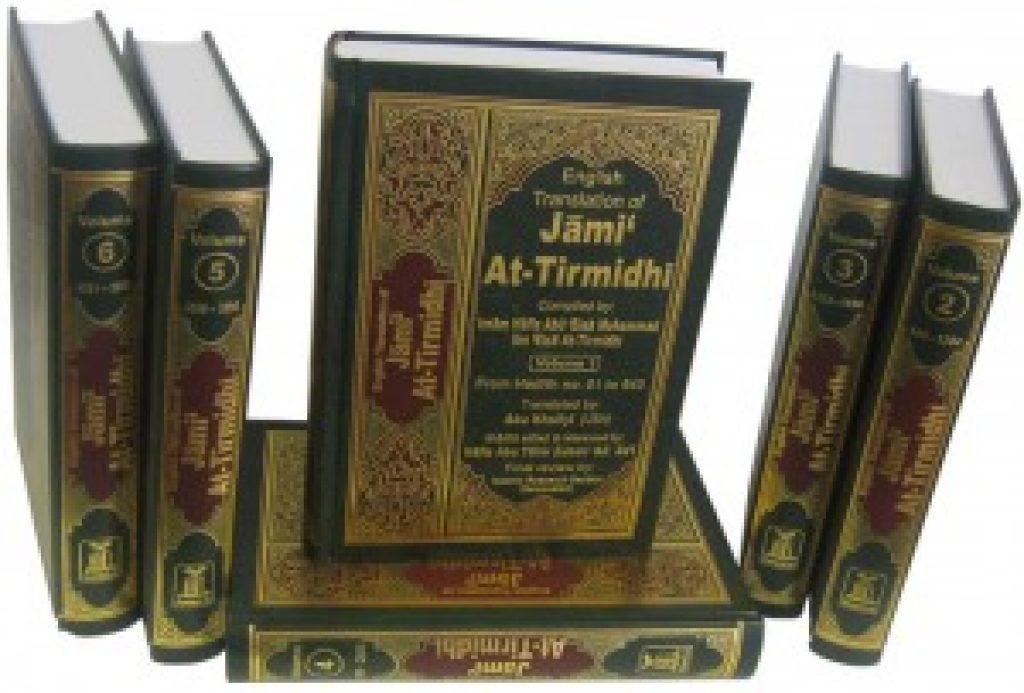
This work, officially titled Al-Jami’ al-Mukhtasar min al-Sunan ‘an Rasul Allah wa Ma’rifat al-Sahih wa al-Ma’lul wa Ma ‘Alayhi al-‘Amal, reflects not only a collection of hadith but also a meticulous analysis of each narration, helping to bridge the gap between hadith and jurisprudence.
Noble Purpose
The creation of Jami’ al-Tirmidhi was motivated by Imam Tirmidhi’s desire to compile a comprehensive collection of authentic hadiths that would serve as a reliable reference for scholars and students of Islamic knowledge. He aimed to categorize hadiths based on their reliability and to highlight different scholarly opinions on various matters, thus facilitating a deeper understanding of Islamic teachings. His work was also intended to preserve the legacy of the Prophet Muhammad ﷺ while addressing the challenges posed by fabrications in hadith literature.
Transmission of Jami At-Tirmidhi
The transmission of Jami` at-Tirmidhi has a unique legacy, as it has been passed down with both meticulous preservation and broad influence. This collection, compiled by Imam Tirmidhi, was transmitted primarily through his close students and was valued by hadith scholars for its methodology.
Several prominent scholars, especially those from the regions of Khurasan and Iraq, played a significant role in the book’s early transmission. Over the centuries, it garnered recognition for its accessible organization and distinctive classifications of hadith, which helped solidify its place as a key reference within Sunni Islam’s six major hadith collections (Kutub al-Sittah). The work’s influence spread beyond Imam Tirmidhi’s region, aided by scholars who transmitted it, taught it in academic circles, and wrote commentaries.
Key Transmitters of Sahih Tirmidhi
The transmission of Sahih at-Tirmidhi (also known as Jami` at-Tirmidhi) was primarily facilitated by a few notable students and scholars who studied directly with Imam Tirmidhi and contributed significantly to its dissemination and preservation. Key transmitters include:
Abu Bakr Ahmad ibn Ishaq al-Balkhi – One of Imam Tirmidhi’s prominent students, he transmitted the collection to later scholars in the Khurasan region.
Abu’l-Fadl Muhammad ibn Ibrahim – His role in the transmission chain helped solidify the spread and preservation of Sahih at-Tirmidhi.
Ibn Surayj – Another key transmitter, he ensured the collection’s teachings reached further regions, helping it gain recognition among subsequent scholars and students.
Through these early transmitters and others, Sahih at-Tirmidhi was able to become an enduring part of hadith scholarship. Their efforts, coupled with the widespread study and commentary by later scholars, allowed Sahih at-Tirmidhi to be recognized as one of the six canonical hadith collections in Sunni Islam.
Other Significant Transmitters
In addition to Abu Bakr Ahmad ibn Ishaq al-Balkhi, Abu’l-Fadl Muhammad ibn Ibrahim, and Ibn Surayj, other notable transmitters of Jami` at-Tirmidhi include:
- Abu Sa’id Ahmad ibn Muhammad al-Attar – His transmission played a key role in spreading the text in Iraq.
- Abu al-Abbas Muhammad ibn Yaqub al-Asam – Known for his detailed understanding, he taught Tirmidhi’s collection widely.
- Al-Harith ibn Miskin – As a prominent Egyptian scholar, he contributed to its reach in North Africa.
- Abu Ja’far Muhammad ibn Isa – A direct student of Imam Tirmidhi, he was instrumental in spreading the work in the Central Asian region.
- Abu Hatim al-Razi – A respected hadith scholar known for verifying the authenticity of narrations, contributing to its acceptance.
- Ibn al-Madini – Although more renowned for his critical hadith analysis, he was also an influential figure in sharing Tirmidhi’s hadith compilations among scholars.
- Ibn Abdan al-Himyari – A prominent scholar in the transmission of hadith, known for his reliability and extensive network of narrators.
- Abu al-Fadl al-Muhallabi – He played a critical role in spreading Tirmidhi’s narrations and was known for his commitment to the accuracy of hadith transmission.
- Al-Hakim al-Nishapuri – Renowned for his work in hadith authentication, he contributed to the acceptance and dissemination of Tirmidhi’s collection in the broader scholarly community.
- Abu Ahmad al-Hakim – He is noted for his role in transmitting hadith from various scholars, including Tirmidhi.
- Abu Dawood al-Sijistani – Though known for his own hadith collection, he also contributed to the transmission of Tirmidhi’s works.
- Abu Bakr al-Khalal – A scholar known for his deep engagement in hadith and his contributions to its transmission.
- Ibn Khuzaymah – He compiled his own collection of authentic hadith and was a significant figure in the validation of narrators.
- Yahya ibn Ma’in – Renowned for his critical approach to hadith and for assessing the reliability of narrators.
These transmitters collectively helped Jami` at-Tirmidhi reach diverse Islamic regions, cementing its influence across generations.
Manuscripts of Jami At-Tirmidhi
The exact number of manuscripts of Jami’ at-Tirmidhi is difficult to determine definitively, but several sources indicate that there are numerous extant manuscripts of this important hadith collection. Various manuscripts have been cataloged, reflecting the widespread transmission and acceptance of Tirmidhi’s work across different regions and generations.
Many of these manuscripts are housed in libraries around the world, particularly in places with significant Islamic scholarly traditions. For instance, the Al-Azhar University and the library of the King Abdulaziz Public Library in Riyadh are known to have collections that include Jami’ at-Tirmidhi. Scholars continue to study and authenticate these manuscripts, contributing to the understanding of the text’s transmission and its variations.
The manuscript tradition of Jami’ at-Tirmidhi is rich, and it encompasses several unique textual variations and commentaries, further highlighting the significance of this collection in Islamic scholarship
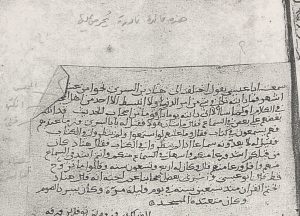
Early Manuscripts
Manuscript in Istanbul: One of the earliest known manuscripts of Jami` at-Tirmidhi is housed in the Suleymaniye Library in Istanbul. This manuscript is notable for its well-preserved condition and is often referenced in scholarly studies.
Manuscript in the British Library: The British Library holds a manuscript of Jami` at-Tirmidhi that dates back to the 9th century. It is recognized for its clarity and adherence to the text, providing insights into the early transmission of the work.
Manuscript in the Bodleian Library: The Bodleian Library in Oxford contains an early manuscript of Jami` at-Tirmidhi. This manuscript is part of a larger collection of Islamic texts and contributes to understanding the historical context of hadith scholarship.
Significant Recensions
a. Original Compilation
- Completion: The original work was completed around 279 AH (892 AD) and contains approximately 4,000 hadiths, systematically organized by topic and classified by authenticity.
- Methodology: Imam Tirmidhi’s methodology was groundbreaking for its time. He classified hadiths as Sahih (authentic), Hasan (good), and Da’if (weak), providing comments on the narrators and contexts for many hadiths, making it a critical resource for scholars and students alike.
b. Manuscript Variants
- Regional Manuscripts: Early manuscripts of Jami` at-Tirmidhi exhibit variations that reflect regional differences in transmission. Manuscripts have been found in places like Egypt, Turkey, and Central Asia, often with unique characteristics in their text and commentary.
- Textual Criticism: Scholars have engaged in textual criticism of these manuscripts, comparing variants to ascertain the most authentic readings. This process has led to a deeper understanding of the transmission history of the text.
c. Prominent Commentaries
Several notable commentaries on Jami` at-Tirmidhi have been produced, enhancing the understanding of the text and its application:
- A’ridat al-Ahwazi:
- Author: Qadi Abu Bakr ibn al-Arabi (d. 543 AH).
- Overview: A comprehensive commentary that spans around seven volumes, providing deep insights into the hadiths, their implications, and legal ramifications. This work is frequently referenced by scholars and students.
- Tuhfat al-Ahwazi:
- Author: Abdur-Rahman Mubarakfuri (d. 1353 AH).
- Overview: A detailed ten-volume commentary that explores the hadiths in depth. While it offers valuable insights, it has been criticized for its bias against the Hanafi school of thought.
- Al-Kawkab al-Durri:
- Author: Shaykh Mawlana Yahya al-Kandahlawi.
- Overview: This two-volume work, containing glosses from his son, Shaykh Muhammad Zakariyya al-Kandahlawi, provides important clarifications based on lessons from other esteemed scholars.
- Ma’arif al-Sunan:
- Author: Shaykh Yusuf al-Binnori.
- Overview: Although incomplete, this six-volume work provides extensive commentary on various hadiths, contributing to the understanding of the text.
Usage
The manuscripts of Jami` at-Tirmidhi have served scholars and students across generations, supporting the transmission, study, and authentication of hadith. Scholars have utilized these manuscripts as primary sources for commentary, analysis, and jurisprudential insights due to their methodical classifications and Imam Tirmidhi’s unique approach in grouping hadith with explanations on their authenticity.
In particular, scholars in the Islamic world have relied on these manuscripts to produce authoritative commentaries and reference works. For instance, notable commentaries like A’ridat al-Ahwazi by Qadi Abu Bakr ibn al-Arabi and *Tuhfat al-Ahwazi* by Abd al-Rahman Mubarakpuri referenced these manuscripts extensively, preserving the nuanced classifications and contextual explanations provided by Imam Tirmidhi. These commentaries, in turn, became indispensable references in hadith studies, frequently cited by jurists and scholars across Islamic schools of thought.
The manuscripts have also been pivotal in preserving variant readings and narrations, allowing contemporary critical editions to reflect the most authentic form of Jami` at-Tirmidhi. Additionally, they are used in comparative studies, where scholars cross-reference hadith with other canonical collections, like Sahih Bukhari and Sahih Muslim, highlighting Imam Tirmidhi’s contributions to hadith criticism and authentication methods.
In modern times, digital copies of these manuscripts have made them widely accessible, enabling scholars worldwide to continue analyzing Tirmidhi’s methodology, further advancing the study and preservation of hadith literature in the Islamic tradition.
Critical Editions of Jami` at-Tirmidhi
Modern scholars and publishing houses have produced several critical editions of Jami` at-Tirmidhi, with meticulous attention to authenticity, variant readings, and scholarly commentary. These editions are based on a close examination of the oldest available manuscripts and often include extensive footnotes, appendices, and indices.
Efforts by Prominent Scholars
Abd al-Rahman Mubarakpuri’s Edition: One of the most renowned critical editions of Jami` at-Tirmidhi, Abdur-Rahman Mubarakpuri’s edition includes comprehensive commentary (Tuhfat al-Ahwazi) and provides an in-depth analysis of hadith classification, such as sahih, hasan, and da’if, according to Imam Tirmidhi’s methodology. Mubarakpuri’s insights and critiques enhance the understanding of the text’s reliability and contextual relevance.
Shaykh Muhammad Fu’ad Abd al-Baqi: Known for his careful work in indexing, Shaykh Fu’ad Abd al-Baqi contributed to modern accessibility by creating indices and subject-based categorization for Jami` at-Tirmidhi, making it easier to navigate and reference.
**Muhammad
Awwama’s Critical Edition**: Shaykh MuhammadAwwama, a contemporary hadith scholar, produced a meticulous version of Jami` at-Tirmidhi based on various early manuscripts. His critical edition includes variants and offers comparisons to other early copies to clarify Imam Tirmidhi’s original intent.Dar al-Gharb al-Islami Edition: This edition involved collaboration between scholars of hadith and manuscript specialists to produce a high-quality critical edition with annotations and scholarly notes on variant readings and differences in manuscripts.
Printed Editions of Sunan Al-Tirmidhi
The first printed edition of *Jami at-Tirmidhi* was produced in 1854 CE in Delhi by the scholar Ahmad Ali al-Saharanpuri. This pioneering edition was widely referenced and set a foundation for subsequent scholarly study. Another prominent edition emerged in 1904 CE in Egypt, edited by Muhammad Badr al-Azam, which carefully incorporated manuscript variants and presented concise annotations to support readers.
In 1980, the King Fahd Complex for the Printing of the Holy Qur’an published an improved edition based on early manuscripts and various critical sources, making it one of the most reliable editions of Jami` at-Tirmidhi for contemporary scholarship. The most comprehensive modern edition to date, however, was published by Dar al-Ta’sil in 2014, where editors meticulously compared multiple early manuscripts, including a manuscript attributed to the early 7th century AH, ensuring unparalleled accuracy and reliability.
The extensive preservation, printing, and critical study of Jami at-Tirmidhi* manuscripts underscore the enduring significance of this work within Islamic scholarship, particularly in the science of hadith classification and jurisprudential insight. These editions have cemented *Jami at-Tirmidhi‘s place as a key resource for hadith studies worldwide.
Authorship of Jami At-Tirmidhi
A key discussion surrounding the authorship and transmission of Jami at-Tirmidhi* revolves around whether Imam Tirmidhi himself completed the work in its entirety during his lifetime or if additional refinements were introduced by his students and later transmitters. Scholars like M.M. Azami have pointed out that the fluidity observed in some manuscripts of *Jami at-Tirmidhi could be due to the transmission practices of the time, which involved minor annotations and clarifications by transmitters. However, this has been largely viewed as a result of the natural transmission and copying process rather than evidence that Imam Tirmidhi’s work was left incomplete or substantively altered by later hands.
Variations Between Recensions
A recent comparative study of different manuscript recensions of Jami` at-Tirmidhi has identified some minor textual variations among key transmitters. For instance, variations between recensions attributed to Sufyan ibn Waqi’ and those transmitted through Muhammad ibn Bashar often involve alternate wording or slight differences in the chains of transmission (isnad). These variations, which are largely grammatical or stylistic, do not affect the fundamental meaning of the narrations and are consistent with the transmission practices of early hadith scholars who aimed to preserve the original material as authentically as possible. A common example includes minor differences in reported statements, where one recension uses “kāna yaqūlu” (he used to say) and another “qāla” (he said), both of which maintain the intended meaning and have been reconciled through comparative analysis.
The Transmission Process
Jami at-Tirmidhi was widely transmitted during Imam Tirmidhi's lifetime and continued to circulate among hadith scholars and students in the generations that followed. Contemporary scholars of Imam Tirmidhi, such as his teacher Imam al-Bukhari and Abu Zura al-Razi, reviewed and praised the completeness and organization of Jami at-Tirmidhi*. This endorsement, combined with the rapid and widespread transmission of his work, affirms that *Jami at-Tirmidhi was completed by Imam Tirmidhi before his passing. Given the rigorous nature of hadith scholarship, substantial changes to the content or form of Jami` at-Tirmidhi would likely have been recognized and addressed by later scholars if they had occurred.
Additions by Transmitters
Some transmitters of Jami at-Tirmidhi* incorporated minor clarifications, known as *taliqāt (commentaries) or ziyādāt (additions), which were typically marked to avoid confusion with the original text. For example, prominent transmitters like Muhammad ibn Bashar added brief explanations or provided alternative transmission chains in their copies of the text to assist in understanding specific narrations. Such additions were never given the same canonical status as the core text of Jami` at-Tirmidhi but instead served as supplementary notes to aid future students and scholars. This practice was common in hadith literature and did not compromise the integrity of the original compilation.
Legacy and Enduring Influence
The transmission history and preservation efforts surrounding Jami at-Tirmidhi* highlight its continued significance in Islamic scholarship. The work has been widely respected across different Islamic schools, with multiple critical editions and manuscripts produced over the centuries, ensuring its accessibility and scholarly reliability. *Jami at-Tirmidhi remains one of the six major hadith collections (Kutub al-Sittah) in Sunni Islam and continues to serve as a crucial reference for students and scholars seeking an understanding of Prophetic tradition and jurisprudential opinions.
Distinct Features Of Jami' At-Tirmidhi
1. A Distinct Approach
Imam al-Tirmidhi’s Jami‘ contains 3,956 narrations, 83 of which are repeated. Spanning 2,231 topics across 51 chapters, the collection includes 404 unique narrations not found even in Imam Ahmad’s Musnad. Although 10 narrations are reported as possibly fabricated (related to virtues and exegesis) and around 300 are weak, these form under 10% of the text. Remarkably, nearly all narrations are marfū’ (directly attributed to the Prophet ﷺ), and Tirmidhi recorded narrations from Imams Muslim and Bukhari. This collection’s precision and unique inclusions make it a valuable scholarly resource.
The structure incorporates hadith and relevant legal interpretations, a format that has made it accessible to both hadith experts and general readers alike. Abu Ismail al-Harawi, a notable Islamic scholar, praised Jami’ al-Tirmidhi as more accessible than works by Bukhari and Muslim, as it allows for broader benefit across various levels of understanding.
2. Classifications and Commentary
Imam al-Tirmidhi meticulously classified each narration as sahih (authentic), hasan (good), gharib (unusual), or da’if (weak). He added notes about the authenticity of each chain of transmission and offered his own commentary. Ibn al-Athir, the compiler of Jami’ al-Usul, commended the work for being one of the most organized and beneficial hadith collections, with minimal repetition, thorough categorization, and valuable insights into each hadith’s authenticity and legal interpretations. Shah Abd al-Aziz al-Dehlawi also recognized its excellence in Bustan al-Muhaddithin, noting its balance of authenticity and accessibility.
3. Pioneer of Comparative Fiqh and Takhreej
Among the many hadith collections, Imam al-Tirmidhi’s Jami‘ stands out for its unique approach to compiling knowledge. Unlike other collections, al-Jami‘ provides a comprehensive overview by labeling each hadith’s authenticity, mentioning which scholars endorsed it, and listing alternative narrations on the same topic. This approach enables students to thoroughly study a subject within the hadith tradition by following references to related narrations, thus consolidating their understanding without needing extensive external sources. This methodology highlights al-Jami‘ as an early work in comparative fiqh.
Thus, Al-Tirmidhi is considered one of the earliest scholars to create a work on comparative fiqh, making significant contributions that laid the groundwork for future books on takhreej.
4. Comprehensive yet Concise
Imam al-Tirmidhi’s preference for brevity is evident. He focused on narrating only essential portions of lengthy hadiths relevant to the topic, avoiding unnecessary details. Additionally, he would indicate other narrations related to the topic, saving students the need to consult multiple sources. If a narrator was not well-known, Imam al-Tirmidhi would provide identifying details, making this collection an invaluable resource in hadith studies.
5. Combination of Sunan and Jami
6. Chapter Structure and Content
Al-Jami` as-Sahih by Imam al-Tirmidhi is pivotal in hadith studies, meticulously arranged into chapters with hadiths followed by evaluations of authenticity. Although often categorized as Sunan due to its extensive fiqh-related content, the work also includes numerous hadiths on ethics, discipline, and character, providing a comprehensive view of Islamic teachings. Its unique collection of high-caliber hadiths on personal conduct distinguishes it among classical hadith compilations.
Al-Jami` as-Sahih is organized into a wide range of chapters covering essential topics in Islamic jurisprudence, ethics, and daily life. Key sections include: –
- Purification
- Salat (Prayer)
- Al-Witr,
- The Day Of Friday,
- The Two Eids,
- Traveling,
- Zakat,
- Fasting,
- Hajj,
- Jana’iz (Funerals)
- Marriage
- Suckling
- Divorce And Li’an, S On Judgements From The Messenger Of Allah ﷺ.
- Blood Money
- Legal Punishments (Al-Hudud)
- Hunting
- Sacrifices
- Vows And Oaths
- Military Expeditions
- Virtues Of Jihad
- Jihad
- Clothing
- Food
- Drinks
- Righteousness And Maintaining Good Relations With Relatives
- Medicine
- Inheritance
- Wasaya (Wills And Testament)
- Wala’ And Gifts
- Al-Qadar
- Al-Fitan
- Dreams
- Witnesses
- Zuhd
- The Description Of The Day Of Judgement
- Ar-Riqaq
- Al-Wara’
- The Description Of Paradise
- The Description Of Hellfire
- Faith
- Knowledge
- Seeking Permission
- Manners
- Parables
- The Virtues Of The Qur’an
- Recitation
- Tafsir
- Supplication.
Imam al-Tirmidhi’s Al-Jami` as-Sahih is structured into various chapters addressing a wide range of topics in Islamic belief, practice, and ethics. Each chapter contains relevant hadiths and includes perspectives from other scholars on similar topics, providing a holistic view of Islamic guidance on each subject. This layout offers readers not only the prophetic traditions but also a comparative look at scholarly interpretations, enhancing the book’s value for study and application.
7. Minimal Repetition
Unlike many other hadith compilations, Jami` at-Tirmidhi features only 83 repeated hadiths. This minimal redundancy showcases Imam Tirmidhi’s emphasis on providing a diverse array of teachings without unnecessary duplication, which enhances the work’s overall efficiency and readability.
8. Attention to Narrators
Imam Tirmidhi places great importance on the identification of narrators. He specifies both the kunya (honorific name) and the proper names of the narrators, ensuring that readers can trace the lineage of the hadith. This meticulous attention to detail underscores the importance of verifying sources in the study of hadith.
9. Thulaathiyaat Hadith
In Jami` at-Tirmidhi, there are instances of thulaathiyaat—hadiths where the chain of transmission consists of only three narrators between Imam Tirmidhi and the Prophet Muhammad ﷺ. This brevity in the chain is significant as it highlights the directness of transmission and adds to the credibility of these narrations.
10. Practical Application of Hadith
Every hadith included in Jami` at-Tirmidhi is characterized as ma’mul bihi, indicating that it is actively practiced by jurists. This aspect reinforces the collection’s relevance in the practical application of Islamic law and ethics.
11. Engagement with Different Madhahib
Imam Tirmidhi also engages with various madhahib (schools of thought) throughout his work, providing insights into their differing opinions and supporting evidence. This feature not only enriches the reader’s understanding but also promotes a spirit of scholarly discourse and pluralism within Islamic jurisprudence.
12. Clarification of Difficult Hadith
The author does not shy away from complex narrations. He offers explanations for difficult hadith, helping readers navigate challenging topics and enhancing their comprehension of Islamic teachings.
13. Concise Recording
Imam Tirmidhi’s approach in Jami’ at-Tirmidhi is distinctive in that he typically records only one or two hadiths under each chapter. Instead of extensive narration lists, he uses the phrase “wa fi ‘l-bab” (meaning “regarding this issue there are other narrations”), referencing additional relevant narrations attributed to specific companions. This concise method offers a focused look at each subject while acknowledging related hadiths, highlighting his selective approach to hadith compilation.
Impact & Legacy of Jami' al-Tirmidhi
Imam al-Tirmidhi is reported to have expressed immense confidence in his Jami’ after sharing it with scholars in regions like Hijaz, Khurasan, and Iraq, who found it exemplary. He then said that having this collection at home was akin to hearing a prophet speak, emphasizing the compilation’s integrity and closeness to Prophetic teachings. This statement reflects his profound dedication to preserving the Prophet’s ﷺ words authentically and making them accessible for Muslims seeking to deepen their knowledge and practice of Islam.
Scholars have extensively discussed Jami’ al-Tirmidhi’s unique qualities and lasting impact on Islamic studies. It has been praised for its user-friendliness, systematic arrangement, and clarity, making it suitable for a range of readers. Unlike more advanced collections like Sahih Muslim, which requires in-depth study, Jami’ al-Tirmidhi presents narrations along with basic commentary, making it a preferred introductory text for students.
While Jami’ al-Tirmidhi is generally regarded as fourth in authenticity after Sahih Bukhari, Sahih Muslim, and Sunan Abu Dawud, some scholars argue it holds a unique place due to its accessibility and educational format. For example, while Imam al-Nasa’i’s collection is highly authentic, it is more specialized and less comprehensive, lacking commentary and additional hadith sources provided by Imam al-Tirmidhi.