


OVERVIEW
What Is Sahih Muslim?
Sahih Muslim, formally known as Al-Musnadu Al-Sahihu bi Naklil Adli (صحيح مسلم), is a cornerstone of Islamic scholarship, revered as one of the most authentic hadith collections in Sunni Islam, second only to Sahih al-Bukhari. Compiled by the esteemed scholar Imam Muslim ibn al-Hajjaj, this collection is a vital part of the six major hadith collections (Kutub al-Sittah) and is highly respected by both Sunni and Zaidi Shia Muslims. This article provides a detailed look at its compilation, structure, and significance.
Table of Contents
ToggleImam Muslim and His Scholarly Legacy
Imam Muslim ibn al-Hajjaj (d. 261 AH/875 CE), a prominent hadith scholar from Nishapur (modern-day Iran), dedicated his life to the study and preservation of the Prophet Muhammad’s (peace be upon him) sayings, actions, and approvals. He authored numerous works on hadith sciences, but his most celebrated contribution is Al-Jami’ As-Sahih, commonly known as Sahih Muslim. This monumental work, completed over 15 years and finalized in 250 AH, a decade before his death, reflects his rigorous methodology and commitment to authenticity.
Key Aspects of the Compilation Process
Rigorous Verification: Imam Muslim scrutinized each narration, focusing on the reliability of the chain of narrators (isnad) and the accuracy of the content (matn). He required narrators to have proven integrity (adaalah) and precision (dabt).
Chain of Transmission: The term “300,000 hadiths” refers to narrations with different chains. For example, if one hadith was reported by two Tabi’in (successors) from a Companion, it was counted as two narrations. This method often inflates the perceived number of distinct hadiths.
Selection Criteria: Only hadiths meeting strict authenticity standards were included, with a focus on marfu’ (Prophet-attributed) narrations and continuous chains.
Structure and Number of Hadiths
Sahih Muslim is organized into 43 books, covering topics such as theology, worship, ethics, and Islamic law. The exact number of hadiths varies depending on how they are counted:
With Repetitions: Approximately 7,500 hadiths, including multiple narrations of the same text with different chains.
Without Repetitions: Around 4,000 unique hadiths, as estimated by Imam Muslim himself.
Scholarly Estimates:
Scholar Al-Munthiri suggests 2,200 unique hadiths.
Muhammad Amin notes that around 1,400 authentic hadiths in Sahih Muslim are also found in other major collections, particularly the Kutub al-Sittah.
Overlap with Sahih al-Bukhari: Approximately 2,000 hadiths are shared with Sahih al-Bukhari, highlighting their complementary nature.
The variation in counts (from 3,033 to 12,000) arises from whether repetitions or different chains (isnad) are included. Imam Muslim’s grouping of similar narrations under one theme makes it easier to study variations in wording or transmission.
Significance of Sahih Muslim
Sahih Muslim holds a revered position in Islamic scholarship due to its authenticity and comprehensive coverage. Its meticulous compilation ensures it is a trusted source for understanding the Sunnah, second only to Sahih al-Bukhari. Key features include:
Universal Acceptance: Widely accepted by Sunni scholars and respected by Zaidi Shia, it serves as a foundational text for Islamic jurisprudence, theology, and ethics.
Organized Structure: Unlike other collections, Sahih Muslim groups related narrations together, enhancing accessibility for scholars and students.
Scholarly Rigor: Imam Muslim’s attention to narrator reliability and content accuracy sets a high standard for hadith authenticity.
Addressing Misconceptions
A common misconception is that the “300,000 hadiths” represent distinct narrations. In reality, this figure includes multiple chains for the same hadith, reflecting the diversity of transmission paths rather than unique content. This counting method, standard in hadith scholarship, explains the discrepancy between the initial pool and the final 4,000 unique hadiths in Sahih Muslim.
Why Was Sahih Muslim Compiled?
The Importance of Sahih Muslim in Preserving Authentic Hadith
In the early centuries of Islam, particularly during the conflicts between the Umayyad and Abbasid dynasties, unreliable and fabricated hadith began to spread among Muslims. This made it challenging for many to discern the true sayings and practices of the Prophet Muhammad (peace be upon him). To address this issue, Imam Muslim ibn Al-Hajjaj dedicated himself to compiling a trustworthy collection of authentic hadith, known as Sahih Muslim, offering Muslims a reliable guide to the Prophet’s teachings.
Preserving the Sunnah
Alongside Imam Bukhari and other esteemed hadith scholars, Imam Muslim worked tirelessly to preserve the Sunnah—the Prophet’s way of life, encompassing his sayings, actions, and approvals. The Sunnah, together with the Quran, forms a vital part of Islamic guidance, providing practical insights into living a life aligned with Quranic principles. Scholars like Ibn Al-Jawzi emphasized that hadith serve as the Shariah in action, bringing clarity and application to the Quran’s teachings.
A Rigorous Approach to Hadith Authentication
Imam Muslim examined an astonishing 300,000 narrations, gathered through oral and written sources. Using a meticulous methodology, he built upon the standards set by earlier and contemporary scholars to verify the authenticity of these reports. His careful analysis ensured that only the most credible narrations were included in his work.
The Creation of Sahih Muslim
From the vast pool of narrations, Imam Muslim selected approximately 12,000 hadith for Sahih Muslim, one of the most respected hadith collections in Islamic tradition. Many of these narrations appear multiple times with different chains of transmission, resulting in about 4,000 unique hadith. His work remains a cornerstone for Muslims seeking authentic guidance from the Prophet’s life.
By compiling Sahih Muslim, Imam Muslim provided an invaluable resource that continues to inspire and guide Muslims worldwide, ensuring the preservation of the Prophet’s authentic legacy.
The Compilation and Transmission of Sahih Muslim
Imam Muslim dedicated 15 years to compiling his renowned Sahih Muslim, starting in 235 AH and completing it in 250 AH. After finishing this monumental work, he spent the final 11 years of his life, until his passing in 261 AH, teaching and sharing the collection with students. Several of his students played a crucial role in passing down Sahih Muslim to future generations, ensuring its widespread acceptance and enduring legacy.
Widespread Acceptance of Sahih Muslim
By the 7th century AH, the scholar Ibn al-Salah (d. 643 AH) noted that Sahih Muslim had been so widely transmitted that its authenticity and authorship were universally recognized. This was later reaffirmed by prominent scholars like Al-Nawawi (d. 676 AH) and Al-Sakhawi (d. 902 AH), cementing its status as a cornerstone of Islamic scholarship.
Key Transmitters of Sahih Muslim
The primary transmitter of Sahih Muslim was Abu Ishaq Ibrahim ibn Sufyan (d. 308 AH), a devoted student of Imam Muslim known for his asceticism and expertise in hadith. His recension became the most widely accepted version of the text. Two notable figures who transmitted Ibrahim’s version were Abu Ahmad al-Juludi (d. 368 AH) and Muhammad ibn Yazid al-ʿAdl. Al-Juludi’s transmission is considered the most authoritative, forming the basis for most surviving manuscripts and printed editions of Sahih Muslim.
Other Significant Transmitters
Another important transmitter was Ahmad ibn ʿAli al-Qalanisi, whose reliability was confirmed by Al-Samʿani (d. 562 AH). His recension, primarily found in the Maghrib (Northwest Africa), was brought to the region from Egypt in the early 5th century AH. Though thought to be lost, Moroccan scholar Ahmad Mahdi al-Nayfar reportedly acquired a manuscript of this recension. Early commentators, including Al-Jayyani (d. 498 AH), Al-Mazari (d. 536 AH), and Qadi ʿIyad (d. 544 AH), preserved variants from Al-Qalanisi’s version.
Other transmitters, such as Makki ibn ʿAbdan (d. 325 AH) and Abu Hamid ibn al-Sharqi (d. 325 AH), also passed down Sahih Muslim, with their versions transmitted by Abu Bakr al-Jawzaqi. However, according to Al-Sakhawi, these recensions did not gain the same widespread acceptance as Ibrahim ibn Sufyan’s.
Through the efforts of these transmitters, Sahih Muslim remains a vital and trusted source of the Prophet’s teachings, guiding Muslims across generations.
Manuscripts of Sahih Muslim
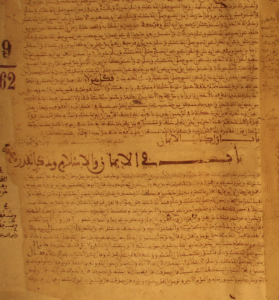
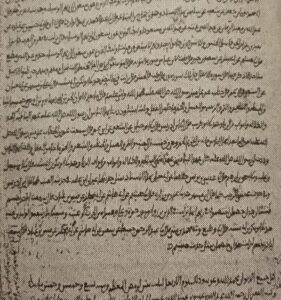
Over a millennium, more than five hundred manuscripts of Sahih Muslim have been transcribed by scribes from various regions. This extensive collection of manuscripts is second in preponderance only to Sahih al-Bukhari. Among these, some of the most valuable manuscripts have been instrumental in the preservation and critical study of Sahih Muslim.
Early Manuscripts
One of the earliest known partial manuscripts, believed to date back to the 5th century AH, is housed in the Khuda Bakhsh Oriental Library. This manuscript was used for teaching by Abu Bakr al-Tusi in 486 AH. Another early partial manuscript, dated 471 AH, is preserved in the Zahiriyyah Library (al-Assad National Library) in Damascus.
Significant Recensions and Usage
While details of Imam Muslim’s original manuscript are unknown, secondary and tertiary manuscripts have been widely studied by classical scholars. The recension of Ibrahim ibn Sufyan, transmitted by al-Juludi, was notably used by the 6th-century scholar al-Mazari. Additionally, the manuscript of Ibn al-Hadhdha’ (d. 416 AH), based on al-Qalanisi’s recension, was utilized by Abu ʿAli al-Jayyani (d. 498 AH) for his influential work Taqyid al-Muhmal.
Modern Access and Critical Editions
Several critical manuscripts remain accessible today, forming the basis for scholarly editions of Sahih Muslim. One such manuscript, transcribed by ʿAbd Allah ibn ʿIsa al-Muradi in 559 AH, was verified by prominent hadith scholars like Abu ʿAli al-Batalyawsi, Ibn ʿAsakir, and al-Dimyati. This manuscript is preserved in Spain’s El Escorial Library and is available both physically and digitally.
Another significant manuscript, transcribed by Abu al-Qasim al-Amawi in 573 AH and refined by Ibn Khayr al-Ishbili, is considered a cornerstone in North African scholarship. Housed at the University of al-Qarawiyyin in Fes, Morocco, it is also accessible online.
Printed Editions of Sahih Muslim
The first printed edition of Sahih Muslim was published in 1849 CE in Calcutta by ʿAzim al-Din and Ghulam Akbar. In 1853 CE, Ahmad ʿAli al-Saharanpuri released an edition with commentary by al-Nawawi. Between 1911 and 1915 CE, an Istanbul-based edition by al-Tabʿah al-ʿAmirah included reliable manuscripts and concise annotations.
In 2013, Zuhayr Nasir produced an improved edition, followed by a highly accurate version by Dar al-Ta’sil in 2014, which was carefully compared with five key manuscripts, including a partial manuscript from 461 AH—one of the earliest surviving copies.
The careful preservation and study of these manuscripts and editions underscore the timeless significance of Sahih Muslim in guiding Islamic scholarship and practice.
Authorship of Sahih Muslim
The authorship of Sahih Muslim, one of Islam’s most authoritative hadith collections, has been a topic of scholarly discussion. Below, we explore whether Imam Muslim completed the work himself and how its transmission process shaped its preservation.
Did Imam Muslim Complete Sahih Muslim?
Some scholars, like Norman Calder, have suggested that Sahih Muslim may have been finalized by Imam Muslim’s students after his death, citing factors like evolving texts and redactional activity. However, this view is contested. The variations found across different recensions of the text are typical of the oral and written transmission process and do not indicate an incomplete or fluid work. Evidence suggests Imam Muslim completed Sahih Muslim during his lifetime, as confirmed by reviews from his contemporaries.
Variations in Recensions
A detailed study comparing the two primary recensions of Sahih Muslim—one by Ibrahim ibn Sufyan and the other by Ibn Mahan through al-Qalanisi—identified only 117 variations across 7,525 reports. These include 56 differences in chains of transmission and 61 in the text itself. For example, one narration describes Saʿid ibn Jubayr’s action as “raḥaltu” (I traveled) in Ibrahim’s recension and “dakhaltu” (I entered) in Ibn Mahan’s. Such minor differences are reconcilable and do not affect the core meaning, reinforcing the text’s reliability.
The Transmission Process
Sahih Muslim was widely shared during Imam Muslim’s lifetime and beyond, making significant alterations unlikely. Contemporaries like Abu Zurʿah al-Razi and Ibn Warah reviewed the text while Muslim was alive, confirming its completeness. Additionally, Abu Bakr al-Sa’igh’s mustakhraj—a work using Sahih Muslim as a template—further supports the collection’s finalized state during Muslim’s era.
Additions by Transmitters
Some transmitters added comments (taʾliqat) or additional material (ziyadat) to Sahih Muslim. For instance, Ibrahim ibn Sufyan included thirteen additional chains of transmission, and his student al-Juludi added four. These additions were clearly distinguished from the original text and often provided alternative, shorter chains of narration. Such practices are common in classical hadith literature and do not compromise the authenticity of the core text, as these additions were never considered part of the canonical work.
The careful transmission and minimal variations in Sahih Muslim highlight its authenticity and the dedication of scholars to preserving Imam Muslim’s original compilation for future generations.
Distinctive Features of Sahih Muslim
Imam Muslim’s Sahih stands out due to its rigorous methodology and unique features, which distinguish it from other Hadith collections, particularly Imam Bukhari’s Sahih. Here are the key distinctive features of Sahih Muslim:
Strict Criteria for Chains of Narrators
Imam Muslim accepted only those narrations that were reported by two reliable successors (Tabi’in) from two companions (Sahabah), which then continued through two independent, unbroken chains (isnāds) of sound narrators. Imam Bukhari, while also strict, did not adhere to such rigid criteria.
Focus on Sahih Narrations
Both Imam Muslim and Imam Bukhari primarily included sahih li dhatihi (inherently authentic) narrations. However, Imam Muslim exclusively included marfu’ (attributed to the Prophet) narrations, avoiding shaadh (rare) narrations. In contrast, Imam Bukhari sometimes included mauquf (narrations from companions).
Inclusion of Mursal and Munqati' Hadith
Imam Muslim recorded some mursal (narrations missing a link) Hadith but provided versions with complete chains (ittisal) elsewhere. His collection also contains 14 munqati’ (broken chain) Hadith.
Systematic Organization of Themes and Narrations
Imam Muslim’s arrangement of Hadith is considered more scientific and organized. He groups together different versions of a Hadith under one theme or chapter, making it easier for readers to compare narrations. Imam Bukhari, on the other hand, scattered similar narrations across various chapters, making Sahih Muslim more accessible for students seeking to understand a particular Hadith comprehensively.
Attention to Differences in Wording
Imam Muslim was meticulous in noting even minor differences in the wording of Hadith. He often placed two Hadith with similar meanings together, specifying the differences in wording and clarifying the chain (sanad) and text (matn) of each. In some cases, he mentioned the source of the wording, stating whose version he used (e.g., “A and B narrated to us, and the wording used here is by A”). Imam Bukhari did not always include such details.
Clarification of Narrator Details
Imam Muslim took great care in providing detailed information about narrators, including differences in their names, surnames (kunya), or other facts, ensuring clarity in the chain of transmission. This was particularly important for narrators from regions like Sham (Greater Syria), where such confusion was more common. Imam Bukhari did not emphasize these distinctions as much.
Differentiation Between Modes of Narration
Imam Muslim distinguished between two key modes of narration:
- Haddathana (he narrated to us/me): When the teacher narrates and the student listens.
- Akhbarana (he informed us): When the student reads the Hadith before the teacher.
This distinction reflects his meticulous approach to understanding the circumstances of narration. Imam Muslim’s differentiation mirrors the methods of scholars like Imam Awza’i and Imam Shafi’i, whereas Imam Bukhari and Imam Malik did not emphasize this distinction.
Muqaddima (Introduction)
Imam Muslim included an introductory section (muqaddima) to his Sahih, in which he outlined the purpose of his book, his methodology, conditions for inclusion, terminologies, and insights into the science of Hadith narration. This sets the tone for the book and provides readers with an understanding of the meticulous process behind it.
Use of Weak Narrators for Turuq (Paths)
In some instances, Imam Muslim included weak narrators alongside authentic narrators, not to authenticate their narrations but to demonstrate various turuq (paths) through which the Hadith was transmitted. This provided a comprehensive view of how a Hadith was transmitted through different channels.
Influence of the Shafi'i Madhab
Imam Nawawi noted that the arrangement of baabs (chapters) in Sahih Muslim shows some inclination towards the Shafi’i school of thought. However, the book itself remains a universal reference for Hadith across Islamic schools of thought.
Unfinished Project
According to scholars like Hafiz Ibn Asakir and Imam Hakim, Imam Muslim intended to divide his Sahih into two parts: one containing Hadith transmitted by narrators of the First Level (Tabaqah), and the second containing Hadith from narrators of the Second Level. However, he was only able to complete the first part before his death, making Sahih Muslim a project from his later years.