


Sahih Muslim, compiled by Imam Muslim ibn al-Hajjaj, is one of the most revered collections of hadith in Islamic tradition, second in authenticity only to Sahih al-Bukhari. Renowned for its meticulous methodology, Imam Muslim carefully scrutinized each narration to ensure the reliability of the chain and the content. The collection contains approximately 7,500 hadiths and has received widespread scholarly consensus for its precision and authenticity. Despite minor criticisms, Sahih Muslim remains a cornerstone of Islamic hadith literature, relied upon by scholars and Muslims worldwide.
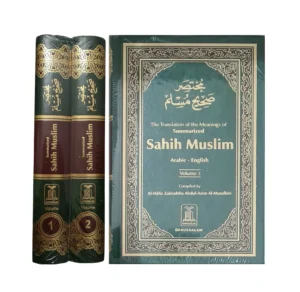
There is no doubt that Saheeh Al-Bukhari and Saheeh Muslim are the two most authentic collections of hadith, second only to the Quran in terms of their importance and reliability. Scholars throughout history have upheld their unparalleled status in the field of hadith, and these collections have been received by the Muslim Ummah with unanimous acceptance.
Table of Contents
ToggleAl-Haafiz said:
Imam al-Haramayn al-Juwayni, declared, - If any man were to swear that he would divorce his wife if it were not the case that what is in the books of al-Bukhaari and Muslim is what they ruled to be sound of the words of the Prophet (peace and blessings of Allaah be upon him), then divorce would not be binding upon him, and he would not be breaking his oath, because the Muslim scholars are unanimously agreed that they are saheeh. End quote.
- Siyaanat Saheeh Muslim (p. 86)
He further stated:
Scholars universally agree that as-Saheehayn (i.e., Saheeh al-Bukhari and Saheeh Muslim) are the most authentic books after the Qur'an, held in high regard by all Muslims, whether learned or unlearned. The general consensus is that Saheeh al-Bukhari is more accurate and rigorous in terms of scholarship compared to Saheeh Muslim.
The ummah is unanimously agreed that these two books (Saheeh Al-Bukhari and Saheeh Muslim) are saheeh and it is obligatory to follow their ahaadeeth. End quote.
- Tahdheeb al-Asma’ wa’l-Lughaat (1/73).
اتَّفَق الْعُلَمَاءُ رحِمَهُمْ اللهُ عَلَى أَنَّ أَصَحُّ الْكُتُبِ بَعْدَ الْقُرْآنِ الْعَزِيزِ : الصَّحِيحَانِ الْبُخَارِيَّ وَمُسْلِمٌ ، وَتَلَقَّتْهُمَا الْأُمَّةُ بِالْقَبُولِ ، وَكِتَابُالْبُخَارِيِّ أُصَحُّهُمَا
"“The Muslim scholars agreed upon the fact that Saheeh Al-Bukhari and Saheeh Muslim are the most authentic books after the Quran, and the Muslim Ummah received them with full acceptance. Saheeh Al-Bukhari is more authentic and abounds in greater benefits and knowledge than Saheeh Muslim."- Sharh an-Nawawi, Vol. 1, p. 14
The two Sahihs - Saheeh Al-Bukhari and Saheeh Muslim - are distinguished from all other hadith compilations because their contents are regarded as authentic and do not require further verification.
Everything that (Imam) Muslim considered to be Sahih of this book is undoubtedly Sahih, and it leads to contemplative certainty due to its authenticity. Likewise, everything that (Imam) al-Bukhari considered to be Sahih in his book (is Sahih), because the Ummah has accepted that reality (the authenticity of Bukhari and Muslim) with agreement. With the exception of a few, whose acceptance or disagreement does not affect the consensus.
- Siyanatu Sahih Muslim.
There is no book beneath the canopy of heaven that is more sound than al-Bukhaari and Muslim, after the Qur’aan. End quote.
- Majmoo’ al-Fataawa (18/74).
Regarding hadiths that both scholars, al-Bukhari and Muslim, agree upon, there is no basis for suggesting that any of these narrations are weak. The Muslim ummah is unanimous in accepting hadiths upon which both imams concur. Shaykh al-Islam affirmed this, stating that any hadith they agreed upon is unquestionably saheeh.
- Majmoo‘ al-Fataawa, 18/20
“Among the books, on whose authenticity scholars have agreed, were Saheeh Al-Bukhari and Saheeh Muslim. All the Hadiths narrated therein are authentic so much that scholars said that the Hadiths recorded therein yield certain knowledge, not just conjecture because the Muslim nation received these Hadiths collections with full acceptance, and it is inconceivable for the Muslim nation to agree on a falsehood.”
Imam Muslim applied rigorous conditions in his compilation of Hadith to ensure their authenticity. These criteria set a high standard for the inclusion of narrations in his renowned collection, Sahih Muslim. Here’s a breakdown of his conditions:
Imam Muslim only accepted Hadith if there was consensus among the scholars (Ulema) of the narrators’ time regarding the narrators’ reliability, both in terms of their precision (dabt) and integrity (‘adaalah). This condition mirrors the approach of Imam Bukhari, emphasizing the importance of a narrator’s accurate transmission and moral uprightness. The verification of narrators’ trustworthiness was central to his compilation process.
Imam Muslim would not accept a Hadith that had only one narrator in the chain unless there were at least two narrators. He also required that narrators must have been present at the time of the narration. This condition is slightly less strict than Imam Bukhari’s, but it still ensured that there were multiple sources corroborating the Hadith, adding to its reliability.
Imam Muslim clarified that not every Hadith in his collection was considered sahih (authentic) by him personally. Instead, he selected those Hadith which had consensus (ijma’) among the scholars of his time, particularly the senior teachers (mashaikh). However, some Hadiths in his collection were subject to differences of opinion (mukhtalif fih).
Explanation by Imam Suyuti: Imam Suyuti suggests that Imam Muslim may have been referring to the matn (text) of the Hadith, not the reliability of the narrators (raawi).
Ibn Salah’s View: According to Ibn Salah, Imam Muslim was referring to the key themes or fundamentals of the Hadith when speaking of their consensus. The remaining Hadith in his collection served as supporting evidence (istishhaad) or corroborative narrations (mutaaba’aat).
Imam Bulqini explained that Imam Muslim’s reference to ijma’ was not a broad consensus but rather a specific agreement among four scholars: Abu Shaiba, Saeed Ibn Mansur, Ahmad bin Hanbal, and Yahya bin Mu’een. These scholars’ consensus was critical for Imam Muslim’s selection process.
Imam Muslim’s narrators were required to have the attribute of itqaan (strong memory and preservation of knowledge). Although the narrators had to show sustained effort in preserving Hadith, he did not strictly require them to have prolonged stays with their teachers, unlike other scholars.
While Imam Muslim shared several conditions with other Hadith scholars, particularly Imam Bukhari, his criteria for authentication had unique elements. For instance, the verification of narrators and multiple chains of transmission played an essential role in his methodology, but he employed a slightly less rigid approach compared to Imam Bukhari.
Imam Muslim’s Sahih Muslim is a cornerstone of Hadith scholarship, reflecting his lifelong dedication to the meticulous study of narrators, Hadith texts, and their authenticity. His extensive body of work laid the foundation for this masterpiece, cementing his legacy as one of Islam’s greatest Hadith scholars.
Imam Muslim’s contributions extended far beyond Sahih Muslim. His works included detailed studies on narrator biographies (Tabaqat), critical evaluations of transmitted Hadith, and specialized texts addressing erroneous interpretations (Auhâm) and hidden defects (‘ilal) in Hadith chains. These works, spanning topics like narrator classifications and juristic issues, showcased his deep expertise and rigorous methodology. Each of his prior writings contributed to the robust framework needed to compile a collection as authoritative as Sahih Muslim.
Sahih Muslim represents the culmination of Imam Muslim’s expertise in narrator biographies, text criticism, and chain analysis. During his era, Hadith students sought a comprehensive, reliable resource covering rituals, commandments, divine rewards and punishments, and guidance on permissible and prohibited actions. Sahih Muslim met this need by presenting authentic narrations from the Prophet Muhammad (peace be upon him) in a clear, organized format. This allowed scholars and students to rely on it as a standalone reference for matters of faith, understanding, and legal deduction.
Imam Muslim’s meticulous approach ensured Sahih Muslim became a definitive guide for Islamic scholarship. By combining his deep knowledge of narrators, transmission chains, and potential flaws, he created a work that remains a trusted source for Muslims seeking authentic guidance from the Prophet’s teachings.
In the introduction (Muqaddama) to Sahih Muslim, Imam Muslim divides narrators into three distinct levels or classes (Tabaqat). His aim was to avoid excessive repetition, only doing so when it was necessary to address a defect in the narration or provide additional insights. He stated –
“In the first section we want to list ahadith clear of all defects and other things (other things meaning other technical weaknesses), that is, Ahâdith whose narrators are considered very strong and very careful while narrating, their narrations (when compared with one another) do not vary nor (the facts and details) mixed up, things often found in case of other narrators.“. “After listing the Ahadith of such narrators, we will turn to the Ahadith of those narrators whose memory and skill are less than that of those belonging to the first section. Anyhow, in such people, though lesser in rank than those in the first section, no defect has been identified. Truth and devotion to knowledge are the qualities common in them, like ‘Atâ’ bin Sâ’ib, Yazid bin Abu Ziyâd, Laith bin Abü Sulaym, etc. They are known for their knowledge and piety but the narrators of the first section rank higher, in skill and care, than those mentioned above. As for those who are considered as Accused (Muttaham) or their narrations (though fair in themselves) are Denounced (Munkar) and wrong, we have nothing to do with them. ” [Muqaddama Muslim]
His classification includes:
Imam Muslim’s Sahih Muslim is celebrated for its rigorous methodology in compiling authentic Hadith, with scholars offering varied interpretations of his narrator classification system. Despite these differences, the collection’s authenticity is universally recognized, making it a cornerstone of Islamic scholarship alongside Sahih Bukhari.
Imam Muslim outlined a three-tier narrator classification in his Muqaddama, emphasizing the exclusion of third-class (least reliable) narrators. For example,
Imam Hâkim and Imam Baihaqi stated that Sahih Muslim relied primarily on narrations from the first class of narrators. They also suggested that Imam Muslim passed away before compiling the narrations from the second class. [Sharh An-Nawawi, Muqaddama: 1/45]
Imam Baihaqi, citing Ibrahim bin Mohammad bin Sufyan, explained that Imam Muslim had actually composed three separate books: Sahih, a collection from narrators like ‘Akrama and Ibn Ishaq, and a collection of weaker narrations.[An-Nikat Al- Kitab Ibnus-Salâh: 1/434]
On the other hand, Qâdi ‘Ayâd disagreed with this viewpoint, asserting that Sahih Muslim contained narrations from all three levels of narrators. He argued that Imam Muslim had intentionally excluded the fourth level of narrators, which others had referred to as the third level.[Akmalul-Mu’alim Bi Fawâ’id Muslim: 1/86]
Imam Tha’labi, aligning with Qadi ‘Ayad, described four classes, noting that Muslims used third-class narrators (e.g., ‘Ata’ ibn Sa’ib, Laith, Yazid ibn Abu Ziyad) sparingly for corroboration, ensuring the collection’s authenticity remained intact.[Sir A‘lamun-Nubala’: 12/575]. He explained –
“He (Imãm Muslim) took Ahâdith from the First class and from the Second one except a few of the latter which he did not like. Then, from the Third class he took Ahâdith, which are not many, as corroborating evidences and follow-ups. If he had included Ahâdith from this class in his Sahih, the book would have been twice as voluminous as it is now and his book, due to the inclusion of such Ahâdith, would have slipped down from the rank of Sahih. The people of this class are ‘Atâ’ bin Sâ’ib, Laith, Yazid bin Abu Ziyâd, and others like them. He did not take Ahâdith from these people except after he had taken a basic Hadith (that is, after a Hadith, the basis of which existed in the First class). (Sir A ‘lâmun-Nubalâ’: 12/575)
This is what Imam Muslim originally stated in his preface, particularly regarding the narrations of ‘Atā’, Yazīd, and Laith. These narrators, while respected, belonged to the second class according to Imam Muslim, and to the third class according to Qadi ‘Ayād and Imām Tha‘labi. As Imam Muslim himself emphasized, their narrations were not used as the foundational or primary Ahadith in Sahih Muslim, but only as supporting or corroborating evidence when needed.
This aligns with the statements of Imām Hākim, Imām Baihaqi, and later scholars like Hāfiz Ibn Hajar, who asserted that Sahih Muslim predominantly contains the Ahadith from the first class of narrators, i.e., the most reliable and skilled transmitters.
This unified understanding among the classical scholars, despite minor differences in how they categorized the narrators, highlights the fact that both groups agree on the fundamental authenticity of the narrations in Sahih Muslim. The differences in classification between scholars like Qādi ‘Ayād and those adhering strictly to Imam Muslim’s original classification are minor when viewed in the broader context of the authenticity of the work.
Hāfiz Ibn Hajar’s remark in An-Nukat, which explains that the confusion arose for Qādi ‘Ayād and his followers, further solidifies the argument. He stated –
“The matter became unclear and ambiguous to Qadi’ Ayad and his followers (An-Nawawii)…” [An-Nikat ‘Ala Kitâb Ibnus-Salâh: 1/434]
This broad consensus has been held by scholars across various schools of thought, affirming that the core narrations in Sahih Muslim—whether they appear at the beginning, middle, or end of a chapter—are unanimously accepted as authentic. This counters the claims made by some contemporary scholars who attempt to undermine the authenticity of certain narrations by exploiting academic differences between the classical scholars.
The claim, purported in a so-called research thesis from the Islamic University of Al-Madīnah, that only the first Hadith in each chapter of Sahih Muslim is fully authentic, while the subsequent narrations indicate hidden defects, is not supported by any of the classical commentators or scholars. In fact, no major scholar of Hadith, including Qādi ‘Ayād or those who followed him, ever suggested such a notion. Instead, the consensus is clear: all the Ahādith in Sahih Muslim, regardless of their position in the text, are considered authentic.
Imam Nawawi’s commentary on Sahih Muslim highlights the unique and meticulous methodology employed by Imām Muslim in his collection, which distinguishes his work from others. While scholars like Abū ‘Ali bin Husain Nishābūri and some from the Maghrib favored Sahih Muslim, the majority, including scholars like Abū Bakr Ismā’īl, gave precedence to Sahih Bukhāri.[Sharh Muslim li-Nawawi Muqaddama: 1/35.]
This difference of opinion underscores the high regard for both collections, though the majority leaned towards Sahih Bukhāri due to its stricter criteria for the acceptance of narrations.
Imam Nawawi praises Imam Muslim’s unparalleled precision in recording the chains of transmission (isnād) and variations in wording of the narrations. He points out that Imam Muslim carefully listed multiple chains for each hadith, tracing them from different teachers and transmitters. This approach allowed students to view the narrations from various perspectives, increasing their confidence in the reliability and authenticity of the hadith.
Imam Muslim’s technique of comparing the same narration from different teachers, times, and settings demonstrates his commitment to verifying the consistency and accuracy of the narrations. If there were no discrepancies in wording or transmission, the narrators were deemed reliable. This process of cross-referencing between multiple transmitters—whether they were from the same teacher or different teachers—was thorough and painstaking. By checking the narrations of the teachers of his teachers and comparing the narrations of different Companions, Imām Muslim ensured that the hadith he included were flawless in their transmission and content.
Nawawi emphasizes that such rigorous verification surpasses even the most stringent of legal court standards in handling witness testimony. Imam Muslim recorded every minute difference, even down to slight variations in phrasing or terms like Haddathana (he narrated to us) and Akhbarana (he informed us), which hold nuanced differences in the transmission process. This meticulousness ensured that Sahih Muslim became a comprehensive and flawless collection, revered for its authenticity.
The uniqueness of Sahih Muslim lies not only in the quality of its narrations but also in the way Imam Muslim presented them, making it a fundamental text for hadith studies and highly beneficial for students and scholars alike. Despite the preference given to Sahih Bukhari by many, Sahih Muslim holds a special place for its methodology, which is seen as more student-friendly, organized, and trust-inspiring.
Sahih Al-Bukhari and Sahih Muslim are universally regarded as the most authentic Hadith collections after the Quran, forming the bedrock of Islamic scholarship. While both are held in high esteem, subtle distinctions and minor criticisms have been addressed by scholars to affirm their reliability.
Imam An-Nawawi, in his introduction to Sharh Sahih Muslim, highlights the consensus among scholars that Sahih Al-Bukhari and Sahih Muslim are the most authoritative texts after the Quran. While Sahih Al-Bukhari is often considered slightly superior due to its stringent criteria and depth of knowledge, both collections are foundational, with the distinction being minimal [Sharh An-Nawawi, Muqaddama: 1/45].
A few senior Hadith scholars, such as Imam Ad-Daraqutni, critiqued a small number of narrations in both collections, pointing to potential issues in the chains of transmission (isnad), such as narrators with weaker memorization skills. However, these criticisms are minimal compared to the vast majority of Hadith in these works and do not undermine their overall authenticity.
Al-Hafith Ibn Hajar, in his introduction to Sharh Sahih Al-Bukhari, meticulously addressed Ad-Daraqutni’s critiques, defending the rigorous selection methods of Imams Al-Bukhari and Muslim. He clarified that narrations from narrators with minor shortcomings were included only when verified as sound and free of defects, ensuring the collections’ reliability [An-Nikat ‘Ala Kitab Ibnus-Salah: 1/434].
Prominent modern scholars like Shaykh Ibn Baz and Shaykh Ibn ‘Uthaymeen have reinforced the authenticity of both collections. Shaykh Ibn Baz dismissed claims questioning their reliability as “odd opinions” that contradict the scholarly consensus, emphasizing that the criticized narrations were carefully vetted for acceptability. Shaykh Ibn ‘Uthaymeen highlighted the Ummah’s unanimous acceptance of these works as evidence of their “certain knowledge,” underscoring that their global and historical reception makes it inconceivable for them to contain falsehood.
The minor criticisms of Sahih Al-Bukhari and Sahih Muslim do not detract from their status as unparalleled sources of authentic Hadith. The rigorous methodologies of Imams Al-Bukhari and Muslim, coupled with the robust defenses by classical and contemporary scholars, affirm their enduring reliability and centrality to Islamic tradition.
Sahih Al-Bukhari and Sahih Muslim are foundational Hadith collections, both aimed at preserving the authentic sayings and actions of the Prophet Muhammad ﷺ . While Imam Bukhari compiled his work before Imam Muslim, Sahih Muslim is not redundant, offering unique features that complement Sahih Al-Bukhari and enhance its accessibility.
Imam Bukhari employed highly stringent criteria for classifying a Hadith as Sahih (authentic), resulting in a more selective collection. Imam Muslim, while maintaining rigorous standards, adopted slightly less strict criteria, allowing him to include additional Hadith deemed highly reliable but excluded by Bukhari. This broader inclusion enriches Sahih Muslim with a wider range of authentic narrations.
Sahih Al-Bukhari is structured to align with various fiqh (Islamic jurisprudence) categories, often repeating the same Hadith across different sections, sometimes in summarized or segmented forms. This approach, while purposeful, can make navigation challenging for readers unfamiliar with Hadith classification nuances, requiring deeper expertise to understand Bukhari’s chapter placements.
In contrast, Sahih Muslim is more streamlined and reader-friendly. Imam Muslim groups all narrations of a single Hadith in one place, presenting them without division or summarization. This organization simplifies navigation, enabling readers—scholars and laypersons alike—to easily locate a Hadith and compare its various chains of transmission without searching through the entire text.
Both Sahih Al-Bukhari and Sahih Muslim are monumental works in Islamic scholarship, but Sahih Muslim stands out for its accessibility and ease of use. Its straightforward structure and inclusion of additional authentic Hadith make it a valuable resource, complementing Sahih Al-Bukhari while offering distinct advantages for studying the Prophet’s teachings.
While Sahih Muslim is widely regarded as one of the most authentic collections of hadith, second only to Sahih al-Bukhārī, scholars have occasionally debated the authenticity of a small number of hadith found in it. However, the overwhelming majority of hadith in Sahih Muslim are considered Sahih (authentic) according to strict criteria. Here are some points about hadiths in Sahih Muslim that have been scrutinized:
Imam Muslim applied rigorous standards to ensure the authenticity of hadith in his collection, primarily focusing on:
Muslim was slightly less stringent than Imam Bukhari in a few areas. For example, Muslim would sometimes accept a hadith if the narrators had muʿāsara (lived during the same period) and luqiya (met each other), while Bukhārī demanded more explicit proof of frequent contact between narrators.
Though the vast majority of the hadith in Sahih Muslim are considered authentic, a handful of hadith have been scrutinized by later scholars for various reasons. These criticisms often pertain to the sanad (chain of narrators) or matn (text) of specific hadith:
Hadith of Jabir on the “Creation of the Prophet”: Some critics have raised concerns about a hadith narrated by Jabir that describes the creation of the Prophet Muhammad ﷺ before other things. Some scholars argued that this hadith, though found in Sahih Muslim, contains a chain with narrators who have been criticized for weak memory. However, Muslim still included it due to the overall integrity of the chain.
Hadith on Intercession: Some hadiths in Sahih Muslim related to intercession (shafāʿa) have been subject to critique, especially by early Muʿtazilī scholars, who had theological concerns with the concept of intercession. However, this criticism often stemmed from ideological reasons rather than issues with the authenticity of the chain.
Hadith of Ibn ‘Umar on the Banu Qurayza: This hadith narrates that the Jews of Banu Qurayza were killed and enslaved by the Prophet ﷺ. It has been critiqued due to the chain, as it contains the narrator ʿUqbah ibn Qudāmah, who was considered weak by some scholars like Al-Dāraqutnī. The issue here lies more in the narrators than in the content itself.
Hadith on Fasting Six Days of Shawwal: Some scholars criticized the isnād of this hadith, which encourages fasting six days after Ramadan. They pointed out issues with the chain, especially in one narration by Sa’d ibn Sa’id, who was considered weak by scholars like Imam Ahmad. However, it should be noted that the hadith itself is widely accepted and practiced by many Muslims, despite the isnād concerns.
Hadith on “Wiping Over Khuffain” for 3 Days for Travelers: A few hadith in Sahih Muslim regarding the ruling on wiping over leather socks (khuffain) while traveling have faced minor critiques. Some scholars like Al-Nasa’i critiqued the chain of transmission, especially in certain versions narrated by Sulaiman ibn Bilal, whose reliability was occasionally questioned by scholars such as Ibn Hibban.
Hadith of Abu Hurayrah on the Black Banner: This hadith describes the coming of black banners from the East, interpreted by some as a prophecy of future events. The chain includes Yazid ibn Abi Ziyad, a narrator who was considered weak due to issues with his memory in old age.
Hadith on “The Weakness of Women’s Intellect and Religion”: While widely accepted, some scholars critiqued the isnad of this particular hadith. It was often attributed to Abu Hurayrah, who reported a large number of hadith, and some critics argued about his narrations being later interpolations.
Hadith of Asma’ bint Abi Bakr on the Punishment of Hell: There’s a narration in Sahih Muslim that describes the punishment of certain groups of women in Hell. Although the content isn’t widely rejected, certain scholars raised concerns over the specific chain of transmission that included narrators whose reliability was debated.
Hadith of the Prophet’s ﷺ Spit on the Wound: One hadith mentions that the Prophet ﷺ applied his spit to a wound, which instantly healed. Some scholars raised issues with the chain of narration, especially regarding Shu’bah ibn al-Hajjaj, who had a minor weakness noted in his later narrations.
Hadith on the Weight of a Believer’s Deeds: The hadith states that a believer’s deeds will be placed on a scale, and that even a small action can outweigh mountains of sins. The concern here is related to the narrators, especially Bakr ibn Khunais, whose memory was criticized by scholars such as Ibn Hajar al-Asqalani.
ʿAnʿana of Certain Narrators: Muslim sometimes accepted hadith from narrators who reported hadith using the term “ʿan” (i.e., “so-and-so reported from so-and-so”). This form of transmission leaves ambiguity about whether the narrators directly heard the hadith from each other. Imam Bukhārī was stricter in avoiding this, while Muslim included these narrations if the narrators were known for their integrity and likely met each other.
An example of this involves narrators like Al-Walīd ibn Muslim, who sometimes used ʿanʿana in his transmissions, leading later scholars to scrutinize his reports.
Imam Muslim, like any scholar, could not always identify hidden defects (ʿilla) in a hadith. Later scholars, such as Ibn Ḥajar al-ʿAsqalānī and al-Dāraqutnī, identified a few hadiths in Sahih Muslim that contain subtle defects in their chains, though these are rare.
Despite these isolated criticisms, most scholars defended the overall authenticity of Sahih Muslim. For instance, scholars like Ibn Ḥajar al-ʿAsqalānī, Al-Nawawī, and Ibn al-Ṣalāḥ praised the collection for its rigor. They noted that while a small number of hadiths might be debated, the overall quality of the book remains unparalleled except by Sahih al-Bukhārī.
Muslim included narrators in his collection who were generally reliable but had some minor critiques from scholars. For example:
One of the most famous critics of Sahih Muslim was Al-Dāraqutnī, who authored a book listing a few hadiths in Sahih Muslim (and Sahih al-Bukhārī) that he believed had minor defects. Dāraqutnī’s critiques often focused on discrepancies in the chain of narrators, though even he acknowledged that the vast majority of the hadiths were authentic.
Sahih Muslim is held in the highest regard by Islamic scholars and is only second to Sahih al-Bukhārī in terms of its reliability and accuracy. While a small number of hadith in the collection have been critiqued, the overwhelming consensus is that the vast majority of hadith in Sahih Muslim are authentic and trustworthy.
There are several common misconceptions about Sahih Muslim, some of which stem from misunderstandings about its compilation, transmission, and role in Islamic scholarship. Here are some of the main misconceptions:
1. All Hadith in Sahih Muslim are Mutawātir (Mass-Transmitted)
2. All Hadith in Sahih Muslim are Completely Free of Criticism
3. Muslim’s Criteria Were Less Stringent Than Bukhari’s
4. Muslim Compiled Sahih Muslim Alone
5. All Hadith in Sahih Muslim are Directly Related to Fiqh (Islamic Jurisprudence)
6. Imam Muslim Rejected the Use of Repetitions
7. Muslim Only Relied on Chains of Transmission from the Hijaz
8. Imam Muslim’s Collection is Arranged in a Logical, Topical Order
9. Imam Muslim’s Work is Independent of Other Scholars’ Opinions
10. Sahih Muslim is Just a Shorter Version of Sahih al-Bukhārī
1. What is Sahih Muslim?
Sahih Muslim is one of the six major hadith collections (Kutub al-Sittah) in Sunni Islam, compiled by Imam Muslim ibn al-Hajjaj. It is considered the second most authentic collection of hadith after Ṣaḥīḥ al-Bukhārī. It consists of prophetic narrations (hadith) on various aspects of Islamic faith, law, and ethics.
2. Who was Imam Muslim?
Imam Muslim ibn al-Hajjaj (d. 261 AH/875 CE) was a renowned hadith scholar from Nishapur (modern-day Iran). He was a student of several prominent scholars, including Imam Bukhari, and dedicated much of his life to collecting and verifying authentic hadith. His work in compiling Sahih Muslim is widely respected in the field of hadith studies.
3. How does Sahih Muslim differ from Sahih al-Bukhārī?
While both collections are considered highly authentic, there are a few key differences:
Imam Bukhari’s methodology for accepting hadith was stricter regarding continuous chains of transmission, meaning he often required that narrators must have met in person.
Imam Muslim accepted narrations where there was strong evidence of reliable transmission, even if the narrators hadn’t explicitly met.
Sahih Muslim is more organized by topic, and its narrations are often presented in groups showing slight variations in wording.
4. Is Sahih Muslim entirely authentic?
Sahih Muslim is regarded as one of the most authentic hadith collections. While some scholars have critiqued a few of its narrations or chains of transmission, the overwhelming majority of the hadith in this collection are considered authentic (sahih). It is second only to Sahih al-Bukhārī in terms of reliability among Sunni scholars.
5. How many hadith are in Sahih Muslim?
Sahih Muslim contains around 7,500 narrations, including repetitions. Without repetitions, the number of unique hadith is approximately 4,000. These narrations cover a wide range of topics, from theology and jurisprudence to ethics and daily life.
6. What are the criteria Imam Muslim used to accept hadith?
Imam Muslim’s criteria for accepting hadith included:
Authenticity of the chain (isnād): He ensured the chain of narrators was connected and that each narrator was reliable in both character and memory.
Soundness of the content (matn): The hadith must not contradict stronger hadith or established Islamic principles.
Consistency among narrators: He ensured that narrators agreed in their reports or that any discrepancies were minor and did not affect the meaning.
7. Are there weak hadith in Sahih Muslim?
There are no intentionally weak (da’if) hadith in Ṣaḥīḥ Muslim. However, a few hadith have been critiqued by later scholars like Al-Daraqutni and Al-Nasa’i due to minor issues with the chain of transmission or narrator reliability. Despite this, the collection as a whole is considered extremely reliable.
8. Is Sahih Muslim used in Islamic law (fiqh)?
Yes, many of the hadith in Sahih Muslim are used as evidence in Islamic law. Islamic jurists use these narrations to derive rulings on various issues, from acts of worship to social transactions and criminal justice.
9. Is Sahih Muslim a comprehensive collection of hadith?
Sahih Muslim is not exhaustive, meaning it does not include every single authentic hadith. Imam Muslim focused on compiling narrations that met his strict criteria for authenticity, but there are authentic hadith found in other collections, like Sahih al-Bukhārī, Sunan Abu Dawood, and others.
10. How was Sahih Muslim transmitted after Imam Muslim’s death?
After Imam Muslim completed the collection, it was widely transmitted through his students, especially through his primary student Abū Isḥāq Ibrāhīm ibn Sufyān. Other key transmitters helped spread the collection to different regions. The text was copied, taught, and transmitted with relatively few variations over the centuries.
11. Are there commentaries on Sahih Muslim?
Yes, several scholars have written commentaries on Sahih Muslim. The most famous commentary is by Imam al-Nawawī (d. 676 AH), who provided explanations of the hadith and addressed issues related to Islamic law, theology, and ethics. Other notable commentaries include those by Qadi ‘Iyad and Al-Suyuti.
12. Why does Imam Muslim avoid excessive repetition?
Imam Muslim grouped different versions of the same hadith together rather than repeating them in different sections. This makes his collection more organized and easier to navigate compared to Sahih al-Bukhārī, where the same hadith may appear multiple times in different chapters with slight variations.
13. How does Sahih Muslim handle variant narrations?
Imam Muslim often includes slight variations in wording or chain of narrators for the same hadith. He groups these together to show different acceptable versions and to highlight that minor differences do not affect the overall authenticity of the hadith.
14. Is Sahih Muslim used by all schools of thought?
Yes, Sahih Muslim is used by all four major Sunni schools of thought (Hanafi, Maliki, Shafi’i, and Hanbali) as one of the primary sources of authentic hadith. However, scholars may differ in how they interpret certain narrations in relation to Islamic law.
15. Are there any notable manuscripts of Sahih Muslim?
Yes, there are many significant manuscripts of Sahih Muslim, some of which date back centuries. Scholars have used these manuscripts to produce critical editions of the text, ensuring accuracy in the transmission of the hadith. Manuscripts from regions such as Spain, Damascus, and North Africa are especially prized for their historical importance.
16. Can I study Sahih Muslim on my own?
While it is possible to read Sahih Muslim on your own, it is highly recommended to study it with a knowledgeable teacher or alongside commentaries. Many hadith require context, explanation, and understanding of how they are applied in Islamic jurisprudence, so guidance from a scholar is beneficial.
17. What is the significance of Sahih Muslim in Islamic scholarship?
Sahih Muslim holds a special place in Islamic scholarship as one of the most authentic sources of hadith. It has been a cornerstone for scholars in the fields of theology, jurisprudence, and ethics. Its careful organization, attention to detail, and methodological rigor make it one of the most important works in the hadith tradition.
In conclusion, Sahih Muslim stands as one of the most respected and authentic collections of hadith in Sunni Islam, second only to Sahih al-Bukhārī. Compiled by Imam Muslim ibn al-Hajjaj after years of meticulous scholarship, it has been a cornerstone for Islamic jurisprudence, theology, and ethics. The collection’s systematic organization, strict criteria for verifying narrations, and its careful attention to variations make it a vital resource for scholars and students alike. While it is not entirely exhaustive of all authentic hadith, Sahih Muslim has played an essential role in preserving and transmitting the sayings and actions of the Prophet Muhammad (peace be upon him) with exceptional accuracy. Its continued study and reverence over the centuries underscore its enduring significance in Islamic scholarship and practice.
