

OVERVIEW
What Is Sahih Bukhari?
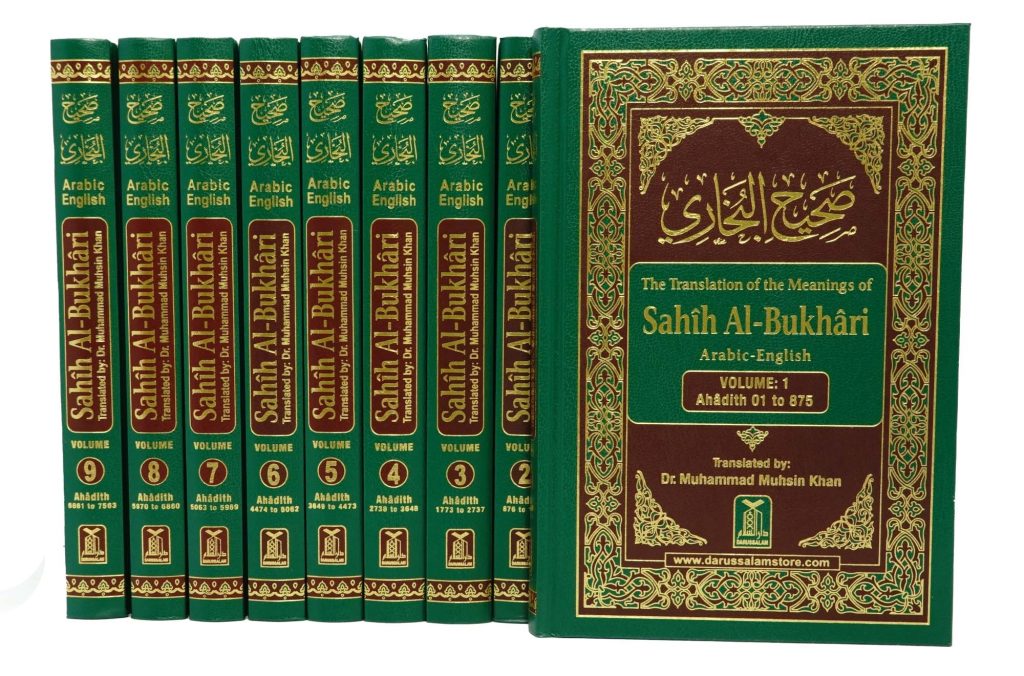
Sahih al-Bukhari is one of the most revered and authentic collections of Hadith in Islamic scholarship. Compiled by the esteemed scholar Imam Muhammad ibn Isma’il al-Bukhari (194–256 AH), this monumental work is regarded as the most authentic book after the Qur’an by the vast majority of Sunni Muslims. Imam al-Bukhari spent over sixteen years compiling this collection, meticulously sifting through hundreds of thousands of Hadiths to ensure only the most reliable and authentic narrations were included.
Table of Contents
ToggleImam al-Bukhari traveled extensively throughout the Islamic world, including regions such as Mecca, Medina, Iraq, Egypt, and Syria, in his quest to gather authentic Hadiths. His primary criterion for inclusion was that each Hadith had to have an unbroken chain of reliable narrators, all of whom were known for their precision, memory, and piety. He adopted a rigorous methodology, evaluating not only the reliability of the narrators but also the consistency of the content and the absence of any defects that could compromise the authenticity of the Hadith.
The book, widely known as Sahih al-Bukhari, was originally titled:
الْجَامِعُ الصَّحِيحُ الْمُسْنَدَ مِنْ حَديثِ رَسُولِ اللهِ صَلَّى اللهُ عَلَيهِ وَسَلَّمَ وَسُنَنِهِ وَأيَّامِهِ
(al-Jami' as-Sahih al-Musnad min hadith Rasuli-llah sala Allahu-alyhi wa salam wa sunatihi wa Ayamihi)- Ibn as-Salah, 'Ulum al-Hadith, Vol. 1, p. 26; Ibn Hajar, Fath al-Bari, Vol. 1, p. 8
Reasons Behind the Compilation of Sahih al-Bukhari
The Shafi’i scholar Ibn Hajar mentioned three key reasons that motivated Imam al-Bukhari to compile his renowned Sahih:
- Focus on Prophetic Ahadith: Prior to Bukhari, scholars often included the interpretations of the Companions and their successors (ra) in their collections. Bukhari sought to create a book containing only the authentic ahadith of the Prophet Muhammad (saw).
- Advice from His Teacher: Imam al-Bukhari was inspired by his teacher, Ishaq ibn Rahawyah, who suggested, "It would be beneficial if you compiled a concise collection of the sound ahadith of the Prophet (saw)."
- Combatting Fabrications: During a time when false ahadith were being attributed to the Prophet (saw), Bukhari had a dream in which he saw himself defending the Prophet from those who fabricated lies against him. This vision inspired him to protect the integrity of prophetic traditions. (Ibn Hajar, Hadi as-Sari, pp. 4-7).
- Ibn as-Salah, 'Ulum al-Hadith, Vol. 1, p. 26; Ibn Hajar, Fath al-Bari, Vol. 1, p. 8
The transmission of Ṣaḥīḥ al-Bukhārī
The transmission of Ṣaḥīḥ al-Bukhārī was an extensive process that ensured the book’s preservation and authenticity over generations. Imam al-Bukhārī compiled this monumental work over a period of 16 years, collecting around 600,000 hadith, from which he selected approximately 7,275 (including repetitions) for inclusion. The work gained immediate recognition among scholars for its high standard of authenticity and thoroughness in verifying the chains of narrators (isnād). Here’s an overview of the key elements of Ṣaḥīḥ al-Bukhārī‘s transmission:
1. Direct Students of Imam al-Bukhārī
- Al-Firabrī (d. 320 AH/932 CE): The most famous transmitter of Ṣaḥīḥ al-Bukhārī. His version of the text is the one most widely used today. It is said that al-Bukhārī himself read the book to al-Firabrī.
- Ibrāhīm ibn Maʿqil al-Nasafī: Another direct student of Bukhārī whose transmission was recognized.
- Ḥammād ibn Shākir: Another early transmitter whose version contributed to the propagation of the text.
- Al-Mustamli (d. 376 AH): A later transmitter who reviewed the text with al-Firabrī, ensuring the consistency of the transmission.
2. Recensions
The Ṣaḥīḥ al-Bukhārī had multiple recensions (versions) due to the slightly different styles of narration of these early transmitters. While all versions are largely the same, there were minor variations in how hadiths were organized or transmitted, such as the arrangement of chains or minor word differences. The version transmitted by al-Firabrī became the most widely accepted and disseminated recension, but other versions were valuable in textual comparison and scholarly studies.
3. Audition (Samāʿ)
One of the key methods of ensuring the text’s authenticity was the process of samāʿ, or formal audition, during which a teacher would recite the entire text of Ṣaḥīḥ al-Bukhārī to a group of students. These students would transcribe the text and later receive ijaza (authorization) from the teacher to transmit the text. This rigorous process minimized errors and maintained the integrity of the text across generations. Auditions took place in major centers of learning such as Baghdad, Damascus, Nishapur, and Cairo.
4. Subsequent Scholars
- Al-Nawawī (d. 676 AH/1277 CE): His commentary and transmission of the text contributed greatly to its understanding.
- Ibn Hajar al-ʿAsqalānī (d. 852 AH/1449 CE): His commentary Fatḥ al-Bārī is considered one of the most comprehensive and authoritative works on Ṣaḥīḥ al-Bukhārī. He also meticulously studied different transmissions to produce a more refined version of the text.
- Al-Kirmānī (d. 786 AH): His work al-Kawākib al-Darārī is a key early commentary on the Ṣaḥīḥ, examining the different manuscripts and versions of the text.
5. Manuscripts
- The Istanbul Manuscript: Held in the Suleymaniye Library, this manuscript is one of the earliest copies of Ṣaḥīḥ al-Bukhārī.
- The Al-Azhar Manuscript: Housed in Cairo, this version was influential in the teaching of hadith in the Islamic world.
- The Qarawiyyīn Manuscript: Held in Morocco, it represents the transmission of Ṣaḥīḥ al-Bukhārī to the Muslim West (Maghreb).
6. Printed Editions
Ṣaḥīḥ al-Bukhārī was first printed in the 19th century, and since then, numerous editions have been produced, often based on critical comparison of manuscripts. The modern editions by publishers such as Dār al-Maʿrifah and Dār al-Taʾṣīl are based on a comparison of early manuscripts, ensuring high accuracy.
7. Global Spread and Study
Ṣaḥīḥ al-Bukhārī became widely studied across the Muslim world. Its transmission spread across different regions, including the Middle East, Central Asia, North Africa, and the Indian subcontinent. The rigorous study of the text and its chains of transmission (isnād) have ensured that it remains one of the most reliable sources of Islamic tradition.
Through meticulous transmission, audition, and scholarly attention, Ṣaḥīḥ al-Bukhārī has maintained its position as one of the most authentic and revered works in Islamic tradition. The reliability of its transmission has been a key factor in its enduring importance in Islamic scholarship.
Suggested Article: Are all the hadith of Sahih Bukhari Authentic?
Women's Role In The Preservation of Sahih Bukhari
Imam al-Bukhari narrated several ahadith that emphasize the importance of women learning and studying hadith. He even dedicated a chapter titled “Is it allowed to specify (teaching) a day for women?” to encourage their education, illustrating this with the following narration:
Abu Sa’id al-Khudri reported:
“Some women requested the Prophet (ﷺ) to fix a day for them as the men were taking all his time. On that, he promised them one day for religious lessons and commandments.” (Sahih al-Bukhari 101).
This encouragement empowered women to take an active role in the preservation and transmission of Sahih al-Bukhari. For instance:
Fatimah Razali: Her version of Sahih al-Bukhari became renowned as one of the most accurate and authoritative copies. Her isnad (chain of narrators) was one of the highest, if not the highest, at the time. Students, including many scholars, would attend her hadith sessions. Her dedication to Sahih al-Bukhari was so profound that some mistakenly thought she had been one of Bukhari’s own teachers.
Karimah Marzuyah: Another prominent female scholar, Karimah, held a strong isnad for narrating Sahih al-Bukhari. Many jurists and scholars studied Sahih al-Bukhari under her guidance, ensuring the text’s transmission through her teachings.
These women played a critical role in the preservation and transmission of Sahih al-Bukhari, helping to maintain its accuracy and authority for future generations.