Mastodon
haqqfinder

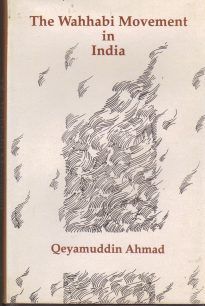
The Wahhabi Movement in India

Format: 368 pages
Language: English
Published Date: 25 Mar. 2026
ISBN: 978-8173040429
User's Rating:
Not rated yet
|
Editor's Rating:
4.19

Summary and Key Themes

Qeyamuddin Ahmad reconstructs the development of the movement commonly called the Indian Wahhabi movement, tracing its religious foundations, leadership, organisational networks, political activities, and eventual decline under British colonial pressure. Rather than limiting the story to one leader or a single military confrontation, the book follows the movement across several decades and geographical areas.

Origins and Religious Reform

The opening chapters examine Sayyid Ahmad of Rae Bareli (1786–1831) and the religious principles associated with his movement. These included an emphasis on tawhid (the oneness of God), ijtihad (independent reasoning in Islamic interpretation), and opposition to practices its proponents considered bid'ah (religious innovation). Ahmad places these principles within the wider religious and political circumstances of early nineteenth-century South Asia.

Sayyid Ahmad and the Frontier Campaign

The book follows Sayyid Ahmad’s journey to the north-western frontier, where he sought to establish a base for his movement. His death at Balakot in 1831 marked a major turning point, but it did not immediately end the movement. Ahmad examines how surviving followers maintained and later reorganised its networks.

Revival and Organisational Networks

Particular attention is given to the role of leaders associated with Patna, including Wilayat Ali and Inayat Ali, in sustaining and expanding the movement. These chapters explore the practical infrastructure behind religious and political mobilisation: correspondence, financial support, recruitment, missionary literature, and relationships between distant communities.

The Movement and the Uprising of 1857

Ahmad investigates the movement’s relationship with the upheavals of 1857–59. This subject is important because the history of the uprising cannot be reduced to a single, centrally coordinated rebellion. The book considers the movement’s activities and connections within the broader landscape of resistance to colonial authority.

British Military Campaigns and State Trials

The later chapters examine British campaigns on the north-western frontier, the prosecution of suspected leaders during the 1860s, and the state’s efforts to dismantle the movement’s organisational base. They illustrate how colonial authorities treated religious networks as potential political and security threats.

Colonial Labels and Historical Interpretation

The term “Wahhabi” requires particular care. British officials used it to identify and prosecute groups they considered dangerous, but colonial classifications did not always correspond neatly to the religious identities, doctrines, or political objectives of the people labelled. Ahmad’s study is valuable partly because it investigates the movement’s own ideas and organisational history alongside the records generated by the colonial state.

Central theme: The movement’s history emerged from the interaction of Islamic reform, political conflict, regional networks, and colonial power. Understanding any one of these dimensions in isolation risks oversimplifying the whole.

Critical Analysis

Extensive Historical Reconstruction

One of the book’s principal strengths is its chronological and organisational scope. It follows the movement beyond the life of Sayyid Ahmad and examines the networks that sustained it after Balakot. This allows readers to see the movement as an evolving historical phenomenon rather than merely a biography of its founder or a short-lived military campaign.

Attention to Primary Records

Ahmad draws on a wide range of contemporary materials, including correspondence, missionary writings, polemical literature, colonial investigations, and records associated with the state trials. This documentary approach helps reconstruct the relationships between religious leadership, supporters, and colonial officials. The appendices and bibliography also make the book useful as a starting point for further research.

Religion and Anti-Colonial Politics

The book brings religious ideas into the history of political resistance without treating them as separate subjects. It shows how theological commitments, leadership, territorial conflict, and opposition to colonial power could overlap. At the same time, readers should avoid assuming that every participant shared identical motivations or that all nineteenth-century Muslim reform movements belonged to one unified political programme.

The Problem with the Term “Wahhabi”

The title uses a historically familiar label, but that label can be misleading if applied without qualification. The Indian movement associated with Sayyid Ahmad was not simply identical to the movement founded by Muhammad ibn Abd al-Wahhab in Arabia. British colonial officials also used “Wahhabi” as a political and administrative category. Historians have since examined how this label helped construct the image of a dangerous Muslim conspiracy.

For a useful contextual comparison, see Julia Stephens’s scholarly article, “The Phantom Wahhabi: Liberalism and the Muslim Fanatic in Mid-Victorian India”. Stephens analyses the colonial construction of a perceived Wahhabi conspiracy and the legal controversies surrounding prosecutions in the late 1860s and early 1870s. Her article is contextual scholarship, not a review of Ahmad’s book.

Interpretive Limitations

The book’s detailed reconstruction is a strength, but its breadth and documentary density can make it demanding for general readers. Its framing also reflects the historiographical setting in which it was first written. Readers should distinguish the author’s interpretation of the movement from conclusions drawn from later scholarship, particularly on colonial knowledge, religious identity, and the relationship between local resistance and imperial security.

Colonial trial records and official correspondence are indispensable sources, but they were produced by institutions with particular interests. They should not automatically be treated as neutral descriptions of the people investigated. A careful reading compares such records with other evidence and asks whose perspective is preserved, whose is missing, and how political circumstances shaped the surviving account.

Overall Assessment

The Wahhabi Movement in India remains a valuable specialist study for understanding nineteenth-century Muslim reform and resistance. Its greatest contribution is the sustained attention it gives to leadership, organisation, regional connections, and colonial suppression. Its conclusions are most useful when read critically alongside newer research into the contested terminology and political assumptions of colonial historiography.


Pros
  • Broad chronological coverage: Traces the movement from its origins through its later organisational phases and decline.
  • Detailed documentary research: Draws on contemporary correspondence, colonial records, and religious polemics.
  • Beyond the founder’s biography: Examines the networks and leaders who sustained the movement after Sayyid Ahmad’s death.
  • Connects religion and politics: Explores how religious reform, military activity, and opposition to colonial rule intersected.
  • Useful research apparatus: Includes appendices, a bibliography, and an index that support further historical investigation.
  • Important for South Asian history: Offers a focused account of a movement that complicates simplified narratives of nineteenth-century resistance.
Cons
  • Dense academic prose: The extensive names, events, and documentary details may challenge readers without a background in South Asian history.
  • Specialist focus: Readers seeking a broad introduction to Islam in colonial India will need additional works to place this movement within the wider landscape.
  • Terminological complications: The word “Wahhabi” can suggest a uniform identity that does not adequately capture the movement’s complex historical context.
  • Historiographical limitations: Some interpretations should be reconsidered alongside later scholarship on colonial surveillance, legal repression, and the construction of Muslim political identities.
  • Limited accessibility for casual readers: Its emphasis on organisational history and documentary evidence may feel less engaging than a narrative history written for a general audience.

Critical Reception

The book has an identifiable history of academic review. Its first edition, published in 1966, was reviewed in established scholarly journals, including The Journal of Asian Studies and the Bulletin of the School of Oriental and African Studies. These records confirm that the work received attention within academic South Asian and Asian studies, although the accessible records do not provide enough review text to responsibly summarise the reviewers’ full judgments.

  • Hafeez Malik’s review appeared in The Journal of Asian Studies, volume 29, issue 3 (May 1970), pages 717–718.
  • M. E. Yapp’s review notice appeared in the Bulletin of the School of Oriental and African Studies, volume 31, issue 1 (February 1968), page 170.

For readers interested in how the subject has been reconsidered, Julia Stephens’s “The Phantom Wahhabi” provides later scholarly analysis of colonial perceptions of a supposed Wahhabi conspiracy. This is a contextual academic study rather than a formal review of Ahmad’s book.

Reception assessment: The existence of reviews in established academic journals and the book’s continued availability in later editions demonstrate its sustained bibliographic presence. However, without the full texts of those early reviews, it would be inappropriate to claim a specific critical consensus or assign reviewers’ opinions that cannot be verified.

Who Should Read This Book?

  • Students of South Asian history: Particularly those studying nineteenth-century India, Muslim reform movements, and resistance to colonial rule.
  • Researchers of British India: Readers investigating colonial intelligence, state trials, frontier warfare, and the administration of dissent.
  • Students of Islamic intellectual history: Those interested in tawhid, ijtihad, religious reform, and the debates surrounding Islamic practice in South Asia.
  • Readers studying the 1857 uprising: Those who want to explore the wider networks and political movements that existed around the rebellion.
  • Advanced general readers: Readers comfortable with academic history who want a detailed, evidence-oriented account rather than a brief popular introduction.

Less suitable for: Readers looking for a short, introductory overview or a devotional account of the movement. The book is a historical study, and its arguments should be evaluated through historical evidence rather than treated as a religious ruling or an uncomplicated account of heroic resistance.

HaqqFinder Editorial Rating

Evaluation Criteria Weight Score Assessment
Content Quality & Depth 20% 4.50/5 Extensive chronological coverage and detailed historical reconstruction.
Writing Style & Clarity 15% 4.00/5 Generally systematic, though the documentary detail can be demanding.
Relevance & Target Audience Fit 15% 4.50/5 Highly relevant to specialists in colonial India and Islamic history.
Originality & Creativity 15% 4.00/5 Its integrated treatment of leadership, networks, and political suppression is valuable.
Cultural & Ethical Sensitivity 10% 4.20/5 Offers substantial historical context, while its terminology warrants critical scrutiny.
Practical Value & Applicability 10% 4.10/5 Useful for academic research and understanding colonial-era religious politics.
Presentation & Design 10% 3.80/5 Reference materials are useful, but the academic format is less accessible to casual readers.
Value for Price 5% 4.00/5 Potentially worthwhile for specialist readers; actual value depends on edition, price, and access.
Weighted Overall Score 100% 4.19/5 Strong specialist historical study

Our editorial ratings are based on HaqqFinder’s established evaluation criteria and weighted scoring system. For details, see our Rating & Evaluation Methodology.

Overall Verdict:

The Wahhabi Movement in India by Qeyamuddin Ahmad is a substantial contribution to the study of nineteenth-century South Asian history. Its detailed account of religious reform, leadership networks, frontier conflict, and British colonial prosecutions helps explain why the movement cannot be reduced to a single religious label or a brief episode of rebellion.

The book is particularly valuable for readers who want to understand the organisational life of the movement after Sayyid Ahmad’s death and its place within the wider history of resistance to British rule. Its extensive historical detail is a strength for researchers, although the same density may challenge readers seeking an accessible introduction.

The work is best approached as an important historical study that benefits from comparison with later scholarship, especially research questioning how colonial authorities defined and prosecuted supposed “Wahhabi” networks. Such contextual reading helps readers distinguish the movement’s own religious and political aims from the categories imposed on it by colonial institutions.

HaqqFinder Editorial Rating: 4.19/5

Recommendation: Recommended for students, researchers, and serious readers of Islamic history, nineteenth-century India, and British colonial rule. It is a particularly useful resource for understanding the relationship between religious reform, political mobilisation, and colonial repression.

Citation: Ahmad, Qeyamuddin. The Wahhabi Movement in India. New Delhi: Manohar Publishers and Distributors, 1994. First published in 1966.

Later edition: Ahmad, Qeyamuddin. The Wahhabi Movement in India. Routledge, 2020.

Publisher’s edition and publication details

🛒 WHERE TO BUY

*When you purchase through this link, HaqqFinder may earn a small commission at no extra cost to you. Learn more

Share On:
Facebook
X
LinkedIn
Pinterest
Reddit
WhatsApp
Tumblr
Telegram
Threads

Ratings & Reviews

0
0 out of 5 stars (based on 0 reviews)
Excellent
Very good
Average
Poor
Terrible

There are no reviews yet. Be the first one to write one.

Where We Reference This Book
Explore HaqqFinder articles that cite, discuss, or mention this publication.
Related Recommendations:

Login

Fill out the form below, and we will be in touch shortly.