Mastodon
haqqfinder

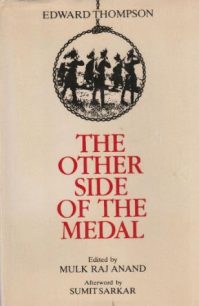
The Other Side of the Medal

Language: English
Published Date: 1 April 1989
ISBN: 978-8120708884
User's Rating:
Not rated yet
|
Editor's Rating:
4.33

Summary and Key Themes

In The Other Side of the Medal, Edward John Thompson challenges the dominant British accounts of the Indian Rebellion of 1857, then commonly called the Indian Mutiny. He argues that British historical writing had presented Indian violence in vivid detail while often minimizing or excusing the severe reprisals carried out by British troops and colonial authorities.

Thompson’s central concern is not simply to add overlooked atrocities to the historical record. He argues that the selective remembrance of violence helped sustain racial prejudice, deepen Indian resentment, and legitimize the continuation of British imperial authority. By examining how the rebellion was remembered and represented, he connects historical writing to the political realities of colonial rule.

The imbalance in colonial history

Thompson criticizes narratives that portray Indians as inherently treacherous or savage while depicting British officials and soldiers as naturally just and disciplined. He argues that this unequal moral framework shaped both popular perceptions and historical accounts, leaving little room for an honest assessment of British misconduct.

British reprisals and colonial violence

The book examines punitive executions, massacres, indiscriminate reprisals, and violence against Indian civilians and captured rebels. Thompson draws attention to episodes that received less attention in popular British accounts, including killings associated with the suppression of the rebellion and the treatment of captured Indian soldiers.

His purpose is to expose the unequal standards by which violence was judged: Indian atrocities were treated as evidence of collective barbarity, whereas British atrocities could be represented as necessary punishment or the restoration of order.

The political causes of the rebellion

Thompson challenges explanations that reduce the uprising to a military mutiny triggered solely by the controversy over rifle cartridges. He gives greater weight to the political climate created by British expansion, annexations, broken or disputed agreements, and widespread distrust of the East India Company.

This interpretation encourages readers to understand 1857 as a complex uprising with military, political, and social dimensions, rather than as an isolated outbreak of irrational violence.

The lasting psychological legacy of 1857

One of Thompson’s most important arguments is that memories of the rebellion continued to shape British attitudes toward Indians long after the fighting ended. Fear of another uprising encouraged suspicion of Indian political demands and helped normalize harsh responses to dissent.

He connects this inherited mentality to later episodes of colonial repression, most notably the 1919 Amritsar massacre at Jallianwala Bagh. His interpretation is that the memory of 1857 became a political lens through which subsequent Indian resistance was viewed.

Historical truth and moral accountability

Thompson calls for a more honest account of imperial history. He believes that reconciliation between Britain and India requires acknowledging wrongdoing rather than preserving national pride through selective remembrance. His proposed remedy is moral and historical accountability: a willingness to confront uncomfortable evidence and recognize the humanity of those subjected to colonial power.

These themes make the book relevant not only to the history of 1857 but also to wider debates about colonial archives, collective memory, historical responsibility, and the political uses of the past.

Further reading: A scholarly teaching resource summarizing the book’s principal arguments.

Critical Analysis

A significant challenge to imperial apologetics

The book’s greatest strength is its willingness to question the moral assumptions underlying established British histories of 1857. Thompson does not deny the violence committed by Indian rebels. Instead, he argues that a credible historical account must also examine British reprisals and apply consistent standards when judging violence by either side.

This is an important distinction. A history that records atrocities committed by one group while omitting those committed by another cannot provide a complete account of a conflict. Thompson’s intervention therefore concerns both historical evidence and the ethical responsibilities of historians.

Moving beyond the narrow idea of a military mutiny

Thompson also challenges interpretations that isolate the rebellion from the wider political circumstances of Company rule. By drawing attention to annexation policies, distrust of colonial authority, and the grievances of affected populations, he encourages a broader understanding of why a military uprising spread into a much larger crisis.

His approach is particularly useful for readers who want to understand the relationship between imperial expansion and resistance. It also cautions against treating the official vocabulary of a colonial government as a neutral description of events: terms such as “mutiny,” “rebellion,” and “restoration of order” can reflect the political standpoint of those using them.

The connection between historical memory and later repression

Thompson’s discussion of the continuing influence of 1857 is another major contribution. He suggests that memories of the rebellion helped foster a climate in which Indian political mobilization could be interpreted as a security threat. His treatment of Jallianwala Bagh makes the book especially relevant to the history of colonial repression in the early twentieth century.

However, the connection between the memory of 1857 and later acts of violence is an interpretation that must be evaluated alongside other political, institutional, and military explanations. Thompson’s argument is illuminating, but it should not be treated as the sole explanation for every subsequent act of colonial repression.

The limitations of a corrective history

Because Thompson is explicitly challenging an established imperial narrative, the book is not a detached survey that gives every interpretation equal space. Its emphasis falls on neglected British wrongdoing and the consequences of imperial self-justification. This corrective focus is central to its value, but readers should recognize that it shapes the selection and presentation of evidence.

The work also reflects the political debates and available historical scholarship of the 1920s. Modern research can provide additional archival evidence, reassess particular incidents, and offer more detailed accounts of the diverse groups involved in 1857. Thompson’s claims should therefore be compared with later scholarship rather than accepted uncritically simply because they challenge imperial orthodoxy.

Historical evidence and responsible interpretation

The book is most persuasive when it exposes asymmetrical moral standards and draws attention to specific episodes that complicate celebratory accounts of British rule. Its strongest contribution is not the claim that one side was wholly innocent, but the argument that the conduct of an imperial power must be subjected to the same historical scrutiny as the conduct of those resisting it.

For readers researching individual massacres or executions, the best approach is to check the cited accounts against independent archival research and later historical studies. Thompson is an important witness to early twentieth-century anti-imperial criticism, but the presence of a claim in his book does not by itself settle every factual dispute surrounding an event.

Overall assessment

The Other Side of the Medal is a forceful and historically significant critique of colonial memory. Its combination of moral argument, historical examples, and criticism of imperial historiography makes it particularly valuable for understanding how colonial societies justified violence and how those justifications shaped later political relations. Its age and argumentative purpose call for critical reading, not dismissal.


Pros
  • Challenges one-sided imperial narratives: Questions the selective treatment of Indian and British violence in accounts of 1857.
  • Highlights overlooked colonial atrocities: Directs attention to punitive reprisals and the treatment of captured rebels and civilians.
  • Explores the political context: Connects the rebellion with annexation, distrust of Company rule, and broader grievances.
  • Links history with political memory: Examines how recollections of 1857 influenced later colonial attitudes and repression.
  • Historically significant perspective: Offers an early critique of imperial historiography written while British rule in India continued.
  • Encourages source criticism: Raises useful questions about who records violence, whose suffering is remembered, and how official narratives are constructed.
  • Relevant beyond 1857: Contributes to wider discussions of colonial accountability, historical denial, and the ethics of writing history.
Cons
  • Argument-driven approach: Thompson’s corrective purpose shapes the selection and emphasis of historical examples.
  • Limited by its publication era: The book predates much of the archival research and specialist scholarship available to historians today.
  • Not a comprehensive modern history: It does not replace a full account of the rebellion’s regional, social, military, and political complexity.
  • Some interpretations require corroboration: Individual casualty figures, reported incidents, and causal connections should be checked against independent evidence.
  • Uneven balance by design: Readers seeking a survey that gives equal space to every aspect of rebel and British conduct may find the emphasis narrower than expected.
  • Older prose and references: Some language, assumptions, and historical terminology may feel dated to contemporary readers.
  • Limited practical guidance for beginners: Readers unfamiliar with the events of 1857 may benefit from a modern introductory history alongside this book.

Critical Reception

The Other Side of the Medal has lasting significance as an early challenge to the selective and self-justifying narratives through which British imperial history was often presented. Its importance lies in questioning whose suffering was recorded, how colonial violence was explained, and why British misconduct was frequently treated differently from violence committed by Indian rebels.

Recognition in later discussions of empire

In her 2020 essay “Misremembering the British Empire,” published in The New Yorker, historian Maya Jasanoff identifies Thompson’s 1925 book as a revisionist account that exposed British atrocities overlooked in earlier histories of the rebellion. She places his work within a longer tradition of criticism directed at imperial myths and the ways historical narratives can conceal colonial violence.

Value for teaching and historical study

The Literature of Colonial South Asia digital archive at Lehigh University provides a detailed teaching-oriented summary of the book. It highlights Thompson’s criticism of racial caricatures, his account of British reprisals, his interpretation of the political causes of 1857, and his argument that the memory of the rebellion shaped later colonial repression.

How to interpret its reception

These sources establish the book’s continuing relevance to discussions of imperial historiography and colonial memory. They should not, however, be mistaken for a complete survey of contemporary reviews or a numerical measure of critical consensus. This review does not assign the book a reader rating or claim that every historian accepts Thompson’s specific interpretations.

Assessment: The book is best regarded as a historically influential and morally challenging critique of British imperial narratives. Its arguments remain worth engaging with, while its individual historical claims should be assessed alongside more recent research.

Who Should Read This Book?

  • Readers studying the Indian Rebellion of 1857: Especially those interested in how the uprising was represented in British accounts and how reprisals affected the historical record.
  • Students of British colonialism: The book offers a direct example of criticism of imperial rule written during the colonial period itself.
  • Researchers in colonial historiography: Useful for examining historical omission, racialized narratives, and the political uses of memory.
  • Readers interested in Jallianwala Bagh and colonial repression: Thompson’s discussion of the legacy of 1857 provides one historical interpretation of later British responses to Indian resistance.
  • Anti-colonial and South Asian history readers: Particularly those exploring the relationship between imperial power, national memory, and demands for accountability.
  • General readers of historical nonfiction: Suitable for readers willing to engage critically with an older, argumentative work rather than expecting a contemporary introductory textbook.

Who may need a companion book?

Readers new to 1857 should consider pairing Thompson with a modern scholarly history that examines the rebellion across different regions and communities. Doing so will help distinguish the book’s important corrective intervention from the broader range of explanations developed in later scholarship.

HaqqFinder Editorial Rating

Evaluation Criteria Weight Score Assessment
Content Quality & Depth 20% 4.5/5 Substantive critique supported by historical examples and a clear central argument.
Writing Style & Clarity 15% 4.1/5 Forceful and readable, though some prose and references reflect the period in which it was written.
Relevance & Target Audience Fit 15% 4.7/5 Highly relevant to colonial history, historical memory, and imperial accountability.
Originality & Creativity 15% 4.5/5 An important early challenge to dominant British narratives of 1857.
Cultural & Ethical Sensitivity 10% 4.4/5 Draws attention to unequal moral standards and the experiences of colonized people.
Practical Value & Applicability 10% 4.0/5 Useful for historical analysis and research, but individual claims need comparison with later scholarship.
Presentation & Design 10% 3.7/5 An older historical work whose presentation may not match modern scholarly editions.
Value for Price 5% 4.5/5 Strong potential value for readers of colonial history, depending on the edition and purchase price.
Weighted Overall Score 100% 4.33/5 A significant and thought-provoking critique of imperial historiography.

Rating rationale: The book earns its strongest marks for historical relevance, originality, and its challenge to selective imperial narratives. Its lower presentation score reflects the age of the work rather than a judgment about the quality of its historical argument. The overall score is HaqqFinder’s editorial assessment, not an externally published rating.

Our editorial ratings are based on HaqqFinder’s established evaluation criteria and weighted scoring system. For details, see our Rating & Evaluation Methodology.

Overall Verdict:

The Other Side of the Medal is a historically important and morally challenging examination of British colonial rule in India. Edward John Thompson questions the selective remembrance of the Indian Rebellion of 1857, exposes the unequal standards used to judge British and Indian violence, and examines how imperial historical narratives contributed to mistrust between Britain and India.

The book’s enduring strength is its insistence that historical honesty requires confronting wrongdoing even when doing so challenges national pride. Thompson’s argument also reminds readers that colonial violence cannot be understood solely through official accounts that describe repression as the restoration of order.

Nevertheless, the book should be read critically. It reflects the historical debates of its own period, and its interpretations of particular incidents and later events should be compared with modern scholarship. Its value lies in opening questions that imperial narratives often neglected, not in providing the final word on every aspect of 1857.

HaqqFinder verdict: Highly recommended for readers interested in the Indian Rebellion of 1857, British colonial history, anti-imperial criticism, and the politics of historical memory. For the fullest understanding, pair it with a modern scholarly history of the rebellion.

Editorial Rating: 4.33/5

Citation: Thompson, Edward John. The Other Side of the Medal. London: The Hogarth Press, 1925.

🛒 WHERE TO BUY

*When you purchase through this link, HaqqFinder may earn a small commission at no extra cost to you. Learn more

Share On:
Facebook
X
LinkedIn
Pinterest
Reddit
WhatsApp
Tumblr
Telegram
Threads

Ratings & Reviews

0
0 out of 5 stars (based on 0 reviews)
Excellent
Very good
Average
Poor
Terrible

There are no reviews yet. Be the first one to write one.

Where We Reference This Book
Explore HaqqFinder articles that cite, discuss, or mention this publication.
Related Recommendations:

Login

Fill out the form below, and we will be in touch shortly.