Summary and Key Themes
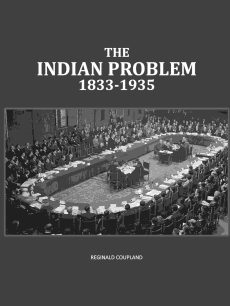
The Indian Problem examines the evolution of British India's constitutional system and the political disagreements that obstructed agreement on self-government. The complete report is organised around two broad historical periods: constitutional developments from 1833 to 1935, and Indian politics from 1936 to 1942. Together, they trace how colonial institutions, electoral arrangements, competing political organisations, and the question of minority representation shaped the constitutional debate.
The Structure of the British Raj
Coupland begins by examining the institutional foundations of British rule. He considers the distribution of authority between the British government, the central administration, provincial governments, and the colonial legislature. This framework helps explain why constitutional reform repeatedly raised questions about who would exercise power and which institutions would remain under British control.
Constitutional Reform from 1833 to 1935
The first part traces constitutional developments through the nineteenth and early twentieth centuries, including the reforms associated with the Montagu–Chelmsford period, the operation of the 1919 constitution, the Simon Commission, the Round Table Conferences, and the Government of India Act of 1935.
Coupland considers the gradual introduction of representative institutions and the limits of those reforms. A central issue is the tension between expanding Indian participation and retaining safeguards and powers for the colonial government.
Hindu–Muslim Political Relations
The report treats Hindu–Muslim political relations as a central constitutional issue. It examines separate electorates, minority safeguards, political representation, and the competing claims of Congress, the Muslim League, and other political organisations.
This is one of the book's most important subjects, but also one requiring the greatest critical care. Coupland's framing reflects the assumptions and political debates of his time. Hindu and Muslim communities were not internally uniform, and disagreements over representation were shaped by regional interests, social structures, leadership choices, and British constitutional policy—not simply by religious difference.
The Government of India Act of 1935
Coupland examines the constitutional framework introduced by the 1935 Act, including provincial autonomy and the proposed federation. The gap between constitutional design and political practice is central to his analysis: a framework could promise greater participation while leaving significant authority in the hands of the colonial state.
Provincial Self-Government, 1936–1939
The second part considers provincial politics after the 1937 elections. It covers Congress ministries and non-Congress governments in provinces such as Bengal, Punjab, Assam, Sind, and Orissa. These chapters show that Indian politics cannot be understood solely through the Congress leadership or a simple Congress-versus-Britain framework.
Provincial political alliances, financial constraints, regional priorities, and disagreements over the exercise of power all affected the prospects for a wider constitutional settlement.
The Muslim League and Political Deadlock
Coupland examines the political developments that strengthened the Muslim League's position and deepened disagreement over the future constitutional structure of India. The report considers the relationships among Congress, the League, provincial leaders, British officials, and other political actors.
Its account is useful for studying contemporary arguments over representation and safeguards, but it should not be treated as the final word on the origins of Pakistan or the causes of Partition. Those subjects require comparison with scholarship based on Indian political perspectives, regional histories, and later archival research.
The Second World War and the Cripps Mission
The report concludes its contemporary political narrative with the effects of the Second World War, the dispute over India's participation without an agreed transfer of power, the Quit India movement, and the Cripps Mission of 1942. These events intensified the constitutional crisis and exposed the limits of attempts to reconcile British imperial authority with Indian demands for self-government.
Central theme: Coupland presents India's constitutional future as a problem of reconciling competing claims to political authority, representation, and national unity. The historical value of the book lies both in its account of those disputes and in what it reveals about the assumptions through which a British constitutional scholar interpreted them.
Critical Analysis
Value as a Contemporary Historical Record
The book's greatest strength is its proximity to the events it describes. Coupland wrote while the constitutional future of British India was still being debated. His account preserves contemporary arguments, political proposals, and assessments of the Congress, Muslim League, provincial governments, and British administration.
This proximity makes the report valuable as a primary-era source. It should not, however, be confused with a neutral or comprehensive history written after independence. Coupland's interpretations were shaped by his position as a British scholar working within the intellectual and political environment of the late empire.
Constitutional Detail and Institutional Analysis
The detailed treatment of constitutional legislation and political institutions is a major strength. Readers can follow the relationship between formal reforms and the practical distribution of power, from early legislative changes to the Government of India Act of 1935 and the provincial ministries of the late 1930s.
For students of constitutional history, this makes the book a useful guide to the institutional background of the independence struggle. Its focus is less on everyday social experience than on political organisations, constitutional arrangements, and negotiations over governance.
The British Liberal and Imperial Perspective
Coupland's perspective is both the book's defining feature and a significant limitation. He analyses the constitutional problem partly through the language of responsible government, political safeguards, negotiation, and institutional compromise. This makes the report valuable for understanding British reformist thinking, but it can also place the debate within a framework in which British authorities appear as key arbiters of India's political future.
Readers should therefore ask how the report treats the legitimacy of colonial rule itself, the unequal power between British officials and Indian political actors, and the possibility that constitutional reform could preserve imperial control even while expanding representation. These questions help distinguish Coupland's analysis from the perspectives of anti-colonial nationalists.
Hindu–Muslim Relations and the Problem of Representation
The book's discussion of Hindu–Muslim political relations is important for studying the constitutional debates that preceded Partition. Separate electorates, minority safeguards, the political claims of the Muslim League, and the Congress's claim to represent Indian nationalism all posed difficult questions about the design of a representative state.
However, Coupland's framing must be read critically. Describing the issue chiefly as Hindu–Muslim antagonism risks making religious division appear more fixed or comprehensive than the evidence warrants. Political identities changed over time, communities contained competing interests, and constitutional arrangements themselves influenced how representation was organised.
For this reason, the report is best used as evidence of how one contemporary British scholar understood the problem—not as a sufficient explanation of Muslim political aspirations, Congress–League relations, or the eventual partition of British India.
Regional Politics Beyond the National Leadership
The attention given to provincial governments is a notable strength. The political landscape of Bengal, Punjab, Assam, Sind, and other provinces did not simply reproduce the national contest between Congress and the British government. Regional coalitions, local priorities, and political leaders followed different strategies.
At the same time, the report's constitutional emphasis limits the depth of its treatment of social movements, economic inequality, caste, labour, and peasant politics. Readers interested in the wider social foundations of nationalism should pair it with histories that focus more directly on these subjects.
What the Book Cannot Explain on Its Own
Because the report's contemporary narrative reaches 1942, it does not provide a complete account of the negotiations, violence, and decisions that led to independence and Partition in 1947. Its discussions of the Cripps Mission and political deadlock are valuable for understanding the situation at that moment, but later developments must be studied separately.
Its focus on constitutional negotiation also means that political mobilisation outside formal institutions can receive less attention than in social histories of the independence movement. The book should therefore be read alongside Indian nationalist writings, Muslim League perspectives, provincial studies, and later historical scholarship.
Overall Assessment
The Indian Problem is most valuable as a detailed contemporary study of constitutional politics under late British rule. Its institutional knowledge and coverage of political negotiations make it a useful reference, while its imperial standpoint and treatment of communal representation require sustained critical engagement. The book's lasting importance lies not in offering a final solution to the constitutional question, but in documenting how that question was framed and contested before independence.