Summary & Key Themes
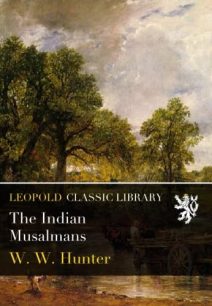
The Indian Musalmans: Are They Bound in Conscience to Rebel Against the Queen? is a nineteenth-century study by William Wilson Hunter, a British civil servant, historian, and statistician. First published in London in 1871, the book addresses British concerns about Muslim loyalty to colonial rule, particularly in the aftermath of the Indian Rebellion of 1857 and amid investigations into religiously framed resistance in northern India and Bengal.
Hunter organizes much of his discussion around what British officials called the “Wahhabi” movement. He examines its religious ideas as understood by colonial authorities, the networks associated with resistance, and the political and legal controversies surrounding Muslim activists. The book's terminology reflects the classifications of its time and should not automatically be treated as a precise description of every group or individual discussed.
The final chapter turns to the position of Muslims under British rule. Hunter discusses grievances relating to social and political change, education, and access to government employment. He argues that a better understanding of Muslim circumstances and reforms to the education system could help reduce alienation and improve relations between the colonial government and its Muslim subjects.
Key Themes
- Muslim political loyalty: The central question of whether Islamic religious obligations required Muslims in India to oppose British rule.
- The so-called Wahhabi movement: Colonial investigations into religious networks, reformist ideas, and alleged connections with resistance.
- Religious authority and political action: The relationship between Islamic legal opinions, religious scholars, and the legitimacy of rebellion against a non-Muslim government.
- Colonial security and surveillance: The ways British authorities interpreted Muslim activism as a potential threat to imperial stability.
- Muslim social and economic grievances: Hunter's account of changes affecting sections of the Muslim population, particularly in Bengal.
- Education and government employment: His argument that educational policy and employment opportunities were relevant to the relationship between Muslims and the colonial state.
- Knowledge and imperial governance: The use of historical, religious, and administrative information to understand and manage a colonized population.
The work is important not because every conclusion it reaches is reliable, but because it brings together contemporary debates about religion, resistance, education, and colonial authority. Its arguments need to be examined alongside other historical evidence and scholarship on the diverse Muslim communities of nineteenth-century India.
Edition reference: The Indian Musalmans, 1871 edition, Google Books; Open Library edition record.
Critical Analysis
A Window into Colonial Anxiety
The book's central question—whether Muslims were religiously obliged to rebel against the British Crown—reveals the concerns of a colonial government attempting to assess the loyalties of its subjects. Hunter was not merely describing religious ideas; he was addressing a practical question of imperial governance: whether Muslim beliefs and institutions posed a continuing political danger.
This makes the book a useful source for studying the British response to dissent after 1857. It documents how officials sought to interpret religious teachings, networks of scholars, and political activity in order to distinguish between perceived threats and the possibility of accommodation. However, the framing of the issue around collective Muslim loyalty risks treating a diverse population as a single political body.
The Problem with the “Wahhabi” Label
Hunter's discussion uses the term “Wahhabi” as it appeared in contemporary British official discourse. In colonial India, that label was sometimes applied broadly to Muslim reformist currents and networks suspected of opposing British rule. It should not be assumed that everyone so described belonged to one unified organization, shared identical doctrines, or participated in a common political project.
Modern historians have examined the complicated relationship between religious reform, regional networks, colonial prosecution, and anti-colonial activity. M. Mohar Ali's scholarly article, “Hunter's Indian Musalmans: A Re-examination of Its Background”, revisits the circumstances in which Hunter wrote the book and discusses the political significance later attached to it.
A critical reader should therefore distinguish among documented events, the claims made by colonial officials, the religious positions of particular scholars, and the broader labels imposed on communities. These are related questions, but they are not interchangeable.
Muslim Grievances under British Rule
One of the book's most influential aspects is its discussion of Muslim social and economic circumstances. Hunter argued that sections of the Muslim population, especially in Bengal, had suffered from changes in political power, education, and access to public employment. He used these grievances to argue that colonial policy should be adjusted to address Muslim alienation.
This analysis is historically significant, but its geographic scope must be kept in view. Hunter's observations about Muslims in Bengal cannot automatically be generalized to every Muslim community across British India. Their experiences varied according to region, occupation, social class, local political history, and relationship with the colonial administration.
Peter Hardy's The Muslims of British India provides a broader historical perspective on the changing circumstances of Indian Muslims under British rule. Hardy emphasizes that the effects of colonial rule differed among regions and social groups, complicating any claim that all Indian Muslims experienced the same trajectory.
Education, Employment, and Colonial Policy
Hunter's recommendations about education and government employment are central to the book's political significance. He maintained that improving the position of Muslims within the colonial education system could reduce estrangement from British institutions. The argument reflects a reform-oriented approach: the government could seek stability not only through surveillance and prosecution but also through administrative and educational changes.
Yet this proposed accommodation remained framed around the needs of the colonial state. Hunter's interest in improving Muslim access to education and employment was connected to his concern about loyalty and imperial security. The book therefore combines recognition of real grievances with an instrumental view of social reform.
It is important to distinguish Hunter's diagnosis from the actual causes of educational and economic change. His observations provide evidence of contemporary debate, but they are not a substitute for examining regional records, employment patterns, educational institutions, and the experiences of Muslim families themselves.
Historical Evidence and Its Limitations
Hunter drew on official information and documents to construct his account. Such material can be valuable for reconstructing the concerns and activities of the colonial administration. However, government records were created within systems of surveillance, prosecution, and political control. Reports about alleged conspiracies or religious disloyalty must therefore be assessed in light of who produced them, what evidence they relied on, and what institutional interests shaped their interpretation.
The book's value is consequently twofold: it contains historical claims that can be investigated, and it reveals the assumptions through which a British official interpreted Indian Muslim politics. Treating it as a transparent account of Muslim beliefs or collective intentions would overlook this second dimension.
Style and Accessibility
Hunter writes in a structured, explanatory style aimed at readers concerned with public affairs and imperial governance. The book's direct central question gives it a clear organizing purpose, and its discussions of religion, law, education, and administration make it relevant to several fields of historical study.
Nevertheless, the work is shaped by nineteenth-century terminology and colonial categories that modern readers may find misleading without context. It is more useful as a source for historical inquiry than as an introductory guide to Islamic theology or the full range of Muslim political thought in India.
Overall Assessment
The Indian Musalmans remains important for studying colonial perceptions of Muslim political loyalty and the relationship between religious identity and imperial governance. Its discussion of grievances and education offers insight into contemporary policy debates, while its treatment of alleged religious resistance requires careful scrutiny. The book is most rewarding when read critically alongside modern scholarship and evidence from Muslim intellectual, regional, and political histories.