Summary & Key Themes
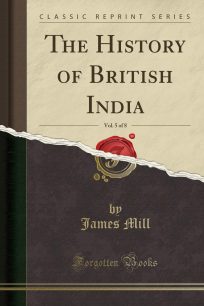
The History of British India, Volume 5 by James Mill continues his account of the East India Company's transformation into a major political and territorial power. In the six-volume third edition published in 1826, the volume examines controversies surrounding British administration, the impeachment proceedings against Warren Hastings, territorial and diplomatic developments, and the military and administrative policies associated with Lord Cornwallis.
Mill organizes his narrative around official decisions, parliamentary proceedings, administrative arrangements, and military campaigns. His purpose is not merely to recount events but to evaluate the institutions and conduct of government through a philosophical and utilitarian framework. The result is a detailed account of colonial policy that also reveals the assumptions and priorities of an influential British intellectual.
1. The Impeachment of Warren Hastings
The proceedings against Warren Hastings form a major part of the volume. Mill examines the accusations, parliamentary debates, evidence, and political arguments surrounding the former governor-general's conduct. The case raised difficult questions about corruption, the exercise of colonial authority, and the extent to which officials serving overseas could be held accountable by British institutions.
The episode also reveals the limits of parliamentary oversight. British politicians could condemn misconduct and demand reform, yet the structures of empire made it difficult to reconcile commercial interests, political power, and responsibility toward the people living under Company rule.
2. Company Power and Territorial Expansion
The volume discusses the Company's negotiations and territorial arrangements with Indian rulers, including the acquisition of the Guntur Circar from the Nizam of Hyderabad. These developments illustrate how the Company expanded its influence through a combination of diplomacy, political pressure, financial agreements, and military power.
Mill's account is especially useful for studying the relationship between the Company's commercial origins and its growing territorial ambitions. However, the narrative often gives greater attention to British calculations than to the political priorities and perspectives of the Indian rulers involved.
3. Lord Cornwallis and Military Campaigns
Lord Cornwallis's administration and military campaigns occupy a substantial place in the volume. His involvement in the Anglo-Mysore conflict under Tipu Sultan illustrates how the Company relied on military alliances and coordinated campaigns to pursue its regional objectives.
These campaigns should be understood within the broader political environment of southern India, where Mysore, Hyderabad, the Maratha powers, and the Company pursued competing interests. Mill supplies a British account of these events, but modern readers should consult other historical perspectives to understand the objectives and agency of the Indian states involved.
4. Financial and Judicial Reforms
Mill examines Cornwallis's attempts to reorganize the financial and judicial administration of British-controlled territories. His account considers changes to revenue collection, the structure of courts, and the responsibilities of colonial officials. The reforms sought to make administration more systematic and to define the relationship between revenue, law, and executive authority.
Yet institutional reform should not automatically be equated with justice or improved conditions for everyone. The effects of colonial policies depended on their implementation, the distribution of power, and the interests of the people subject to them. Readers should distinguish the stated aims of reform from its consequences for Indian society.
5. Colonial Accountability and the Ethics of Empire
Across the volume, Mill returns to the conduct of Company officials and the question of whether institutions can restrain abuses of power. His criticisms of administrative misconduct demonstrate that he did not simply celebrate every aspect of British expansion. He could expose failures within the colonial system while still judging Indian institutions through assumptions rooted in British political thought.
This tension is central to reading the book today. Mill's criticisms of the Company can be valuable, but they do not make his account culturally neutral or ensure that Indian experiences receive equal attention.
Key Takeaway
Volume 5 is a substantial historical account of the political controversies, military campaigns, and administrative reforms associated with the expansion of British power. It is particularly valuable for studying colonial governance and British debates about accountability. Its limitations include dense prose, an elite-centered narrative, and judgments about India that require critical scrutiny.
Edition note: This review concerns the six-volume third edition of 1826. Volume numbering and chapter divisions vary across editions; readers using the original 1817 edition or later editions edited by H. H. Wilson should check their table of contents before comparing passages.
Sources: Google Books, Volume 5, 1826 edition; Online Library of Liberty, Volume 5.
Critical Analysis
Strength in Political and Institutional Detail
One of the volume's greatest strengths is its attention to the institutions through which the East India Company exercised power. The impeachment of Warren Hastings, disputes over official conduct, territorial negotiations, and Cornwallis's reforms show that colonial government was shaped by political conflict as well as military strength.
Mill's discussion of parliamentary proceedings is particularly useful for readers interested in the relationship between imperial authority and accountability. It demonstrates how British politicians debated the conduct of colonial officials and struggled to define the limits of their power. These debates also expose a central contradiction: the British government increasingly scrutinized imperial administration while continuing to exercise authority over people who had little direct influence over decisions affecting them.
The Relationship Between Reform and Power
The sections on Cornwallis illustrate Mill's preference for institutional explanations. He examines financial and judicial arrangements as efforts to establish a more systematic form of government. This makes the volume useful for understanding the administrative thinking behind British rule.
However, a reform's stated purpose does not establish its practical success. Judicial reorganization and revenue policies could strengthen colonial control even when presented as improvements in efficiency or order. A balanced assessment requires evidence about implementation and effects on local communities, not only the intentions of the officials who designed the policies.
Colonial Bias and the Limits of Mill's Perspective
James Mill wrote without having visited India or learned its languages. The Library of Congress's historical record notes both the influence of his work and its harsh judgments of Indian civilization. His approach was shaped by utilitarian philosophy and the conviction that institutions could be evaluated through rational principles of government and reform.
This framework can clarify the reasoning behind administrative decisions, but it also encourages Mill to judge Indian societies through British intellectual categories. His account should therefore be read on two levels: as a narrative of historical events and as evidence of how a British historian interpreted India and justified particular standards of government.
Indian Political Agency and Missing Perspectives
Indian rulers and political institutions feature prominently when they interact with the Company, particularly in discussions of territorial arrangements and military campaigns. Nevertheless, the narrative tends to privilege British officials, parliamentary debates, and colonial policy. The political objectives of Indian states and the experiences of ordinary people are not always explored with comparable depth.
Readers should supplement Mill with modern scholarship on Mysore under Tipu Sultan, the Nizam of Hyderabad, eighteenth-century southern India, and the social consequences of colonial revenue and judicial policies. Such comparison can reveal where Mill's account is informative and where its perspective is incomplete.
Writing Style and Accessibility
Mill writes in a formal, argumentative style typical of early nineteenth-century historical scholarship. His detailed accounts of parliamentary proceedings, official disputes, and administrative measures reward careful reading but can feel repetitive or difficult to follow. Readers without background knowledge of British Indian politics may find it helpful to consult a modern historical overview first.
Overall Assessment
The History of British India, Volume 5 is most valuable as a source for the history of colonial governance and the intellectual debates surrounding imperial power. Its detailed treatment of Hastings's impeachment and Cornwallis's administration provides useful material for research, but its cultural assumptions and limited attention to Indian perspectives prevent it from serving as a balanced standalone history.
Further reading: Online Library of Liberty, Volume 5; Library of Congress, The History of British India; Javed Majeed, Ungoverned Imaginings; Jane Rendall, “Scottish Orientalism: From Robertson to James Mill”.