Discover the brutal history of British colonial atrocities against Indian Muslims, from the 1857 rebellion to the Mopla uprising and beyond.
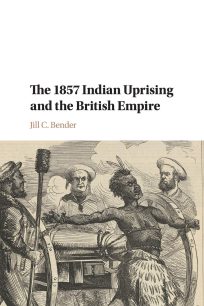
The 1857 Indian Uprising and the British Empire by Jill C. Bender re-examines the Indian uprising of 1857 by looking beyond the events in India to explore how the rebellion influenced the wider British Empire. Rather than treating the uprising only as a military revolt against the East India Company, Bender investigates how news of the conflict travelled across colonial networks and influenced British administrators, settlers, and political debates in other parts of the empire.
Drawing on colonial correspondence, official papers, private letters, and contemporary newspapers, Bender traces the uprising's repercussions in Ireland, New Zealand, Jamaica, and southern Africa. These comparisons reveal how colonial authorities interpreted resistance in one territory through their experiences and anxieties about governing other territories. The book examines debates over imperial responsibility, military recruitment, counter-insurgency, and the use of coercive force to maintain colonial authority.
A central argument is that British imperial power was neither automatic nor inevitable. It had to be actively maintained through information networks, administrative decisions, military policies, and ideas about race and colonial rule. Bender also argues that the violence of 1857 influenced later colonial responses to resistance, helping officials justify harsher methods of repression.
The result is a focused contribution to the global and imperial history of the uprising. Readers looking for a comprehensive account of every Indian leader, battlefield, or regional dimension of the rebellion should understand that Bender's primary concern is its wider imperial consequences.
Bender places 1857 within a network of colonial territories rather than treating it as an isolated Indian crisis. The book shows how developments in India influenced political calculations and administrative practices elsewhere in the empire.
News, letters, reports, and newspapers helped shape how colonial officials understood the uprising. The circulation of information also spread fear that resistance might emerge in other British-controlled territories.
The book examines the racial assumptions through which British officials interpreted rebellion and considered the appropriate use of force. It explores how colonial perceptions of danger influenced governance and repression.
Bender investigates debates about the recruitment and deployment of soldiers, including the development of ideas about so-called “martial races.” These debates reveal how the British sought to reorganize imperial military power after 1857.
The uprising became a reference point for British responses to later resistance, including conflicts in Jamaica, Ireland, and New Zealand. Bender explores how the memory of 1857 helped colonial officials rationalize coercive policies.
By following the movement of ideas and policies across different colonies, Bender challenges the assumption that imperial governance was directed exclusively from London. The book emphasizes the role of colonial officials and interconnected local experiences in shaping British power.
In a review published in The American Historical Review in 2017, historian Elizabeth Kolsky describes Bender’s study as a compelling work that broadens understanding of the British imperial system. The review highlights the book’s use of the global context of empire and its argument that the uprising had consequences beyond India. Kolsky also draws attention to Bender’s use of colonial correspondence, archival collections, and the press to trace the circulation of information across the empire.
Read the review record in The American Historical Review.
Shawn M. Reagin reviewed the book in The Journal of Imperial and Commonwealth History, volume 47, issue 1, in 2019. This specialist journal review provides another academic assessment of Bender’s contribution to the study of British imperial history.
Cambridge University Press lists endorsements from historians Kim A. Wagner and Clare Anderson. They emphasize the book’s research into the uprising’s effects across the empire and its contribution to global and new imperial history. These are publisher-provided endorsements, not independent journal reviews, and should be understood accordingly.
View the publisher’s book page and endorsements.
The available academic coverage supports the book’s significance as a study of the wider imperial consequences of 1857. Its main strength is its comparative framework, while its concentration on colonial officials, correspondence, and elite perspectives means it should not be treated as a comprehensive account of the experiences of ordinary Indian participants. Readers seeking those perspectives will need to supplement it with other historical studies.
Our editorial assessment focuses on the book’s historical argument, research value, clarity, intended audience, and scholarly contribution. The score reflects its focused imperial perspective rather than treating it as a comprehensive history of the uprising inside India.
| Evaluation Criteria | Weight | Score | Assessment |
|---|---|---|---|
| Content Quality & Depth | 20% | 4.5/5 | A well-defined, research-oriented argument connecting the uprising to wider imperial developments. |
| Writing Style & Clarity | 15% | 4.2/5 | A structured scholarly argument; specialist terminology and historiographical discussion may challenge general readers. |
| Relevance & Target Audience Fit | 15% | 4.5/5 | Highly relevant to readers of South Asian history, British imperial history, and colonial studies. |
| Originality & Creativity | 15% | 4.6/5 | Its cross-colonial approach provides a distinctive way to understand the significance of 1857. |
| Cultural & Ethical Sensitivity | 10% | 4.3/5 | Critically examines colonial race, violence, and power, although its emphasis on elite sources limits some perspectives. |
| Practical Value & Applicability | 10% | 3.7/5 | Useful for academic research and historical understanding, but less suited to readers seeking a basic narrative overview. |
| Presentation & Design | 10% | 4.0/5 | A conventional scholarly monograph with a clear chapter structure; the physical layout of a specific edition has not been fully inspected. |
| Value for Price | 5% | 3.5/5 | Potentially valuable for specialist readers, but the score is provisional because a specific edition and current price have not been assessed. |
| Weighted Overall Score | 4.27/5 — Rounded: 4.3/5 | ||
Rating status: Provisional editorial assessment. The evaluation is based on the publisher’s description, chapter structure, introduction, and available independent scholarly reviews; it is not a complete audit of every page or a physical inspection of a particular edition.
Our editorial ratings are based on HaqqFinder’s established evaluation criteria and weighted scoring system. For details, see our Rating & Evaluation Methodology.
The 1857 Indian Uprising and the British Empire is a valuable scholarly study for readers who want to understand how the uprising reshaped British imperial thinking beyond the Indian subcontinent. Jill C. Bender’s central achievement is to connect the events of 1857 with colonial debates and policies in Ireland, New Zealand, Jamaica, and southern Africa, showing how information, racial assumptions, military planning, and experiences of resistance influenced imperial governance.
The book’s greatest strength is its comparative approach. Rather than treating the uprising as an isolated crisis, Bender demonstrates how colonial authorities interpreted it as a warning about the vulnerability of imperial power. This makes the work particularly useful for students and researchers studying colonialism, imperial administration, and the history of counter-insurgency.
Its narrower focus is also its main limitation. Readers looking for a comprehensive account of the rebellion’s causes, Indian leaders, regional movements, or the experiences of ordinary participants will need additional sources. The emphasis on colonial and elite documentation provides insight into imperial decision-making but does not make this a history told primarily from the perspective of the rebels themselves.
Final Verdict: A strong, focused work of imperial history that expands understanding of the consequences of the 1857 uprising. It is particularly recommended for university students, historians, and serious readers of British colonial history. General readers may benefit from first reading a broader introduction to the uprising.
HaqqFinder Editorial Rating: 4.3/5 (Provisional)
*When you purchase through this link, HaqqFinder may earn a small commission at no extra cost to you. Learn more
There are no reviews yet. Be the first one to write one.

Discover the brutal history of British colonial atrocities against Indian Muslims, from the 1857 rebellion to the Mopla uprising and beyond.