Mastodon
haqqfinder

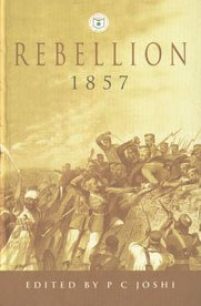
Rebellion 1857: A Symposium

Format: 358 pages
Language: English
Published Date: January 1, 2017
(First Published In 1957)
ISBN: 978-8123749358
User's Rating:
Not rated yet
|
Editor's Rating:
3.9

Rebellion, 1857: A Symposium, edited by P. C. Joshi, is a collection of historical and literary essays examining the Indian uprising of 1857 and its significance in the history of British colonial rule. First published in 1957, the volume brings together contributions from multiple scholars to explore the causes, character, historical impact, and wider cultural significance of the rebellion. Rather than presenting a single continuous narrative, it offers readers several perspectives on one of the most consequential events in modern Indian history.

The book examines the rebellion's political and social dimensions, including the participation of different groups and the place of religious revivalist movements in the resistance to British rule. Contributions address the role of Muslim revivalists, the Bengali intelligentsia, and the broader historical interpretation of the uprising. These essays encourage readers to consider the rebellion in relation to colonial authority, popular resistance, political loyalties, and the changing character of Indian society.

A substantial part of the volume explores the rebellion's influence on literature and cultural memory. Essays examine representations of 1857 in Hindi and Urdu literature, the writings associated with Mirza Ghalib, Bengali literary developments, and folk songs about the uprising. This literary focus demonstrates that the rebellion's significance extended beyond military confrontations and political events into the ways people remembered, represented, and interpreted colonial violence and resistance.

The collection also broadens its perspective beyond India by examining British opinion, contemporary French press coverage, reactions in Italy and Russia, and connections between China and India in the mid-nineteenth century. These international perspectives help situate the uprising within a wider world of imperial competition, political debate, and responses to colonial power.

As a collection of essays published during the early development of modern Indian historiography on 1857, the book offers valuable insight into how historians and intellectuals approached the rebellion during the mid-twentieth century. Its multidisciplinary coverage is particularly useful for readers interested in colonial history, resistance movements, South Asian literature, and historical memory. However, readers should evaluate its interpretations alongside later scholarship, since historical research and debates about the rebellion have continued to develop since the volume's original publication.

Key themes

  • Causes and character of the rebellion: Different interpretations of the political, social, and historical factors behind the uprising of 1857.
  • Muslim revivalist movements: The relationship between religious reform, political resistance, and the revolt against British rule.
  • Indian intellectual responses: The role of the Bengali intelligentsia and other intellectual circles in interpreting the rebellion.
  • Hindi and Urdu literature: How literary works reflected the rebellion, its consequences, and changing political consciousness.
  • Ghalib and historical memory: The significance of Mirza Ghalib's writings in understanding the upheaval and its impact on Delhi.
  • Folk songs and popular memory: How oral and popular traditions preserved interpretations of the rebellion beyond formal historical writing.
  • International perspectives: British, French, Italian, Russian, and Chinese responses to the uprising and its wider significance.
  • Colonialism and resistance: How the rebellion challenged British authority and became a subject of competing historical interpretations.
Pros
  • Multidisciplinary approach: Examines the rebellion through history, politics, literature, cultural memory, and international perspectives.
  • Multiple scholarly viewpoints: Brings together contributions from different writers rather than relying on one author’s interpretation.
  • Explores Muslim participation: Includes discussion of Muslim revivalist movements and their relationship with the rebellion.
  • Strong literary coverage: Examines the impact of 1857 on Hindi, Urdu, and Bengali literature, including writing associated with Mirza Ghalib.
  • Attention to popular memory: The inclusion of folk songs helps illuminate how the uprising was remembered beyond official records and elite narratives.
  • International scope: Considers foreign press coverage and responses to the rebellion outside India.
  • Historical significance: Offers insight into an important mid-twentieth-century effort to reassess the uprising beyond older colonial interpretations.
  • Useful for academic research: Provides a range of essays and historical references for students and researchers studying colonial India and the historiography of 1857.
  • Useful comparison of perspectives: Readers can compare how different contributors interpret the rebellion’s causes, participants, and cultural consequences.
Cons
  • Historical interpretations may be dated: First published in 1957, the volume predates several later developments in the historiography of 1857. Its arguments should be compared with more recent research.
  • Uneven coverage across essays: As a symposium, the depth, style, and analytical approach may vary between contributors.
  • No single continuous narrative: Readers seeking a chronological account of the rebellion may find the collection less straightforward than a dedicated historical monograph.
  • Potentially specialized reading: Some essays may require prior knowledge of colonial Indian history, nineteenth-century literature, and historical debates.
  • Limited contemporary historiography: The original edition cannot reflect subsequent research into gender, regional variations, subaltern participation, and other dimensions of the uprising.
  • Literary sections may not suit every reader: Readers interested primarily in military operations or political chronology may find the discussions of literature, folk songs, and foreign opinion less directly relevant.
  • Historical context is essential: The contributors’ interpretations should be read in light of the political and intellectual context in which the collection was compiled.
  • Edition differences matter: Page count, introductory material, and presentation may differ between the 1957 original and later editions, so readers should check which edition they are using.

Critical Reception

Rebellion, 1857: A Symposium, edited by P. C. Joshi, occupies a place in the historiography of the Indian Rebellion of 1857. Published in 1957 to mark the rebellion’s centenary, the collection explores interpretations of the uprising through political, social, religious, and literary perspectives. Its contents include discussions of Muslim revivalists, the Bengali intelligentsia, and the representation of the rebellion in literature and historical memory.

The collection is relevant to broader scholarly debates about the nature of the uprising, including its nationalist, agrarian, regional, and social dimensions. Later historiographical studies have examined how interpretations of 1857 developed over time and how historians have reassessed the motivations and participation of different groups. For wider context, see Biswamoy Pati’s scholarship on historians and the historiography of 1857 and Kim A. Wagner’s study of the changing historiography of the Indian uprising.

Critical Perspective

The collection is best approached as a historically situated set of essays rather than a definitive, up-to-date account of the rebellion. Readers should consider its arguments alongside subsequent scholarship, particularly research into regional differences, peasant participation, religious movements, and the varied motivations of those involved in the uprising.

Assessment of Available Reception

The available sources establish the collection’s bibliographic significance and relevance to historical debates, but a substantial body of dedicated, independent reviews of the volume as a whole could not be verified. This assessment therefore reflects its place in historiography rather than claiming a broad critical consensus.

HaqqFinder Editorial Rating

HAQQFINDER EDITORIAL SCORE
3.9/5
Provisional editorial assessment
78/100
Equivalent score

This provisional rating evaluates the book’s documented subject matter, multidisciplinary scope, historical significance, and intended audience. It is an independent editorial assessment, not an average of customer ratings. The complete text and a specific edition have not been independently audited in full.

Evaluation Criterion Score Weight
Content Quality & Depth 4.3/5 20%
Writing Style & Clarity 3.5/5 15%
Relevance & Target Audience Fit 4.3/5 15%
Originality & Creativity 4.2/5 15%
Cultural & Ethical Sensitivity 3.8/5 10%
Practical Value & Applicability 3.5/5 10%
Presentation & Design 3.3/5 10%
Value for Price 3.8/5 5%

Weighted calculation: 3.91/5, rounded to 3.9/5. Presentation and price scores are provisional because the specific edition, condition, format, and current price have not been assessed.

Rating Rationale

  • Content Quality & Depth — 4.3/5: Covers political, religious, literary, and international dimensions of the rebellion.
  • Writing Style & Clarity — 3.5/5: The symposium format offers varied perspectives, but the essays may differ in style and accessibility.
  • Relevance & Target Audience Fit — 4.3/5: Particularly useful for readers of colonial Indian history, literature, and historiography.
  • Originality & Creativity — 4.2/5: Its multidisciplinary approach was valuable for examining the rebellion from several angles.
  • Cultural & Ethical Sensitivity — 3.8/5: The collection covers diverse groups and perspectives, but its representation of communities requires closer full-text evaluation.
  • Practical Value & Applicability — 3.5/5: Useful for research and historical understanding rather than practical application.
  • Presentation & Design — 3.3/5: Provisional assessment pending examination of the specific edition’s layout and references.
  • Value for Price — 3.8/5: Provisional assessment pending verification of the edition and its current price.

Overall Verdict:

Rebellion, 1857: A Symposium, edited by P. C. Joshi, is a historically significant collection that examines the Indian uprising of 1857 through a broad range of historical, political, literary, and international perspectives. Its essays move beyond a purely military account to explore religious revivalist movements, intellectual responses, literary representations, folk traditions, and foreign reactions to the rebellion.

The collection’s greatest strength is its multidisciplinary approach. By bringing together discussions of Muslim revivalists, the Bengali intelligentsia, Hindi and Urdu literature, folk songs, and international press coverage, it demonstrates how the rebellion influenced political thought and cultural memory as well as the course of colonial history.

However, the volume was first published in 1957, and its interpretations should be evaluated alongside subsequent historical research. Its essay-based structure may also be less suitable for readers who prefer a single, chronological narrative. These limitations make it important to distinguish the book’s value as a historical collection from its usefulness as a comprehensive account of current scholarship.

Final Verdict: Rebellion, 1857: A Symposium is a worthwhile resource for students, researchers, and serious readers interested in the Indian uprising, colonial resistance, South Asian literature, and the development of modern Indian historiography. Its broad range of perspectives makes it valuable, especially when supplemented with more recent scholarship. HaqqFinder’s provisional editorial rating is 3.9/5.

🛒 WHERE TO BUY

*When you purchase through this link, HaqqFinder may earn a small commission at no extra cost to you. Learn more

Share On:
Facebook
X
LinkedIn
Pinterest
Reddit
WhatsApp
Tumblr
Telegram
Threads

Ratings & Reviews

0
0 out of 5 stars (based on 0 reviews)
Excellent
Very good
Average
Poor
Terrible

There are no reviews yet. Be the first one to write one.

Where We Reference This Book
Explore HaqqFinder articles that cite, discuss, or mention this publication.
Related Recommendations:

Login

Fill out the form below, and we will be in touch shortly.