Summary & Key Themes
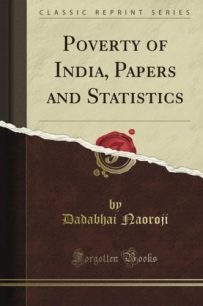
Poverty of India: Papers and Statistics is an important early critique of the economic consequences of British rule in India. Through statistical tables, administrative reports, economic estimates, and arguments addressed to British audiences, Dadabhai Naoroji examines why widespread poverty persisted despite the resources and productive capacity of the Indian subcontinent.
The central argument is that India's poverty could not be understood simply as the result of local inefficiency or insufficient production. Naoroji investigated how colonial taxation, the transfer of wealth to Britain, the structure of government expenditure, restricted access to higher administrative employment, and the terms of trade affected India's economic condition. His analysis helped establish the economic critique of colonialism that became influential in Indian nationalist thought.
The 1888 edition brings together papers and statistical material, including discussions of agricultural production, prices, wages, taxation, exports, the transfer of wealth, public administration, and criticism of Naoroji's earlier arguments. It should be read both as an economic investigation of colonial India and as a historical document from the development of Indian economic nationalism. Consult the digitized edition on Google Books.
1. The Poverty of India
Naoroji's central concern is the economic condition of ordinary Indians under British rule. He questions whether the country's production and income were sufficient to provide its population with an adequate standard of living, and whether the existing economic system allowed Indians to benefit fairly from the resources generated within their own country.
Rather than relying exclusively on general impressions, he assembles estimates and administrative statistics to support his argument. The result is an early attempt to make poverty a measurable economic and political issue, rather than treating it as an inevitable feature of Indian society.
2. The Drain of Wealth
One of the most influential themes in Naoroji's economic thought is the drain of wealth: the transfer of Indian resources and income to Britain without a corresponding return of economic benefits to the Indian population.
Naoroji examines payments, remittances, administrative costs, and other financial relationships between colonial India and Britain. He argues that these transfers reduced the resources available for domestic investment and consumption, contributing to India's impoverishment.
The drain theory became a foundational element of Indian economic nationalism. Its historical significance lies in challenging the assumption that British rule necessarily benefited India economically. The precise scale and effects of particular transfers, however, must be assessed using the definitions and evidence available for each historical period.
3. Agricultural Production and National Income
Agriculture occupies a central place in Naoroji's assessment because a large proportion of India's population depended on land and agricultural production for its livelihood. He examines official estimates of agricultural output and questions whether the available statistics accurately represented the country's productive resources and material condition.
His work highlights a basic economic problem: national production figures alone do not reveal whether people have enough income or purchasing power to meet their needs. The distribution of output, taxation, prices, and the share of income available to households are equally important to understanding poverty.
4. Taxation and the Burden on Indians
Naoroji scrutinizes the tax burden imposed under British administration and questions whether the system was appropriate to India's economic circumstances. He compares taxation with estimates of production and the resources available to the population.
His analysis raises a lasting question in public finance: how should the burden of taxation be evaluated when a large proportion of the population has limited income and little capacity to absorb additional costs?
The book also challenges readers to consider how revenue is collected, how it is spent, and whether government expenditure generates benefits for the people who finance it.
5. Wages, Prices, and the Cost of Living
The book examines wages and prices across different regions and commodities, including agricultural products and other goods. These discussions help Naoroji assess the relationship between nominal earnings and the cost of subsistence.
A central implication is that higher prices do not necessarily indicate greater prosperity. When prices rise faster than wages, or when scarcity pushes essential goods beyond the reach of poor households, living conditions may deteriorate even if certain economic indicators appear to improve.
These historical comparisons are useful for understanding the economic questions Naoroji raised. His numerical estimates should nevertheless be treated as period-specific calculations rather than substituted for modern measurements of income, poverty, or purchasing power.
6. Trade, Exports, and Economic Benefit
Naoroji questions whether India's participation in international trade automatically improved the welfare of its population. He considers exports, imports, the movement of bullion, and the financial relationship between India and Britain.
His argument draws attention to the difference between producing goods for export and improving the material circumstances of the people who produce them. A country can export substantial quantities of goods without ensuring that its population receives adequate wages, affordable food, or sufficient resources for domestic development.
7. Government Employment and Indian Representation
Naoroji also examines the representation of Indians in government employment and the promises made concerning access to public office. He argues that the exclusion of Indians from higher positions had economic as well as political consequences.
When senior administrative posts are occupied disproportionately by officials brought from Britain, a significant share of public expenditure may flow to people whose earnings and savings are remitted abroad. Naoroji connects this issue to the broader drain of wealth and to questions of fairness, opportunity, and political accountability.
8. Colonial Administration and Its Economic Consequences
The book draws on administrative reports and opinions from different parts of India to examine economic conditions under British rule. By assembling evidence from multiple regions, Naoroji attempts to show that the problems he identifies cannot be dismissed as isolated local difficulties.
His approach also highlights the importance of examining the effects of administrative decisions on ordinary people. Government policy must be assessed not only by its stated objectives or the revenue it generates, but also by its consequences for livelihoods, productive capacity, and economic security.
9. Responding to Criticism
The volume includes a section titled “Reply to Criticisms on the Poverty of India.” Its presence is significant because it shows that Naoroji's economic argument was part of an ongoing debate rather than an uncontested conclusion.
By responding to objections, Naoroji sought to defend his estimates and clarify the reasoning behind his claims. For modern readers, this material offers an opportunity to examine how early economic arguments were constructed, challenged, and revised.
10. Reform and Economic Justice
Naoroji's statistical analysis is connected to a wider demand for reform in the administration of India. His critique implies that poverty cannot be addressed adequately without examining the institutions and financial arrangements that shape the distribution of national resources.
The book's lasting importance lies in its effort to connect economic evidence with political accountability. It asks readers to consider whether a colonial system can claim to govern for the benefit of a population when its fiscal and administrative arrangements appear to disadvantage that population materially.
Critical Analysis
An Early Evidence-Based Critique of Colonial Economics
A major strength of Poverty of India: Papers and Statistics is Naoroji's effort to support his political criticism with quantitative evidence. He draws on agricultural estimates, official reports, wage and price information, and financial data to investigate the material consequences of British rule.
This method was important because it challenged colonial claims using the administrative statistics and economic reasoning of the period. Instead of treating poverty as an abstract grievance, Naoroji attempted to identify its causes and connect them to the structure of colonial government.
The Significance of the Drain Theory
The drain theory remains the book's most influential contribution. Naoroji argued that the transfer of resources from India to Britain weakened India's ability to accumulate capital and improve the living conditions of its population.
The argument encouraged Indian political thinkers to examine colonialism as an economic system, not merely a foreign administration. It also helped shift debate toward the distribution of economic benefits, the destination of public revenue, and the relationship between political power and financial control.
However, the drain theory should not be reduced to the claim that every payment to Britain was necessarily economically unproductive. Assessing individual flows requires distinguishing among administrative payments, remittances, returns on investment, trade transactions, and other transfers. Naoroji's broader thesis is best evaluated by examining the evidence and economic reasoning he provides for the categories he identifies.
Statistical Ambition and Historical Limitations
Naoroji's use of statistics is both a strength and a limitation. He recognized that reliable estimates of production, income, taxation, and subsistence were essential to understanding poverty. Yet the colonial statistical systems on which he relied had limitations in coverage, consistency, and measurement.
Some of his estimates were necessarily approximate because comprehensive national income accounts and modern household surveys did not exist in their present form. Historical researchers should therefore examine his calculations in their original context and avoid treating every figure as a precise measurement comparable to contemporary data.
Distribution, Wages, and Living Standards
The book's attention to wages, prices, and subsistence is particularly valuable. Economic growth or rising exports do not automatically mean that ordinary people enjoy improved living standards. The relationship between income and the cost of essential goods is critical to evaluating material welfare.
Naoroji's approach encourages readers to examine who benefits from production and trade, how much income remains available to households, and whether taxation or price increases place disproportionate pressure on poorer communities.
Colonial Administration and Political Representation
Naoroji connects the economic structure of colonial rule with the limited access of Indians to senior administrative positions. This argument links the distribution of employment opportunities to the movement of income between India and Britain.
It also reveals that his critique was not exclusively about financial statistics. The book addresses the wider relationship between representation, public accountability, and the right of Indians to participate meaningfully in the administration of their own country.
What Readers Should Treat with Caution
The volume is a historical economic argument, not a modern statistical report. Its figures reflect the available data, definitions, and analytical methods of the nineteenth century. Readers should not apply its estimates directly to present-day India or use them without checking the underlying tables and assumptions.
Naoroji was also writing with a clear political objective: to demonstrate the economic harm associated with British rule and encourage reform. That objective gives the work historical importance, but it also makes independent scrutiny of his calculations essential. A strong historical assessment should consider both the force of his argument and the limitations of the evidence available to him.
Overall Assessment
Poverty of India: Papers and Statistics is a foundational work in the history of Indian economic nationalism. Its greatest contribution is the effort to use economic evidence to challenge colonial claims and explain how taxation, trade, administration, and transfers of wealth could contribute to persistent poverty.
Although its statistical methods and estimates must be understood within their nineteenth-century context, the questions Naoroji raised remain important to the study of colonial economies: who controls national resources, who receives the benefits of production, and how should the economic consequences of political rule be measured?