Discover the brutal history of British colonial atrocities against Indian Muslims, from the 1857 rebellion to the Mopla uprising and beyond.
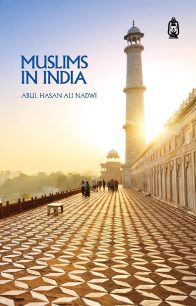
Muslims in India by Abul Hasan Ali Nadwi is a historical and cultural account of the contributions of Muslims to the Indian subcontinent. Originally delivered as lectures and subsequently published in different languages, the work seeks to challenge portrayals of India's Muslim past that reduce it to foreign conquest, political domination, or a supposedly unproductive historical period.
Nadwi explores the influence of Muslims on Indian civilisation through scholarship, literature, religious learning, education, spiritual traditions, and public life. He discusses prominent Muslim scholars and personalities, the contributions of Sufi saints, and the development of educational institutions that helped preserve and transmit Islamic learning. The book also addresses the role of Muslims in the struggle against British colonial rule, connecting their historical legacy with questions of identity, belonging, and national history.
A central concern is historical representation. Nadwi argues that the achievements of Indian Muslims deserve recognition as an integral part of India's cultural and intellectual heritage. He presents Muslim civilisation in India not simply as a history of rulers and dynasties, but also as a record of scholars, teachers, writers, spiritual figures, institutions, and wider cultural interactions.
The book is written from the perspective of a Muslim scholar seeking to restore attention to a community's contributions that he believes have been neglected or misrepresented. This gives the work its distinctive purpose and makes it especially meaningful to readers interested in Muslim intellectual history. At the same time, its interpretive perspective should be considered when using it as a historical source. Readers seeking a comprehensive, balanced account of every period of Indian history should supplement it with specialist academic histories and primary-source research.
Nadwi examines the influence of Muslim communities on India's intellectual, literary, religious, and cultural development. He seeks to place these contributions within the broader story of the subcontinent rather than treating them as separate from Indian history.
The book highlights Muslim scholars and their contributions to religious learning, Arabic and Persian literature, education, and intellectual life. It draws attention to traditions of learning that connected Indian Muslim scholars with wider networks across the Muslim world.
Nadwi discusses the influence of Sufi figures and their place in Indian Muslim society. This theme helps readers explore the spiritual and social dimensions of Muslim history beyond political power and dynastic change.
The development of traditional learning and later educational institutions receives attention as part of the history of Muslim intellectual life. The book considers how scholars and institutions maintained religious and literary traditions during periods of political and social change.
Nadwi highlights Muslim individuals and movements associated with resistance to British colonialism. His treatment challenges historical narratives that minimise Muslim participation in the struggle for India's independence.
The work responds to what Nadwi regards as the neglect or distortion of Muslim achievements in historical narratives. It presents historical knowledge as important to communal confidence, cultural continuity, and a more inclusive understanding of India's past.
The book also explores how Islamic civilisation developed in interaction with the Indian cultural environment. This perspective encourages readers to consider the history of Indian Muslims as part of a larger, interconnected civilisational story.
Muslims in India is discussed in scholarship on Abul Hasan Ali Nadwi’s intellectual contributions and his approach to Islamic history. Its central concern is the recognition of Indian Muslims as contributors to the subcontinent’s cultural, educational, literary, and religious heritage. The work is particularly relevant to studies of Muslim historical identity and the ways scholars responded to representations of India’s Islamic past.
An analytical study published in the Journal of Islamic Thought and Civilization examines Nadwi’s life, writings, and contribution to Islamic historiography. It discusses Muslims in India, originally associated with his work Hindustani Musalman, and explains how Nadwi sought to counter historical narratives that marginalised Muslim achievements and participation in India’s development.
This is a scholarly study of Nadwi and his intellectual work, rather than an independent review devoted exclusively to this particular book.
Read the study: Life and Works of Abul Hasan Ali Nadwi (RA): An Analytical Study
A 2020 article in Al-Itqan: Journal of Islamic Sciences and Comparative Studies compares Nadwi’s and Wahiduddin Khan’s approaches to religious harmony in post-independence India. It identifies Nadwi’s emphasis on the contributions of Muslims to Indian civilisation as an important element of his thought. Although this article does not constitute a direct review of Muslims in India, it provides context for understanding the book’s broader intellectual concerns.
The sources identified provide useful context for understanding Nadwi’s historical perspective and the significance of his writing. However, I could not verify a substantial body of independent, book-specific academic reviews for this edition. It would therefore be inappropriate to claim a broad scholarly consensus about the book’s quality.
Readers should approach the book as a historically situated interpretation by an influential Muslim scholar. Its account of Muslim contributions can be read alongside modern academic histories, regional studies, and primary sources to evaluate individual claims and gain a broader understanding of India’s complex past.
The assessment considers the book’s historical significance, thematic coverage, accessibility, intended readership, and usefulness as an introduction to Muslim heritage in India. Its interpretive perspective and limited scope are considered alongside its strengths.
| Evaluation Criteria | Weight | Score | Assessment |
|---|---|---|---|
| Content Quality & Depth | 20% | 4.1/5 | Covers a meaningful range of cultural, educational, intellectual, and historical contributions, although its concise essay format limits depth. |
| Writing Style & Clarity | 15% | 4.0/5 | The thematic essay format is approachable for interested general readers; the translation and full prose have not been assessed line by line. |
| Relevance & Target Audience Fit | 15% | 4.5/5 | Particularly relevant to readers interested in Indian Muslim history, Islamic scholarship, cultural heritage, and colonial-era history. |
| Originality & Creativity | 15% | 3.9/5 | Its corrective emphasis on Muslim contributions provides a distinctive perspective, although the book is not a wholly new or exhaustive framework for Indian history. |
| Cultural & Ethical Sensitivity | 10% | 3.8/5 | Recognises Muslim cultural contributions and India’s interconnected heritage, but its perspective-driven purpose calls for comparison with diverse historical interpretations. |
| Practical Value & Applicability | 10% | 4.0/5 | Useful as an introductory resource and a starting point for further reading, but insufficient on its own for advanced historical research. |
| Presentation & Design | 10% | 3.8/5 | The essay-based structure supports thematic reading; the specific edition’s typography, layout, and production quality have not been inspected. |
| Value for Price | 5% | 3.8/5 | The compact collection may offer good value for readers seeking an introduction, but the score is provisional without an assessed purchase price. |
| Weighted Overall Score | 4.025/5 — Rounded: 4.0/5 | ||
Rating status: Provisional editorial assessment based on the available book description, bibliographic information, and contextual scholarship. It should not be interpreted as a complete audit of the full text or the physical quality of a particular edition.
Our editorial ratings are based on HaqqFinder’s established evaluation criteria and weighted scoring system. For details, see our Rating & Evaluation Methodology.
Muslims in India by Abul Hasan Ali Nadwi is a useful introductory collection for readers interested in the intellectual, cultural, religious, and educational contributions of Indian Muslims. Its principal strength is its effort to bring scholars, literary traditions, Sufi figures, educational institutions, and anti-colonial participation into a broader account of India’s historical development.
The book is particularly valuable for readers who want to understand how a prominent Muslim scholar interpreted the community’s place in Indian civilisation. Its concise thematic approach makes it accessible to general readers, students, and those beginning to explore the history of Islam in South Asia.
Nevertheless, the book should not be treated as a comprehensive or neutral account of every aspect of Indian Muslim history. Its corrective purpose and emphasis on achievements make comparison with independent historical scholarship important, particularly when examining contested events, political power, or the experiences of different communities.
Final Verdict: A worthwhile introductory work on Indian Muslim heritage and intellectual history. Recommended for readers interested in Islamic civilisation in India, Muslim scholars, Sufi traditions, and Muslim participation in the struggle against British rule. For academic research, it is best read alongside more recent specialist histories and primary sources.
HaqqFinder Editorial Rating: 4.0/5 (Provisional)
*When you purchase through this link, HaqqFinder may earn a small commission at no extra cost to you. Learn more
There are no reviews yet. Be the first one to write one.

Discover the brutal history of British colonial atrocities against Indian Muslims, from the 1857 rebellion to the Mopla uprising and beyond.