Discover the brutal history of British colonial atrocities against Indian Muslims, from the 1857 rebellion to the Mopla uprising and beyond.
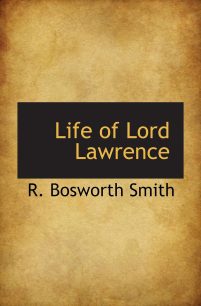
Life of Lord Lawrence by Reginald Bosworth Smith is a two-volume biography of John Laird Mair Lawrence (1811–1879), one of the most influential British administrators in nineteenth-century India. Drawing on correspondence, official records, personal recollections, and other documentary material, Smith traces Lawrence's development from a young East India Company civil servant to a senior colonial administrator and ultimately Viceroy of India.
The biography follows Lawrence's early career, his administrative work in northern India, and his involvement in the British conquest and consolidation of power in the Punjab. It examines his relationship with his elder brother, Sir Henry Lawrence, whose political and administrative career was closely connected with his own. Although the brothers shared a commitment to British imperial service, they differed in temperament, administrative priorities, and approaches to governing Indian territories.
A major part of the narrative concerns the Second Anglo-Sikh War, the British annexation of the Punjab in 1849, and the subsequent administration of the province. Smith presents Lawrence as a practical administrator whose attention to revenue, local governance, public order, and military preparedness helped strengthen British authority. The biography also discusses Lawrence's role during the Indian uprising of 1857, particularly the importance of the Punjab to British efforts to recapture Delhi.
The later narrative examines Lawrence's appointment as Viceroy of India in 1864, his approach to imperial administration, and the foreign-policy questions confronting British India, including relations with Afghanistan and the wider Central Asian region. Throughout the work, Smith emphasises Lawrence's personal discipline, religious convictions, administrative judgment, and sense of duty.
The book is both a biography and a historical account of British expansion and governance in nineteenth-century India. However, it was written during the high imperial period and reflects many of the assumptions and priorities of its author and subject. Its praise of Lawrence and its emphasis on the achievements of British administration should therefore be read critically, alongside scholarship that gives greater attention to Indian perspectives, colonial coercion, and the consequences of imperial rule.
The biography explores the wars, political decisions, and administrative developments through which the British consolidated control over the Punjab. Lawrence's career provides a perspective on how colonial authority was established and maintained following the Anglo-Sikh conflicts.
Smith discusses Lawrence's response to the uprising and the role of the Punjab in sustaining British military operations. The narrative highlights British administrative and military decision-making, making comparison with Indian-centred histories especially important.
Lawrence's approach to land revenue, local administration, public order, and the responsibilities of district officers forms an important part of the account. These subjects illuminate the workings of colonial government while also raising questions about how administrative reforms affected Indian communities.
The relationship between the Lawrence brothers provides a personal dimension to the biography. Their differing personalities and administrative approaches reveal tensions within the British colonial establishment itself.
Smith places considerable emphasis on Lawrence's religious convictions, personal discipline, and understanding of public service. These characteristics are presented as important influences on his decisions and leadership style.
Lawrence's later career involved difficult questions about British India's north-western frontier and relations with Afghanistan. The biography offers insight into the strategic calculations behind British policy during the nineteenth-century imperial rivalry in Asia.
The biography presents Lawrence as an effective administrator and defender of British interests. Modern readers should examine this favourable portrayal against other historical interpretations of annexation, colonial violence, economic policy, and Indian political agency.
Life of Lord Lawrence attracted contemporary critical attention soon after its publication. A review titled “Review of Life of Lord Lawrence by R. Bosworth Smith” appeared in The Quarterly Review, volume 155, in April 1883, pages 289–326. The existence of this substantial contemporary review establishes that the biography received attention in the British periodical press shortly after publication.
View the historical review record in the Morrison Pamphlet Collection database.
The biography remains a useful source for understanding how British imperial administrators were represented in the late nineteenth century. Its extensive documentary detail and coverage of the Punjab, the uprising of 1857, and the government of British India make it relevant to research on colonial administration and imperial political culture.
However, the book’s portrayal of Lawrence must be distinguished from a modern, independent evaluation of his historical legacy. Smith’s favourable presentation reflects the conventions of Victorian biography and the imperial setting in which the work was written. The narrative should be compared with later histories that examine Indian political agency, colonial coercion, and the social and economic consequences of British rule.
A contemporary review record has been identified, but I could not verify enough accessible, book-specific modern scholarly reviews to establish a clear present-day critical consensus. The discussion above therefore distinguishes documented historical reception from broader assessments of the book’s value as a primary historical source.
This assessment evaluates the biography as a historical source and a study of British imperial administration. Its documentary value and historical detail are weighed against its strongly pro-Lawrence perspective, colonial-era assumptions, and limited attention to Indian experiences.
| Evaluation Criteria | Weight | Score | Assessment |
|---|---|---|---|
| Content Quality & Depth | 20% | 4.3/5 | Detailed biographical coverage supported by extensive historical documentation, though its interpretation favours the subject. |
| Writing Style & Clarity | 15% | 4.0/5 | A developed biographical narrative, although Victorian prose, lengthy passages, and administrative detail can challenge modern readers. |
| Relevance & Target Audience Fit | 15% | 4.2/5 | Highly relevant to readers of British India, the Punjab, the 1857 uprising, and colonial administration. |
| Originality & Creativity | 15% | 3.8/5 | An important historical biography, but its interpretation reflects nineteenth-century biographical conventions and imperial assumptions. |
| Cultural & Ethical Sensitivity | 10% | 3.0/5 | Valuable as a historical perspective, but the colonial viewpoint and limited attention to Indian agency require critical contextualisation. |
| Practical Value & Applicability | 10% | 3.8/5 | Useful for historical research and source comparison, but not an ideal standalone introduction for beginners. |
| Presentation & Design | 10% | 3.7/5 | The original work has a detailed chapter structure, but the typography, layout, and completeness of a particular edition have not been inspected. |
| Value for Price | 5% | 3.8/5 | Potentially valuable to serious history readers, but the assessment is provisional because no specific purchase price or edition has been evaluated. |
| Weighted Overall Score | 3.915/5 — Rounded: 3.9/5 | ||
Rating status: Provisional editorial assessment based on bibliographic records, the available digitised edition and historical context. It is not a page-by-page audit of every volume or a physical inspection of a specific modern reprint.
Our editorial ratings are based on HaqqFinder’s established evaluation criteria and weighted scoring system. For details, see our Rating & Evaluation Methodology.
Life of Lord Lawrence by Reginald Bosworth Smith is a substantial historical biography that offers insight into the career of one of the most influential British administrators in nineteenth-century India. Its treatment of the Punjab, the uprising of 1857, colonial administration, and British imperial strategy makes it valuable for readers researching the history of British India.
The biography’s principal strengths are its documentary detail, its coverage of administrative decision-making, and its account of the Lawrence brothers. It can help readers understand how British officials interpreted their responsibilities and justified their role in expanding and maintaining imperial authority.
Its main limitation is its strongly favourable colonial perspective. The book should not be treated as a neutral account of British rule or as a substitute for histories centred on Indian communities, political resistance, and the consequences of colonial policies. Reading it alongside modern scholarship allows readers to distinguish its documentary value from the assumptions and judgments of its author.
Final Verdict: A historically significant biography recommended for advanced readers, researchers, and students interested in British India, the Punjab, and nineteenth-century imperial administration. General readers should approach it with some historical background and supplement it with more recent scholarship.
HaqqFinder Editorial Rating: 3.9/5 (Provisional)
*When you purchase through this link, HaqqFinder may earn a small commission at no extra cost to you. Learn more
There are no reviews yet. Be the first one to write one.

Discover the brutal history of British colonial atrocities against Indian Muslims, from the 1857 rebellion to the Mopla uprising and beyond.