Discover the brutal history of British colonial atrocities against Indian Muslims, from the 1857 rebellion to the Mopla uprising and beyond.
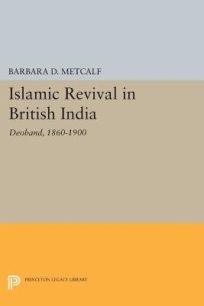
In Islamic Revival in British India: Deoband, 1860–1900, historian Barbara D. Metcalf investigates the emergence and development of the Deobandi movement during a period of profound political, cultural, and religious change in South Asia. Rather than interpreting the movement simply as a reaction against British rule, she examines how Muslim religious scholars sought to preserve and renew Islamic life after the decline of Muslim political authority and the consolidation of colonial power.
Focusing on Darul Uloom Deoband and its associated scholarly networks, Metcalf explores how religious education, Islamic learning, Urdu-language communication, spiritual discipline, and guidance on everyday conduct helped create a distinctive form of Muslim religious revival. The study draws on institutional records, biographies, hagiographies, memoirs, diaries, letters, religious tracts, and government records to reconstruct the movement's intellectual and social world.
The book situates Deoband within the transformation of North Indian Muslim society under British colonial dominance. The loss of political power created new challenges for scholars whose authority had previously existed alongside older political and institutional arrangements. Metcalf examines how religious leaders responded by strengthening Islamic education and directing attention toward the preservation and renewal of religious practice.
This approach makes the book particularly valuable for understanding revival as an intellectual and institutional project, rather than merely as a political reaction to colonialism.
Metcalf investigates the people, institutions, and religious ideals associated with the early development of Darul Uloom Deoband. She examines the roles of prominent scholars, including Muhammad Qasim Nanautavi and Rashid Ahmad Gangohi, in shaping a tradition of religious learning and guidance.
Rather than treating the seminary as an isolated institution, the book places it within a wider network of teachers, students, patrons, families, and religious communities. This institutional perspective helps explain how a local centre of learning could develop influence well beyond its immediate geographical setting.
A major theme is the changing position of the ulama, or Islamic religious scholars, in a society no longer governed by a Muslim ruling establishment. Metcalf examines how scholars maintained and expanded their influence through teaching, religious advice, legal interpretation, and personal networks.
The book shows why religious authority cannot be understood solely through formal political office. Scholarly credentials, educational institutions, the transmission of knowledge, and the relationship between teachers and students were also central to the organisation of Muslim religious life.
Deobandi revival was concerned not only with formal scholarship but also with the conduct of ordinary Muslims. Metcalf explores the efforts of religious scholars to influence devotional practices, social behaviour, religious observance, and moral discipline.
The study therefore helps readers understand revival as an attempt to reshape everyday life through religious instruction. It also raises broader questions about how scholars define proper practice, how religious norms circulate through communities, and how reform movements respond to practices they regard as inconsistent with their understanding of Islam.
Metcalf highlights the importance of communication and education in the development of Deobandi influence. The use of Urdu helped scholars address audiences beyond a narrow circle of Arabic- and Persian-trained specialists. Religious texts, instruction, and public guidance could reach broader sections of Muslim society, including people outside elite scholarly institutions.
This emphasis on language and education is important because it connects the history of Islamic ideas with the practical means through which those ideas were disseminated and adopted.
The movement presented itself as renewing inherited Islamic principles rather than abandoning the scholarly tradition. Metcalf examines how this appeal to continuity operated within new political and social circumstances. The resulting picture complicates any simple distinction between tradition and modernity: the preservation of inherited religious authority required organisational, educational, and communicative adaptation.
One of the book's wider contributions is its treatment of Deoband as a significant example of Muslim religious revival under colonial conditions. Its history helps readers compare the movement with other responses to colonialism, changing political authority, and the perceived need for religious renewal.
The book is most useful when read as a historically grounded study of a particular movement and period. It is not a comprehensive account of every later development in Deobandi thought, nor does it cover the movement's entire twentieth- and twenty-first-century history.
Islamic Revival in British India: Deoband, 1860–1900 received formal scholarly reviews in established academic journals following its original publication. The existence of these reviews confirms that the book attracted attention within the fields of South Asian history and Islamic studies. However, the records and abstracts available for this review do not provide enough detail to attribute specific arguments or verdicts to the reviewers without consulting their full texts.
William R. Roff reviewed the book in The Journal of Asian Studies, volume 42, issue 3 (May 1983), pages 703–705. The bibliographic record is available through the journal’s review page.
The publication of a review in this major area-studies journal places Metcalf’s study within contemporary scholarly discussion of South Asian history. Because the accessible record does not provide an abstract or the review’s substantive conclusions, it would be inappropriate to claim that Roff endorsed or criticised particular aspects of the book without checking the full review.
Yohanan Friedmann reviewed the book in the International Journal of Middle East Studies, volume 16, issue 1 (March 1984), pages 150–152. The formal record is available through Cambridge University Press.
This review is significant as evidence of the book’s reception in a journal devoted to Middle Eastern and Islamic studies. The accessible record does not include a substantive abstract, so the specific strengths or weaknesses Friedmann identified cannot responsibly be summarised from the metadata alone.
The book’s importance is also evident in its sustained publication history. Princeton University Press made it available again through the Princeton Legacy Library, and the work has appeared in later editions. Its central subject—the response of Muslim scholars to colonial rule and the decline of Muslim political authority—remains relevant to research on religious reform, Islamic education, and the history of Muslim communities in South Asia.
Metcalf’s approach is particularly valuable because it studies the movement through materials produced by and about the people involved, including biographies, institutional records, memoirs, religious writings, and government records. This source base helps readers investigate how Deobandi scholars understood their religious mission rather than explaining their activities solely through colonial administrative categories.
The documented academic reviews and the book’s continued availability support its standing as a significant historical study. Nevertheless, the existence of formal reviews should not be mistaken for unanimous scholarly agreement, and a publication history alone does not prove that every interpretation remains uncontested.
Overall: The book is best approached as an influential historical account of Deoband’s formative decades. Readers undertaking advanced research should consult the full contemporary reviews and compare Metcalf’s interpretation with later scholarship, especially when investigating developments beyond 1900.
The following is HaqqFinder’s editorial assessment of the book’s historical contribution, research quality, accessibility, and usefulness to its intended audience. These scores are editorial judgments, not reader-review averages.
| Evaluation Criteria | Weight | Score | Assessment |
|---|---|---|---|
| Content Quality & Depth | 20% | 4.7/5 | Substantial historical research and a detailed account of Deoband’s early development and scholarly culture. |
| Writing Style & Clarity | 15% | 4.3/5 | Scholarly and carefully contextualised, though some historical and religious terminology requires familiarity with the subject. |
| Relevance & Target Audience Fit | 15% | 4.8/5 | Highly relevant to readers studying Deoband, South Asian Islam, religious reform, and colonial history. |
| Originality & Creativity | 15% | 4.6/5 | Provides a historically grounded interpretation of revival that extends beyond a purely political explanation. |
| Cultural & Ethical Sensitivity | 10% | 4.6/5 | Takes the religious world of its historical subjects seriously and seeks to understand their outlook within its context. |
| Practical Value & Applicability | 10% | 4.5/5 | Excellent for academic research and historical understanding, though not intended as a practical religious guide. |
| Presentation & Design | 10% | 4.2/5 | Includes useful scholarly apparatus; the physical production quality can vary between editions. |
| Value for Price | 5% | 4.5/5 | A valuable long-term research resource, although actual value depends on the edition and purchase price. |
| Weighted Overall Score | 100% | 4.57/5 | Excellent: a major scholarly study of Deoband’s emergence and intellectual foundations. |
Barbara D. Metcalf’s Islamic Revival in British India: Deoband, 1860–1900 is a substantial and influential contribution to the study of South Asian Muslim history. Its principal strength lies in explaining how Islamic revival took shape through religious education, scholarly authority, moral instruction, and institutional networks during a period of colonial transformation.
Rather than reducing Deoband to a political response to British rule, Metcalf explores the religious and intellectual purposes that motivated its scholars. Her use of varied historical sources gives the study depth, while its focus on the late nineteenth century provides a defined historical framework for understanding the movement’s emergence.
The book’s limitations are largely matters of scope and audience. It does not cover the entire later history of Deoband, and readers seeking a direct theological evaluation or a comprehensive comparison of Muslim movements will need additional works. Its original publication date also makes engagement with subsequent scholarship important.
Final verdict: Highly recommended for students, researchers, and serious readers interested in Deobandi scholarship, Islamic revival, and colonial South Asia. With its strong historical grounding and attention to the scholars’ own religious world, the book remains an important starting point for understanding the emergence of one of the most influential Islamic educational traditions in modern South Asian history.
*When you purchase through this link, HaqqFinder may earn a small commission at no extra cost to you. Learn more
There are no reviews yet. Be the first one to write one.

Discover the brutal history of British colonial atrocities against Indian Muslims, from the 1857 rebellion to the Mopla uprising and beyond.