Summary & Key Themes
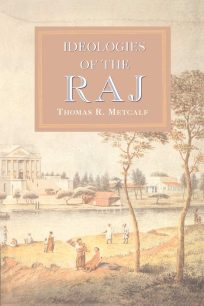
Ideologies of the Raj by Thomas R. Metcalf is a historical study of the ideas and assumptions through which the British sought to justify their rule over India. Published by Cambridge University Press as part of The New Cambridge History of India, the book examines the intellectual foundations of colonial authority rather than treating British rule simply as a sequence of political events or administrative decisions.
Metcalf argues that British ideas about India were shaped by competing approaches. Some emphasised similarities between Indian and British society, making it possible to justify reform and the extension of British institutions. Others stressed India's supposed cultural, racial, and social differences, presenting British supervision as necessary and legitimate. Over time, the emphasis on difference became especially influential in the colonial understanding of India.
Major Themes
1. Britain and India in the Eighteenth Century
The opening chapter establishes the historical problem confronting British rulers as their territorial control expanded. They had to explain how governing another society could be reconciled with political ideals that increasingly celebrated liberty, nationhood, and representative government. This contradiction forms the starting point for Metcalf's analysis of colonial ideology.
2. Liberalism and Empire
Metcalf examines how liberal ideas could be used to support both reform and imperial domination. British officials might present their rule as a means of introducing better institutions, rational administration, or social improvement while denying Indians an equivalent degree of political self-government.
This theme exposes a central contradiction of empire: principles presented as universal could be applied selectively when colonial authorities claimed that the people they governed were not yet ready to exercise those principles themselves.
3. The Creation of Difference
The book explores how British writers and administrators represented India as fundamentally different from Britain. Ideas about Indian history, religion, culture, and society helped establish distinctions between rulers and subjects. These representations were not merely descriptive; they could also help explain and legitimise continued colonial authority.
4. The Ordering of Difference
Metcalf investigates how ideas about race, gender, caste, social hierarchy, and India's historical development influenced the way British officials classified and governed the population. The desire to understand Indian society often involved dividing it into categories that could then inform administrative decisions.
This process reveals how colonial knowledge and colonial power could reinforce one another. The categories used to describe Indian society could shape the policies through which that society was governed.
5. Coping with Contradiction
The book examines the tensions that emerged when British claims about their own political and moral superiority conflicted with the realities of imperial rule. Colonial authorities had to reconcile ideals of civilisation, progress, and lawful government with a system in which Indians lacked equal political authority.
6. Raj, Empire, and Nation
The concluding discussion places British India within the wider imperial system and considers the relationship between colonial rule, imperial identity, and the emergence of Indian nationalism. The Raj was not isolated from the rest of the British Empire: ideas, people, and administrative practices circulated across imperial territories.
7. Knowledge as an Instrument of Rule
Across these themes, Metcalf shows how historical writing, social classification, and administrative assumptions could help make colonial domination appear reasonable or necessary. His analysis connects representations of India with the political purposes and practical operations of British rule.
Overall, Ideologies of the Raj is a study of how empire was intellectually justified and administratively maintained. It encourages readers to examine not only what colonial governments did, but also the ideas that made their actions appear legitimate to those who governed.
Critical Analysis
The principal strength of Ideologies of the Raj is its examination of the relationship between ideas and political power. Metcalf does not assume that British colonial rule rested on one coherent ideology shared by every official. Instead, he explores the competing assumptions and intellectual traditions through which British authority was explained, defended, and adapted.
The Contradictions of Liberal Imperialism
One of the book's most important arguments concerns the contradiction between liberal political ideals and imperial domination. British thinkers could advocate liberty, rational government, and progress while maintaining that Indians required foreign supervision. The language of reform thus provided a means of criticising particular Indian institutions while preserving the larger structure of British control.
This analysis is valuable because it moves beyond the idea that colonial rule was justified only through openly expressed racial superiority. Imperial authority could also be defended through claims about education, civilisation, administrative efficiency, or gradual political development. Such arguments could sound benevolent while still denying the colonised population equal political rights.
Race, Gender, and the Construction of Difference
Metcalf's discussion of difference is central to understanding how colonial representations of India acquired political significance. Ideas about race, masculinity, femininity, caste, and social hierarchy helped British observers classify Indian people and interpret their capacity for self-government.
These categories were not necessarily consistent. British descriptions of Indian society changed over time and could differ according to the interests, experiences, and assumptions of particular officials or writers. Metcalf's emphasis on competing representations helps explain why colonial ideology should be studied as a changing process rather than a fixed set of beliefs.
Nevertheless, readers should distinguish between analysing a colonial stereotype and accepting it as a reliable description of Indian society. The historical importance of these representations lies partly in how they influenced British perceptions and policies, not in whether the stereotypes accurately described the people being governed.
Colonial Knowledge and Administrative Practice
The book is particularly persuasive when it connects intellectual ideas to the practical ordering of Indian society. Classification, historical interpretation, and social observation could become tools of government. Once administrative institutions adopted particular categories, those categories could influence how people were understood and treated by the colonial state.
This relationship between knowledge and power is important because it demonstrates that imperial domination was not maintained through military force or economic interests alone. It was also supported by systems of representation that presented British authority as rational, informed, and appropriate to India's supposed needs.
At the same time, colonial administration was not simply the mechanical application of a unified ideology. Officials could disagree, policies could produce unintended consequences, and Indian actors could challenge or reshape the categories imposed upon them. A complete understanding of colonial rule therefore requires attention to negotiation, resistance, and local variation as well as official thought.
Indian Agency and the Limits of a British-Centred Study
Because the book focuses on British ideas about India, its primary analytical perspective is that of colonial rulers and the intellectual frameworks they employed. This focus is appropriate to its subject, but it also creates a limitation: Indian responses to colonial classification, reform, and political authority cannot always receive the same sustained attention as British representations.
Indian intellectuals, reformers, religious scholars, political organisations, and ordinary communities were not passive recipients of imperial ideas. They could contest colonial assumptions, adopt selected concepts for their own purposes, or develop alternative accounts of Indian society and political legitimacy. Readers interested in these responses should complement Metcalf's work with histories centred on Indian political thought and anti-colonial movements.
Understanding the Wider Colonial Context
The book is most effective when read alongside research on colonial law, taxation, land revenue, education, racial hierarchy, and the economic organisation of the Raj. Ideology helped justify imperial authority, but it operated alongside material interests, institutional structures, political calculations, and coercive power.
It would therefore be too narrow to conclude that British rule was sustained by ideas alone. Metcalf's contribution is to explain an important dimension of imperial domination: how authority was represented and legitimised, and how those representations informed the practices of government.
Historical Value and Contemporary Relevance
First published in the 1990s, the book remains useful for understanding the intellectual history of British India. Its account of the construction of difference helps readers recognise how claims about cultural superiority or political readiness can be used to defend unequal power relationships.
However, the book should be read as a major scholarly interpretation rather than a complete or final account of colonial ideology. Later research has continued to investigate Orientalism, race, gender, law, knowledge production, and Indian responses to imperial rule. Contemporary readers will benefit from using Metcalf's framework alongside this wider scholarship.
Overall Assessment
Ideologies of the Raj offers a strong historical explanation of how the British sought to reconcile their political ideals with the reality of ruling India. Its most valuable insight is that colonial power depended not only on institutions and force but also on changing ideas about difference, civilisation, and legitimate authority. Its British-centred focus is a limitation only if readers mistake it for a complete account of Indian society; read within its stated purpose, it is a significant contribution to the intellectual history of empire.