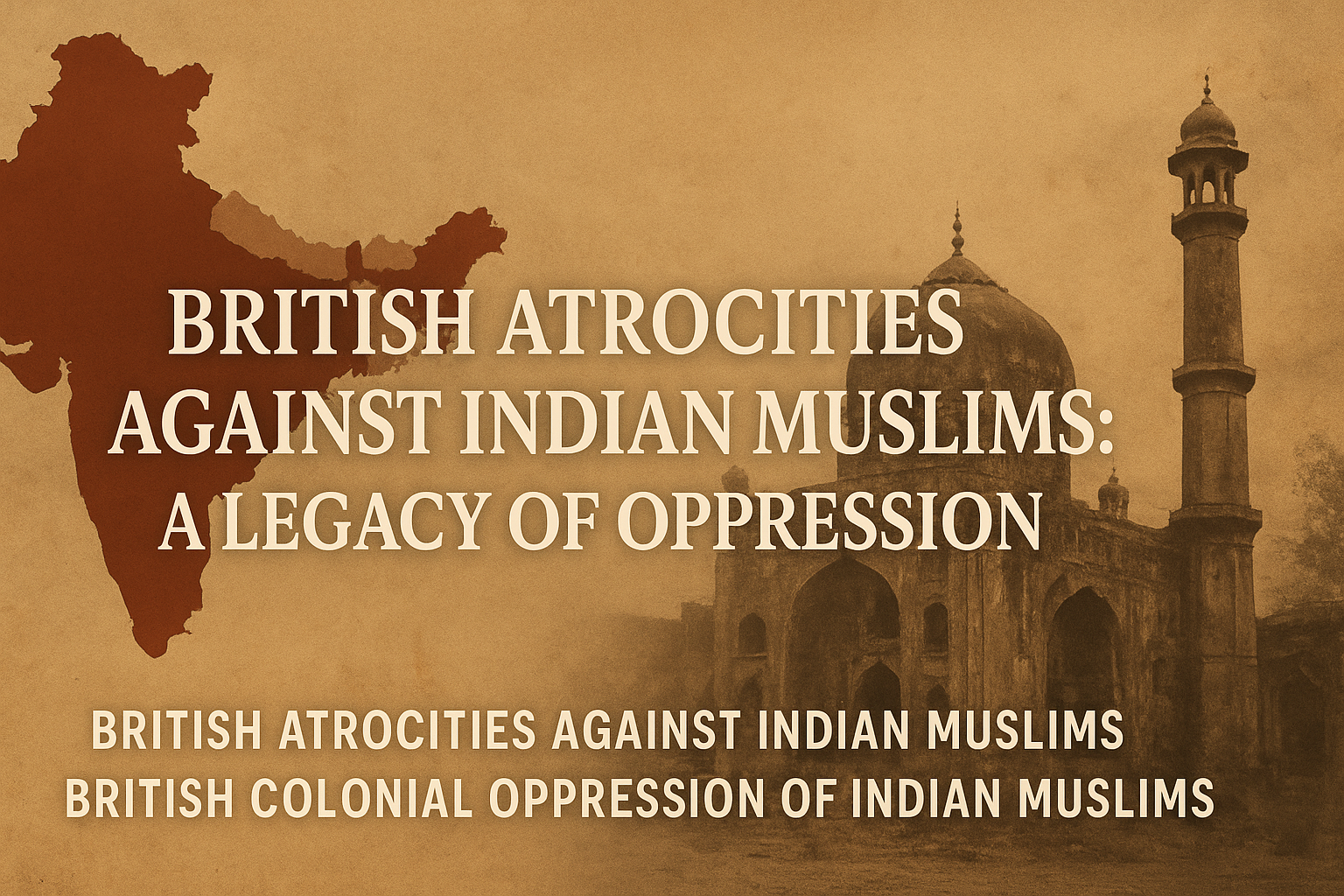
Discover the brutal history of British colonial atrocities against Indian Muslims, from the 1857 rebellion to the Mopla uprising and beyond.
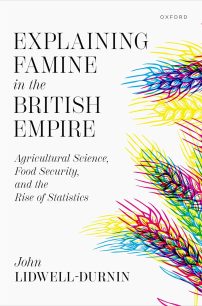
Explaining Famine in the British Empire: Agricultural Science, Food Security, and the Rise of Statistics by John Lidwell-Durnin examines how famine and food shortages in eighteenth-century Britain and colonial India shaped the development of agricultural science, statistical thinking, and modern concepts of food security. Focusing on the period between the Bengal famine of 1770 and food shortages in Britain around 1800, the book explores how officials, economists, agriculturalists, and intellectuals attempted to explain why famines occurred.
The book investigates the distinction between “natural” famine caused by environmental or agricultural conditions and “artificial” scarcity associated with markets, monopolies, political decisions, and human actions. It examines how the East India Company and Britain's Board of Agriculture sought to collect agricultural information and statistical data to understand food shortages, defend policies, and establish more authoritative explanations of famine.
Rather than simply offering a new explanation for historical famines, Lidwell-Durnin explores how famine itself increasingly became a measurable phenomenon. The book shows how statistics and agricultural surveys influenced debates about government responsibility, food availability, population, and the causes of scarcity.
By connecting colonial India with Britain, the study reveals how imperial networks helped shape the development of statistical knowledge and ideas that continue to influence discussions of food security, environmental pressures, and population growth.
Explaining Famine in the British Empire: Agricultural Science, Food Security, and the Rise of Statistics was published by Oxford University Press in January 2026, with the print edition available from February 2026. Because it is a recent publication, its independent scholarly reception is still emerging. The available evidence does not yet establish a substantial body of formal academic reviews, so it would be premature to describe the book as having received widespread critical consensus.
The book’s central contribution is its investigation of how famine became increasingly understood through statistical evidence and administrative inquiry. Rather than simply proposing a new explanation for the Bengal famine of 1770 or the food crises of the 1790s, John Lidwell-Durnin traces how people constructed, contested, and communicated explanations of scarcity.
The distinction between “artificial” and “natural” famine is central to this argument. Accusations of hoarding, monopolies, greed, and market manipulation could assign responsibility to officials and commercial actors. Explanations centred on rainfall, crop failures, population, and food availability could redirect attention towards environmental and structural causes. The author investigates how the growing use of statistics affected these debates and how numerical evidence could become a means of defending institutional decisions.
The book treats the Bengal famine of 1770 as a significant moment in the history of imperial information gathering. Lidwell-Durnin examines how East India Company officials attempted to collect and interpret data on harvests, food prices, mortality, and agricultural revenues. The resulting figures did not automatically resolve disputes: officials questioned the reliability of reports, disagreed about causes, and sometimes used information to protect their own positions.
This approach offers a way to study colonial administration beyond its formal policies. It draws attention to the production of knowledge itself: who collected information, whose testimony was trusted, how uncertainty was handled, and how the interpretation of data shaped debates about responsibility.
Another important aspect is the connection between food shortages in Britain and famine in colonial India. The book traces links between the East India Company and the Board of Agriculture, showing how agricultural experimentation, political economy, statistical inquiry, and ideas about food supply travelled through imperial networks.
Its treatment of the Madras famine of 1790–1792 also illustrates a shift in the explanations favoured by Company officials. Climatic conditions, irrigation, transport, crop choices, and local responses increasingly featured in discussions of scarcity. The author examines how such explanations could influence decisions about famine relief and food-storage schemes.
The book’s most distinctive feature is its history-of-knowledge approach. It asks not only whether particular explanations of famine were correct but also how certain forms of evidence acquired authority. This is useful for historians interested in the relationship between scientific expertise, state power, and the administration of colonial territories.
At the same time, the author explicitly distinguishes the history of famine explanation from the lived experience of famine. Readers primarily interested in the experiences of those who suffered hunger, the social distribution of mortality, or the effectiveness of relief measures will need to supplement this work with studies centred on those questions. This is a matter of scope rather than evidence of a flaw in the book’s stated purpose.
At the time of this review, the book’s publisher description, chapter abstracts, and published text provide a substantial basis for assessing its argument and research design. However, these materials are not independent critical reviews. A responsible assessment should therefore distinguish the book’s documented contents from future scholarly judgments about its strengths, limitations, and influence.
Overall: The book offers a distinctive contribution to the history of famine, agricultural science, and colonial administration. Its long-term scholarly reception remains to be established, but its central questions make it relevant to researchers examining how data and expertise shape explanations of social crises.
This editorial assessment considers the book’s historical research, originality, accessibility, and value for its intended academic audience. Scores are HaqqFinder’s editorial judgments, not reader-review averages.
| Evaluation Criteria | Weight | Score | Assessment |
|---|---|---|---|
| Content Quality & Depth | 20% | 4.7/5 | Develops a detailed account of how famine explanations and statistical methods evolved in the late eighteenth century. |
| Writing Style & Clarity | 15% | 4.2/5 | Organised around a clear argument, though the specialised intellectual and administrative history can be demanding. |
| Relevance & Target Audience Fit | 15% | 4.8/5 | Highly relevant to researchers studying colonial India, famine, agricultural history, and the history of statistics. |
| Originality & Creativity | 15% | 4.6/5 | Connects famine discourse, imperial administration, and statistical knowledge in a distinctive historical framework. |
| Cultural & Ethical Sensitivity | 10% | 4.4/5 | Recognises the human suffering underlying the debates while openly defining its focus on intellectual and administrative explanations. |
| Practical Value & Applicability | 10% | 4.4/5 | Useful for historical research and critical thinking about data, policy, and food security, though not a practical guide to famine response. |
| Presentation & Design | 10% | 4.2/5 | Provides a structured scholarly apparatus, including illustrations, tables, notes, bibliography, and index. |
| Value for Price | 5% | 4.5/5 | The open-access online edition offers substantial research value without requiring a print purchase. |
| Weighted Overall Score | 100% | 4.51/5 | Excellent: a distinctive scholarly study of famine, colonial power, and the development of statistical thinking. |
Explaining Famine in the British Empire: Agricultural Science, Food Security, and the Rise of Statistics by John Lidwell-Durnin is a specialised and thought-provoking study of how famine became an object of scientific and statistical investigation during the late eighteenth century. Its strength lies in connecting debates about food shortages in Britain with the experiences of colonial India and the information networks linking the East India Company to Britain’s Board of Agriculture.
The book offers an important perspective on the relationship between evidence and power. Statistics could help officials investigate scarcity, but the figures were also disputed, selectively interpreted, and used to justify decisions. By tracing the changing balance between explanations based on human actions and those based on natural conditions, Lidwell-Durnin shows how famine explanations were shaped by political and institutional circumstances as well as scientific ambitions.
The study is not designed to provide a comprehensive account of famine victims’ experiences or a complete history of famine in India. Readers seeking those perspectives should combine it with social histories of famine, studies of relief policy, and research into the lived consequences of hunger. Its focus is instead the development of ideas, evidence, and administrative practices through which famine was understood.
Final verdict: Highly recommended for readers interested in colonial South Asian history, the history of science, agricultural statistics, and the intellectual origins of modern food-security debates. Its specialist focus may not suit every general reader, but it provides a valuable framework for understanding how societies explain famine—and how those explanations can influence the allocation of responsibility and the response to human suffering.
*When you purchase through this link, HaqqFinder may earn a small commission at no extra cost to you. Learn more
There are no reviews yet. Be the first one to write one.

Discover the brutal history of British colonial atrocities against Indian Muslims, from the 1857 rebellion to the Mopla uprising and beyond.