Summary & Key Themes
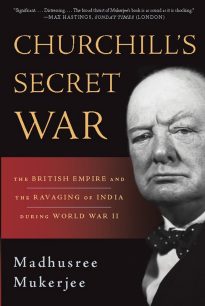
Churchill’s Secret War: The British Empire and the Ravaging of India During World War II examines the Bengal Famine of 1943 within the wider context of British imperial rule, the Second World War, and India's struggle for independence. Madhusree Mukerjee challenges the conventional image of Winston Churchill as a wartime leader whose achievements in Europe should overshadow his government's treatment of India's population.
The book argues that British wartime priorities, colonial economic policies, restrictions on food relief, and Churchill's attitudes toward Indians contributed substantially to the catastrophe. Drawing on archival material, political correspondence, government discussions, and accounts of famine victims, Mukerjee investigates how decisions made during the war affected millions of people in Bengal and beyond.
1. The Bengal Famine of 1943
The central subject of the book is the Bengal Famine, during which mass starvation and disease devastated communities across Bengal under British rule. Mukerjee describes the collapse of food access, the displacement of rural populations, the suffering of famine victims, and the failure of the colonial administration to provide adequate relief.
The famine's causes remain an important subject of historical discussion. Mukerjee emphasizes government policy and wartime priorities, while other historical analyses also examine crop conditions, inflation, distribution failures, wartime disruption, and the collapse of people's purchasing power. The book's central contribution is its insistence that the famine cannot be understood solely as a natural or local agricultural disaster.
2. Churchill and British Imperial Priorities
Mukerjee examines Winston Churchill's commitment to preserving the British Empire and argues that his government's decisions placed imperial and military priorities above the immediate needs of India's starving population. The book challenges the idea that Churchill's leadership during the European war can be evaluated independently of his policies toward colonial subjects.
This argument raises a broader historical question: to what extent should a wartime leader be held responsible for the consequences of decisions affecting populations outside the principal European theatres of war? Mukerjee places the treatment of Indians at the centre of that debate.
3. Wartime Food Supplies and Shipping Decisions
One of the book's most consequential arguments concerns the availability and allocation of food and shipping during the famine. Mukerjee disputes explanations that portray Britain's ability to provide emergency relief as severely constrained by wartime shortages. She examines the allocation of shipping, food stocks, and transport resources and argues that imperial priorities shaped the response to Bengal's emergency.
This part of the argument is particularly important because it moves the discussion beyond whether food was scarce in the abstract. It asks who controlled available resources, which destinations received priority, and whether alternative decisions could have reduced the death toll. The strength of individual conclusions depends on the specific documentary evidence and counterfactual assumptions being assessed.
4. Colonial Economic Exploitation
The book places the famine within the broader economic relationship between Britain and colonial India. It explores how wartime production, procurement, financial arrangements, and the extraction of resources affected the Indian economy while Britain pursued military objectives.
Mukerjee argues that the burdens of the war were distributed unequally. Her analysis encourages readers to investigate how wartime inflation and economic disruption undermined the ability of poor households to obtain food, even when food continued to circulate through parts of the economy.
5. The Denial of Relief and Administrative Failure
Another major theme is the dispute over emergency food relief. Mukerjee describes the efforts of officials and other observers who raised concerns about starvation and considers the political and logistical obstacles that affected relief decisions.
The book invites readers to distinguish between a government's awareness of a humanitarian emergency, its assessment of available resources, and its actual response. This distinction is essential when evaluating responsibility for a famine involving both severe deprivation and decisions made by institutions with considerable power.
6. The Quit India Movement and the Independence Struggle
The famine unfolded during a period of intense political conflict. The Quit India movement, British repression, competing nationalist strategies, and wartime security concerns formed part of the wider environment in which the colonial government operated.
Mukerjee connects the handling of the famine to Britain's determination to retain control over India. This perspective places humanitarian policy within the politics of imperial survival rather than treating food administration as an isolated technical matter.
7. Race and Colonial Attitudes
The book investigates the racial assumptions and imperial attitudes that influenced British discussions about India. Mukerjee argues that prejudices concerning Indians affected how officials understood the famine and the urgency of responding to it.
This theme is central to the book's moral argument. It raises questions about whether colonial subjects were treated as possessing the same claims to protection and humanitarian consideration as British citizens. The relevant historical judgments should be assessed through documented statements, correspondence, and government decisions rather than through generalized assumptions about every British official.
8. The Human Cost of Imperial Policy
Mukerjee combines political and administrative history with accounts of the suffering experienced by famine victims. Her descriptions of starvation, migration, disease, and death make the consequences of government decisions more tangible than a discussion limited to policy documents alone.
These accounts also remind readers that historical debates over responsibility concern real people and communities. Estimates of famine mortality vary across sources, so the human scale of the disaster should be discussed without presenting a single disputed figure as universally settled.
9. Churchill's Legacy and the Interpretation of World War II
The book challenges readers to reconsider the way Churchill's legacy is remembered. It argues that his reputation as a defender of freedom in Europe must be examined alongside his commitment to empire and his government's treatment of Indians during the war.
Ultimately, Churchill's Secret War is not simply a narrative of famine. It is an argument about imperial responsibility, the allocation of scarce resources, racial hierarchy, and the moral consequences of political decisions during wartime.
Critical Analysis
A Significant Reassessment of Wartime Leadership
The book's principal strength is its attempt to connect the Bengal Famine to the wider political and military priorities of the British Empire. Instead of treating the famine as a tragedy detached from the decisions of wartime leaders, Mukerjee examines the relationship between colonial policy, food allocation, shipping, and the determination to maintain imperial control.
This approach challenges simplified accounts of the Second World War in which British leadership is judged primarily through its resistance to Nazi Germany. It encourages a broader historical assessment that also considers the experiences of colonial populations.
Archival Research and Political Decision-Making
Mukerjee's investigation draws attention to government discussions, official correspondence, resource allocation, and disputes within the British administration. These materials are important because they allow readers to investigate what decision-makers knew, which alternatives were discussed, and how competing priorities shaped policy.
The book's argument is most persuasive when a specific claim can be connected to a documented decision, a contemporary record, or a clearly identified chain of evidence. Readers should nevertheless distinguish evidence that a particular decision occurred from the further claim that it alone caused a particular outcome.
The Relationship Between Wartime Policy and Famine
The famine cannot be adequately explained by identifying only one contributing factor. Food availability, distribution, prices, household purchasing power, wartime disruption, government intervention, and administrative choices all matter to the historical analysis.
Mukerjee gives substantial weight to British imperial policy and the decisions of Churchill's government. This focus provides a powerful framework for investigating political responsibility, but readers should also compare it with scholarship examining local market conditions, crop losses, inflation, and the wider operation of the colonial economy.
Political Responsibility and Historical Causation
A key distinction in evaluating the book is the difference between political responsibility, negligence, and direct intention. Evidence that officials knew about starvation or failed to provide adequate assistance may support a serious criticism of policy. Establishing that a particular leader deliberately intended mass starvation, however, requires a separate and particularly strong evidentiary basis.
Readers should therefore evaluate the documentary evidence behind each conclusion rather than assuming that every failure of relief necessarily demonstrates a single motive. This approach makes criticism of colonial policy more rigorous, not less consequential.
The Strength of the Human Narrative
The book's descriptions of the famine's human consequences give urgency to its political analysis. Personal accounts and descriptions of suffering help explain why disputes over food allocation, transport, and administrative priorities cannot be reduced to abstract questions of wartime logistics.
At the same time, emotionally powerful accounts should be read alongside quantitative evidence and administrative records. Combining human testimony with documentary analysis provides the strongest basis for understanding both the scale of the disaster and the decisions that shaped it.
Limitations and Areas for Further Investigation
The book's strong focus on Churchill and British imperial policy is central to its purpose, but it can also narrow the reader's attention if treated as a complete explanation of every aspect of the famine. A comprehensive assessment benefits from comparison with scholarship on Bengal's economy, provincial administration, wartime markets, agricultural conditions, and the broader history of famine.
Some of the book's most consequential claims remain contested. Readers should consult additional historical studies when evaluating the relative importance of food availability, shipping constraints, government decisions, and other causes. The existence of disagreement does not invalidate Mukerjee's contribution; it makes careful source evaluation especially important.
Overall Assessment
Churchill's Secret War is a forceful and important contribution to the debate over the Bengal Famine and British imperial responsibility. Its principal value lies in placing the suffering of India's population and the decisions of British leaders within the same historical frame.
The book is best read as a substantial, evidence-based historical argument that should be examined alongside other scholarship. Its challenge to celebratory accounts of Churchill is significant, while its individual claims about causation, resource availability, and responsibility deserve close attention to the underlying evidence.