Discover the brutal history of British colonial atrocities against Indian Muslims, from the 1857 rebellion to the Mopla uprising and beyond.
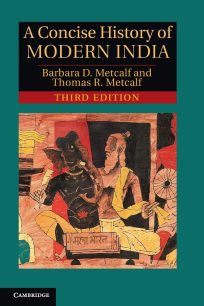
A Concise History of Modern India by Barbara D. Metcalf and Thomas R. Metcalf offers a broad historical interpretation of the transformation of the Indian subcontinent from the Mughal period to the early twenty-first century. Rather than presenting history as a succession of rulers, battles, and dates, the authors focus on the political institutions, social identities, and cultural developments through which modern India took shape.
The book examines the decline of Mughal authority, the expansion of the East India Company, the consolidation of British colonial rule, the development of Indian nationalism, the Partition of 1947, and the challenges of governing an independent democratic state. It also considers social and economic change, religious identity, caste, poverty, and India's growing role in the global economy.
The narrative begins with the political and social world of the Mughals and the regional states that emerged as Mughal authority weakened. The authors explore how political power was distributed and transformed across the subcontinent, providing context for the subsequent expansion of European trading companies.
This opening framework challenges the idea that British rule simply filled a political vacuum. The rise of regional powers, changing relationships between rulers and local elites, and the activities of commercial networks all contributed to the conditions in which the East India Company expanded its influence.
The book traces the transformation of the East India Company from a commercial enterprise into a territorial power. It examines how revenue collection, military force, administrative systems, and new forms of political authority reshaped Indian society.
Colonialism is treated not merely as foreign rule but as a reorganisation of institutions and relationships. The development of the colonial state affected landholding, economic life, education, political authority, and the ways communities understood their place within the emerging imperial order.
The authors examine the upheavals of the nineteenth century, including the rebellion of 1857 and the subsequent reorganisation of British rule. These developments changed the relationship between the colonial state and its subjects.
The discussion also addresses how colonial governance produced new categories, administrative practices, and political constraints. Resistance and adaptation existed alongside one another, as Indian communities and political actors responded to changing conditions in different ways.
The late nineteenth and early twentieth centuries saw the development of new political organisations, public debates, reform movements, and nationalist demands. The authors examine the emergence of the Indian National Congress and the changing forms of political participation under colonial rule.
Nationalism appears not as a single, unified movement but as a contested project shaped by different political visions, social interests, and understandings of Indian identity. The narrative explores how the idea of a nation developed within the institutional and cultural constraints of colonial society.
The book follows the growing challenges to British authority during the early twentieth century, including mass politics, the influence of Gandhi, and the emergence of competing visions for India's future.
It examines the tensions among nationalist unity, religious identity, and political representation that became increasingly consequential as independence approached. The account culminates in the events surrounding the end of British rule and the Partition of 1947, a transition that brought independence alongside enormous displacement and violence.
After 1947, the focus shifts to the institutions and political arrangements of the new Indian state. The authors explore democratic government, development planning, economic transformation, and the persistence of poverty and social inequality.
India's democratic institutions are presented alongside the challenges of governing a vast, diverse society. The book considers the relationship between political participation, social hierarchy, religious difference, and the uneven distribution of economic opportunity.
A recurring theme is that categories such as caste, Hindu, Muslim, and even India cannot always be treated as fixed or timeless. The authors examine how these identities acquired different meanings through historical experience, political institutions, social movements, and colonial practices.
This approach challenges simplified accounts in which religious and social communities are assumed to have existed unchanged throughout history. Instead, the book considers how identities were interpreted, organised, and mobilised under changing conditions.
The third edition's concluding chapter considers developments from 1990 through 2009, including economic liberalisation, technological growth, India's expanding global role, and continuing social challenges.
The authors present economic progress alongside persistent poverty, political unrest, and religious division. This provides a useful reminder that modernisation is neither uniform nor sufficient on its own to resolve longstanding inequalities.
The book's unifying argument is that modern India emerged through the transformation of political institutions and the changing meanings of social and religious identity. Colonial rule, nationalism, Partition, and democratic government are treated as connected processes rather than isolated historical episodes.
Its broad chronological scope makes it a useful introduction for readers who want to understand the connections between precolonial political structures, British imperial rule, the freedom struggle, and the challenges of independent India.
A Concise History of Modern India has been presented by Cambridge University Press as an established introduction to Indian history, and the publisher records favourable assessments from historians and scholars of South Asia. The book’s continued publication through three editions reflects its sustained use as a broad historical survey. Publisher endorsements, however, should be distinguished from independent scholarly reviews.
Historian Durba Ghosh describes the book as a carefully written work for engaged general readers and students of South Asia, calling it a classic in the field. Her endorsement highlights the book’s accessibility and its suitability as an introduction to a complex subject.
Critical significance: This assessment supports the book’s value as a teaching and orientation text. Its broad narrative makes it useful for readers who need a coherent historical framework before turning to specialised studies.
Historian Rochona Majumdar praises the book’s treatment of Indian history, culture, religion, and politics, particularly its ability to connect long-term historical developments with India’s position in the global economy. Her endorsement also highlights the authors’ attention to the contradictions and complexity of Indian democracy.
Critical significance: This assessment reflects the book’s effort to combine political history with social and economic change, rather than treating modern India solely as a story of colonialism and independence.
Historian C. A. Bayly’s endorsement of the book’s earlier publication describes it as a lucid and comprehensive introduction suitable for undergraduate and graduate courses on South Asian history. This highlights its value as a structured survey for students beginning advanced study.
Critical significance: The endorsement emphasises the book’s pedagogical usefulness and broad coverage. It is an assessment of the book as an introductory work, rather than evidence that every interpretation in its chapters is universally accepted.
The publisher’s third-edition description emphasises the book’s interpretation of the political and institutional structures that shaped India under colonial rule and after independence. Its account also integrates social and economic development with cultural history.
The same breadth that makes the book useful as a survey imposes limits. A concise narrative cannot provide equal depth on every region, community, or historical controversy. Readers investigating particular questions—such as the causes and consequences of Partition, the history of caste, or regional political movements—should supplement the overview with specialised scholarship.
Another important limitation is chronological. The third edition’s contemporary discussion ends around 2009, so it should not be used as a complete account of India’s subsequent political and economic developments.
The available endorsements support the book’s reputation as an accessible and analytically informed introduction to modern Indian history. Its principal value lies in the connections it draws between political institutions, colonial rule, nationalism, social identities, and post-independence democracy.
Overall: The book is particularly suitable as a foundational text for students and general readers. Its broad scope is an advantage for orientation, while readers conducting specialised or up-to-date research should use it alongside focused academic studies and newer publications.
HaqqFinder’s editorial rating assesses the book’s historical scope, analytical quality, accessibility, and value to its intended readership. These scores are editorial judgments, not reader-review averages.
| Evaluation Criteria | Weight | Score | Assessment |
|---|---|---|---|
| Content Quality & Depth | 20% | 4.7/5 | Provides a substantial, integrated account of India’s political and institutional transformation across several centuries. |
| Writing Style & Clarity | 15% | 4.5/5 | Offers an organised narrative suitable for students and engaged general readers, although the breadth of material requires concentration. |
| Relevance & Target Audience Fit | 15% | 4.8/5 | Highly relevant as an introductory text for Indian history, South Asian studies, and colonial and postcolonial history. |
| Originality & Creativity | 15% | 4.4/5 | Its strength lies in synthesising political, institutional, social, and cultural history rather than presenting an entirely new interpretation of every period. |
| Cultural & Ethical Sensitivity | 10% | 4.6/5 | Examines caste, religious identity, inequality, and the contested nature of national belonging. |
| Practical Value & Applicability | 10% | 4.6/5 | Useful for building a historical foundation and identifying topics for deeper study, though it is not a current-affairs reference. |
| Presentation & Design | 10% | 4.4/5 | Includes a structured chapter sequence, illustrations, biographical notes, bibliographic essay, and index. |
| Value for Price | 5% | 4.5/5 | A useful long-term reference for students and general readers; value depends on edition, format, and purchase price. |
| Weighted Overall Score | 100% | 4.57/5 | Excellent: a well-rounded introduction to the making of modern India. |
A Concise History of Modern India by Barbara D. Metcalf and Thomas R. Metcalf is a valuable introduction to the historical forces that shaped modern India. By connecting Mughal political structures, British colonialism, nationalist movements, Partition, and independent India’s democratic institutions, the authors provide readers with a broad framework for understanding the subcontinent’s transformation.
The book’s most important strength is its effort to connect political history with the changing meanings of caste, religion, national identity, and social inequality. Rather than treating India as an unchanging historical entity, it examines how institutions and identities developed through conflict, adaptation, and political negotiation.
Its breadth inevitably limits the depth available for individual events, regional experiences, and marginalised communities. Readers seeking detailed analysis of a particular period or a current account of Indian politics should supplement it with specialised and more recent research. Nevertheless, its clear structure and wide chronological scope make it a strong starting point for further study.
Final verdict: Highly recommended for students, researchers beginning their study of South Asia, and general readers seeking a historically grounded introduction to modern India. The third edition remains useful for understanding developments through 2009, but it should be supplemented with newer scholarship when studying contemporary India.
*When you purchase through this link, HaqqFinder may earn a small commission at no extra cost to you. Learn more
There are no reviews yet. Be the first one to write one.

Discover the brutal history of British colonial atrocities against Indian Muslims, from the 1857 rebellion to the Mopla uprising and beyond.