


In Islam, Fasting (Sawm – صوم) is one of the five pillars of the faith. It is far more than abstaining from food and drink—it is a deeply spiritual act that nurtures self-control, empathy, and closeness to Allah (SWT). Through fasting, a believer learns patience, gratitude, and awareness of both body and soul.
The Qur’an reminds us of its purpose:
“O you who believe! Fasting is prescribed for you as it was prescribed for those before you, that you may attain Taqwa.” (Qur’an 2:183)
In Islam, fasting holds a unique place. It appears in more than seventy verses of the Qur’an and is emphasized in numerous hadiths. From the obligatory fasts of Ramadan to voluntary fasts throughout the year, each form of Sawm carries its own wisdom and reward.
In this guide, we will explore the meaning, types, and rules of fasting in Islam, along with its spiritual and physical benefits. We will also look at how fasting connects believers across cultures and times, offering a path of purification, reflection, and nearness to the Creator.
What is Fasting in Islam? Definition and Importance
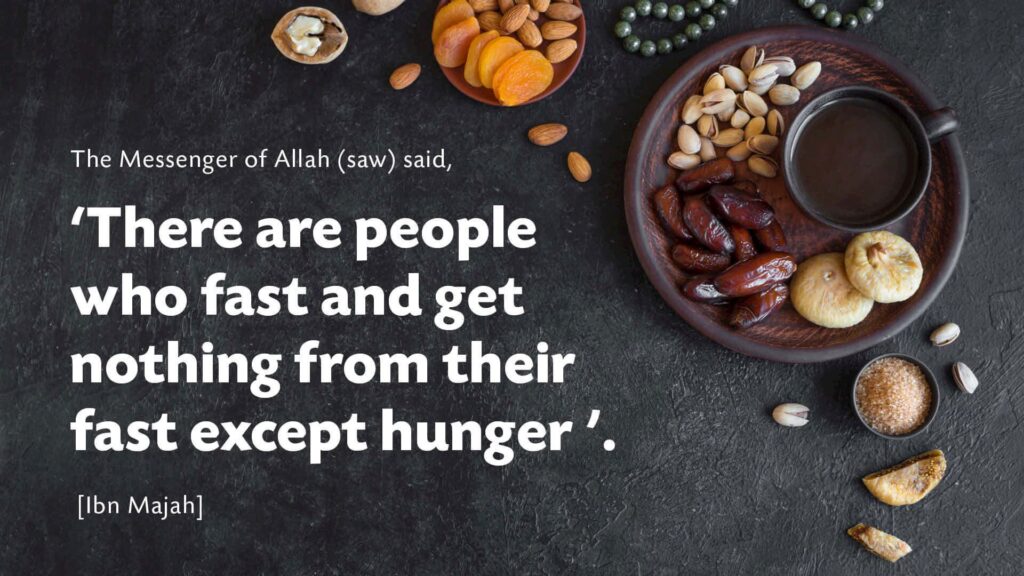
Fasting in Islam (Sawm) is the act of abstaining from food, drink, sexual relations, and sinful behaviors from dawn (Fajr) until sunset (Maghrib), performed with the intention (Niyyah) of worshipping Allah. It is obligatory during Ramadan for adult Muslims who are healthy and not traveling, but voluntary fasts are encouraged year-round. The Quran defines it as a means to achieve Taqwa: “Fasting is prescribed for you… that you may attain Taqwa” (Quran 2:183).
Importance: Fasting fosters self-discipline, empathy for the poor, spiritual purification, and community bonding. The Prophet (PBUH) said: “Fasting is a shield; so when one of you is fasting, he should neither indulge in obscene language nor raise his voice” (Sahih Bukhari). It also aligns with pre-Islamic practices, as fasting was prescribed for earlier nations (Quran 2:183).
Historical Origins from the Quran and Hadith
Fasting predates Islam, practiced by Jews, Christians, and Arabs. In Islam, it was revealed in 2 AH (624 CE) during Sha’ban, making Ramadan fasting obligatory. The Quran’s revelation began in Ramadan (Quran 2:185), linking fasting to divine guidance.
Hadith: The Prophet (PBUH) fasted most in Sha’ban (Sahih Bukhari). He said: “Whoever fasts Ramadan with faith and seeking reward will have past sins forgiven” (Sahih Muslim). Pre-Islamic Arabs fasted on Ashura (10th Muharram), which the Prophet continued initially (Sahih Bukhari).
Types of Fasting in Islam
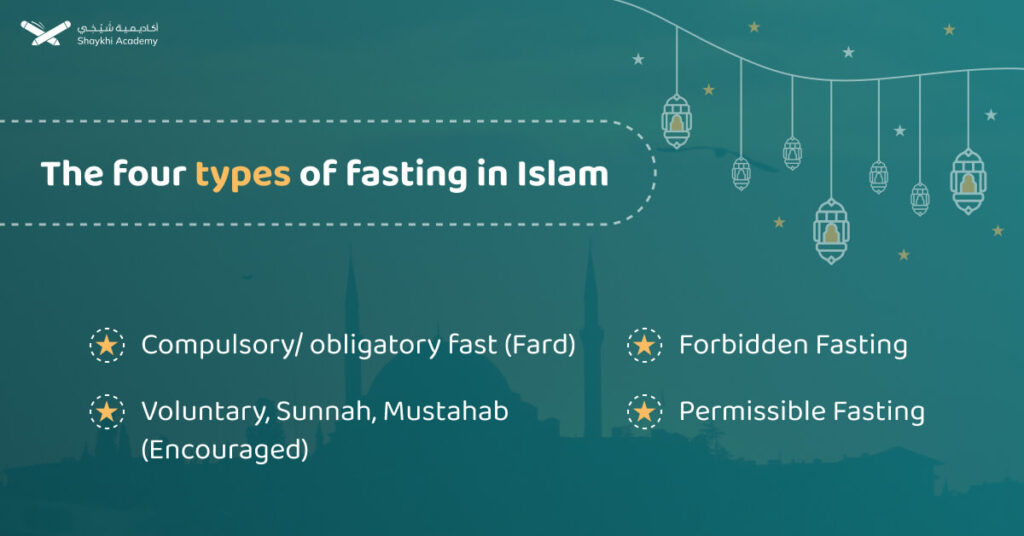
Obligatory Fasting (Fard)
- Ramadan Fasting: Mandatory for 29/30 days (Quran 2:185).
- Qada (Make-Up Fasts): For missed Ramadan fasts due to illness/travel.
- Kaffarah (Expiation): For intentionally breaking fast, e.g., feeding 60 poor or fasting 60 days.
Voluntary Fasting (Nawafil)
- Sunnah Fasts: Mondays/Thursdays, 13-15th of lunar months (white days).
- Recommended Fasts: Arafah (9th Dhul-Hijjah), Ashura (10th Muharram), six days of Shawwal.
- Tahajjud Fasts: Optional but rewarding, e.g., Davidic fast (alternate days).
Table: Types of Fasting
| Type | Description | Reference |
|---|---|---|
| Obligatory (Fard) | Ramadan, Qada, Kaffarah | Quran 2:183-185 |
| Voluntary (Nawafil) | Sunnah (Mondays, white days), Arafah, Ashura | Sahih Bukhari, Muslim |
| Prohibited | Eid days, Tashriq days | Sunan Abi Dawud |
Rules and Guidelines for Fasting
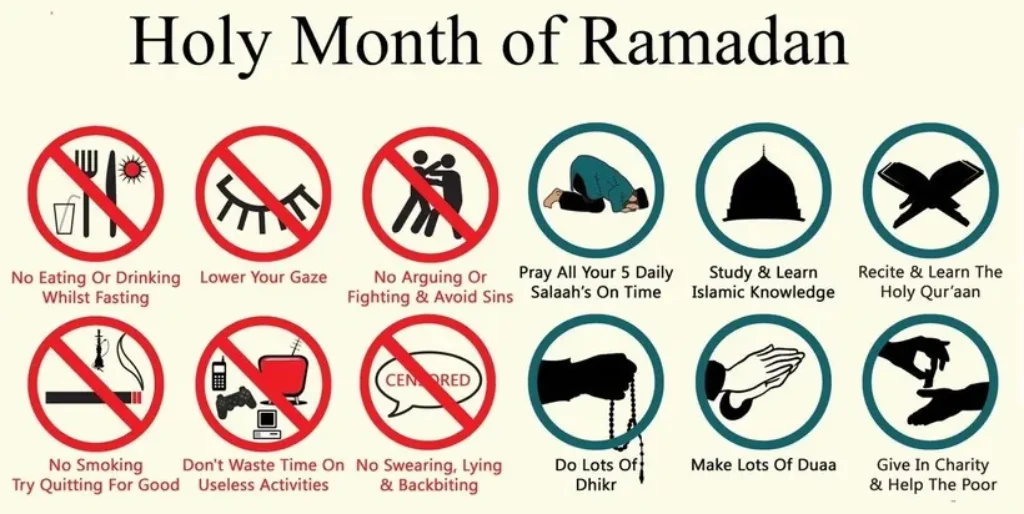
Who Must Fast?
Adult, sane Muslims who are healthy, not traveling, and (for women) not menstruating or postpartum (Quran 2:184).
Exemptions and Who is Excused
- Elderly, chronically ill: Feed one poor person per day (Fidya).
- Pregnant/nursing women: Make up later.
- Travelers, ill: Make up missed days.
- Children: Not obligatory but encouraged for practice.
What Breaks the Fast?
- Eating/drinking intentionally.
- Sexual intercourse.
- Vomiting intentionally.
- Menstruation/postpartum bleeding.
- Medical injections (nutritious); inhalers debated.
Making Up Missed Fasts (Qada)
Missed fasts must be made up before next Ramadan (Quran 2:184). If unable, Fidya applies.
Ramadan Fasting: The Pinnacle of Sawm
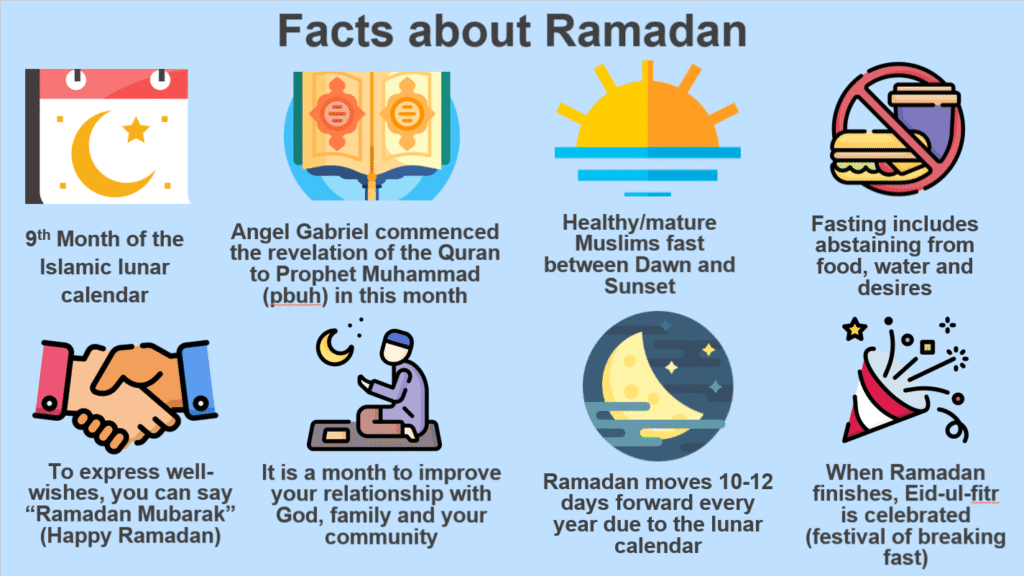
Ramadan, the 9th lunar month, is the peak. Revealed Quran was revealed during it (Quran 2:185). Fasts from Fajr to Maghrib.
Suhoor and Iftar: Pre-Dawn Meal and Breaking Fast
- Suhoor: Pre-dawn meal, blessed (Sahih Bukhari).
- Iftar: Break with dates/water (Sunan Abi Dawud), followed by Maghrib Salah.
Taraweeh and Night Prayers
Nightly congregational prayers (8-20 Rak’ahs), reciting the Quran.
Lailat al-Qadr: The Night of Power
Better than 1,000 months (Quran 97:3). Seek in the last 10 nights.
Spiritual Benefits of Fasting
Fasting in Islam is not merely about hunger or thirst—it is a journey of the soul. Through abstaining from worldly desires, a believer draws nearer to Allah (SWT) and strengthens the bond of faith. The essence of fasting lies in developing Taqwa (God-consciousness)—the awareness that Allah is watching in every moment, even when no one else is.
When one fasts sincerely, the heart softens, pride diminishes, and gratitude deepens. Fasting teaches patience, humility, and empathy for those who suffer. It purifies the inner self, helping a person detach from material distractions and focus on spiritual growth.
The Prophet Muhammad (peace be upon him) said:
“Whoever fasts Ramadan with faith and seeking reward from Allah will have his past sins forgiven.”
(Sahih al-Bukhari, 38; Sahih Muslim, 760)
Thus, fasting becomes a means of renewal—a way to cleanse the heart, increase sincerity in worship, and attain tranquility through remembrance of Allah.
So, in Short, fasting’s spiritual benefits are:
- Taqwa development (Quran 2:183).
- Forgiveness of sins (Hadith in the Muslim).
- Empathy for the poor.
- Self-discipline against desires.
Al-Ghazali in Ihya Ulum al-Din: Fasting purifies the heart, elevates the soul.
Health Benefits: Physical and Mental Wellness
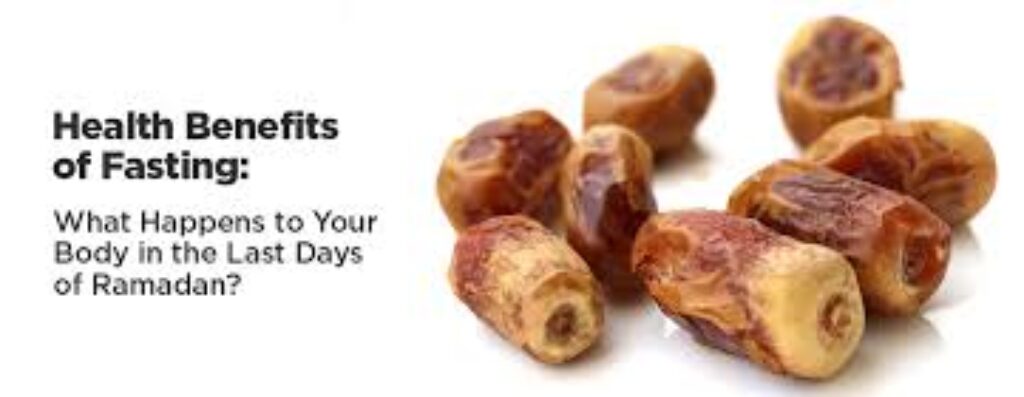
Fasting in Islam is not only a form of worship but also a powerful way to restore balance in both body and mind. While its primary purpose is spiritual, modern science continues to reveal the remarkable health benefits associated with this ancient practice.
During fasting, the body enters a state of rest and renewal. The digestive system gets time to recover, allowing cells to repair and detoxify naturally. Studies have shown that fasting can help regulate blood sugar levels, reduce inflammation, support heart health, and promote weight balance. It may also enhance metabolism and delay the effects of aging by triggering a process known as autophagy, where the body cleans out damaged cells and regenerates new ones.
Beyond physical health, fasting also brings significant mental and emotional benefits. It teaches self-control, reduces stress, and improves focus and emotional stability. By reducing dependency on food and material comfort, the mind learns clarity and discipline. Many people report feeling lighter, calmer, and more grateful during Ramadan and other fasting periods.
Thus, fasting in Islam serves as a holistic act—purifying the body, uplifting the mind, and rejuvenating the soul—all in harmony with the divine wisdom of Allah (SWT).
In short, Intermittent fasting aligns with Islamic practice.
- Studies (NIH 2024): Weight loss, improved insulin sensitivity, reduced inflammation.
- Mental: Reduced stress, better focus (Harvard Health 2023).
Table: Health Benefits
| Benefit | Description | Reference |
|---|---|---|
| Physical | Metabolic health, longevity | NIH Studies |
| Mental | Anxiety reduction, cognitive boost | Harvard Health |
| Scientific | Cellular repair (autophagy) | Nobel Prize 2016 (Yoshinori Ohsumi) |
Social and Community Aspects
Fasting in Islam is not merely a personal act of worship—it has a profound impact on social and community life. It is an act that brings people closer together, strengthening the bonds of brotherhood and unity among believers.
During the month of Ramadan, the entire Muslim Ummah fasts together, breaks their fast at the same time, and shares a common purpose of purification and devotion. This shared experience fosters unity, compassion, and equality within the community. The rich and the poor, the educated and the uneducated—all experience the same hunger and thirst, which nurtures empathy and understanding among them.
Fasting also teaches believers to feel the pain of those who are less fortunate. This is why Islam places great emphasis on charity, zakat, and feeding others during iftar. Such acts build a culture of generosity, care, and social justice.
The collective prayers in mosques, community iftars, and Eid gatherings further highlight the social dimension of fasting. It is not only a form of worship but also a communal bond that strengthens love and brotherhood in the hearts of Muslims.
Thus, fasting in Islam goes beyond individual purification—it nurtures social harmony, compassion, and humanity, reflecting the true beauty of the Islamic way of life.
Fasting in Different Islamic Schools of Thought
While fasting (Sawm) is universally recognized as one of the five pillars of Islam, the interpretation of its details and rulings may vary slightly among the major Islamic schools of thought—Hanafi, Maliki, Shafi‘i, Hanbali, and Ja‘fari (Shia). These differences do not change the essence of fasting but reflect the richness and diversity within Islamic jurisprudence (Fiqh).
1. The Hanafi School
The Hanafi scholars emphasize intention (niyyah) before Fajr and maintain that swallowing anything intentionally, even without nourishment, invalidates the fast. They hold a stricter view on actions like rinsing the mouth excessively during fasting hours. Voluntary fasts can be broken, but doing so without a valid reason is makruh (discouraged).
2. The Maliki School
According to the Malikis, the niyyah for fasting can be made at any point during the night before Fajr, and one general intention can suffice for the whole month of Ramadan. They consider that minor forgetfulness in fasting does not break the fast, and emphasis is placed on spiritual awareness over excessive legal detail.
3. The Shafi‘i School
The Shafi‘i school requires a specific intention for each fast, to be made every night before dawn. They also consider anything that reaches the stomach intentionally—even through medicine or inhalation—as breaking the fast. Their rulings are meticulous, focusing on purity of intention and careful observance of boundaries.
4. The Hanbali School
Hanbali are similar to Shafi‘is in requiring a daily intention but are slightly more flexible regarding unintentional acts. They stress the spiritual dimension of fasting and encourage voluntary fasts, such as those on Mondays and Thursdays and on the white days (13th–15th of each lunar month).
5. The Ja‘fari (Shia) School
In the Ja‘fari tradition, fasting begins at true dawn (al-fajr al-sadiq) and ends at full sunset (ghurub al-shams). Intention is also necessary before Fajr, but they differ slightly in defining what invalidates the fast—for instance, ghibah (backbiting) and deliberate lying about Allah or His Messenger are considered spiritually invalidating acts.
Despite these variations, all schools agree that fasting is an act of devotion meant to attain Taqwa, purify the heart, and strengthen the believer’s connection with Allah (SWT). These differences illustrate Islam’s intellectual depth and its respect for sincere diversity in seeking divine closeness.
Common Misconceptions About Fasting in Islam
Fasting in Islam is widely practiced, yet several misunderstandings and myths often circulate, even among Muslims. Clarifying these misconceptions helps believers observe fasting correctly and appreciate its true purpose—spiritual growth, self-discipline, and closeness to Allah (SWT).
1. Fasting Is Only About Abstaining from Food and Drink
Many people think fasting only involves refraining from eating and drinking. While these are key components, fasting also requires avoiding sinful behavior, such as lying, backbiting, gossip, anger, and immoral acts. True fasting is both physical and spiritual.
2. Children Cannot Fast
Some assume that fasting is strictly for adults. In reality, children are encouraged to begin fasting once they reach an age of understanding and responsibility, often around puberty. Many families start children with partial fasts to gradually teach the practice.
3. Fasting Leads to Weakness and Ill Health
While fasting does temporarily reduce food and drink intake, when observed correctly, it strengthens the body and mind. Studies show that intermittent fasting can improve metabolism, promote heart health, and support mental clarity. Islam also provides exemptions for those who are ill, pregnant, nursing, or traveling.
4. Breaking Fast Early Is Always Wrong
Breaking the fast intentionally without a valid reason is prohibited, but Islam allows flexibility for health or unavoidable circumstances. Those who cannot fast for legitimate reasons can make up missed days later or provide fidya (feeding the needy) if unable to fast.
5. Fasting Only During Ramadan
While Ramadan is the obligatory month of fasting, Islam encourages voluntary fasts throughout the year—such as Mondays and Thursdays, the six days of Shawwal, and the Day of Arafah—which hold great spiritual reward.
6. Fasting Is Only About Hunger and Thirst
Some mistakenly view fasting as merely a form of physical deprivation. In reality, fasting is an act of self-discipline and purification, training the believer to control desires, increase patience, and strengthen spiritual awareness.
By understanding and correcting these misconceptions, Muslims can experience fasting in its full spiritual, physical, and social dimensions.
How to Prepare for Fasting: Tips for Beginners
- Gradual practice in Sha’ban.
- Hydrate during non-fasting hours.
- Balanced Suhoor/Iftar.
- Spiritual focus: Quran reading, Du’a.
To learn more in detail, check here: The beginner’s guide to prepare for fasting.
Fasting During Travel, Illness, or Special Circumstances
Islam recognizes that fasting may not always be feasible for everyone at all times. There are valid circumstances where a person may be excused from fasting, ensuring that worship remains balanced with health and well-being.
1. Fasting During Travel
Travelers are permitted to break their fast if fasting causes hardship or excessive fatigue. The Qur’an states:
“But if any of you is ill or on a journey, the same number [of days] should be made up later.” (Quran 2:185)
Muslims who miss fasts while traveling are required to make up the missed days when they are able. Short-distance travel usually does not exempt fasting unless it is genuinely difficult.
2. Fasting During Illness
Those who are ill, recovering, or have chronic conditions that fasting could worsen are allowed to refrain from fasting. Islam emphasizes preserving health: fasting is not obligatory if it poses a serious risk. Missed fasts can be made up later or compensated through fidya if necessary.
3. Women During Pregnancy or Nursing
Pregnant or breastfeeding women may find fasting physically challenging or risky for themselves or their child. Islam permits them to postpone fasting, making up the days later or offering fidya if unable to fast at all.
4. Menstruation and Postnatal Bleeding
Women experiencing menstruation or postnatal bleeding are not allowed to fast during these times. They must make up the missed fasts after their period or recovery.
5. Special Circumstances
Other valid reasons, such as extreme weather, intense labor, or any situation causing serious hardship, may also justify breaking a fast. The guiding principle in Islam is ease and mercy; worship should not endanger one’s health or well-being.
Islam’s approach balances spiritual devotion with compassion and practicality, ensuring that fasting remains a means of purification and closeness to Allah (SWT) without undue hardship.
Voluntary Fasts: Sunnah and Recommended Days
- Mondays/Thursdays: Prophet fasted (Tirmidhi).
- Ashura: For Moses’ victory (Bukhari).
- Arafah: Expia tes sins (Muslim).
Fasting in Global Contexts: Cultural Variations
While the spiritual essence of fasting in Islam remains universal, the ways it is practiced can vary across cultures and countries. These variations reflect local traditions, climates, and lifestyles, enriching the global Muslim experience without altering the core purpose of Sawm.
1. Timing and Daylight Differences
Fasting hours can differ significantly depending on the region. For instance, Muslims in Scandinavia or Alaska may face extremely long daylight hours in summer, sometimes exceeding 20 hours. Scholars provide guidance for adjusting fasting hours in such extreme cases to ensure the practice remains manageable.
2. Suhoor and Iftar Traditions
Cultural customs strongly influence pre-dawn (Suhoor) and sunset (Iftar) meals. In South Asia, dishes like dates, fruits, and parathas are common, while in the Middle East, lentil soups, samosas, and dates are traditional. In Southeast Asia, sweet drinks and rice-based dishes often dominate. Despite regional differences, the principle of breaking the fast with something light and nutritious remains constant.
3. Community Gatherings
Around the world, communities enhance the social aspect of fasting through collective prayers, charity, and shared Iftar meals. In some cultures, mosques host large communal Iftars, while in others, families and neighbors take the lead in fostering togetherness.
4. Festivals and Local Customs
Cultural nuances shape the celebration of Eid al-Fitr, marking the end of Ramadan. From special dishes to local festivities, each community adds unique flavors to the global observance, while maintaining the religious obligations of charity (Zakat al-Fitr) and prayers.
5. Adaptations for Climate and Lifestyle
In very hot climates, light meals and hydration strategies are emphasized. In colder regions, high-energy meals are common to sustain long fasting hours. These adaptations reflect Islam’s flexibility and accommodation of human needs while preserving the spiritual discipline of Sawm.
Fasting across different cultures demonstrates the diverse yet unified nature of Islam, showing how a single act of worship can harmonize faith, tradition, and community life around the world.
Scientific Research on Islamic Fasting
Islamic fasting, particularly during Ramadan, has attracted significant attention from modern scientific research. Numerous studies have explored its effects on physical health, mental well-being, and metabolic function, highlighting both short-term and long-term benefits.
1. Metabolic and Cardiovascular Benefits
Research shows that fasting can improve blood sugar regulation, lipid profiles, and blood pressure. For example, a study on healthy adult males found significant reductions in body weight, BMI, plasma glucose, and insulin levels after Ramadan fasting (2015, PubMed ID: 26155596). Another study reported improvements in HDL cholesterol, fasting plasma glucose, and insulin sensitivity among participants with metabolic syndrome (2008, PubMed ID: 18053308). Intermittent fasting during Ramadan has also been associated with lower cholesterol, reduced triglycerides, and improved cardiovascular risk markers, including systolic blood pressure and waist circumference (2012, PubMed ID: 22963582). These findings suggest that fasting, when practiced responsibly, may reduce the risk of heart disease and diabetes.
2. Weight Management and Detoxification
Fasting regulates calorie intake and encourages the body to utilize stored fat for energy, aiding in weight management. Additionally, fasting triggers autophagy, a natural process in which the body cleans out damaged cells and regenerates new ones. A recent study on overweight and obese adults practicing dawn-to-dusk intermittent fasting showed significant upregulation of autophagy genes (e.g., LAMP2, LC3B, ATG5), accompanied by reductions in fat mass, LDL cholesterol, and inflammatory markers (2024, PubMed ID: 39542136). This demonstrates the potential of fasting to support overall cellular health and detoxification.
3. Mental Clarity and Cognitive Benefits
Scientific studies indicate that fasting can enhance focus, attention, and mental clarity. Reduced caloric intake during fasting may increase neurotrophic factors in the brain, which support learning and memory. For instance, elderly participants showed improvements in executive function, attention, inhibition, and memory during Ramadan fasting (2022, PubMed ID: 36438750). Many fasting individuals also report feeling more alert and spiritually focused, highlighting the interaction between physical and mental well-being.
4. Hormonal and Anti-Inflammatory Effects
Fasting affects hormones such as human growth hormone (HGH) and cortisol, supporting fat metabolism and stress regulation. Studies have also shown a decrease in inflammatory markers (e.g., IL-6, TNF-α) during Ramadan fasting, which may help prevent chronic diseases and support overall health (2024, PubMed ID: 39542136).
5. Alignment with Spiritual Benefits
Interestingly, the physiological effects of fasting often complement its spiritual benefits. Self-restraint, mindfulness, and emotional regulation during fasting reinforce both mental and physical well-being. This synergy between science and spirituality highlights the holistic nature of Islamic fasting, showing that it is simultaneously a health practice and a profound act of worship.
Hadith and Quranic Verses on Fasting
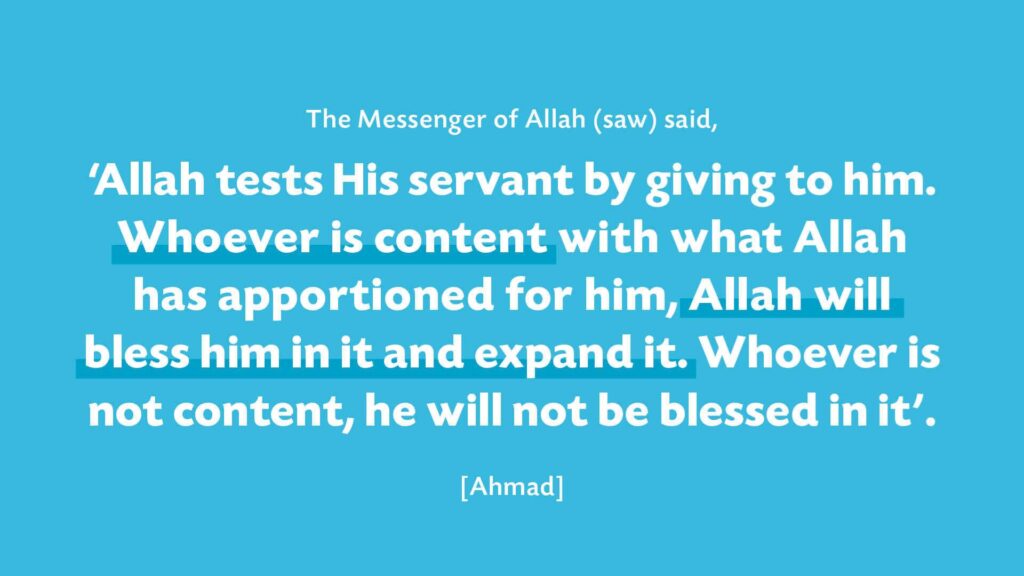
Fasting in Islam is deeply rooted in the Quran and Hadith, which guide its obligations, spiritual significance, and proper conduct. These texts emphasize fasting as a means of attaining Taqwa (God-consciousness), self-discipline, and moral refinement.
1. Quranic Verses on Fasting
- Obligation of Fasting:
“O you who believe! Fasting is prescribed for you as it was prescribed for those before you, that you may attain Taqwa.”
(Quran 2:183)
- Exemptions and Flexibility:
“But if any of you is ill or on a journey, the same number [of days] should be made up later. And for those who are able, there is [the reward of] feeding a poor person.”
(Quran 2:184)
- Spiritual Benefits:
“It is better for you that you fast, if only you knew.”
(Quran 2:184)
These verses highlight that fasting is both a physical practice and a spiritual discipline, encouraging believers to cultivate mindfulness, patience, and empathy.
2. Hadith on Fasting
- Fasting as Shield:
The Prophet Muhammad (peace be upon him) said:
“Fasting is a shield; it will protect you from the Hellfire and prevent you from sins.”
(Sahih Muslim)
- Reward and Mercy:
“Whoever fasts Ramadan out of faith and seeking reward, all his past sins will be forgiven.”
(Sahih Bukhari & Sahih Muslim)
- Behavior During Fasting:
“The one who does not give up false statements and evil deeds while fasting, Allah is not in need of him giving up his food and drink.”
(Sahih Bukhari & Sahih Muslim)
This Hadith reminds believers that fasting is not only abstention from food and drink but also moral and ethical restraint.
3. Additional Guidance
- Breaking the Fast (Iftar):
The Prophet (peace be upon him) encouraged breaking the fast with dates or water and supplication:
“When one of you breaks his fast, let him do so with dates; if there are no dates, then with water, for it is purifying.”
(Sunan Abu Dawood)
- Voluntary Fasting:
In addition to Ramadan, the Prophet also recommended voluntary fasts on specific days such as Mondays, Thursdays, and the six days of Shawwal, highlighting extra spiritual reward.
These Quranic verses and Hadith together establish fasting as a central pillar of Islam, combining spiritual, ethical, and communal dimensions, while offering practical guidance on its observance.
Scholarly Perspectives on Sawm
Fasting (Sawm) in Islam has been examined and interpreted by scholars across centuries, providing jurisprudential, spiritual, and practical guidance. These perspectives help Muslims understand not just the rules of fasting, but also its ethical, psychological, and communal dimensions.
1. Classical Scholars
- Imam al-Ghazali (d. 1111 CE):
Al-Ghazali emphasized that fasting is not only about abstaining from food and drink but also about purifying the heart and controlling one’s desires. He noted that true fasting involves avoiding sinful speech, greed, and negative behavior, aligning spiritual discipline with moral development. - Ibn Taymiyyah (d. 1328 CE):
Ibn Taymiyyah highlighted the inner dimension of fasting, emphasizing sincerity (ikhlas) and intention (niyyah). He stressed that a fast is valid not just through physical abstention but through mindful submission to Allah (SWT). - Ibn al-Qayyim (d. 1350 CE):
Ibn al-Qayyim elaborated on the psychological benefits of fasting, including self-restraint, increased patience, and spiritual elevation. He argued that fasting trains the soul to align desires with divine guidance, leading to greater closeness to Allah.
2. Fiqh Schools of Thought
Different Islamic jurisprudential schools have nuanced positions regarding fasting:
- Hanafi: Requires intention (niyyah) before dawn for a valid fast; minor mistakes like accidental swallowing do not invalidate the fast.
- Shafi’i: Emphasizes continuous intention throughout the day; invalidates the fast if deliberate violations occur.
- Maliki: Highlights the spiritual dimension, stressing that fasting without moral restraint diminishes its value.
- Hanbali: Stresses strict adherence to rules but recognizes allowances for illness, travel, and special circumstances.
3. Contemporary Scholars
Modern scholars continue to explore fasting’s health, psychological, and societal impacts, integrating classical knowledge with scientific findings. They emphasize that fasting should be practiced responsibly, balancing spiritual objectives with physical health, especially in extreme climates, long daylight hours, or among those with medical conditions.
4. Key Takeaways from Scholarly Views
- Fasting is both outward and inward: Abstaining from food and drink is important, but ethical and spiritual conduct is equally essential.
- Intention (niyyah) and sincerity (ikhlas) are central for acceptance of the fast.
- Fasting is a means of self-discipline, empathy, and social harmony, not merely a ritual.
- Flexibility exists for illness, travel, pregnancy, and menstruation, reflecting Islam’s balance of spiritual and practical considerations.
Overall, scholarly perspectives show that Sawm is a holistic practice, integrating physical restraint, spiritual growth, moral development, and social consciousness.
Modern Challenges
While fasting (Sawm) remains a central pillar of Islam, practicing it in the modern world presents unique challenges that differ from classical times. These challenges stem from lifestyle changes, work demands, health concerns, and global variations in daylight hours.
1. Long Daylight Hours in Certain Regions
In countries far from the equator, such as Scandinavia, Alaska, or northern Canada, summer days can exceed 18–20 hours of daylight. Fasting for such extended periods can be physically demanding. Scholars recommend following the timetable of the nearest moderate city or averaging fasting hours to maintain both spiritual intent and physical well-being.
2. Work and Academic Demands
Modern work schedules, night shifts, and academic obligations can make suhoor (pre-dawn meal) and iftar (breaking fast) timing challenging. Fatigue, concentration issues, and missed meals may affect productivity, requiring careful meal planning, hydration, and sleep management.
3. Health Concerns
People with chronic illnesses such as diabetes, heart disease, or kidney problems may face risks if fasting without medical guidance. Pregnant or breastfeeding women also require careful consideration. Modern scholars and physicians emphasize conditional exemptions and medically supervised fasting when necessary.
4. Urban Lifestyle and Fast Food
Urbanization has changed eating habits. Many rely on processed foods and high-sugar meals during suhoor or iftar, which can lead to energy spikes, crashes, and poor digestion. Balancing nutrition with convenience is a modern challenge for maintaining the health benefits of fasting.
5. Digital Distractions and Social Media
The constant connectivity of modern life can reduce the spiritual focus of fasting. Time spent on social media, entertainment, or work may distract from prayers, reflection, and Quranic recitation, which are integral to the spiritual essence of Sawm.
6. Climate and Physical Activity
In hot climates, fasting can lead to dehydration and heat stress, especially for outdoor workers or athletes. Conversely, cold climates may require higher energy intake to maintain body warmth during long fasting hours. Adapting fasting practices to environmental conditions is essential.
7. Maintaining Social and Family Bonds
Modern migration, busy schedules, and fragmented families can make communal iftars and family gatherings difficult. Preserving the social and communal dimension of Ramadan requires deliberate effort, particularly in multicultural or non-Muslim societies.
Modern challenges of Sawm highlight the need for flexibility, planning, and awareness. Islam provides exemptions and allowances for travel, illness, and hardship, ensuring that fasting remains both spiritually meaningful and physically sustainable. Balancing tradition with contemporary life requires mindfulness, preparation, and a focus on both health and spirituality.
Timeline of Fasting in Islamic History
| Period / Year | Event / Milestone | Significance |
|---|---|---|
| 610 CE | First Revelation to Prophet Muhammad (SAW) | Beginning of Islam; fasting as part of later revealed commandments. |
| 2 AH (624 CE) | Ramadan fasting prescribed | Quranic command in Surah Al-Baqarah (2:183) established obligatory fasting for Muslims. |
| 624–632 CE | Early practice in Medina | Prophet Muhammad (SAW) and companions observe fasting, including Ramadan, voluntary fasts (e.g., Mondays, Thursdays, Ashura). |
| 7 AH (628 CE) | Tarawih prayers and night fasting practices were established | Fasting of Ashura is emphasized |
| 8–10 AH | Beginning of Islam; fasting as part of the later revealed commandments. | Development of communal and spiritual aspects of Ramadan fasting. |
| 632 CE | Prophet Muhammad (SAW) passes away | Scholarly works on the fiqh of fasting; commentaries by classical scholars (e.g., Al-Ghazali, Ibn Qudamah). |
| 661–750 CE | Umayyad Caliphate | Standardization of Ramadan fasting, dates, and practices; introduction of public communal iftars. |
| 750–1258 CE | Abbasid Caliphate | Commemoration of historical events (Moses and Pharaoh) and voluntary fasts are recognized. |
| 13th–14th Century CE | Ibn Taymiyyah & Ibn al-Qayyim | Emphasis on spiritual dimensions and psychological benefits of fasting. |
| 19th–20th Century | Modern scholarship & health research | Integration of scientific studies with classical Islamic guidance on fasting. |
| 21st Century | Global practice & research | Companions continue the practice of fasting as prescribed; expansion across the Arabian Peninsula. |
Frequently Asked Questions (FAQs) on Fasting in Islam
A. About Fasting
A1. Did fasting exist before Islam?
Yes. Fasting was practiced by earlier prophets and communities, including those of Moses and Jesus (peace be upon them).
A2. Did Islam invent fasting?
No. Islam did not invent fasting; it continued and perfected it as a divinely ordained act of worship.
A3. Does Islamic fasting help lose weight?
Yes, when practiced properly. Fasting helps regulate metabolism and can support healthy weight management.
A4. Does water break fasting in Islam?
Yes. Drinking water intentionally invalidates the fast.
A5. Does fasting appear in the Quran?
Yes. Fasting is mentioned in Surah Al-Baqarah (2:183–187), which outlines its rules and spiritual purpose.
B. Before and During Fasting
B1. Can I brush while fasting in Islam?
Yes, brushing is allowed, but avoid swallowing toothpaste or water.
B2. Can I chew gum while fasting?
No. Chewing gum breaks the fast because it involves swallowing flavored residue.
B3. Can I use an inhaler while fasting?
Most scholars say yes only if medically necessary, but it may invalidate the fast if particles reach the throat or stomach.
B4. Can I use Vicks while fasting?
Topical Vicks (applied on skin or chest) is permissible, but inhaling deeply may invalidate the fast.
B5. Can I take injections while fasting?
Injections for nutrition break the fast; medical injections (like insulin or vaccines) do not.
B6. Can you sleep while fasting?
Yes. Sleep does not affect your fast.
B7. Can you smoke while fasting in Islam?
No. Smoking invalidates the fast and is considered haram (forbidden).
B8. Can we kiss during fasting in Islam?
Yes, if it does not lead to sexual arousal. Intercourse, however, breaks the fast.
B9. Can we shave while fasting in Islam?
Yes, shaving does not break the fast.
B10. Can you swim while fasting in Islam?
Yes, as long as you don’t swallow water.
C. Conditions, Rules, and Prohibitions
C1. How many days of fasting are haram in Islam?
Five days:
- Eid al-Fitr (1 day)
- Eid al-Adha (1 day)
- Days of Tashreeq (11th, 12th, 13th Dhul-Hijjah)
C2. What are the conditions of fasting in Islam?
You must be a Muslim, sane, post-puberty, and physically able.
C3. What are the rules of fasting in Islam?
- Make intention (niyyah) before dawn.
- Abstain from food, drink, and sexual activity.
- Avoid sinful speech or behavior.
C4. What are the things that spoil fasting in Islam?
- Eating or drinking intentionally.
- Sexual intercourse.
- Deliberate vomiting.
- Taking anything into the body through the mouth or nose.
D. Days and Timing of Fasting
D1. What are the fasting days in Islam?
- Ramadan (obligatory)
- Mondays and Thursdays
- 6 days of Shawwal
- 9th & 10th Muharram (Ashura)
- Day of Arafah (9th Dhul-Hijjah)
D2. What time does fasting start and end in Islam?
Start at Fajr (dawn) and end at Maghrib (sunset).
D3. When do you start fasting in Islam?
When the new moon of Ramadan is sighted.
D4. When do you stop eating during fasting?
Stop eating before the Adhan of Fajr begins.
D5. How long does fasting last in Islam?
Each daily fast lasts from dawn until sunset.
E. Fasting Obligations and History
E1. When did fasting become obligatory in Islam?
In the second year after Hijrah (2 AH / 624 CE).
E2. When was fasting made mandatory in Islam?
Same as above — 2 AH, in the month of Sha’ban before Ramadan.
E3. When was the first fast in Islam?
The first Ramadan fasts began in 2 AH.
E4. Where did fasting originate in Islam?
In Medina, after the Prophet ﷺ received the revelation of Surah Al-Baqarah (2:183).
F. How to Fast
F1. How to do fasting in Islam?
- Make an intention before dawn.
- Stop eating at Fajr.
- Avoid food, drink, and sin until Maghrib.
- Breakfast with dates and water.
F2. How to make an intention for fasting in Islam?
Say in heart or words:
“I intend to fast tomorrow for the sake of Allah (SWT) in Ramadan.”
F3. How to start fasting in Islam?
Eat Suhoor before dawn, make intention, and begin at Fajr.
F4. How to make fasting easier in Islam?
- Eat balanced meals.
- Avoid heavy work during the day.
- Get enough rest.
- Focus on the dua and the Quran for spiritual strength.
G. Importance and Benefits
G1. What are the benefits of fasting in Islam?
- Improves self-discipline and Taqwa.
- Strengthens empathy for the poor.
- Promotes physical and mental health.
G2. What are the rewards of fasting in Islam?
- Forgiveness of sins (Sahih Muslim)
- Entry to Jannah through the gate Ar-Rayyan.
- Immense spiritual elevation.
G3. What is the importance of fasting in Islam?
It is the fourth pillar of Islam, purifying both body and soul.
G4. What is the significance of fasting in Islam?
It symbolizes obedience, gratitude, and self-purification before Allah.
G5. Why is fasting important in Islam?
Because it cultivates faith, patience, and moral strength, fulfilling a key act of worship.
H. Spiritual Practices and Etiquette
H1. What to do before fasting in Islam?
- Eat Suhoor (pre-dawn meal)
- Make intention (niyyah)
- Perform Fajr prayer
H2. What to do while fasting in Islam?
- Avoid sins, gossip, and anger
- Increase Quran recitation and charity
H3. What not to do when fasting in Islam?
Avoid lying, arguing, gossiping, and wasting time.
H4. What to say before fasting in Islam?
“Wa bisawmi ghadin nawaytu min shahri Ramadan”
(“I intend to fast tomorrow in the month of Ramadan.”)
H5. What to read when fasting in Islam?
- Qur’an, especially Surah Al-Baqarah and Surah Al-Mulk.
- Dua at iftar:
“Allahumma inni laka sumtu wa bika aamantu wa ‘alayka tawakkaltu wa ‘ala rizqika-aftartu.”
I. Who Must Fast
I1. When do boys and girls have to start fasting?
When they reach puberty. Children can practice gradually before that.
I2. Is fasting compulsory in Islam?
Yes. Fasting during Ramadan is fard (obligatory) for every adult Muslim.
I3. Is fasting required in Islam?
Yes, it is a pillar of Islam (alongside prayer, zakat, hajj, and shahadah).
J. Miscellaneous
J1. Where is fasting mentioned in the Bible?
In several verses — Moses (Exodus 34:28) and Jesus (Matthew 4:2) — show that fasting was a universal act of devotion.
J2. How does fasting work in Islam?
By abstaining from desires to strengthen one’s spirit, patience, and obedience to Allah.
J3. How many types of fasting in Islam?
- Fard (Obligatory): Ramadan
- Nafl (Voluntary): Mondays, Thursdays, Ashura, Arafah
- Qada (Make-up): Missed fasts
J4. How many fasting days do Muslims have?
- 29 or 30 days in Ramadan each year.
Conclusion
Fasting in Islam is a transformative pillar fostering spiritual growth, health, and community. From Ramadan to voluntary fasts, it reminds us of purpose. Embrace Sawm for eternal rewards.
References
Primary Sources
- The Qur’an, Surah al-Baqarah 2:183–187, 185.
- Muhammad ibn Isma‘il al-Bukhari, Sahih al-Bukhari (Riyadh: Darussalam, 1997).
- Muslim ibn al-Hajjaj, Sahih Muslim (Beirut: Dar al-Kutub al-‘Ilmiyyah, 1998).
- Abu ‘Isa al-Tirmidhi, Jami‘ al-Tirmidhi.
- Abu Dawood al-Sijistani, Sunan Abi Dawood.
- Ahmad ibn Hanbal, Musnad Ahmad.
Classical Works
- Ibn Kathir, Tafsir al-Qur’an al-‘Azim (Beirut: Dar al-Ma‘rifah, 2000).
- Al-Nawawi, Al-Majmu‘ Sharh al-Muhadhdhab (Cairo: Dar al-Fikr).
- Al-Qurtubi, Al-Jami‘ li Ahkam al-Qur’an (Beirut: Dar al-Kutub al-‘Ilmiyyah).
- Wahbah al-Zuhayli, Al-Fiqh al-Islami wa Adillatuhu (Damascus: Dar al-Fikr, 1985).
- Ibn al-Qayyim, Zad al-Ma‘ad (Beirut: Mu’assasat al-Risalah, 1994).
Modern Fiqh and Fatwas
- Abdul Aziz bin Baz, Majmu‘ Fatawa wa Maqalat Mutanawwi‘ah, Vol. 15 (Riyadh: Dar al-Qasim, 1995).
- Muhammad ibn Salih al-Uthaymeen, Fatawa Arkan al-Islam (Riyadh: Dar al-Thurayya, 1998).
- Majma‘ al-Fiqh al-Islami, Resolution No. 93, “Medical Treatments and Fasting” (Jeddah: OIC, 1997).
Scientific Research
- Mark P. Mattson, “The Benefits of Intermittent Fasting in Health and Disease,” The New England Journal of Medicine 381, no. 26 (2019): 2541–2551.
- Valter D. Longo and Satchidananda Panda, “Fasting, Circadian Rhythms, and Time-Restricted Feeding in Healthy Lifespan,” Cell Metabolism 23, no. 6 (2016): 1048–1059.
- Krista A. Varady, “Intermittent versus Daily Calorie Restriction: Which Diet Regimen Is More Effective for Weight Loss?” Obesity Reviews 12, no. 7 (2011): e593–e601.
- Michelle N. Harvie and Anthony Howell, “Intermittent Fasting and Weight Loss,” Annual Review of Nutrition 37 (2017): 371–393.
- National Institutes of Health (NIH), “Fasting and Metabolic Health: Evidence Review” (2023).
- Harvard Health Publishing, “Ramadan and Health: Evidence-Based Benefits of Fasting” (2024).