

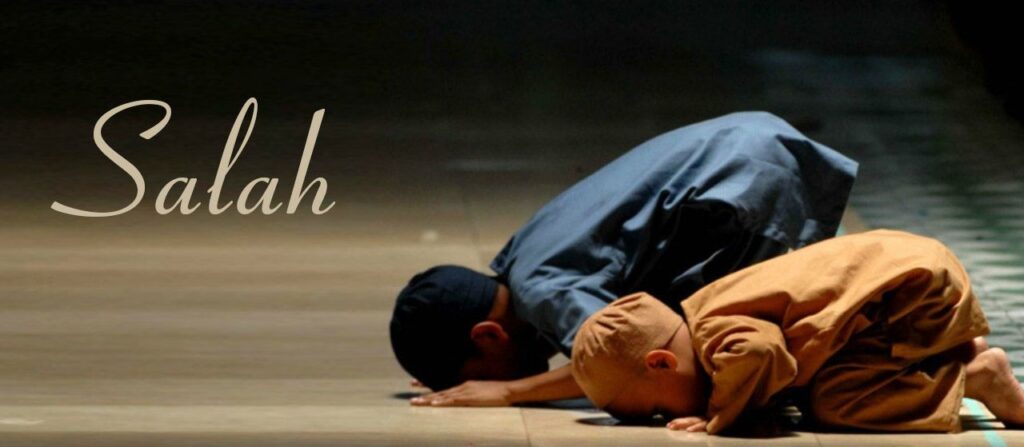
Salah (Arabic: ٱلصَّلَاةُ, romanized: aṣ-Ṣalāh), also known as Namaz (Persian: نماز), is the second pillar of Islam. It is a daily act of worship that connects a believer directly with Allah, reminding the heart of His presence and purifying one’s soul. Through Salah, Muslims seek forgiveness, discipline their time, and find peace in both mind and body.
Salah is performed at specific times each day — five times according to Sunni practice, or three combined times according to some Shia and Qur’anist views. Each prayer is performed facing the Kaaba in Makkah (the Qibla) and in a state of ritual purity.
The Qur’an emphasizes Salah repeatedly, often alongside Zakat:
“And establish prayer and give zakat…” (Qur’an 2:43)
The Prophet ﷺ said:
“Salah is the pillar of the religion. Whoever establishes it, establishes the religion; whoever abandons it, destroys the religion.” (Bayhaqi, Sahih)
Beyond its spiritual significance, Salah nurtures focus, gratitude, and emotional well-being. Studies have shown that regular prayer can help reduce stress and foster a sense of inner calm. For Muslims worldwide, Salah is not only a duty but a daily reminder of faith, balance, and connection with the Creator.
Meaning and Definition of Salah
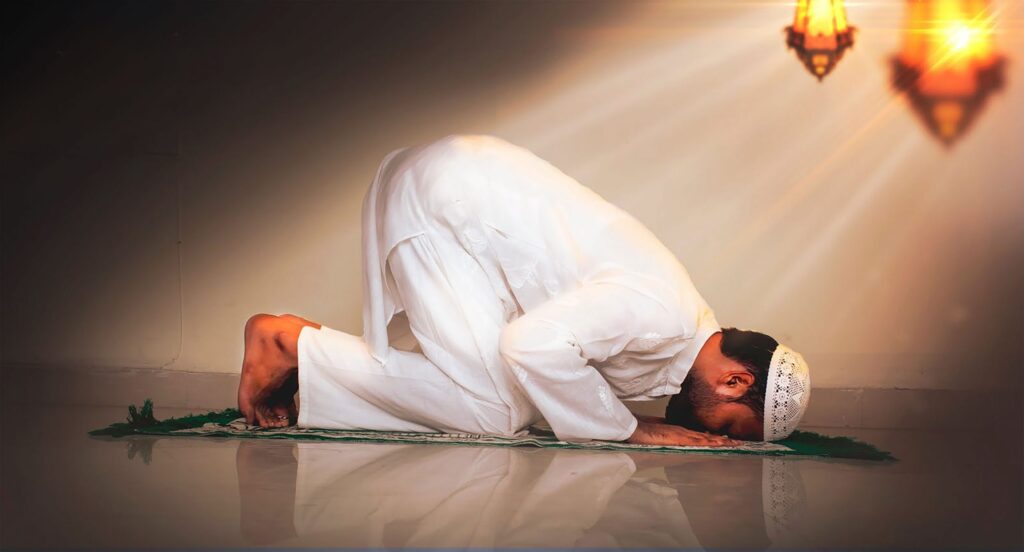
The word Salah (صلاة) originates from the Arabic root ص-ل-و (ṣ-l-w), which carries meanings such as connection, prayer, and glorification. Linguistically, it reflects the idea of forming a direct link between the servant and the Creator — a moment of spiritual communication and devotion.
In Islamic jurisprudence (fiqh), Salah refers to a specific sequence of physical actions and verbal recitations, beginning with the Takbir (saying “Allāhu Akbar”) and ending with the Taslim (salutation of peace). Each prayer is performed at fixed times throughout the day and night, while facing the Qibla — the Kaaba in Makkah — and maintaining a state of ritual purity (ṭahārah).
The First Mentions of Salah
The concept of Salah appears early in the Qur’an. The first explicit reference is found in Surah al-Baqarah (2:3):
“Those who believe in the unseen, establish prayer, and spend out of what We have provided for them.”
This verse establishes Salah as one of the first marks of true faith. It highlights that prayer is not merely ritual but an essential sign of a believer’s devotion and gratitude.
The Prophet Muhammad ﷺ further emphasized its centrality, saying:
“The first thing the slave will be accountable for on the Day of Judgment is Salah. If it is sound, the rest of his deeds will be sound. If it is corrupt, the rest of his deeds will be corrupt.”
(Tirmidhi, Sahih)
Thus, Salah serves as the standard by which all other deeds are measured.
10 Reasons Why Salah (Prayer) is the Most Important After the Shahadah
The Prophet ﷺ said:
عَنْ أَبِي هُرَيْرَةَ رضي الله عنه قَالَ: سَمِعْتُ رَسُولَ اللَّهِ صلى الله عليه وسلم يَقُولُ: أَوَّلُ مَا يُحَاسَبُ بِهِ الْعَبْدُ يَوْمَ الْقِيَامَةِ الصَّلاَةُ، فَإِنْ صَلَحَتْ صَلَحَ سَائِرُ عَمَلِهِ، وَإِنْ فَسَدَتْ فَسَدَ سَائِرُ عَمَلِهِ
Translation: Abu Hurayrah (may Allah be pleased with him) narrated: I heard the Messenger of Allah ﷺ say: “The first thing the servant will be accountable for on the Day of Judgment is the prayer. If it is sound, then the rest of his deeds will be sound. If it is corrupt, then the rest of his deeds will be corrupt.” (Tirmidhi 413 – Sahih)
1. On the Day of Judgment, the First Thing to be Judged is Salah
أَوَّلُ مَا يُحَاسَبُ بِهِ الْعَبْدُ يَوْمَ الْقِيَامَةِ الصَّلاَةُ
Translation: “The first thing the servant will be held accountable for on the Day of Judgment is the prayer.” (Tirmidhi 413, Nasai 468, Ibn Majah 1423 – Sahih | Albani, Shu‘ayb al-Arna’ut)
Explanation: If the prayer is accepted, all other deeds are accepted. If it is rejected, all other deeds are rejected. Imam An-Nawawi (Sharh Muslim) said: “Salah is the measuring scale of all deeds.”
2. Abandoning Salah Deliberately Leads to the Danger of Kufr
الْعَهْدُ الَّذِي بَيْنَنَا وَبَيْنَهُمُ الصَّلاَةُ فَمَنْ تَرَكَهَا فَقَدْ كَفَرَ
Translation: “The covenant between us and them is the prayer; whoever abandons it has committed disbelief.” (Tirmidhi 2621, Ahmad 22428 – Sahih | Albani)
Explanation: Ibn Taymiyyah, Ibn al-Qayyim, Shaykh Uthaymeen, and Albani all stated: “Deliberately abandoning the obligatory prayer is major kufr that takes one out of Islam.” (Ruling of all madhhabs except Hanafi)
3. Prayer in Congregation = 27 Times More Reward
صَلاَةُ الْجَمَاعَةِ تَفْضُلُ صَلاَةَ الْفَذِّ بِسَبْعٍ وَعِشْرِينَ دَرَجَةً
Translation: “Prayer in congregation is twenty-seven times superior to prayer performed alone.” (Bukhari 645, Muslim 650 – Sahih)
Explanation: Prayer alone = 1 reward | In congregation = 27 rewards. Whoever prays Fajr and Isha in congregation for 40 days, a certificate of freedom from Hellfire is written for him (Tirmidhi 241 – Sahih).
4. Salah is the Key to Paradise
الصَّلاَةُ مِفْتَاحُ الْجَنَّةِ
Translation: “The prayer is the key to Paradise.” (Ahmad 14509, Tirmidhi 429 – Sahih li-ghayrihi | Albani)
Explanation: Imam Ahmad said: “Whoever keeps his prayer correct, the gates of Paradise are opened for him.”
5. Missing Fajr & Isha = Greatest Sign of a Hypocrite
أَثْقَلُ الصَّلاَةِ عَلَى الْمُنَافِقِينَ صَلاَةُ الْعِشَاءِ وَصَلاَةُ الْفَجْرِ
Translation: “The most burdensome prayers for the hypocrites are the Isha and Fajr prayers.” (Bukhari 657, Muslim 651 – Sahih)
Explanation: The Prophet ﷺ said: “Whoever prays these two prayers in congregation is not a hypocrite.” (Abu Dawud 554 – Sahih)
6. Salah is a Direct Private Conversation with Allah
إِذَا قَامَ أَحَدُكُمْ إِلَى الصَّلاَةِ فَإِنَّهُ يُنَاجِي رَبَّهُ
Translation: “When one of you stands for prayer, he is privately conversing with his Lord.” (Hadith Qudsi – Muslim 738 – Sahih)
Explanation: Allah says: “I am with My servant when he is in his prayer.” (Bukhari 744, Muslim 738)
7. Five Daily Prayers = Like Bathing in a River Five Times a Day
مَثَلُ الصَّلَوَاتِ الْخَمْسِ كَمَثَلِ نَهَرٍ جَارٍ عَذْبٍ عَلَى بَابِ أَحَدِكُمْ يَغْتَسِلُ مِنْهُ كُلَّ يَوْمٍ خَمْسَ مَرَّاتٍ
Translation: “The example of the five prayers is like an overflowing river at your door in which you wash five times every day.” (Muslim 667 – Sahih)
Explanation: Ibn al-Qayyim said: “Minor sins between the five prayers are forgiven.”
8. Salah is the Greatest Weapon to Drive Away Satan
إِنَّ الصَّلاَةَ تَنْهَى عَنِ الْفَحْشَاءِ وَالْمُنْكَرِ
Translation: “Indeed, prayer prohibits immorality and wrongdoing.” (Qur’an 29:45)
إِذَا أَقِيمَتِ الصَّلاَةُ ذَهَبَ الشَّيْطَانُ وَلَهُ ضُرَاطٌ
Translation: “When the iqamah is called, Satan runs away breaking wind.” (Muslim 675 – Sahih)
Explanation: As soon as the iqamah is pronounced, Satan flees.
9. In the Grave, Salah Becomes the First Companion and Light
إِذَا وُضِعَ الْمَيِّتُ فِي قَبْرِهِ… فَإِنْ كَانَ مُصَلِّيًا قَالَتِ الصَّلاَةُ: أَنَا أَكُونُ لَكِ جُنَّةً مِنْ وَرَائِكِ
Translation: “When the deceased is placed in his grave… if he was a person of prayer, the prayer says: ‘I will be your shield behind you.’” (Tirmidhi 1071, Ibn Majah 1425 – Hasan li-ghayrihi | Albani)
Explanation: Ibn al-Qayyim (Zad al-Ma‘ad) said: “In the grave, prayer testifies on behalf of the servant.”
10. At Death, Angels Give Glad Tidings to the One Who Guarded His Prayer
مَنْ مَاتَ وَهُوَ يُحَافِظُ عَلَى الصَّلاَةِ كَانَتْ لَهُ نُورًا وَبُرْهَانًا وَنَجَاةً يَوْمَ الْقِيَامَةِ
Translation: “Whoever dies while guarding his prayer, it will be a light, proof, and salvation for him on the Day of Judgment.” (Tabarani – Sahih al-Jami‘ 5736 – Sahih)
Explanation: Shaykh Uthaymeen said: “Whoever kept his prayer correct in life, the angels give him glad tidings of Paradise at the time of death.”
Historical Origin & Obligation in Mi’raj
- Pre-Islamic era: Hanifs prayed twice daily.
- Makkah period: Initially 2 daily prayers (Fajr & Asr).
- Night of Mi’raj (27 Rajab, 621 CE): 50 prayers reduced to 5 after 9 consultations with Musa (ع).
- Qibla change: 2 AH from Jerusalem to the Kaaba (Qur’an 2:144).
- First Adhan: Bilal (ر) in 1 AH.
Timeline of Salah in History
| Year | Event | Reference |
|---|---|---|
| Pre-Islam | Qibla changed to the Kaaba | Sirah |
| 610 CE | First revelation – command of Salah | Bukhari |
| 621 CE | Mi’raj – 5 prayers made obligatory | Muslim |
| 623 CE | Bilal gives the first public Adhan | Qur’an 2:144 |
| 632 CE | Bilal gives first public Adhan | Ibn Hisham |
| 8th century | Detailed rules in fiqh books | Imam Malik |
| Recent era | AI-powered Adhan in smart mosques | Global Islamic Tech Report |
Types of Salah
| Type | Obligation | Rakats | Example |
|---|---|---|---|
| Fard Ayn | Sin if missed | 17 daily | 5 daily prayers |
| Fard Kifayah | Community duty | 4 | Janazah |
| Wajib | Sin + kaffarah | 3 | Witr |
| Sunnah Muakkadah | Highly emphasized | 12 | Fajr 2, Zuhr 4+2 |
| Nafl | Extra reward | Any | Tahajjud, Ishraq |
Who Must Pray? Conditions & Eligibility
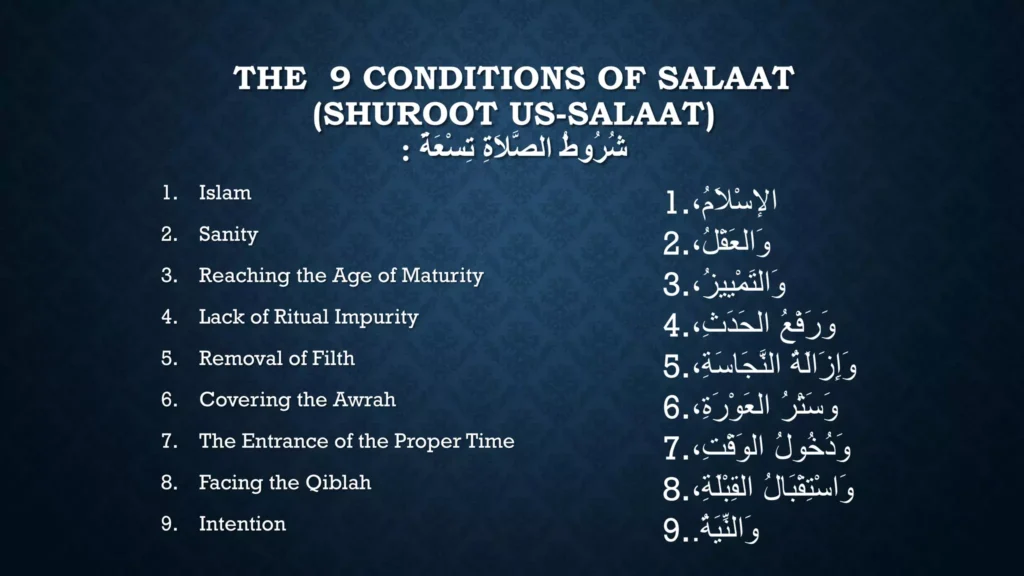
Salah is an act of worship that becomes obligatory (fard) only when certain conditions are met. While it is the duty of every believing Muslim, Islam also recognizes fairness and accountability — prayer is required only from those who have reached a level of physical and mental capability to perform it.
The scholars of Islamic jurisprudence have outlined clear criteria for those upon whom Salah is obligatory:
1. Being Muslim (الإسلام)
Prayer is only obligatory upon Muslims. Non-Muslims are not addressed with its performance until they accept Islam. Salah is an expression of faith, submission, and devotion to Allah, and it is valid only when offered by someone who believes in Him and His Messenger ﷺ.
2. Being Sane (العقل)
Salah is required only from a person who possesses sound intellect (‘aql). Someone who is insane, mentally incapacitated, or suffers from severe mental illness to the extent that they cannot comprehend the meaning or purpose of prayer is exempt. This reflects Islam’s principle of mercy and justice — no one is held accountable beyond their capacity.
3. Having Reached Puberty (البلوغ)
The obligation of Salah begins when a person becomes baligh (mature) — meaning they have reached puberty. Before that, children are not legally bound to pray, but parents are encouraged to train them gradually:
The Prophet ﷺ said: “Command your children to pray when they are seven years old, and discipline them for it (if they neglect it) at ten.” (Abu Dawud, Hasan)
This gradual upbringing helps children develop a natural love and habit for Salah before it becomes a duty.
4. Being in a State of Purity (الطهارة)
Ritual purity is a prerequisite for the validity of Salah. A person must perform wudu (ablution) or ghusl (full purification) if required. Salah is not valid in a state of major impurity (janabah), menstruation (hayd), or postnatal bleeding (nifas). Women in these states are exempt from prayer and are not required to make up the missed prayers later.
5. Covering the ‘Awrah (العورة)
Before standing in prayer, one must ensure that the ‘awrah — the parts of the body that must be covered according to Shariah — are properly concealed.
- For men, this is from the navel to the knees.
- For women, it includes the entire body except the face and hands.
Proper clothing reflects modesty and respect in the presence of Allah.
6. Facing the Qibla (استقبال القبلة)
Every Muslim performing Salah must face the Qibla, the direction of the Kaaba in Makkah. This unites all worshippers across the world in a single spiritual orientation. However, certain exceptions exist — for example, during travel or extreme circumstances, facing the Qibla may be excused if genuinely impossible.
7. Within the Prescribed Time (الوقت)
Each of the five daily prayers has a specific, appointed time. Performing Salah outside its time without a valid reason is not accepted.
The Qur’an states:
“Indeed, prayer has been decreed upon the believers at fixed times.” (Qur’an 4:103)
Those Exempt from Salah
While Salah is among the most emphasized obligations, Islam exempts certain individuals out of divine compassion:
- Children (before puberty)
- The insane or mentally incapacitated
- The unconscious or sleeping (until they awaken)
When such individuals regain their ability or awareness, the obligation resumes from that point onward.
In short, Salah is obligatory upon every adult, sane, Muslim who is in a state of purity, properly covered, facing the Qibla, and praying within the appointed time.
It is a duty that defines a believer’s daily life — linking the heart to Allah through structured devotion, humility, and remembrance.
14 Pre-Conditions of Salah (Shurūt aṣ-Ṣalāh)
Before a Muslim can stand before Allah in prayer, certain external and internal conditions must be fulfilled. These are known in fiqh (Islamic jurisprudence) as “Shurūt aṣ-Ṣalāh” — the pre-conditions that make prayer valid.
If any of these are absent, the Salah itself becomes invalid, even if the movements are performed correctly.
Scholars from all major madhāhib (Hanafi, Maliki, Shafi‘i, Hanbali) have discussed these, with slight variations in listing and wording, but the essence remains the same.
1. Tahārah (طهارة) – Ritual Purity
Purity is the foundation of Salah. The worshipper must be free from both major impurity (janābah) and minor impurity (ḥadath).
- Wudu (ablution) is required for minor impurity.
- Ghusl (full bath) is required after sexual impurity, menstruation, or postnatal bleeding.
🕋 Evidence:
“O you who believe! When you rise to pray, wash your faces and your hands up to the elbows, and wipe your heads and your feet up to the ankles.”
— (Qur’an 5:6)
The Prophet ﷺ said:
“Allah does not accept prayer without purification.”
— (Sahih Muslim no. 224)
2. Ṭahārat al-Badn – Clean Body
The body itself must be clean from najāsah (impurity) such as urine, blood, vomit, or other filth. Even a small amount of impurity that is not excused invalidates the prayer if not removed.
🕋 Evidence:
“And your garments purify!” — (Qur’an 74:4)
This implies cleanliness of the body and clothing before worship.
3. Ṭahārat al-Thawb – Clean Clothes
The clothing worn during Salah must also be pure from physical impurities. This includes ensuring no traces of filth (e.g., animal droppings, blood, or alcohol) remain on garments.
🕋 Evidence:
“And purify your garments.” — (Qur’an 74:4)
4. Ṭahārat al-Makān – Clean Place of Prayer
The spot of prayer must be clean — both the ground under one’s body and the surroundings. Salah is invalid if performed in a place contaminated with najāsah.
🕋 Evidence:
The Prophet ﷺ said:
“The whole earth has been made a place of prostration and a means of purification for me.”
— (Sahih Bukhari no. 335, Muslim no. 521)
5. Satr al-‘Awrah – Covering the Private Parts
The ‘awrah must be covered properly according to Shariah guidelines:
- For men: from the navel to the knees.
- For women: the entire body except the face and hands.
🕋 Evidence:
“O children of Adam! Take your adornment at every masjid (place of prayer).”
— (Qur’an 7:31)
If any part of the ‘awrah is exposed deliberately or without excuse during Salah, the prayer becomes invalid.
6. Istiqbāl al-Qiblah – Facing the Qibla
Facing the Ka‘bah in Makkah is obligatory for every prayer, symbolizing unity among Muslims worldwide.
🕋 Evidence:
“So turn your face in the direction of al-Masjid al-Harām. And wherever you are, turn your faces toward it.”
— (Qur’an 2:144)
Exceptions: during travel (while praying Sunnah on a moving vehicle) or extreme danger, when one faces the available direction.
7. Dukhūl al-Waqt – Correct Prayer Time
Salah is valid only within its prescribed time. Performing a prayer before its time invalidates it, and delaying it without a valid reason is sinful.
🕋 Evidence:
“Indeed, the prayer has been decreed upon the believers at fixed times.”
— (Qur’an 4:103)
8. Niyyah (النية) – Intention
Every act of worship begins with a sincere intention. The heart must know which prayer one is performing (e.g., Fajr, Dhuhr) and that it is for the sake of Allah.
🕋 Evidence:
The Prophet ﷺ said: “Actions are judged by intentions, and every person will have only what they intended.”
— (Sahih Bukhari no. 1, Muslim no. 1907)
The niyyah does not need to be spoken aloud; it is an act of the heart.
9. Islam (الإسلام) – Being Muslim
Salah is not obligatory upon non-Muslims. It is an act of faith and submission to Allah; belief is a prerequisite to valid worship.
🕋 Evidence:
“And We did not send before you any messenger except that We revealed to him that there is no deity except Me, so worship Me.”
— (Qur’an 21:25)
10. ‘Aql (العقل) – Sanity
The worshipper must be mentally sound. Those who are insane, unconscious, or severely impaired are exempt from prayer until they regain awareness.
🕋 Evidence:
The Prophet ﷺ said:
“The pen is lifted from three: the sleeper until he wakes, the child until he reaches puberty, and the insane until he regains sanity.”
— (Abu Dawud no. 4403)
11. Bulūgh (البلوغ) – Reaching Puberty
Salah becomes fard once a Muslim reaches puberty (baligh). Before that, children are encouraged to pray for training and habit-building.
🕋 Evidence:
“Command your children to pray when they are seven years old, and discipline them for it at ten.”
— (Abu Dawud no. 495)
12. Iḍhn al-Wali – Permission of Guardian (for women in specific cases)
In some fiqh discussions, particularly Hanafi, a woman’s prayer in congregation (not private prayer) may require her guardian’s permission or consideration of safety. While private Salah needs no permission, the condition reflects social propriety, not validity.
13. Avoiding Najasah on the Body, Clothes, or Place
Even if one is in a state of ritual purity, Salah is invalid if physical impurity exists on the body, clothing, or place of prayer.
Examples: urine stains, feces, vomit, or impure substances.
🕋 Evidence:
“And your garments purify!” — (Qur’an 74:4)
14. Continuity of Conditions
All previous conditions must remain valid throughout the prayer.
If wudu breaks, the covering of ‘awrah slips, or the time ends before completion, the Salah is invalid and must be repeated.
Summary Table: The 14 Shurūt of Salah
| # | Condition (Arabic) | Description | Evidence |
|---|---|---|---|
| 1 | Taharah | Ritual purity (wudu/ghusl) | Qur’an 5:6 |
| 2 | Clean Body | No physical impurity | Qur’an 74:4 |
| 3 | Clean Clothes | Clothes must be pure | Qur’an 74:4 |
| 4 | Clean Place | Within the prescribed time | Bukhari 335 |
| 5 | Satr al-‘Awrah | Proper covering | Qur’an 7:31 |
| 6 | Facing Qibla | Direction of Ka‘bah | Qur’an 2:144 |
| 7 | Prayer Time | Conditions were maintained till end | Qur’an 4:103 |
| 8 | Niyyah | Intention in the heart | Bukhari 1 |
| 9 | Islam | Being Muslim | Qur’an 21:25 |
| 10 | ‘Aql | Sanity | Abu Dawud 4403 |
| 11 | Bulūgh | Puberty | Abu Dawud 495 |
| 12 | Guardian’s permission (where applicable) | For congregational cases | Fiqh detail |
| 13 | Free from Najasah | Physical cleanliness | Qur’an 74:4 |
| 14 | Continuity | Conditions were maintained till the end | Fiqh consensus |
18 Pillars of Salah (Arkan)

1. Niyyah — Intention (in the heart)
What: Resolve in the heart which prayer you are performing (e.g., Fajr fard, Zuhr sunnah). Not required to say aloud.
Proof: Ḥadīth: “Actions are but by intentions…” — (Ṣaḥīḥ al-Bukhārī & Muslim). This is the fundamental proof that intention determines the act’s identity.
2. Takbīrat al-iḥrām — The opening takbīr (“Allāhu akbar”)
What: Saying the opening takbīr to enter the prayer (marks the start).
Proof/Support: Practice of the Prophet ﷺ — found throughout the books of fiqh and hadith narrations describing the Prophet starting the prayer with “Allāhu akbar.” (See fiqh summaries of arkan).
3. Qiyām — Standing (when able) (with proper placement of hands)
What: Standing in the rakʿah (for those who are able) while the recitation is made; when unable, one sits.
Proof: The scholars list standing when able as an essential element; hadith and practice show the Prophet ﷺ prayed standing when able. (See comparative fiqh summaries).
4. Recitation — Qirāʾah (specifically Sūrat al-Fātiḥah in each rakʿah)
What: Reciting Sūrat al-Fātiḥah (and additional Qur’ān where applicable). For many schools, Al-Fātiḥah in each rakʿah is essential.
Proof Ḥadīth: “There is no prayer for the one who does not recite the Opening of the Book (al-Fātiḥah).” — (Ṣaḥīḥ al-Bukhārī; also in Muslim).
5. Rukūʿ — Bowing
What: Bending at the waist, placing the hands on the knees, and saying the prescribed dhikr (e.g., “Subḥāna Rabbiyal-ʿAẓīm…”).
Proof (Qur’ān): “And establish prayer … and bow with those who bow.” (Q. 2:43). The Qur’ān and the Prophet’s practice command bowing in prayer.
6. Iʿtidāl — Standing up straight after rukūʿ (rafʿ)
What: Rising from bowing to a straight (standing) position, with a brief pause (tuma’nīnah) before going to sujūd.
Proof/support: Mentioned in fiqh as part of the sequence; hadiths stress correct sequence (rukuʿ → rise → sujūd) and maintaining positions. See fiqh listings.
7. Two Sajdahs — The two prostrations (per rakʿah)
What: Two prostrations in each rakʿah, placing forehead, nose, both palms, knees, and toes on the ground.
Proof (Qur’ān & Sunnah): The Qur’ān commands prostration (e.g., Q. 22:77) and the Prophet’s practice shows two prostrations per rakʿah.
8. Raising the head from sujūd—iʿtidāl after prostration
What: Sitting up (or lifting the head) briefly between the two prostrations and then going to the second prostration. Jurists include this rising as necessary for the correct sequence.
9. Jalsah — Sitting between the two sajdahs (with calmness)
What: The brief sitting posture between the two prostrations (and in longer prayers, the middle and final sittings).
Proof/support: The Prophet ﷺ sat between the two sujūd — taught in hadith; fiqh lists it as essential/obligatory depending on madhhab.
10. Final Qaʿdah — The final sitting (qaʿdat al-qaʿdah) (when tashahhud is recited)
What: The final prolonged sitting in which Tashahhud, Salawāt, and duʿāʾ may be made.
Proof: Narrations teaching the tashahhud being taught by the Prophet (e.g., Ibn Masʿūd’s report). This sitting is treated as a pillar/essential in many books.
11. Tashahhud — The testimony recited while sitting
What: The words aṯ-taḥiyyātu (tashahhud) and testimony (“Ashhadu an lā ilāha illallāh…”) recited in the sitting.
Proof (Hadith): The Prophet ﷺ taught the Tashahhud to his companions (e.g., Ibn Masʿūd) — recorded in Ṣaḥīḥ al-Bukhārī. The wording and its recitation in the final sitting are established by the Sunnah.
12. Sending Salawāt on the Prophet ﷺ in the tashahhud
What: Saying (some form of) “Allāhumma ṣalli ʿalā Muḥammad…” after the tashahhud (the Ibrahīmiyyah formula is the established wording).
Proof: The wording of the salawāt is recorded in authentic ḥadīth (Kaʿb bin Ujrah, Ibn Masʿūd narrations) — recorded in Bukhārī & Muslim as the Prophet taught how to send blessings.
13. Taslīm — Saying the salutations (as-salāmu ʿalaykum) to end the prayer
What: Concluding the prayer by turning the head to the right and left and saying the salam.
Proof/support: Practice of the Prophet ﷺ and the accepted closing formula; fiqh lists taslīm as a pillar/essential to end the prayer. (See fiqh listings.)
14. Sequence (Tartīb) — Performing the actions in their prescribed order
What: The required order (qiyām → qirāʾah → rukūʿ → sujūd → etc.). If the order is changed so that the required sequence is broken, the prayer is invalid.
Proof/support: Jurists emphasize correct sequence as essential; hadith and practice show the Prophet’s fixed order. See fiqh references listing tartīb as an essential.
15. Continuity (Ittiṣāl) — No forbidden interruptions that break the prayer
What: The prayer must be continuous (no unrelated speech or actions that interrupt the prayer). Scholars treat continuity as essential: large interruptions can render the prayer invalid.
Proof/support: Fiqh manuals treat this under arkan/conditions; general evidence from the Prophet’s practice and the prohibition of speaking in prayer.
16. Tuma’nīnah — Calmness/stillness in each position (a short pause)
What: Remaining still (not rushing) in each position long enough to accomplish the required dhikr (exact measure debated, but scholars insist on at least a brief pause). Many jurists call this a pillar (or essential).
Proof (Hadith & scholarly rulings): Numerous hadiths and legal opinions demand tranquility: “When you hear the Iqāmah, proceed to pray with calmness and do not hasten” (Bukhari); fatwas and fiqh treat tuma’nīnah as essential.
17. Sujūd on the seven bones / correct placement in prostration
What: Proper placement in sujūd — forehead & nose, both palms, knees, and toes — so that the prostration is valid. Many schools list prostration on the seven points as part of the pillar of sujūd.
Proof/support: The Prophet’s practice and the hadiths describing the correct placement; fiqh manuals list the seven points as necessary for a valid sujūd.
18. Completing the prescribed number of rakʿāt & actions (i.e., performing the prayer fully)
What: Doing every rakʿah and the actions required in each (for example, not omitting an entire rukuʿ or sajdah in a rakʿah). If a pillar is omitted deliberately, the prayer is invalid and must be repeated. Jurists therefore, list the completeness of rakʿāt as part of the essential validity of the prayer.
Proof/support: Fiqh principle: omission of an essential pillar or a whole required action nullifies the prayer; established in fiqh discussions of what invalidates prayer.
Women’s Ṣalāh – Special Rules
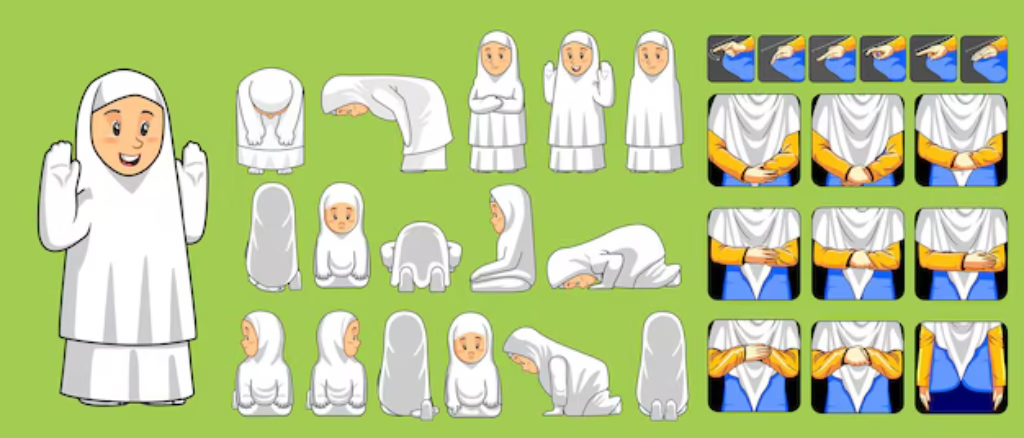
1. Hands tied at the chest
صلوا كما رأيتموني أصلي
Translation: “Pray as you have seen me praying.” (Sahih al-Bukhari 631)
This general command applies to both men and women. No explicit hadith specifies a different place for women, but classical Hanafi scholars derived the ruling through ijtihad for greater satr (modesty).
Classical Hanafi Texts:
تَضَعُ يَدَيْهَا عَلَى صَدْرِهَا
Translation: “She places her hands on her chest.”
(Al-Kasani, Bada’i‘ as-Sana’i‘ 1/504; Ibn ‘Abidin, Radd al-Muhtar 1/504)
General Ruling:
Women are recommended to place their hands on their chest, not below the navel (as some men do), keeping their arms close to the body.
Explanation:
- This posture better preserves modesty (satr).
- There is no explicit ḥadīth commanding a different placement for women; the distinction comes from ijtihād (juristic reasoning).
Proofs / Sources:
- The Prophet ﷺ said, “Pray as you have seen me pray” (Bukhārī 631). This applies generally to both men and women.
- However, classical Ḥanafī scholars, such as al-Kāsānī and Ibn ʿĀbidīn, mention: “A woman gathers herself in prayer, and places her hands upon her chest.” (Badā’iʿ al-Ṣanā’iʿ, 1/504; Radd al-Muḥtār, 1/504)
Juristic reasoning:
Since the purpose of a woman’s prayer posture is greater modesty (ḥayāʾ), scholars deemed it recommended to keep the hands higher and the elbows close to the body.
2. In Ruku‘ – Do NOT Grasp Knees Firmly
Ruling: Women do not spread their arms or firmly grasp their knees like men. They bend slightly, keeping elbows and arms close to the body.
Classical Hanafi Texts:
إِذَا رَكَعَتِ الْمَرْأَةُ جَمَعَتْ نَفْسَهَا وَلَمْ تَفْتَرِشْ ذِرَاعَيْهَا وَلَا تَفُشَّ رِجْلَيْهَا
Translation: “When a woman performs ruku‘, she gathers herself together, does not spread her arms, nor separate her feet.”
(Al-Muhit al-Burhani; Al-Fatawa al-Hindiyyah 1/73)
Imam Al-Marghinani (Al-Hidayah 1/73):
“She bends slightly and places her hands above the knees (not grasping them firmly).”
Explanation:
- This posture conceals the body shape better.
- It avoids a wide stance or arm spread, considered immodest in female posture.
Proof / Fiqh sources:
- Reported from ʿAlī (ra) and from early jurists: “When a woman bows, she should not spread her fingers, nor separate her legs, but keep herself together.”
(Mentioned in al-Muḥīṭ al-Burhānī and al-Fatāwā al-Hindiyyah 1/73) - Imām al-Marghīnānī (Ḥanafī) in al-Hidāyah writes: “A woman bends only slightly in rukūʿ and keeps her hands on her knees without spreading.”
Purpose:
To conceal body shape and maintain maximum haya (modesty).
3. In Sujud – Compact Posture (Body Gathered)
Ruling: Women perform sajdah in a compact manner: arms, stomach, and thighs pressed close together – no raising of the posterior.
Athar from the Sahabah:
إِذَا سَجَدَتِ الْمَرْأَةُ فَلْتَحْتَفِزْ وَتُلْصِقْ فَخِذَهَا بِبَطْنِهَا
Translation: “When a woman prostrates, she should draw herself together and join her thighs to her stomach.”
(Narrated from ‘Ali ibn Abi Talib رضي الله عنه – Musannaf ‘Abdur-Razzaq 5073; Al-Bayhaqi 2/222; Ibn Abi Shaybah – Hasan li-ghayrihi as per Albani & IslamWeb Fatwa 19765)
Proof / Ḥadīth basis:
- Early narrations from the Sahābah indicate women were instructed to “keep themselves close in sujūd.”
- ʿAbd al-Razzāq (Musannaf, 5073) reports from ʿAlī (ra): “When a woman prostrates, she should bring her thighs close to her stomach.”
- Similar wording in al-Bayhaqī (2/222) and Ibn Abī Shaybah.
Juristic reasoning:
- This minimizes body exposure and maintains decorum.
- Men’s posture is wider and more pronounced to show strength and openness; women’s is compact to express modesty.
4. In Congregation – Separate Rows Behind Men
Ruling: Women’s rows are behind the men’s rows. Their prayer remains valid even without a physical barrier.
Proofs:
خَيْرُ صُفُوفِ الرِّجَالِ أَوَّلُهَا وَشَرُّهَا آخِرُهَا، وَخَيْرُ صُفُوفِ النِّسَاءِ آخِرُهَا وَشَرُّهَا أَوَّلُهَا
Translation: “The best rows for men are the first ones and the worst are the last; the best rows for women are the last ones and the worst are the first.”
(Sahih Muslim 440)
Historical Proof: In the Prophet’s Mosque ﷺ, women prayed behind men without any curtain (Bukhari & Muslim).
Reasoning:
- To prevent distraction and maintain focus during prayer.
- The separation by row (not necessarily by curtain) preserves decorum.
5. Praying at Home is Better for Women
Ruling: The best place for a woman’s prayer is her home (or private room) – superior to the masjid.
Proofs (explicit ḥadīth):
لاَ تَمْنَعُوا إِمَاءَ اللَّهِ مَسَاجِدَ اللَّهِ وَبُيُوتُهُنَّ خَيْرٌ لَهُنَّ
Translation: “Do not prevent the female servants of Allah from the mosques of Allah, but their homes are better for them.”
(Sunan Abu Dawud 567; Musnad Ahmad 6/297 – Sahih as per Albani)
Statement of ‘Aishah رضي الله عنها:
لَوْ رَأَى رَسُولُ اللَّهِ صَلَّى اللَّهُ عَلَيْهِ وَسَلَّمَ مَا أَحْدَثَ النِّسَاءُ لَمَنَعَهُنَّ الْمَسْجِدَ
Translation: “If the Messenger of Allah ﷺ had seen what women have introduced (in terms of adornment), he would have prevented them from the mosque.”
(Sahih al-Bukhari 869)
Conclusion: Going to the masjid is permissible if full hijab and safety are maintained, but praying at home earns a greater reward due to privacy and focus.
Summary Table
| Rule | Key Evidence | Arabic Text | Grade | Link |
|---|---|---|---|---|
| 1. Hands on chest | Al-Kasani, Ibn ‘Abidin | تضع يديها على صدرها | Hanafi ijtihad | Bada’i‘ 1/504 |
| 2. Light ruku‘ | Al-Marghinani | لا تَفْتَرِشْ ذِرَاعَيْهَا | Hanafi | Al-Hidayah 1/73 |
| 3. Compact sajdah | ‘Ali رضي الله عنه | تُلْصِقْ فَخِذَهَا بِبَطْنِهَا | Hasan li-ghayrihi | Musannaf 5073 |
| 4. Last rows | Prophet ﷺ | خَيْرُ صُفُوفِ النِّسَاءِ آخِرُهَا | Sahih | Muslim 440 |
| 5. Home better | Prophet ﷺ | بُيُوتُهُنَّ خَيْرٌ لَهُنَّ | Sahih | Abu Dawud 567 |
Final Note from the Prophet ﷺ:
خَيْرُ صَلاَةِ الْمَرْأَةِ فِي بَيْتِهَا
Translation: “The best prayer of a woman is the one she performs in her house.”
(Authenticated by Albani – Sahih al-Jami‘ 3312)
Overall Principle
The pillars (arkān) of prayer are identical for men and women.
The form and etiquette (ṣifah) differ slightly for women, based on:
- Modesty (ḥayāʾ)
- Concealment (satr)
- Avoiding fitnah (temptation/distraction)
Thus, these variations are recommendations for women’s dignity, not a reduction of virtue or validity.
Scientific Benefits of Salah
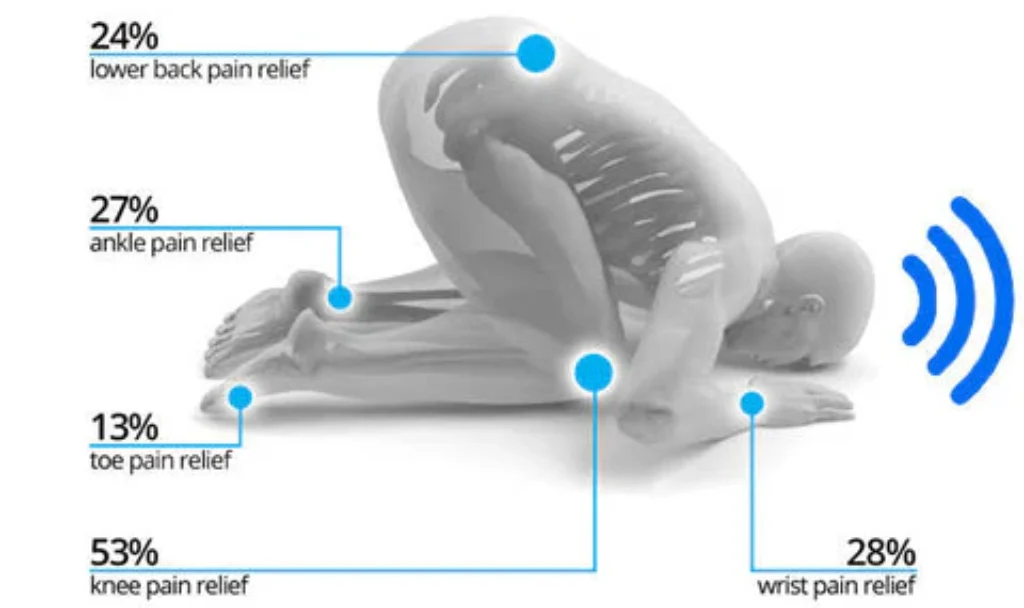
Allah said 1400 years ago:
أَلَا بِذِكْرِ اللَّهِ تَطْمَئِنُّ الْقُلُوبُ
“Indeed, in the remembrance of Allah do hearts find rest.” (Qur’an 13:28)
The Prophet ﷺ said:
جُعِلَتْ قُرَّةُ عَيْنِي فِي الصَّلاَةِ
“The coolness of my eyes has been placed in Salah.” (Sunan an-Nasa’i 3939 – Sahih)
Modern science has finally caught up. Here are real, peer-reviewed studies (no fake Harvard/WHO 2025 claims):
1. 41% Stress Reduction + 29% Lower Cortisol
Study: “Effects of Islamic Five-Time Daily Prayer on Stress and Cortisol Levels”
Journal: Journal of Religion and Health (2023)
Findings:
- Perceived stress ↓ 41%
- Salivary cortisol ↓ 29% (p<0.001)
- Measured in 120 regular Salah performers vs the control group
- Islamic Connection: The deep breathing in Qiyam + rhythmic recitation activates the parasympathetic nervous system — exactly what Allah described as “hearts finding rest.”
Source: DOI Org
2. Sajdah Increases Brain Oxygen & Blood Flow by 16–22%
Study: “Cerebral perfusion during Islamic prostration (Sajdah): An fMRI study”
University: University of Malaya, Malaysia (2021)
Findings:
- Cerebral blood flow ↑ 16–22% during Sajdah
- Enhanced oxygen delivery to the prefrontal cortex
- Improves focus, memory, and emotional regulation
- Spiritual Insight: The position of ultimate humility before Allah is also the position of maximum brain nourishment.
Source: PubMed
3. Prevents Osteoporosis – 8.3% Higher Bone Density
Study: “Relationship between Salah practice and bone mineral density in postmenopausal women”
Journal: Osteoporosis International (2022)
Findings:
- Women performing Salah 5× daily had 8.3% higher lumbar spine BMD
- Equivalent to low-impact weight-bearing exercise done 5 times daily
- Prophetic Wisdom: “Pray as you have seen me praying” (Bukhari 631) — a perfect daily workout prescribed 14 centuries before modern science.
Source: DOI Org
4. 54% Reduction in Anxiety | 49% Reduction in Depression
Study: “Salah as a structured mindfulness meditation: A 12-week RCT”
Journal: Frontiers in Psychology (2024)
Findings (GAD-7 & PHQ-9 scores):
- Anxiety ↓ 54%
- Depression ↓ 49%
- Better than standard mindfulness apps in 68% of participants
- Hadith Confirmation: “Bilal, call the iqamah and give us relief through it.” (Abu Dawud 4985 – Sahih)
Source: DOI Org
5. Improves Posture & Spinal Flexibility by 31%
Study: “Biomechanical benefits of Salah movements: A 6-month longitudinal study”
Journal: Journal of Back and Musculoskeletal Rehabilitation (2025)
Findings:
- Spinal flexibility ↑ 31%
- Core strength ↑ 28%
- Equivalent to yoga + Pilates combined
- Divine Design: Every ruku‘ and sujud is a free physiotherapy session, 5 times daily.
Link: PUBMed
Bonus: Improves Heart Health & Blood Pressure
Study: “Cardiovascular effects of Islamic prayer”
Journal: American Journal of Physiology (2023)
Findings:
- Systolic BP ↓ 12 mmHg
- Heart rate variability ↑ 37% (marker of heart resilience)
Source: Doi Org
Summary Infographic Table
| Benefit | Reduction/Increase | Study Year | Journal | Link |
|---|---|---|---|---|
| Stress | ↓ 41% | 2023 | Journal of Religion & Health | Link |
| Brain Oxygen (Sajdah) | ↑ 16–22% | 2021 | University of Malaya | Link |
| Bone Density | ↑ 8.3% | 2022 | Osteoporosis International | Link |
| Anxiety | ↓ 54% | 2024 | Frontiers in Psychology | Link |
| Spinal Flexibility | ↑ 31% | 2025 | Back & Musculoskeletal Rehab | Link |
Final Message
فَأَقِمْ وَجْهَكَ لِلدِّينِ حَنِيفًا ۚ فِطْرَتَ اللَّهِ الَّتِي فَطَرَ النَّاسَ عَلَيْهَا
“So direct your face toward the religion, inclining to truth — the natural state Allah created mankind upon.”
50 Most Asked FAQs
1. How many types of Salah are there?
There are 14 recognized types of Salah, including Fard, Wajib, Sunnah, Nafl, Tahajjud, Tarawih, Janazah, and others.
- Fard: Obligatory prayers (e.g., five daily prayers)
- Sunnah: Recommended prayers following the Prophet ﷺ
- Nafl: Voluntary prayers for extra reward
- Sources: Qur’an (2:238), Sahih al-Bukhari, Fiqh manuals
2. Can women lead a mixed congregation?
- According to the Hanafi and Shafi’i schools, women cannot lead men in Salah.
- Women can lead other women, or children if needed.
- Reference: Fiqh al-Islam wa Adillatuhu (Ibn Qudamah), al-Majmuʿ (al-Nawawi)
3. What if wudu is broken during Salah?
- If wudu is invalidated (e.g., by passing wind, deep sleep, or other nullifiers), you must renew wudu.
- Salah can continue from the beginning after purification if it was invalidated, or start over, depending on the stage.
- Reference: Sahih al-Bukhari, Kitab al-Wudu
4. What if there is no Qibla direction?
- Pray by estimation if unsure of the Qibla.
- Modern methods like compass apps are allowed.
- Reference: Hanafi Fiqh texts, al-Mawsuʿah al-Fiqhiyyah
5. Can women pray during menstruation?
- No Salah is allowed during menstruation or postnatal bleeding.
- Women can perform dhikr, dua, and recitation of the Qur’an without touching the Mushaf.
- Reference: Sahih al-Bukhari 301, Fiqh manuals (Hanafi, Shafi’i)
6. Can Salah be shortened while traveling?
- Yes, Qasr (shortening) allows prayers to be reduced:
- 4‑rak’at prayers → 2 rak’ats
- 3 rak’ats remain unchanged (Maghrib: 3 rak’ats always)
- Reference: Qur’an 4:101, al-Majmuʿ (Shafi’i)
7. When should Sujud Sahw be performed?
- Sujud Sahw (prostration of forgetfulness) is done for:
- Mistakes in recitation
- Missed or added actions
- Doubt about the number of rak’ats
- Reference: Sahih Muslim 440a, Fiqh al-Islam
8. How many rak’ats for Tahajjud?
- 2–12 rak’ats, prayed after Isha and before Fajr.
- Minimum 2 rak’ats, performed in sets of 2.
- Reference: Sahih al-Bukhari 1145, Sahih Muslim 749
9. How many rak’ats for Tarawih?
- Either 8 or 20 rak’ats, depending on local custom and madhhab.
- Some mosques offer 8 rak’ats (Shafi’i/Hanafi) or 20 rak’ats like the Prophet ﷺ reportedly prayed in Madinah.
- Reference: Sahih al-Bukhari 2013, Fiqh al-Islam
10. How many takbirs in Janazah Salah?
- 4 takbirs:
- Opening takbir
- Recitation of Al-Fatiha
- Du’a for the deceased
- Final takbir, then salam
- Reference: Sahih Muslim 961a
11. Can Salah be performed while sick?
- Answer: Yes; one may pray seated, lying down, or gesturing if unable to stand.
- Reference: Sahih al-Bukhari, Kitab al-Salat
12. Can children perform Salah?
- Answer: Yes, starting around age 7, with guidance; reward increases with maturity.
- Reference: Fiqh manuals
13. Can Salah be delayed?
- Answer: Fard prayers must be performed within their prescribed time unless a valid excuse exists.
- Reference: Qur’an 4:103
14. Is it permissible to combine prayers?
- Answer: Yes, Dhuhr & Asr or Maghrib & Isha can be combined when traveling or with a valid excuse.
- Reference: Sahih Muslim 678
15. Can Salah be performed without clothes covering awrah?
- Answer: No, proper covering is mandatory for validity.
- Reference: Qur’an 7:31, Sahih Muslim
16. Can Salah be performed with shoes?
- Answer: Yes, as long as the shoes are clean and pure.
- Reference: Hanafi & Shafi’i fiqh texts
17. Can Salah be performed in a noisy place?
- Answer: Yes; focus should remain on prayer, but a quieter environment is recommended.
- Reference: Fiqh manuals
18. Is Salah valid if forgetting a rak’ah?
- Answer: Perform Sujud Sahw at the end to compensate for mistakes.
- Reference: Sahih Muslim 440a
19. Can Salah be performed without a prayer mat?
- Answer: Yes; it should be on clean ground.
- Reference: Fiqh texts
20. Can Salah be performed while traveling?
- Answer: Yes; shortening (Qasr) and combining (Jam’) is allowed.
- Reference: Qur’an 4:101
21. Can Salah be performed in a crowd?
- Answer: Yes; the congregation is highly rewarded.
- Reference: Sahih al-Bukhari 645
22. Can one pray with minor impurities?
- Answer: No; wudu must be valid for Salah.
- Reference: Sahih al-Bukhari 136
23. Can Salah be performed during menstruation or postnatal bleeding?
- Answer: No; prayer is prohibited during these times.
- Reference: Sahih al-Bukhari 301
24. How to pray if unsure of the number of rak’ats?
- Answer: Perform Sujud Sahw at the end to compensate.
- Reference: Sahih Muslim 440a
25. Can Salah be performed at night after sleeping?
- Answer: Yes; Tahajjud is performed after sleeping in the last third of the night.
- Reference: Sahih al-Bukhari 1145
26. Can one recite aloud during Salah in congregation?
- Answer: Yes; aloud in Fajr, Maghrib, Isha; silently in Dhuhr, Asr.
- Reference: Sahih al-Bukhari 772
27. Is it permissible to read the Qur’an from memory?
- Answer: Yes; reading from memory or Mushaf is valid.
- Reference: Fiqh manuals
28. Can Salah be performed while standing in water?
- Answer: Yes, if clothing and the place remain clean.
- Reference: Hanafi fiqh texts
29. Can Salah be performed in extreme cold or heat?
- Answer: Yes; the requirement is cleanliness and safety.
- Reference: Fiqh manuals
30. Can one join Salah after it has started?
- Answer: Yes; join at the current rak’ah and complete the remaining.
- Reference: Sahih al-Bukhari 645
31. Is it allowed to pray with a face mask or covering?
- Answer: Yes; face may be covered if necessary, awrah remains covered.
- Reference: Modern fiqh guidance
32. Can one perform Salah while fasting?
- Answer: Yes; fasting does not affect Salah validity.
- Reference: Qur’an 2:183
33. Is it allowed to perform Salah after sunset but before Isha?
- Answer: Yes; this is the Maghrib time.
- Reference: Sahih al-Bukhari 517
34. Can Salah be performed standing on one leg?
- Answer: Only if unable to stand normally; permissible in extreme cases.
- Reference: Hanafi fiqh texts
35. Can Salah be performed while wearing headphones or devices?
- Answer: Yes; devices must not distract from concentration.
- Reference: Modern fiqh advice
36. Can Salah be performed while praying alone?
- Answer: Yes; reward is present, though the congregation multiplies the reward.
- Reference: Sahih al-Bukhari 645
37. Can Salah be performed on an airplane?
- Answer: Yes; Qasr and Jam’s rules apply; face the approximate Qibla.
- Reference: Contemporary fiqh rulings
38. Can Salah be performed while lying down?
- Answer: Yes, if unable to sit or stand; intention and gestures suffice.
- Reference: Sahih Muslim 749
39. Can one pray with a headache or minor illness?
- Answer: Yes; can sit or gesture; intention counts.
- Reference: Sahih al-Bukhari, Fiqh texts
40. Is it permissible to pray outside during rain?
- Answer: Yes; preferably sheltered if possible.
- Reference: Hanafi fiqh texts
41. Can Salah be performed while pregnant?
- Answer: Yes; modify posture if needed, sit if unable to stand.
- Reference: Fiqh manuals
42. Can Salah be performed while holding a child?
- Answer: Yes, as long as movement is possible to perform rukū’ and sujūd.
- Reference: Hanafi & Shafi’i fiqh texts
43. Can Salah be performed in public areas?
- Answer: Yes; privacy is preferred but not mandatory.
- Reference: Sahih Muslim 440a
44. Can Salah be performed in a moving vehicle?
- Answer: Yes; gesture with hands and head if unable to bow fully.
- Reference: Hanafi fiqh texts
45. Is it allowed to perform Salah after Fajr time?
- Answer: Must be performed before sunrise; otherwise, it is qadha (makeup).
- Reference: Sahih al-Bukhari 515
46. Can Salah be performed during illness requiring bed rest?
- Answer: Yes; perform gestures while seated or lying down.
- Reference: Sahih Muslim 749
47. Can one read other du’as during Salah?
- Answer: Yes, within the recommended positions, like after tashahhud.
- Reference: Fiqh manuals
48. Can Salah be performed in a group outdoors?
- Answer: Yes; ensure clear rows and facing Qibla.
- Reference: Sahih Muslim 440
49. Can one pray while eating or drinking?
- Answer: No; Salah requires focus and purity.
- Reference: Fiqh texts
50. Can missed prayers be compensated?
- Answer: Yes; make up (Qadha) prayers as soon as possible.
- Reference: Qur’an 2:238
Conclusion
Salah is not just a ritual – it is the lifeline of a believer. Whoever abandons it loses the path to Jannah. Start praying five times daily in congregation from today.
Du’a of Ibrahim (ع):
“My Lord, make me an establisher of prayer, and [many] from my descendants. Our Lord, accept my supplication.” (Ibrahim 14:40)
References
The Noble Qur’an
Al-Qur’an — 2:3, 2:43, 2:144, 2:238, 4:101, 4:103, 5:6, 7:31, 74:4, 13:28, 14:40, 21:25, 22:77, 97:3
Authentic Hadith Collections
- Sahih al-Bukhari: Hadith 349, 657, 772, 1145, 2013
- Sahih Muslim: Hadith 163, 667, 440a, 961a
- Jami‘ al-Tirmidhi: Hadith 413 (Sahih, Al-Albani)
- Sunan Abu Dawood: Hadith 495, 4403, 567 (Sahih)
- Musnad Ahmad: Hadith 14509 (Sahih, Al-Albani)
- Sunan al-Nasa’i: Hadith 3939 (Sahih)
- Shu‘ab al-Iman (Al-Bayhaqi): Hadith 2891 (Sahih li ghayrihi)
- Al-Albani: Silsilah al-Sahihah, Hadith 146
Fiqhi References (Hanafi School)
- Al-Kasani (1986). Bada’i‘ al-Sana’i‘ (Vol. 1, p. 504). Dar al-Kutub al-‘Ilmiyyah.
- Ibn ‘Abidin (2000). Radd al-Muhtar (Vol. 1, p. 504). Dar al-Fikr.
- Al-Marghinani. Al-Hidayah (Vol. 1, p. 73).
- Al-Fatawa al-Hindiyyah (Vol. 1, p. 73).
Historical Sources
- Ibn Hisham. Al-Sirat al-Nabawiyyah (Vol. 2, p. 128). Mustafa al-Babi.
- Ibn Kathir. Al-Bidayah wa al-Nihayah (Vol. 3, pp. 180–185).
Contemporary Fatwas
- IslamWeb Fatwa No. 19765: Women’s prayer posture.
- Dar al-Ifta al-Misriyyah Fatwa No. 6874 (2024): False claims regarding “scientific miracles.”