


One of the important questions in understanding Islamic belief (Aqeedah) and religious authority is: Are the noble Companions (Sahabah) the Standard of Truth (Mi’yār al-Haqq)?
Muslims generally agree that the Companions of Prophet Muhammad ﷺ were the first generation to receive, learn, and practice Islam under his guidance. The Qur’an praises the early Muhajirun and Ansar, while authentic Hadiths establish their exceptional virtue and the superiority of their generation.
However, an important question remains: What exactly is the religious authority of the Sahabah? Does their collective agreement carry binding authority? Does the opinion of an individual Companion constitute an independent legal proof? And should their understanding and practice be regarded as the ultimate standard for interpreting Islam?
To examine these questions, we must distinguish between the Companions’ virtue, their reliability as transmitters of Islam, the authority of their collective consensus, and the legal status of their individual opinions. This discussion will explore these matters through the Qur’an, authentic Hadiths, the historical lives of the Companions, and the writings of classical Islamic scholars.
Sahabah as the Standard of Truth: Key Facts
Identity and Status of the Sahaba
Meaning and Definition of the Word “Sahabi”

The Arabic word Sahabi (صحابي) is derived from Suhbah (صُحْبَة), which means companionship or association. In the terminology of Hadith scholars, a Companion is generally defined as someone who:
- Met Prophet Muhammad ﷺ during his lifetime while believing in him;
- Had an encounter with him, whether their companionship was long or brief; and
- Died as a Muslim.
This is the well-known definition preferred by the Hadith scholar Ibn Hajar al-Asqalani in Al-Isabah fi Tamyiz al-Sahabah.
According to this definition, a person does not need to have participated in a battle, narrated a Hadith, or maintained prolonged companionship with the Prophet ﷺ to qualify as a Companion. The definition encompasses both men and women, the Muhajirun (emigrants), the Ansar (helpers), and other Muslims who met the Prophet ﷺ and fulfilled the relevant conditions.
Islam’s View on the Praise and Status of the Sahabah

The Qur’an contains numerous passages praising the early Muslim community, particularly the Muhajirun and Ansar. These verses recognize their faith, sacrifices, steadfastness, and devotion to Allah. The following are among the most relevant passages.
Status of the Sahabah According to the Qur’an
1. Surah At-Tawbah – 9:100
“And the first forerunners among the Muhajirun and the Ansar and those who followed them in goodness—Allah is pleased with them, and they are pleased with Him. He has prepared for them gardens beneath which rivers flow, wherein they will abide forever. That is the supreme success.”
This verse explicitly praises the foremost Muhajirun and Ansar and also recognizes those who follow them in goodness. It establishes the distinguished position of the earliest Muslim believers.
2. Surah Al-Fath – 48:18
“Certainly was Allah pleased with the believers when they pledged allegiance to you under the tree. He knew what was in their hearts, so He sent down tranquillity upon them and rewarded them with an imminent victory.”
This verse refers specifically to the believers who participated in the Pledge of Ridwan at Hudaybiyyah. It provides direct Qur’anic evidence of Allah’s pleasure with those Companions who took that pledge.
3. Surah Al-Fath – 48:29
“Muhammad is the Messenger of Allah, and those with him are firm against the disbelievers and compassionate among themselves. You see them bowing and prostrating, seeking bounty from Allah and His pleasure…”
The verse describes the devotion, worship, and mutual compassion of the Prophet’s Companions. It also mentions the parable of a growing plant to illustrate the strength and development of the early Muslim community.
4. Surah Al-Hashr – 59:8
“For the poor emigrants who were expelled from their homes and their properties, seeking bounty from Allah and His pleasure and supporting Allah and His Messenger. It is they who are the truthful.”
This verse praises the Muhajirun who left their homes and possessions for the sake of their faith and supported the Prophet ﷺ.
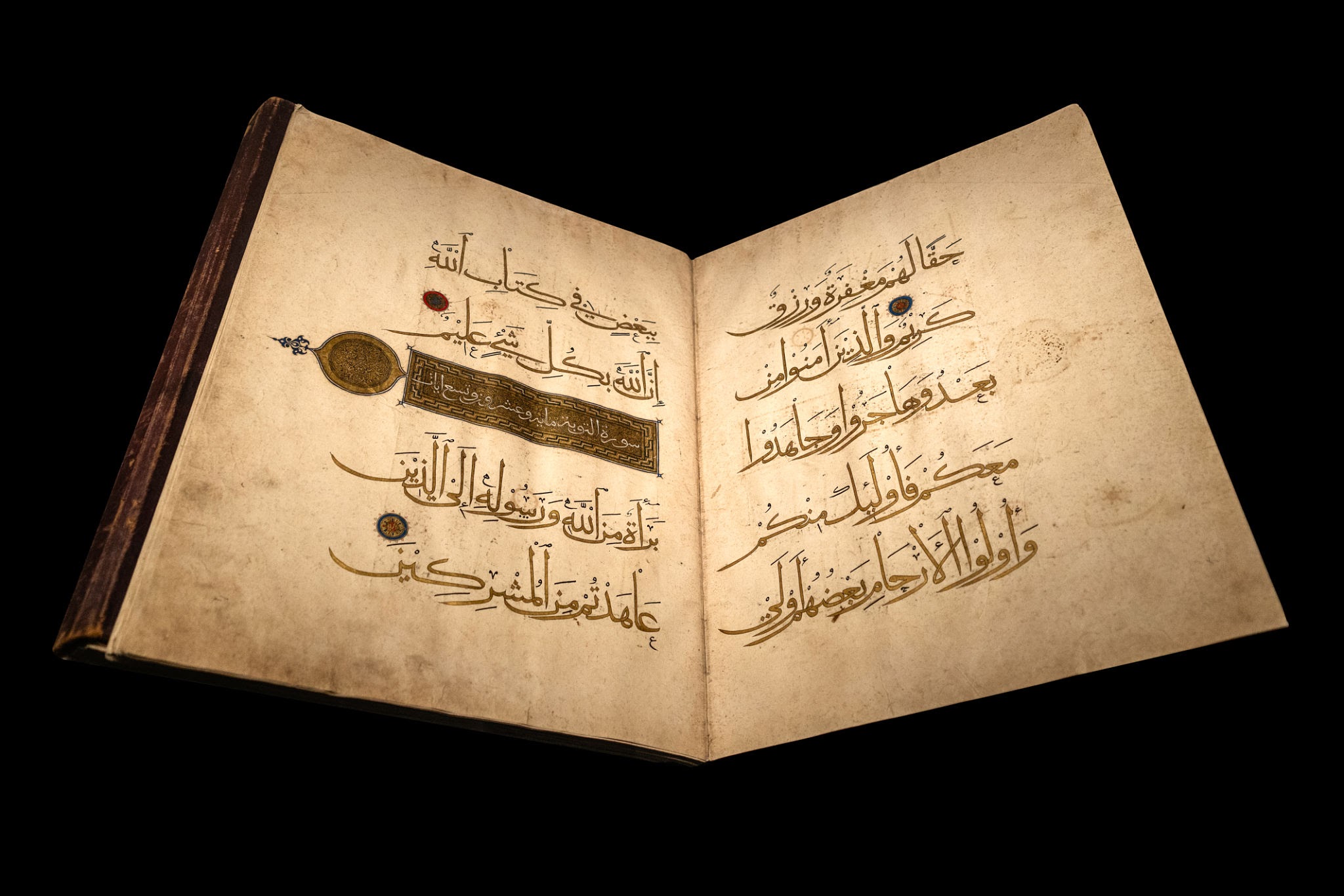
5. Surah Al-Hashr – 59:9
“And those who had settled in the city and adopted the faith before them love those who emigrated to them…”
This verse praises the Ansar for welcoming the Muhajirun, showing generosity, and preferring their fellow believers over themselves, even when they were in need.
6. Surah At-Tawbah – 9:117
“Allah has already forgiven the Prophet and the Muhajirun and the Ansar who followed him in the hour of difficulty…”
This verse refers to the Prophet ﷺ and the believers who stood with him during the difficult expedition of Tabuk. It recognizes their steadfastness and Allah’s mercy toward them.
7. Surah Al-Hadid – 57:10
“Not equal among you are those who spent before the victory and fought [and those who did so afterward]. Those are greater in rank than those who spent and fought afterward. But to all Allah has promised the best reward…”
This verse establishes a distinction in rank between those who spent and fought before the Conquest of Makkah and those who did so afterward. At the same time, it confirms Allah’s promise of a good reward to both groups.
8. Surah Al-Hashr – 59:10
“And those who came after them say, ‘Our Lord, forgive us and our brothers who preceded us in faith, and put not in our hearts any resentment toward those who have believed. Our Lord, indeed You are Kind and Merciful.'”
This verse describes the attitude of later believers toward the earlier Muslim generations. It teaches Muslims to pray for those who preceded them in faith and to avoid harboring resentment toward fellow believers.
9. Surah Al-Ahzab – 33:23
“Among the believers are men who have been true to their covenant with Allah. Some of them have fulfilled their vow, and some are still waiting, and they have not changed [their commitment] in the least.”
This verse praises believers who remained faithful to their covenant with Allah. In its historical context, it is associated with the steadfastness of believers who remained committed despite facing difficult circumstances.
These passages demonstrate the Qur’an’s recognition of the sacrifices, faith, and devotion of the early Muslim community. Some address particular groups among the Companions, while others describe qualities of sincere believers more generally. They should therefore be understood according to their respective contexts rather than treated as though every verse refers to every Companion in the same way.
Undoubtedly, the Companions hold a distinguished position in Islamic history and Sunni religious thought. Their sacrifices in receiving, preserving, and transmitting the message of Islam are fundamental to the Muslim community’s religious heritage. Muslims are expected to recognize their virtue and avoid unjustly insulting or disparaging them. At the same time, the precise theological and legal consequences of disputing particular claims about the Companions must be assessed carefully rather than applying a blanket judgment to every disagreement.
Status of the Sahabah According to Hadith
The Prophet Muhammad ﷺ also spoke about the exceptional virtue of his Companions. Several authentic narrations establish the superiority of their generation and prohibit Muslims from abusing or disparaging them.
1. The Generation of the Companions Was the Best
خَيْرُ النَّاسِ قَرْنِي، ثُمَّ الَّذِينَ يَلُونَهُمْ، ثُمَّ الَّذِينَ يَلُونَهُمْ
“The best of people are those of my generation, then those who follow them, then those who follow them.”
Source: Sahih al-Bukhari 2652; Sahih Muslim 2533.
This authentic narration establishes the superiority of the Prophet’s generation over the generations that followed. It is among the clearest Hadiths demonstrating the exceptional status of the Companions as the first generation of Muslims.
2. The Prophet ﷺ Warned Against Making His Companions Targets of Abuse
اللَّهَ اللَّهَ فِي أَصْحَابِي، اللَّهَ اللَّهَ فِي أَصْحَابِي، لَا تَتَّخِذُوهُمْ غَرَضًا بَعْدِي
“Fear Allah regarding my Companions. Fear Allah regarding my Companions. Do not make them targets after me…”
Source: Jami’ at-Tirmidhi 3862; Musnad Ahmad. At-Tirmidhi graded this narration Hasan Gharib, although some later Hadith scholars, including al-Albani, graded it weak.
The narration is therefore relevant to the discussion, but its grading should be presented transparently rather than described without qualification as an authentic Hadith.
3. Cursing or Abusing the Companions Is Prohibited
لَا تَسُبُّوا أَصْحَابِي، فَلَوْ أَنَّ أَحَدَكُمْ أَنْفَقَ مِثْلَ أُحُدٍ ذَهَبًا مَا بَلَغَ مُدَّ أَحَدِهِمْ وَلَا نَصِيفَهُ
“Do not abuse my Companions. If any one of you were to spend gold equal to Mount Uhud, it would not equal a Mudd or even half a Mudd spent by one of them.”
Source: Sahih al-Bukhari 3673; Sahih Muslim 2541a. See also Sahih Muslim 2540.
This authentic Hadith demonstrates the exceptional virtue of the Companions’ sacrifices. The Prophet ﷺ explained that even a very large charitable contribution from a later Muslim would not equal the value of a much smaller contribution made by one of his Companions. Their sacrifices must therefore be understood in light of their early acceptance of Islam, their circumstances, and their support for the Prophet ﷺ.
4. The Uprightness of the Companions (ʿAdalat al-Sahabah)
الصحابة كلهم عدول
“All the Companions are considered upright and trustworthy.”
This is a recognized principle in Sunni Hadith methodology. Classical Hadith scholars generally held that the Companions are collectively considered upright (ʿudūl) as transmitters of religious reports. Imam al-Nawawi records this principle in his discussion of the Companions in Al-Taqrib wa al-Taysir, including those who were involved in the historical conflicts among Muslims.
However, the technical meaning of ʿadalah must be understood correctly. It does not mean that the Companions were infallible (maʿsum), incapable of committing mistakes, or necessarily correct in every individual judgment. Rather, it means that Sunni Hadith scholars accept their general uprightness and reliability as transmitters of the religion without subjecting each Companion to the same individual evaluation applied to later narrators.
This distinction is essential when discussing the religious authority of the Companions.
What Do These Verses and Hadiths Establish?
The Qur’anic passages and Hadiths discussed above establish several important points:
- The Companions, particularly the foremost Muhajirun and Ansar, received explicit praise in the Qur’an.
- The generation of the Prophet ﷺ was identified as the best generation in authentic Hadith.
- The Companions made exceptional sacrifices in supporting and preserving Islam.
- Muslims are prohibited from unjustly abusing or disparaging them.
- Sunni Hadith scholarship recognizes the collective uprightness of the Companions as transmitters of religious reports.
However, these established virtues do not, by themselves, answer every question concerning the legal and theological authority of the Companions.
In particular, three matters must be distinguished:
- The individual Companion’s opinion: Whether the statement or legal judgment of a particular Companion constitutes an independent proof (hujjah) is a subject discussed by scholars of Usul al-Fiqh.
- The consensus of the Companions (Ijmaʿ al-Sahabah): The authority of an established consensus among the Companions is a separate and important subject in Sunni legal theory.
- The Companions as transmitters and interpreters of Islam: Their collective role in receiving, preserving, explaining, and transmitting the Qur’an and Sunnah is fundamental to Islamic scholarship.
Therefore, the question of whether the Sahabah are the ultimate criterion of truth cannot be answered merely by listing verses and Hadiths praising them. We must also examine what is meant by Mi’yār al-Haqq and how classical scholars understood the authority of the Companions in matters of belief, interpretation, and Islamic law.
What Does “Standard of Truth (Miʿyār al-Haqq)” Mean?

In theological and philosophical discussions, the expression Miʿyār al-Ḥaqq (معيار الحق), commonly translated as “Standard of Truth,” refers to a principle, method, or authority by which a belief, statement, or action is evaluated as true or false.
The expression is a conceptual formulation rather than a specific technical term established by a Qur’anic verse or authentic Hadith. In contemporary South Asian Islamic discussions, it has become particularly relevant to debates about the religious authority of the Companions (Sahabah) and the relationship between their opinions, actions, and divine revelation.
To understand this debate, it is helpful to consider how different disciplines approach the identification and verification of truth.
The Modern South Asian Debate
The expression became particularly prominent in twentieth-century South Asian scholarly discussions concerning the religious authority of the Companions of the Prophet Muhammad ﷺ.
One important contributor to this debate was Sayyid Abul A‘la Maududi. In his discussion of whether the Companions are the Miʿyār al-Haqq, Maududi argued that the Qur’an and Sunnah are the ultimate standards of truth (Mi’yār e-Haqq). He distinguished this principle from the authority of the Companions, maintaining that their collective consensus is binding while the opinions of individual Companions require separate consideration.
This position became a subject of debate among South Asian scholars, particularly concerning the status of the Companions’ collective conduct, individual judgments, and possible errors of interpretation.
How Different Disciplines Evaluate Claims of Truth
Different disciplines use different approaches to assess whether a claim is reliable or true. Some commonly discussed approaches include:
| Approach | Meaning | Example |
|---|---|---|
| Correspondence with Reality | A statement is true when it accurately describes or corresponds to reality. | The Earth revolves around the Sun. |
| Empirical Evidence | Claims about the natural world are assessed through observation, experimentation, and evidence. | Water boils at approximately 100°C at standard atmospheric pressure. |
| Logical Coherence | A claim or argument should be logically consistent and free from contradiction. | A valid mathematical proof must follow consistent logical principles. |
| Consensus and Corroboration | Agreement among qualified experts or corroboration by independent sources can strengthen confidence in a conclusion, although agreement alone does not guarantee truth. | Historians comparing independent primary sources to establish the details of a historical event. |
| Divine Revelation | Within a religious worldview, authenticated divine revelation provides authoritative guidance concerning religious truth. | Muslims regard the Qur’an as the revealed Word of Allah. |
These approaches do not all serve the same purpose. Empirical evidence helps investigate the natural world, logical coherence evaluates arguments, and historical corroboration strengthens the reliability of historical claims. In religious matters, however, the authority of divine revelation is understood within the framework of faith.
The Foundations of Religious Authority in Sunni Islamic Methodology (Usul al-Fiqh)
In Sunni Islamic jurisprudence, scholars have traditionally identified four principal sources and methods for deriving religious rulings: the Qur’an, Sunnah, Ijmaʿ (consensus), and Qiyas (analogical reasoning).
| Source or Method | Role in Islamic Jurisprudence | Example |
|---|---|---|
| Al-Qur’an | The primary revealed source of Islamic guidance and legislation. | Surah Al-Ikhlas (112:1) establishes the oneness of Allah (Tawheed). |
| Authentic Sunnah | The sayings, actions, and approvals of Prophet Muhammad ﷺ, which explain and demonstrate the teachings of the Qur’an. | Prophetic teachings explain the method of performing the five daily prayers. |
| Ijmaʿ (Consensus) | The agreement of qualified Muslim jurists on a religious ruling, subject to the conditions established in Islamic jurisprudence. | The recognised authority of an established scholarly consensus on a legal matter. |
| Qiyas (Analogical Reasoning) | Deriving a ruling for a new matter by identifying a relevant shared effective cause (ʿillah) with an established ruling. | Extending the prohibition of wine to other intoxicating substances because of their shared intoxicating effect. |
These four are commonly presented as the principal foundations of Sunni Usul al-Fiqh. Their classification and the details of their authority have been discussed by jurists, and other legal principles and methods are also recognised, although their acceptance and application vary among schools.
Reason (ʿaql) plays an essential role in understanding revelation, examining evidence, and deriving legal rulings. It is not simply an independent source equivalent to the Qur’an and Sunnah.
Similarly, Fitrah refers to the innate disposition with which Allah created human beings. It is an important concept in Islamic theology, particularly in discussions of human nature and the recognition of basic truths, but it is not one of the four principal sources of Sunni jurisprudence.
Where Do the Companions Fit into This Framework?
The Companions of Prophet Muhammad ﷺ occupy a unique position in Islamic history and scholarship. They directly learned the religion from the Prophet, witnessed its revelation and implementation, transmitted the Qur’an and Sunnah, and formed the first Muslim community.
Their religious authority, however, requires several important distinctions:
- Transmission of Islam: The Companions were the first generation to receive and transmit the Qur’an and the teachings of the Prophet ﷺ. Their role is fundamental to the preservation and transmission of Islamic knowledge.
- Understanding and interpretation: Their direct knowledge of the Prophet’s teachings, the circumstances of revelation, and the early Muslim community makes their understanding particularly significant.
- Collective consensus: The authority of an established consensus among the Companions is an important subject in Sunni Islamic jurisprudence.
- Individual opinions: Whether the opinion of an individual Companion constitutes an independent legal proof (Hujjah) is a separate juristic question on which scholars have differed.
These distinctions are essential. The virtue and general uprightness of the Companions do not necessarily mean that every individual opinion or historical decision carries the same legal authority as the Qur’an and authentic Sunnah.
Therefore, the question is not simply whether the Companions were virtuous or whether Muslims should respect them. Rather, we must examine the precise nature and limits of their religious authority.
This brings us to the central question of this article: Are the Sahabah the Standard of Truth in Islam? And what exactly does their religious authority entail?
Are the Companions a Standard of Truth According to the Qur’an?

A recurring theological question in Muslim discussions, particularly in South Asia, is whether the Companions (Sahaba) of Prophet Muhammad ﷺ are themselves an independent standard of truth, or whether their authority comes from their adherence to the Qur’an and Sunnah.
From the mainstream Sunni perspective, the Qur’an and the authentic Sunnah of the Prophet ﷺ are the primary revealed authorities in Islam. The Companions hold a uniquely important position because they witnessed the revelation, learned directly from the Prophet ﷺ, transmitted his teachings, and demonstrated how Islam was practised by the first Muslim generation.
Sunni scholarship generally recognises the uprightness (ʿadālah) of the Companions as transmitters of Hadith. However, this does not mean that every Companion was individually infallible or that every personal opinion and decision must be accepted without examination.
Below is some important Qur’anic evidence concerning their status.
1. The Qur’an as the Foundational Authority of Guidance (Surah Al-Baqarah 2:2)
ذَٰلِكَ الْكِتَابُ لَا رَيْبَ ۛ فِيهِ ۛ هُدًى لِّلْمُتَّقِينَ
“This is the Book about which there is no doubt, a guidance for the righteous.”
Allah describes the Qur’an as a Book free from doubt and as guidance for the God-conscious. The Companions received, memorised, transmitted, and practised this revelation. Their religious authority is therefore closely connected to their role in preserving and conveying the teachings of the Prophet ﷺ.
2. Praise for the Early Companions and Those Who Follow Their Example (Surah At-Tawbah 9:100)
وَالسَّابِقُونَ الْأَوَّلُونَ مِنَ الْمُهَاجِرِينَ وَالْأَنْصَارِ وَالَّذِينَ اتَّبَعُوهُم بِإِحْسَانٍ رَّضِيَ اللَّهُ عَنْهُمْ وَرَضُوا عَنْهُ…
“And the first forerunners among the Muhajirun and the Ansar, and those who followed them with excellence—Allah is pleased with them, and they are pleased with Him…”
In this verse, Allah expresses His pleasure with the foremost Muhajirun and Ansar and those who follow them with excellence (bi-iḥsān).
Classical commentators, including al-Tabari and Ibn Kathir, discuss different interpretations of the expression al-Sābiqūn al-Awwalūn (the earliest forerunners). These include those who participated in the Pledge of al-Ridwan at Hudaybiyyah and those who prayed facing both the earlier and later qiblahs.
The expression bi-iḥsān describes the manner in which later believers follow the example of the early Muhajirun and Ansar—with faith, righteousness, and obedience to Allah. The verse therefore establishes the distinguished status of the early Muslim community and the merit of following their example.
However, it does not declare every individual Companion infallible or establish that every personal opinion or historical decision must be accepted without scrutiny.
3. The Virtues of the Muhajirun, Ansar, and Later Believers (Surah Al-Hashr 59:8–10)
The Qur’an further highlights the sacrifices of the Muhajirun and the generosity of the Ansar. In verse 10, Allah also teaches later believers to pray for those who preceded them in faith and to ask Him to remove resentment from their hearts toward fellow believers.
These verses demonstrate the honourable position of the early Muslim community and the importance of maintaining respect and goodwill toward those who preceded later generations in faith.
What Does This Mean for the Standard of Truth?
The Qur’an gives the Companions an exceptionally distinguished position, but it does not place every individual Companion on the same level of authority as the Prophet ﷺ. Their statements and actions must be understood in light of the Qur’an and Sunnah, while recognising their unique knowledge, experience, and proximity to revelation.
In Sunni Islamic jurisprudence (Usul al-Fiqh), an established consensus (ijmāʿ) has binding authority under its recognised conditions. However, the legal authority of an individual Companion’s opinion (qawl al-ṣaḥābī) is a separate subject on which jurists have differed.
Therefore, the Companions should be understood as authoritative witnesses, transmitters, and early interpreters of the Qur’an and Sunnah. Their established consensus carries a distinct legal authority, but an individual Companion is not an independent source of infallible religious truth.
This distinction is essential to understanding what it means to regard the Sahaba as a Standard of Truth.
Are the Companions the Criterion of Truth According to Authentic Hadith?
Hadith Evidence for the Authority and Status of the Sahabah

The Sunnah provides important evidence for understanding the religious authority and exemplary status of the Companions (Sahabah). Several narrations emphasise adherence to the Prophet’s teachings and the guidance of his rightly guided successors, commend the way of the earliest Muslims, and explain the importance of remaining with the Muslim community. Other reports demonstrate that individual Companions could make mistakes and receive correction from the Prophet ﷺ.
Taken together, these reports establish the special position of the Sahabah in Islamic scholarship without suggesting that every individual Companion was infallible or that every personal opinion carried binding authority.
1. Following the Sunnah of the Prophet and the Rightly Guided Caliphs
One of the clearest narrations on this subject is the hadith of al-ʿIrbad ibn Sariyah (RA). The Messenger of Allah ﷺ delivered an admonition that deeply moved the Companions. When they asked for his final instructions, he said:
“I advise you to fear Allah, and to listen and obey, even if an Abyssinian slave is appointed over you. Those among you who live after me will see much disagreement. So adhere to my Sunnah and the Sunnah of the rightly guided Caliphs. Hold firmly to it and cling to it with your molar teeth. Beware of newly introduced matters, for every innovation (bid’ah) is misguidance.”
References: Jamiʿ al-Tirmidhi 2676; Sunan Abi Dawud 4607; Sunan Ibn Majah 42. Al-Tirmidhi graded the narration Hasan Sahih.
This hadith gives particular importance to the Sunnah of the rightly guided Caliphs (al-Khulafaʾ al-Rashidun al-Mahdiyyun), traditionally identified as Abu Bakr, ʿUmar, ʿUthman, and ʿAli (RA). The Prophet ﷺ explicitly instructed Muslims to adhere to both his Sunnah and theirs, especially during periods of religious disagreement.
The instruction recognises the distinctive religious authority of the rightly guided Caliphs and the importance of their guidance in preserving and implementing the Prophet’s teachings. Their Sunnah is not limited to practices on which all four unanimously agreed. At the same time, the hadith should not be interpreted as making every personal judgment or action of every Caliph—or every Companion—infallible. Rather, it establishes the special authority of the rightly guided Caliphs’ religious guidance within the framework of the Qur’an and the Prophet’s Sunnah.
This distinction is important: the Prophet ﷺ specifically commanded adherence to the Sunnah of the rightly guided Caliphs, but this does not mean that every individual Companion’s opinion automatically constitutes a binding religious proof.
2. The Understanding and Example of the Early Companions
A well-known statement attributed to ʿAbdullah ibn Masʿud (RA) emphasises the importance of following the example of the earliest generation of Muslims. He advised those seeking a sound path to follow the Companions of Muhammad ﷺ, praising them for their upright hearts, deep knowledge, and conduct. He also described them as people whom Allah chose to accompany His Prophet ﷺ and establish His religion.
“Whoever among you wishes to follow someone, let him follow those who have passed away, for the living are not safe from trials (fitnah). They were the Companions of Muhammad ﷺ. They were the best of this Ummah: the most upright in heart, the deepest in knowledge, and the least affected in manner. They were a people whom Allah chose to accompany His Prophet and establish His religion. So acknowledge their virtue, follow their footsteps, and adhere as much as you can to their character and way of life, for they were upon true guidance.”
— ʿAbdullah ibn Masʿud (RA), reported by Ibn ʿAbd al-Barr in Jamiʿ Bayan al-ʿIlm wa Fadlih, report no. 1810 (2/947).
Source qualification: This is an English rendering of a reported athar, not a verbatim English quotation from the original Arabic. The expression aqalluhā takallufan is rendered here as “the least given to affectation in conduct.” The report’s chain has been described as weak, and its precise wording should be checked against the edition cited.
This report is an athar—a statement attributed to a Companion—not a Prophetic hadith. Its chain has been described as weak, so it should not be presented as an authenticated statement of the Prophet ﷺ. Nevertheless, its general meaning reflects a widely recognised principle in Sunni scholarship: the understanding and religious practice of the earliest Muslim generation deserve particular consideration because the Companions learned directly from the Messenger of Allah ﷺ and witnessed the circumstances in which the Qur’an was revealed, and its teachings applied.
The report supports the exemplary status of the Companions and the importance of studying their understanding and practice. However, it does not independently establish that every individual Companion’s legal opinion is binding or that their personal judgments are free from error.
3. The Narrations Concerning the Divisions of the Muslim Community
Two narrations frequently discussed in connection with adherence to the Prophet’s way and the early Muslim community should be considered separately because their wording differs.
The narration in Jamiʿ al-Tirmidhi
ʿAbdullah ibn ʿAmr (RA) reported that the Messenger of Allah ﷺ foretold that the Muslim community would divide into seventy-three groups. When asked about the group that would remain upon the right path, the Prophet ﷺ replied:
“What befell the children of Isra’il will befall my Ummah, step by step, such that if there was one who had intercourse with his mother in the open, then there would be someone from my Ummah who would do that. Indeed the children of Isra’il split into seventy-two sects, and my Ummah will split into seventy-three sects. All of them are in the Fire Except one sect.” He said: “And which is it O Messenger of Allah?” He said: “What I am upon and my Companions.“
Reference: Jamiʿ al-Tirmidhi 2641. Book 40, Hadith 36; Grade: Da’if (Darussalam)
Al-Tirmidhi described this report as Hasan Gharib Mufassar. Later Hadith scholars have differed over the strength of its particular chain; some later gradings have judged it weak. Its wording and grading should therefore be reported with this qualification rather than presented as undisputedly authentic.
The narration nevertheless has an important place in discussions of adherence to the Prophet’s teachings and the way of his Companions. It identifies the Prophet’s path and that of his Companions as the reference point for evaluating religious approaches. It should not, however, be used without further argument to equate every individual Companion’s opinion with binding consensus (ijmaʿ).
The Narration in Sunan Abi Dawud
A separate narration transmitted from Muʿawiyah ibn Abi Sufyan (RA) also refers to the division of the Muslim community into seventy-three groups. It states that one group will be saved and identifies it as al-Jamaʿah.
The Messenger of Allah ﷺ said:
“Beware! Those who came before you from the People of the Book divided into seventy-two religious communities, and this community will divide into seventy-three. Seventy-two will be in the Fire, and one will be in Paradise—and that is al-Jamaʿah.”
Reference: Sunan Abi Dawud 4597, Book 42, Hadith 2. Graded Hasan by al-Albani.
The Arabic phrase at the end of the narration is:
وَهِيَ الْجَمَاعَةُ
Wa-hiya al-Jamaʿah.
“And that is the united community.”
Some English translations render al-Jamaʿah as “the majority group.” However, the Arabic wording literally identifies the saved group as al-Jamaʿah (الجماعة), a term associated with gathering, unity, and communal adherence. Its precise religious meaning is better understood through the explanations of classical scholars rather than by assuming that it simply means the group with the largest number of followers.
What does al-Jamaʿah mean according to classical scholars?
An important explanation is preserved by Imam al-Tirmidhi in Jamiʿ al-Tirmidhi 2167, in the chapter entitled “Adhering to the Jamaʿah.” After recording a narration from ʿAbdullah ibn ʿUmar (RA), al-Tirmidhi explains the term:
وَتَفْسِيرُ الْجَمَاعَةِ عِنْدَ أَهْلِ الْعِلْمِ هُمْ أَهْلُ الْفِقْهِ وَالْعِلْمِ وَالْحَدِيثِ
“According to the people of knowledge, al-Jamaʿah refers to the people of jurisprudence, knowledge, and Hadith.”
Reference: Imam al-Tirmidhi, Jamiʿ al-Tirmidhi 2167.
This explanation is significant because it connects al-Jamaʿah with the people who possess religious knowledge and preserve the understanding of Islam through jurisprudence and Hadith. It therefore cannot be reduced to a purely numerical concept in which the largest group is automatically considered correct.
Al-Tirmidhi also records an illustrative exchange involving the renowned scholar ʿAbdullah ibn al-Mubarak (RA). According to the report, ʿAli ibn al-Hasan asked Ibn al-Mubarak:
سَأَلْتُ عَبْدَ اللَّهِ بْنَ الْمُبَارَكِ مَنِ الْجَمَاعَةُ؟ فَقَالَ أَبُو بَكْرٍ وَعُمَرُ. قِيلَ لَهُ قَدْ مَاتَ أَبُو بَكْرٍ وَعُمَرُ. قَالَ فُلَانٌ وَفُلَانٌ. قِيلَ لَهُ قَدْ مَاتَ فُلَانٌ وَفُلَانٌ. فَقَالَ عَبْدُ اللَّهِ بْنُ الْمُبَارَكِ أَبُو حَمْزَةَ السُّكَّرِيُّ جَمَاعَةٌ.
“I asked ʿAbdullah ibn al-Mubarak, ‘Who are al-Jamaʿah?’ He replied, ‘Abu Bakr and ʿUmar.’ He was told, ‘Abu Bakr and ʿUmar have passed away.’ He then mentioned so-and-so and so-and-so. When he was told that they too had passed away, ʿAbdullah ibn al-Mubarak said, ‘Abu Hamzah al-Sukkari is al-Jamaʿah.’”
Al-Tirmidhi identifies Abu Hamzah al-Sukkari as Muhammad ibn Maymun and describes him as a righteous scholar. He also explains that Ibn al-Mubarak made this statement during Abu Hamzah’s lifetime.
Reference: Jamiʿ al-Tirmidhi 2167.
The point of this exchange is not that a single scholar literally constitutes the entire Muslim community. Rather, it illustrates that religious adherence and sound scholarship—not numerical strength alone—are central to the meaning of al-Jamaʿah. Ibn al-Mubarak’s example shows that a person firmly established upon sound religious guidance may represent the community’s commitment to the truth even when few people remain.
A further clarification appears in the commentary of the Indian scholar ʿAbd al-Haqq al-Dihlawi (d. 1052 AH) on the same seventy-three-groups narration. Explaining the phrase wa-hiya al-Jamaʿah, he writes:
أَيْ تِلْكَ الْفِرْقَةُ مُسَمَّاةٌ بِالْجَمَاعَةِ لِكَوْنِهِمْ مُجْتَمِعِينَ عَلَى كَلِمَةِ الْحَقِّ وَمَا أَجْمَعَ عَلَيْهِ الْمُسْلِمُونَ الَّذِينَ هُمْ عَلَى الْهُدَى
“That group is called al-Jamaʿah because its members are united upon the word of truth and upon that which the Muslims who are rightly guided have agreed upon.”
Reference: ʿAbd al-Haqq al-Dihlawi, Lamaʿat al-Tanqih, commentary on the narration of the seventy-three groups, no. 172.
This explanation emphasises unity upon the truth and agreement with the guidance of the rightly guided Muslims. It should not, however, be interpreted as equating every agreement among Muslims with the technical legal concept of ijmaʿ.
The related narration in Jamiʿ al-Tirmidhi
Another narration helps explain why adherence to al-Jamaʿah was considered important. ʿAbdullah ibn ʿUmar (RA) reported that the Messenger of Allah ﷺ said:
إِنَّ اللَّهَ لَا يَجْمَعُ أُمَّتِي – أَوْ قَالَ أُمَّةَ مُحَمَّدٍ صَلَّى اللَّهُ عَلَيْهِ وَسَلَّمَ – عَلَى ضَلَالَةٍ وَيَدُ اللَّهِ مَعَ الْجَمَاعَةِ وَمَنْ شَذَّ شَذَّ إِلَى النَّارِ
“Indeed, Allah will not unite my Ummah—or he said, the Ummah of Muhammad ﷺ—upon misguidance. Allah’s Hand is with al-Jamaʿah, and whoever separates himself from it separates himself towards the Fire.”
Reference: Jamiʿ al-Tirmidhi 2167. Al-Tirmidhi described this particular chain as Gharib min hadha al-wajh (unusual through this route). The Darussalam edition grades it Daʿif (weak).
Although the chain of this particular narration has been criticised, al-Tirmidhi’s accompanying explanation of al-Jamaʿah remains an important piece of classical commentary to consider. The grading of the Prophetic report should not be confused with the separate scholarly explanation that al-Tirmidhi records alongside it.
What does this mean for identifying al-Jamaʿah?
Taken together, these explanations indicate that al-Jamaʿah is not simply whichever religious group has the largest number of followers. Its meaning is connected with remaining united upon the truth, adhering to the Qur’an and the Sunnah, and following sound religious understanding preserved by qualified scholars.
The narration should therefore not be used to declare that a particular contemporary organisation, school, or movement automatically represents the saved group merely because it claims that title or has a large following. Claims of religious correctness must be assessed against the Qur’an, authentic Sunnah, and established principles of Islamic scholarship.
It is also important to distinguish this narration from the separate report in Jamiʿ al-Tirmidhi 2641, which identifies the saved way with what the Prophet ﷺ and his Companions followed. The two reports have related themes, but their wording is different: Abu Dawud 4597 says al-Jamaʿah, whereas Tirmidhi 2641 uses the phrase “What I and my Companions are upon.” They should be discussed together without merging their texts or chains.
4. The Prophet’s Correction of Individual Companions
The special status of the Sahabah does not mean that every individual Companion was incapable of error. Prophetic narrations themselves demonstrate that the Messenger of Allah ﷺ corrected some of their words, conduct, and judgments.
The Incident Involving Abu Dharr (RA)
In a narration recorded in Sahih Muslim, Abu Dharr (RA) explained that he had quarrelled with another Muslim whose mother was non-Arab. During the dispute, Abu Dharr reproached the man because of his mother.
We went to Abu Dharr (Ghifari) in Rabadha and he had a mantle over him, and his slave had one like it. We said: Abu Dharr, had you joined them together, it would have been a complete garment.
Thereupon he said: There was an altercation between me and one of the persons among my brothers. His mother was a non-Arab. I reproached him for his mother.
He complained against me to Allah’s Apostle (ﷺ). As I met Allah’s Apostle (ﷺ) he said: Abu Dharr, you are a person who still has (in him the remnants) of the days (of Ignorance). Thereupon I said: Allah’s Messenger, he who abuses (other) persons, they abuse (in return) his father and mother.
He (the Holy Prophet) said: Abu Dharr, you are a person who still has (the remnants) of Ignorance in him. They (your servants and slaves) are your brothers. Allah has put them in your care, so feed them with what you eat, clothe them with what you wear. and do not burden them beyond their capacities; but if you burden them (with an unbearable burden), then help them (by sharing their extra burden).
The man subsequently complained to the Messenger of Allah ﷺ.
The Prophet ﷺ said to Abu Dharr:
“You are a person who still has in him the remnants of the days of ignorance.”
He further reminded Abu Dharr that those under his authority were his brothers and instructed him to treat them with dignity. He commanded that they be fed and clothed as one would feed and clothe oneself.
References: Sahih Muslim 1661a; Sahih al-Bukhari 30.
The narrations do not identify the man by name, so he should not be identified as Bilal (RA) without separate evidence. This incident demonstrates that even a highly respected Companion could make a statement reflecting an attitude condemned by Islam and receive direct correction from the Prophet ﷺ.
The Treaty of Hudaybiyyah
Another example appears in the account of the Treaty of Hudaybiyyah. When the treaty’s terms appeared unfavourable to the Muslims, ʿUmar ibn al-Khattab (RA) questioned the situation and sought clarification from the Prophet ﷺ. He also approached Abu Bakr (RA), who reassured him that the Messenger of Allah ﷺ was following the truth and advised him to remain firm in following him.
The Prophet ﷺ explained that he would not disobey Allah and expressed confidence that Allah would grant him victory. Although the treaty’s terms initially appeared difficult to some Muslims, its eventual consequences revealed wisdom that was not immediately apparent.
Reference: Sahih al-Bukhari 2731–2732.
This incident should not be presented as proof that ʿUmar (RA) committed a formal legal error. Rather, it illustrates that a Companion could struggle to understand the wisdom behind a Prophetic decision at a particular moment, while the Prophet ﷺ possessed divine guidance unavailable to others.
These incidents establish an important distinction: the Companions were honoured and upright, but they were not individually infallible. During the Prophet’s lifetime, their words, conduct, and judgments remained subject to his guidance and correction. Their distinguished status does not mean that every individual opinion or decision must be regarded as error-free.
5. The Authority of Consensus (Ijmaʿ)
The authority of the Companions must also be considered in relation to the Islamic legal doctrine of ijmaʿ (consensus). Unlike an individual Companion’s opinion, an established consensus represents a distinct category of legal authority in Sunni jurisprudence.
Among the narrations discussed in this context is the report of Anas ibn Malik (RA), recorded in Sunan Ibn Majah:
“‘My nation will not unite on misguidance, so if you see them differing, follow the great majority.’.”
Reference: Sunan Ibn Majah 3950, Book 36, Hadith 25. Grade: Da’if (Darussalam)
The chain of this particular narration has been graded weak by Hadith scholars. Al-Albani, for example, distinguished between its central meaning, which he considered supported by other evidence, and the additional wording about following the great majority, which he did not authenticate through this chain. Therefore, the complete narration should not be presented as an undisputedly authentic hadith.
A related report, we mentioned earlier, appears in Jamiʿ al-Tirmidhi 2167, narrated by ʿAbdullah ibn ʿUmar (RA). It states that Allah will not gather the Ummah upon deviation and that Allah’s support is with the Jamaʿah. Al-Tirmidhi described this particular route as Gharib min hadha al-wajh (unusual through this chain).
In his accompanying explanation, al-Tirmidhi records that, according to the scholars of his time, al-Jamaʿah referred to the people of jurisprudence, knowledge, and Hadith. This is a scholarly explanation of the term, rather than part of the Prophet’s ﷺ wording. Later Hadith scholars have also discussed the strength of the narration’s chain.
These reports are relevant to the broader discussion of communal adherence and the protection of the Muslim community from collective error. However, the technical doctrine of ijmaʿ cannot be reduced to these narrations alone.
In Sunni legal theory, ijmaʿ is generally defined as the agreement of the qualified jurists (mujtahids) of the Muslim community, after the death of the Prophet ﷺ, upon a religious ruling. Its precise conditions and scope have been discussed differently by Muslim legal theorists. It is not simply a majority vote, a popular opinion, or an agreement among any group of Muslims.
The consensus of the Companions holds particular importance in Sunni jurisprudence because they were the first generation to receive the Prophet’s teachings directly, witness their application, and understand the circumstances surrounding revelation. An established consensus among them is therefore a particularly significant instance of ijmaʿ.
Nevertheless, the consensus of the Companions must be distinguished from the opinion of an individual Companion (qawl al-Sahabi). Whether an individual Companion’s legal opinion constitutes an independent proof is a separate question over which Muslim jurists have differed. An established consensus, by contrast, belongs to the distinct legal category of ijmaʿ and carries its own authority under the conditions recognised by Sunni legal theory.
Imam al-Shafiʿi’s Al-Risalah is an important early source for the classical legal discussion of consensus and its authority.
What Do These Hadith Reports Establish?
Considered together, these reports support several important conclusions:
- The Prophet’s Sunnah is the primary model of religious guidance. The Prophet ﷺ instructed Muslims to adhere to his teachings and, in particular, the Sunnah of the rightly guided Caliphs.
- The Companions hold a distinctive position in understanding Islam. Their direct association with the Prophet ﷺ, their transmission of revelation, and their early understanding of its teachings make their example especially significant.
- The way of the Companions is an important reference point. The narration in Jamiʿ al-Tirmidhi 2641 explicitly connects the Prophet’s way with that of his Companions, although the grading of its particular chain has been discussed.
- Individual Companions were not infallible. The Prophet ﷺ corrected their conduct and clarified matters they did not initially understand.
- Valid consensus has a distinct legal authority. However, ijmaʿ must be distinguished from individual Companion opinions and from mere majority agreement.
The evidence therefore supports the authority and exemplary status of the Sahabah without placing them on the level of Prophetic revelation. Their understanding and collective agreement are highly significant in Sunni Islam, but the ultimate and infallible standard remains the revelation conveyed by the Messenger of Allah ﷺ.
The Status of the Companions According to Usul al-Fiqh and the Imams

Islamic legal theory (Usul al-Fiqh) distinguishes between the authority of the Qur’an and Sunnah, the consensus of the Muslim community (ijmaʿ), and the legal opinions of individual Companions (qawl al-Sahabi). Although the Companions occupy a uniquely important position in Sunni scholarship, their individual opinions are not treated as infallible or uniformly binding by every school of Islamic jurisprudence.
The legal status of a Companion’s opinion depends on the circumstances:
- An opinion supported by the Qur’an and Sunnah: It is accepted on the strength of the relevant evidence, with the Companion’s understanding providing important interpretive insight.
- An individual opinion with no known disagreement among the Companions: Muslim jurists differed over whether such an opinion constitutes an independent legal proof. Many gave it considerable authority, while others did not regard it as automatically binding.
- A disagreement among the Companions: No individual Companion’s opinion automatically binds the others. Jurists examine the available evidence and assess which position is stronger.
- An established consensus (ijmaʿ): This is a distinct legal category and is not equivalent to an individual Companion’s opinion or a simple majority view.
The positions of the classical Imams illustrate the importance they attached to the Companions while also demonstrating that the legal authority of their individual opinions requires careful qualification. the best examples and trusted transmitters of Islam, but not infallible standards by themselves.
1. Imam Abu Hanifa
Imam Abu Hanifa’s reported legal methodology gives particular importance to the opinions of the Companions after the Qur’an and the Sunnah of the Messenger of Allah ﷺ. In a statement transmitted in classical biographical works, he explained:
آخذ بكتاب الله، فما لم أجد فبسنة رسول الله ﷺ، فإن لم أجد في كتاب الله ولا سنة رسول الله ﷺ أخذت بقول أصحابه، آخذ بقول من شئت منهم وأدع من شئت منهم، ولا أخرج من قولهم إلى قول غيرهم.
“I follow the Book of Allah. When I find no ruling in it, I follow the Sunnah of the Messenger of Allah ﷺ. If I find no ruling in the Book of Allah or the Sunnah of His Messenger, I take the opinions of his Companions. I adopt the opinion of whichever of them I wish and leave whichever I wish, but I do not go beyond their opinions to those of others.”
References: Ibn ʿAbd al-Barr, Al-Intiqaʾ fi Fadaʾil al-Aʾimmah al-Thalathah al-Fuqahaʾ, section on Abu Hanifa (Cairo edition, 1350 AH, p. 142; pagination varies by edition); see also al-Khatib al-Baghdadi, Tarikh Baghdad 13/368 (page no. may vary based on editions), biography of Abu Hanifa.
This statement demonstrates the exceptional importance Abu Hanifa attached to the Companions’ legal understanding. When they differed, he allowed for choosing among their opinions, but he did not regard himself as free to disregard their positions and simply adopt the opinions of later generations instead.
His approach should not be interpreted as making every individual Companion’s opinion infallible. Rather, it illustrates the special authority he assigned to the Companions as the generation closest to the Prophet ﷺ and the importance of their collective legal understanding in his jurisprudential methodology.
2. Imam al-Shafi‘i
Imam al-Shafi‘i gave considerable legal weight to the opinions of the Companions while distinguishing between their collective agreement, individual opinions, and disagreements.
Al-Bayhaqi transmits the following statement from al-Shafi‘i concerning the differing opinions of the Companions:
أَقَاوِيلُ الصَّحَابَةِ إِذَا تَفَرَّقُوا فِيهَا نَصِيرُ إِلَى مَا وَافَقَ الْكِتَابَ وَالسُّنَّةَ أَوِ الْإِجْمَاعَ إِذَا كَانَ أَصَحَّ فِي الْقِيَاسِ، وَإِذَا قَالَ الْوَاحِدُ مِنْهُمْ الْقَوْلَ لَا يُحْفَظُ عَنْ غَيْرِهِ مِنْهُمْ فِيهِ لَهُ مُوَافَقَةٌ وَلَا خِلَافٌ صِرْتُ إِلَى اتِّبَاعِ قَوْلِهِ إِذَا لَمْ أَجِدْ كِتَابًا وَلَا سُنَّةً وَلَا إِجْمَاعًا وَلَا شَيْئًا فِي مَعْنَاهُ يُحْكَمُ لَهُ بِحُكْمِهِ أَوْ وُجِدَ مَعَهُ قِيَاسٌ.
Meaning:
“When the Companions’ opinions differ, we turn to the opinion that accords with the Qur’an and Sunnah, or with consensus, or that is stronger by analogy. When one Companion expresses an opinion and no agreement or disagreement on it is known from the others, I follow that opinion if I find no ruling in the Qur’an, Sunnah, or consensus, nor anything equivalent to these sources that determines the matter; or if an analogy supports it.”
Reference: Al-Bayhaqi, Al-Madkhal ila al-Sunan al-Kubra, chapter concerning the opinions of the Companions when they differed. Also paraphrased from Al-Risalah (ed. Ahmad Shakir, paras. 1805–1811).
This statement illustrates al-Shafi‘i’s respect for the legal understanding of the Companions. When they differed, he evaluated their positions in light of the Qur’an, Sunnah, consensus, and legal analogy. When only one Companion’s position was known, he gave it particular consideration under the conditions he described.
His approach therefore recognises the exceptional scholarly authority of the Companions without treating every individual judgment as infallible or placing their opinions above the Qur’an and authentic Sunnah.
3. Imam Malik
Imam Malik ibn Anas gave particular importance to the inherited religious and legal practice of the people of Medina (ʿAmal Ahl al-Madinah). He considered this practice an important source of legal understanding because Medina was the city where the Prophet ﷺ established the Muslim community, the Qur’an was revealed, and generations of Companions and their successors preserved and transmitted the Prophetic teachings.
In his famous letter to al-Layth ibn Saʿd, preserved by Qadi ʿIyad in Tartib al-Madarik wa-Taqrib al-Masalik, Malik explained the special significance of Medinan practice:
فَإِنَّمَا النَّاسُ تَبَعٌ لِأَهْلِ الْمَدِينَةِ، إِلَيْهَا كَانَتِ الْهِجْرَةُ، وَبِهَا نَزَلَ الْقُرْآنُ، وَأَحَلَّ الْحَلَالَ وَحَرَّمَ الْحَرَامَ، إِذْ رَسُولُ اللَّهِ ﷺ بَيْنَ أَظْهُرِهِمْ، يَحْضُرُونَ الْوَحْيَ وَالتَّنْزِيلَ…
Meaning:
“People are followers of the people of Medina, for to it was the Migration, and there the Qur’an was revealed and the lawful and unlawful were established, while the Messenger of Allah ﷺ was among them and they witnessed the revelation and its descent.”
Reference: Qadi ʿIyad, Tartib al-Madarik wa-Taqrib al-Masalik, vol. 1, pp. 41–43 (Moroccan Ministry of Endowments edition), “The Letter of Malik to al-Layth ibn Saʿd.”
Malik’s argument reflects his confidence in the religious knowledge preserved through the established practice of Medina. However, this should not be confused with the claim that every individual Companion’s opinion was binding or that all Companions agreed on every legal question. The distinction between inherited communal practice and individual juristic reasoning is important in understanding Maliki legal methodology.
4. Imam Ahmad ibn Hanbal
Imam Ahmad ibn Hanbal gave exceptional importance to the teachings and transmitted reports of the Prophet ﷺ and his Companions.
Al-Khatib al-Baghdadi records the following statement from Ahmad:
الِاتِّبَاعُ أَنْ يَتَّبِعَ الرَّجُلُ مَا جَاءَ عَنِ النَّبِيِّ ﷺ، وَعَنْ أَصْحَابِهِ، ثُمَّ هُوَ بَعْدُ فِي التَّابِعِينَ مُخَيَّرٌ.
Meaning:
“Following [the revealed guidance] means following what has come from the Prophet ﷺ and his Companions; after that, a person has a choice concerning the Successors.”
Reference: Al-Khatib al-Baghdadi, Al-Faqih wa al-Mutafaqqih, vol. 1, p. 439, report no. 461 (Islamweb edition).
This statement demonstrates Ahmad’s special regard for the Prophetic and Companion traditions. However, it should not be understood to mean that every individual Companion’s legal opinion was infallible or automatically binding. The jurists differed over the independent authority of an individual Companion’s opinion, particularly when no disagreement from other Companions was known.
5. Al-Khatib al-Baghdadi
In his work Al-Kifayah fi ʿIlm al-Riwayah, al-Khatib al-Baghdadi discusses the accepted uprightness of the Companions (ʿAdalat al-Sahabah) and explains why Hadith scholars do not investigate the reliability of individual Companions in the same manner as later narrators.
He explains:
لِأَنَّ عَدَالَةَ الصَّحَابَةِ ثَابِتَةٌ مَعْلُومَةٌ بِتَعْدِيلِ اللَّهِ لَهُمْ وَإِخْبَارِهِ عَنْ طَهَارَتِهِمْ وَاخْتِيَارِهِ لَهُمْ فِي نَصِّ الْقُرْآنِ.
Meaning:
“Because the uprightness of the Companions is established and known through Allah’s declaration of their uprightness, His informing us of their purity, and His choosing them, as stated in the Qur’an.”
Reference: Al-Khatib al-Baghdadi, Al-Kifayah fi ʿIlm al-Riwayah, p. 46 (pagination of the cited edition).
This principle concerns the reliability of the Companions as transmitters of Prophetic reports. It does not mean that every individual Companion’s legal judgment was infallible or that their opinions all carried the same legal authority.
Summary: The Companions and the Standard of Truth
The discussions of the classical jurists and Hadith scholars establish several important distinctions:
- The Qur’an and authentic Sunnah: These are the primary revealed authorities and ultimate standards by which religious beliefs and practices are evaluated.
- The Companions as transmitters and interpreters: Their knowledge, understanding, and preservation of the Prophetic teachings give their legacy exceptional authority in Islamic scholarship.
- The consensus of the Companions (Ijmaʿ al-Sahabah): Established consensus is a binding legal proof under the conditions recognised in Islamic jurisprudence.
- Individual Companion opinions (Qawl al-Sahabi): These are not infallible revelation. Their independent legal authority is a subject of juristic discussion, and their evidentiary weight depends on the circumstances.
Therefore, the Companions should not be described as an independent or infallible source of truth alongside the Qur’an and Sunnah. Rather, they were the first generation to receive, preserve, understand, and transmit the Prophet’s teachings. Their established consensus carries legal authority, while individual opinions must be considered according to the principles of Islamic jurisprudence.
In this sense, the Companions are exceptionally authoritative witnesses and transmitters of the revealed guidance, but the Qur’an and authentic Sunnah remain the ultimate criterion of truth.
Companions as Followers of Truth
The lives of the Companions (Sahaba) demonstrate their commitment to following the guidance of Allah and His Messenger ﷺ. They did not regard their personal opinions as independent sources of revelation.
- Abu Bakr al-Siddiq (RA): He was renowned for his generosity, including freeing oppressed believers such as Bilal (RA). In a separate incident, when the Prophet ﷺ called upon the Companions to give charity, Abu Bakr brought everything he had. (Sahih al-Bukhari, account of Bilal’s emancipation; Jamiʿ al-Tirmidhi, 3675.)
- ʿUmar ibn al-Khattab (RA): When kissing the Black Stone, he explained that he did so because he had seen the Messenger of Allah ﷺ kiss it. This illustrates his commitment to following the Prophet’s example rather than acting on personal preference. (Sahih al-Bukhari, 1597.)
- ʿAli ibn Abi Talib (RA): During the dispute with the Kharijites, he appealed to the Qur’an’s guidance concerning arbitration to explain the legitimacy of arbitration between disputing parties. (Musnad Ahmad, 656.)
These examples illustrate the Companions’ commitment to Prophetic guidance. They were devoted followers of revelation, not independent or infallible sources of religious authority alongside the Qur’an and Sunnah.
Contemporary Misconceptions
Discussions about the authority of the Companions sometimes fall into two extremes. Some people give individual Companion opinions an authority that Islamic jurisprudence does not automatically assign to them, while others disregard the Companions’ important role in preserving and interpreting the Prophetic teachings.
Classical Sunni scholarship recognises a more careful distinction: the Qur’an and authentic Sunnah are the primary revealed authorities; the Companions are highly respected as upright transmitters, early interpreters, and exemplars; established consensus (ijmaʿ) has binding legal authority under its recognised conditions; and the independent authority of an individual Companion’s opinion (qawl al-Sahabi) is a matter of juristic discussion.
For a detailed examination of the arguments used to establish the Companions as an absolute criterion of truth, see our related article: The Companions as the Criterion of Truth: Analysis and Refutation of Supporting Arguments.
📖 Read More: Rebuttal to the Evidence: Sahabah as the Criterion of Truth
Conclusion: What Is the Criterion of Truth?
In Islam, the Qur’an and authentic Sunnah are the primary revealed authorities and the ultimate standards for evaluating religious beliefs and practices. The Companions are not an independent or infallible source of revelation. Rather, they are the first generation to receive, preserve, understand, and transmit the Prophet’s teachings.
Their authority must be understood through several distinctions:
| Authority or Source | Role in Islamic Methodology | Important Qualification |
|---|---|---|
| Authority or Source The Qur’an | Role in Islamic Methodology Primary revealed authority | Important Qualification The ultimate criterion of divine guidance |
| Authority or Source Authentic Sunnah | Role in Islamic Methodology Primary revealed authority | Important Qualification The Prophet’s authoritative teachings, explanations, and practices |
| Authority or Source Established Ijmaʿ | Role in Islamic Methodology Secondary / derived binding proof | Important Qualification Must meet the recognized conditions of valid consensus |
| Authority or Source Individual Qawl al-Sahabi | Role in Islamic Methodology Subject of juristic evaluation | Important Qualification Its legal authority depends on the circumstances and the principles of Usul al-Fiqh |
The distinction is therefore between the collective consensus of the Companions and the opinion of an individual Companion. Established consensus carries binding legal authority under its recognised conditions, whereas an individual Companion’s opinion is not automatically infallible or binding in every circumstance.
Following the Companions means respecting their understanding of Islam, learning from their example, and adhering to the guidance they received from the Prophet ﷺ. Their path is an essential reference for understanding the early practice of Islam, but it must be understood in harmony with the Qur’an and authentic Sunnah.
Frequently Asked Questions (FAQ)
1. Can the Companions be considered the criterion of truth?
Not as an independent or infallible source alongside the Qur’an and Sunnah. The Companions are authoritative transmitters and interpreters of the Prophetic teachings, and their established consensus carries binding legal authority under recognised conditions.
2. What is the ultimate criterion of truth in Islam?
The Qur’an and the authentic Sunnah of the Prophet Muhammad ﷺ are the primary revealed authorities and the ultimate standards for evaluating Islamic beliefs and practices.
3. Should Muslims follow the path of the Companions?
Yes. Muslims should respect and learn from the Companions’ faith, sincerity, understanding, and adherence to the Prophet’s teachings. Their established consensus and the recognised guidance of the Rightly Guided Caliphs also have a special place in Sunni Islamic methodology. However, the legal authority of an individual Companion’s opinion is subject to juristic principles.
4. Is an individual Companion’s opinion (Qawl al-Sahabi) always binding proof (Hujjah)?
Not automatically. Classical jurists differed over the independent legal authority of an individual Companion’s opinion. Its evidentiary weight depends on factors such as whether other Companions disagreed, whether the opinion reflects knowledge received from the Prophet ﷺ, and whether other recognised evidence applies.
References
Primary Sources
- The Qur’an. Relevant passages: Surah Al-Baqarah 2:2; Surah An-Nisa 4:59; Surah At-Tawbah 9:100, 9:117; Surah Al-Fath 48:18, 48:29; Surah Al-Hadid 57:10; Surah Al-Hashr 59:8–10; and Surah Al-Ahzab 33:23.
- Al-Bukhari, Muhammad ibn Ismaʿil. Sahih al-Bukhari. Hadith 30, 1597, 2652, 2731–2732, and 3673.
- Muslim ibn al-Hajjaj. Sahih Muslim. Hadith 2533, 2541a, and 1661a.
- Al-Tirmidhi, Muhammad ibn ʿIsa. Jamiʿ al-Tirmidhi. Hadith 2167, 2641, 2676, 3675, and 3862.
- Abu Dawud, Sulayman ibn al-Ashʿath. Sunan Abi Dawud. Hadith 4597 and 4607.
- Ibn Majah, Muhammad ibn Yazid. Sunan Ibn Majah. Hadith 42 and 3950.
- Ahmad ibn Hanbal. Musnad Ahmad. Hadith 656.
Classical Scholarly Works
- Ibn Hajar al-ʿAsqalani. Al-Isabah fi Tamyiz al-Sahabah. A classical reference for the definition, biographies, and classification of the Prophet’s Companions.
- Al-Nawawi, Yahya ibn Sharaf. Al-Taqrib wa al-Taysir li-Maʿrifat Sunan al-Bashir al-Nadhir. Discussion of the uprightness (ʿAdalat al-Sahabah) of the Companions in Hadith transmission.
- Al-Suyuti, Jalal al-Din. Tadrib al-Rawi fi Sharh Taqrib al-Nawawi. A supplementary discussion of Hadith methodology and the principle of the Companions’ uprightness.
- Ibn ʿAbd al-Barr. Jamiʿ Bayan al-ʿIlm wa Fadlih. Report no. 1810 (2/947). Statement attributed to ʿAbdullah ibn Masʿud concerning the example of the Companions.
- Ibn ʿAbd al-Barr. Al-Intiqaʾ fi Fadaʾil al-Aʾimmah al-Thalathah al-Fuqahaʾ. Section on Imam Abu Hanifa, Cairo edition, 1350 AH, p. 142. Pagination may vary by edition.
- Al-Khatib al-Baghdadi. Tarikh Baghdad. Vol. 13, p. 368, biography of Abu Hanifa. Pagination may vary by edition.
- Al-Bayhaqi. Al-Madkhal ila al-Sunan al-Kubra. Chapter concerning the differing opinions of the Companions. Statement attributed to Imam al-Shafiʿi.
- Al-Shafiʿi, Muhammad ibn Idris. Al-Risalah. Discussion of consensus, individual Companion opinions, and legal reasoning. See the relevant discussion in the edition edited by Ahmad Muhammad Shakir, paragraphs 1805–1811.
- Qadi ʿIyad. Tartib al-Madarik wa-Taqrib al-Masalik. Vol. 1, pp. 41–43, Moroccan Ministry of Endowments edition. Letter of Imam Malik to al-Layth ibn Saʿd.
- Al-Khatib al-Baghdadi. Al-Faqih wa al-Mutafaqqih. Vol. 1, p. 439, report no. 461. Statement attributed to Imam Ahmad ibn Hanbal.
- Al-Khatib al-Baghdadi. Al-Kifayah fi ʿIlm al-Riwayah. p. 46 of the cited edition. Discussion of the uprightness of the Companions as transmitters.
- Al-Dihlawi, ʿAbd al-Haqq. Lamaʿat al-Tanqih. Commentary on the narration concerning the seventy-three groups, no. 172. Explanation of the term al-Jamaʿah.
Modern Scholarly Works and Research
- Al-Zuhayli, Wahbah. Usul al-Fiqh al-Islami. Discussion of the legal authority of the consensus of the Companions (Ijmaʿ al-Sahabah) and individual Companion opinions (Qawl al-Sahabi).
- Kamali, Mohammad Hashim. Principles of Islamic Jurisprudence. Discussion of the Qur’an, Sunnah, ijmaʿ, qiyas, and legal interpretation.
- Maududi, Sayyid Abul Aʿla. Rasa’il-o-Masa’il. Discussion titled “The Discussion on Whether the Companions Are the Standard of Truth.” See also the relevant discussion in Tarjuman al-Qur’an, August 1966.
- Hallaq, Wael B. A History of Islamic Legal Theories: An Introduction to Sunni Usul al-Fiqh. Cambridge University Press, 1997.
- Al-Share, Safia, and Majd al-Din al-Janaida. “The Authoritativeness of Qawl al-Sahabi ‘Companion Sayings’ According to Imam Shafi‘i: A Rooting Analytical Study.” Jordan Journal of Islamic Studies 21, no. 2 (2025): 155–177.
- Al-Tabari, Muhammad ibn Jarir. Jamiʿ al-Bayan. Commentary on Qur’an 9:100, particularly the interpretations of al-Sabiqūn al-Awwalūn.
- Ibn Kathir, Ismaʿil ibn ʿUmar. Tafsir al-Qur’an al-ʿAzim. Commentary on Qur’an 9:100 and 59:8–10.