Mastodon
haqqfinder

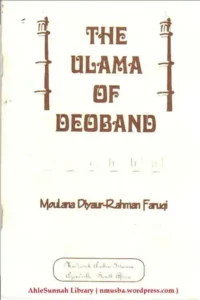
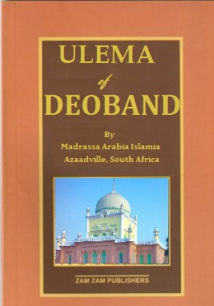
The Ulema of Deoband

Author: Madrasah Arabia Islamia
Editor's Rating:

The book serves as a historical overview and defense of the Deobandi paradigm, detailing the academic, spiritual, and anti-colonial history of the scholars associated with Darul Uloom Deoband.

Core Themes Covered

  • Anti-Colonial Resistance: The work highlights the active military and political struggle of the early Deobandi pioneers—such as Hujjatul-Islam Maulana Qasim Nanotwi and Haji Imdadullah Muhaajir Makki—against British imperial rule in the Indian subcontinent, specifically emphasizing events like the 1857 Shamli uprising.
  • Preservation of Islamic Knowledge: It underscores the foundation of Darul Uloom Deoband in 1866 as a pivotal endeavor aimed at preserving orthodox Sunni Islam, classical Arabic sciences, and Hanafi jurisprudence amidst colonial and political transitions.
  • Theological Identity (Maslak): The text defines the identity of Deobandi scholars as strict adherents to the Ahlus Sunnah wal Jama'ah, seamlessly blending traditional Hadith scholarship with the spiritual principles of orthodox Tasawwuf (Sufism) across the primary spiritual orders (Chishti, Naqshbandi, Qadri, and Suhrawardi).
  • Countering Theological Deviations: The narrative outlines the unique capacity of Deobandi elders to identify, unmask, and academically counter internal theological deviations as well as external missionary campaigns aiming to alter the religious fabric of the region.
Key Highlights:
Pros
  1. Preserves Historical Memory: Introduces prominent Deobandi scholars, key institutions, and their historical roles in South Asia.
  2. Highlights Scholarly Contributions: Emphasizes Islamic scholarship, religious education, sacrifice, and anti-colonial resistance.
  3. Strong Inspirational Value: Inspires readers to explore Islamic scholarship and the lives of esteemed scholars.
  4. Broad Historical Coverage: Extends beyond Darul Uloom Deoband to cover earlier scholars and wider regional developments.
  5. Accessible Introduction: Features an approachable, lecture-based style ideal for general readers.
  6. Insight into Deobandi Perspectives: Provides a valuable look at how the tradition understands and presents its own history.
Cons
  1. Potentially One-Sided Presentation: Emphasizes achievements and sacrifices while overlooking internal debates, failures, or critiques.
  2. Requires Historical Verification: Specific historical claims, especially numbers regarding executions and persecution, should be cross-referenced with primary sources.
  3. Limited Source Transparency: Lack of precise citations makes it difficult to distinguish documented facts from oral traditions.
  4. Minimal Critical Analysis: Focuses heavily on praise rather than analyzing alternative interpretations or complex decisions.
  5. Blends Fact with Religious Judgment: Claims regarding piety, spiritual status, and orthodoxy rely on theological standards rather than empirical evidence.
  6. Not a Standalone Academic Reference: Researchers should supplement its narrative with primary sources and broader historical studies.
Publisher: Zam Zam Publishers
Format: 45 pages
Language: English
*When you purchase through this link, HaqqFinder may earn a small commission at no extra cost to you.
Share On:
Facebook
X
LinkedIn
Pinterest
Reddit
WhatsApp
Tumblr
Telegram
Threads

Ratings & Reviews

0
0 out of 5 stars (based on 0 reviews)
Excellent
Very good
Average
Poor
Terrible

There are no reviews yet. Be the first one to write one.

Where We Reference This Book
Explore HaqqFinder articles that cite, discuss, or mention this publication.
Related Recommendations:

Login

Fill out the form below, and we will be in touch shortly.