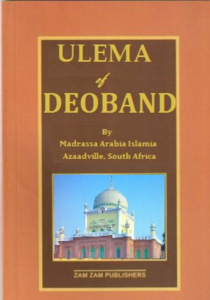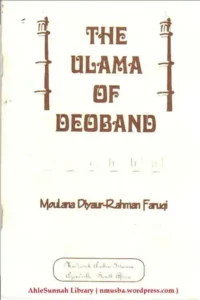


The Tradition of the Scholars of Deoband by Qari Muhammad Tayyab: A Detailed Review
The Tradition of the Scholars of Deoband by Qari Muhammad Tayyab is a work for readers seeking to understand the religious identity, intellectual heritage, and scholarly outlook of the Deobandi movement. Rather than approaching the subject solely through outside commentary, the book presents the tradition from the perspective of a scholar closely associated with its principal institution, Darul Uloom Deoband.
This perspective makes the book relevant to students of Islamic studies, researchers of South Asian Muslim history, and readers interested in how Deobandi scholars understand and explain their own tradition. At the same time, readers should distinguish between an author’s presentation of his scholarly tradition and an independent comparative assessment of every theological or historical claim.
Book Overview
- Title: The Tradition of the Scholars of Deoband
- Author: Qari Muhammad Tayyab
- Original work: Maslak Ulama-i-Deoband
- Subject: Deobandi scholarship, religious thought, and intellectual tradition
- Genre: Islamic studies, religious thought, and scholarly history
- Intended audience: Students, researchers, and readers interested in Deobandi thought
What Is the Book About?
The book introduces readers to the scholarly tradition associated with Deoband, an influential Islamic educational movement that developed in South Asia. Its central interest is the movement’s religious identity and the way its scholars understand their intellectual and religious inheritance.
For readers unfamiliar with the subject, the book provides an opportunity to explore a tradition that has played a significant role in Muslim religious education. For readers already familiar with Deobandi institutions, it offers an insider’s perspective that can help explain how the tradition is articulated by one of its prominent scholars.
The work is best approached as a presentation of Deobandi scholarly thought rather than as a comprehensive history of every institution, scholar, or debate associated with the movement. Readers who want a broader understanding should supplement it with historical studies, primary sources, and works representing other scholarly perspectives.
About the Author
Qari Muhammad Tayyab was a prominent Deobandi scholar and served as chancellor of Darul Uloom Deoband for an extended period. His association with the institution gives his perspective particular significance when examining how the Deobandi scholarly tradition understands and presents itself.
His institutional position is an important consideration when evaluating the book. It provides proximity to the movement’s scholarly outlook, but readers should not assume that institutional authority alone establishes the accuracy of every argument. Specific claims must still be assessed through their evidence, reasoning, and relevant primary sources.
Main themes

1. The identity and heritage of Deoband
The book introduces Deoband as a scholarly tradition associated with the preservation and teaching of Islamic knowledge, rather than simply a political label or an isolated sectarian identity.

2. The Qur’an, Sunnah, and Islamic scholarship
It presents the importance of studying revelation through established scholarly methods, inherited learning, and the interpretive traditions of earlier Muslim scholars.

3. Theology and jurisprudence
The Deobandi tradition is generally associated with Hanafi jurisprudence and the Ash’ari and Maturidi theological traditions. The book seeks to explain this inherited framework as a coherent religious approach.

4. Spiritual purification and Tasawwuf
The tradition’s emphasis on inner reform, spiritual discipline, and ethical conduct is an important part of its religious identity, alongside formal religious learning.

5. Understanding Deoband on its own terms
The work responds to confusion and competing portrayals of Deobandi scholars by offering an insider’s explanation of their intellectual and religious commitments.
These themes summarize the book’s stated purpose and the wider tradition it describes. They are not a verified chapter-by-chapter outline.
PROS AND CONS:
Pros of the book
1. An insider’s perspective
The author’s close institutional and family connection to Darul Uloom Deoband gives the book particular value as a primary source for understanding how an influential Deobandi scholar defines his own tradition.
2. Clarifies a frequently misunderstood tradition
It helps readers move beyond simplistic assumptions that Deoband can be understood through a single political position, a few controversial statements, or stereotypes about its followers.
3. Connects different dimensions of religious life
Its approach brings scholarly learning, jurisprudence, theology, spiritual development, and religious practice into one account of the Deobandi outlook.
4. Accessible length
At roughly 125 pages, it is a manageable introduction for readers who want an overview before studying longer works on Deobandi history and theology.
5. Useful for comparative Islamic studies
Readers interested in differences among Deobandi, Barelvi, Salafi, and other Sunni approaches can use it to identify the Deobandi school’s own stated principles before examining disagreements.
6. Valuable as a historical primary source
The book provides insight into how a senior twentieth-century Deobandi scholar articulated the identity and continuity of his scholarly tradition. Its value extends beyond readers who agree with his conclusions.
Cons of the book
1. Limited critical distance
The author writes from within the tradition he explains. This is valuable for understanding Deobandi self-perception, but readers should not expect the same analytical distance they might find in an independent academic study.
2. Limited engagement with opposing interpretations
A work focused on explaining one school’s identity is not necessarily designed to examine every major criticism of its beliefs or historical figures. Readers seeking detailed responses to rival Sunni interpretations may need additional sources.
3. Not a comprehensive history of Deoband
Its primary purpose is to explain the tradition’s religious outlook, not to provide an exhaustive history of the seminary, its political activities, its educational system, and its different contemporary branches.
4. Insufficient for advanced theological research on its own
Readers investigating disputed theological formulations, specific historical quotations, or disagreements between scholars will need to consult the original Arabic or Urdu sources, relevant primary texts, and specialist scholarship.
5. Potentially limited for readers unfamiliar with traditional Islamic terminology
Concepts relating to fiqh, aqidah, Tasawwuf, and scholarly authority may require supplementary explanations for readers without a background in traditional Islamic studies.
6. Does not replace independent comparative research
The book is best read as an explanation of the Deobandi position, not as a final, neutral adjudication of every dispute involving Deobandi scholars. Its claims should be assessed alongside relevant primary evidence and informed critiques.
Editorial note: These limitations are assessments of the book’s stated purpose, authorship, and scope. They should not be taken as proof that a particular argument in the book is inaccurate.
Detailed Critical Review
1. Content Quality and Intellectual Depth
The book’s principal strength is its focus on the intellectual and religious identity of an established Islamic scholarly tradition. Deobandi thought has influenced religious education and scholarship across South Asia and beyond, making an account written from within that tradition a useful resource for understanding its self-conception.
The author’s background gives the work contextual value. Instead of relying exclusively on descriptions by external observers, readers can engage with an explanation rooted in the tradition itself. This is especially useful for understanding how adherents describe their scholarly heritage and religious commitments.
However, an insider’s account and a neutral comparative study serve different purposes. A book explaining a movement’s own understanding should not automatically be treated as a final authority on disagreements between Islamic schools or on contested historical questions. A thorough scholarly assessment would examine the author’s evidence, references, definitions, and treatment of alternative interpretations.
Assessment: Strong subject relevance and a valuable insider perspective, with the depth and accuracy of individual arguments requiring verification against the full text.
2. Writing Style and Clarity
The English edition makes the work accessible to readers who cannot comfortably read the original Urdu. This is an important benefit for students and researchers who want to explore Deobandi thought through an English-language resource.
Religious and theological works can contain specialized terminology that is unfamiliar to general readers. Readers without a background in Islamic theology or South Asian religious history may therefore benefit from consulting a glossary or additional introductory material when necessary.
A definitive judgment on the translation’s readability, terminology, sentence structure, and consistency requires direct examination of the published English text. The availability of an English translation is a clear accessibility advantage, but it does not by itself establish that every passage is easy to understand.
Assessment: Valuable for expanding access to the subject, although the translation’s clarity and technical precision should be checked directly.
3. Relevance and Target Audience
The book is particularly relevant to readers researching Deobandi scholarship, South Asian Islamic intellectual history, and the ways religious traditions explain their own identities. It may also help readers who have encountered claims about Deoband in public discussions and want to consult a work associated with the movement itself.
Its relevance is more specialized for readers seeking a general introduction to Islam, practical worship guidance, or a comprehensive comparison of Sunni theological and jurisprudential traditions. Such readers may need additional resources that address their questions more directly.
Assessment: A strong subject fit for readers specifically interested in Deobandi thought, with a narrower appeal for readers seeking broad introductory Islamic guidance.
4. Originality and Distinctive Contribution
The book’s distinctive contribution lies primarily in its perspective. A work by a scholar closely connected with Deoband can help readers understand how the movement’s scholarly identity is expressed from within its own intellectual environment.
That perspective is valuable in historical and religious research because external descriptions do not always capture how a community understands its own principles and inherited practices. Reading an insider’s account alongside independent historical research can give readers a more balanced understanding.
Nevertheless, an author’s institutional affiliation should not be confused with the originality of the argument. Establishing whether the work introduces new interpretations, develops earlier arguments, or primarily summarizes established positions requires comparison with the author’s other writings and relevant earlier literature.
Assessment: A distinctive insider perspective, with the degree of original scholarly contribution requiring further textual comparison.
5. Cultural and Ethical Sensitivity
Religious scholarship benefits from accurately representing traditions in their own terms and distinguishing between disagreement and misrepresentation. A work explaining Deobandi thought can contribute to informed discussion by giving readers direct access to the perspective of a scholar associated with that tradition.
However, a fair evaluation must also consider how a book describes other Muslim scholars, schools, and interpretations. The same standards of accuracy, contextual understanding, and respectful representation should apply to all sides of a theological disagreement.
Without checking the relevant passages, it would be premature to conclude that every disputed claim or characterization in the book is fair, complete, or adequately supported. Readers should compare contested statements with primary sources and credible scholarship rather than relying on labels or polemical summaries.
Assessment: The subject is suitable for serious religious study, but a definitive ethical and theological assessment depends on reviewing the text’s treatment of other perspectives.
6. Practical Value and Applicability
The book’s practical value is primarily educational. It can serve as a starting point for readers who want to understand the Deobandi scholarly tradition and place its religious outlook within a wider study of South Asian Islam.
Students may use it to identify questions for further research, compare different scholarly accounts, or develop a clearer understanding of the terminology used in discussions of Deoband. Researchers may also find it useful as a source representing an insider’s perspective.
It should not be treated as a substitute for specialized research into a particular legal ruling, hadith authentication question, or theological dispute. Readers investigating such questions should consult the relevant primary texts and qualified scholarship directly.
Assessment: Useful as a study and reference resource, especially when paired with independent sources and further reading.
7. Presentation and Design
The English edition provides a published format through which readers can access the work without needing the original Urdu text. Its compact length, reported at approximately 125–128 pages depending on the edition, may make it approachable for readers seeking a focused introduction to the subject.
Page count alone, however, cannot establish the quality of typography, layout, paper, cover design, citations, or digital formatting. Those features should be assessed from the specific print or digital edition being reviewed.
Assessment: Accessible in scope, with the final presentation score dependent on inspection of the actual edition.
8. Value for Price
The book’s value depends on the price readers can actually obtain it for, the edition available, shipping costs, and the reader’s research needs. For someone specifically studying Deobandi thought, a focused work by a prominent scholar may offer worthwhile educational value.
For readers with only a general interest in Islamic studies, other introductory resources may be a more appropriate first purchase. A fair value judgment should compare the current selling price with the book’s content, production quality, availability, and relevance to the intended reader.
Assessment: Potentially worthwhile for readers with a clear interest in the subject; verify the current price before assigning a definitive value-for-money score.
Key Strengths
- Insider perspective: Presents the Deobandi tradition through the work of a scholar closely associated with its institutional heritage.
- Specialized research value: Relevant to students and readers investigating South Asian Islamic scholarship.
- English-language accessibility: Makes the work available to readers who do not read the original Urdu.
Limitations to Consider
- Perspective and scope: An account from within a movement should not be mistaken for a comprehensive, independent comparison of all scholarly positions.
- Need for corroboration: Readers examining disputed theological or historical claims should consult primary sources and credible works representing relevant alternative interpretations.
- Edition-specific evaluation: Translation quality, presentation, and value for money require checking the exact edition and current price.
Who Should Read This Book?
This book may be suitable for:
- Students of Islamic studies and South Asian religious history.
- Readers seeking to understand how Deobandi scholars describe their own tradition.
- Researchers comparing different accounts of Islamic scholarly movements.
- Readers who are comfortable evaluating religious arguments critically and consulting additional sources.
It may be less suitable as a first choice for:
- Beginners seeking a broad, introductory guide to Islam.
- Readers looking primarily for practical instructions on worship or daily religious practice.
- Anyone expecting a fully independent comparative assessment of all Islamic schools from a single book.
HaqqFinder Rating Breakdown
The following scores are provisional editorial estimates, not the result of a documented full-text review. They should be finalized only after examining the book, verifying its claims, and checking the specific edition and price.
| Evaluation criterion | Weight | Provisional score | Weighted score |
|---|---|---|---|
| Content Quality and Depth | 20% | 4.4/5 | 0.880 |
| Writing Style and Clarity | 15% | 4.1/5 | 0.615 |
| Relevance and Target Audience Fit | 15% | 4.7/5 | 0.705 |
| Originality and Creativity | 15% | 4.2/5 | 0.630 |
| Cultural and Ethical Sensitivity | 10% | 4.0/5 | 0.400 |
| Practical Value and Applicability | 10% | 4.1/5 | 0.410 |
| Presentation and Design | 10% | 4.2/5 | 0.420 |
| Value for Price | 5% | 4.8/5 | 0.240 |
| Provisional overall rating | 4.30/5 | ||
Rating calculation: The overall score is calculated by multiplying each criterion’s score by its assigned weight, then summing the weighted results. The provisional calculation produces 4.30/5. Under HaqqFinder’s published methodology, Content Quality and Depth and Cultural and Ethical Sensitivity must each meet the minimum score of 3/5 for a book to qualify for recommendation. These thresholds should be confirmed after full-text evaluation.
Final Verdict
The Tradition of the Scholars of Deoband is a relevant title for readers interested in the intellectual identity and scholarly heritage of the Deobandi movement. Its most important potential strength is the opportunity to engage with the tradition through the perspective of a scholar closely connected with Darul Uloom Deoband.
The book is best approached as one source within a broader study of Islamic scholarship. Readers can benefit from understanding how a tradition explains itself while also checking historical and theological claims against primary evidence and other credible scholarly perspectives.
HaqqFinder’s provisional assessment: Worth considering for readers specifically researching Deobandi scholarship. The final recommendation and rating should remain pending until the full text, treatment of differing views, translation, edition details, and current price have been verified.
Review Transparency
This review distinguishes the book’s subject, authorial perspective, and likely research value from claims that require direct textual verification. The provisional scores are not based on a completed independent reading of the full book or a verified analysis of reader reviews. The rating should be updated if examination of the complete text or reliable reader feedback materially changes the assessment.
Evaluation framework: HaqqFinder Rating and Evaluation Methodology.