

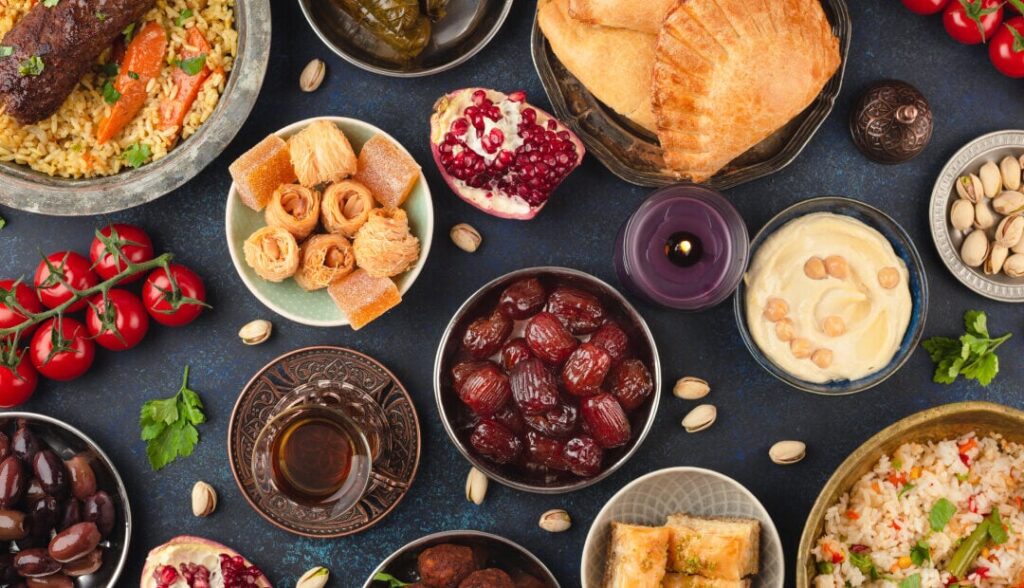
Islamic dietary practices offer a practical, faith-based approach to eating that integrates spiritual, ethical, and health-conscious choices into daily life. For Muslims worldwide, following halal (permissible) and tayyib (wholesome) guidelines is not just about adhering to rules—it’s a lifestyle that fosters mindfulness, gratitude, and well-being. Rooted in the Quran and the Sunnah (teachings of Prophet Muhammad, peace be upon him), these practices guide Muslims in navigating food choices, from grocery shopping to dining out, in diverse cultural and modern contexts.
Table of Contents
ToggleThis comprehensive guide explores how to apply Islamic dietary laws in everyday scenarios, offering actionable tips, cultural adaptations, and Sunnah-inspired recipes. This article is designed for Muslims seeking practical ways to live halal and for anyone curious about faith-based nutrition. Whether you’re meal planning or eating on the go, you’ll find strategies to make halal eating seamless and rewarding.
By the end, you’ll discover how to transform daily meals into acts of worship, aligning faith with modern life. Let’s explore how to eat halal every day.
Understanding Islamic Dietary Practices
Islamic dietary practices translate the principles of halal and tayyib into actionable routines. Halal ensures food is permissible under Islamic law, while tayyib emphasizes wholesomeness—nutritious, ethically sourced, and pure. Surah Al-Baqarah (2:168) sets the tone: “O mankind, eat from whatever is on earth [that is] lawful and good and do not follow the footsteps of Satan.” This verse frames eating as a spiritual act, requiring mindfulness in sourcing, preparing, and consuming food.
The Prophet Muhammad (PBUH) modeled these practices through a simple, balanced diet. A hadith advises: “The son of Adam does not fill any vessel worse than his stomach. It is sufficient to eat a few mouthfuls… If he must, then one-third for food, one-third for drink, and one-third for air.” This promotes moderation, aligning with modern health trends like portion control. Practical guidelines, such as saying Bismillah (In the name of Allah) before eating and using the right hand, turn meals into worship.
Islamic dietary practices also adapt to cultural and regional contexts, from Middle Eastern kebabs to South Asian curries, ensuring flexibility while maintaining faith-based standards.
Applying Halal Guidelines in Daily Life
Living halal every day involves practical steps to ensure food meets Islamic standards. These guidelines focus on sourcing, preparation, and consumption, tailored to diverse lifestyles.
Shopping for Halal Foods
Grocery shopping is the first step in halal eating. Key practices include:
- Check Certifications: Look for halal logos from trusted bodies. Certifications verify zabiha (ritual slaughter) for meat and the absence of haram (forbidden) ingredients like pork or alcohol.
- Read Labels: Avoid vague terms like “natural flavor,” which may hide haram additives (e.g., gelatin, alcohol-based preservatives). Plant-based or microbial rennet in cheese is safer.
- Choose Whole Foods: Fruits, vegetables, grains, and nuts are inherently halal, minimizing processing risks.
- Source Ethically: Opt for sustainable, fair-trade products to align with Tayyib principles (Quran 4:29, 30:41).
Madhhab Considerations:
- Hanafi: Requires zabiha meat from Muslim slaughterers; check certifications closely, as Ahl al-Kitab (Jews/Christians) meat is often deemed mashbooh (doubtful).
- Maliki, Shafi’i, Hanbali: Accept Ahl al-Kitab slaughter if zabiha conditions are met, offering flexibility in non-Muslim regions.
- Shi’a: Insist on Muslim slaughterers; certifications must confirm zabiha.
Preparing Halal Meals
Cooking at home ensures control over ingredients. Tips include:
- Use Halal Ingredients: Source zabiha meat or plant-based proteins. Avoid cross-contamination (e.g., separate utensils for pork if sharing a kitchen).
- Sunnah-Inspired Recipes: Incorporate Prophetic favorites like dates, barley, and honey, praised in the Quran (16:69, 19:25).
- Mindful Preparation: Begin with Bismillah, maintain cleanliness, and avoid waste (Quran 17:27).
Madhhab Considerations:
- Hanafi and Shi’a: Strict on ingredient purity, especially for cheese (plant-based rennet only) and processed foods (no alcohol traces).
- Maliki, Shafi’i, Hanbali: May accept transformed additives (e.g., alcohol in soy sauce via istihala—chemical change), but prefer pure sources.
Dining Out and Social Eating
Eating outside requires vigilance:
- Choose Halal Venues: Select restaurants with halal certifications or vegetarian menus.
- Ask Questions: Confirm zabiha meat or absence of haram ingredients (e.g., wine in sauces).
- Opt for Alternatives: In non-halal settings, vegetarian or kosher dishes (Quran 5:5) are safe, though zabiha is preferred.
Madhhab Considerations:
- Hanafi and Shi’a: Rarely accept non-zabiha meat, even kosher, due to strict slaughter rules.
- Maliki, Shafi’i, Hanbali: More lenient, accepting kosher or Ahl al-Kitab meat if zabiha-like, especially in necessity.
Cultural Adaptations of Halal Practices
Islamic dietary practices thrive across diverse cuisines, reflecting Islam’s global reach. Each culture integrates halal guidelines creatively, ensuring compliance and flavor.
Middle Eastern Cuisine
- Staples: Kebabs, hummus, falafel, and tabbouleh use zabiha meats or plant-based ingredients. Lamb shawarma and lentil soup align with Sunnah simplicity.
- Practices: Restaurants often source zabiha meat; vegetarian dishes like baba ghanoush are inherently halal.
- Madhhab Note: Hanafi Muslims may avoid shellfish-heavy dishes (e.g., shrimp mezze), while Maliki/Shafi’i embrace them.
South Asian Cuisine
- Staples: Biryanis, curries, and daal feature zabiha chicken, lamb, or vegetarian options. Spices enhance halal ingredients without haram additives.
- Practices: Home cooking ensures zabiha; restaurants often display halal certifications.
- Madhhab Note: Shi’a communities in South Asia emphasize Muslim-sourced meat, while Maliki/Shafi’i may accept certified imports.
Western Cuisine
- Staples: Halal burgers, pizzas, and vegan desserts cater to modern tastes. Grilled chicken wraps or vegetable pastas are common.
- Practices: Urban areas offer halal fast food; vegetarian options are safe fallbacks.
- Madhhab Note: Hanafi Muslims seek zabiha certifications, while Maliki/Shafi’i may dine at kosher-friendly venues.
African and Southeast Asian Cuisine
- African: Jollof rice, tagines, and grilled fish use halal ingredients. Sea moss, a West African staple, is universally halal.
- Southeast Asian: Rendang, satay, and nasi goreng feature zabiha beef or plant-based tempeh.
- Madhhab Note: Maliki-dominated African regions permit all seafood; Hanafi Southeast Asian communities avoid shellfish.
These adaptations show halal’s flexibility, uniting diverse cultures under shared principles.
Sunnah-Inspired Recipes for Halal Eating
Incorporating Prophetic foods into daily meals aligns with Tayyib principles and enhances health. Below are three simple, halal recipes inspired by the Sunnah.
Date and Milk Smoothie
- Ingredients: 5–7 pitted dates, 1 cup halal milk, 1 banana, a pinch of cinnamon.
- Instructions: Soak dates in water for 10 minutes. Blend with milk, banana, and cinnamon until smooth. Serve chilled, saying Bismillah.
- Benefits: Dates (Quran 19:25) provide energy; milk (Quran 16:66) adds protein.
- Madhhab Note: Universally halal across all schools.
Barley Vegetable Soup
- Ingredients: 1 cup barley, 2 cups halal vegetable broth, 1 carrot, 1 zucchini, 1 onion, 2 tbsp olive oil, salt, pepper.
- Instructions: Sauté diced vegetables in olive oil. Add barley and broth, simmer 45 minutes. Season and serve with Bismillah.
- Benefits: Barley, a Prophetic staple, is fiber-rich; olive oil (Quran 24:35) supports heart health.
- Madhhab Note: Halal for all; Hanafi/Shi’a ensure broth is free of animal-derived additives.
Honey-Glazed Roasted Vegetables
- Ingredients: 2 cups mixed vegetables (e.g., carrots, sweet potatoes), 2 tbsp honey, 2 tbsp olive oil, salt, and rosemary.
- Instructions: Toss vegetables with honey, olive oil, salt, and rosemary. Roast at 400°F for 30 minutes. Serve with Bismillah.
- Benefits: Honey (Quran 16:69) aids digestion; vegetables are nutrient-dense.
- Madhhab Note: Universally halal, with no madhhab disputes.
These recipes are simple, affordable, and align with the Prophetic emphasis on wholesome, accessible foods.
Learn more about “Islamic Dietary Principles and Laws: A Complete Guide to Halal Eating“
Navigating Modern Food Systems: Challenges and Solutions
Modern food systems—processed foods, additives, and global supply chains—pose challenges to halal eating. Islamic dietary guidelines offer practical solutions.
Common Challenges
- Processed Foods: Emulsifiers, gelatin, or alcohol-based preservatives (e.g., in desserts) may be haram.
- Cross-Contamination: Shared equipment with pork or non-zabiha meat voids halal status.
- Genetically Modified Foods: Permissible if non-harmful, but Tayyib principles question unnatural alterations.
- Global Sourcing: Imported foods may lack clear halal certification.
Madhhab Perspectives:
- Hanafi and Shi’a: Strict on avoiding mashbooh additives, requiring explicit ingredient clarity. GMOs are scrutinized for Tayyib compliance.
- Maliki, Shafi’i, Hanbali: May accept trace non-intoxicating alcohol (e.g., in vinegars) via istihala (chemical transformation), but prefer pure sources.
- Shi’a: Emphasize Muslim-sourced certifications, rejecting non-Muslim slaughter unless verified.
Practical Solutions
- Use Technology: Apps scan barcodes for halal status, helping identify certified products.
- Shop Whole Foods: Fruits, vegetables, grains, and avoid processing risks.
- Source Locally: Local butchers or farms ensure zabiha and tayyib compliance.
- Cook at Home: Control ingredients with recipes like those above.
- Consult Scholars: Clarify madhhab-specific rulings (e.g., Hanafi on shellfish, Maliki on kosher).
- Community Networks: Mosques or co-ops share trusted suppliers.
Health and Spiritual Benefits of Halal-Tayyib Practices
Islamic dietary practices promote holistic well-being, aligning with modern wellness trends.
Physical Health Benefits
- Nutritional Density: Sea moss (92 minerals), dates, and barley support immunity and digestion.
- Heart Health: Olive oil and seafood (omega-3s) reduce cardiovascular risk.
- Digestive Health: Honey aids digestion, per Sunnah.
Studies confirm whole-food diets lower inflammation and chronic disease risk, mirroring the Prophetic diet.
Spiritual and Mental Benefits
Pure food enhances spiritual clarity, per Ibn Sina: “The heart clouded by impure food struggles in worship.” Eating with Bismillah and gratitude deepens faith. Moderation fosters discipline, reducing overeating’s mental fog.
Madhhab Perspectives:
- Hanafi and Shi’a: Emphasize strict halal adherence for maximum spiritual purity.
- Maliki, Shafi’i, Hanbali: Balance purity with accessibility, ensuring spiritual benefits through practical compliance.
Halal Eating in Social and Global Contexts
Halal practices adapt to diverse settings, fostering inclusivity.
Dining Out and Social Gatherings
- Restaurants: Choose halal-certified venues or vegetarian dishes. Confirm zabiha meat or the absence of haram ingredients.
- Interfaith Events: Kosher or vegan options align with halal (Quran 5:5), though zabiha is preferred.
- Hosting: Offer halal dishes like grilled fish or lentil stew for all guests.
Madhhab Considerations:
- Hanafi and Shi’a: Require zabiha verification, avoiding kosher unless confirmed.
- Maliki, Shafi’i, Hanbali: Accept kosher or Ahl al-Kitab options in necessity.
Islamic etiquette—eating with the right hand, sharing food—reflects hospitality (Quran 24:61).
Global Appeal of Halal
Halal’s focus on ethics, health, and sustainability attracts non-Muslims, aligning with veganism, paleo, and eco-conscious diets. Halal restaurants welcome diverse patrons, promoting cultural exchange.
Practical Tips for Everyday Halal Eating
- Verify Certifications: Seek trusted halal logos, considering madhhab preferences.
- Cook Sunnah-Inspired Meals: Try date smoothies or barley soup.
- Shop Whole Foods: Minimize processed food risks.
- Dine Out Wisely: Confirm zabiha or choose vegetarian/kosher options.
- Source Ethically: Support sustainable suppliers for Tayyib compliance.
- Use Apps: Scan products for halal status.
- Consult Scholars: Clarify madhhab rulings (e.g., Hanafi on shellfish).
Learn more about “Islamic Dietary Laws During Ramadan: Fasting and Feasting Guide“
Conclusion: Halal Eating as a Daily Act of Worship
Islamic dietary practices and guidelines transform meals into expressions of faith, health, and ethics. From Quranic calls to eat halal-tayyib to the Prophet’s mindful habits, these practices offer a timeless path to nourishment. Whether cooking Sunnah-inspired recipes, navigating restaurants, or adapting to cultural cuisines, halal eating is accessible and rewarding. Start small: say Bismillah, choose whole foods, consult scholars for madhhab clarity. Your daily plate becomes a prayer, enriching body, soul, and community.
FAQs: Common Questions on Islamic Dietary Practices and Guidelines
What are Islamic dietary practices?
Islamic dietary practices apply halal (permissible) and tayyib (wholesome) principles to daily eating, rooted in the Quran and Sunnah.
How do I shop for halal foods?
Check halal certifications, read labels, choose whole foods, and source ethically, considering madhhab rules.
Can Muslims eat vegetarian or vegan diets?
Yes, all plants are halal (Quran 2:29); vegetarianism aligns with compassion (Quran 6:38).
How do madhhabs differ in halal practices?
Hanafi and Shi’a are stricter on zabiha and additives; Maliki, Shafi’i, and Hanbali allow Ahl al-Kitab slaughter and some transformed additives.
How do I eat halal when dining out?
Choose halal-certified restaurants, confirm zabiha, or opt for vegetarian/kosher dishes (Quran 5:5).
What does Tayyib mean in Islamic dietary guidelines?
Tayyib means wholesome—nutritious, ethically sourced, sustainable—enhancing halal eating.
References
- Quran 2:168, 4:29, 5:5, 16:69, 19:25, 24:35, 24:61, 30:41.
- Sahih Muslim, Hadith on moderation in eating.
- Quran 17:27.
- Quran 6:38.
- Ibn Sina, The Canon of Medicine.
- Studies on the health benefits of whole-food diets (generalized for evergreen quality).