

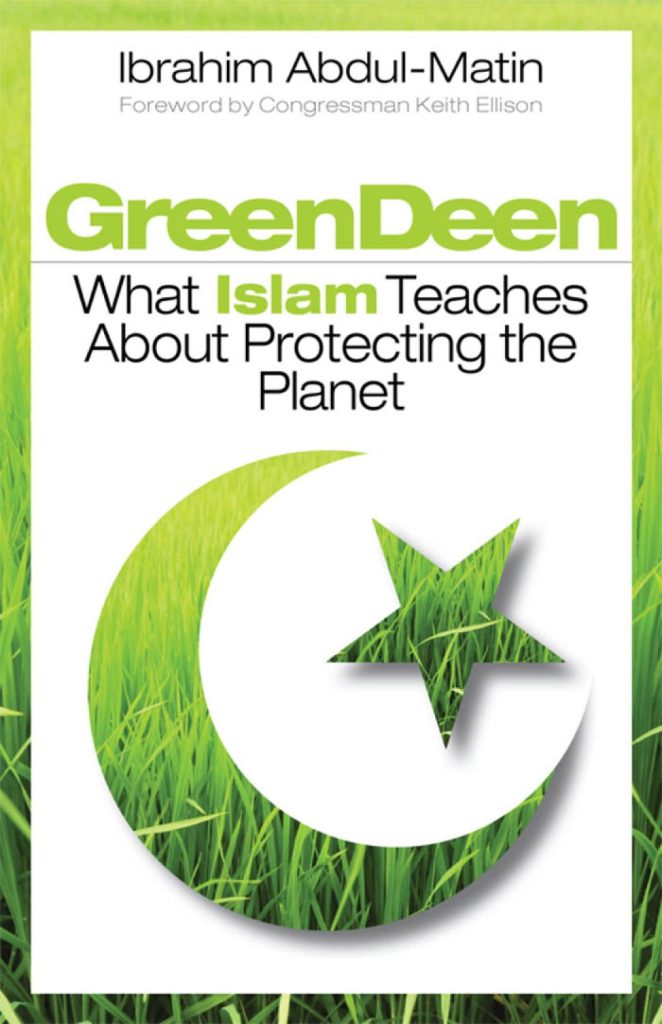
In a world facing climate change and ecological crises, Green Deen: What Islam Teaches About Protecting the Planet by Ibrahim Abdul-Matin offers a powerful, faith-driven call to action. Published in 2010 by Berrett-Koehler Publishers, this transformative book connects Islamic principles with environmental stewardship, inspiring both Muslims and non-Muslims to protect the planet.
📘 About the Book
- Title: Green Deen: What Islam Teaches About Protecting the Planet
- Author: Ibrahim Abdul-Matin
- Publisher: Berrett-Koehler Publishers
- Published: 2010
- Pages: ~240
📘 What Is “Green Deen”?
The term Green Deen refers to a spiritually conscious and environmentally mindful way of life grounded in Islam. The Arabic word deen means “path” or “way of life,” and Abdul-Matin uses it to frame a vision where Muslims live in harmony with the planet, guided by divine principles.
In Green Deen, the author introduces six core Islamic concepts that shape the foundation of an eco-conscious lifestyle:
- Tawḥīd (Oneness): All creation is interconnected under Allah’s unity.
- Āyāt (Signs): Nature reflects divine signs, urging us to protect it.
- Khilāfah (Stewardship): Humans are caretakers of the Earth.
- Amānah (Trust): The planet is a trust, not a resource to exploit.
- ʿAdl (Justice): Environmental justice aligns with Islamic fairness.
- Mīzān (Balance): Muslims must preserve the natural balance.
Each principle offers a Qur’anic and spiritual lens through which Muslims can engage with climate change, sustainability, and ecological justice.
Overview of the Book
The book is structured into four main parts, each addressing a major environmental domain—waste, energy, water, and food—all examined through the lens of Islamic ethics and practice.
🗑️ 1. Waste – The Call to Balance and Moderation
Abdul-Matin begins with a powerful critique of overconsumption and waste, rooted in the Qur’anic concept of Mīzān (balance). He urges Muslims to embrace moderation, recycle responsibly, and reduce consumption as part of fulfilling the trust (amānah) given by Allah. He draws from Qur’anic guidance and real-world examples to show how waste reduction aligns with divine balance and global sustainability goals.
⚡ 2. Watts (Energy) – Energy from Heaven
In this section, he contrasts fossil fuels—termed “energy from hell”—with renewable sources—”energy from heaven”. Tied to the concept of Khilāfah (stewardship), Abdul-Matin argues that Muslims are entrusted with protecting the planet and must favor clean, sustainable energy. He advocates for investing in solar, wind, and other renewable technologies as acts of worship and responsibility.
💧 3. Water – Sacred Signs of God
Water, a recurring symbol in the Qur’an, is addressed under the principles of Āyāt (divine signs) and ʿAdl (justice). Abdul-Matin emphasizes the importance of preserving this essential resource and ensuring equitable access for all. He relates Islamic traditions like wuḍū’ (ablution) to water conservation and calls for justice in global water distribution.
🥗 4. Food – Eating What Is Ḥalāl and Ṭayyib
In the final part, the book explores Islamic dietary ethics in relation to environmental sustainability. Through the principles of Mīzān and Amānah, Abdul-Matin highlights the significance of eating food that is not just ḥalāl (permissible) but also ṭayyib (pure, ethical, and wholesome). He champions ethical farming, humane animal treatment, and conscious consumption as acts of spiritual responsibility.
Core Theme: Environmentalism as Worship
Green Deen (meaning “Green Religion”) redefines environmentalism as an act of worship. Abdul-Matin, a former sustainability advisor to New York Mayor Michael Bloomberg, argues that protecting the Earth is a spiritual duty rooted in the Qur’an and Sunnah. The prophetic saying, “The Earth is a mosque,” underscores humanity’s role as stewards (Khilāfah) of creation.
Structure and Style
Organized around practical themes—waste, water, energy, food, and transportation—the book combines:
- Personal anecdotes from Abdul-Matin’s life as a Muslim and policy expert.
- Islamic teachings linking Quranic verses to sustainability.
- Real-world examples, like eco-mosques and ḥalāl urban farming.
The conversational tone and clear structure make complex issues approachable, appealing to readers new to environmentalism or Islamic ecology.
Why Read Green Deen?
- Faith-Based Lens: Unlike mainstream environmental books, it frames sustainability as a spiritual duty.
- Practical Steps: Offers actionable advice, like reducing waste or choosing ethical ḥalāl food.
- Social Justice Focus: Links environmentalism to equity, addressing issues like clean water access.
- Broad Appeal: Resonates with Muslims, interfaith activists, educators, and eco-conscious readers.
“Green Deen changed how I view recycling and my role as a Muslim in protecting the planet.” – Goodreads Reviewer
✅ Strengths
- Faith-Based Approach: Seamlessly integrates Islamic theology with environmentalism, making sustainability a spiritual duty (e.g., linking Āyāt to water conservation).
- Practical and Actionable: Provides simple, faith-aligned steps like reducing waste or choosing renewables, supported by real-world examples (e.g., Chicago Muslims Green Team).
- Inclusive Appeal: Resonates with Muslims, interfaith activists, and eco-conscious readers, fostering cross-cultural dialogue.
- Social Justice Focus: Ties environmentalism to equity (ʿAdl), addressing issues like clean water access and ethical food systems.
- Engaging Style: Conversational tone and community stories make complex issues approachable.
🔴 Limitations
- U.S.-Centric Examples: Focuses heavily on American Muslim initiatives, limiting global resonance (e.g., could include eco-mosques in Indonesia).
- Limited Scientific Depth: Lacks technical climate data, better suited for beginners than readers seeking advanced environmental analysis.
- Occasional Oversimplification: Terms like “energy from heaven” vs. “energy from hell” are rhetorically strong but lack nuance on energy transitions.
What Makes This Book Unique?
While many environmental books focus on science or politics, Green Deen takes a bold step by grounding environmentalism in Islamic theology. Its uniqueness lies in four key areas:
1. Faith-Based Environmentalism
The book presents environmental stewardship as a religious duty, not just a moral one. Through Tawḥīd, Khilāfah, and Mīzān, Abdul-Matin calls on Muslims to see sustainability as worship.
2. Cultural and Scriptural Grounding
Drawing deeply from Qur’anic verses and Hadith, the book resonates with Muslims by showing how Islamic texts advocate care for the Earth.
3. Practical Actions Rooted in Faith
Abdul-Matin translates theology into daily life—like using less water for ablution, eating ethically sourced food, or switching to green energy.
4. Community and Justice Focus
The book emphasizes collective responsibility and social justice, urging readers to care not just for nature, but also for marginalized communities impacted by environmental degradation.
A Call to Action for Eco-Conscious Muslims
Green Deen is a movement, urging readers to:
- Reevaluate consumption habits.
- Advocate for environmental justice.
- Build sustainable communities, like Green Masjid initiatives.
Final Verdict
A must-read for anyone seeking to align faith with environmental action. Whether you’re a Muslim embracing your Khilāfah or an eco-conscious reader exploring Islamic values, Green Deen is transformative.
Rating: 4.8/5 ⭐
🛒 Buy Green Deen Now
Get your copy from our store and start your journey toward a Green Deen today!
- Exclusive Offer: 10% off with code GREENDEEN10. (Not Verified)
- Fast Shipping: Available worldwide.
- Check The Updated Price Here
🔗 Suggested Actions
- Join a Green Masjid initiative in your community.
- Host a Green Deen book club at your mosque.
- Reflect on how Islamic ethics can guide your daily sustainability practices.
[content-egg module=Youtube template=custom/simple]