


Zina, encompassing adultery and fornication, is a major sin in Islam, strictly prohibited due to its profound impact on personal spirituality, family integrity, and societal harmony. The signification of zina in Islam lies in its classification as a hudud crime, designed to safeguard chastity, lineage, and social order. This comprehensive, SEO-friendly article explores zina in Islam, addressing the meaning of zina in Islam, what is zina, what is considered zina in Islam, types of zina in Islam, zina laws, consequences of zina, punishment for zina in Islam, zina in Islam forgiveness, and zina Shia perspectives, alongside cultural, historical, psychological, and ethical dimensions.
What Is Zina in Islam?
What is zina? In Islamic jurisprudence (fiqh), zina refers to unlawful sexual relations between individuals not bound by marriage. The term carries dual meanings:
- Broad Sense: Includes immoral acts that may not trigger legal penalties but are sinful, such as lustful gazes, flirtatious speech, or mental fantasies. A narration from the Prophet Muhammad (PBUH) states: “Every person faces some form of immorality. The eyes transgress through looking, the tongue through words, the soul through desires, and the body either acts or refrains” (Sahih Al-Bukhari, Sahih Muslim). These lesser acts are termed zina because they risk leading to greater sin.
- Specific Sense: Refers to physical sexual intercourse outside marriage, warranting hudud punishments if proven.
What is considered zina in Islam?
- Adultery: Sexual relations involving at least one married person.
- Fornication: Relations between unmarried individuals.
- Types of Zina in Islam: Some scholars include same-sex acts, incest, or unnatural behaviors (e.g., with animals) as violations of divine order.
Zina is a hudud crime, transgressing Allah’s rights (huquq Allah) and, in cases like adultery, human rights (huquq al-ibad). It temporarily disrupts faith, inviting divine consequences unless repented sincerely. All major religions condemn such acts, reflecting their universal harm to honor and lineage.
Evidence from the Quran and Hadith
The prohibition of zina is firmly rooted in Islamic texts:
- Quranic Verses:
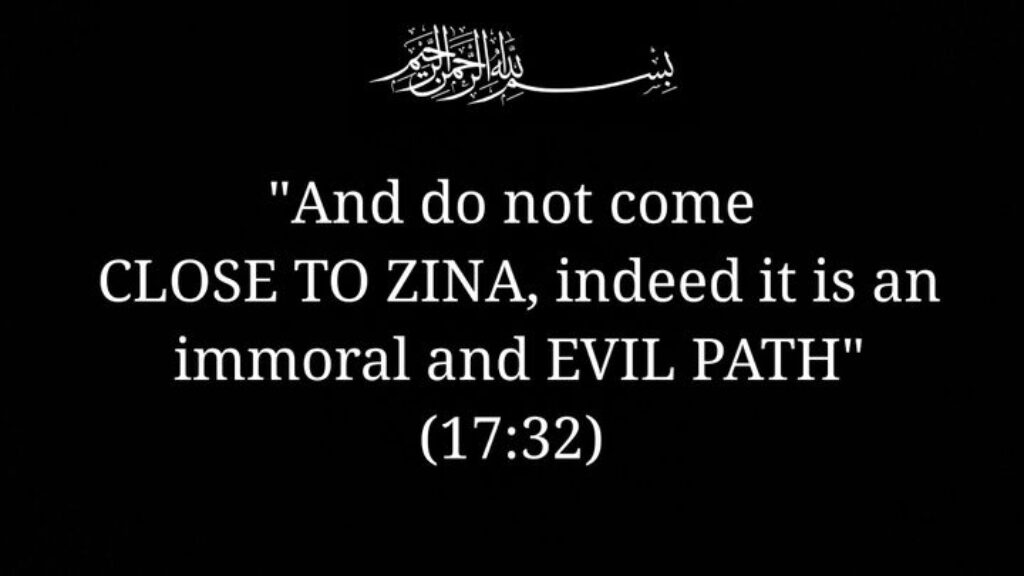
- “And do not approach unlawful sexual intercourse. Indeed, it is ever an immorality and is evil as a way” (Surah Al-Isra 17:32). This urges avoidance of not just the act but any steps toward it, like seclusion or provocative behavior.
- “The [unmarried] woman or [unmarried] man found guilty of sexual intercourse—lash each one of them with a hundred lashes...” (Surah An-Nur 24:2).
- Surah Al-Furqan (25:68-70) promises that sincere repentance and good deeds can transform sins into merits.
- Hadith:
- The Prophet (PBUH) ranked zina among the gravest sins, listing it after idolatry and unjust killing, especially when it involves a neighbor’s spouse, betraying community trust.
- Another narration warns: “Betraying a believer’s family during their absence for sacred duties is as grave as violating one’s own kin.”
- Rape is distinguished, with the rapist facing stoning, while the victim is innocent.
Degrees and Variations in Zina’s Severity

Zina varies in gravity based on context, though all forms are forbidden.
- Acts with close relatives (incest) or a married partner are graver, violating family rights and purity.
- Zina with a neighbor compounds the sin by breaching community trust, as the Prophet (PBUH) said: “One whose neighbor is not safe from their harm will not enter Paradise” (Sahih Muslim).
- Committing zina during sacred times (e.g., Ramadan), in sacred places (e.g., Makkah), or by elders multiplies the offense’s severity, attracting harsher divine scrutiny. For example, zina with a mujahid’s spouse during their absence for worship or jihad is likened to betraying one’s own family, compounding the moral and spiritual offense.
To know more, check “The 7 Types of Zina In Islam“
Rulings on Zina Across Islamic Schools of Thought
The four Sunni schools and Shia perspectives agree on the prohibition but differ in nuances:
Hanafi School
- Ruling: Zina is a hudud crime requiring four witnesses or confessions. Homosexuality is sinful but not hudud, warranting ta’zir (discretionary punishment). Pregnancy is not automatic evidence.
- Scope: Requires penetration; lesser acts incur ta’zir.
Maliki School
- Ruling: Pregnancy in an unmarried woman is evidence unless rape is proven. Sodomy is hudud, punishable by death.
- Details: Prohibits masturbation as lesser zina.
Shafi’i School
- Ruling: Zina requires penetration; non-muhsan homosexuals face 100 lashes and banishment. Masturbation is forbidden.
- Context: Emphasizes intention and evidence.
Hanbali School
- Ruling: Zina and sodomy are hudud, with death for the latter. Bestiality is included, with execution for the offender and the animal.
- Details: Strict Hadith adherence.
Shia Perspectives on Zina
In Shia rulings on zina, zina is a major sin, aligning with Sunni views. Differences include accepting pregnancy as evidence in some cases and recognizing temporary marriage (mut’ah), where relations are lawful and not zina.
Punishments mirror Sunni hudud (lashes for unmarried, stoning for married), with ta’zir for related acts. The signification of zina in Islam for Shia emphasizes preserving lineage and social order, with repentance strongly encouraged.
Zina in Islamic Legal History
The application of zina laws has evolved across Islamic history, reflecting cultural and political contexts:
- Early Islamic Period (7th–8th Century): Hudud punishments were rarely applied due to stringent evidence requirements. The Prophet (PBUH) emphasized repentance and concealment of sins, fostering community harmony. Cases are often resolved through mediation or marriage to prevent recurrence.
- Umayyad and Abbasid Eras (8th–13th Century): Courts prioritized social stability, often applying ta’zir (e.g., fines, imprisonment) over hudud to avoid harsh penalties. Judges relied on confessions or clear evidence, with public lashings serving as deterrents.
- Ottoman Empire (14th–20th Century): Zina cases were handled under Hanafi fiqh, with ta’zir common due to difficulty meeting hudud criteria. Courts issued fines, exile, or public reprimands, balancing moral enforcement with social order.
- Modern Muslim Countries: Countries like Saudi Arabia apply hudud in rare cases, requiring four witnesses. Pakistan’s Hudood Ordinance (1979, reformed 2006) separated rape from zina to protect victims, reflecting modern human rights concerns. In secular Muslim states (e.g., Turkey), civil laws govern, though cultural stigma persists.
- Contemporary Challenges: Globalization and digital platforms increase exposure to zina risks (e.g., online relationships). Scholars advocate education, early marriage, and community support to uphold chastity.
This historical perspective highlights Islam’s balance of strict rulings with mercy and practicality.
Psychological and Social Impacts of Zina
The consequences of zina extend beyond legal and spiritual realms, affecting mental and social well-being:
- Psychological Effects: Individuals may experience guilt, shame, or spiritual disconnection, impacting mental health. The fear of divine punishment or social exposure can lead to anxiety or depression.
- Familial Disruption: Adultery often causes marital breakdown, mistrust, or disputes over lineage, especially if children result. Families may face stigma, particularly in tight-knit communities.
- Societal Harm: Zina undermines trust, destabilizes family units, and contributes to social issues like illegitimacy or broken homes. In conservative societies, public knowledge of zina can lead to ostracism or honor-based conflicts.
- Gender Dynamics: Women often face disproportionate stigma, though Islamic law applies punishments equally. Modern reforms aim to protect victims, particularly in rape cases. These impacts underscore the need for prevention and repentance to restore personal and communal harmony.
Ethical and Moral Reflections on Zina
Zina violates Islamic values of chastity, honor, and trust, which are central to personal and societal ethics:
- Spiritual Dimension: Zina distances one from Allah, as it defies divine boundaries. Repentance and good deeds realign the soul with faith.
- Honor and Dignity: Protecting lineage and family honor is a core Islamic principle. Zina disrupts this, harming individuals and communities.
- Community Trust: Acts like zina with a neighbor or a mujahid’s spouse betray communal bonds, eroding mutual respect.
- Moral Responsibility: Muslims are urged to reflect on Allah’s greatness, not the sin’s scale, when tempted. A saying attributed to early scholars notes: “No sin is minor if persisted in, and none is major if forgiveness is sought.”
These reflections reinforce the importance of upholding chastity and seeking mercy.
Punishments for Zina
Punishment for zina in Islam includes:
- Unmarried (Non-Muhsan): 100 lashes (Surah An-Nur 24:2).
- Married (Muhsan): Stoning (rajm, Sahih Muslim).
- Additional Punishments: One-year banishment for some; rapists face stoning, and victims are exonerated. Lesser acts (e.g., physical intimacy without penetration) incur ta’zir.
- Hereafter: Punishment in the grave with fire (Sahih Al-Bukhari 1320). The severity protects dignity and lineage.
To learn more in detail, check “The Punishment of Zina in Islam“
Evidence Requirements for Zina
Zina laws require:
- Four adult, free, Muslim male witnesses of penetration, or equivalent trustworthy testimony.
- Four voluntary confessions, retractable.
- In Maliki and some Shia views, pregnancy in an unmarried woman may indicate zina unless coercion is evident.
- False accusations (qadhf) incur 80 lashes (Surah An-Nur 24:4).
Exceptions and Repentance
- Exceptions: Lawful relations (marriage, historical slavery) and rape victims are exempt.
- Zina in Islam Forgiveness: Sincere tawbah (regret, cessation, resolve, good deeds) is accepted (Quran 39:53). Scholars note that no sin is too great for mercy if sought earnestly, nor too small if repeated without remorse. Charitable acts can offset misdeeds, as narrated, where virtuous conduct erases faults.
- Marriage After Zina: If both parties repent and no pregnancy results, they may wed.
Preventing Zina: Comprehensive Strategies
To avoid zina, Islam emphasizes proactive measures:
- Lower the Gaze: Avoid lustful looks (Quran 24:30-31). Even minor contacts, like unnecessary touching, are likened to severe harm: “Better to be struck with iron than touch a forbidden person.”
- Early Marriage or Fasting: Marriage is encouraged; fasting controls desires for the unmarried (Sahih Al-Bukhari).
- Avoid Risky Environments: Steer clear of mixed gatherings, isolation with non-relatives, or online platforms promoting inappropriate interactions (e.g., dating apps, explicit content).
- Modest Conduct: Dress and behave modestly to uphold dignity.
- Spiritual Resilience: Regular prayer, Quran recitation, charity, and remembrance of Allah (dhikr) strengthen faith. Reflecting on Zina’s spiritual harm fosters discipline.
- Community Support: Engage with a righteous company, attend Islamic classes, and seek scholarly guidance. Community programs (e.g., youth mentorship, marriage counseling) can address modern challenges.
- Education and Awareness: Learning about zina’s consequences and Islamic boundaries empowers individuals to make informed choices.
Case Studies: Real-World Scenarios
To illustrate zina’s implications, consider these anonymized scenarios:
- Scenario 1: Workplace Temptation: A young man, recently converted to Islam, struggles with attraction to a non-Muslim colleague, leading to flirtatious messages. Recognizing the risk of zina, he seeks repentance through prayer, fasting, and avoiding private interactions, eventually pursuing marriage to channel his desires lawfully.
- Scenario 2: Marital Betrayal: A married woman engages in an emotional affair online, escalating to physical intimacy. Overwhelmed by guilt, she confesses to a scholar, repents sincerely, and seeks her spouse’s forgiveness, rebuilding trust through counseling and good deeds.
- Scenario 3: Youthful Mistake: An unmarried couple engages in kissing and touching but stops short of intercourse. They repent privately, perform charitable acts, and marry to align with Islamic values, avoiding public disclosure to protect their reputations.
These scenarios highlight the importance of repentance, prevention, and community support.
FAQs About Zina in Islam
- What acts are considered zina?
Adultery, fornication, and sometimes sodomy or bestiality. Lesser acts (gazing, touching, fantasizing) are sinful precursors but not hudud. - Is zina forgivable?
Yes, through sincere tawbah (Quran 39:53), involving regret, cessation, and good deeds. - How is rape distinguished?
Rape is coercive; victims are innocent, rapists face hudud. - Can pregnancy prove zina?
In Maliki and some Shia views, yes, unless rape is proven; others reject this. - Is masturbation zina?
Prohibited in Maliki/Shafi’i as lesser zina; allowed in Hanafi/Hanbali to avoid greater sin. - What about homosexuality?
A sin; punishments vary from ta’zir (Hanafi) to hudud (others). - How do modern Muslim countries handle zina?
Varies; some apply hudud, others ta’zir or civil laws (e.g., Pakistan’s Hudood reforms). - Does zina affect faith?
Temporarily removes faith during the act; repentance restores it. - Is oral sex considered zina?
Yes, as an unlawful intimate act, though not full penetration, it requires repentance and may incur ta’zir. - What if a married person commits zina?
The offense is graver, warranting stoning; repentance and good deeds are essential. - How did historical Muslim societies address zina?
Early communities favored repentance; Ottoman courts used ta’zir to maintain order. - Can zina impact mental and social well-being?
Yes, causing guilt, family discord, or social stigma, emphasizing prevention and repentance. - How does zina affect community trust?
It erodes bonds, especially when involving neighbors or betrayal during sacred duties, requiring restitution and repentance. - What role does education play in preventing zina?
Awareness of Islamic boundaries and consequences empowers individuals to avoid temptation.
Conclusion
Zina is a grave sin in Islam, with severe consequences of zina in this world and the hereafter. Zina laws ensure justice through strict evidence, while zina in Islam offers forgiveness and mercy through repentance. Muslims should prevent zina through modesty, faith, and community support, seeking scholarly guidance for personal situations.
References
- Quran: Surah Al-Isra (17:32), An-Nur (24:2-4), Al-Furqan (25:68-70), Ta-Ha (20:82), Az-Zumar (39:53).
- Hadith: Sahih Al-Bukhari (1320, 2475), Sahih Muslim (57, 3515), Abu Dawud (4960), Al-Tirmidhi (2625), Al-Silsilah Al-Sahihah (663).
- Scholarly Works: Fath al-Bari (Ibn Hajar al-Asqalani), Sharh Sahih Muslim (Al-Nawawi), Fatawa Islamiyyah (Ibn Baz).
- Sources: IslamQA.info, SeekersGuidance.org.
One Response
Thank you for your sharing. You nailed it. That was a great article indeed. We should lower our gaze and be aware about Zina. May Allah keep our faith safe! Ameen.