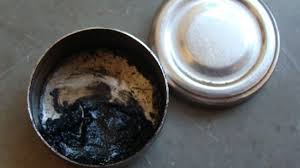
Applying kohl in Islam is a revered prophetic practice that intertwines spiritual devotion, physical well-being, and cultural heritage. Known as ithmid or surma, kohl is
We use cookies and similar technologies to enhance your experience, analyze site performance, and provide personalized content. By clicking "Accept," you consent to our use of these technologies. You can manage your preferences or opt out at any time in our Privacy Policy https://haqqfinder.com/privacy-policy/.
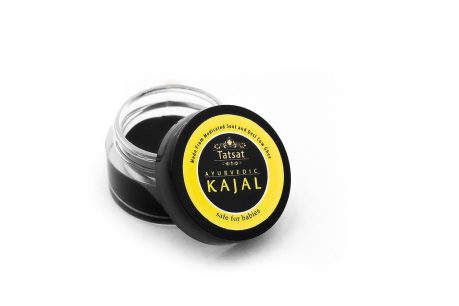
TATSAT Medicated Soot & Desi Cow Ghee Baby Kajal is a traditional Ayurvedic-inspired eye cosmetic marketed for babies and other age groups. The manufacturer describes a handmade preparation process involving medicinal herbs, a cotton wick and soot collected on a copper plate. The resulting black soot is combined with ingredients such as desi cow ghee, castor oil, beeswax and other botanical components.
TATSAT – Wellness Through Ayurveda
Traditional medicated soot kajal
3 g
Baby care and traditional eye cosmetics
Medicated soot, cow ghee, castor oil, beeswax and herbs
4.56/5 from 9 customer ratings
TATSAT describes the kajal as natural, Ayurvedic, lead-free and safe for babies. The manufacturer also promotes traditional eye-care and soothing benefits. These are manufacturer claims and should not be interpreted as independent laboratory findings or clinical proof of infant eye safety.
The published ingredient information identifies several botanical ingredients and formulation components, including cow ghee, castor oil, beeswax and a camphor-related ingredient. The product description also mentions almond oil, although it is not separately listed in the written ingredient declaration. No independently verified, batch-specific laboratory report establishing the heavy-metal levels of the exact product was identified for this review.
Overview information is based on the manufacturer's published product details. This is a desk-based assessment; the product was not physically tested.
HaqqFinder Editorial Rating
TATSAT Baby Kajal has a traditional preparation concept and a published ingredient list that includes cow ghee, castor oil, beeswax and several botanical ingredients. The manufacturer also displays positive customer feedback on its official store.
However, the product is specifically marketed for babies, and the available evidence does not establish that its current formulation and batches have undergone independent testing sufficient to verify infant eye-area safety. The ingredient information also needs clarification, particularly regarding camphor and almond oil.
Verdict: HaqqFinder does not recommend applying this kajal to babies’ eyes. The available evidence is insufficient to establish infant eye safety. This is a precautionary editorial recommendation, not a finding that the TATSAT product has been proven contaminated.
The editorial rating is independent of the manufacturer’s customer rating. It is not a laboratory certification, medical recommendation or formal Islamic ruling.
Traditional kajal and similar eye cosmetics have been associated with lead exposure in children. This category-level concern does not prove that TATSAT Baby Kajal contains lead. However, without credible product- and batch-specific testing, its lead-free marketing claim cannot independently establish safety for infants.
Customer feedback for TATSAT Baby Kajal is available across several Amazon regional marketplaces. The same product identifier (ASIN B0CG8X3YVP) is associated with the supplied US, UK, Canadian and Australian listings. The regional ratings are presented separately because marketplace review pools may overlap and should not automatically be treated as independent customer samples.
Amazon customer ratings, brand-hosted feedback and HaqqFinder's editorial assessment are reported separately.
HaqqFinder Editorial Rating
Independent editorial assessment using eight equally weighted criteria.
Not recommended for application to babies' eyes.
Amazon Regional Ratings
Ratings reported across four Amazon regional marketplaces.
These are marketplace customer ratings, not independent laboratory or safety assessments.
| Marketplace | Customer Rating | Ratings / Reviews | Source |
|---|---|---|---|
| Amazon US | 4.1/5 | 2,720 | View listing |
| Amazon UK | 4.2/5 | 2,697 | View listing |
| Amazon Canada | 4.2/5 | 136 | View listing |
| Amazon Australia | 4.2/5 | Not specified | Regional listing |
The figures above are the marketplace information supplied for this review. Amazon ratings and review counts can change over time. The Australian rating was supplied as 4.2/5, but a separate review count was not clearly specified.
TATSAT Official Store
Based on 9 customer ratings and 9 displayed customer reviews.
This is manufacturer-hosted feedback. It is shown separately and is not included in the Amazon marketplace figures.
Amazon US: The supplied listing shows 4.1/5 from 2,720 ratings, indicating a generally positive customer rating.
Amazon UK: The supplied listing shows 4.2/5 from 2,697 ratings. This is also a positive customer rating, although the review pool may overlap with other regional listings.
Amazon Canada and Australia: Both were reported at 4.2/5. The supplied Canadian listing shows 136 ratings. A separate Australian rating count was not clearly provided.
Brand-hosted feedback: TATSAT's official store displays 4.56/5 from nine ratings. This is a separate source and should not be combined with Amazon ratings.
Methodology and limitations: Amazon regional ratings are reported separately rather than combined into a single average. The same ASIN across regional marketplaces does not establish that every rating represents a unique customer or an independent review pool. The figures are marketplace snapshots supplied for this review and may change. The Australian review count was not specified. The official-store rating is manufacturer-hosted and excluded from the Amazon figures. Research information supplied: 31 October 2026.
The Amazon ratings suggest that customers have generally responded positively to this product listing. However, customer satisfaction does not establish laboratory-tested purity, lead-free status, halal certification, clinical safety or suitability for infants. HaqqFinder's 2.94/5 Editorial Rating evaluates broader criteria, including safety and evidence transparency, so it should not be expected to match marketplace customer ratings.
The following features are based primarily on TATSAT's published product information. Marketing descriptions are distinguished from independently verified performance and safety findings.
The manufacturer describes preparing herbal solutions using ingredients such as Triphala, Daruharidra, Tulsi and Sahadevi. A cotton cloth is reportedly treated with these preparations and used to create a wick. The resulting soot is collected on a copper plate and used as the black pigment. This explains the intended traditional preparation method but does not independently establish the soot's purity or contaminant levels.
Desi cow ghee is identified as a key component of the formulation. The manufacturer presents it as part of the traditional base. However, the published information does not independently establish the ghee's source, processing standards or the finished product's suitability for use around an infant's eyes.
The manufacturer identifies botanical ingredients including Triphala, Daruharidra, Tulsi and Sahadevi. These ingredients form part of the product's Ayurvedic-inspired positioning. Their traditional use does not, by itself, demonstrate that the finished cosmetic is clinically effective or safe for infant eye application.
Castor oil and beeswax appear in the published ingredient information. They may contribute to the product's base and consistency. Their presence does not establish the finished product's microbiological quality, stability or suitability for contact with the eye surface.
The manufacturer's ingredient imagery identifies Cinnamomum camphora, while its written ingredient declaration uses the term Pachakarpoora. The precise form, concentration and relationship between these descriptions are not established in the available product information. This deserves clarification before the product is considered for use around an infant's eyes.
TATSAT presents the kajal as a traditional Ayurvedic-inspired cosmetic and promotes it for babies and other age groups. The traditional preparation story may interest consumers looking for this type of product, but it should not be confused with clinical evidence or independent safety certification.
The manufacturer's product page identifies the Baby Kajal as a 3 g product. A compact pack may be convenient to store, although hygienic handling, applicator arrangements and contamination controls are not independently documented.
The product has a clearly described traditional formulation concept. However, ingredient disclosure and traditional preparation do not independently verify purity, consistency or suitability for infant eye use.
Product features are based on the manufacturer's published information and should not be interpreted as independent performance or safety findings.
These are potential product or presentation advantages. They do not establish that the kajal protects eye health, improves eyesight, prevents irritation or is safe for newborns.
This assessment considers the manufacturer's product information and the limited customer feedback available on its own website. It is not based on hands-on testing.
The product is designed to provide a dark, traditional kajal appearance using medicated soot as its stated source of black colour. However, the available customer feedback does not establish consistent pigmentation, colour intensity or application performance across different batches.
The manufacturer states that the kajal may last approximately four to six hours, depending on skin type, and may smudge. Customer comments are mixed: one reviewer described it as not smudge-proof and easy to remove, while another reported that it stayed on the skin for a longer period. These individual experiences do not establish a reliable wear-time result.
The container format may suit traditional application methods. However, applying a cosmetic near an infant's eyes requires particular care. A clean applicator cannot compensate for uncertainty about the formulation's purity, contamination controls or suitability for infant eye exposure.
The manufacturer promotes traditional eye-care benefits, including claims relating to comfort and reducing irritation. No reliable clinical evidence was identified demonstrating that this exact product improves eyesight, treats redness, prevents eye irritation or provides a medical benefit. It should not be used to manage an eye condition.
The manufacturer describes a handmade preparation process. However, publicly available information does not establish batch-to-batch consistency, manufacturing controls, microbial quality or the finished product's contaminant levels. These are important considerations for a cosmetic intended for use around the eyes.
The available information suggests a traditional cosmetic formulation with some positive customer comments about appearance and removal. Nevertheless, performance evidence is limited, and cosmetic convenience cannot outweigh unresolved infant eye-safety questions. HaqqFinder does not recommend using this product on babies' eyes.
Performance observations are based on published product claims and limited customer feedback, not independent wear testing.
Overall Editorial Rating
The rating recognises the manufacturer’s disclosed traditional formulation and preparation description, together with the limited positive customer feedback. However, the lack of independently verified product- and batch-specific safety testing substantially limits confidence in a cosmetic marketed for infant eye use.
The score is not a finding that the product contains lead or has caused harm. It reflects the evidence gap and the higher level of assurance expected for a product promoted for babies’ eyes.
Recommendation: Not recommended for application to babies’ eyes. Adults considering the product should also review the complete ingredient declaration and seek reliable product-specific safety information rather than relying on baby-safe or lead-free marketing claims.
The HaqqFinder Editorial Rating is independent of the manufacturer’s customer rating. Marketplace popularity, positive reviews and traditional claims do not determine the editorial score.
The product is evaluated using eight equally weighted criteria. These criteria consider its disclosed formulation, halal-related information, safety evidence, cosmetic characteristics, usability, packaging, value and available consumer feedback.
| Evaluation Criterion | Score | Assessment |
|---|---|---|
| Halal & Sunnah Compliance | 3.00/5 | No specific prohibited ingredient is established by the published description, but complete ingredient sourcing and halal certification have not been independently verified. |
| Safety & Non-Harmful | 1.50/5 | No verified current-batch heavy-metal report was identified, and infant eye-area suitability remains unestablished. |
| Pigmentation & Appearance | 3.00/5 | The product is intended to provide a dark appearance, but consistent pigmentation has not been independently established. |
| Longevity & Wudu Compatibility | 2.50/5 | Customer comments differ on smudging and removal. Water resistance and whether any remaining cosmetic layer affects water reaching the skin have not been established. |
| Ease of Application | 3.00/5 | The container format may be practical for traditional application, but hygienic handling and safe use near an infant’s eyes remain concerns. |
| Packaging & Sustainability | 3.00/5 | The compact pack is convenient to store, but packaging hygiene, contamination protection and sustainability information are insufficiently documented. |
| Value & Fair Pricing | 3.50/5 | The traditional formulation may appeal to a specific audience, but unresolved safety questions reduce the product’s overall value proposition. |
| Muslim Community Satisfaction | 4.00/5 | The manufacturer displays positive customer feedback, but nine ratings do not establish broad Muslim community satisfaction or product safety. |
| Overall | 2.94/5 | Average of the eight equally weighted criteria. Not recommended for use on babies’ eyes. |
(3.00 + 1.50 + 3.00 + 2.50 + 3.00 + 3.00 + 3.50 + 4.00) ÷ 8
23.50 ÷ 8 = 2.9375 → 2.94/5
Each criterion carries equal weight. Marketplace ratings do not determine the editorial score. Serious safety concerns can justify a poor safety score and an unsuitable recommendation even when the overall arithmetic average is higher.
Read the HaqqFinder Rating Evaluation Methodology for further details.
This assessment examines the manufacturer's published ingredient information, unresolved formulation details and broader safety concerns relevant to traditional kajal products. Manufacturer claims are not treated as independent laboratory findings.
The manufacturer's product information identifies the following ingredients or formulation components:
The manufacturer's description also mentions almond oil, but it is not separately listed in the written ingredient declaration on the Baby Kajal page. The relationship between the camphor imagery and the written term Pachakarpoora also needs clarification. Consumers should check the actual package label and request a complete, consistent ingredient declaration. The published information does not independently verify the finished formulation or ingredient concentrations.
The disclosed formulation includes cow ghee, beeswax, oils and botanical ingredients. The available product information does not establish a specific prohibited ingredient, but it also does not provide independently verified halal certification or complete sourcing documentation.
Cow-derived ingredients and beeswax should not automatically be classified as impermissible. Their source, processing and relevant certification details should be checked where necessary. Likewise, natural, herbal or Ayurvedic positioning is not equivalent to halal certification. HaqqFinder does not issue a formal fatwa on this product. The Islamic principle of avoiding harm should also be considered when evaluating a cosmetic intended for infants.
The US Food and Drug Administration warns that some traditional kohl, kajal, surma and similar eye cosmetics have contained high levels of lead and other heavy metals. The FDA specifically describes cases linking these products to lead exposure in children and advises keeping these products away from children.
This is a category-level warning. It does not establish that TATSAT Baby Kajal contains lead. However, the manufacturer's description of its product as lead-free is not a substitute for an independently verifiable laboratory report identifying the exact product, batch, test method and measured results.
The FDA's guidance also explains that traditional eye cosmetics may contain other heavy metals. A product-specific assessment therefore needs more than a general lead-free statement.
Reference: FDA: Kohl, Kajal, Al-Kahal, Surma, Tiro, Tozali, or Kwalli: By Any Name, Beware of Lead Poisoning.
The manufacturer's ingredient information identifies Cinnamomum camphora and uses the term Pachakarpoora in its written ingredient declaration. The precise chemical form, concentration and exposure level in the finished kajal are not published in the information reviewed.
This uncertainty prevents a meaningful assessment of the ingredient's concentration or suitability for infant eye-area use. It should not be assumed that an ingredient is appropriate for babies simply because it is used in a traditional formulation. The manufacturer should provide the exact ingredient identity, concentration and relevant finished-product safety assessment.
A product marketed for babies requires particularly strong evidence for its intended use. The available information does not establish that this kajal has undergone appropriate independent assessment for infant eye-area exposure, microbial quality, irritation potential or batch-specific contamination.
The FDA advises keeping traditional kajal and similar products away from children because of documented lead-exposure concerns associated with some products in this category. HaqqFinder therefore does not recommend applying this product to a baby's eyelids, waterline or other eye-area surfaces. The manufacturer's baby-safe marketing claim does not override the need for credible safety evidence.
Given the intended infant use and unresolved product-specific evidence, the following precautions are appropriate:
The disclosed formulation provides some information about the product's traditional ingredients, but inconsistencies in the published ingredient details and the absence of verified product- and batch-specific safety testing leave important questions unresolved. No evidence reviewed establishes that this exact TATSAT product is contaminated; equally, the available information does not justify describing it as independently verified lead-free or safe for infant eye use.
HaqqFinder assessment: Not sufficiently verified for infant eye use. We do not recommend applying this kajal to babies' eyes. Halal certification and complete ingredient sourcing also remain unverified. This is a precautionary editorial conclusion, not a formal fatwa or laboratory finding.
Safety information is based on the manufacturer's published product details and public-health guidance. It does not establish contamination of the specific TATSAT product.
Suitability depends on the intended user and the level of product-specific safety evidence available. The manufacturer's baby-focused marketing should not be treated as proof that the product is appropriate for infants.
Not recommended. HaqqFinder does not recommend applying this kajal to babies' eyes. The absence of verified product-specific safety testing and wider public-health concerns surrounding traditional kajal make precaution particularly important for infants.
Not sufficiently verified. The manufacturer's lead-free claim should not be treated as independent confirmation. Parents seeking such assurance should require a credible laboratory report for the exact product and batch.
Adults interested in traditional cosmetics should first examine the complete package ingredient declaration and seek reliable safety documentation. The product's baby-focused label does not establish safety for every age group.
Consumers who prefer botanical formulations should distinguish traditional ingredient descriptions from verified safety and performance. Natural or herbal positioning alone is not sufficient evidence of product quality or suitability for the eye area.
This product should not be selected as a treatment for eyesight, redness, irritation or another eye condition. No verified clinical evidence was identified showing that this exact kajal provides these medical benefits.
The available ingredient descriptions do not establish a specific prohibited ingredient, but independent halal certification and complete ingredient sourcing have not been verified. Consumers requiring formal certification should request documentation from the manufacturer.
Suitability guidance is based on the evidence reviewed and is not a medical diagnosis or a formal religious ruling.
Final HaqqFinder Editorial Rating
TATSAT Medicated Soot & Desi Cow Ghee Baby Kajal has a recognisable traditional formulation concept. Its manufacturer describes a herbal-soot preparation process and identifies ingredients including cow ghee, castor oil, beeswax, Triphala, Daruharidra, Tulsi and Sahadevi. Its official store also displays positive customer feedback.
However, these features do not establish that the finished product is safe for babies’ eyes. The published ingredient information needs clarification, particularly regarding camphor-related ingredients and almond oil. More importantly, no independently verified laboratory report establishing the heavy-metal levels of the exact product and current batch was identified.
Public-health guidance from the FDA highlights the risk of lead exposure from some traditional kajal and similar products. This does not prove that TATSAT is contaminated, but it supports a precautionary approach when a product is marketed for infants and product-specific safety evidence is unavailable.
Not recommended for application to babies’ eyes. The product receives an overall HaqqFinder Editorial Rating of 2.94/5. Its traditional formulation and positive brand-hosted customer feedback do not compensate for the unresolved infant eye-safety evidence.
This review is a desk-based editorial assessment based on publicly available product information and safety guidance. It does not establish that the product is contaminated, replace professional medical advice, certify halal status or constitute a formal Islamic ruling. The assessment may be revised if credible, product- and batch-specific evidence becomes available.
*When you purchase through this link, HaqqFinder may earn a small commission at no extra cost to you. Learn more
There are no reviews yet. Be the first one to write one.

Applying kohl in Islam is a revered prophetic practice that intertwines spiritual devotion, physical well-being, and cultural heritage. Known as ithmid or surma, kohl is

Kohl, kajal, and surma have a long history in beauty traditions across the Middle East, North Africa, and South Asia. For many Muslims, kohl also

Kohl (also known as surma or kajal) has a long history in Muslim communities and is mentioned in Islamic Hadith literature. Among the types traditionally