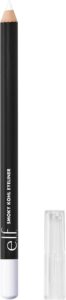
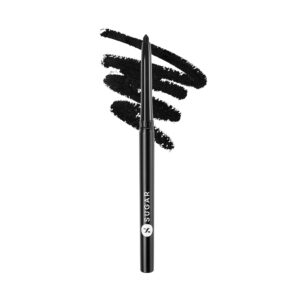
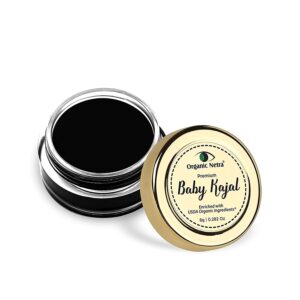
Applying kohl in Islam is a revered prophetic practice that intertwines spiritual devotion, physical well-being, and cultural heritage. Known as ithmid or surma, kohl is
We use cookies and similar technologies to enhance your experience, analyze site performance, and provide personalized content. By clicking "Accept," you consent to our use of these technologies. You can manage your preferences or opt out at any time in our Privacy Policy https://haqqfinder.com/privacy-policy/.
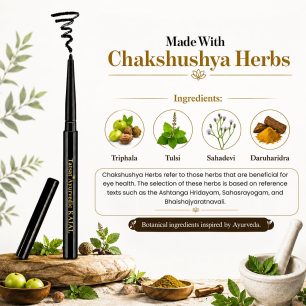
The TATSAT Ayurvedic Kajal Pencil is a traditional herbal eye cosmetic marketed by TATSAT – Wellness Through Ayurveda. The manufacturer describes it as a handmade kajal prepared with medicated soot, Ayurvedic herbs, almond oil and desi cow ghee. The pencil contains 0.25g of product and is intended to provide a black-lined eye look.
TATSAT says its pigment is prepared through a traditional process in which herbal preparations are used to create soot collected on a copper plate. The manufacturer also describes the formulation as natural, Ayurvedic and lead-free. These are manufacturer claims; the product-specific laboratory evidence needed to independently verify its lead-free claim was not available in the sources reviewed.
TATSAT describes the kajal as natural, Ayurvedic and lead-free. The brand also promotes traditional herbal preparation and claims that the formula has soothing and eye-nourishing properties. These descriptions represent the manufacturer's marketing statements, not independent proof of product purity, clinical benefit or eye safety.
Product specifications and manufacturer claims are based on the official TATSAT product page. The published product information does not provide a batch-specific independent safety report.
The product has a clearly published formal ingredient list, a convenient pencil format and positive brand-hosted customer feedback about smooth application and its dark appearance.
The manufacturer’s lead-free claim could not be independently verified for the exact product or batch. Customer experiences cannot establish heavy-metal purity or finished-product safety.
Adults interested in traditional herbal kajal may find the product’s format and formulation description appealing. However, consumers who require independently verified safety evidence should seek a batch-specific laboratory report before considering an eye cosmetic of this type. We would not recommend it for babies based on the available evidence.
TATSAT markets this kajal as lead-free. However, we could not verify a publicly available, batch-specific independent laboratory report confirming the lead content or broader heavy-metal purity of this exact product. Therefore, its lead-free claim should be treated as a manufacturer statement rather than independently established evidence.
The US Food and Drug Administration (FDA) warns that some traditional kohl, kajal and similar eye cosmetics have contained high levels of lead. This is a category-level safety warning; it does not establish that TATSAT’s product contains lead.
HaqqFinder recommendation: Until suitable independent testing documentation is available, consumers should exercise caution rather than assume the product is proven lead-free. We would also avoid using it on infants or children, particularly given the absence of verified product-specific safety evidence for those age groups.
The TATSAT Ayurvedic Kajal Pencil has received customer ratings across several online marketplaces, including Amazon's US, UK, Canadian, Australian and Indian stores. The supplied figures show ratings ranging from 4.1/5 to 4.3/5 across these Amazon marketplaces, with substantial review volumes. Pushmycart and Flipkart also display positive customer ratings. The manufacturer's own website has a smaller sample of nine ratings.
The supplied marketplace figures indicate generally positive customer sentiment. Amazon ratings remain relatively consistent across the five listed regional stores, ranging from 4.1/5 to 4.3/5. Pushmycart displays the highest supplied rating at 4.8/5, supported by a particularly large reported rating count. Flipkart and the official TATSAT store also show positive ratings, although their reported sample sizes are considerably smaller than those of the major Amazon and Pushmycart listings.
Some reviewers describe the pencil as smooth to apply and appreciate its dark appearance. Several customers report that they did not experience watering or irritation during their own use. One reviewer also mentions purchasing the product repeatedly. These comments indicate satisfaction among some buyers, but they do not establish universal tolerance or independently demonstrate eye-area safety.
The written feedback available for the official product listing includes complaints about smudging, limited staying power and inconsistent visibility. One reviewer reports that the kajal was hardly visible unless more was applied, while another says it smudges when the eyes are rubbed. These comments suggest that wear performance may vary between users. High overall marketplace ratings should therefore not be interpreted as evidence that every customer experiences the same application or staying-power results.
Marketplace ratings are reported separately because each platform may use its own review collection, product-variation and rating-display systems. The figures supplied for this review have not been independently audited, and ratings can change. We do not combine these separate rating pools into a single customer score. Customer ratings also cannot verify ingredient accuracy, halal certification, lead-free claims or batch-specific product safety.
TATSAT says it prepares the herbal ingredients through a traditional process involving Triphala, Tulsi, Sahadevi and Daruharidra. The brand describes processing the herbs before collecting medicated soot on a copper plate. This explains the manufacturer's traditional positioning, but the preparation description does not independently establish the purity or safety of the final pigment.
The manufacturer identifies medicated soot as the source of the kajal's black appearance. Traditional soot preparation may be central to the product's identity, but no independent pigment analysis or batch-specific heavy-metal result was available to confirm its composition.
The formal ingredient declaration includes castor oil, almond oil, beeswax, carnauba wax, cow ghee and cocoa butter. These ingredients form part of the product's disclosed formulation. Their presence alone does not establish the finished pencil's performance, eye-area suitability or contamination status.
The pencil format is convenient to carry and offers a familiar application style for people who prefer a solid kajal product instead of loose powder. The listed quantity is relatively small, so buyers should consider the amount supplied when evaluating value.
TATSAT describes the product as lead-free. This is an important claim for a traditional eye cosmetic, but the official product information reviewed did not provide a product-specific independent laboratory report. The claim should therefore remain attributed to the manufacturer rather than presented as independently verified.
Camphor (Cinnamomum camphora) appears in the formal ingredient declaration. The manufacturer associates it with traditional therapeutic properties, but the available product information does not disclose its concentration or establish clinical benefits or suitability for every type of eye-area application.
The manufacturer states an expiry period of two years from the manufacturing date and advises keeping the product away from sunlight and hot conditions to avoid melting. Buyers should follow the manufacturing date, expiry date and storage instructions printed on their own packaging.
Feature descriptions are based on the manufacturer's published information. They should not be interpreted as independent verification of safety, clinical effectiveness or performance.
Customer reports reflect personal experiences and cannot establish that a cosmetic is universally non-irritating or medically beneficial.
Customer feedback on pigmentation is mixed. One reviewer describes the colour as true to colour, while another says the kajal was hardly visible on the eyes. Other reviewers describe a dark finish. These are individual experiences from the brand-hosted review sample, not results from a standardized pigmentation test.
Smudging and wear time are recurring limitations in the official customer feedback. Some reviewers explicitly mention that the pencil smudges when rubbed or is not smudge-proof. Another reviewer says it did not stay long. Buyers seeking a waterproof or long-wearing eyeliner should not assume this product will meet those expectations.
The pencil format offers a familiar application method. One official reviewer specifically describes it as very smooth to apply. This is encouraging user feedback, but no independent application test was conducted for this review.
The available product information and customer reviews do not establish whether the applied kajal forms a water-resistant barrier or whether water reaches the skin beneath it. Smudging or fading does not by itself prove wudu compatibility. Consumers who need religious guidance should consult a qualified scholar and assess the actual product's application and removal characteristics.
Several reviewers report that they experienced little or no irritation. However, these individual reports cannot establish that the product is suitable for all sensitive eyes. The formal ingredient declaration includes camphor, and the available product information does not establish its concentration or provide independent finished-product eye-safety testing.
TATSAT receives positive feedback for smooth application and, for some users, a dark finish. However, reports of smudging, fading and inconsistent visibility suggest that wear performance is not uniform. More importantly, cosmetic satisfaction should not be confused with verified eye safety. This assessment is based on published customer feedback, not hands-on testing.
TATSAT earns credit for its disclosed ingredient list, convenient pencil format and generally positive feedback on application. Its score is limited by the lack of independently verified product-specific safety documentation, mixed reports about wear performance and the absence of evidence supporting some of the manufacturer’s broader eye-health claims.
The 3.25/5 score is an editorial average, not a safety certification or confirmation that the product is safe. The product has not been established as contaminated; however, its lead-free claim remains unverified in the absence of a product-specific independent laboratory report.
The editorial rating is not a medical certification, laboratory result, formal halal certification or religious ruling. The eight individual criterion scores and their calculation are provided in the next section.
The product is assessed against eight criteria, each scored out of 5. The criteria consider ingredient disclosure, safety evidence, cosmetic performance, application, packaging, value and relevant customer feedback. Each criterion carries equal weight in the final arithmetic average.
| Evaluation Criterion | Score | Editorial Assessment |
|---|---|---|
| 1. Halal & Sunnah Compliance | 3.50/5.00 | The disclosed ingredients do not identify an obvious prohibited component, but formal halal certification and product-specific Sunnah endorsement were not verified. |
| 2. Safety & Non-Harmful | 2.50/5.00 | A formal ingredient list is available, but no product-specific independent laboratory report was found to verify the lead-free claim or finished-product safety. |
| 3. Pigmentation & Appearance | 3.00/5.00 | Some reviewers praise the dark finish, while another reports weak visibility. Feedback is positive but not consistent. |
| 4. Longevity & Wudu Compatibility | 2.50/5.00 | Customer feedback includes smudging and fading. Water-barrier characteristics relevant to wudu have not been established. |
| 5. Ease of Application | 4.00/5.00 | The pencil format is convenient, and some brand-hosted reviewers describe smooth application. |
| 6. Packaging & Sustainability | 3.50/5.00 | The compact pencil format is practical, but detailed packaging-material and sustainability information is not available. |
| 7. Value & Fair Pricing | 3.00/5.00 | The 0.25g quantity is small. Value depends on current local pricing and comparable products; a full comparative value assessment is not possible from the available information. |
| 8. Muslim Community Satisfaction | 4.00/5.00 | The official store’s nine customer ratings are positive overall, but this small brand-hosted sample is not a representative survey of Muslim consumers. |
| Total / Overall Average | 26.00/40 | 26.00 ÷ 8 = 3.25/5.00 |
(3.50 + 2.50 + 3.00 + 2.50 + 4.00 + 3.50 + 3.00 + 4.00) ÷ 8 = 26.00 ÷ 8 = 3.25/5.00.
HaqqFinder requires both Halal & Sunnah Compliance and Safety & Non-Harmful to score at least 3/5 for a positive recommendation. The safety criterion scores 2.50/5. Therefore, despite the mathematical average of 3.25/5, this product does not meet the editorial threshold for a positive recommendation. This is a precaution based on missing verification, not a finding that the product is contaminated.
The official product page publishes a full ingredient declaration. The table below follows that declaration and provides cautious descriptions of the ingredients' commonly understood formulation roles. The manufacturer does not disclose the concentration of each ingredient.
| Ingredient | Common Formulation Role | HaqqFinder Consideration |
|---|---|---|
| Castor oil (Ricinus communis) | Oil component and emollient. | Plant-derived oil; the finished formula's eye-area suitability still requires appropriate safety evidence. |
| Beeswax (Cera alba) | Wax used for structure and consistency. | Animal-derived; beeswax is not the same as a plant-derived wax. Formal certification was not verified. |
| Almond oil (Prunus dulcis) | Emollient oil component. | Plant-derived; people with relevant sensitivities should check the complete formulation and seek appropriate advice. |
| Carnauba wax (Copernicia prunifera) | Plant-derived wax used to contribute structure and firmness. | Plant-derived; its presence does not independently establish the product's overall safety. |
| Haritaki (Terminalia chebula) | Botanical ingredient associated with Triphala. | Plant-derived; no product-specific clinical eye benefit is established by its inclusion. |
| Bibhitaki (Terminalia bellirica) | Botanical ingredient associated with Triphala. | Plant-derived; the product's final safety cannot be inferred from traditional use. |
| Amla (Emblica officinalis) | Botanical ingredient associated with Triphala. | Plant-derived; no specific therapeutic effect on eyesight is established for this finished kajal. |
| Cow ghee (A2 cow ghee) | Animal-derived fat used as part of the formulation. | The declared source is cow-derived. Formal halal certification and manufacturing controls were not verified. |
| Cocoa butter (Theobroma cacao) | Plant-derived fat used as an emollient and consistency component. | Plant-derived; no product-specific eye-health benefit is established. |
| Camphor (Cinnamomum camphora) | Aromatic ingredient identified by the manufacturer. | Concentration and finished-product suitability for the intended eye-area use are not established by the available product information. |
The manufacturer's descriptive text also discusses Tulsi (Ocimum sanctum), Sahadevi (Vernonia cinerea) and Daruharidra (Berberis aristata). However, these three ingredients are not separately named in the formal full ingredient declaration reproduced on the product page. The page describes them as part of the herbal preparation, but the exact status and quantity of these botanicals in the finished pencil are not clear. Buyers should request clarification from the manufacturer rather than assume that every herb mentioned in the promotional description is present as a separately declared ingredient.
Heavy-metal contamination is an important consideration for traditional eye cosmetics. The U.S. Food and Drug Administration warns that some products sold as kohl, kajal and surma have contained high levels of lead. The FDA also describes reported cases of lead exposure involving children who used such products. This is a category-level public-health warning; it is not evidence that the TATSAT pencil itself contains lead.
TATSAT advertises its pencil as lead-free. However, the official product page reviewed does not provide a batch-specific independent laboratory report confirming that claim. Without such documentation, HaqqFinder cannot independently verify the product's lead content or broader heavy-metal purity.
For context, the FDA's guidance explains that some traditional kohl products have contained lead compounds and other materials. This should not be used to assume that every modern kajal product is contaminated. Product-specific testing is needed to make a claim about this particular pencil.
Relevant guidance: U.S. FDA – Kohl, Kajal, Surma and Lead Poisoning and CDC – Lead in Foods, Cosmetics and Medicines.
Camphor: Camphor is included in the formal ingredient declaration. The product page does not disclose its concentration or provide independent finished-product safety testing. Its presence should not be treated as proof of harm, but neither should traditional use be treated as proof that the formula is suitable for every eye-area application.
Almond oil: Almond oil is a declared ingredient. Consumers with known sensitivities to almond-derived ingredients should review the packaging and seek appropriate advice before use.
Herbal ingredients: Triphala and the other herbs named in the product description are part of the manufacturer's traditional positioning. Their presence does not establish that the finished kajal treats eye conditions, prevents infection or improves eyesight.
Eye-area use: The skin and tissues around the eyes are sensitive. Customer reports of no irritation are individual experiences and cannot establish universal tolerance. Avoid direct contact with the eye itself and stop using the product if irritation occurs.
The formal ingredient list includes cow ghee and beeswax, both of animal origin. The declared cow-derived ingredient does not, by itself, establish formal halal certification. The available product information does not identify a recognized halal certifying body or provide a certificate for this exact pencil.
The other named ingredients are largely botanical or plant-derived materials. However, ingredient compatibility and formal halal certification are different questions. Manufacturing aids, processing controls and certification documentation may also matter to consumers who require formal assurance.
The disclosed ingredients do not identify an obvious prohibited component, but the product is not verified as halal-certified. Consumers who require formal halal assurance should request relevant certification and manufacturing information from TATSAT. This assessment is not a fatwa or formal religious ruling.
Kohl and ithmid have a place in traditional Islamic discussions, but a modern commercial kajal should not automatically be described as Sunnah-endorsed merely because it is traditional, herbal or marketed as Ayurvedic. The product page does not establish that this exact commercial pencil is authentic ithmid or that it has a specific religious endorsement.
HaqqFinder therefore distinguishes the manufacturer's Ayurvedic and traditional preparation claims from religious evidence about specific forms of kohl. We do not issue a religious ruling or claim that this product is Sunnah-certified.
The available product information does not establish whether the applied pencil creates a water-resistant film or whether water reaches the relevant skin area during washing. Smudging, fading or ease of removal alone does not prove wudu compatibility. Consumers should not treat this review as a religious ruling and should consult a qualified scholar for personal guidance.
The following documentation would help consumers evaluate the product more confidently:
The available information is not sufficient for HaqqFinder to independently confirm the manufacturer's lead-free claim or make a categorical safety conclusion about the finished product. This is an evidence limitation, not proof of contamination.
These are evidence-based consumer considerations, not medical advice. No group should interpret traditional positioning or positive customer reviews as proof of product safety.
TATSAT Ayurvedic Kajal Pencil has several appealing characteristics: a compact pencil format, a published ingredient declaration, a traditional preparation description and generally positive feedback from its small brand-hosted review sample. Some customers appreciate its smooth application and dark appearance, while others report smudging, fading or weak visibility.
However, the most important issue remains unresolved: the manufacturer describes the product as lead-free, but HaqqFinder could not verify an independent laboratory report for the exact product or batch. The official page also discusses additional herbs that are not separately named in its formal full ingredient declaration. These limitations make further documentation important before consumers rely on the product’s safety and formulation claims.
HaqqFinder does not recommend TATSAT Ayurvedic Kajal Pencil at this time because the product does not meet our minimum safety-evidence threshold. We would reconsider this assessment if the manufacturer provides credible, product-specific laboratory results and sufficient documentation supporting its intended eye-area use. This recommendation reflects missing verification, not a finding that the product is contaminated.
For consumers interested in traditional kajal, the product may be worth examining further, but its natural and Ayurvedic positioning should not replace independent safety evidence. Until the relevant documentation is available, a more transparently tested eye cosmetic is the more prudent option.
HaqqFinder’s assessment is based on the manufacturer’s published product information, the nine customer ratings and reviews displayed on its official product page, and relevant public-health guidance. It is not a laboratory test, medical opinion, halal certification or religious ruling.
*When you purchase through this link, HaqqFinder may earn a small commission at no extra cost to you. Learn more
There are no reviews yet. Be the first one to write one.

Applying kohl in Islam is a revered prophetic practice that intertwines spiritual devotion, physical well-being, and cultural heritage. Known as ithmid or surma, kohl is

Kohl, kajal, and surma have a long history in beauty traditions across the Middle East, North Africa, and South Asia. For many Muslims, kohl also

Kohl (also known as surma or kajal) has a long history in Muslim communities and is mentioned in Islamic Hadith literature. Among the types traditionally