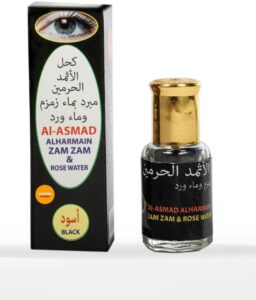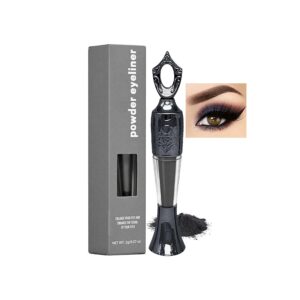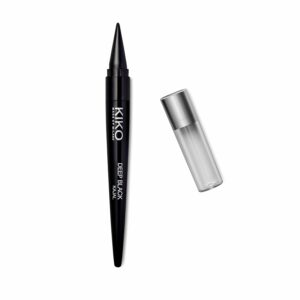
Applying kohl in Islam is a revered prophetic practice that intertwines spiritual devotion, physical well-being, and cultural heritage. Known as ithmid or surma, kohl is
We use cookies and similar technologies to enhance your experience, analyze site performance, and provide personalized content. By clicking "Accept," you consent to our use of these technologies. You can manage your preferences or opt out at any time in our Privacy Policy https://haqqfinder.com/privacy-policy/.
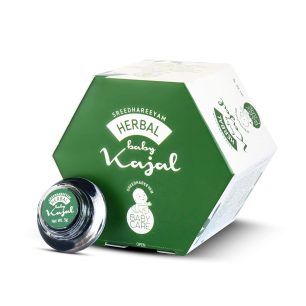
Sreedhareeyam Herbal Baby Kajal is a black, Ayurvedic-inspired cream kajal manufactured by Sreedhareeyam Farmherbs India Pvt. Ltd. in Kerala, India. Marketed for babies and adults, it is formulated around traditional herbal ingredients, including Amalaki (Indian gooseberry), Sahadevi, Yashtimadhu (licorice), castor oil, camphor oil and coconut oil.
The manufacturer describes a medicated oil base that is converted into kajal using beeswax and emulsifying wax. Its product information also reports dermatological testing and laboratory clearance, alongside claims that the formulation is hypoallergenic and non-irritating to the eyes. These are manufacturer claims; the complete test reports and current-batch results were not independently verified for this review.
Sreedhareeyam Ayurveda
Sreedhareeyam Farmherbs India Pvt. Ltd.
Herbal Ayurvedic cream kajal
Black · 3 g
India
24 months from manufacture, subject to package confirmation
The manufacturer’s product information and ingredient descriptions can be reviewed through its official Herbal Kajal product information. Retail listings and product packaging may describe the formulation differently, so consumers should check the complete ingredient declaration on the actual pack.
Product specifications and marketing claims are not equivalent to independent laboratory verification. This review is based on published information and marketplace research, not hands-on testing or laboratory analysis.
HaqqFinder Editorial Rating
Sreedhareeyam Herbal Baby Kajal offers a creamy format and a named selection of traditional Ayurvedic ingredients. The manufacturer reports dermatological testing and non-irritation assessment, while marketplace feedback is generally positive.
However, a complete current-batch ingredient and heavy-metal test report was not independently verified. The product also contains camphor oil, and its marketing for babies makes the absence of independently reviewable infant-specific eye-safety evidence particularly important.
Verdict: Not recommended for application to babies’ eyes pending stronger product-specific safety verification. This is a precautionary recommendation, not a finding that the product contains lead or is contaminated. Adult consumers considering it as a cosmetic should still check the full ingredient declaration and use appropriate caution.
This is a desk-based editorial assessment, not a medical safety certification, laboratory result, hands-on product test or formal Islamic ruling.
3.25/5
An independent assessment based on eight criteria, including halal considerations, safety, usability, value, and community satisfaction. This score is not calculated from retailer ratings.
4.51/5
Equal-weight average of four retailer ratings plus one Amazon rating source, covering five independent retail sources. This is an indicative comparison, not a volume-weighted global customer score.
Amazon US — 4.2/5
5,552 displayed ratings. View Amazon US listing.
Amazon Canada — 4.2/5
5,550 displayed ratings. View Amazon Canada listing.
Flipkart — 4.3/5
7,661 displayed star ratings and 697 written reviews for the 3 g product listing.
Distacart — 4.7/5
Based on 3 product reviews.
AyurKart — 4.83/5
Based on 18 product-specific reviews. A separate store-wide feedback figure was not included in this calculation.
Indiangoods / Shop App — 4.5/5
The listing displays a feedback count of 1,234; the count is not clearly identified as ratings or written reviews.
How the marketplace average was calculated: (4.2 + 4.3 + 4.7 + 4.83 + 4.5) ÷ 5 = 4.51/5.
Amazon US and Canada are shown separately for transparency, but counted as one rating source because both links point to the same Amazon product ID (B07QM2627J). Their nearly identical rating counts should not be added together as independent feedback.
Ratings and feedback counts are marketplace snapshots and may change. Counts across retailers are not combined because they use different reporting methods and may not represent unique customers. The marketplace average reflects customer sentiment, not verified product safety, halal certification, or suitability for babies.
The following features are based on the manufacturer's product information and matching retail listings. Marketing claims are identified separately from independently established capabilities.
The manufacturer identifies Amalaki, Sahadevi, Yashtimadhu, castor oil, camphor oil and coconut oil as principal ingredients. These ingredients reflect an Ayurvedic-inspired formulation, but traditional use does not independently prove clinical benefits or safety for an infant's eyes.
The product is described as a cream kajal. The manufacturer's preparation information refers to a medicated oil base combined with beeswax and emulsifying wax. This type of formulation may be easier to handle than loose powder, although packaging and applicator availability affect practical use.
The kajal is marketed in a black shade intended to enhance eye definition. Marketplace feedback indicates that customers generally appreciate its appearance, but no controlled pigmentation test was identified for this review.
Sreedhareeyam states that the product has undergone dermatological testing and has been assessed as non-irritating to the eyes. The available product information does not provide the complete study protocol, tested population, detailed results or current-batch laboratory documentation needed to independently evaluate the full scope of these claims.
Retail product descriptions state that the kajal is lead-free. This is relevant for an eye cosmetic, particularly one marketed for babies. However, a claim in a product listing is not equivalent to an independently verified heavy-metal report for the current production batch.
The commonly listed product is a 3 g container. It is compact for storage and transport, but the actual packaging, hygiene arrangements and availability of a suitable applicator should be checked before purchase.
Matching retail specifications identify the kajal as non-waterproof. Consumers should therefore not expect it to remain unchanged after exposure to moisture, rubbing or tears. No reliable controlled wear-duration test was located.
Sreedhareeyam markets this product as a black kajal. The matching Flipkart listing contains positive customer feedback about its appearance and use. However, no standardised laboratory or controlled comparison of pigmentation, colour intensity or consistency was identified. Its visual performance should therefore be considered promising based on customer feedback rather than independently measured.
The manufacturer describes an oil-based preparation combined with beeswax and emulsifying wax. This suggests a creamy texture rather than a loose powder. Customer feedback on an international retailer listing also raises a practical concern: the product may not include an applicator suitable for its creamy consistency. Buyers should check the actual package contents.
Matching retail specifications describe the product as non-waterproof. It may therefore move or smudge with moisture, rubbing or tears. The available evidence does not establish a reliable number of hours for wear, and no controlled independent wear test was located.
The manufacturer reports that the formulation has undergone testing and has been assessed as non-irritating to the eyes. Some customer comments also describe a cooling sensation. These reports do not establish universal tolerance, and dermatological testing alone does not demonstrate suitability for application to an infant's eyelids or eye margins.
A creamy kajal requires careful handling to avoid introducing dirt or microorganisms into the container. If an applicator is not included, using fingers or an unsuitable shared tool can create additional hygiene concerns. Packaging details should be confirmed before purchase.
The product appears to offer a practical cream-kajal format and generally positive cosmetic feedback. However, its non-waterproof specification, uncertain applicator provision and lack of controlled wear testing limit the strength of performance claims. More importantly, cosmetic performance should not be confused with suitability for an infant's eyes.
HaqqFinder Editorial Rating
Sreedhareeyam Herbal Baby Kajal receives credit for its identified principal ingredients, creamy format, accessible Indian retail pricing and generally positive marketplace reputation. The manufacturer’s reported testing and lead-free claims are relevant considerations.
However, the complete formulation and independently verifiable current-batch safety documentation remain insufficient for a strong infant eye-safety conclusion. The intended baby use requires a more conservative assessment than an ordinary adult cosmetic.
Editorial recommendation: Not recommended for application to babies’ eyes pending stronger safety verification. The score reflects the full eight-criterion assessment and does not mean that the product has been proven contaminated.
The HaqqFinder score is independent of marketplace averages. It is an editorial evaluation, not a medical certification, laboratory finding or formal religious ruling. Read the HaqqFinder Rating and Evaluation Methodology.
The product is evaluated using eight equally weighted criteria. Marketplace ratings are considered only as consumer-reputation context; they do not determine the editorial scores.
| Criterion | Score | Assessment |
|---|---|---|
| Halal & Sunnah Compliance | 3.50/5 | The principal ingredients do not establish an obvious prohibited ingredient, but the complete formulation and formal halal certification were not verified. The product is not established as authentic ithmid. |
| Safety & Non-Harmful | 2.00/5 | The manufacturer reports testing and lead-free status, but independent current-batch safety evidence was not verified. The infant-targeted eye application warrants a conservative score. |
| Pigmentation & Appearance | 3.50/5 | Marketed as black kajal, with generally positive customer feedback, but no controlled pigmentation test was located. |
| Longevity & Wudu Compatibility | 2.50/5 | Listed as non-waterproof, with limited reliable wear-duration evidence. Wudu compatibility depends on whether the particular application forms a barrier to water reaching the required area. |
| Ease of Use | 3.50/5 | The creamy format may be convenient, although application depends on the package and availability of an appropriate applicator. |
| Packaging & Practicality | 3.00/5 | Compact packaging, but applicator availability and hygienic handling need consideration. |
| Value & Fair Pricing | 4.00/5 | Indexed Indian listings have shown a relatively accessible price for a 3 g pack. Actual value depends on the current price, packaging and individual expectations. |
| Muslim Community Satisfaction | 4.00/5 | General customer ratings are positive, but specific evidence about Muslim consumers’ halal, Sunnah and infant-safety assessments remains limited. |
| Overall | 3.25/5 | Average of the eight equally weighted criteria. |
Calculation: 3.50 + 2.00 + 3.50 + 2.50 + 3.50 + 3.00 + 4.00 + 4.00 = 26.00. Therefore, 26.00 ÷ 8 = 3.25/5.
The relatively low safety score reflects the evidence limitations and the higher standard appropriate for a product marketed for infant eye use. It is not a finding that the product contains lead or another contaminant.
Methodology: HaqqFinder Rating and Evaluation Methodology.
The product's herbal positioning and manufacturer-reported testing are relevant, but they should be evaluated separately from independent ingredient verification, formal halal certification and infant eye-safety evidence.
The manufacturer identifies Amalaki, Sahadevi, Yashtimadhu, castor oil, camphor oil and coconut oil as principal ingredients. Its preparation description also mentions beeswax and emulsifying wax. These details help identify the broad formulation, but they do not replace a complete, current ingredient declaration with relevant ingredient specifications and concentrations.
Retail descriptions sometimes present different ingredient summaries. Consumers should therefore check the package supplied with the actual product rather than assuming that every online listing reflects the current formulation.
The principal ingredients disclosed by the manufacturer do not establish an obvious prohibited ingredient. However, the complete formulation, processing details and formal halal certification were not verified. Beeswax is an ingredient of animal origin, so consumers seeking a formal halal assessment may wish to confirm its source and the manufacturer's relevant documentation.
Natural, herbal or Ayurvedic positioning does not automatically establish halal certification. Similarly, the product should not be described as authentic ithmid or a Sunnah-prescribed preparation without evidence establishing that specific identity.
HaqqFinder does not issue a formal fatwa. This is an evidence-based product assessment, not a definitive religious ruling.
Camphor oil is identified among the manufacturer's principal ingredients. Its presence deserves particular scrutiny in a product marketed for babies and intended for use near the eyes. The public product information reviewed does not provide enough detail about its concentration, exposure assessment or infant-specific safety evaluation to establish that this formulation is appropriate for babies' eye margins.
This is an evidence limitation, not a claim that the product has been proven harmful. A traditional ingredient does not automatically become suitable for every age group or application area.
The manufacturer and retail listings make lead-free or lead-related safety claims. However, a current-batch laboratory report with the product identity, batch number, test method, detection limits and measured results was not independently verified for this review.
The US Food and Drug Administration's guidance on kohl and kajal warns that some traditional eye cosmetics have contained high levels of lead and have been associated with lead poisoning, including in children. This is a category-level warning; it is not evidence that Sreedhareeyam Herbal Baby Kajal contains lead.
The distinction matters: a manufacturer's lead-free claim is relevant, but independently reviewing a batch-specific report would provide stronger evidence.
Eye cosmetics can become contaminated through unclean hands, shared applicators, dirty containers or unsuitable storage. The FDA's eye cosmetic safety guidance explains the importance of clean application tools, avoiding shared cosmetics and stopping use when irritation develops.
A creamy container may require particular care because fingers or repeatedly used applicators can introduce contaminants. The absence of a suitable applicator, if confirmed for a particular package, is a practical hygiene disadvantage.
Sreedhareeyam publishes information about its quality-control facilities and laboratory capabilities, including analytical testing infrastructure. This provides useful background about the manufacturer's quality-control resources. However, general facility capabilities or accreditation do not independently establish the test results of this particular kajal batch.
For a stronger assessment, consumers would need the relevant product-specific report and confirmation that its test scope covers the current formulation and batch.
For a product marketed for babies and intended for the eye area, a cautious approach is appropriate. The following precautions do not replace professional medical advice:
Sreedhareeyam provides a recognisable list of principal herbal ingredients and reports laboratory and irritation testing. Nevertheless, the complete current formulation, formal halal certification, infant-specific eye-safety evidence and independently verified current-batch heavy-metal results remain unresolved.
HaqqFinder assessment: Not sufficiently verified for recommending application to babies' eyes. This is a precautionary conclusion based on the intended infant use and available evidence, not a finding that the product is contaminated or proven harmful.
Adults interested in a cream-based kajal with a disclosed list of traditional herbal ingredients may find the formulation worth examining. They should still review the complete package ingredients, check personal sensitivities and avoid assuming that herbal positioning guarantees safety.
Consumers interested in traditional Ayurvedic cosmetic formulations may appreciate the named ingredients and the manufacturer's published preparation information. Traditional use should not be confused with independently proven eye-health benefits.
HaqqFinder does not recommend applying this kajal to babies' eyes pending stronger infant-specific safety verification. The product's baby-oriented marketing is not, by itself, sufficient evidence of suitability for infant eye use.
Manufacturer-reported non-irritation testing does not guarantee that every individual will tolerate the formulation. People with existing eye irritation, infection or known sensitivities should avoid use and seek appropriate professional advice.
Matching product specifications identify the kajal as non-waterproof. Consumers seeking a waterproof or independently tested long-wear product should consider a different option.
The available evidence does not establish formal halal certification or authentic ithmid identity. Consumers requiring either should seek appropriate documentation before purchasing.
Sreedhareeyam Herbal Baby Kajal has several appealing characteristics: a traditional Ayurvedic-inspired ingredient profile, a convenient cream format, a recognised manufacturer and generally positive customer ratings across multiple retailer listings. The manufacturer also reports dermatological testing and makes claims concerning lead-free formulation and eye non-irritation.
However, its most important limitation is the gap between those claims and the independently verifiable evidence available for the current product and its intended infant use. The full batch-specific heavy-metal report, complete formulation details and infant-specific eye-safety documentation were not independently established for this review. The presence of camphor oil also makes careful assessment of the formulation and intended application important.
The marketplace average of 4.58/5 indicates positive customer feedback, but customer satisfaction cannot establish that an eye cosmetic is suitable for babies. Nor does it prove halal certification, authentic ithmid identity or laboratory-confirmed safety.
Final recommendation: HaqqFinder does not recommend applying Sreedhareeyam Herbal Baby Kajal to babies’ eyes pending stronger product-specific safety verification. This is a precautionary recommendation, not a declaration that the product contains lead or is contaminated. Adults considering it as a cosmetic should check the complete ingredient declaration, consider individual sensitivities and avoid relying solely on marketing claims.
HaqqFinder Editorial Rating: 3.25/5.
Editorial disclosure: This review is based on published manufacturer information, available product listings, marketplace ratings and customer feedback. HaqqFinder did not conduct hands-on testing, independently verify the manufacturer’s laboratory claims or test a product batch. Marketplace ratings and counts can change after the date of research.
*When you purchase through this link, HaqqFinder may earn a small commission at no extra cost to you. Learn more
There are no reviews yet. Be the first one to write one.

Applying kohl in Islam is a revered prophetic practice that intertwines spiritual devotion, physical well-being, and cultural heritage. Known as ithmid or surma, kohl is

Kohl, kajal, and surma have a long history in beauty traditions across the Middle East, North Africa, and South Asia. For many Muslims, kohl also

Kohl (also known as surma or kajal) has a long history in Muslim communities and is mentioned in Islamic Hadith literature. Among the types traditionally