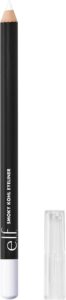
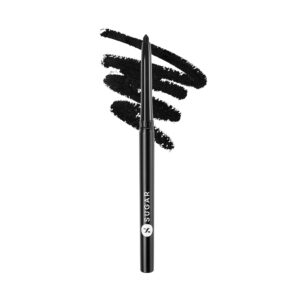
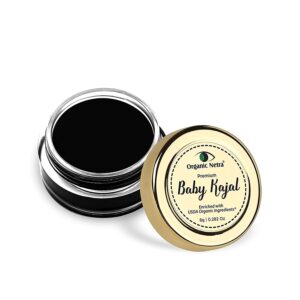
Applying kohl in Islam is a revered prophetic practice that intertwines spiritual devotion, physical well-being, and cultural heritage. Known as ithmid or surma, kohl is
We use cookies and similar technologies to enhance your experience, analyze site performance, and provide personalized content. By clicking "Accept," you consent to our use of these technologies. You can manage your preferences or opt out at any time in our Privacy Policy https://haqqfinder.com/privacy-policy/.
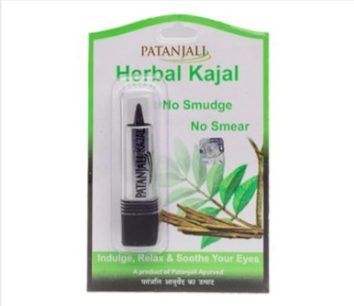
Patanjali Herbal Kajal is a black eye cosmetic marketed in a traditional herbal formulation. Available product descriptions identify plant-derived ingredients such as castor oil, almond oil, liquorice and Triphala-related herbs. The product is intended to define the eyes with a dark cosmetic appearance.
Although the product is marketed as herbal, that description does not establish that it is free from heavy metals. A King County public-health report records a sample identified as Patanjali Herbal Kajal that was tested in 2022 and contained 30 ppm of lead. This is a significant safety concern that warrants caution, although the result cannot establish the composition of every current batch.
BRAND
Patanjali
PRODUCT TYPE
Herbal black kajal / eyeliner
COMMON LISTED SIZE
3 g
FORMAT
Pencil-style kajal
HISTORICAL LEAD RESULT
30 ppm
One sample tested in 2022
HAQQFINDER RATING
3.06/5
Editorial assessment
PRODUCT IDENTITY AND FORMULA
Available descriptions do not present a completely consistent ingredient declaration. Some list herbal extracts and oils, while others include additional waxes, pigments and base materials. The exact package label should therefore be checked rather than assuming all products sold under this name have an identical formula.
Product information is based on available manufacturer and retailer descriptions. Packaging, formula and listed product specifications may vary between versions.
Patanjali Herbal Kajal is a traditional herbal-style black eye cosmetic commonly sold in a compact 3 g pencil format. Its reported ingredients include castor oil, almond oil, liquorice, amla, harad, baheda and rasaut. However, ingredient disclosures vary between available listings, and a historical public-health test raises a significant safety concern.
⚠️ Overall Verdict: Not recommended pending safety verification. A King County public-health report records 30 ppm of lead in a sample identified as Patanjali Herbal Kajal and tested in 2022. This result does not establish the lead concentration in every current batch, but it is a concrete reason to seek credible product- and batch-specific testing before use.
This is a desk-based editorial assessment, not a hands-on product test, laboratory analysis or formal religious ruling.
Customer feedback can provide useful context about application, pigmentation and everyday cosmetic performance. The marketplace ratings below offer a broader snapshot of reported customer satisfaction across several retail platforms. However, customer ratings do not establish current product safety, ingredient purity or the performance of every batch.
AGGREGATED MARKETPLACE RATING
4.10/5
Weighted average across six marketplaces
TOTAL MARKETPLACE RATINGS
1,641
Combined rating count across six platforms
HAQQFINDER EDITORIAL SCORE
3.06/5
Independent eight-criterion editorial assessment
HOW THE AGGREGATED RATING IS CALCULATED
The 4.10/5 marketplace average is calculated using a weighted formula: each platform's rating is multiplied by its reported rating count, and the resulting values are divided by the combined rating count of 1,641. This is HaqqFinder's calculation based on the supplied figures, not an official combined marketplace score. Regional review pools may overlap, so the total should not be interpreted as 1,641 unique customers.
AMAZON INDIA
4.1/5
553 ratings
FLIPKART
4.1/5
400 ratings
INDIAMART
4.1/5
584 ratings
Marketplace ratings and counts are based on the figures supplied for this review and should be treated as a snapshot, not independently verified live totals. Ratings are shown separately because marketplace review pools, regional listings and rating systems may differ.
Older published retail feedback includes favourable comments about smooth application and appearance. Some historical feedback also describes fading after approximately two hours and mild smudging. These are individual experiences rather than results from controlled or recent product testing.
The supplied marketplace figures indicate generally positive customer ratings, particularly across the Indian retail platforms. However, ratings alone do not confirm that the currently sold formulation is identical to previously reviewed versions.
HOW TO INTERPRET CUSTOMER FEEDBACK
Customer satisfaction can help describe cosmetic performance, but it cannot establish halal certification, ingredient purity, heavy-metal safety or ophthalmological suitability. Positive reviews should not be treated as evidence that a product is free from lead.
Marketplace ratings and review counts may change over time. HaqqFinder presents these figures as customer-feedback indicators only; they are not independent product-safety tests or confirmation of the current formulation's performance.
Available product descriptions identify ingredients such as castor oil, almond oil, amla, harad, baheda, liquorice and rasaut. These are presented as part of the product's herbal formulation. However, the exact composition should be confirmed from the packaging of the version being purchased.
The commonly listed 3 g pencil-style format is compact and portable. It may also be easier to control than loose kajal powder for some users.
The product is marketed as a black eye-defining cosmetic. Older published user feedback describes its colour as buildable, with repeated strokes sometimes needed for a stronger appearance. This is anecdotal feedback rather than a verified result for every current version.
Some available descriptions identify castor oil, almond oil and additional base materials such as waxes and pigments. These ingredients help describe the formulation, but their presence does not establish product purity or eye-area safety.
The available ingredient lists are inconsistent, and a 2022 public-health test recorded 30 ppm lead in one sample identified as Patanjali Herbal Kajal. Current-batch safety has not been established by the evidence reviewed.
Evidence note: These features describe reported product characteristics and available listing information. They should not be interpreted as independent confirmation of performance, purity or safety.
These potential advantages concern the product’s ingredients, format and reported user experience. They do not outweigh the unresolved lead-safety concern.
The product is intended to create a black line around the eyes. An older published review described the pigmentation as buildable rather than immediately jet black, requiring multiple strokes for stronger colour. This is an individual experience and should not be treated as a verified result for every current version.
Some historical feedback describes fading after around two hours and mild smudging, despite product descriptions advertising smudge resistance. There is insufficient recent, independently verified testing to establish a reliable wear time for the current formulation.
A pencil-style format can be easier to control than loose kajal powder. However, ease of application does not establish eye safety. Avoid applying any eye cosmetic in a way that causes discomfort or risks injury.
OVERALL PERFORMANCE VERDICT
Patanjali Herbal Kajal has some reported practical advantages, particularly its compact format and buildable appearance. Nevertheless, performance claims remain secondary to the unresolved safety question raised by the historical lead result.
This performance assessment is based on product descriptions and historical user feedback. HaqqFinder did not conduct a hands-on wear test of the current product.
3.06
OUT OF 5
Not recommended pending safety verification
The score reflects reported cosmetic usefulness, convenient format and botanical ingredients while giving substantial weight to the historical lead finding and the lack of verified current-batch testing.
The King County report records 30 ppm lead in a sample identified as Patanjali Herbal Kajal and tested in 2022. That result should not be ignored, but it also should not be misrepresented as proof that every current unit contains the same concentration. Until credible testing of the exact current formulation is available, HaqqFinder takes a precautionary approach.
The Halal & Sunnah score also reflects the Islamic principle of avoiding harm. This is an editorial assessment, not a formal fatwa or laboratory certification.
The following eight criteria are equally weighted. Each score reflects the available product information, historical feedback and safety evidence.
| Evaluation Criterion | Score | Assessment |
|---|---|---|
| Halal & Sunnah Compliance | 2.50/5 | No specific prohibited ingredient has been established from the available information, but the historical lead result raises a concern under the principle of avoiding harm. |
| Safety & Non-Harmful | 1.00/5 | A historical sample identified as this product contained 30 ppm lead; current-batch safety remains unverified. |
| Pigmentation & Appearance | 3.50/5 | Designed for black eye definition; older feedback describes buildable pigmentation. |
| Longevity & Wudu | 2.50/5 | Older anecdotal feedback reports fading and some smudging. Water resistance and the effect of any residue on wudu are not established. |
| Ease of Use | 4.00/5 | The pencil-style format is potentially convenient and controllable. |
| Packaging & Practicality | 3.00/5 | The compact format is practical, but packaging and formula may vary. |
| Value for Money | 4.00/5 | The product is commonly positioned as an accessible, low-cost cosmetic; however, value cannot overcome unresolved safety concerns. |
| Muslim Community Satisfaction | 4.00/5 | Some historical retail feedback is positive, but the available evidence is limited and does not establish current community satisfaction. |
| Overall Average | 3.06/5 | Not recommended pending safety verification. |
Scoring calculation: (2.50 + 1.00 + 3.50 + 2.50 + 4.00 + 3.00 + 4.00 + 4.00) ÷ 8 = 3.0625, presented as 3.06/5. The eight criteria are equally weighted. The safety score is a precautionary editorial judgement informed by the historical test result, not a claim that all current batches have been tested.
Available descriptions identify castor oil, almond oil, amla, harad, baheda, liquorice and rasaut. Some descriptions also list waxes, carbon black, iron oxides, mica, titanium dioxide, camphor and other base ingredients.
The official Patanjali product listing for Saundarya Kajal (Deep Black) describes a 3 g product and lists herbal extracts including liquorice, amla, harad, baheda, rasaut, aloe vera and honey, alongside base materials such as castor oil, carnauba wax, paraffin wax, carbon black, iron oxides, mica, titanium dioxide, almond oil, camphor, beeswax, emulsifying wax and BHT. Because descriptions differ, this listing should not automatically be assumed to represent every package sold as Patanjali Herbal Kajal. Consult the label on the exact product.
King County's public-health report records a sample named Patanjali Herbal Kajal, attributed to Patanjali Ayurved Ltd, with a lead concentration of 30 ppm. The sample was purchased from Amazon and tested in 2022 by the Hazardous Waste Management research team.
This is product-specific historical evidence, but it does not establish the lead level in current batches or every version sold under the name. King County explains that test results represent the products tested at that time and do not necessarily reflect subsequent changes in ingredients or manufacturing.
The US Food and Drug Administration also warns that some traditional kohl, kajal and surma products have contained high levels of lead and other heavy metals. This broader warning supports caution but is separate from the specific historical Patanjali sample result.
King County: Traditional and Nontraditional Eyeliner Testing Report
The listed botanical ingredients do not, by themselves, establish that the product is fully halal-certified, nor do they settle the safety question. The available information does not establish a specific prohibited ingredient in the reported formula. However, the ingredient declarations vary, and the exact packaging should be checked.
Under the Islamic principle of avoiding harm (lā ḍarar wa-lā ḍirār), a credible health concern should be taken seriously. HaqqFinder's score is an editorial assessment rather than a formal religious ruling.
The historical lead result is a documented finding for one tested sample. It is not a measurement of every current product unit. The absence of current-batch testing is an evidence gap, not proof that all current batches have the same contamination level.
The listed plant-derived ingredients may appeal to consumers who prefer herbal-style cosmetics. However, ingredient preferences should be considered alongside independent safety evidence.
Consumers who require documented lead safety should choose a product with credible, relevant testing for the exact formulation and batch. Based on the evidence available for this review, Patanjali Herbal Kajal cannot currently meet that standard with confidence.
People who experience eye irritation should be especially cautious. Neither the herbal label nor positive user feedback guarantees that a cosmetic will be suitable for every individual.
HaqqFinder does not recommend this product for children while its current-batch safety remains unverified. The historical lead result makes precaution particularly important.
These categories describe consumer preferences and safety considerations, not a recommendation to purchase or use the product. HaqqFinder's overall recommendation remains not recommended pending safety verification.
Patanjali Herbal Kajal has a convenient pencil-style format and a reported formulation containing several botanical ingredients. Historical user feedback also suggests that some consumers liked its application and appearance, although some reported fading and smudging.
The decisive issue is safety. A King County public-health report records 30 ppm lead in a sample identified as Patanjali Herbal Kajal and tested in 2022. This finding does not prove that every current batch contains the same amount, but it is a concrete reason to seek reliable, current product-specific testing rather than relying on herbal marketing claims.
HaqqFinder’s final recommendation: Not recommended pending safety verification.
Overall editorial rating: 3.06/5
This recommendation is precautionary. It does not claim that all current Patanjali Herbal Kajal products have been shown to contain lead at 30 ppm. A credible independent test of the exact current formulation and batch could support a reassessment.
HaqqFinder Editorial Note: The score reflects the available product information, historical customer feedback and documented safety evidence. It is an editorial evaluation, not a laboratory certification, medical assessment or formal fatwa.
*When you purchase through this link, HaqqFinder may earn a small commission at no extra cost to you. Learn more
There are no reviews yet. Be the first one to write one.

Applying kohl in Islam is a revered prophetic practice that intertwines spiritual devotion, physical well-being, and cultural heritage. Known as ithmid or surma, kohl is

Kohl, kajal, and surma have a long history in beauty traditions across the Middle East, North Africa, and South Asia. For many Muslims, kohl also

Kohl (also known as surma or kajal) has a long history in Muslim communities and is mentioned in Islamic Hadith literature. Among the types traditionally