

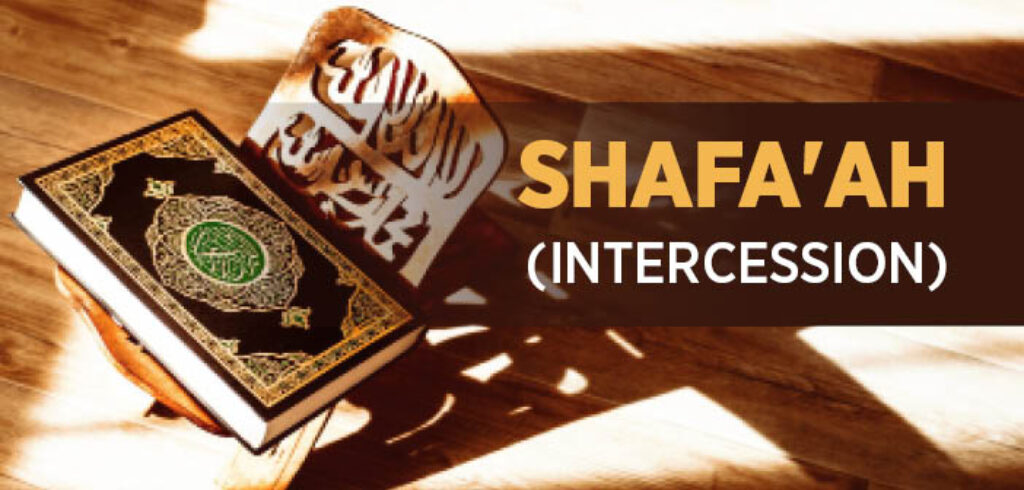
Intercession in Islam, known in Arabic as Shafa‘ah (شفاعة), refers to the act of interceding or pleading on behalf of others—especially on the Day of Judgment. It highlights both Allah’s boundless mercy and the honored role of the righteous in seeking forgiveness and relief for fellow believers.
Table of Contents
ToggleRooted deeply in the Qur’an and Hadith, the concept of Shafa‘ah has been discussed and interpreted by scholars for centuries. It includes various forms—such as the Prophet Muhammad’s ﷺ intercession for his Ummah—and raises theological discussions about its conditions, types, and limits.
Muslim scholars across different schools of thought, including Sunni and Shia, have elaborated on its nature and scope, often connecting it with related ideas like Tawassul (seeking closeness to Allah through righteous means).
In essence, Shafa‘ah reflects the balance between divine justice and divine mercy, reminding believers of hope, repentance, and the immense compassion of Allah on the Day when all souls will stand before Him.
What is Intercession (Shafa’ah) in Islam? Definition and Significance
Intercession, or Shafa’ah, is the process where a permitted intercessor pleads to Allah on behalf of sinners for forgiveness or relief, especially in the Hereafter. Derived from the Arabic root meaning “to join” or “pair,” it implies adding one’s plea to another’s to achieve a favorable outcome. In Islamic theology, it highlights Allah’s ultimate authority while allowing mercy through chosen individuals.
This concept is central to beliefs about the afterlife, offering hope to believers. Searches like “Shafa’ah meaning in Islam” often seek clarity on its role in salvation. Unlike polytheistic intercession, Islamic Shafa’ah requires Allah’s explicit permission and is not automatic—it’s a divine favor for the faithful. It applies to both the Hereafter (e.g., easing punishment) and worldly matters (e.g., prayers for relief).
Quranic Verses on Intercession in Islam
The Quran extensively discusses intercession, emphasizing that it occurs only with Allah’s approval. Key verses include:
- Quran 2:255 (Ayat al-Kursi): “Who is it that can intercede with Him except by His permission? He knows what is before them and what will be after them…” This verse affirms no intercession without divine consent.
- Quran 20:109: “On that Day, no intercession will benefit except by those granted permission by the Most Compassionate and whose words are agreeable to Him.“
- Quran 39:44: “To Allah belongs all intercession. To Him belongs the dominion of the heavens and the earth…” Reiterating Allah’s sole ownership of Shafa’ah.
Other verses (e.g., 19:87, 21:28) specify intercession for those Allah is pleased with, countering misconceptions that it’s denied entirely. These verses form the basis for understanding intercession as a mercy from Allah, not a guaranteed right.
Hadiths on Intercession: Prophetic Teachings
Hadiths provide detailed insights into Shafa’ah, particularly the Prophet Muhammad’s (PBUH) role. Notable narrations include:
- Sahih Bukhari: The Prophet (PBUH) said, “I have been given five things… and I have been given intercession.” He will intercede for his Ummah on Judgment Day.
- The Great Intercession (Shafa’ah al-Uzma): In Hadith, the Prophet (PBUH) will prostrate before Allah, praised as “al-Maqam al-Mahmud,” interceding for all humanity to begin judgment.
- Multiple Intercessors: Hadiths mention angels, prophets, martyrs, and scholars interceding.
The Hadiths about intercession in Islam affirm that Shafa‘ah is a special privilege granted to the Prophet Muhammad ﷺ, through which the reckoning of believers will be made easier.
Who Can Intercede in Islam? Intercessors and Their Roles
Intercession is reserved for those whom Allah permits. Common intercessors include:
- Prophet Muhammad (PBUH): The primary intercessor, with the greatest Shafa’ah for his followers.
- Other Prophets: Like Abraham, Moses, and Jesus, but limited compared to Muhammad.
- Angels: They intercede for believers (Quran 21:28).
- Martyrs and Righteous Believers: Hadiths allow martyrs to intercede for 70 relatives. [Jami‘ al-Tirmidhi, Hadith 2536 (Hasan)].
- Scholars and Pious Individuals: Those with knowledge and piety may intercede conditionally. (Musnad Ahmad ibn Hanbal, vol. 6, Hadith 17459; Sunan Ibn Majah, Kitab al-Fitan, Hadith 2930; Al-Qurtubi, al-Tafsir al-Kabir, commentary on Quran 21:28)
Ahl al-Bayt Intercession (Shia View)
- Shia theology emphasizes the special spiritual status of the Ahl al-Bayt, granting them intercessory roles on the Day of Judgment.
- Primary Sources:
- Nahj al-Balagha – Sermons of Imam ‘Ali (RA) describing his intercessory role for believers.
- Al-Kafi (Kitab al-Tawhid & Kitab al-Imamah) – Reports on the intercession of the Twelve Imams for their followers.
- Bihar al-Anwar by Allama Majlisi – Extensive narrations about the intercessory role of the Ahl al-Bayt.
- Key Concept: Unlike Sunni views, where intercession is primarily for the Prophet ﷺ and select righteous, Shia belief extends this privileged intercessory status to the Ahl al-Bayt, forming a core theological distinction.
Conditions and Types of Intercession in Islam
Conditions for Valid Intercession
- Allah’s Permission: Essential (Quran 10:3).
- For Believers Only: Intercession benefits those with faith and good intentions, not defiant sinners.
- Pleasing to Allah: The intercessor’s words and actions must align with divine will.
Types of Intercession
- In the Hereafter: For forgiveness, higher ranks in Paradise, or relief from Hell.
- In This World: Prayers for healing or needs, often through Tawassul.
When exploring ‘conditions for intercession in Islam’ or ‘types of Shafa‘ah,’ these guidelines show that intercession is strictly by Allah’s permission, preventing any form of shirk.
Intercession in Sunni and Shia Islam: Key Differences
Both sects affirm intercession, but differ in emphasis:
- Sunni View: Intercession is permitted with Allah’s approval, primarily by the Prophet (PBUH). They caution against excessive reliance on saints.
- Shia View: Emphasizes the Ahl al-Bayt’s intercessory role, viewing them as infallible mediators. Intercession extends to Imams.
While both Sunni and Shia traditions share Quranic foundations, their views and practices regarding intercession differ.
Tawassul vs. Shafa’ah: Understanding the Distinction
- Tawassul: Seeking nearness to Allah through means like prophets’ status, righteous deeds, or supplicating at graves (without worshiping them).
- Shafa’ah: Specific intercession on Judgment Day.
In Islam, Tawassul is a practice in this world, whereas Shafa‘ah refers to intercession on the Day of Judgment.
Common Misconceptions About Intercession in Islam
- Misconception: Intercession is Shirk: Proper Shafa’ah seeks Allah’s mercy through permitted means, not equating intercessors to God.
- Misconception: Available to All: Only for believers; disbelievers have none (Quran 2:48).
- Misconception: Denies Personal Accountability: It complements justice, not replaces it.
Clarifying misconceptions about intercession in Islam shows that it is an expression of Allah’s mercy, not a loophole to bypass accountability.
Conclusion
Intercession (Shafa’ah) in Islam is a mercy-based concept rooted in the Quran and Hadith, offering hope for believers through the Prophet Muhammad (PBUH), other prophets, angels, and righteous individuals on the Day of Judgment. It operates strictly under Allah’s permission, distinguishing it from shirk and emphasizing divine justice.
While Sunni and Shia perspectives share core beliefs, differences arise in the emphasis on Ahl al-Bayt. By clarifying misconceptions and distinguishing Shafa’ah from Tawassul, this guide addresses all major queries, providing a comprehensive resource for understanding this profound Islamic principle
Frequently Asked Questions (FAQs) About Intercession in Islam
What is the meaning of Shafa’ah in Islam?
Shafa’ah is intercession where righteous individuals plead to Allah for others’ forgiveness, with His permission.
Is intercession allowed in Islam?
Yes, but only with Allah’s approval and for believers.
Who will intercede on the Day of Judgment?
Primarily Prophet Muhammad (PBUH), followed by other prophets, angels, martyrs, and pious believers.
What is the difference between Tawassul and Shafa’ah?
Tawassul is seeking Allah’s help through means in this world; Shafa’ah is intercession in the Hereafter.
Do Sunnis and Shias differ on intercession?
Both accept it, but Shias emphasize the Ahl al-Bayt’s role more.
Can non-Muslims benefit from intercession?
Generally, no, as it’s for believers, though some Hadiths suggest limited cases.
Is there intercession for major sins?
Possible for believers if Allah permits, but not guaranteed.
References
- Quran.com, “Ayat al-Kursi,” https://quran.com/2/255
- Wikipedia, “Shafa’a,” https://en.wikipedia.org/wiki/Shafa%27a
- Al-Islam, “Intercession in Shiite Encyclopedia,” https://www.al-islam.org/shiite-encyclopedia/intercession
- Quran.com, “Verses on Intercession,” https://quran.com
- Al-Islam, “Intercession: Shia View,” https://www.al-islam.org/shiite-encyclopedia/intercession-shia-view
- Sunnah.com, “Sahih Bukhari on Intercession,” https://sunnah.com/bukhari:334
- Sunnah.com, “Intercession for Non-Muslims,” https://sunnah.com/bukhari:6565
- IslamWeb, “Sunni View on Intercession,” https://www.islamweb.net/en/fatwa/84562
- Sunnah.com, “Sahih Muslim on Great Intercession,” https://sunnah.com/muslim:194
- IslamWeb, “Who Can Intercede,” https://www.islamweb.net/en/fatwa/84562
- Quran.com, “Angels Intercession,” https://quran.com/21/28
- Islamic Studies, “Tafheem on Quran 2:255,” https://www.islamicstudies.info/tafheem.php?sura=2&verse=255
- IslamQA, “Prophet’s Intercession,” https://www.islamqa.info/en/answers/11931/the-intercession-of-the-prophet
- Al-Islam, “Prophetic Intercession,” https://www.al-islam.org/articles/prophetic-intercession
- Al-Islam, “Intercession in Islam,” https://www.al-islam.org/articles/intercession-shafaa-islam-sayyid-muhammad-rizvi
- Sunnah.com, “Martyrs Intercession,” https://sunnah.com/tirmidhi:2433
- IslamWeb, “Tawassul vs Shafa’ah,” https://www.islamweb.net/en/fatwa/84562
- IslamQA, “Tawassul Explained,” https://www.islamqa.info/en/answers/329/towassul-seeking-a-means-of-nearness-to-allaah
- Al-Islam, “Tawassul and Shafa’ah,” https://www.al-islam.org/articles/tawassul-seeking-means-nearness-allah
- Al-Islam, “Tawassul in Islam,” https://www.al-islam.org/articles/tawassul-seeking-means-nearness-allah
- Al-Islam, “Types of Intercession,” https://www.al-islam.org/shiite-encyclopedia/intercession
- IslamQA, “Conditions of Intercession,” https://www.islamqa.info/en/answers/21672/conditions-of-intercession
- IslamQA, “Intercession and Accountability,” https://www.islamqa.info/en/answers/21672/conditions-of-intercession